 flip
flipCastagnaccio (chestnut flour flatbread)
Castagnaccio (chestnut flour flatbread)
Why this dish? In a workshop where one works standing from morning to night, one eats what the hand grabs between tasks. Chestnut flour, cheap and nourishing, yielded this flat cake that Florentines sold and nibbled cold. An ideal snack for the apprentice who never puts down the chisel.
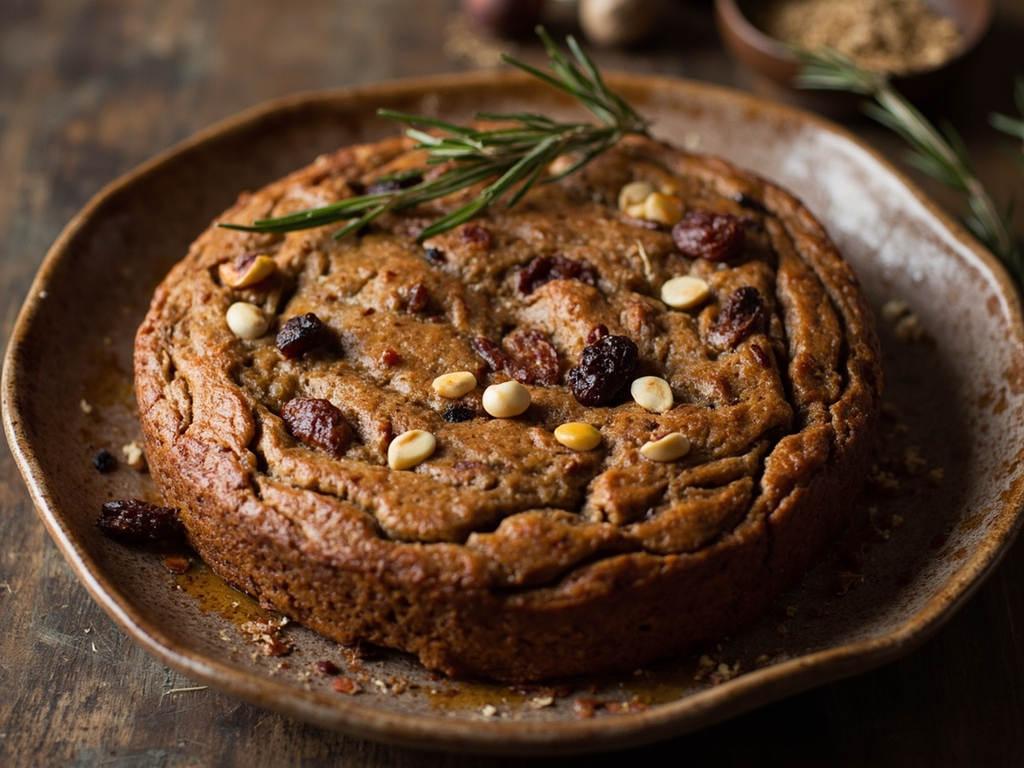
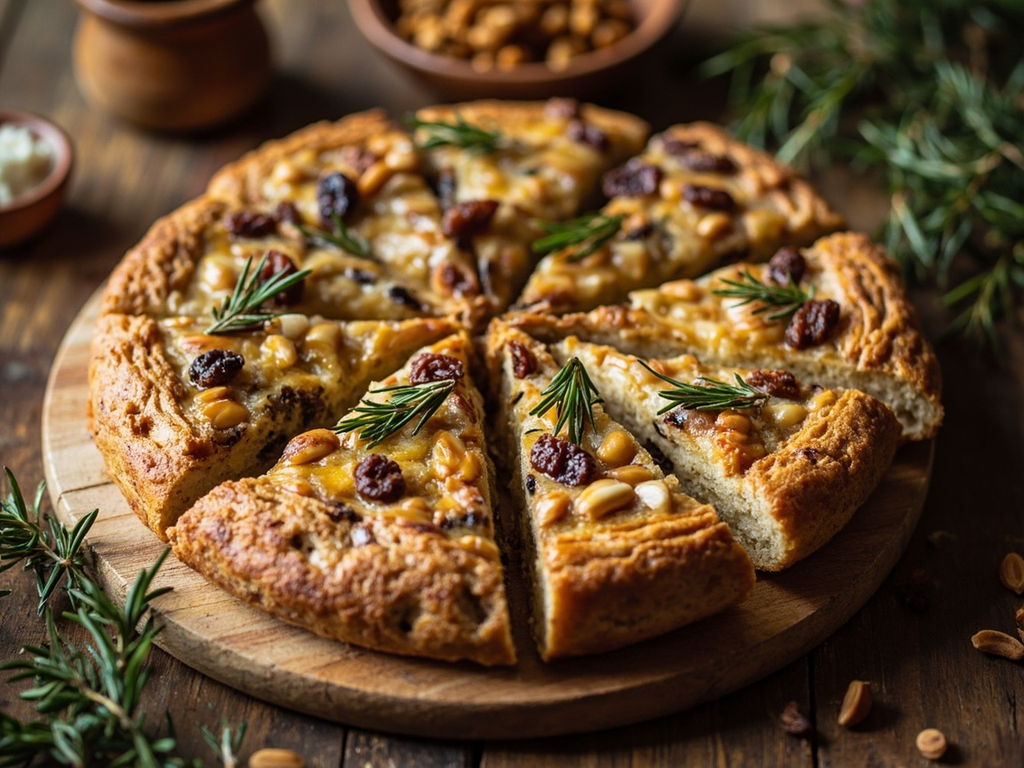
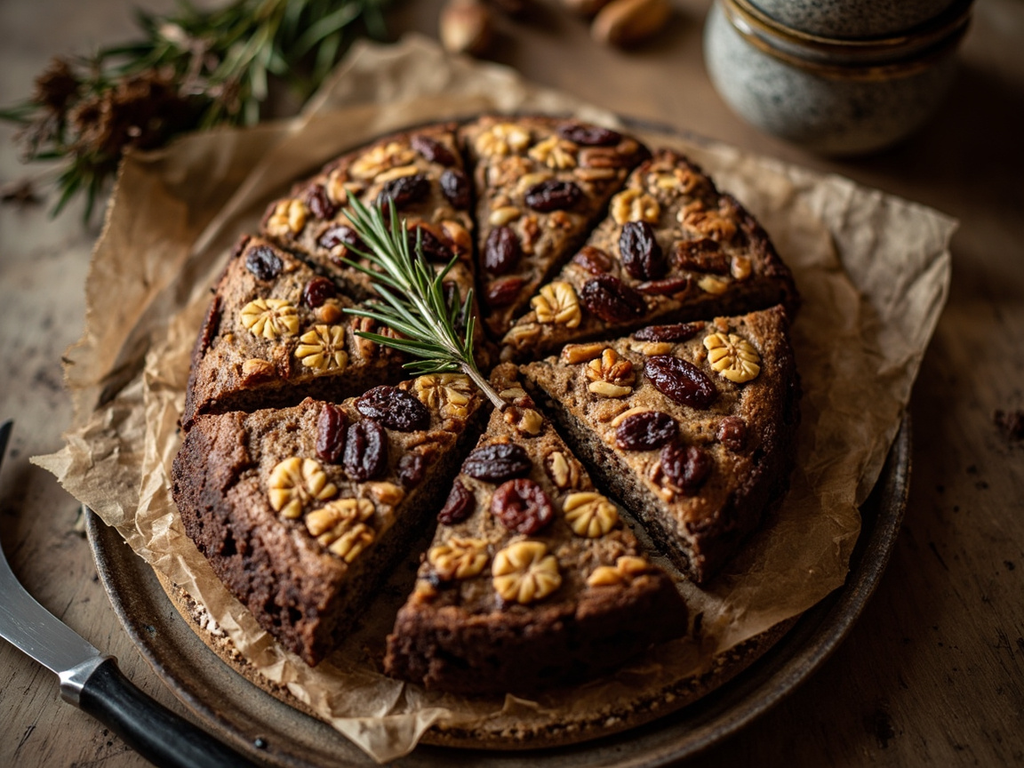
A flat, dense cake of chestnut flour, barely sweetened naturally, studded with pine nuts, raisins, and rosemary. The contrast between the sweetness of chestnut and the bitterness of rosemary and nuts makes it a distinctly rustic sweet.
Here is the poor man's treat, yet I loved it as much as the rich man's confetti. No need for a master's oven: a little chestnut flour mixed with water, oil, a pinch of pine nuts and currants, and rosemary on top to prick the tongue. We spread it thin as beaten gold leaf, and baked it until it cracked like old plaster. Cold, we slipped it into the pouch: enough to stave off hunger without leaving the workbench.
- •Chestnut flour — according to batch (naturally sweet base)
- •Water — to mix (liquid)
- •Olive oil — a drizzle (fat)
- •Pine nuts — a handful (garnish)
- •Raisins — a handful (sweetness)
- •Rosemary — a few sprigs (bitter fragrance)
- •Salt — a pinch (balance)
Castagnaccio (chestnut flour flatbread)
A flat, dense cake of chestnut flour, barely sweetened naturally, studded with pine nuts, raisins, and rosemary. The contrast between the sweetness of chestnut and the bitterness of rosemary and nuts makes it a distinctly rustic sweet.
Why this dish? In a workshop where one works standing from morning to night, one eats what the hand grabs between tasks. Chestnut flour, cheap and nourishing, yielded this flat cake that Florentines sold and nibbled cold. An ideal snack for the apprentice who never puts down the chisel.
Here is the poor man's treat, yet I loved it as much as the rich man's confetti. No need for a master's oven: a little chestnut flour mixed with water, oil, a pinch of pine nuts and currants, and rosemary on top to prick the tongue. We spread it thin as beaten gold leaf, and baked it until it cracked like old plaster. Cold, we slipped it into the pouch: enough to stave off hunger without leaving the workbench.
Ingredients (period version)
- Chestnut flour — according to batch (naturally sweet base)
- Water — to mix (liquid)
- Olive oil — a drizzle (fat)
- Pine nuts — a handful (garnish)
- Raisins — a handful (sweetness)
- Rosemary — a few sprigs (bitter fragrance)
- Salt — a pinch (balance)
Ingredients
- Chestnut flour — 300 g (naturally sweet base)
- Water — about 500 ml (liquid)
- Extra virgin olive oil — 3 tbsp (fat)
- Pine nuts — 40 g (garnish)
- Raisins (rehydrated) — 40 g (sweetness)
- Fresh rosemary — 1 tbsp needles (bitter fragrance)
- Walnuts (optional) — 30 g (bitterness and crunch)
- Salt — 1 pinch (balance)
Method
- Preheat the oven to 200°C. Gradually mix the chestnut flour with water and a pinch of salt until a smooth, fluid batter forms.
- Add half the olive oil and some of the rehydrated raisins.
- Generously oil a wide, shallow dish and pour in the batter to a maximum depth of 1 cm.
- Scatter with pine nuts, remaining raisins, walnuts, and rosemary needles. Drizzle with oil.
- Bake for 30 to 35 minutes: the surface should crack and brown, the inside remain moist.
- Let cool slightly and cut into squares. Best eaten cold; keeps for several days.
How it was made : For centuries, the chestnut was the "bread tree" of the Tuscan mountains: its flour fed the people in years of poor wheat harvest. *Castagnaccio* is one of the oldest attested sweet preparations in Tuscany, and a derivative is mentioned as early as the 16th century (sometimes attributed to a certain Pilade of Lucca). Naturally without eggs or added sugar.
The contemporary twist : Serve with a spoonful of fresh ricotta whipped with honey to soften the bitterness—like a light glaze on a dark fresco.
Sources : Tuscan tradition of chestnut flour · Ortensio Lando, Commentario delle più notabili e mostruose cose d'Italia (1548), mention of a chestnut cake
Andrea del Verrocchio · Charactorium