Il desinare fiorentino (the Tuscan artisan's meal)
In fifteenth-century Florence, a workshop master's midday meal revolves around bread, the true pillar of the table. It begins with a *minestra* (soup or thick porridge of vegetables and legumes), followed by the *companatico*, what "accompanies the bread": a boiled or roast meat on meat days. Sweets and dried fruits (*confetti*, *dolci*) close the feast, and a spiced wine is often served to aid digestion. Artisans also snacked on humble flour flatbreads between tasks.
Signature : La brace e il pepe (embers and pepper)
Two hallmarks of Florence meet at this table: the slow ember, inherited from the furnaces where bronze is cast, and black pepper, a costly spice that Venetian galleys unload and the opulent city scatters without counting. The master founder knows better than anyone the patience of covered fire.
Andrea del Verrocchio at the table
1435 — 1488
4 period recipes
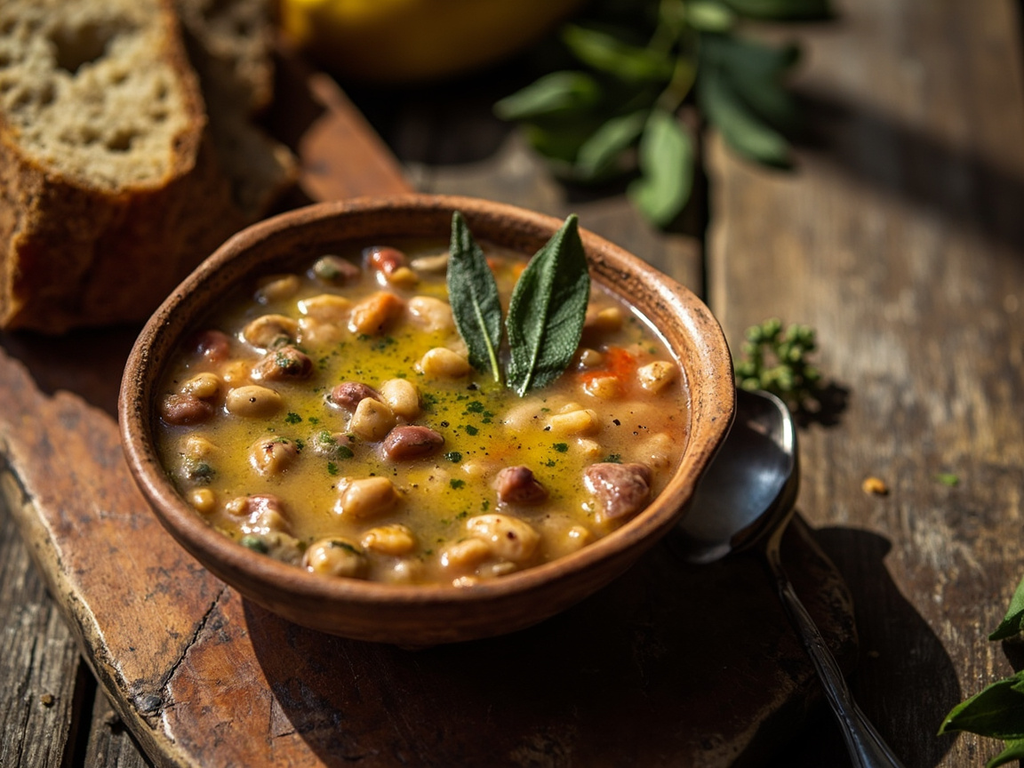 Everyday
Minestra di fave e pane (fava bean and stale bread soup)
Minestra (the foundational porridge that opens the meal)
🧂 🍄· 1 h 45 (plus soaking)
View the recipe
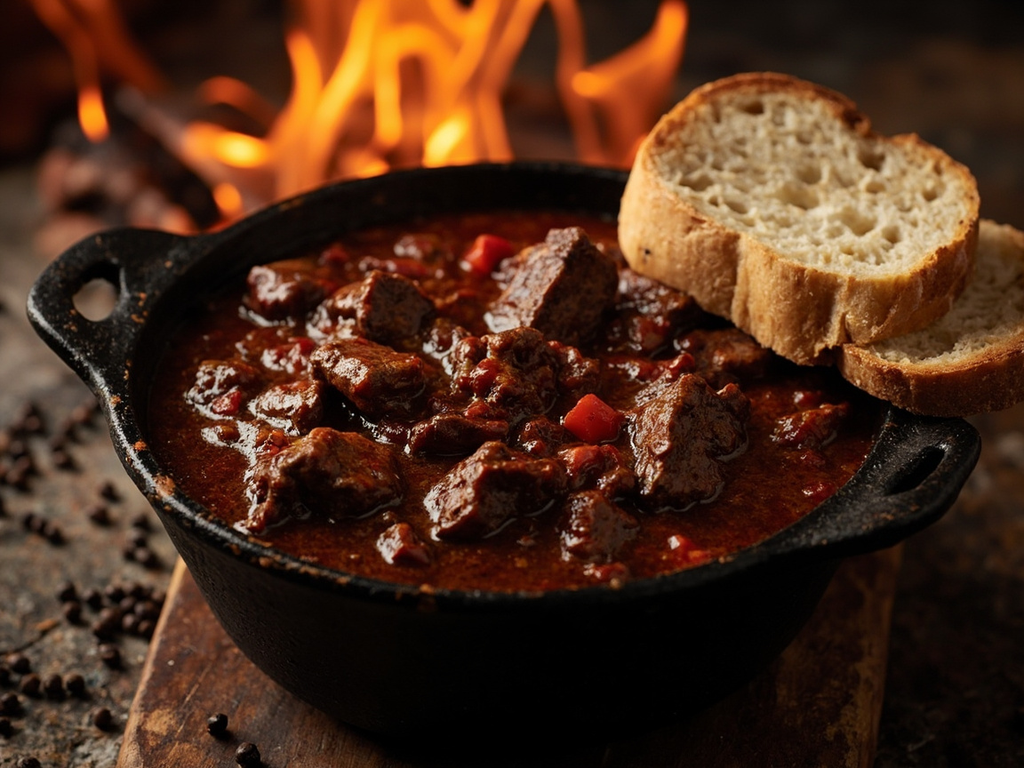 Festive
Peposo alla fornacina (foundryman's peppered beef)
Festive companatico (the meat dish that accompanies bread on meat days)
🧂 🌶️· 3 h 45
View the recipe
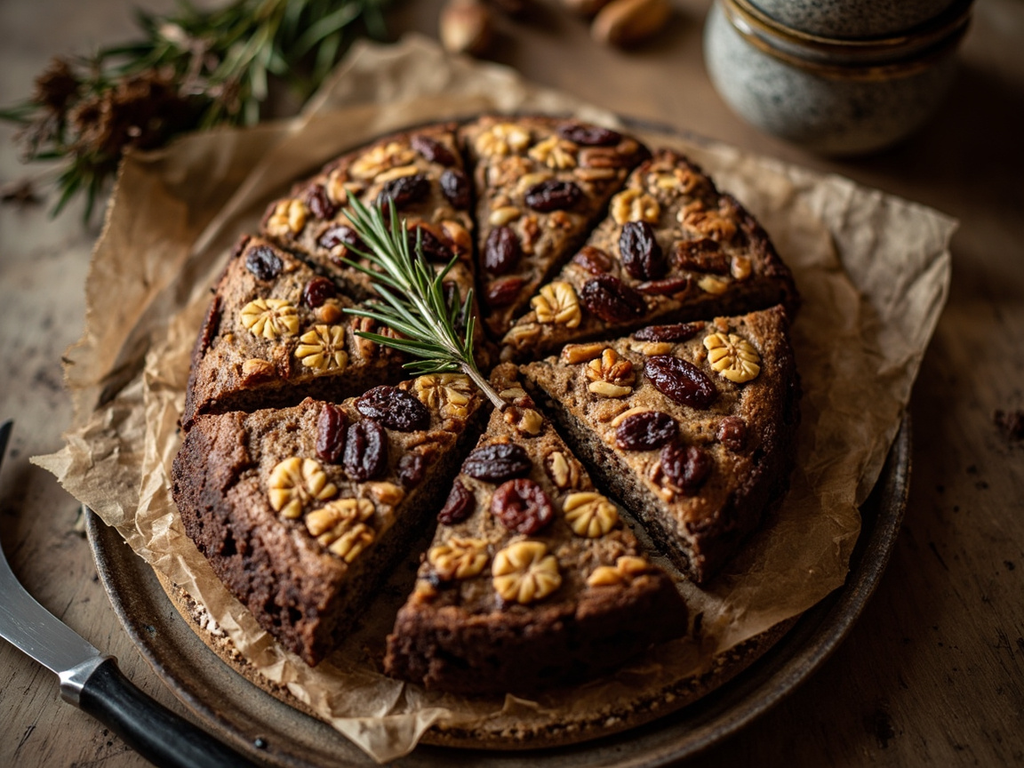 Street food
Castagnaccio (chestnut flour flatbread)
Dolce povero / workshop snack (humble sweet eaten on the go)
🍯 ☕· 45 min
View the recipe
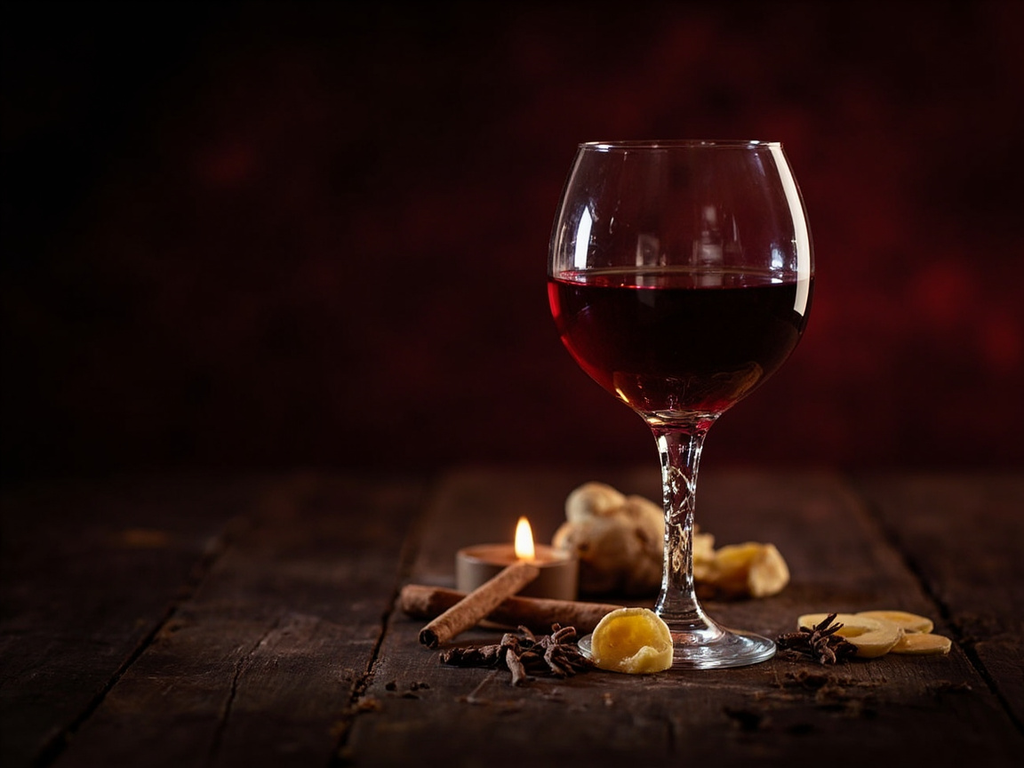 Drink
DrinkIpocrasso (clarified spiced wine for banquets)
End-of-meal beverage (spiced drink that closes the feast)
🍯 🌶️· 35 min
View the recipe