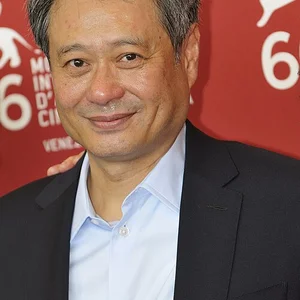

Ang Lee is a Taiwanese director born in 1954, celebrated for his ability to cross genres and cultures. His films explore identity, family, and desire with a remarkable visual sensibility.
Frequently asked questions
Key Facts
- Born on October 23, 1954, in Pingtung, Taiwan
- Won the Academy Award for Best Director in 2006 for Brokeback Mountain
- Won a second Academy Award for Best Director in 2013 for Life of Pi
- Directed Crouching Tiger, Hidden Dragon (2000), the first Asian film to win the Academy Award for Best Foreign Language Film
- Trained at New York University's Tisch School of the Arts in the 1980s
Works & Achievements
Ang Lee's first major international success, this film explores with humor and emotion the tensions between Confucian tradition and modernity surrounding an arranged marriage. It won the Golden Bear at the Berlin Film Festival and was nominated for the Academy Award for Best Foreign Language Film.
A masterpiece of the Father Knows Best trilogy, this Taiwanese film uses food as the language of repressed emotions within a modern Taipei family. It was nominated for the Academy Award for Best Foreign Language Film and remains a landmark of Asian cinema.
An adaptation of Jane Austen's novel starring Emma Thompson, Kate Winslet, and Hugh Grant. This film confirmed Ang Lee's ability to excel in genres and cultures far removed from his origins; it won the Golden Bear at the Berlin Film Festival in 1996.
A groundbreaking wuxia film blending visual poetry, Taoist philosophy, and ahead-of-its-time feminism. It won four Academy Awards and long remained the highest-grossing non-English-language film in American box-office history.
A tragic love story between two cowboys in rural America from the 1960s through the 1980s. A landmark film for LGBTQ+ representation in mainstream cinema, it earned Ang Lee his first Academy Award for Best Director.
An adaptation of Yann Martel's novel about a young Indian teenager's survival at sea alongside a fully computer-generated tiger. A technical and spiritual masterpiece, it won four Academy Awards including Best Director for Ang Lee.
Anecdotes
After earning his degree from New York University in 1984, Ang Lee spent six years without managing to direct a single professional film. During this difficult period, it was his wife, a microbiology researcher, who supported the household while he handled domestic tasks and continued writing screenplays. This quiet perseverance eventually paid off when a Taiwanese producer noticed his work in 1991.
His film *The Wedding Banquet* (1993) won the Golden Bear at the Berlin Film Festival and was nominated for the Academy Award for Best Foreign Language Film. In it, Ang Lee explored the tensions between Confucian tradition and modernity through a Taiwanese man who hides his romantic relationship from his parents. This unexpected success revealed to the world a filmmaker capable of addressing universal themes through deeply personal experience.
For *Crouching Tiger, Hidden Dragon* (2000), Ang Lee filmed aerial martial arts sequences in China that revolutionized the genre. The film became the first non-English-language feature to gross over $100 million in the United States, and won four Academy Awards including Best Foreign Language Film. Decades after its release, it remains one of the most influential works in Asian cinema.
In 2006, Ang Lee became the first director of Asian descent to win the Academy Award for Best Director, for *Brokeback Mountain*, a love story between two cowboys in 1960s Wyoming. Then, in 2013, he won that same Oscar a second time for *Life of Pi*, making him one of the rare directors to have received the award twice.
For *Life of Pi* (2012), Ang Lee took on an unprecedented technical challenge: filming a shipwrecked teenage boy alongside a Bengal tiger created entirely by computer. Hundreds of specialist technicians worked for years on the visual effects, simulating water, light, and animal movement with a realism never before achieved. The film won the Academy Award for Best Visual Effects and permanently transformed the practices of digital filmmaking.
Primary Sources
Ang Lee dedicated his award to all those who have the courage to love, stating that this film belongs to those who have known the pain of having to hide a part of themselves. He thanked his actors Heath Ledger and Jake Gyllenhaal for their artistic courage.
I don't consider myself a Taiwanese filmmaker or an American filmmaker. I try to find universal truth in particular stories, to build bridges between worlds that believe themselves foreign to one another.
Ang Lee thanked the teams spread across India, Taiwan, Canada, and the United States, emphasizing that cinema is a collective art and a bridge between cultures. He paid tribute to the novel's author, Yann Martel, whose vision had guided him.
Telling this story of faith and survival using the most modern digital tools was a deliberate paradox. Technology can, if properly directed, serve spirituality rather than replace it.
Key Places
Ang Lee's hometown, in southern Taiwan. He grew up there in a family of mainland refugees, caught between Confucian tradition and the island's rapid modernization — themes that run through his entire body of work.
The film school where Ang Lee earned his MFA in 1984. It was there that he made his first professional short films and built the connections that allowed him to launch his career.
Filming locations for Crouching Tiger, Hidden Dragon (2000). The spectacular landscapes of Mount Huangshan and the rooftops of the Forbidden City provided the backdrop for the film's airborne martial arts sequences, which revolutionized the genre.
The main setting for the land-based scenes in Life of Pi (2012). Ang Lee captured the colorful, spiritual atmosphere of this former Franco-Indian town, which serves as the starting point for young Pi's journey of self-discovery.
The world capital of cinema, where Ang Lee received his two Academy Awards and maintains ties with the major Hollywood studios. He keeps a second home there while remaining rooted in New York.
Typical Objects

The central tool of the contemporary filmmaker, Ang Lee embraced the most advanced technologies throughout his career. For Life of Pi, he was among the first to use high-definition 3D cameras so ambitiously.

A sequence of drawings representing each shot before filming begins. Ang Lee is known for the meticulousness of his visual preparation, creating highly detailed storyboards to plan out every scene in advance.

The iconic object on a film set that synchronizes sound and image. It is a reminder of cinema's artisanal origins — something the digital era has not entirely erased.

A powerful computer used by visual effects teams to create digital environments and characters. For Life of Pi, entire render farms worked for months to simulate the ocean and the tiger Richard Parker.

The shooting script covered in the director's handwritten notes, guiding every artistic decision on set. Ang Lee spends considerable time developing his screenplays in close collaboration with his writers before filming begins.

A symbol of Asian culinary culture present in several of his films, most notably in Eat Drink Man Woman (1994), where the meals prepared by a Taiwanese chef embody family relationships and unspoken desires.
School Curriculum
Vocabulary & Tags
Key Vocabulary
Daily Life
Morning
Ang Lee starts his day early, often at dawn, reading and reviewing the script or storyboards for his current project. During pre-production periods, he devotes his mornings to meetings with his director of photography and department heads to refine the artistic vision for each sequence.
Afternoon
On set, afternoons are dedicated to the most technically demanding scenes or to in-depth rehearsals with the actors. Ang Lee is known for his patience and gentleness with his cast, guiding them toward emotional truth rather than a calculated performance. He may repeat a shot many times until he achieves the authenticity he is looking for.
Evening
In the evening, Ang Lee reviews the dailies (raw footage shot during the day) with his team to assess what is working and decide on adjustments for the following day. Outside of shoots, his evenings are often spent reading — novels, philosophical essays, film history — and listening to classical or jazz music, both of which he deeply enjoys.
Food
Ang Lee has a deep attachment to Taiwanese and Chinese cuisine, which he celebrated in *Eat Drink Man Woman* as a language of love and family. When shooting abroad, he consistently seeks out Asian restaurants and stays true to the flavors of his childhood. Food represents for him a strong and tangible connection to his cultural roots.
Clothing
In daily life and on set, Ang Lee favors simple, comfortable clothing suited to the long, physically demanding days. He is not particularly concerned with the sartorial image that some directors carefully cultivate. At ceremonies such as the Oscars, he wears well-made classic suits, without ostentation.
Housing
Ang Lee has been married since 1983 to Jane Lin, a molecular biology researcher, with whom he has two sons. They live primarily in the New York area, the city where he studied and built his career. It was in their suburban New York home that he weathered the six difficult years of waiting before his career finally took off.
Historical Timeline
Period Vocabulary
Liens externes & ressources
Références
Œuvres
L'Odyssée de Pi (Life of Pi)
2012