 flip
flipO-a-tsian — night market oyster omelette
O-a-tsian — night market oyster omelette
Why this dish? Night markets (yeshi) are the beating heart of Taiwanese life, and the oyster omelette is their undisputed star. Ang Lee, deeply attached to the popular cuisine of his island, finds in these noisy stalls the intimate Taiwan he films — that of simple gestures and shared flavors on a plastic stool.
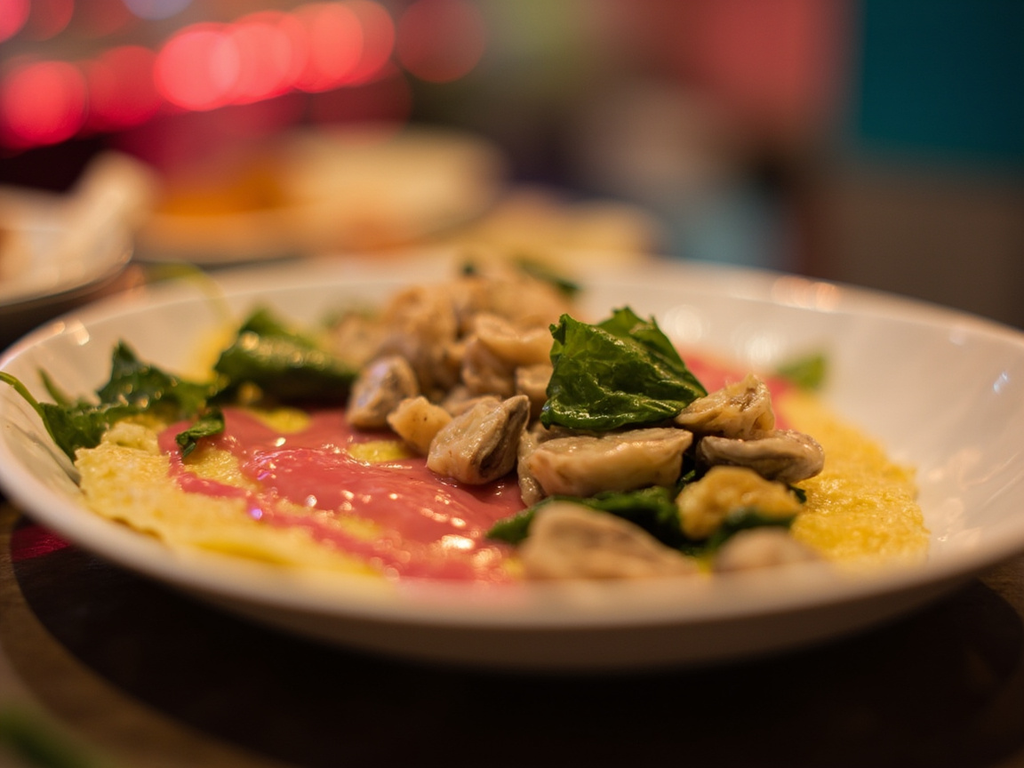
A soft, translucent crepe made from sweet potato starch batter, filled with plump oysters and an egg, sprinkled with green leaves, then drizzled with a characteristic sweet-sour pink sauce from the night markets.
In the evening, in Pingtung, the smell of the hot griddles pulled you outside like a magnet. The batter should remain a bit gelatinous in the center, never dry — that's the whole art: neither crepe nor omelette, something in between. We'd throw in the oysters at the last minute, crack the egg on top, a handful of green leaves, and that slightly sweet, slightly tangy sauce we all know. You eat standing up, it burns your fingers a little, and it's perfect that way.
- •Small fresh oysters — a handful (sea garnish)
- •Sweet potato starch — as needed (translucent batter)
- •Egg — 1 (binder)
- •Leafy greens (bok choy, edible chrysanthemum) — a few leaves (greens)
- •Fermented sweet-sour sauce — to taste (drizzle)
O-a-tsian — night market oyster omelette
A soft, translucent crepe made from sweet potato starch batter, filled with plump oysters and an egg, sprinkled with green leaves, then drizzled with a characteristic sweet-sour pink sauce from the night markets.
Why this dish? Night markets (yeshi) are the beating heart of Taiwanese life, and the oyster omelette is their undisputed star. Ang Lee, deeply attached to the popular cuisine of his island, finds in these noisy stalls the intimate Taiwan he films — that of simple gestures and shared flavors on a plastic stool.
In the evening, in Pingtung, the smell of the hot griddles pulled you outside like a magnet. The batter should remain a bit gelatinous in the center, never dry — that's the whole art: neither crepe nor omelette, something in between. We'd throw in the oysters at the last minute, crack the egg on top, a handful of green leaves, and that slightly sweet, slightly tangy sauce we all know. You eat standing up, it burns your fingers a little, and it's perfect that way.
Ingredients (period version)
- Small fresh oysters — a handful (sea garnish)
- Sweet potato starch — as needed (translucent batter)
- Egg — 1 (binder)
- Leafy greens (bok choy, edible chrysanthemum) — a few leaves (greens)
- Fermented sweet-sour sauce — to taste (drizzle)
Ingredients
- Fresh shucked oysters — 8-10 small (garnish)
- Sweet potato starch — 4 tbsp (batter)
- Water — 120 ml (dilution)
- Eggs — 2 (binder)
- Bok choy or edible chrysanthemum leaves (tong hao) — a handful (greens)
- Oil — 2 tbsp (cooking)
- For the sauce: ketchup — 2 tbsp (pink base)
- Sweet bean paste (tian mian jiang) or miso — 1 tbsp (umami)
- Sugar, rice vinegar, water, starch — to taste (sweet-sour balance)
Method
- Prepare the sauce: bring ketchup, bean paste, sugar, vinegar, and water to a simmer, thicken with a little dissolved starch; set aside.
- Dissolve sweet potato starch in water to make a thin batter.
- On a very hot, oiled griddle or pan, sear the oysters for a few seconds.
- Pour the starch batter over them, crack an egg on top and spread slightly.
- When the edges become translucent, add the greens, flip, and cook until the center is set but still soft.
- Slide onto a plate and generously drizzle with the pink sauce.
How it was made : The oyster omelette, inherited from neighboring Fujian, became a symbol of Taiwanese resourcefulness: in times of scarcity, a few oysters were stretched with cheap sweet potato starch to feed more mouths. The sweet-sour sauce varies from stall to stall, a jealously guarded secret of each vendor.
The contemporary twist : For those who don't like oysters, a version with small shrimp or enoki mushrooms — common in modern night markets.
Ang Lee · Charactorium