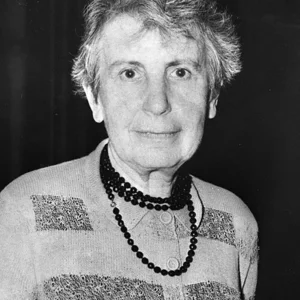

Austrian-British psychoanalyst (1895–1982), daughter of Sigmund Freud. A pioneer of child psychoanalysis, she theorized the ego's defense mechanisms and founded child therapy in London.
Anna Freud(1895 — 1982)
Anna Freud
Autriche, Royaume-Uni
7 min read
Frequently asked questions
Famous Quotes
« Creative minds have always been known to survive any kind of bad training.»
Key Facts
- Born on December 3, 1895, in Vienna, the sixth child of Sigmund Freud
- 1936: publication of *The Ego and the Mechanisms of Defence*, a foundational work in ego psychology
- 1938: fled Nazi-occupied Austria and settled permanently in London
- 1947: founded the Hampstead Child Therapy Clinic (now the Anna Freud Centre)
- Died on October 9, 1982, in London, after a lifetime devoted to child psychoanalysis
Works & Achievements
Anna Freud's first major work, drawn from lectures delivered in Vienna. It lays the foundations of child psychoanalysis as a distinct discipline and draws the boundary with the work of Melanie Klein.
Her central theoretical work, presented to her father as a gift for his 80th birthday. In it she catalogues and describes ten defence mechanisms of the ego (repression, projection, sublimation, regression…), founding ego psychology.
A clinical report drawn from observations at the Hampstead War Nurseries, demonstrating the devastating impact of parental separation on the psychological development of young children.
An extension of the 1942 report, this work theorises the infant's fundamental need for affective continuity and would directly influence John Bowlby's attachment theories.
A synthesis of a lifetime of clinical practice and observation, introducing the concept of "developmental lines" to assess a child's psychological health without pathologising individual differences.
An interdisciplinary work combining psychoanalysis and law, which revolutionised child welfare legislation by asserting the primacy of the "psychological parent" over the biological parent.
Anecdotes
Anna Freud was the only one of Sigmund Freud's six children to embrace psychoanalysis. Unusual and controversial even at the time: her own father took her into analysis between 1918 and 1922, a practice now considered a serious breach of professional ethics, but which was then entirely without precedent.
On March 22, 1938, the day after the Anschluss (the annexation of Austria by Nazi Germany), the Gestapo summoned Anna Freud for questioning at their Vienna headquarters. She spent several hours there alone, not knowing whether she would be arrested. This harrowing episode finally convinced Sigmund Freud — who had long resisted leaving — to flee Vienna with his family.
During the Second World War, as bombs rained down on London, Anna Freud and her friend Dorothy Burlingham opened the 'Hampstead War Nurseries': emergency childcare centers taking in children separated from their parents by the Blitz. Their meticulous observations on the psychological impact of this separation laid the groundwork for modern attachment theory.
Before becoming a psychoanalyst, Anna Freud worked as a primary school teacher in Vienna from 1914 to 1920. This hands-on experience with children would deeply shape her therapeutic approach: unlike adults lying on the couch, she worked with children by watching them play, draw, and recount their dreams.
Primary Sources
The ego defends itself against its own instincts and the emotions associated with them [...] Repression is the most powerful and effective defence mechanism, but at the same time the most dangerous.
The child is not a miniature adult. His psychic life obeys its own laws, and the therapist must first gain acceptance as a real person before being able to access the child's inner world.
Children separated from their mothers in early infancy show profound emotional disturbances independent of their material care, proving that the affective bond is a vital need on a par with food.
Developmental lines allow us to assess the psychological maturity of a child by observing successive progress — from total dependence to relative autonomy — across each major domain of their life.
Key Places
It was in this Viennese apartment that Anna Freud grew up, was analysed by her father, and began her career. The family left hurriedly in June 1938, following the Anschluss.
The Freud family moved into this Hampstead house upon arriving in London in 1938. Anna lived there until her death in 1982; it is now the Freud Museum London.
Founded by Anna Freud in 1947, this Hampstead clinic became the world's leading training centre for psychoanalytic therapy with children and adolescents.
Anna Freud taught here as a primary school teacher from 1914 to 1920, before devoting herself to psychoanalysis; this direct experience of the world of children lastingly shaped her clinical approach.
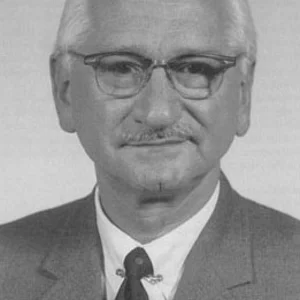
Anna Freud regularly collaborated there with legal scholar Joseph Goldstein and psychiatrist Albert Solnit, producing landmark works on children's rights and child welfare.
Typical Objects

Anna Freud kept detailed notebooks in which she recorded the behaviors and words of children during sessions or in the wartime nurseries. These systematic notes formed the empirical foundation of her theories.

Unlike adult psychoanalysis, which relies on free verbal association on the couch, Anna Freud used play as a gateway to the child's unconscious. Toys and drawings replaced the analyst's couch.

A tireless correspondent and writer, Anna Freud produced thousands of letters, clinical reports, and scholarly articles throughout her life, maintaining a dense international correspondence.

For adolescents and adults, Anna Freud used the classic Freudian setup: the patient lying down, the analyst seated behind and out of the patient's line of sight, encouraging free association.

The letters exchanged between father and daughter, held at the Library of Congress in Washington, reveal the deep intellectual and emotional collaboration that bound the two psychoanalysts for decades.
School Curriculum
Vocabulary & Tags
Key Vocabulary
Tags
Daily Life
Morning
Anna Freud rose early and began her day by reading the mail and writing letters — an international correspondence she managed with near-monastic rigor. She would have a light breakfast before preparing for her first analytical sessions, which generally began at 8 or 9 in the morning.
Afternoon
The afternoon was devoted to clinical sessions with children and adolescents, conducted at the Hampstead Clinic or at her home on Maresfield Gardens. She also supervised trainees, led seminars, and took part in the clinic's theoretical meetings, where cases were discussed collectively.
Evening
In the evenings, Anna Freud would write up her clinical notes, work on her articles and books, or receive colleagues and friends in the intellectual atmosphere of the family home. She also spent time with Dorothy Burlingham, her lifelong companion, around the family table that had been brought from Vienna.
Food
Anna Freud followed a simple, unelaborate diet typical of the Viennese bourgeoisie transplanted to London: bread, cheese, vegetables, and tea made up the bulk of her daily meals. She attached no particular importance to gastronomy, preferring the sobriety that allowed her to devote her energy to her work.
Clothing
Anna Freud was known for her sober, practical style: dark, well-cut but unassuming clothes, often strict dresses or tailored suits. In her later years, she enjoyed knitting some of her own garments — a manual activity she associated with relaxation and reflection.
Housing
After the 1938 exile, Anna Freud lived until her death in the family home at 20 Maresfield Gardens in Hampstead, a middle-class neighbourhood in north London. Her father's furniture and library had been faithfully reassembled, creating a preserved Viennese interior at the heart of London.
Historical Timeline
Period Vocabulary
Liens externes & ressources
Références
Œuvres
Introduction à la psychanalyse pour éducateurs
1927
Le Moi et les mécanismes de défense
1936
Young Children in Wartime (avec Dorothy Burlingham)
1942
Infants Without Families (avec Dorothy Burlingham)
1944
Normalité et pathologie chez l'enfant
1965
Beyond the Best Interests of the Child (avec Goldstein et Solnit)
1973