Sciences
Sciences fondamentales et appliquées
568 characters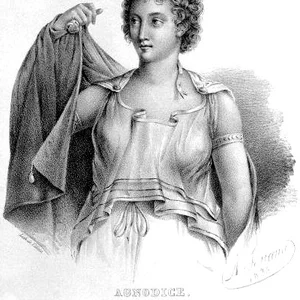
568 characters
Before Christ(28)
Agnodice
400 av. J.-C. — 360 av. J.-C.
Agnodice is a legendary figure from ancient Greece, presented as the first female physician and gynecologist in Athens in the 4th century BCE. According to the account of the Latin author Hyginus, she disguised herself as a man in order to study medicine under Herophilus in Alexandria, and then to practice in Athens.
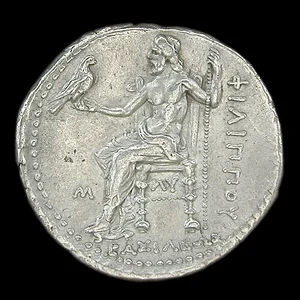
Alexander II of Macedon
King of Macedon from 370 to 368 BC, son of Amyntas III and elder brother of Philip II. His brief reign was marked by internal unrest before his assassination by Ptolemy of Aloros.
Anaxagoras of Clazomenae
499 av. J.-C. — 427 av. J.-C.
Greek pre-Socratic philosopher (c. 500–428 BC), born in Ionia. He introduced the concept of Nous (Cosmic Mind) as the organizing principle of the universe and was the first to offer a rational explanation for solar eclipses. A close friend of Pericles, he lived in Athens before being banished on charges of impiety.
Anaximander
609 av. J.-C. — 545 av. J.-C.
Pre-Socratic Greek philosopher born around 609 BCE in Miletus, a disciple of Thales. He proposed the apeiron (the boundless, indeterminate infinite) as the originating principle of all things, and created one of the earliest known maps of the world.
Anaximenes
584 av. J.-C. — 527 av. J.-C.
Anaximenes is a Pre-Socratic Greek philosopher of the Milesian school, active in the 6th century BC. A disciple of Anaximander, he held that air (pneuma) was the first principle of all things.
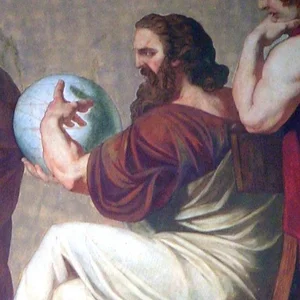
Aristarchus
Greek astronomer and mathematician of Antiquity, born on the island of Samos. He was the first to propose a heliocentric model placing the Sun, rather than the Earth, at the center of the known world.
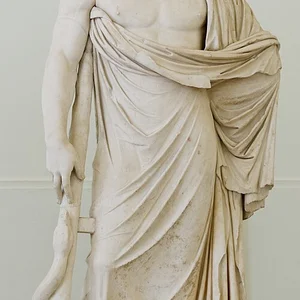
Asclepius
Greek god of medicine and healing, son of Apollo and Coronis. Raised by the centaur Chiron, he mastered the healing arts so completely that he could resurrect the dead — a transgression that led Zeus to strike him down with a thunderbolt.
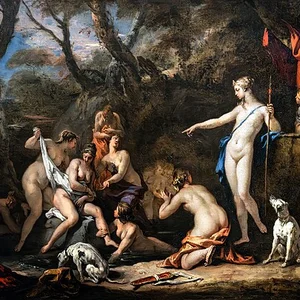
Callisto
Callisto is a nymph from Greek mythology and a companion of Artemis, goddess of the hunt. Seduced by Zeus, she was transformed into a bear by the jealous Hera, then placed in the sky as the constellation Ursa Major.
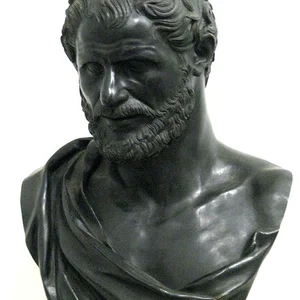
Democritus
460 av. J.-C. — 360 av. J.-C.
A Greek philosopher of the 5th century BC, Democritus is the father of atomic theory: he proposed that all matter is made up of indivisible particles called atoms. A student of Leucippus, he developed a materialist and rationalist philosophy that would have a lasting influence on scientific thought.
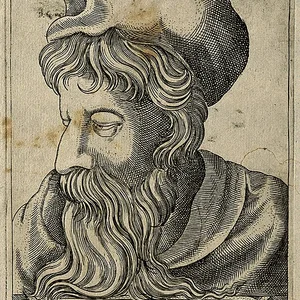
Empedocles
493 av. J.-C. — 433 av. J.-C.
Greek philosopher, physician, and statesman of the 5th century BC, from Akragas in Sicily. He is famous for his theory of the four elements (earth, water, fire, air) and two cosmic forces (Love and Strife). A major figure in Presocratic philosophy, he also had deep interests in medicine and natural phenomena.
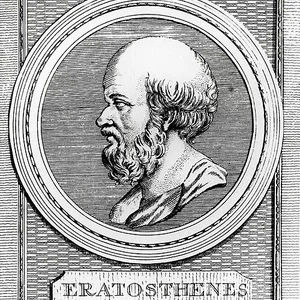
Eratosthenes
275 av. J.-C. — 193 av. J.-C.
Greek scholar of the 3rd century BC and director of the Library of Alexandria. He measured the circumference of the Earth with remarkable accuracy and laid the foundations of scientific geography.
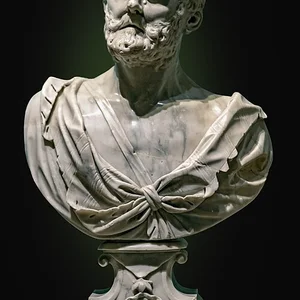
Heraclitus
534 av. J.-C. — 470 av. J.-C.
Pre-Socratic Greek philosopher born around 534 BC in Ephesus (present-day Turkey). He is famous for his doctrine of universal flux and fire as the fundamental principle of all things. His work, known under the title "On Nature", has survived only in fragments.
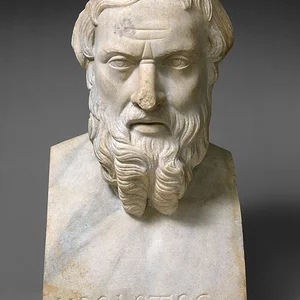
Herodotus
483 av. J.-C. — 424 av. J.-C.
Greek historian and geographer born around 484 BC in Halicarnassus, considered the "Father of History". He is the author of the Histories, a vast inquiry into the Greco-Persian Wars and the peoples of the ancient world.
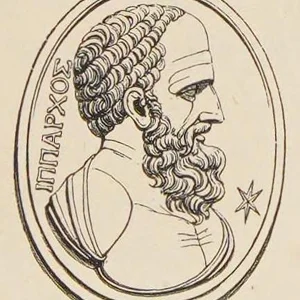
Hipparchus of Nicaea
189 av. J.-C. — 119 av. J.-C.
Hipparchus of Nicaea was a Greek astronomer, geographer, and mathematician of the 2nd century BC. Regarded as the greatest astronomer of antiquity, he discovered the precession of the equinoxes and compiled the first major star catalogue. He is also one of the founders of trigonometry.
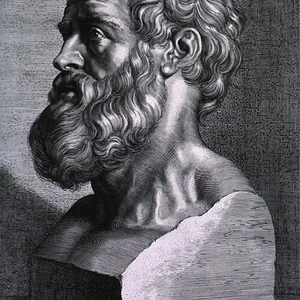
Hippocrates
459 av. J.-C. — 369 av. J.-C.
Greek physician of the 5th century BC, considered the "father of medicine". He established a rational and empirical approach to medicine, separating it from religious and magical practices. His body of work, the Hippocratic Corpus, has influenced Western medicine for more than two millennia.
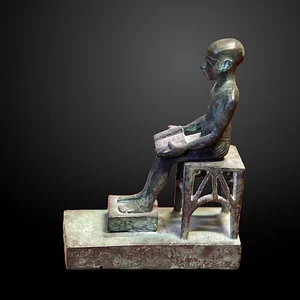
Imhotep
2800 av. J.-C. — 2700 av. J.-C.
A high official, architect, and physician of ancient Egypt in the 3rd millennium BC, Imhotep is considered the first known engineer and architect in history. Designer of the Step Pyramid of Saqqara, he was later deified as a god of medicine.
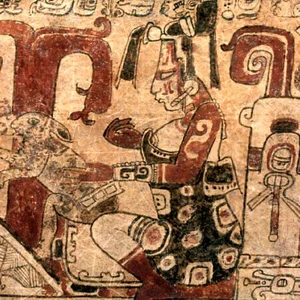
Ixchel
Ix Chel is a goddess of Maya mythology, venerated as a figure of the moon, medicine, weaving, and fertility. According to oral traditions and colonial written sources (Maya codices), she embodied both the creative power and the destruction associated with water and lunar cycles.
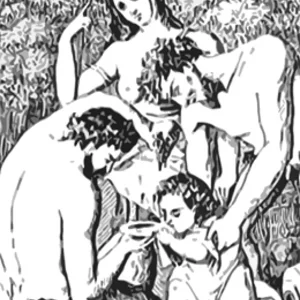
Panacea
Greek goddess of universal healing, daughter of Asclepius and Epione. She personified the remedy capable of curing all ailments. Her name, meaning “she who heals all” in Greek, is the origin of the word “panacea” in modern languages.
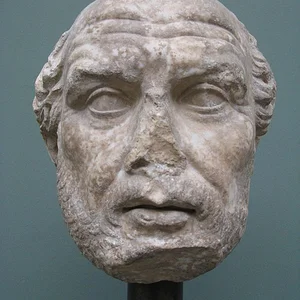
Phidias
499 av. J.-C. — 429 av. J.-C.
Phidias is considered the greatest sculptor of ancient Greece in the 5th century BC. He created the chryselephantine statue of Athena Parthenos and the statue of Zeus at Olympia, counted among the Seven Wonders of the Ancient World.
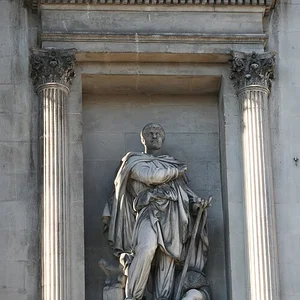
Pytheas
358 av. J.-C. — 288 av. J.-C.
A Greek navigator and geographer from Massalia (Marseille), Pytheas undertook an extraordinary voyage around 325 BCE toward northern Europe, reaching the mysterious island of Thule. He was one of the first to give a scientific description of tides and the Arctic regions.
Pythias
361 av. J.-C. — 400 av. J.-C.
Greek biologist and embryologist of the 4th century BC, wife of Aristotle. She is believed to have actively participated in the philosopher's natural research, particularly in embryology and marine biology. A rare female figure in ancient science.
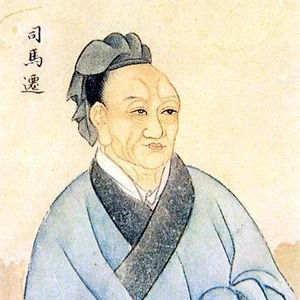
Sima Qian
144 av. J.-C. — 85 av. J.-C.
A historian and annalist of the Han dynasty, Sima Qian is the author of the Records of the Grand Historian (Shiji), considered the first great work of Chinese historiography. Despite disgrace and castration imposed by Emperor Wu, he completed this monumental work covering three millennia of history.
Sima Tan
164 av. J.-C. — 109 av. J.-C.
A Chinese astrologer and historian of the 2nd century BC, Sima Tan served as Grand Astrologer at the Han court. He undertook the writing of the *Shiji* (Records of the Grand Historian), a work his son Sima Qian completed after his death.
Sosigenes
Sosigenes of Alexandria was a Greek astronomer and mathematician of the 1st century BC. He advised Julius Caesar on the reform of the Roman calendar, which led to the Julian calendar in 46 BC. His work introduced the 365-day year with a leap day every four years.

Tapputi-Belatekallim
1200 av. J.-C. — ?
Tapputi-Belatekallim was a Babylonian perfume-maker of the second millennium BCE, often regarded as the first chemist in recorded history. Her name appears on a cuneiform tablet describing her perfume-making processes.
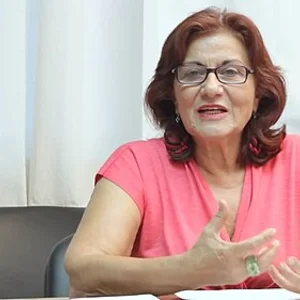
Theano
600 av. J.-C. — 500 av. J.-C.
A Greek philosopher and mathematician of the 6th century BCE, Theano was a student and later the wife of Pythagoras. She contributed to the development of the Pythagorean school and carried on its teachings after her master's death.
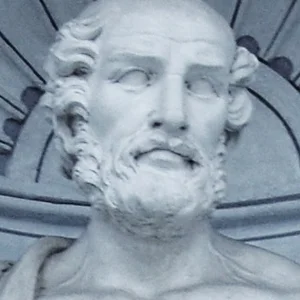
Theophrastus
370 av. J.-C. — 286 av. J.-C.
Greek philosopher and scholar, successor to Aristotle as head of the Lyceum in Athens. Considered the father of botany, he systematized the study of plants and continued his master's encyclopedic work.
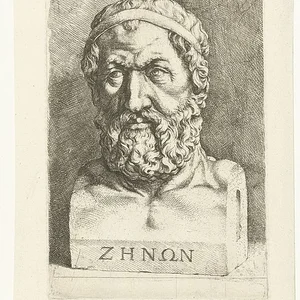
Zeno of Elea
489 av. J.-C. — 424 av. J.-C.
Pre-Socratic Greek philosopher and disciple of Parmenides, born around 489 BCE in Elea (Magna Graecia). He is famous for his paradoxes demonstrating the impossibility of motion and plurality, laying the groundwork for dialectic as a method of argumentation.
Antiquity(19)
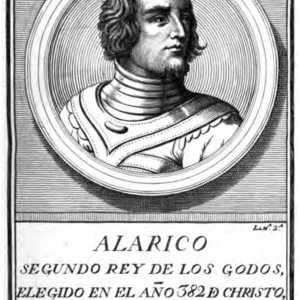
Alaric I
370 — 410
King of the Visigoths from 395 to 410, Alaric I is famous for leading the sack of Rome in 410, a symbolic event marking the beginning of the end of the Western Roman Empire.
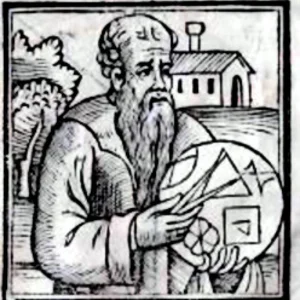
Apollonius of Perga
261 av. J.-C. — 189 av. J.-C.
Apollonius of Perga was a Greek geometer and astronomer of the Hellenistic period. He is famous for his major treatise, the Conics, which studies the curves obtained by slicing a cone (ellipse, parabola, hyperbola). His work profoundly influenced mathematics and astronomy right up to the modern era.
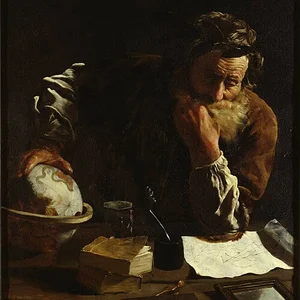
Archimedes
286 av. J.-C. — 211 av. J.-C.
Greek mathematician and physicist from Sicily (c. 287–212 BC), Archimedes is one of the greatest scholars of Antiquity. He revolutionized mathematics and physics by developing innovative methods for calculating areas and volumes, and by formulating the principles of levers and buoyancy.
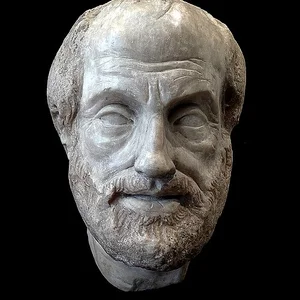
Aristotle
460 av. J.-C. — 401 av. J.-C.
Greek philosopher born in Stagira (384–322 BC), Aristotle founded his own school, the Lyceum, in Athens. He developed comprehensive systems of logic, metaphysics, ethics, and politics that profoundly influenced Western thought.
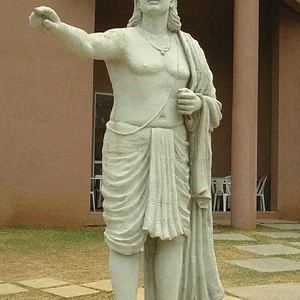
Aryabhata
476 — 550
Āryabhata was an Indian mathematician and astronomer born in 476, the first of the great scholars of India's classical age. Author of the Āryabhaṭīya, he set down major advances in arithmetic, algebra, and astronomy.
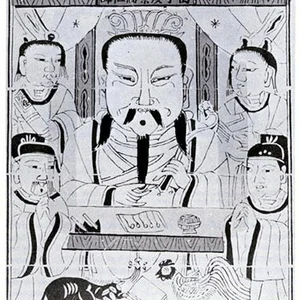
Cai Lun
48 — 121
An official at the imperial court during the Han dynasty, Cai Lun is credited with inventing paper in 105 AD. He refined a process using plant fibers, bark, and rags to produce a lightweight and inexpensive writing material.
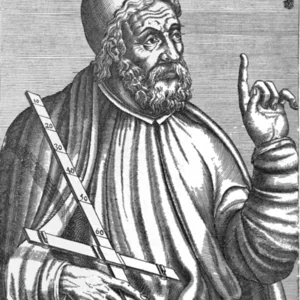
Claudius Ptolemy
100 — 170
Greek astronomer, mathematician, and geographer of the 2nd century, he developed a geocentric model of the universe that would dominate scientific thought for over 1,400 years. His encyclopedic work synthesizes ancient knowledge in astronomy, geography, and optics.
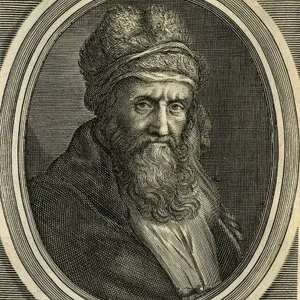
Diogenes Laërtius
A Greek biographer and doxographer of the 3rd century AD, Diogenes Laërtius is the author of Lives and Opinions of Eminent Philosophers, the principal source of knowledge about ancient Greek philosophers. His work compiles the biographies and views of more than 80 thinkers, from Thales to Epicurus.
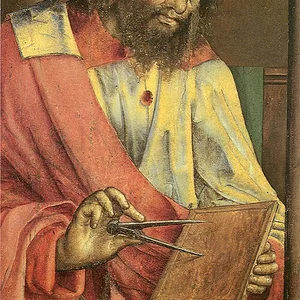
Euclid
333 av. J.-C. — 284 av. J.-C.
A Greek mathematician of Antiquity, Euclid lived in Alexandria in the 3rd century BC. He is the author of the Elements, the most influential mathematical work in history, which dominated the teaching of geometry for over 2,000 years.
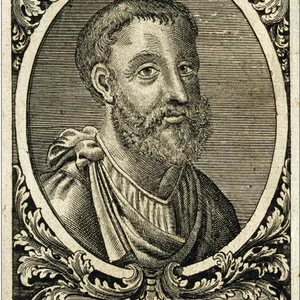
Galen
129 — 300
A Greek physician of the 2nd century AD, Galen served as doctor to the Roman emperors and became the greatest medical theorist of antiquity. His work in anatomy and physiology, based on the dissection of animals, dominated Western medicine for over a thousand years.
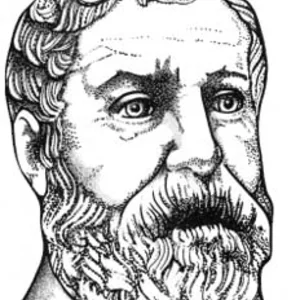
Hero of Alexandria
10 — 75
A Greek engineer and mathematician of the 1st century AD, Hero of Alexandria authored numerous mechanical inventions and foundational mathematical works. He designed the aeolipile, the first device to harness the power of steam, as well as automata and theatrical machines.
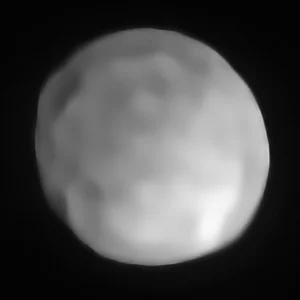
Hygiea
Hygiea is the Greek goddess of health, cleanliness, and hygiene. Daughter of Asclepius, god of medicine, she personified the prevention of disease. Her name gave rise to the word “hygiene” in all Western languages.
Hypatia of Alexandria
vers 355/370 — 415
Greek mathematician, astronomer, and philosopher of the 4th–5th centuries, she taught in Alexandria and advanced the sciences of antiquity. An iconic figure of female scholarship, she was murdered in 415 during religious unrest.
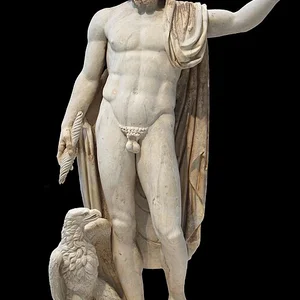
Jupiter
Jupiter is the supreme god of the Roman pantheon, master of the sky, lightning, and thunder. The Roman equivalent of Greek Zeus, he reigns over gods and men from Mount Olympus. He is the protector of Rome and the guarantor of cosmic order.
Philostratus of Athens
300 — ?
Greek writer and sophist of the 2nd–3rd century AD, Philostratus of Athens is celebrated for his Life of Apollonius of Tyana and his Lives of the Sophists. He moved in the literary circle of Empress Julia Domna in Rome.
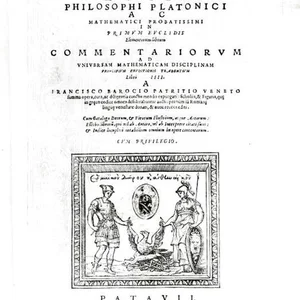
Proclus
412 — 485
Greek Neoplatonist philosopher of the 5th century, the last great master of the School of Athens. He was also an influential commentator on Greek mathematics, particularly on Euclid.
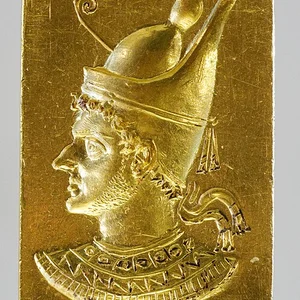
Ptolemy
250 — 350
A Greek astronomer and mathematician of the 2nd century CE, Ptolemy developed the geocentric model that dominated Western astronomy for over a thousand years. His major work, the Almagest, is a foundational treatise of ancient astronomy compiling observations and mathematical theories.
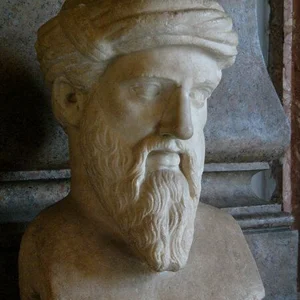
Pythagoras
582 av. J.-C. — 490 av. J.-C.
Greek philosopher and mathematician (c. 580–495 BC) from the island of Samos. Founder of a philosophical community in southern Italy, he is famous for his work in geometry, particularly the theorem bearing his name that relates the sides of a right triangle.
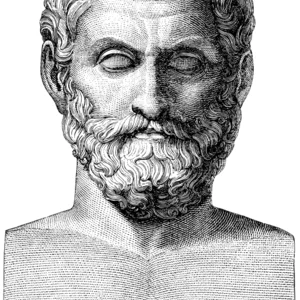
Thales
624 av. J.-C. — 545 av. J.-C.
A Greek philosopher and scholar of the 6th century BCE, Thales of Miletus is considered the founder of Greek geometry. He is famous for his geometric theorems — particularly the theorem bearing his name on the proportionality of line segments — and for his pioneering work in mathematics and astronomy.
Middle Ages(24)
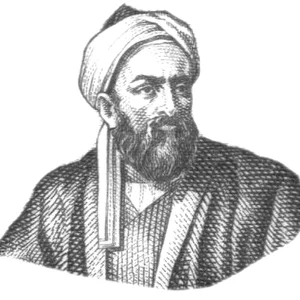
Al-Biruni
973 — 1048
A Persian polymath (973–1048), Al-Biruni was one of the greatest minds of the medieval Islamic world. Astronomer, mathematician, geographer, and historian, he wrote more than 150 works and was one of the first scholars to study India in a systematic, scientific way.
Al-Farabi
870 — 951
Persian philosopher, logician, and music theorist who wrote in Arabic, regarded as the “Second Teacher” after Aristotle. A major figure of medieval Islamic philosophy, he was a transmitter of Greek thought and a leading political thinker.
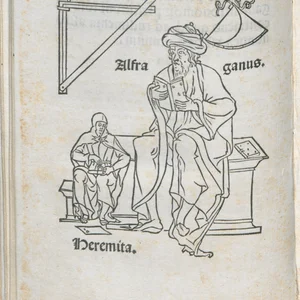
Al-Farghani
800 — 870
Al-Farghani was a 9th-century astronomer and mathematician, born in the region of Ferghana (present-day Uzbekistan). Under the patronage of the Abbasid caliphs in Baghdad, he wrote works that summarized and transmitted Ptolemaic astronomy to medieval Europe.
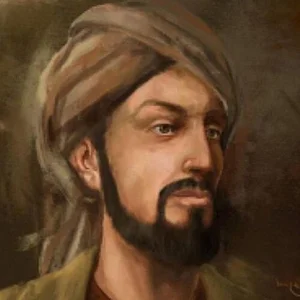
Al-Jazari
1164 — 1206
Engineer and inventor of the 12th–13th century active in Mesopotamia (Jazira), al-Jazari is famous for his treatise on automata and hydraulic machines. His major work describes more than fifty ingenious mechanical devices, making him one of the fathers of medieval mechanics.
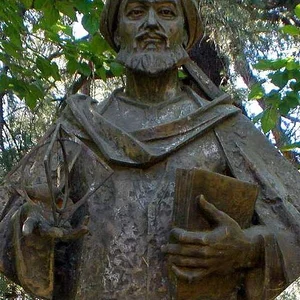
Al-Khwârizmî
780 — 850
A Persian mathematician, geographer, and astronomer of the 9th century, Al-Khwârizmî revolutionized mathematics by formalizing algebra and popularizing the Indo-Arabic decimal numeral system. His name gave rise to the word "algorithm", a concept fundamental to modern mathematics.
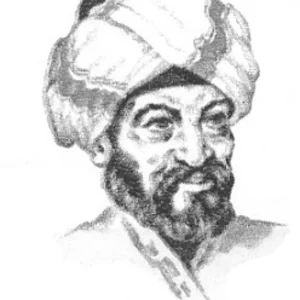
Al-Kindi
801 — 870
Al-Kindi is regarded as the first great philosopher to write in Arabic. A polymath of the 9th century, he worked at the House of Wisdom in Baghdad and played a major role in transmitting Greek thought to the Islamic world.
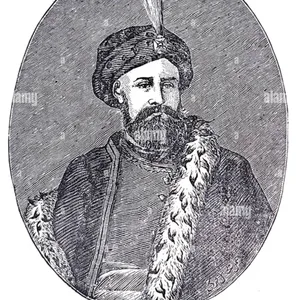
Al-Ma'mun
786 — 833
Seventh Abbasid caliph (reigned 813-833), son of Harun al-Rashid. A patron of scholars, he expanded the House of Wisdom (Bayt al-Hikma) in Baghdad, a center of translation and scientific research.
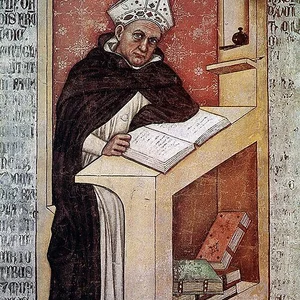
Albert the Great
1200 — 1280
A German Dominican of the 13th century — philosopher, theologian, and naturalist. Teacher of Thomas Aquinas in Paris and Cologne, he introduced the works of Aristotle into Christian thought and observed nature with an almost experimental spirit.
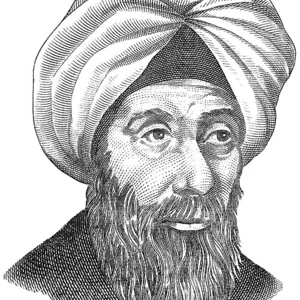
Alhazen
965 — 1039
Arab mathematician, physicist, and astronomer born in Basra around 965 and died in Cairo in 1039. Considered the father of modern optics, he revolutionized the understanding of light and vision. His major work, the Kitāb al-Manāẓir, profoundly influenced European scholars of the Middle Ages.
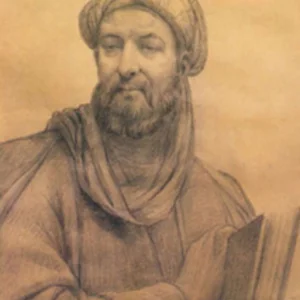
Avicenna
980 — 1037
A Persian physician and philosopher of the 10th century, Avicenna authored the Canon of Medicine, a reference work used in Europe and the Islamic world for five centuries. He synthesized Aristotle's philosophy with Islamic thought and made decisive contributions to the medical sciences.
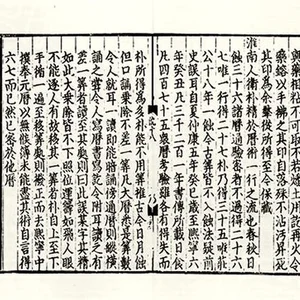
Bi Sheng
990 — 1052
Chinese artisan and inventor of the 11th century, Bi Sheng invented movable type printing using baked clay around 1040, under the Song Dynasty. His invention predates Gutenberg's in Europe by four centuries.

Brahmagupta
598 — 670
A 7th-century Indian mathematician and astronomer, Brahmagupta was the first to formulate arithmetic rules for zero and negative numbers. His major work, the Brahmasphutasiddhanta (628), influenced both Arabic and European mathematics.
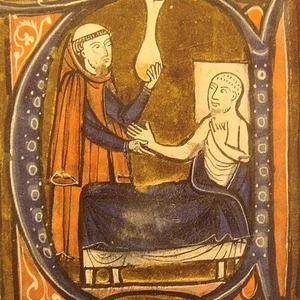
Gerard of Cremona
1114 — 1187
Gerard of Cremona was a 12th-century Italian translator, active in Toledo, who translated many Greek and Arabic scientific works from Arabic into Latin. He played a decisive role in transmitting ancient and Arabic knowledge to medieval Europe.
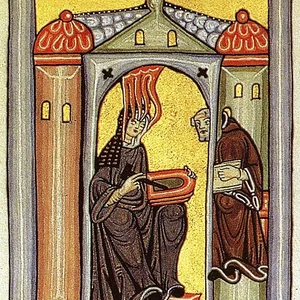
Hildegard of Bingen
1098 — 1179
A twelfth-century German Benedictine nun, Hildegard of Bingen was at once a mystic, composer, naturalist, and theologian. She founded her own monastery and corresponded with the most powerful figures of her time, including popes and emperors.
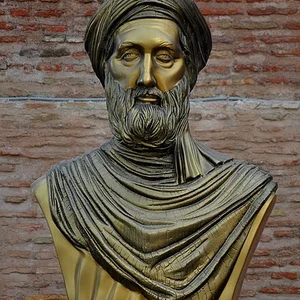
Ibn Khaldun
1332 — 1406
Muslim philosopher, sociologist, historiographer and historian
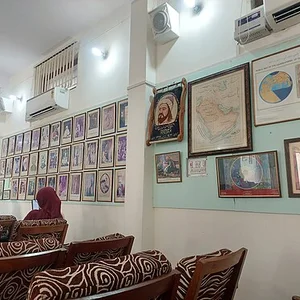
Ibn Sina
Ibn Sina, known in the West as Avicenna, was a Persian physician, philosopher, and scholar of the Islamic Golden Age. His Canon of Medicine served as a reference work in European and Arab universities for centuries.

Jutta of Sponheim
A German Benedictine recluse and mystic of the 12th century, Jutta of Sponheim founded a community of women at the monastery of Disibodenberg. She is best known as the spiritual teacher and educator of Hildegard von Bingen.
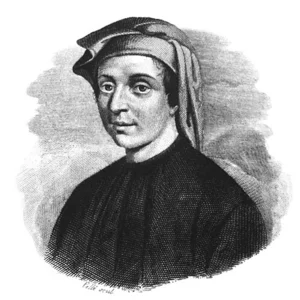
Leonardo Fibonacci
1170 — 1240
Leonardo Fibonacci, an Italian mathematician of the Middle Ages, is famous for introducing Arabic numerals and the decimal system to Europe. His major work, the Liber Abaci (1202), revolutionized Western mathematics. He is also known for the Fibonacci sequence, a numerical sequence with many applications.
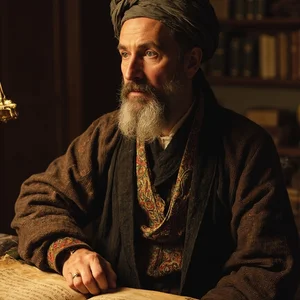
Mahmoud al-Kashgari
1005 — 1102
Mahmoud al-Kashgari was an 11th-century Turkic philologist and encyclopedist, author of the celebrated *Dīwān Lughāt al-Turk* (Compendium of the Turkic Dialects), a monumental work documenting the dialects, poems, and customs of Turkic-speaking peoples. Regarded as the father of Turkic linguistics, he drew up the first known map of the Turkic-speaking world.
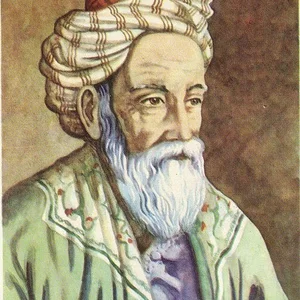
Omar Khayyam
1048 — 1131
An 11th-century Persian poet, mathematician, and astronomer, Omar Khayyam is celebrated for his quatrains (the Rubaiyat) and his work in algebra. He reformed the Persian calendar and solved cubic equations using geometric methods.
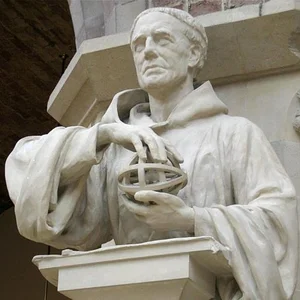
Roger Bacon
1220 — 1292
Roger Bacon, nicknamed Doctor Mirabilis, was a 13th-century English Franciscan friar, philosopher, and scholar. A pioneer of the experimental method, he championed observation and mathematics as the foundations of knowledge, long before modern science.

Theodore Meliteniotes
A 14th-century Byzantine astronomer and mathematician, a scholar and ecclesiastical dignitary in Constantinople. He is the author of a vast treatise on astronomy that synthesizes the Greek, Persian, and Latin traditions.
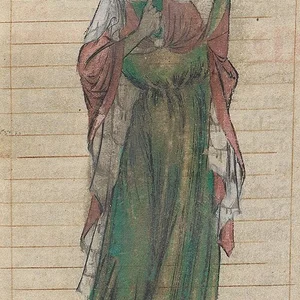
Trotula of Salerno
1110 — 1197
Female physician of the 11th century associated with the School of Medicine of Salerno, Europe's first organized medical institution. She is linked to foundational treatises on gynecology and obstetrics, though her exact biography remains a matter of debate.
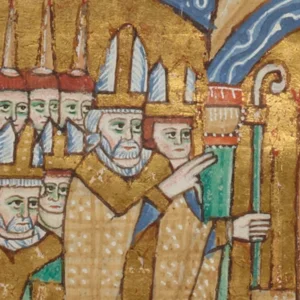
Urban II
1035 — 1099
Pope from 1088 to 1099, Urban II was the instigator of the First Crusade, proclaimed at the Council of Clermont in 1095. A Cluniac monk of French origin, he strengthened papal authority and continued the Gregorian Reform of the Church.
Renaissance(22)
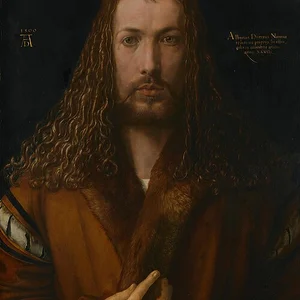
Albrecht Dürer
1471 — 1528
German Renaissance painter, printmaker, and theorist (1471–1528), Dürer is considered the greatest Germanic artist of his time. He introduced Italian Renaissance ideals to Northern Europe and revolutionized the art of woodcut and copper engraving.
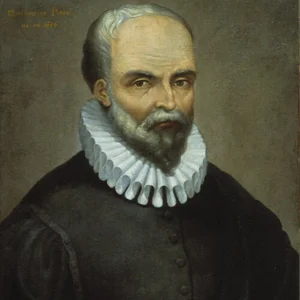
Ambroise Paré
1510 — 1590
French surgeon and anatomist (1510-1590) who revolutionized Renaissance surgery by abandoning brutal medieval practices. He laid the foundations of modern surgery through his anatomical innovations and more humane techniques.
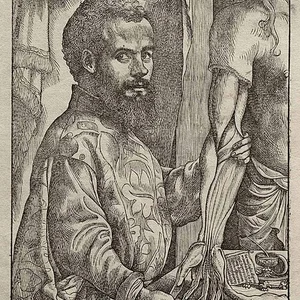
Andreas Vesalius
1515 — 1564
Flemish anatomist of the 16th century, Vesalius revolutionized the study of the human body through systematic dissection and direct observation. He is the author of De Humani Corporis Fabrica (1543), a founding work of modern anatomy that challenged the anatomical errors inherited from Galen.
Domenico Maria Novara
1454 — 1504
Italian Renaissance astronomer and mathematician, professor at the University of Bologna. He was the teacher and collaborator of Nicolaus Copernicus, with whom he carried out decisive astronomical observations.
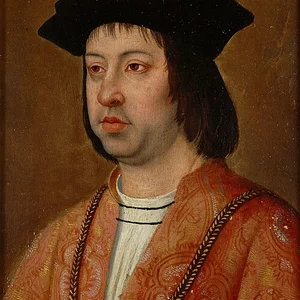
Ferdinand II of Aragon
1452 — 1516
King of Aragon, Ferdinand II married Isabella of Castile in 1469, uniting the two great Iberian crowns. Together, the “Catholic Monarchs” completed the Reconquista in 1492, financed Christopher Columbus's voyage, and laid the foundations of modern Spain.
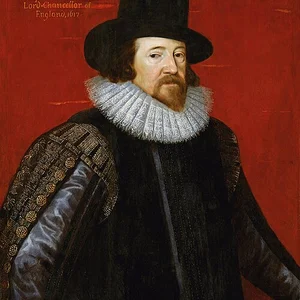
Francis Bacon
1561 — 1626
English philosopher and statesman (1561–1626), Francis Bacon is the founder of the modern experimental method. Lord Chancellor of England under James I, he championed the idea that science must be based on observation and induction rather than authority.
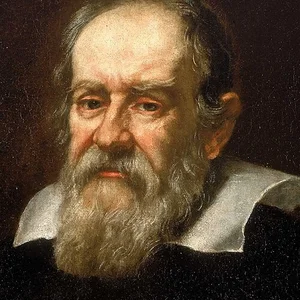
Galileo
1564 — 1642
Italian physicist, astronomer, and philosopher (1564–1642), Galileo revolutionized science by combining experimental observation with mathematics. Inventor of the astronomical telescope and champion of the heliocentric model, he laid the foundations of modern physics despite being tried by the Inquisition.
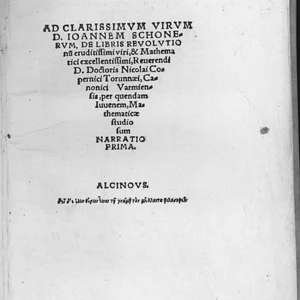
Georg Joachim Rheticus
1514 — 1574
Austrian mathematician and astronomer of the Renaissance. Copernicus's only disciple, he published the Narratio prima in 1540, the first printed account of the heliocentric system, and persuaded his master to publish De revolutionibus.
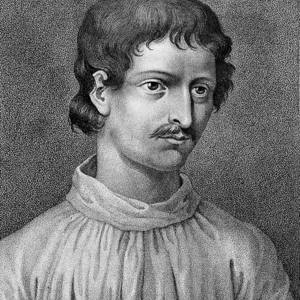
Giordano Bruno
1548 — 1600
An Italian Renaissance philosopher, cosmologist, and theologian, Giordano Bruno championed the idea of an infinite universe and a plurality of worlds. Condemned for heresy by the Inquisition, he was burned at the stake in Rome in 1600.
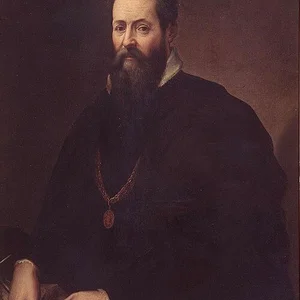
Giorgio Vasari
1511 — 1574
Giorgio Vasari was an Italian painter, architect, and writer of the Renaissance. Author of "Lives of the Most Excellent Painters, Sculptors, and Architects" (1550), he is considered the first art historian. He also designed the Uffizi Palace in Florence.
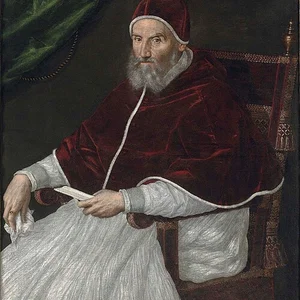
Gregory XIII
1502 — 1585
Gregory XIII was the 226th pope of the Catholic Church, from 1572 to 1585. Trained as a lawyer, he is best known for the calendar reform that bears his name, the Gregorian calendar, introduced in 1582 and still in use today.
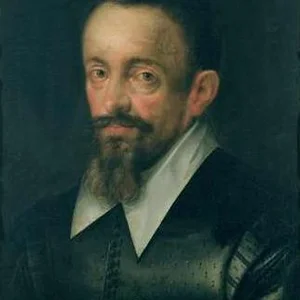
Johannes Kepler
1572 — 1630
German astronomer and mathematician (1572–1630), Kepler formulated the three laws of planetary motion that revolutionized astronomy. A disciple of Tycho Brahe, he confirmed Copernicus's heliocentric model through precise mathematical calculations.
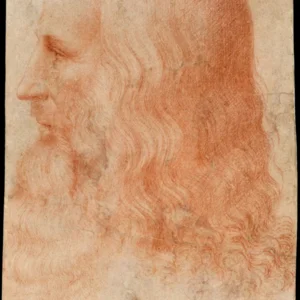
Leonardo da Vinci
1452 — 1519
Italian Renaissance painter, sculptor, architect, and engineer (1452–1519), Leonardo da Vinci embodies the ideal of the universal man. Creator of the Mona Lisa and The Last Supper, he revolutionized art through perspective and scientific observation, while pursuing research in anatomy, botany, and engineering.
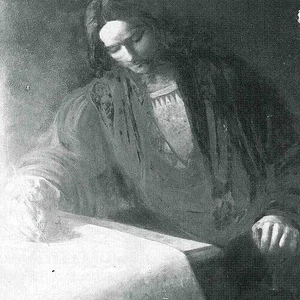
Martin Waldseemüller
1470 — 1520
A German Renaissance cartographer, he was the first to use the name “América” on a map, in 1507. His world map, printed in Saint-Dié-des-Vosges, depicts America for the first time as a distinct continent.
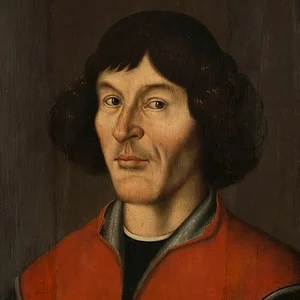
Nicolas Copernicus
1473 — 1543
Polish Renaissance astronomer, mathematician, and canon (1473–1543). He revolutionized our understanding of the universe by proposing the heliocentric model, placing the Sun at the center of the solar system rather than the Earth. His major work, De revolutionibus orbium coelestium, published shortly before his death, marks the beginning of the Scientific Revolution.
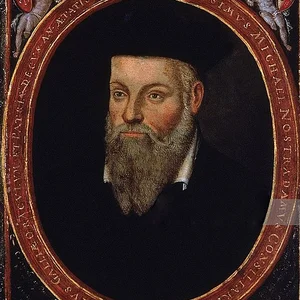
Nostradamus
1503 — 1566
A French physician and apothecary of the Renaissance, Nostradamus is famous for his Centuries, a collection of prophetic quatrains first published in 1555. He was also a respected practitioner during plague epidemics.
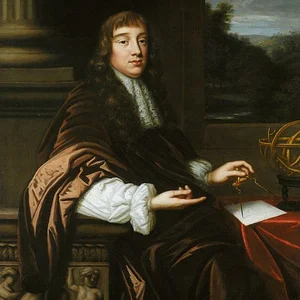
Robert Hooke
1635 — 1703
Robert Hooke was a 17th-century English polymath and scientist, a pioneer of microscopy. His work *Micrographia* (1665) revealed the microscopic world, and he introduced the term “cell.” He also formulated the law of elasticity that bears his name.
Ruy Faleiro
1500 — 1556
Portuguese cosmographer and astronomer of the 16th century, Rui Faleiro was Magellan's intellectual partner in planning the first circumnavigation of the globe. A specialist in navigation and cartography, he contributed to the theoretical design of the expedition but ultimately never set sail.
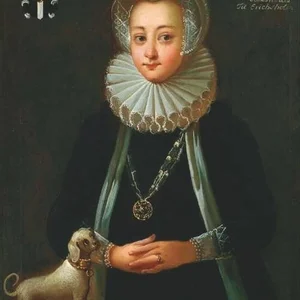
Sophie Brahé
A Danish astronomer and horticulturist of the 16th century, she actively collaborated with her brother Tycho Brahe in his astronomical observations. A passionate self-taught scholar, she also mastered chemistry, medicine, and genealogy.
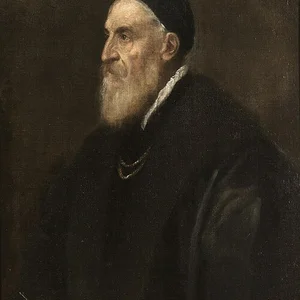
Titian
1490 — 1576
Titian, whose real name is Tiziano Vecellio, is the undisputed master of the Venetian school of the Renaissance. A prolific painter famous for his revolutionary use of color, he dominated the art scene for over sixty years and was the official portraitist of the greatest sovereigns of Europe.
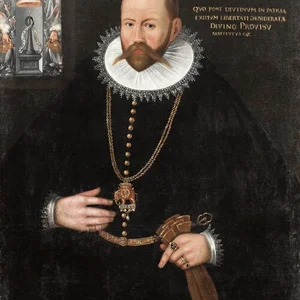
Tycho Brahe
1546 — 1601
A Danish Renaissance astronomer, Tycho Brahe is renowned for his astronomical observations of unmatched precision before the invention of the telescope. He discovered a supernova in 1572 and established that comets travel beyond the Moon, challenging Aristotelian cosmology.
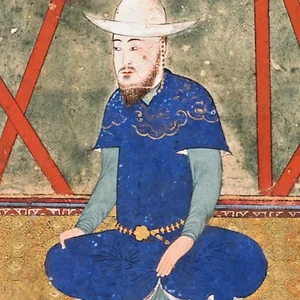
Ulugh Beg
1394 — 1449
Ulugh Beg, grandson of Tamerlane, was one of the greatest astronomers of the medieval Islamic world. As Timurid ruler of Samarkand, he turned his court into a thriving intellectual center, building an observatory whose star tables rivaled those of antiquity.
Early Modern(82)
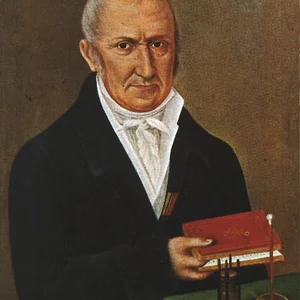
Alessandro Volta
1745 — 1827
Italian physicist (1745–1827), Alessandro Volta invented the electric battery in 1800, the first source of direct current in history. His work on electricity revolutionized experimental physics and paved the way for electrochemistry.
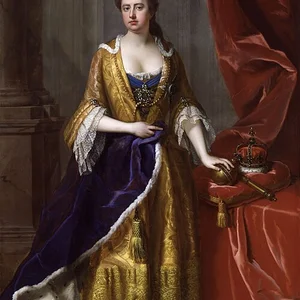
Anne of Great Britain
1665 — 1714
Queen of England, Scotland, and Ireland from 1702 to 1707, then first Queen of Great Britain following the Acts of Union of 1707. Her reign saw the rise of parliamentary government and the War of the Spanish Succession.
Anne Ponsarde
Anne Ponsarde is a female figure of the early modern period, associated with the world of natural sciences and practical knowledge in France. Her story reflects the role of women in the transmission of knowledge during the early modern era.
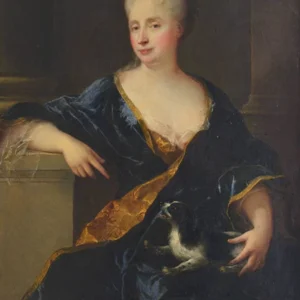
Anne Thérèse de Marguenat de Courcelles, marquise de Lambert
A Parisian writer and salon hostess (1647–1733), she presided over one of the most influential literary salons of the Regency period, frequented by Fontenelle, Montesquieu, and Marivaux. A pioneer in thinking about women's education, she championed their access to intellectual life.
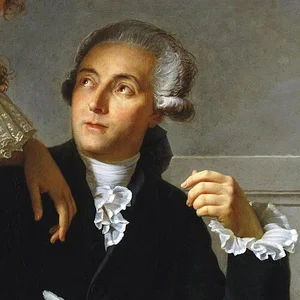
Antoine de Lavoisier
1743 — 1794
An 18th-century French chemist, Lavoisier is the founder of modern chemistry. He established the law of conservation of mass and identified oxygen, revolutionizing the understanding of chemical phenomena.
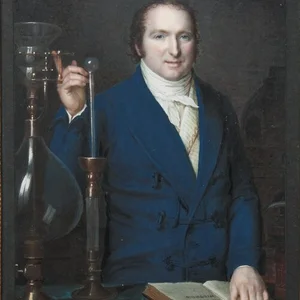
Antoine François de Fourcroy
1755 — 1809
French chemist and statesman, a collaborator of Lavoisier in the reform of chemical nomenclature. A member of the National Convention, he played a major role in reorganizing scientific education during the Revolution.
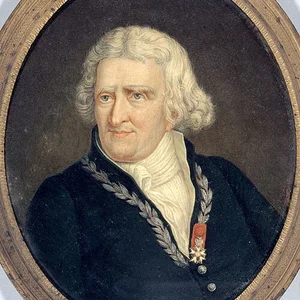
Antoine Parmentier
1737 — 1813
French military pharmacist and agronomist (1737-1813), famous for popularizing the potato as a food staple in France. A prisoner of war in Prussia, he discovered the nutritional value of the tuber and convinced Louis XVI to lift the ban on its cultivation.
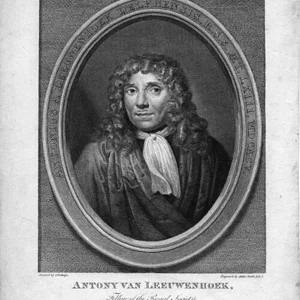
Antoni van Leeuwenhoek
A self-taught Dutch draper and scholar, Antoni van Leeuwenhoek (1632-1723) perfected the microscope and was the first to observe micro-organisms. His observations laid the foundations of microbiology.
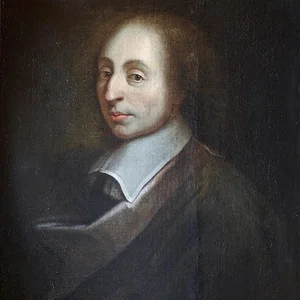
Blaise Pascal
1623 — 1662
French mathematician, physicist, philosopher and writer (1623–1662), Blaise Pascal revolutionized mathematics by founding probability theory and left a lasting mark on Christian philosophy through his exploration of doubt and faith. A major figure of the 17th century, he combined scientific rigor with metaphysical inquiry.
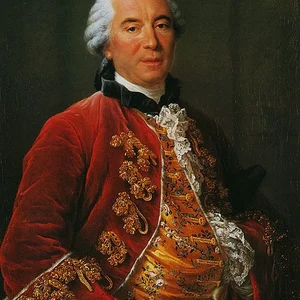
Buffon
1707 — 1788
French naturalist and mathematician of the 18th century, Buffon is one of the founders of modern natural history. As director of the Jardin du Roi in Paris, he proposed a groundbreaking theory on the age of the Earth and the evolution of species.
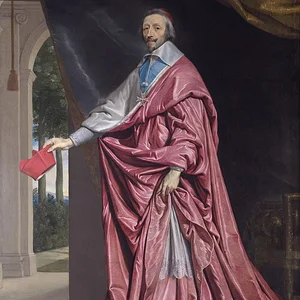
Cardinal de Richelieu
1585 — 1642
Cardinal and chief minister to Louis XIII, Richelieu strengthened royal authority and centralized power in France. He fought against the rebellious nobility and the Protestants, while drawing France into the Thirty Years' War.
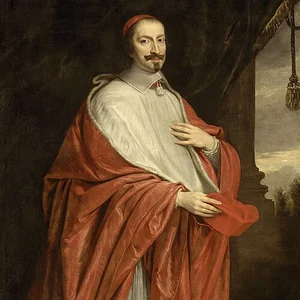
Cardinal Mazarin
1602 — 1661
Cardinal and chief minister of state of France, he governed the kingdom during Louis XIV's minority under the regency of Anne of Austria. Richelieu's successor, he signed the Treaties of Westphalia and overcame the Fronde to consolidate the monarchy.
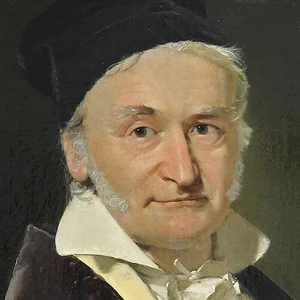
Carl Friedrich Gauss
1777 — 1855
Carl Friedrich Gauss (1777–1855) was a German mathematician, astronomer, and physicist regarded as one of the greatest mathematicians in history. He made groundbreaking contributions to algebra, geometry, number theory, and physics.
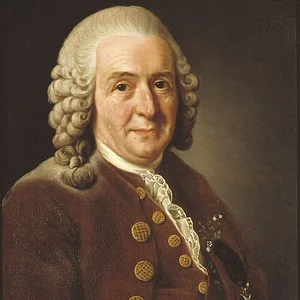
Carl von Linnaeus
1707 — 1778
An 18th-century Swedish naturalist, Carl von Linnaeus revolutionized the classification of living organisms. He created a binomial nomenclature system that made it possible to name and organize all known species in a rational and universal way.
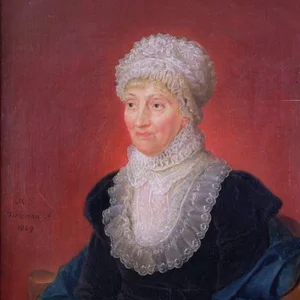
Caroline Herschel
1750 — 1848
A pioneering astronomer from Hanover, Caroline Herschel discovered eight comets and helped map the sky alongside her brother William. She was the first woman to receive the Gold Medal of the Royal Astronomical Society, in 1828.
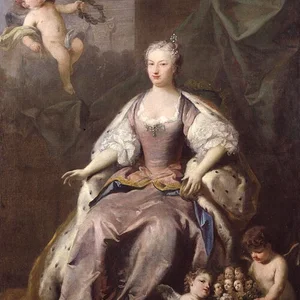
Caroline of Ansbach
1683 — 1737
Queen consort of Great Britain and Ireland (1727–1737), wife of George II. An Enlightenment intellectual, she corresponded with Leibniz and actively supported Newton in the philosophical and scientific dispute between the two men. Regent on several occasions, she wielded major political influence over the British monarchy.
Charles Maitland
1620 — 1691
Scottish surgeon (1668-1748), a pioneer of inoculation against smallpox in Great Britain. In 1721 he performed the first variolation in London on the family of Lady Mary Wortley Montagu, then the “Royal Experiment” on prisoners, paving the way for Jenner's vaccination.
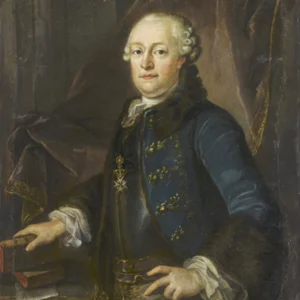
Charles Pierre Claret de Fleurieu
1738 — 1810
French navigator, hydrographer, and statesman (1738–1810), Fleurieu contributed to maritime cartography and oversaw several scientific expeditions. Minister of the Navy under Louis XVI, he played a key role in organizing France's major voyages of exploration.
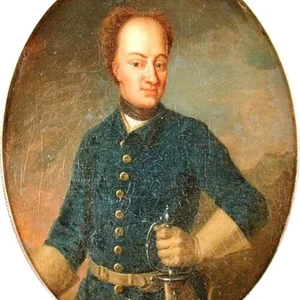
Charles XII of Sweden
King of Sweden from 1697 to 1718, Charles XII was one of the greatest military commanders of his era. He led the Great Northern War against a European coalition, winning the Battle of Narva (1700) before suffering a crushing defeat at Poltava (1709). He died during the siege of Fredriksten, marking the end of Swedish dominance in Europe.
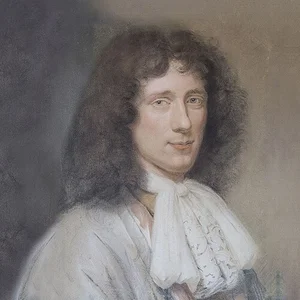
Christiaan Huygens
1629 — 1695
Dutch mathematician, physicist, and astronomer (1629–1695), Huygens invented the pendulum clock and developed the wave theory of light. He discovered Titan, Saturn's largest moon, and formulated the laws of elastic collision.
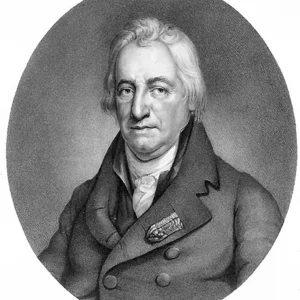
Claude Louis Berthollet
1748 — 1822
French chemist (1748–1822), collaborator of Lavoisier and founder of modern chemistry. He discovered the bleaching properties of chlorine and formulated the laws of chemical affinity, challenging the notion of complete chemical reactions.
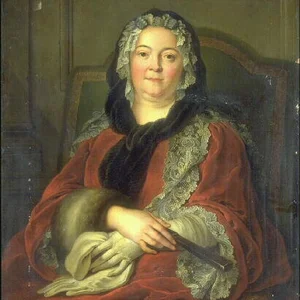
Claudine Guérin de Tencin
1682 — 1749
French novelist and salonnière (1682–1749), she hosted one of the most influential literary salons of the eighteenth century in Paris. The mother who abandoned d'Alembert at birth, she is the author of sentimental and historical novels such as the Mémoires du comte de Comminge.
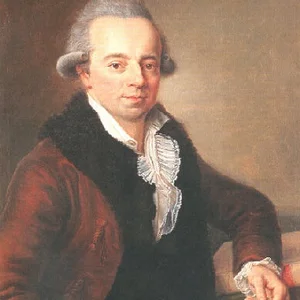
Daniel Bernoulli
1700 — 1782
Swiss mathematician and physicist (1700–1782), son of Johann Bernoulli. He is famous for his principle of hydrodynamics, which establishes the relationship between the velocity and pressure of fluids — the foundation of modern aerodynamics.
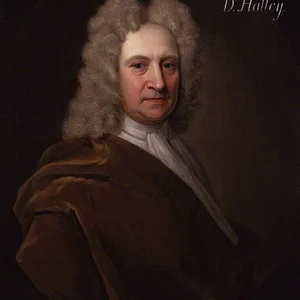
Edmond Halley
1656 — 1742
An English astronomer and scientist of the 17th–18th century, he is famous for calculating the orbit of the comet that bears his name and predicting its return. A friend and patron of Newton, he played an essential role in the publication of the Principia Mathematica.
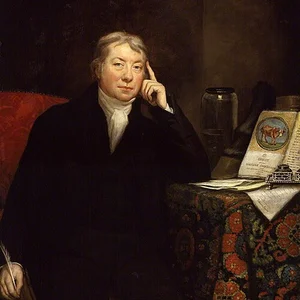
Edward Jenner
1749 — 1823
English physician and scientist (1749-1823), pioneer of vaccination. In 1796, he developed the first vaccine in history by inoculating cowpox to protect against human smallpox.
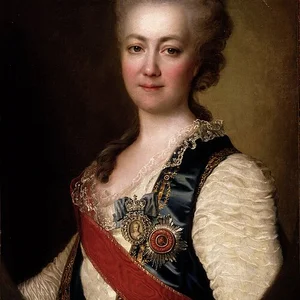
Ekaterina Vorontsova-Dashkova
1743 — 1810
A learned Russian aristocrat and close associate of Catherine II, she played a part in the coup d'état of 1762. The first woman to head the Russian Academy of Sciences, she founded the Russian Academy devoted to the language.
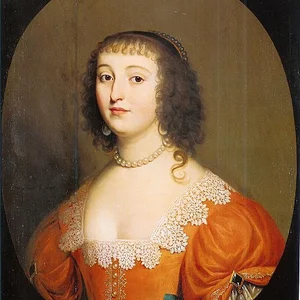
Elisabeth of Bohemia
1618 — 1680
Princess Palatine (1618–1680), daughter of King Frederick V of Bohemia. A self-taught philosopher, she engaged in a celebrated correspondence with Descartes, challenging his mind-body dualism. She ended her life as abbess of the Lutheran convent of Herford.
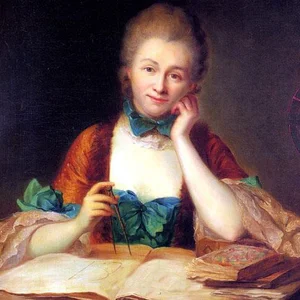
Émilie du Châtelet
1706 — 1749
Émilie du Châtelet (1706-1749) was a French physicist and mathematician of the Enlightenment. She translated and annotated Newton's Principia Mathematica, a work that remained the standard French reference until the 19th century. Voltaire's companion, she demonstrated that kinetic energy is proportional to the square of velocity.
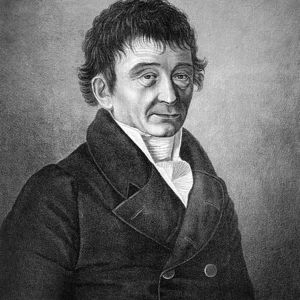
Ernst Chladni
1756 — 1827
German physicist and musician, considered the father of modern acoustics. He revealed the vibration modes of plates through the figures that bear his name.
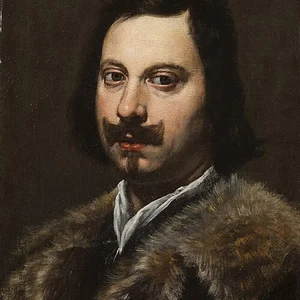
Evangelista Torricelli
1608 — 1647
Italian physicist and mathematician of the 17th century, student of Galileo. He invented the mercury barometer in 1643 and demonstrated the existence of atmospheric pressure, paving the way for modern experimental physics.
Florin Périer
1605 — 1672
Florin Périer (c. 1605-1672) was a magistrate and jurist from the Auvergne region, a councillor at the cour des aides (tax court) of Clermont. The brother-in-law of Blaise Pascal, in 1648 he carried out the Puy de Dôme experiment, which demonstrated the weight of air.
Fontenelle
1657 — 1757
A French writer and scholar of the 17th–18th century, Fontenelle popularized science for the general public. Known for his Conversations on the Plurality of Worlds and his role as perpetual secretary of the Académie des sciences, he embodies the spirit of the Enlightenment.
Frederick II of Denmark
King of Denmark and Norway from 1559 to 1588, Frederick II waged the Northern Seven Years' War against Sweden and was an enlightened patron of the arts, most notably supporting the astronomer Tycho Brahe. He commissioned the construction of Kronborg Castle in Elsinore.
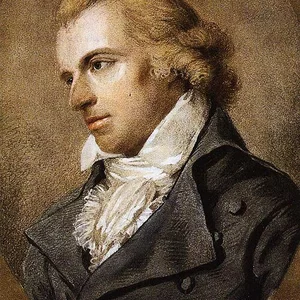
Friedrich Schiller
1759 — 1805
German poet, playwright, and philosopher of the Enlightenment and Sturm und Drang, Schiller is one of the major figures of Weimar Classical literature. A close friend of Goethe, he championed the ideals of freedom, human dignity, and moral elevation through art.
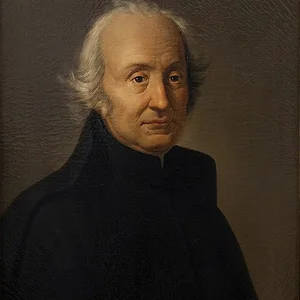
Giuseppe Piazzi
1746 — 1826
Giuseppe Piazzi was an Italian astronomer and mathematician, a priest of the Theatine order. He is famous for discovering Ceres in 1801, the first asteroid (now classified as a dwarf planet) in the belt located between Mars and Jupiter.
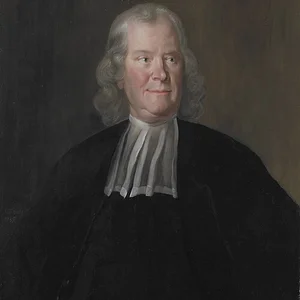
Herman Boerhaave
1668 — 1738
Dutch physician, botanist and chemist, professor at the University of Leiden. Considered the founder of modern clinical teaching and one of the greatest physicians of his era, he trained students who came from all over Europe.
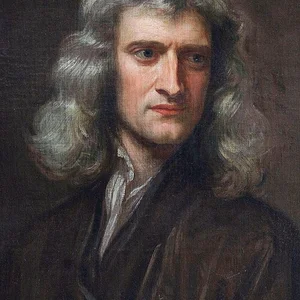
Isaac Newton
1643 — 1727
English mathematician, physicist and astronomer (1643–1727), Isaac Newton is one of the greatest scientists in history. He revolutionized science by formulating the laws of motion and universal gravitation, and by developing calculus.
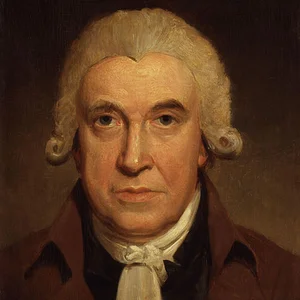
James Watt
1736 — 1819
Scottish engineer and inventor (1736–1819), James Watt greatly improved Newcomen's steam engine in 1769, making it efficient and economical. His invention revolutionized industry and transportation, earning him a place as one of the fathers of the Industrial Revolution.
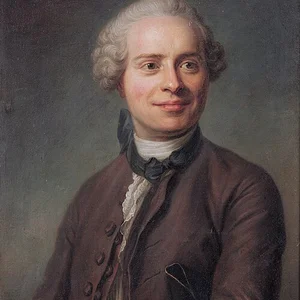
Jean le Rond d'Alembert
1717 — 1783
A mathematician and philosopher of the Enlightenment, he co-edited the great Encyclopédie with Diderot and wrote its famous Preliminary Discourse. He formulated the mechanical principle that bears his name and embodied the encyclopédiste ideal of bringing together all human knowledge.
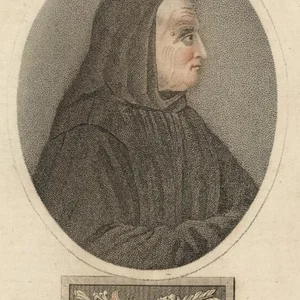
Jean Mabillon
1632 — 1707
A Benedictine monk of the Congregation of Saint-Maur, Jean Mabillon is the founder of diplomatics, the critical science of authenticating charters and ancient documents. His major work, De re diplomatica (1681), laid the foundations of modern historical method.
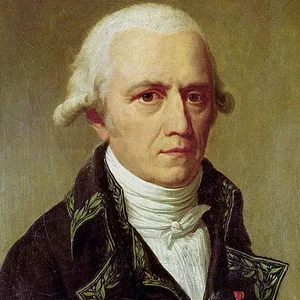
Jean-Baptiste Lamarck
1744 — 1829
French naturalist and zoologist (1744–1829), Lamarck developed a theory of evolution based on the adaptation of organisms to their environment and the inheritance of acquired characteristics. A professor at the Paris Museum of Natural History, he laid the foundations of transformism, a precursory vision of evolution predating Darwin.
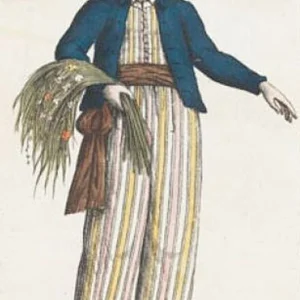
Jeanne Barret
1740 — 1807
explorer and botanist (1740-1807)

Johann Siegesbeck
Eighteenth-century German physician and botanist, director of the Saint Petersburg botanical garden. He is best known for his fierce opposition to Carl von Linné's sexual system of plant classification.
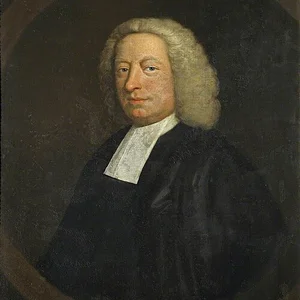
John Colson
1680 — 1760
John Colson was an eighteenth-century British mathematician, Lucasian Professor of Mathematics at the University of Cambridge. He is best known for translating Newton's treatise on fluxions into English.
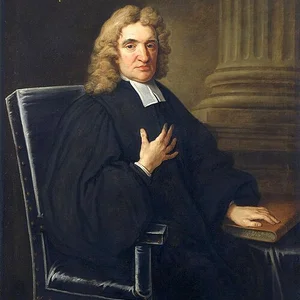
John Flamsteed
1646 — 1720
John Flamsteed was an English astronomer, the first Astronomer Royal of England, appointed by Charles II in 1675. He led the founding of the Greenwich Observatory and compiled a star catalogue of unprecedented precision, recording nearly 3,000 stars.
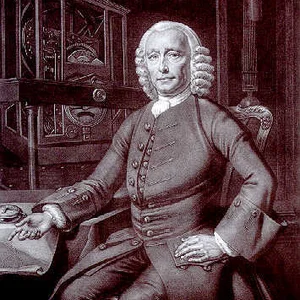
John Harrison
1693 — 1776
A self-taught British clockmaker (1693–1776), John Harrison solved one of the greatest scientific challenges of his era: the precise determination of longitude at sea. His marine chronometer H4 (1759) revolutionized navigation and saved countless lives.
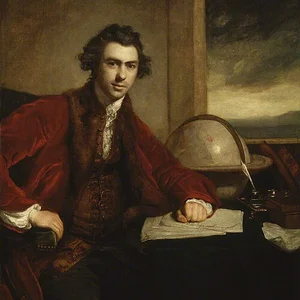
Joseph Banks
1743 — 1820
British naturalist and botanist (1743–1820), Joseph Banks took part in James Cook's first voyage around the world (1768–1771) aboard the Endeavour. He brought back thousands of previously unknown plant specimens and served as President of the Royal Society for 41 years.
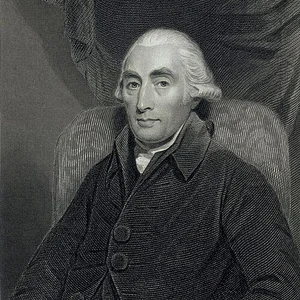
Joseph Black
1728 — 1799
Joseph Black (1728-1799) was a Scottish chemist and physicist, a major figure of the Enlightenment. He discovered “fixed air” (carbon dioxide) and formulated the concepts of latent heat and specific heat, laying the foundations of thermodynamics.
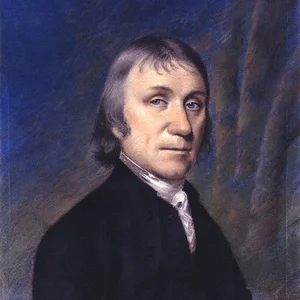
Joseph Priestley
1733 — 1804
Eighteenth-century English chemist, theologian and philosopher, famous for isolating oxygen in 1774. A dissenting minister, he was also a liberal thinker forced into exile in the United States.
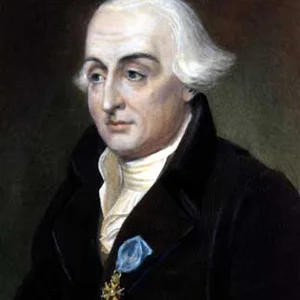
Joseph-Louis Lagrange
1736 — 1813
Franco-Sardinian mathematician and astronomer (1736–1813), considered one of the greatest mathematicians of the 18th century. He revolutionized mechanics with his analytical formulation and founded the calculus of variations.

Katharina Gsell
1707 — 1773
Katharina Gsell (c. 1707–1773) was the daughter of Swiss painter Georg Gsell, who was employed at the imperial court of Saint Petersburg. In 1734 she married the mathematician Leonhard Euler, one of the greatest scholars of the 18th century, and was the companion of his entire scientific life.
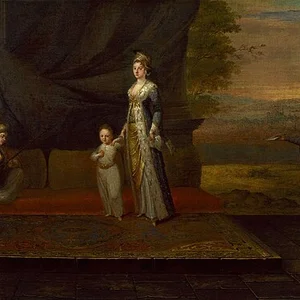
Lady Montagu
An English aristocrat and woman of letters of the 18th century, Mary Wortley Montagu accompanied her husband, an ambassador, to Constantinople. There she discovered variolation and introduced it to Western Europe, saving countless lives before Jenner's development of the vaccine.
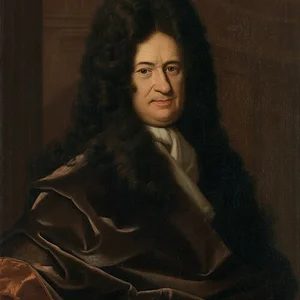
Leibniz
1646 — 1716
A German philosopher and mathematician of the 17th century, Leibniz contributed to the scientific revolution by developing infinitesimal calculus and proposing an original philosophy grounded in monadology. He shaped modern thought through his theory of pre-established harmony and his metaphysical optimism.
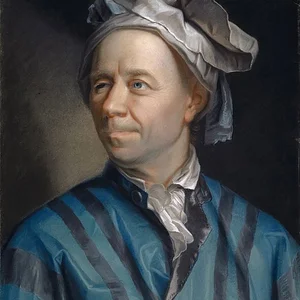
Leonhard Euler
1707 — 1783
Swiss mathematician, physicist, and engineer (1707–1783), Euler is one of the greatest scientists of the 18th century. Prolific and innovative, he contributed to nearly every field of mathematics and physics, despite the blindness that affected him from 1738 onward.
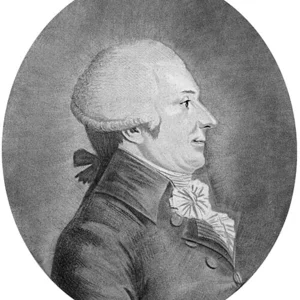
Louis-Bernard Guyton de Morveau
1737 — 1816
A French chemist, jurist and statesman, Guyton de Morveau was one of the architects of the reform of chemical nomenclature alongside Lavoisier in 1787. As a member of the National Convention, he also took part in the Revolution and contributed to the founding of the École Polytechnique.
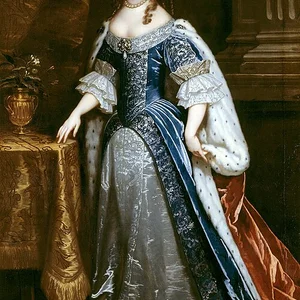
Margaret Cavendish
1617 — 1673
Seventeenth-century English natural philosopher and woman of letters (1623–1673), she developed her own theories on the nature of matter, drawing on atomism while proposing an original vitalist materialism. The first woman to attend a meeting of the Royal Society, in 1667.
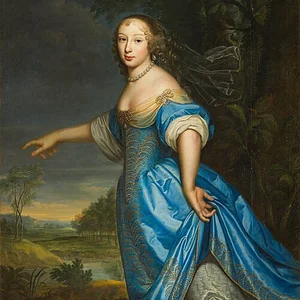
Marguerite de La Sablière
A salonnière and woman of letters of the seventeenth century, she presided over one of the most celebrated salons in Paris, bringing together poets, philosophers, and scholars. A patron of La Fontaine, she welcomed him into her home for nearly twenty years. Passionate about science, she studied astronomy and natural philosophy under scholars such as Bernier.
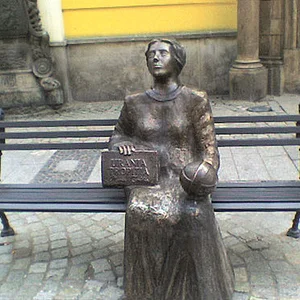
Maria Cunitz
1607 — 1664
A Silesian astronomer of the 17th century, Maria Cunitz published Urania Propitia in 1650, a simplification of Kepler's tables written in both Latin and German. Considered the most remarkable female scholar of her time, she made Keplerian astronomy accessible to a wider audience.
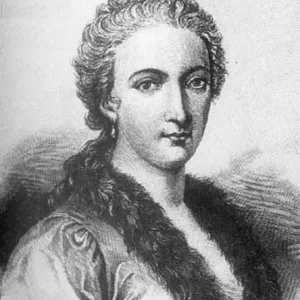
Maria Gaetana Agnesi
1718 — 1799
An Italian mathematician and philosopher of the 18th century, Maria Gaetana Agnesi is celebrated for her treatise Instituzioni analitiche (1748), a pioneering pedagogical synthesis of differential and integral calculus. The first woman appointed as a professor of mathematics at the University of Bologna, she later devoted her life to charity and spirituality.
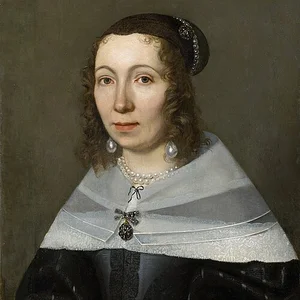
Maria Sibylla Merian
1647 — 1717
A German naturalist and artist of the 17th century, Maria Sibylla Merian was a pioneer in the study of insects and their metamorphosis. She led an expedition to Suriname (1699–1701) to observe and illustrate tropical flora and fauna, at a time when women rarely had access to the sciences.
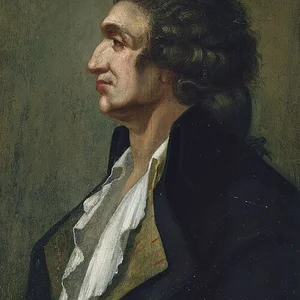
Marie Jean Antoine Nicolas de Condorcet
Mathematician and Enlightenment philosopher (1743–1794), Condorcet served as Permanent Secretary of the Academy of Sciences, championed equal rights for women and enslaved people, and played an active role in the French Revolution. He died during the Reign of Terror, having written his intellectual testament on human progress.
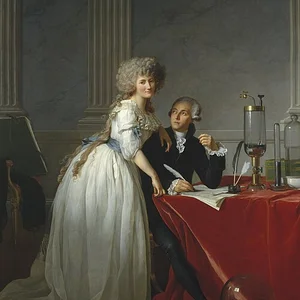
Marie-Anne Paulze
French chemist and illustrator (1758–1836), essential collaborator of Antoine Lavoisier. She translated English scientific treatises and created the engravings for the landmark "Elementary Treatise on Chemistry" (1789), contributing to the chemical revolution.
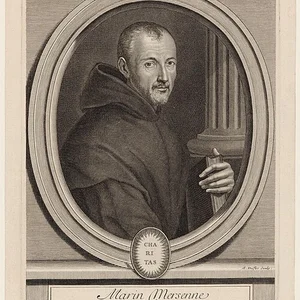
Marin Mersenne
1588 — 1648
Marin Mersenne was a French Minim friar, mathematician, and physicist of the 17th century. The driving force behind a vast scholarly network across Europe, he was a forerunner of the scientific academy and a pioneer of acoustics.
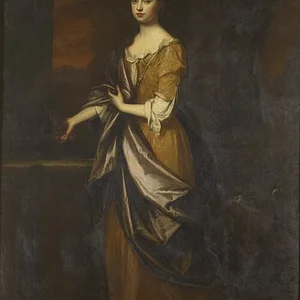
Mary Pitt
1676 — ?
Mary Pitt (1676-) was an English courtesan moving in circles close to British royal power at the end of the 17th century. Her role at court places her within a context of spreading scientific and cultural ideas characteristic of the era.
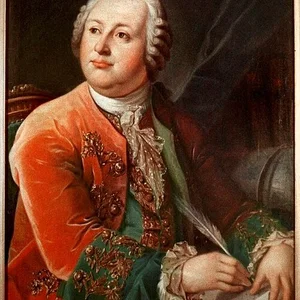
Mikhail Lomonosov
1711 — 1765
An 18th-century Russian scholar — chemist, physicist, and astronomer. A pioneer of Russian science, he formulated a principle of conservation of matter and helped found Moscow University.
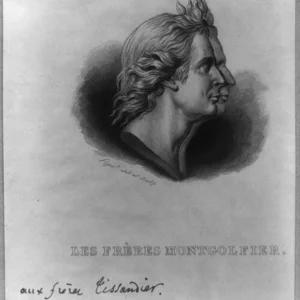
Montgolfier (brothers)
French inventor brothers who achieved the first manned hot-air balloon flight in 1783. Their invention revolutionized the concept of aerial travel and paved the way for aeronautics.
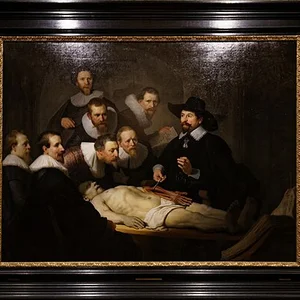
Nicolas Tulp
A Dutch physician and anatomist of the 17th century, Nicolas Tulp is famous for his public anatomy lessons in Amsterdam. He was immortalized by Rembrandt's painting *The Anatomy Lesson of Dr. Nicolaes Tulp* (1632).
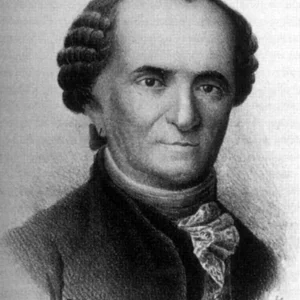
Philibert Commerson
1727 — 1773
French physician, naturalist, and explorer (1727–1773), Commerson took part in Bougainville's circumnavigation (1766–1769) as the official botanist. He described thousands of plant and animal species unknown to Europe, including the bougainvillea, which he named in honour of his expedition commander.
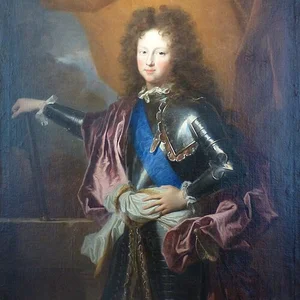
Philippe II d'Orléans
Regent of France from 1715 to 1723 during the minority of Louis XV, Philippe II d'Orléans governed the kingdom following the death of Louis XIV. A curious and libertine spirit, he was also a musician, painter, and patron of the arts, embodying the transition between the Grand Siècle and the Enlightenment.
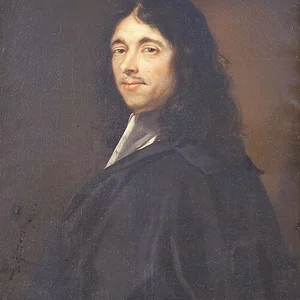
Pierre de Fermat
1607 — 1665
A French mathematician and magistrate of the 17th century, Pierre de Fermat left a lasting mark on the history of mathematics through his fundamental contributions to number theory, analytic geometry, and probability theory. Although he worked primarily as a counselor in the Parliament of Toulouse, his mathematical work inspired generations of mathematicians to come.
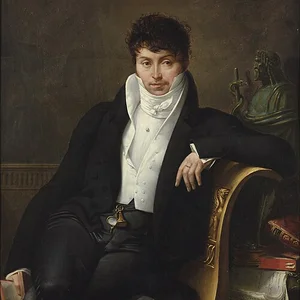
Pierre Jean Georges Cabanis
1757 — 1808
French physician, physiologist, and philosopher (1757–1808), a leading figure among the Idéologues. He sought to establish a science of man by linking the physical functions of the body to moral phenomena.
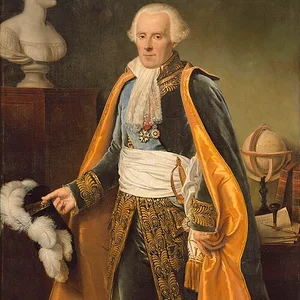
Pierre-Simon Laplace
1749 — 1827
French mathematician and astronomer (1749–1827), Laplace authored the Traité de mécanique céleste and developed the theory of probability. He formulated the nebular hypothesis on the formation of the Solar System.
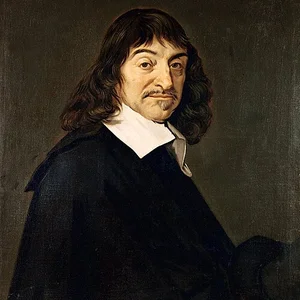
René Descartes
1596 — 1650
French philosopher and mathematician of the 17th century, founder of modern philosophy and rationalism. Known for his method of systematic doubt and his famous principle "I think, therefore I am." He revolutionized mathematics by creating analytic geometry.
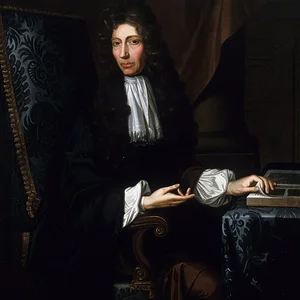
Robert Boyle
1627 — 1691
Irish physicist and chemist of the 17th century, regarded as one of the founders of modern chemistry and of the experimental method. He is famous for the law that bears his name on the compressibility of gases and for his work 'The Sceptical Chymist'.
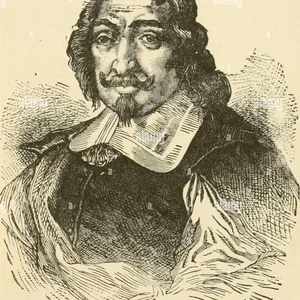
Roberval
1602 — 1675
French mathematician and physicist (1602–1675), professor at the Collège Royal de France. He is renowned for inventing the balance scale that bears his name, and for his pioneering work in geometry and mechanics.

Sarah Chiswell
Young Englishwoman who died of smallpox around 1714, and a friend of Lady Mary Wortley Montagu. Her tragic death prompted Lady Mary to champion variolation in England after observing the practice in the Ottoman Empire, indirectly contributing to the history of vaccination.
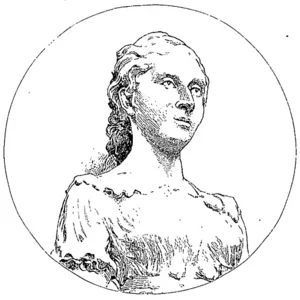
Sophie Germain
1776 — 1831
French mathematician and philosopher (1776–1831), a pioneer in science at a time when women were excluded from it. She made contributions to number theory and elasticity, and corresponded with Gauss under a male pseudonym.
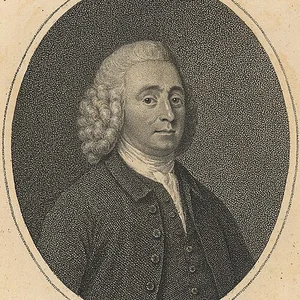
Thomas Dimsdale
1712 — 1800
Eighteenth-century British physician, a pioneer of variolation (inoculation against smallpox). He gained European fame by inoculating Empress Catherine II of Russia and her son in 1768.
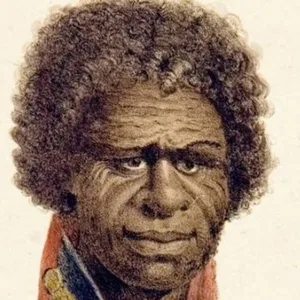
Tupaia
1725 — 1770
Tupaia was a Polynesian navigator, priest, and artist from Ra'iatea. A master of traditional navigation, he joined James Cook's expedition in 1769 and drew up a remarkable chart of more than 130 Pacific islands, a unique testament to Polynesian geographic knowledge.
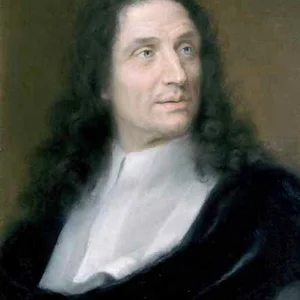
Vincenzo Viviani
1622 — 1703
Vincenzo Viviani was an Italian mathematician and physicist, the last disciple and assistant of Galileo. He worked to preserve and publish his master's scientific legacy and contributed to geometry and the study of motion.

Wang Zhenyi
1768 — 1797
Wang Zhenyi was a Chinese astronomer, mathematician, and poet of the Qing dynasty. Despite the conventions of her time that kept women away from learning, she popularized astronomy and championed intellectual equality between men and women.
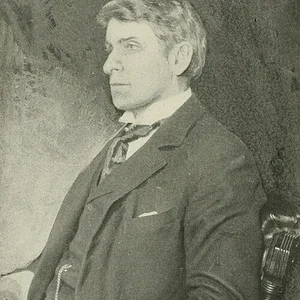
William Griggs
1650 — ?
William Griggs was a physician in the Massachusetts colony, remembered for diagnosing a supernatural cause for the convulsions of young girls in Salem in 1692, triggering one of the most famous witch hunts in American colonial history.
19th Century(121)
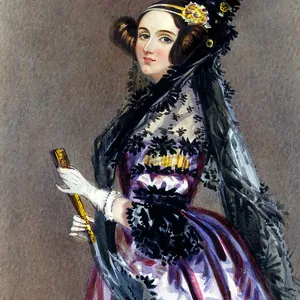
Ada Lovelace
1815 — 1852
British mathematician (1815-1852), pioneer of computing and programming. She wrote the first algorithm intended to be executed by a machine, working on Charles Babbage's Analytical Engine. Her legacy makes her a founding figure of theoretical computer science.
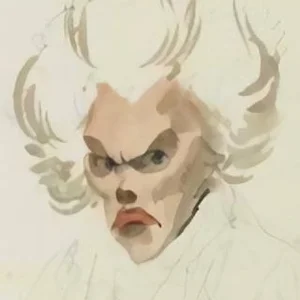
Adrien-Marie Legendre
1752 — 1833
French mathematician (1752–1833), he contributed to number theory, geometry, and analysis. He is known for the Legendre polynomials and the method of least squares.
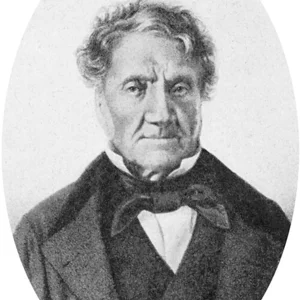
Aimé Bonpland
1773 — 1858
French botanist and explorer (1773-1858), companion of Alexander von Humboldt during their famous expedition to South America (1799-1804). He catalogued thousands of plant species unknown in Europe and spent the rest of his life in Argentina.
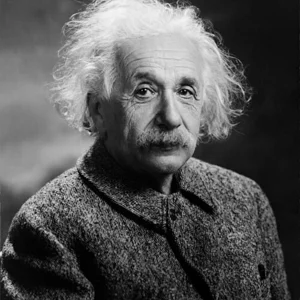
Albert Einstein
1879 — 1955
German-born physicist who became Swiss and later American (1879–1955), Albert Einstein revolutionized physics by developing the theories of special and general relativity. He is the author of the famous equation E=mc² and received the Nobel Prize in Physics in 1921 for his work on the photoelectric effect.
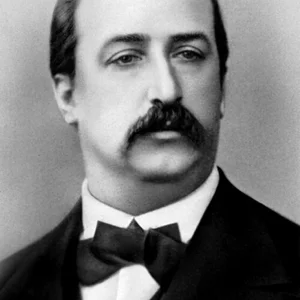
Alexander Borodin
1833 — 1887
A 19th-century Russian composer and member of The Five, he was also a renowned chemist. He pursued scientific and musical careers side by side, leaving behind the unfinished opera *Prince Igor*.
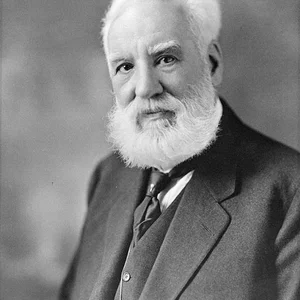
Alexander Graham Bell
1847 — 1922
A Scottish-born inventor who became a naturalized American citizen, Alexander Graham Bell is best known for filing the patent for the telephone in 1876. He also conducted research on hearing and communication, particularly to help people who were deaf.
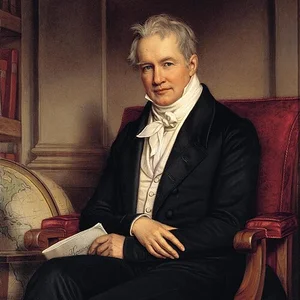
Alexander von Humboldt
1769 — 1859
German naturalist, geographer, and explorer (1769–1859), he carried out a monumental expedition to Latin America (1799–1804) that revolutionized the natural sciences. A pioneer of modern geography and ecology, he was one of the last great universal scholars.
Alexandre-Antoine Hureau de Sénarmont
1769 — 1810
An artillery general of the First Empire, Hureau de Sénarmont distinguished himself at Jena and Friedland through his innovative offensive artillery tactics. He was killed at the Battle of Zaragoza in 1809.
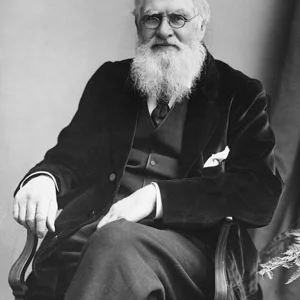
Alfred Russel Wallace
1823 — 1913
British naturalist and geographer (1823-1913), Wallace independently developed the theory of natural selection alongside Darwin. His explorations in the Amazon and Southeast Asia led him to formulate fundamental laws in biogeography.
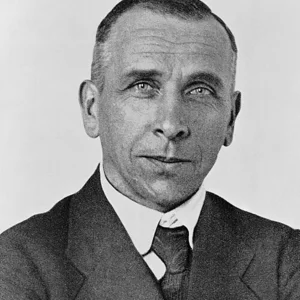
Alfred Wegener
1880 — 1930
German scientist (1880–1930) who proposed the theory of continental drift in the early 20th century. This revolutionary theory suggests that continents are not fixed but slowly move across the Earth's surface. Though widely rejected at the time, his theory laid the foundations for modern plate tectonics.
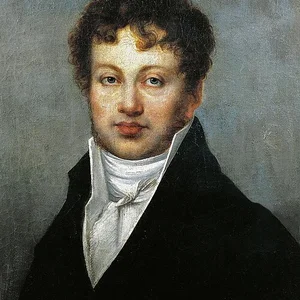
André-Marie Ampère
1775 — 1836
French physicist and mathematician, Ampère is the founder of electrodynamics. He established the mathematical laws governing the interactions between electric currents and magnetic fields. The international unit of electric current, the ampere, bears his name.
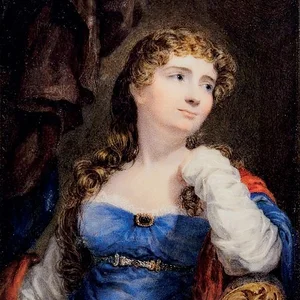
Annabella Milbanke
1792 — 1860
British aristocrat (1792–1860), self-taught mathematician and philanthropist, she married the poet Lord Byron in 1815 before separating from him a year later. She went on to dedicate herself to popular education and social reform, and is the mother of Ada Lovelace, pioneer of computing.

Auguste Lumière
1862 — 1954
Auguste Lumière (1862–1954) was a French inventor and industrialist who, together with his brother Louis, developed the Cinématographe in 1895, giving birth to cinema. He also contributed to colour photography with the invention of the Autochrome.
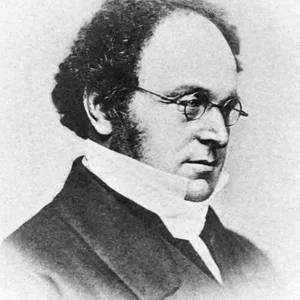
Augustus De Morgan
1806 — 1871
Augustus De Morgan was a 19th-century British mathematician and logician. A pioneer of modern formal logic, he helped found the algebra of logic and gave his name to De Morgan's laws, which are fundamental to logic and set theory.
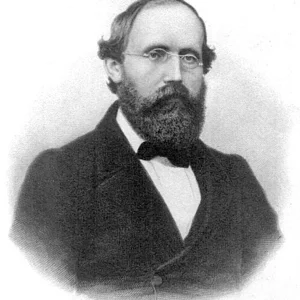
Bernhard Riemann
1826 — 1866
A 19th-century German mathematician, Riemann revolutionized geometry by developing Riemannian geometry, the mathematical foundation of Einstein's general relativity. His work on complex functions and the Riemann hypothesis remains among the most influential in modern mathematics.

Bronisława Dłuska
Polish physician (1865-1939), elder sister of Marie Curie, she funded her sister's studies in Paris. A pioneer of women's medicine in Poland, she ran a clinic in Zakopane and campaigned for women's emancipation.
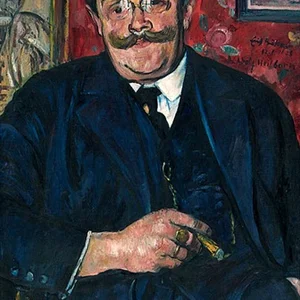
Büttner
1858 — 1927
Oskar Büttner was a German botanist of the late 19th century. He took part in the botanical exploration of Africa, particularly the Congo and West Africa, where he collected numerous plant specimens described by the naturalists of his time.
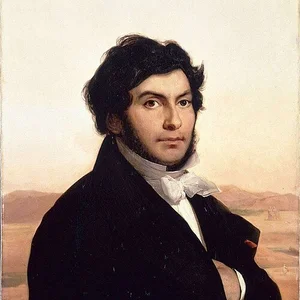
Champollion
1790 — 1832
French Egyptologist (1790-1832) who revolutionized the study of ancient Egypt by deciphering Egyptian hieroglyphs using the Rosetta Stone. His work opened the door to understanding Egyptian civilization and established Egyptology as a scientific discipline.
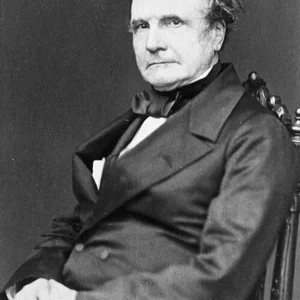
Charles Babbage
1791 — 1871
British mathematician (1791–1871), Charles Babbage is the pioneer of modern computing. He designed the Analytical Engine, the first programmable machine in history, and the Difference Engine, both conceptual ancestors of the computer.
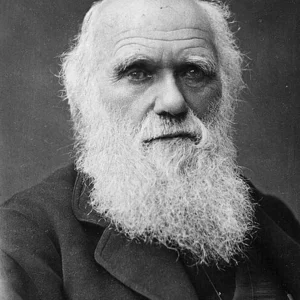
Charles Darwin
1809 — 1882
A 19th-century English naturalist, Charles Darwin revolutionized biology by proposing the theory of evolution by natural selection. His observations during the voyage of the Beagle and his subsequent work laid the foundations of modern biology.
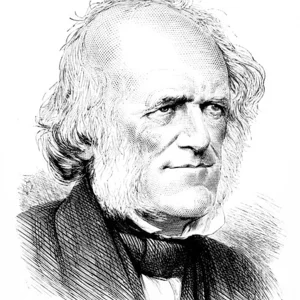
Charles Lyell
1797 — 1875
Charles Lyell was a 19th-century British geologist and a major figure in modern geology. His work 'Principles of Geology' popularized uniformitarianism, the idea that present-day geological processes explain the formation of the Earth over very long stretches of time. He had a profound influence on Charles Darwin.
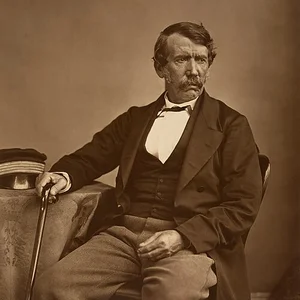
David Livingstone
1813 — 1873
Physician, Protestant missionary, and Scottish explorer (1813–1873), Livingstone was one of the first Europeans to cross Africa from east to west. He contributed to the geographical knowledge of the continent and actively fought against the slave trade.
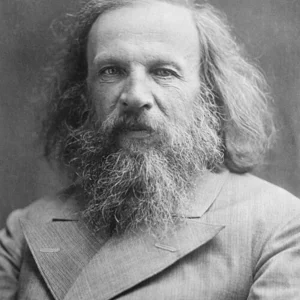
Dmitri Mendeleev
1834 — 1907
Russian chemist (1834–1907), he established in 1869 the periodic table of chemical elements, classifying elements by increasing atomic mass and recurring properties. His table even made it possible to predict the existence of then-unknown elements.
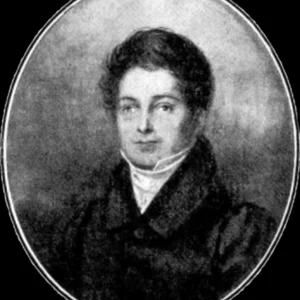
Doctor Blanche
1796 — 1852
Esprit Blanche (1796-1852) was a French alienist physician, a pioneer of humane psychiatry. In Montmartre and later in Passy, he founded a nursing home renowned for the treatment of mental illness, where he welcomed many artists and writers.
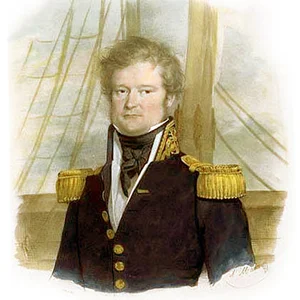
Dumont d'Urville
1790 — 1842
French naval officer and explorer (1790–1842), he led several expeditions to the southern seas and Antarctica. He discovered Adélie Land in 1840 and helped identify the Venus de Milo.
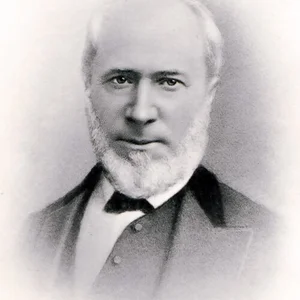
Édouard Séguin
1812 — 1880
French physician and educator, a pioneer in the education of children with intellectual disabilities. A student of Itard, he developed a physiological method of education before emigrating to the United States, where he influenced Maria Montessori.
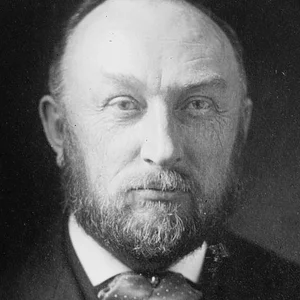
Edward Charles Pickering
1846 — 1919
American astronomer (1846–1919), director of the Harvard Observatory for 42 years. He revolutionized stellar classification and led the famous group known as the "Harvard Computers," composed mostly of women scientists.
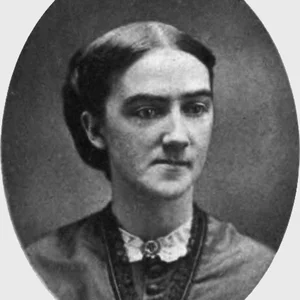
Ellen Swallow Richards
1842 — 1911
Pioneering American chemist, the first woman admitted to MIT, where she became an instructor. A specialist in sanitary chemistry, she analyzed water and air quality and founded scientific home economics.
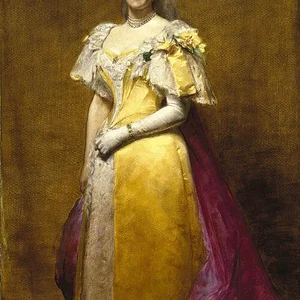
Emily Warren Roebling
1843 — 1903
Emily Warren Roebling was an American pioneer of civil engineering. When her husband, chief engineer Washington Roebling, was struck by caisson disease, she took over the technical supervision of the Brooklyn Bridge construction until its completion in 1883.
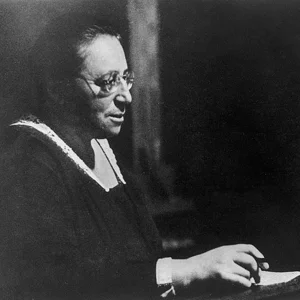
Emmy Noether
1882 — 1935
German mathematician (1882–1935) considered one of the greatest mathematicians of the 20th century. She revolutionized abstract algebra, and her landmark theorem established the deep connection between symmetries and conservation laws in physics.
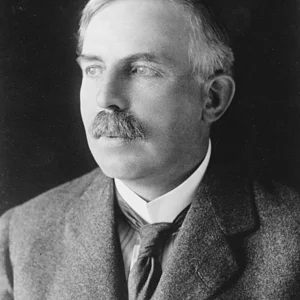
Ernest Rutherford
1871 — 1937
New Zealand-born physicist and chemist (1871–1937) who revolutionized our understanding of atomic structure. He discovered the atomic nucleus and elucidated the mechanisms of radioactivity, laying the foundations of modern nuclear physics.
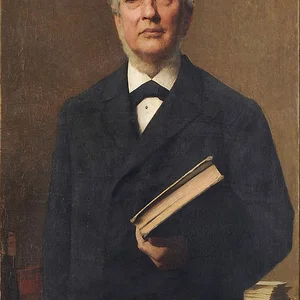
Ernst Förstemann
1822 — 1906
Nineteenth-century German librarian and linguist, regarded as a pioneer in the decipherment of Maya writing. He was the first to understand the calendar system and astronomical calculations of the Dresden Codex.
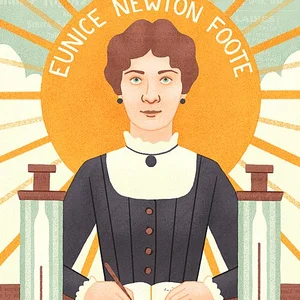
Eunice Newton Foote
1819 — 1888
An American scientist, Eunice Newton Foote demonstrated as early as 1856 the ability of carbon dioxide to trap heat, anticipating the understanding of the greenhouse effect. An activist as well, she was a forgotten pioneer of climate science.
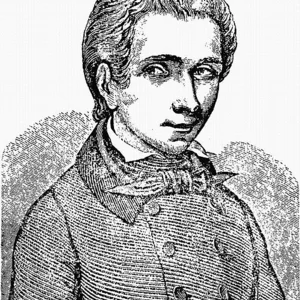
Évariste Galois
1811 — 1832
French mathematician (1811–1832), a precocious genius who died in a duel at the age of 20. He founded group theory and proved the impossibility of solving by radicals equations of degree higher than 4.
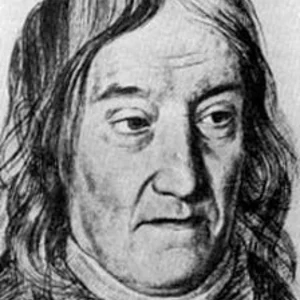
Farkas Bolyai
1775 — 1856
Farkas Bolyai was a Hungarian mathematician, known for his work on the foundations of geometry. He was the father of János Bolyai, one of the founders of non-Euclidean geometry, whom he encouraged despite his own reservations.
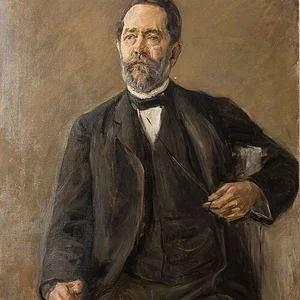
Felix Klein
1849 — 1925
German mathematician (1849–1925), Felix Klein is celebrated for his Erlangen Programme, which unifies geometries through group theory. He contributed to topology, analysis, and mathematics education.
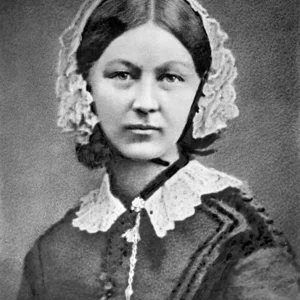
Florence Nightingale
1820 — 1910
British nurse and statistician (1820–1910), she revolutionized hospital care during the Crimean War. A pioneer of public health, she founded the first secular nursing school and used statistics to demonstrate the critical importance of hygiene.
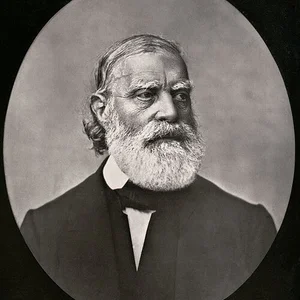
François-Vincent Raspail
1794 — 1878
French chemist and naturalist (1794–1878), pioneer of cellular chemistry and histology. A committed republican, he took part in the revolutions of 1830 and 1848, was imprisoned for his political beliefs, and ran for the presidency of the Republic from his prison cell.
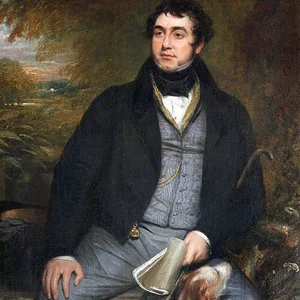
Frederick Hodgson
1796 — 1854
Investigator for the Society for Psychical Research (SPR) who, in 1884-1885, examined the phenomena attributed to Helena Blavatsky at the Theosophical headquarters in Adyar, India. His report concluded that they were fraud and trickery.
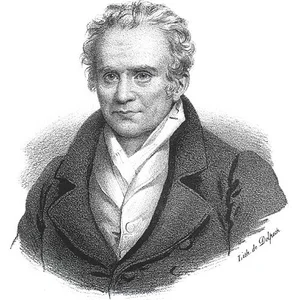
Gaspard Monge
1746 — 1818
French mathematician (1746–1818), inventor of descriptive geometry and co-founder of the École Polytechnique. A close ally of Napoleon, he played a major role in modernizing scientific and technical education in France.
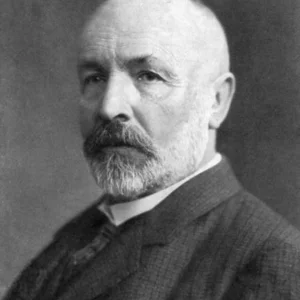
Georg Cantor
1845 — 1918
German mathematician (1845–1918), founder of set theory. He proved the existence of multiple sizes of infinity and introduced transfinite numbers, revolutionizing the foundations of mathematics.
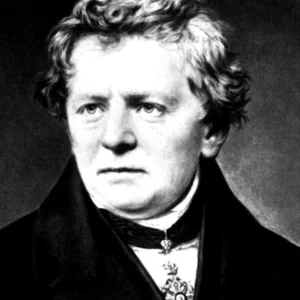
Georg Ohm
1789 — 1854
German physicist (1787-1854) who discovered the fundamental relationship between voltage, current, and electrical resistance. His law, formulated in 1827, became one of the foundational laws of electricity and bears his name.
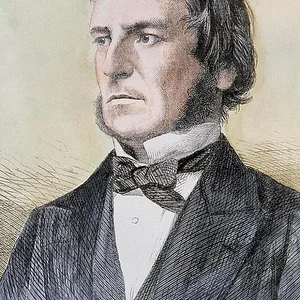
George Boole
1815 — 1864
19th-century British mathematician and logician, founder of Boolean algebra. He revolutionized logic by translating it into a mathematical system, laying the foundations of modern computing.
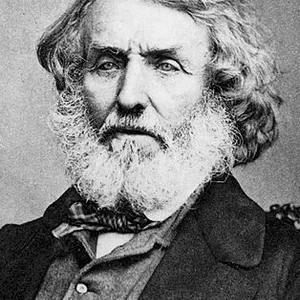
George Everest
1790 — 1866
British geographer and geodesist, George Everest led the Great Trigonometrical Survey of India in the 19th century. He carried out the precise triangulation of the Indian subcontinent — a monumental undertaking that made it possible to accurately measure the Himalayan peaks. Mount Everest, the highest mountain in the world, was named in his honour in 1865.
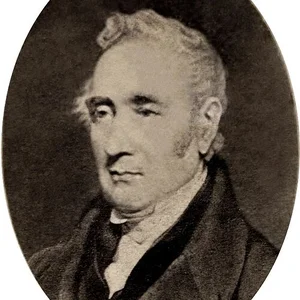
George Stephenson
1781 — 1848
British engineer (1781–1848), George Stephenson is the father of the railway. He built the first efficient steam locomotive for passenger transport and designed the Liverpool-Manchester line, inaugurated in 1830.
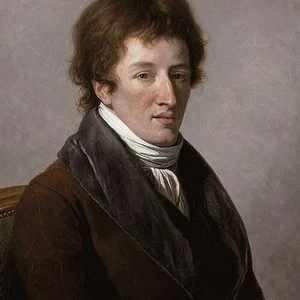
Georges Cuvier
1769 — 1832
French naturalist and anatomist (1769–1832), Georges Cuvier is the founder of paleontology and comparative anatomy. He established the catastrophism theory to explain species extinctions and classified the animal kingdom into four phyla.
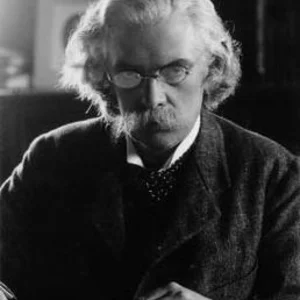
Gösta Mittag-Leffler
1846 — 1927
Swedish mathematician, a major figure in complex analysis. Founder of the journal Acta Mathematica, he played an international role in spreading mathematics during the late 19th and early 20th centuries.
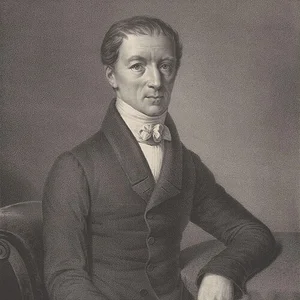
Gottfried Reinhold Treviranus
1776 — 1837
A German naturalist and physician, he was one of the first to use the term “biology” to describe the science of living things. His major work sought to unify the study of living beings into a coherent discipline.
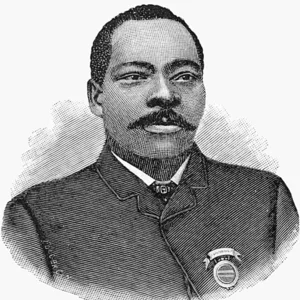
Granville Woods
1856 — 1910
African American inventor and engineer (1856–1910), nicknamed the "Black Edison," he filed more than 60 patents in electricity and railroad engineering, including the multiplex telegraph that allowed communication between moving trains.
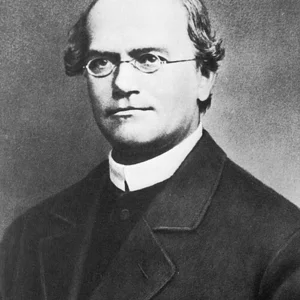
Gregor Mendel
1822 — 1884
Moravian monk and naturalist (1822–1884), Gregor Mendel is the founder of modern genetics. Through his experiments with pea plants, he discovered the fundamental laws of heredity that govern the transmission of traits from one generation to the next.
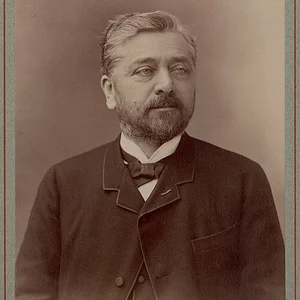
Gustave Eiffel
1832 — 1923
French engineer and entrepreneur (1832–1923), Gustave Eiffel is famous for building the tower that bears his name, erected for the 1889 World's Fair. A pioneer of iron architecture, he also designed the internal framework of the Statue of Liberty.
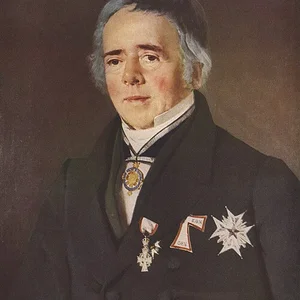
Hans Christian Ørsted
1777 — 1851
A Danish physicist and chemist, Hans Christian Ørsted discovered in 1820 that an electric current deflects a compass needle, revealing the link between electricity and magnetism. He thus founded electromagnetism and was the first to isolate metallic aluminium.
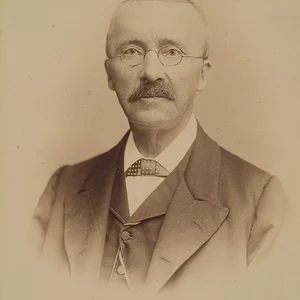
Heinrich Schliemann
1822 — 1890
A self-taught German archaeologist (1822–1890), he devoted his fortune to finding the Homeric Troy. His excavations at Hisarlik in Turkey revealed several superimposed cities, one of which he identified — incorrectly — as the Troy of the *Iliad*.
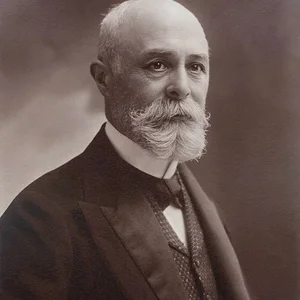
Henri Becquerel
1852 — 1908
French physicist (1852–1908), Henri Becquerel discovered radioactivity in 1896 by observing that uranium salts exposed photographic plates without any exposure to light. This fundamental discovery earned him the Nobel Prize in Physics in 1903, shared with Pierre and Marie Curie.
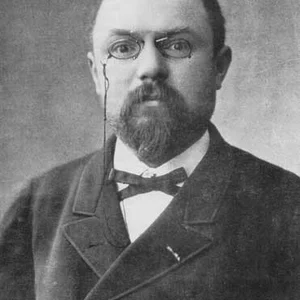
Henri Poincaré
1854 — 1912
French mathematician, physicist and philosopher (1854-1912), considered the last universal genius of science. He founded algebraic topology, laid the foundations of special relativity, and discovered deterministic chaos.
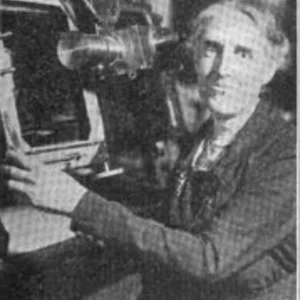
Henrietta Leavitt
1868 — 1921
Henrietta Swan Leavitt (1868-1921) was an American astronomer who discovered the period-luminosity relationship of Cepheid stars, giving humanity a tool to measure distances across the universe. Working as a "human computer" at the Harvard Observatory, she transformed astronomy despite the discrimination she faced because of her gender.
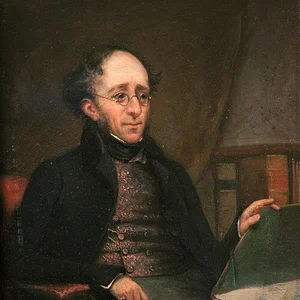
Henry de la Beche
British geologist, pioneer of geological mapping. In 1835 he founded the British Geological Survey, the world's first national geological survey, and worked to establish geology as a scientific discipline in its own right.
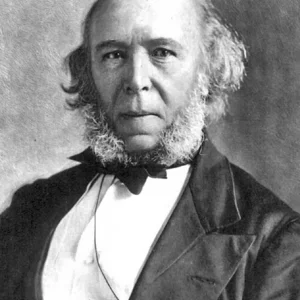
Herbert Spencer
1820 — 1903
Herbert Spencer (1820-1903) was an English philosopher and sociologist, one of the leading thinkers of social evolutionism in the 19th century. He applied the idea of evolution to all natural and social phenomena and coined the phrase “survival of the fittest.”
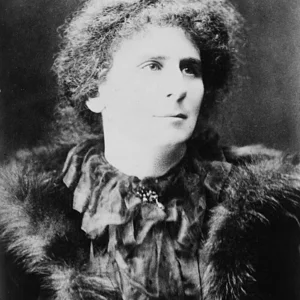
Hertha Ayrton
1854 — 1923
British mathematician and engineer (1854-1923), pioneer of electrical engineering. She conducted groundbreaking research on the electric arc and invented several technical devices, becoming the first woman elected as an associate member of the Royal Society.
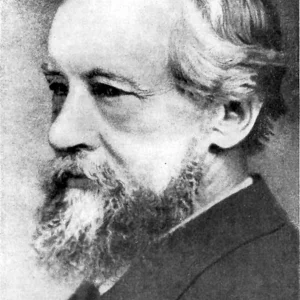
Hugo de Vries
1848 — 1935
Dutch botanist (1848–1935), Hugo de Vries was one of the rediscoverers of Mendel's laws in 1900. He is best known for his mutation theory, which he developed from his work on evening primrose.
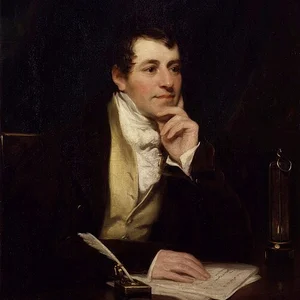
Humphry Davy
1778 — 1829
Humphry Davy was a British chemist and a pioneer of electrochemistry. He isolated several elements using electrolysis and invented the safety lamp for miners.
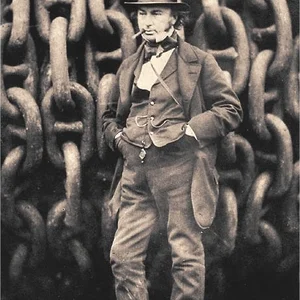
Isambard Kingdom Brunel
1806 — 1859
19th-century British engineer, Brunel revolutionized transportation with the Great Western Railway, the Thames Tunnel, and giant steamships. An iconic figure of the Victorian Industrial Revolution.
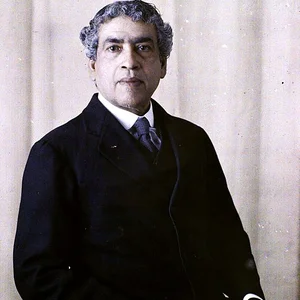
Jagadish Chandra Bose
1858 — 1937
Indian physicist and botanist (1858-1937), a pioneer in the study of radio waves and plant physiology. He demonstrated that plants react to stimuli and invented instruments of remarkable precision.
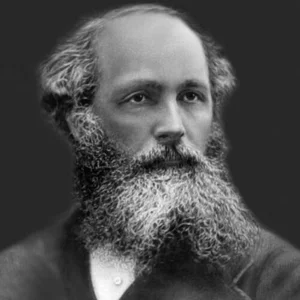
James Clerk Maxwell
1831 — 1879
Scottish physicist and mathematician (1831–1879), Maxwell authored the unifying equations of electromagnetism. His work predicted the existence of electromagnetic waves and inspired Einstein in developing the theory of special relativity.
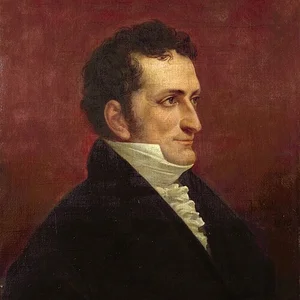
Jean Marc Gaspard Itard
1774 — 1838
French physician born in 1774, a pioneer of special education and otolaryngology. He is famous for having tried to educate Victor of Aveyron, “the wild child,” laying the foundations of teaching methods for children with disabilities.
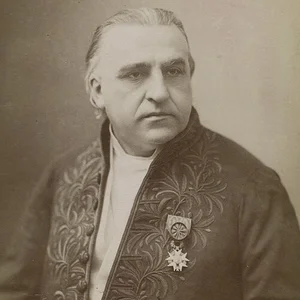
Jean-Martin Charcot
1825 — 1893
Jean-Martin Charcot was a French neurologist, regarded as one of the founders of modern neurology. He practiced at the Salpêtrière hospital in Paris, where he trained many physicians, including Sigmund Freud.
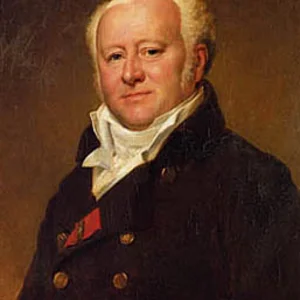
Jean-Nicolas Corvisart
1755 — 1821
French physician (1755–1821), first personal physician to Napoleon I and professor at the Collège de France. He popularized chest percussion as a diagnostic method and trained a generation of clinicians who laid the foundations of modern medicine.
Jeanne Villepreux-Power
1794 — 1871
French naturalist (1794–1871), pioneer of marine biology. She invented the glass aquarium to observe octopuses and cephalopods in situ, revolutionizing the study of the marine world.
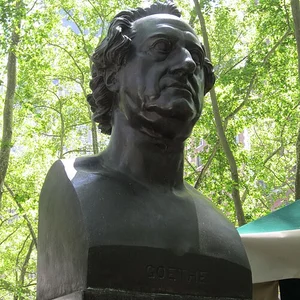
Johann Wolfgang von Goethe
German writer, poet, and scholar (1749–1832), Goethe is the author of Faust and The Sorrows of Young Werther. A central figure of the Sturm und Drang movement and later Weimar Classicism, he embodies the Enlightenment ideal of the universal man.
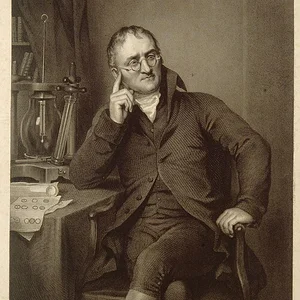
John Dalton
1766 — 1844
John Dalton was a British chemist, physicist and meteorologist. He is regarded as the father of modern atomic theory, according to which matter is made up of indivisible atoms specific to each element. He also described colour blindness, a condition he himself had.
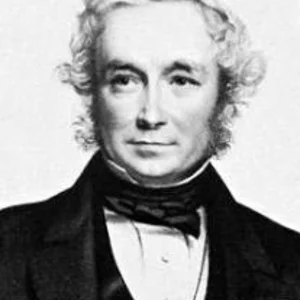
John Stevens Henslow
1796 — 1861
British botanist and geologist, professor at the University of Cambridge. As Charles Darwin's mentor, he recommended the young naturalist for the voyage of HMS Beagle, which gave rise to the theory of evolution.
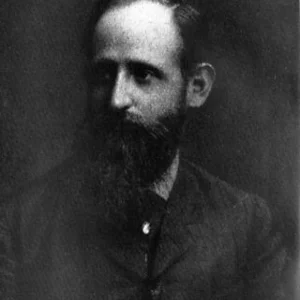
Josef Breuer
1842 — 1925
Austrian physician and physiologist, a pioneer of the cathartic method. His treatment of the patient “Anna O.” in the 1880s and his collaboration with Sigmund Freud paved the way for the birth of psychoanalysis.
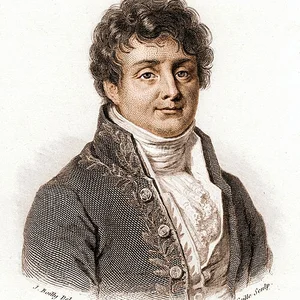
Joseph Fourier
1768 — 1830
French mathematician and physicist (1768–1830), Fourier is renowned for his work on heat propagation and mathematical analysis. He developed the decomposition of functions into trigonometric series, known as the Fourier series.
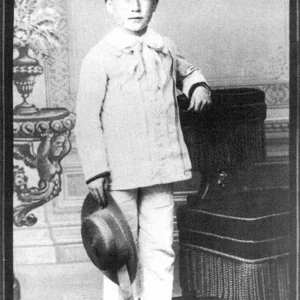
Joseph Meister
1876 — 1940
Joseph Meister is known for being the first human successfully vaccinated against rabies by Louis Pasteur in 1885, when he was only 9 years old. This historic vaccination marked a decisive turning point in the history of modern medicine.
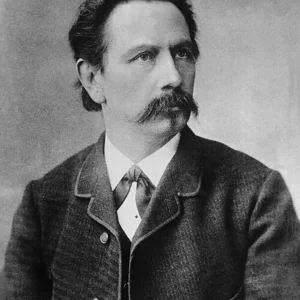
Karl Benz
1844 — 1929
German engineer and inventor, Karl Benz is considered the father of the automobile. In 1885, he built the Benz Patent-Motorwagen, the first vehicle with an internal combustion engine recognized as a true automobile.
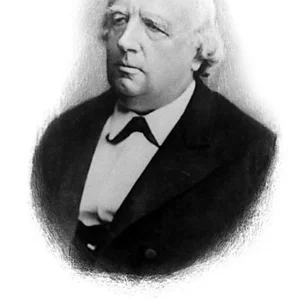
Karl Weierstrass
1815 — 1897
Karl Weierstrass was a German mathematician regarded as the “father of modern analysis.” He placed analysis on rigorous foundations by formalizing the notions of limit and continuity.
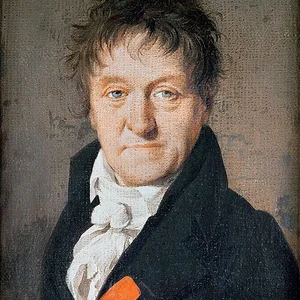
Lazare Carnot
1753 — 1823
French mathematician and general, Lazare Carnot earned the nickname "The Organizer of Victory" for his role on the Committee of Public Safety. He restructured the republican armies, contributing to the victories of revolutionary France, and left a notable mathematical legacy in geometry.
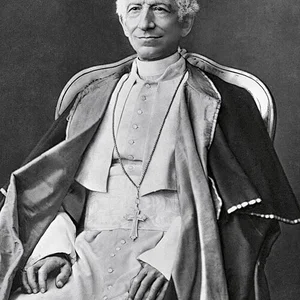
Leo XIII
1810 — 1903
Pope from 1878 to 1903, Leo XIII modernized the social doctrine of the Church with the encyclical Rerum Novarum (1891). He sought to reconcile Catholicism with the modern world and liberal democracies.
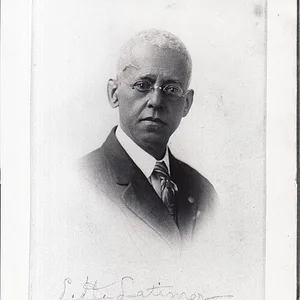
Lewis Latimer
American inventor and engineer born in 1848, Lewis Latimer improved the carbon filament of the incandescent light bulb, making electric lighting accessible to the general public. A collaborator of Thomas Edison and Alexander Graham Bell, he was one of the few Black engineers recognized during his era.
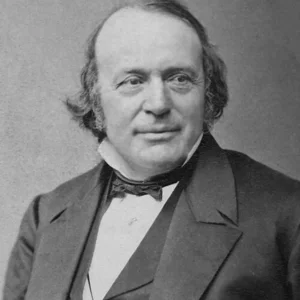
Louis Agassiz
1807 — 1873
American naturalist of Swiss origin, zoologist, ichthyologist and geologist. A pioneer in the study of fossil fish and a theorist of the great ice ages, he was also a famous opponent of Darwin's theory of evolution.
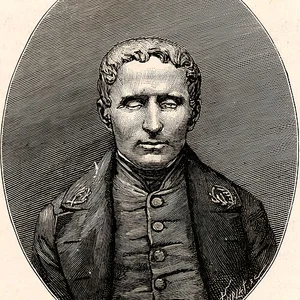
Louis Braille
1809 — 1852
Louis Braille (1809–1852) was a French teacher who lost his sight at the age of three and invented, at 15, the tactile writing system that bears his name. His raised-dot alphabet revolutionized access to reading and writing for blind people around the world.
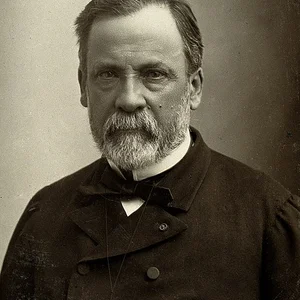
Louis Pasteur
1822 — 1895
French chemist and biologist (1822–1895), founder of modern microbiology. He demonstrated the role of microorganisms in diseases and fermentation, revolutionizing medicine and hygiene. His discoveries led to the development of vaccines and pasteurization.
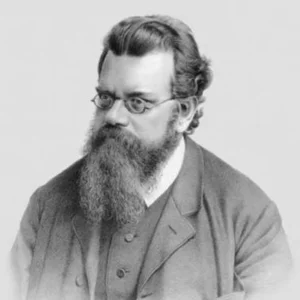
Ludwig Boltzmann
1844 — 1906
Austrian physicist (1844–1906), founder of statistical mechanics. He demonstrated that the laws of thermodynamics arise from the statistical behavior of atoms, laying the foundations of modern physics.
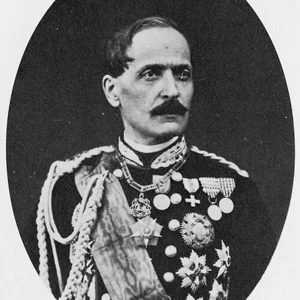
Luigi Menabrea
Italian general, engineer, and statesman of the 19th century. He is best known for writing in 1842 a memoir on Charles Babbage's analytical engine, which Ada Lovelace translated and extensively annotated.
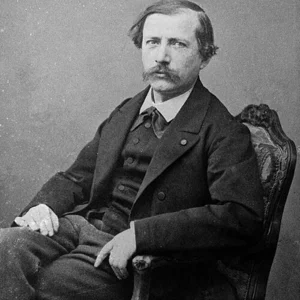
Marcellin Berthelot
1827 — 1907
French chemist (1827–1907), founder of thermochemistry and organic synthesis chemistry. He was also a republican politician, serving as Minister of Public Education and then Minister of Foreign Affairs.
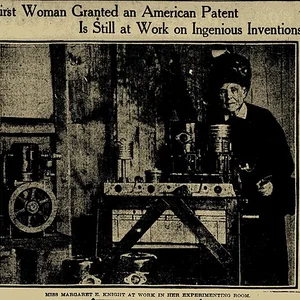
Margaret Knight
1838 — 1914
Margaret Knight (1838–1914) was a prolific American inventor who revolutionized the packaging industry by developing the machine that produces flat-bottomed paper bags. Over the course of her life she filed more than 27 patents across fields as varied as textiles, mechanics, and automotive engineering.
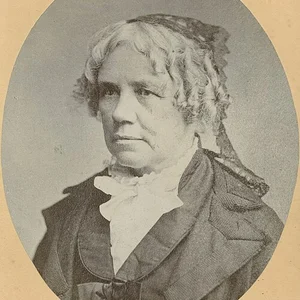
Maria Mitchell
1818 — 1889
America's first professional female astronomer, Maria Mitchell discovered a comet in 1847, earning her a gold medal from the King of Denmark. She was the first woman elected to the American Academy of Arts and Sciences and advocated for the scientific education of women.
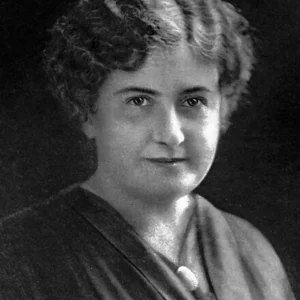
Maria Montessori
1870 — 1952
Italian physician and educator
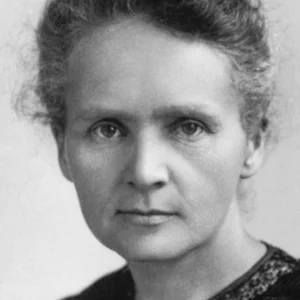
Marie Curie
1867 — 1934
Polish-born French physicist and chemist (1867–1934). A pioneer in the study of radioactivity, she was the first woman to receive a Nobel Prize and the only person to receive two Nobel Prizes in different scientific fields. Her discoveries revolutionized modern physics and chemistry.
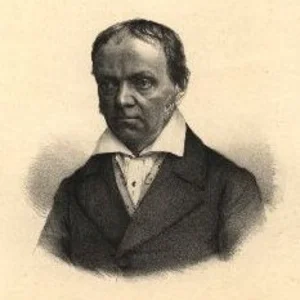
Martin Ohm
1792 — 1872
German mathematician (1792–1872), brother of Georg Simon Ohm. He contributed to the formal rigor of mathematical analysis and to mathematics education in 19th-century Germany.
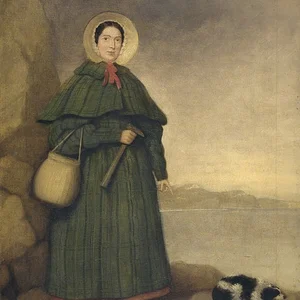
Mary Anning
1799 — 1843
Mary Anning was a self-taught English paleontologist who, from childhood, collected fossils along the cliffs of Lyme Regis. She discovered the first complete skeletons of an ichthyosaur and a plesiosaur, revolutionizing the understanding of extinct species. Despite her major contributions, she was long excluded from scientific circles because of her sex and her modest background.
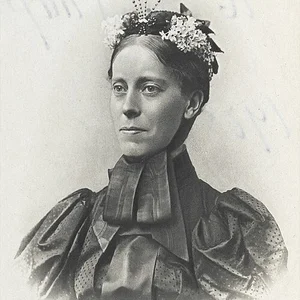
Mary Kingsley
1862 — 1900
British explorer and ethnographer (1862–1900), Mary Kingsley was one of the first European women to travel alone in West Africa. She brought back invaluable observations on the cultures and wildlife of Gabon and the Congo, and championed African societies against colonial prejudice.
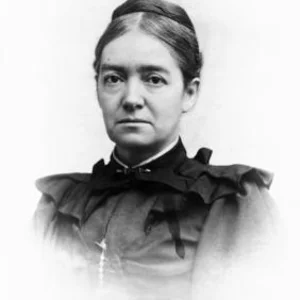
Mary Putnam Jacobi
1842 — 1906
American physician, a pioneer for the place of women in medicine in the 19th century. A rigorous researcher and suffragist activist, she scientifically refuted the medical prejudices that deemed women unfit for intellectual and physical effort.
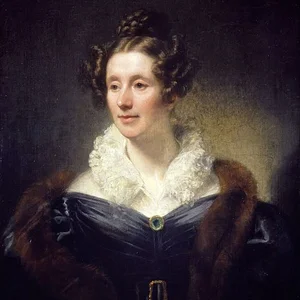
Mary Somerville
1780 — 1872
Scottish mathematician and scientist (1780–1872), a pioneer of science in the 19th century. She popularised the works of Laplace and contributed to celestial mechanics. Together with Caroline Herschel, she was one of the first women to be elected an honorary member of the Royal Astronomical Society.
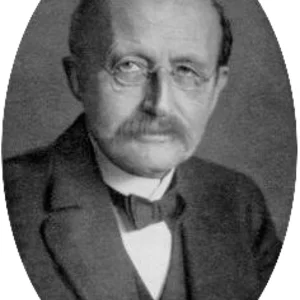
Max Planck
1858 — 1947
German physicist (1858–1947) who revolutionized physics by discovering quantum theory in 1900. He established that energy is emitted in small discrete portions called quanta, laying the foundations of quantum mechanics. His work marked the transition from classical physics to modern physics.
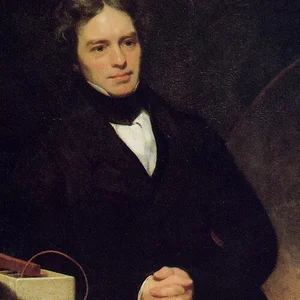
Michael Faraday
1791 — 1867
A self-taught British physicist and chemist (1791–1867), Faraday discovered electromagnetic induction and laid the foundations of modern electrical engineering. His work on electric and magnetic fields inspired Maxwell's theories.
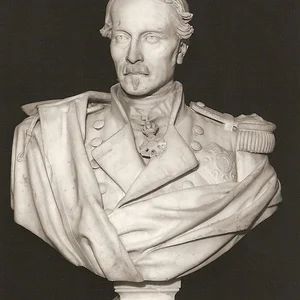
Michel Bizot
1795 — 1855
French general of the Corps of Engineers (1796–1855), director of the École polytechnique. He distinguished himself during the capture of Constantine (1837) and died at the Siege of Sevastopol during the Crimean War.
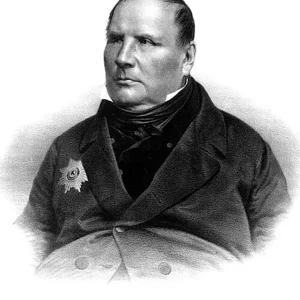
Mikhail Ostrogradsky
1801 — 1862
Russian mathematician and physicist (of Ukrainian origin), a major figure of the Saint Petersburg mathematical school. He is known for his work in mathematical analysis, mechanics, and mathematical physics, notably the divergence theorem.
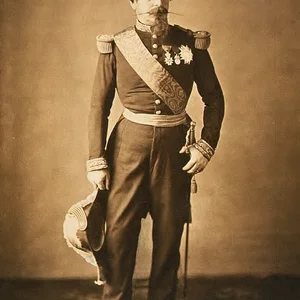
Napoleon III
1808 — 1873
Nephew of Napoleon I, he was elected President of the Republic in 1848, then seized power through a coup d'état on December 2, 1851, before proclaiming the Second Empire. His reign profoundly transformed France: the modernization of Paris under Haussmann, industrial and railway expansion — until the defeat at Sedan in 1870.
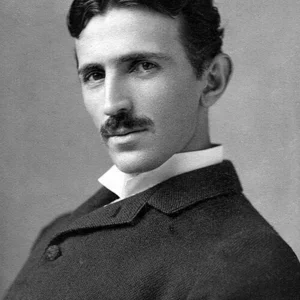
Nikola Tesla
1856 — 1943
Serbian-American inventor and engineer (1856-1943), Nikola Tesla is one of the central figures of the electrical revolution. His work on alternating current and his technological innovations transformed modern electricity and energy transmission.
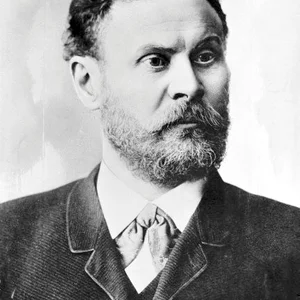
Otto Lilienthal
1848 — 1896
German engineer and inventor (1848–1896), Otto Lilienthal was the first person to achieve repeated and controlled gliding flights. His experiments with gliders laid the scientific foundations of modern aviation.
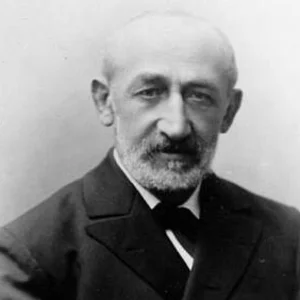
Paul Gordan
1837 — 1912
Paul Gordan was a 19th-century German mathematician, famous for his work on invariant theory. Nicknamed the “king of invariant theory,” he left his mark on algebra through his mastery of calculations.
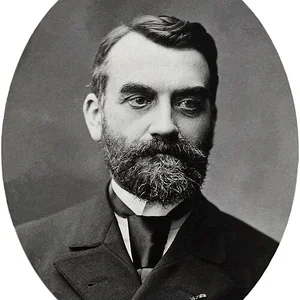
Paul Vidal de La Blache
1845 — 1918
Paul Vidal de La Blache (1845-1918) was a French geographer regarded as the founder of the French school of geography. He developed the concept of the “genre de vie” (way of life) and the notion of possibilism, establishing a human geography attentive to the relationships between societies and their environment.
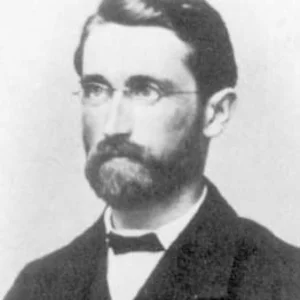
Richard Dedekind
1831 — 1916
German mathematician, a student of Gauss and Dirichlet, he profoundly renewed algebra and number theory. We owe to him a rigorous construction of the real numbers and the notion of an ideal.
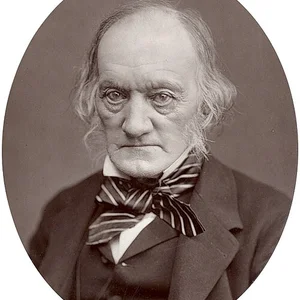
Richard Owen
1804 — 1892
Richard Owen was a 19th-century British palaeontologist and anatomist. He coined the term “Dinosauria” (dinosaurs) in 1842 and was the founder of the Natural History Museum in London. A famous opponent of Darwin's theories on evolution.
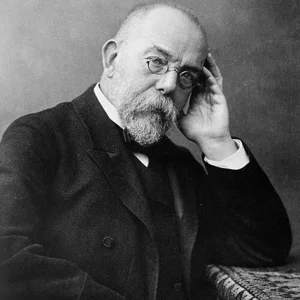
Robert Koch
1843 — 1910
German physician and microbiologist (1843–1910), pioneer of modern bacteriology. He identified the agents responsible for tuberculosis, cholera, and anthrax, revolutionizing the understanding of infectious diseases.
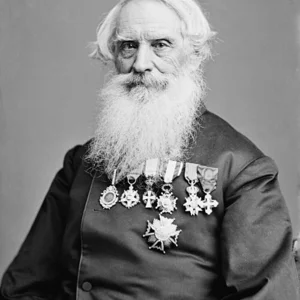
Samuel Morse
1791 — 1872
American inventor and painter (1791–1872), Samuel Morse is famous for developing the electric telegraph and the code that bears his name. His invention revolutionized long-distance communications in the 19th century.
Santiago Ramón y Cajal
1852 — 1934
Spanish histologist and neuroscientist
Sigmund Freud
1856 — 1939
Austrian neurologist and psychoanalyst (1856-1939), founder of psychoanalysis. Freud developed a revolutionary theory of the unconscious and the psychological mechanisms governing human behavior, profoundly influencing modern psychology, psychiatry, and philosophy.
Siméon Denis Poisson
1781 — 1840
French mathematician and physicist (1781-1840), student of Laplace and Lagrange. He contributed to celestial mechanics, electrostatics, and probability theory, lending his name to the Poisson distribution.
Sofia Kovalevskaya
1850 — 1891
Sofia Kovalevskaya (1850–1891) was the first woman to earn a doctorate in mathematics in Europe and the first female professor of mathematics at a modern university. A pioneer in analysis and mechanics, she broke through the barriers of the male academic world to establish herself as a leading mathematician.
Sophie Berthelot
1837 — 1907
Wife of the great chemist Marcellin Berthelot, Sophie Berthelot (1837-1907) was a cultured woman who accompanied her husband throughout his entire career. Having died on the same day as him, she became the first woman interred in the Panthéon in 1907, a symbol of the grateful Republic.
Srinivasa Ramanujan
1887 — 1920
A self-taught Indian mathematician (1887–1920), Ramanujan discovered thousands of remarkable mathematical formulas with no formal university training. Recognized by mathematician G.H. Hardy, he made major contributions to number theory and modular functions before dying prematurely at the age of 32.
Thomas Edison
1847 — 1931
American inventor and industrialist (1847–1931), Edison is one of the greatest innovators in history. He filed more than 1,000 patents and created the incandescent light bulb, the phonograph, and the electrical distribution system.
Thomas Henry Huxley
1825 — 1895
A British biologist and palaeontologist, and a fervent defender of Charles Darwin's theory of evolution — which earned him the nickname “Darwin's bulldog.” A renowned comparative anatomist, he was one of the foremost popularizers of science in the 19th century.
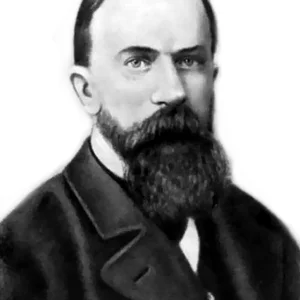
Vladimir Kovalevski
1842 — 1883
Vladimir Kovalevski was a Russian paleontologist, considered one of the founders of evolutionary paleontology. He notably studied the evolution of hoofed mammals from fossils, drawing on the theories of Darwin.
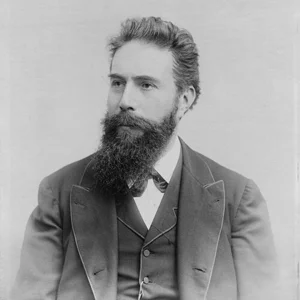
Wilhelm Röntgen
1845 — 1923
A German physicist, in 1895 he discovered an unknown radiation that he named “X-rays.” This discovery revolutionized medicine and physics. He received the very first Nobel Prize in Physics in 1901.
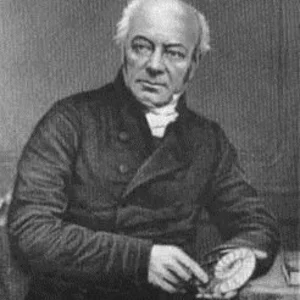
William Buckland
1784 — 1856
British geologist and palaeontologist, a pioneer of palaeontology. In 1824, he described and named Megalosaurus, the first dinosaur ever described scientifically.
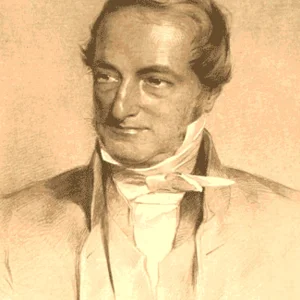
William Conybeare
1787 — 1857
William Conybeare was a 19th-century British geologist and palaeontologist. A pioneer in the study of fossil marine reptiles, he notably described the plesiosaur and contributed to the rise of stratigraphic geology.
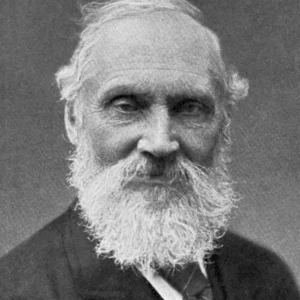
William Thomson (Lord Kelvin)
British physicist and mathematician of the 19th century, he made fundamental contributions to thermodynamics and electromagnetism. He is the originator of the absolute temperature scale that bears his name. He also oversaw the laying of the first transatlantic telegraph cable.
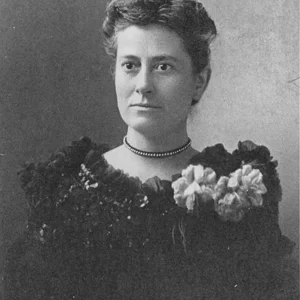
Williamina Fleming
1857 — 1911
Scottish-American astronomer, she joined the Harvard Observatory as a "Harvard Computer." She developed a system for classifying stellar spectra and discovered the Horsehead Nebula in 1888.
20th Century(242)
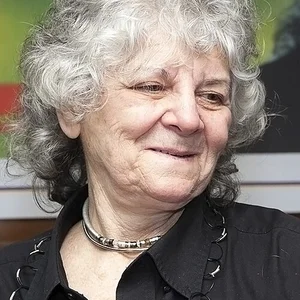
Ada Yonath
1939 — ?
Israeli crystallographer and molecular biologist, Ada Yonath elucidated the three-dimensional structure of the ribosome, the cellular machinery responsible for protein synthesis. She received the Nobel Prize in Chemistry in 2009, the first woman to do so in 45 years.
Adele Goldberg
1945 — ?
American computer scientist born in 1945, Adele Goldberg worked at Xerox PARC where she contributed to the development of the Smalltalk programming language. She played a pioneering role in the design of graphical user interfaces and object-oriented programming.
Ahmed Zewail
1946 — 2016
Egyptian-American chemist and pioneer of femtochemistry, he revolutionized the observation of chemical reactions by filming the movement of atoms at the femtosecond timescale. Winner of the Nobel Prize in Chemistry in 1999, he is regarded as the father of ultrafast chemistry.
Alain Bombard
1924 — 2005
A French doctor and biologist, Alain Bombard crossed the Atlantic in 1952 aboard an inflatable dinghy without provisions or water, to prove that a castaway could survive at sea. Having become a popular hero, he also served as a Member of the European Parliament and Secretary of State for the Environment.
Alan Kay
1940 — ?
A pioneering American computer scientist in object-oriented programming, Alan Kay designed the Smalltalk language and envisioned the concept of a portable personal computer (the Dynabook) in the 1970s. His work at the Xerox PARC laboratories transformed modern computing.
Alan Shepard
1923 — 1998
Alan Shepard was the first American to travel in space, on May 5, 1961, during the suborbital flight of Freedom 7. A Navy pilot turned NASA astronaut, he also walked on the Moon in 1971 during the Apollo 14 mission.
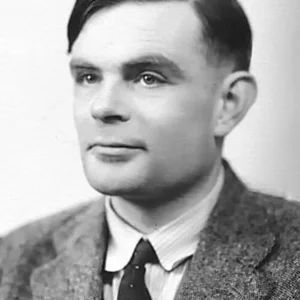
Alan Turing
1912 — 1954
British mathematician and cryptologist (1912-1954), Alan Turing is the founder of theoretical computer science and artificial intelligence. He contributed to the decryption of the Enigma machine during the Second World War and formalized the concepts of computability and algorithm.
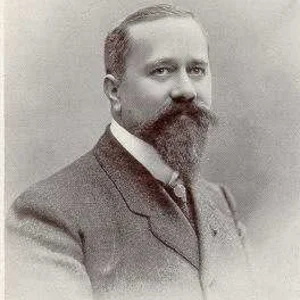
Albert Calmette
1863 — 1933
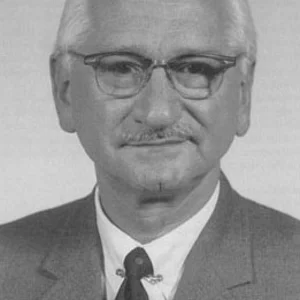
Albert Sabin
1906 — 1993
American physician and virologist of Polish origin. In the 1950s he developed the live attenuated oral vaccine against poliomyelitis, administered on a sugar cube, which made possible mass vaccination campaigns around the world.
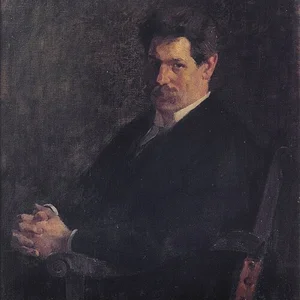
Albert Schweitzer
An Alsatian theologian, philosopher, musicologist, and physician, he founded a hospital at Lambaréné in Gabon, where he devoted his life to caring for African populations. A thinker of “reverence for life,” he received the Nobel Peace Prize in 1952.
Alexei Leonov
1934 — 2019
Soviet cosmonaut Alexei Leonov was the first person to perform a spacewalk on March 18, 1965, during the Voskhod 2 mission. A trained military pilot, he embodies the boldness of the Soviet space program.
Alice Ball
1892 — 1916
Alice Ball was an African American chemist known for developing an injectable treatment for leprosy made from chaulmoogra oil. She died at just 24, and her pioneering work was not recognized until decades later.
André Breton
1896 — 1966
French poet and writer (1896–1966), co-founder and theorist of Surrealism. He authored the Manifestoes of Surrealism and gathered around him a generation of revolutionary artists and writers.
Andrew Wiles
1953 — ?
British mathematician born in 1953, famous for proving Fermat's Last Theorem in 1994 after seven years of secret work. His proof, published in 1995, solved a problem that had been open for 358 years.
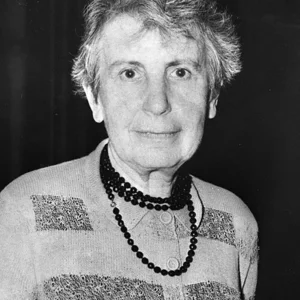
Anna Freud
1895 — 1982
Austrian-British psychoanalyst (1895–1982), daughter of Sigmund Freud. A pioneer of child psychoanalysis, she theorized the ego's defense mechanisms and founded child therapy in London.
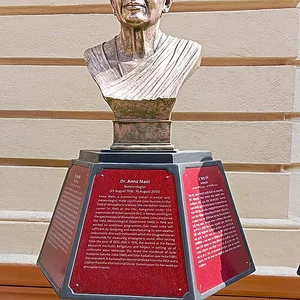
Anna Mani
1918 — 2001
Anna Mani (1918-2001) was an Indian physicist and meteorologist. A pioneer of meteorology in India, she designed instruments to measure solar radiation, ozone, and wind, contributing to her country's scientific growth after independence.
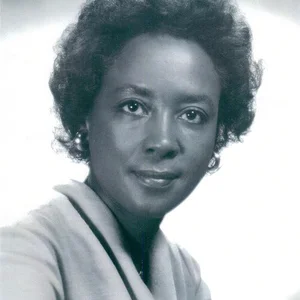
Annie Easley
1932 — 2011
An African American mathematician and computer scientist at NASA, Annie Easley contributed to the development of Centaur rockets and early solar energy technologies. A pioneer in a field dominated by white men, she also advocated for equal access to education.
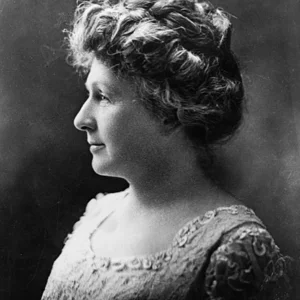
Annie Jump Cannon
1863 — 1941
A pioneering American astronomer, Annie Jump Cannon revolutionized astronomy by classifying the spectra of more than 350,000 stars. Her spectral classification system (OBAFGKM) is still in use today.
Antony Hewish
1924 — 2021
Antony Hewish (1924-2021) was a British radio astronomer. He led the work that resulted in the discovery of pulsars in 1967 and received the Nobel Prize in Physics for it in 1974, shared with Martin Ryle.
Asima Chatterjee
1917 — 2006
Asima Chatterjee (1917-2006) was a pioneering Indian chemist who specialized in the chemistry of natural products and medicinal plants. She was the first woman to receive a Doctor of Science degree from an Indian university.
Auguste Piccard
1884 — 1962
Swiss physicist (1884–1962), he was the first person to reach the stratosphere by balloon (1931), then designed the bathyscaphe to explore the ocean depths. A pioneer of extreme exploration, he pushed the boundaries of scientific knowledge in both vertical directions.
Barbara McClintock
1902 — 1992
Barbara McClintock is a pioneering American geneticist who discovered transposable elements, known as "jumping genes," in maize as early as the 1940s. Long overlooked by the scientific community, she received the Nobel Prize in Physiology or Medicine in 1983, the only woman to have received it unshared in that discipline.
Beatrice Shilling
1909 — 1990
Beatrice Shilling (1909-1990) was a British aeronautical engineer. She is famous for solving a serious flaw in the Rolls-Royce Merlin engines that powered RAF fighters during the Second World War.
Beatrice Tinsley
1941 — 1981
Beatrice Tinsley is a New Zealand astronomer and cosmologist of British origin, a pioneer in the study of galaxy evolution. Her work transformed our understanding of how galaxies form and age over the course of the Universe's history.
Beulah Henry
An American inventor nicknamed "Lady Edison," Beulah Henry filed more than 110 patents between 1912 and 1970, covering household appliances, bobbinless sewing machines, and various practical tools. A pioneer in a field almost exclusively dominated by men, she founded several companies to bring her inventions to market.
Bibha Chowdhuri
1913 — 1991
Bibha Chowdhuri (1913-1991) was an Indian physicist and a pioneer in the study of cosmic rays and particle physics. Working with Debendra Mohan Bose, she used photographic plates to detect subatomic particles, coming close to discovering the meson.
Bjarne Stroustrup
1950 — ?
Danish computer scientist born in 1950, Bjarne Stroustrup is the creator of the C++ programming language, developed in the 1980s at Bell Labs. He is also a professor and author of numerous reference works in computer science.
Bob Kahn
1938 — ?
American computer scientist who co-invented the TCP/IP protocol with Vint Cerf, the technical foundation of the Internet. His work made universal communication between computers possible on a global scale.
Boris Cyrulnik
1937 — ?
French neuropsychiatrist, psychoanalyst, and ethologist born in 1937. A Holocaust survivor, he popularized in France the concept of resilience — the ability to rebuild oneself after trauma.
Bruce Heezen
Bruce Heezen was an American marine geologist. Together with Marie Tharp, he mapped the floor of the Atlantic Ocean, revealing the Mid-Atlantic Ridge and its central rift valley — major contributions to the theory of plate tectonics.
Bruno Bettelheim
1903 — 1990
Bruno Bettelheim (1903-1990) was an American psychoanalyst and educator of Austrian origin, specializing in childhood. A survivor of the Dachau and Buchenwald camps, he ran a school for troubled children in Chicago and left his mark on thinking about education and child psychology.
Bryan Sykes
1947 — 2020
Bryan Sykes (1947-2020) was a British geneticist and professor of human genetics at the University of Oxford. A pioneer in the study of ancient DNA and mitochondrial DNA, he popularized the use of genetics to trace the origins of human populations.
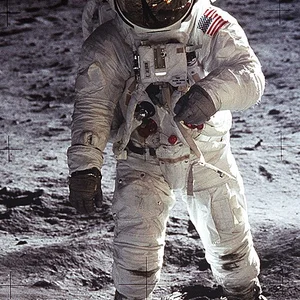
Buzz Aldrin
1930 — ?
An American astronaut, he was the second man to walk on the Moon during the Apollo 11 mission on July 20, 1969. A former combat pilot in Korea and holder of a doctorate in orbital mechanics, he contributed to the development of space rendezvous techniques.
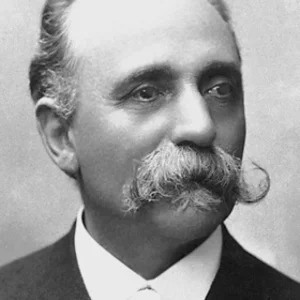
Camillo Golgi
1843 — 1926
Italian physician and biologist, a pioneer in the study of the nervous system. In 1873 he developed a method for staining nerve cells (the “black reaction”) that revolutionized neuroanatomy. He received the Nobel Prize in Medicine in 1906.
Carl Correns
1864 — 1933
A German botanist and geneticist, he was one of three researchers who, in 1900, rediscovered Gregor Mendel's laws of heredity, which had been forgotten since 1865. His work on plants helped to found modern genetics.
Carl Jung
1875 — 1961
Swiss psychiatrist and psychoanalyst, founder of analytical psychology. Initially close to Freud, he distanced himself to develop his own concepts such as the collective unconscious and archetypes. His work has profoundly influenced psychology, spirituality, and the study of myths.
Carl Sagan
1934 — 1996
American astronomer and astrophysicist (1934–1996), Carl Sagan is celebrated for bringing science to the general public. His television series *Cosmos* (1980) reached hundreds of millions of viewers worldwide.
Cecilia Payne-Gaposchkin
1900 — 1979
British-born American astronomer (1900–1979), she discovered that stars are composed primarily of hydrogen and helium. Her 1925 doctoral thesis revolutionized astrophysics, even though her conclusions were initially rejected by her peers.
Cheikh Anta Diop
1923 — 1986
Senegalese historian, anthropologist, and physicist (1923-1986). He championed the precedence of Black African civilizations and the African origin of ancient Egypt, leaving a lasting mark on historiography and Pan-Africanism.
Chen-Ning Yang
Sino-American theoretical physicist born in 1922, awarded the Nobel Prize in Physics in 1957 alongside T.D. Lee for the discovery of parity violation in weak interactions. Co-author of Yang-Mills theory, a cornerstone of the standard model of particle physics.
Chien-Shiung Wu
1912 — 1997
Chien-Shiung Wu was a Chinese-American experimental physicist, nicknamed "the First Lady of Physics." Her 1956 experiment disproved the law of conservation of parity, upending particle physics. Unjustly passed over for the Nobel Prize awarded to Lee and Yang for that discovery, she remains one of the most important figures in twentieth-century physics.
Chika Kuroda
1884 — 1968
Chika Kuroda (1884-1968) was a pioneering Japanese chemist, one of the first women in Japan to earn a university degree in science. She made her mark with her research into the structure of natural pigments.
Christa McAuliffe
1948 — 1986
An American teacher selected for NASA's Teacher in Space program, she was set to become the first civilian in space. She perished in the Space Shuttle Challenger disaster on January 28, 1986.
Christiaan Barnard
1922 — 2001
Christiaan Barnard was a South African cardiac surgeon. On December 3, 1967, in Cape Town, he performed the first human heart transplant in history, becoming a worldwide figure of modern surgery.
Christiane Nüsslein-Volhard
1942 — ?
Christiane Nüsslein-Volhard is a German biologist born in 1942, a specialist in developmental genetics. Her work on the fruit fly (Drosophila) revealed how genes control the formation of the embryo. She received the Nobel Prize in Physiology or Medicine in 1995.
Claude Lévi-Strauss
1908 — 2009
French anthropologist and ethnologist (1908-2009), founder of structural anthropology. He revolutionized the study of human societies by applying structuralist methods to myths, kinship systems, and cultural practices. His major work, Tristes Tropiques, combines ethnographic narrative with philosophical reflection.
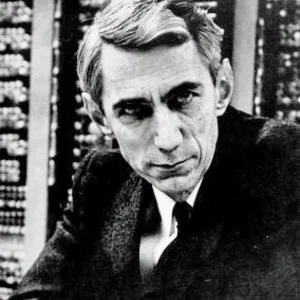
Claude Shannon
1916 — 2001
American mathematician and engineer (1916-2001), founder of information theory. His 1948 paper laid the mathematical foundations of digital communication and data encoding.
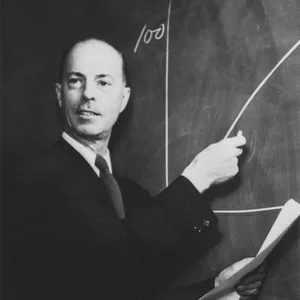
Colin MacLeod
Colin MacLeod is an Australian researcher in cognitive psychology. He is recognized for his work on attention, memory, and cognitive control, in particular the study of attentional biases linked to anxiety.
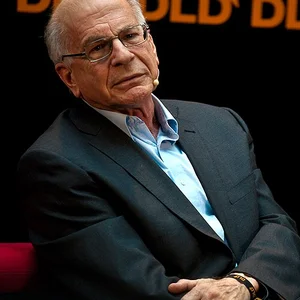
Daniel Kahneman
1934 — 2024
Daniel Kahneman was an Israeli-American psychologist and economist, a pioneer of behavioral economics. His work on cognitive biases and decision-making under uncertainty earned him the Nobel Prize in Economics in 2002.
Daniel Lagache
1903 — 1972
Daniel Lagache (1903-1972) was a French psychiatrist, psychologist, and psychoanalyst. A graduate of the École normale supérieure with an agrégation in philosophy, he sought to unify psychoanalysis and clinical psychology and was a major figure in the French psychoanalytic movement.
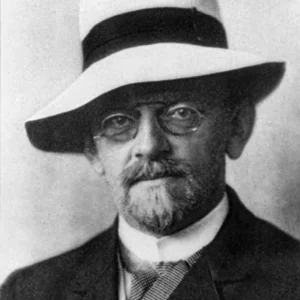
David Hilbert
1862 — 1943
German mathematician (1862–1943), one of the most influential of his era. In 1900, he formulated the 23 problems that would guide mathematical research throughout the 20th century, and sought to establish mathematics on rigorous formal foundations.
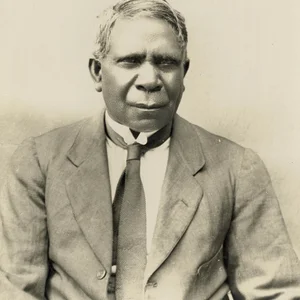
David Unaipon
1872 — 1967
David Unaipon, son of a Ngarrindjeri preacher, was the first Indigenous Australian to publish a literary work and to file invention patents. Nicknamed the 'Australian Leonardo da Vinci', he notably designed a mechanical shearing handpiece and worked on flight prototypes inspired by the boomerang. His portrait has appeared on the Australian $50 note since 1995.
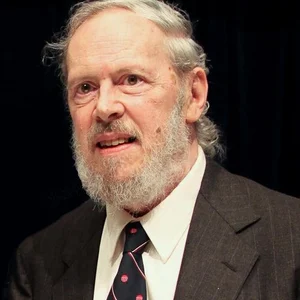
Dennis Ritchie
1941 — 2011
An American computer scientist, Dennis Ritchie is the creator of the C programming language and co-creator of the Unix operating system. His work at Bell Labs in the 1970s laid the foundations of modern computing.
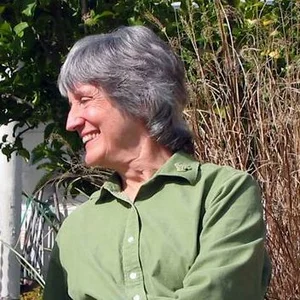
Donna Haraway
1944 — ?
Donna Haraway is an American academic, feminist theorist, and historian of science. Known for her “Cyborg Manifesto” (1985), she questions the boundaries between human, animal, and machine, and rethinks the relationships between nature, technology, and feminism.
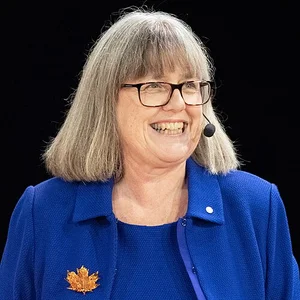
Donna Strickland
1959 — ?
Donna Strickland is a Canadian physicist and pioneer in the field of ultra-intense lasers. In 1985, she co-developed with Gérard Mourou the technique of chirped pulse amplification (CPA), revolutionizing laser physics. In 2018, she received the Nobel Prize in Physics, becoming only the third woman ever to receive this distinction.
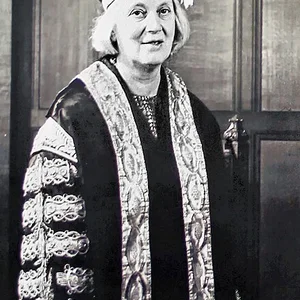
Dorothy Hodgkin
1910 — 1994
British chemist (1910-1994)
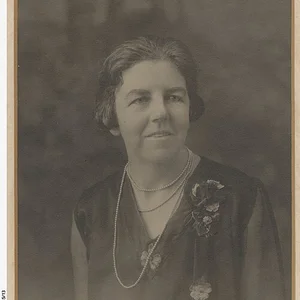
Dorothy Vaughan
1881 — 1974
An African-American mathematician, Dorothy Vaughan joined the NACA in 1943 as a "human computer." She became the agency's first Black supervisor in 1949, leading the West Area Computing unit. A computing pioneer, she taught herself FORTRAN and prepared her teams for the era of electronic computers.
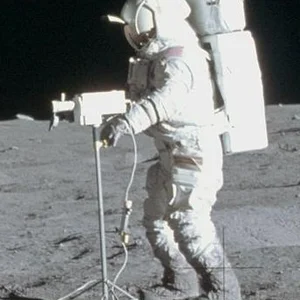
Edgar Mitchell
1930 — 2016
An American NASA astronaut, Edgar Mitchell was the sixth man to walk on the Moon during the Apollo 14 mission in February 1971. Holding a doctorate in aeronautics from MIT, he devoted his life after the space conquest to the study of human consciousness.
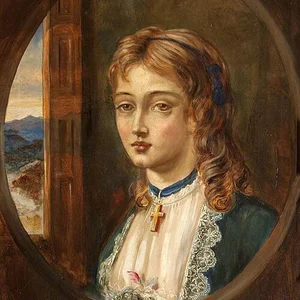
Edith Clarke
1883 — 1959
First woman to earn an electrical engineering degree from MIT (1919) and the first professionally employed female electrical engineer in the United States. She invented the Clarke graphical calculator, which greatly simplified electrical power transmission calculations.
Edith Flanigen
Edith Flanigen is an American chemist born in 1929, a pioneer in the chemistry of zeolites (molecular sieves). Her work revolutionized oil refining and industrial purification. She is one of the most prolific inventors of the 20th century.
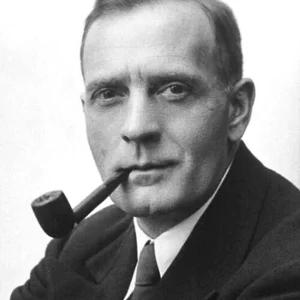
Edwin Hubble
1889 — 1953
American astronomer (1889–1953), Edwin Hubble demonstrated that spiral nebulae are galaxies beyond the Milky Way. He established that the Universe is expanding, revolutionizing our understanding of the cosmos.
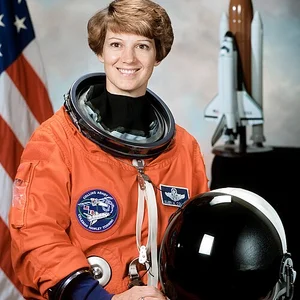
Eileen Collins
1956 — ?
An American astronaut and military pilot, Eileen Collins was the first woman to pilot and then command an American Space Shuttle. She completed four missions with NASA between 1995 and 2005.
Ejnar Hertzsprung
1873 — 1967
A Danish astronomer, he co-discovered the relationship between the brightness and temperature of stars. His work gave rise to the Hertzsprung-Russell diagram, a fundamental tool of modern astrophysics.
Elizabeth Blackburn
1948 — ?
Elizabeth Blackburn is an Australian-American molecular biologist born in 1948 in Tasmania. She discovered telomerase, the enzyme that protects the ends of chromosomes, which earned her the Nobel Prize in Physiology or Medicine in 2009.
Elsdon Best
1856 — 1931
Elsdon Best (1856-1931) was a New Zealand ethnographer and historian, a pioneer in the study of the Māori people. He recorded the traditions, beliefs, and knowledge of the Māori in landmark reference works.
Emil Fischer
1852 — 1919
Emil Fischer (1852-1919) was a German chemist regarded as one of the founders of modern organic chemistry. His work on sugars, purines, and proteins earned him the Nobel Prize in Chemistry in 1902.
Enrico Fermi
1901 — 1954
Italian physicist (1901–1954), Nobel Prize in Physics in 1938. He achieved the first controlled nuclear chain reaction in 1942 and was one of the fathers of the atomic bomb as part of the Manhattan Project.
Erich von Tschermak
1871 — 1962
Erich von Tschermak-Seysenegg was an Austrian agronomist and botanist. He was one of three scientists who, in 1900, independently rediscovered the laws of heredity set out by Gregor Mendel, contributing to the birth of modern genetics.

Erna Schneider Hoover
1926 — ?
Erna Schneider Hoover (1926-2025) was an American mathematician and computer scientist. In the 1960s she invented a computerized stored-program-controlled telephone switching system, revolutionizing the way calls were handled in telephone exchanges.
Ernest Beaux
1881 — 1961
Ernest Beaux (1881–1961) was a Franco-Russian perfumer who created the legendary Chanel N°5 in 1921, revolutionizing the art of perfumery with his innovative use of aldehydes. He is considered one of the greatest noses of the twentieth century.
Ernest Lawrence
1901 — 1958
American physicist (1901–1958), inventor of the cyclotron, the first circular particle accelerator. Winner of the 1939 Nobel Prize in Physics, he paved the way for modern nuclear physics and contributed to the Manhattan Project.
Ernest Marsden
1889 — 1970
English–New Zealand physicist and collaborator of Ernest Rutherford. In 1909, together with Hans Geiger, he carried out the famous experiment scattering alpha particles off a gold foil, which revealed the existence of the atomic nucleus.

Erwin Chargaff
1905 — 2002
An Austrian-American biochemist of Jewish origin, in the 1950s he established the rules governing the composition of DNA bases. His work provided a decisive clue for the discovery of the double helix structure by Watson and Crick.
Erwin Schrödinger
1887 — 1961
Austrian physicist (1887–1961), Nobel Prize in Physics 1933. He formulated the wave equation that bears his name, a cornerstone of quantum mechanics, and devised the famous Schrödinger's cat thought experiment.
Esther Lederberg
1922 — 2006
Esther Lederberg (1922-2006) was an American microbiologist who pioneered bacterial genetics. She discovered the lambda bacteriophage and developed the replica plating technique, long overshadowed by her husband Joshua Lederberg.
Eugenie Clark
1922 — 2015
Eugenie Clark (1922-2015) was an American ichthyologist, a pioneer of scientific diving and a world-renowned shark expert. Nicknamed “the Shark Lady,” she transformed the image of these predators and advanced the study of fishes.

Evelyn Berezin
1925 — 2018
Evelyn Berezin (1925-2018) was an American engineer and computer scientist, a pioneer of computing. In 1971 she designed the first computerized word processor, the Data Secretary, and founded the company Redactron to bring it to market.
Evelyn Boyd Granville
1924 — 2023
Evelyn Boyd Granville was an American mathematician, one of the first African American women to earn a doctorate in mathematics in the United States (Yale, 1949). She contributed to the American space programs by developing trajectory analyses for the Vanguard, Mercury, and Apollo missions.
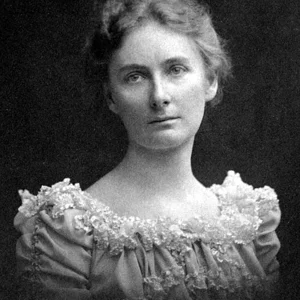
Florence Bascom
1862 — 1945
Florence Bascom (1862-1945) was an American geologist and a pioneer of the Earth sciences. The first woman to earn a doctorate from Johns Hopkins University (1893) and the first woman hired by the US Geological Survey, she was a recognized specialist in mineralogy and petrography.
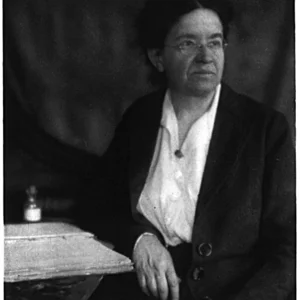
Florence Sabin
Florence Sabin (1871-1953) was an American physician and anatomist, a pioneer of medical research. She was the first woman to become a full professor at the Johns Hopkins Medical School and the first woman elected to the National Academy of Sciences of the United States.
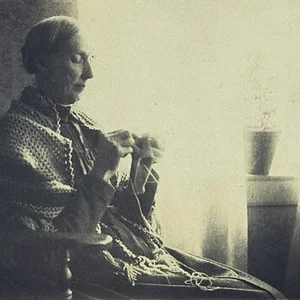
Frances Allen
1934 — 2018
American computer scientist and pioneer in compiler optimization at IBM. The first woman to win the Turing Award in 2006, she laid the theoretical foundations of modern compilation and parallel programming.
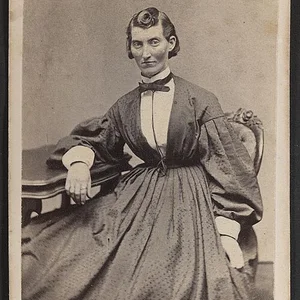
Frances Clayton
1830 — 1863
American psychologist and partner of the African American poet and activist Audre Lorde for nearly twenty years. The couple raised Lorde's two children together on Staten Island, a figure in 20th-century lesbian and feminist history.
François Jacob
1920 — 2013
François Jacob (1920-2013) was a French biologist and geneticist. Together with Jacques Monod, he uncovered the mechanism of gene regulation, which earned him the Nobel Prize in Physiology or Medicine in 1965.
Françoise Dolto
1908 — 1988
French pediatrician and psychoanalyst (1908–1988), Françoise Dolto revolutionized the understanding of children and their psychological development. She brought psychoanalysis to a wide public audience and championed children's rights.
Franklin Stahl
1929 — 2025
Franklin Stahl is an American molecular biologist and geneticist. With Matthew Meselson, in 1958 he carried out a decisive experiment demonstrating that DNA replication is semiconservative, confirming the model proposed by Watson and Crick.
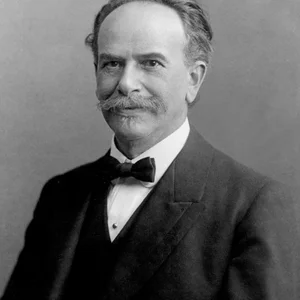
Franz Boas
1858 — 1942
Franz Boas (1858-1942) was a German-born American anthropologist, considered the father of modern cultural anthropology. He fought scientific racism by demonstrating that the differences between peoples stem from culture and not from biology.
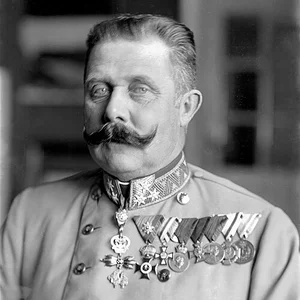
Franz Ferdinand of Austria
1863 — 1914
Archduke and heir to the Austro-Hungarian Empire, his assassination in Sarajevo on June 28, 1914, by Gavrilo Princip triggered the First World War. A central figure in the nationalism and European tensions of the early twentieth century.
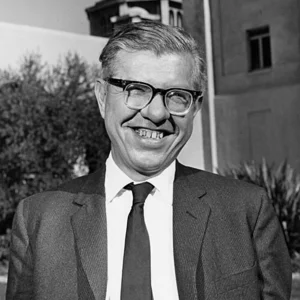
Fred Hoyle
1915 — 2001
British astrophysicist (1915–2001), Fred Hoyle is famous for his work on stellar nucleosynthesis and for ironically coining the term "Big Bang" for the theory he rejected. He championed the steady-state theory of the Universe.
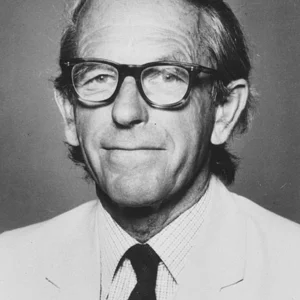
Frederick Sanger
1918 — 2013
Frederick Sanger (1918-2013) was a British biochemist, one of the very few scientists to have received the Nobel Prize in Chemistry twice. He developed fundamental methods for determining the sequence of proteins and then of DNA.
Frederick Soddy
1877 — 1956
Frederick Soddy (1877-1956) was a British radiochemist and a pioneer in the study of radioactivity. He formulated the concept of the isotope and studied radioactive decay with Ernest Rutherford. He was awarded the Nobel Prize in Chemistry in 1921.
Fridtjof Nansen
1861 — 1930
Norwegian polar explorer who crossed Greenland on skis in 1888 and attempted to reach the North Pole in 1893–1896 aboard the Fram. Nobel Peace Prize laureate in 1922, he created the Nansen passport for stateless refugees.

Fritz Strassmann
1902 — 1980
Fritz Strassmann was a German chemist who, together with Otto Hahn, carried out in 1938 the experiment demonstrating the fission of the uranium nucleus. This discovery, interpreted by Lise Meitner and Otto Frisch, paved the way for nuclear energy and nuclear weapons.
G.H. Hardy
1877 — 1947
British mathematician, a leading figure in number theory and analysis in the early 20th century. He is famous for his collaboration with John Littlewood and for revealing to the world the self-taught Indian genius Srinivasa Ramanujan.

Gary Becker
American economist of the Chicago school, winner of the Nobel Prize in Economics in 1992. He extended economic analysis to fields previously reserved for sociology, such as the family, education, crime, and discrimination.
George Sudarshan
1931 — 2018
Indian-American theoretical physicist, a major figure in 20th-century physics. He contributed to the theory of the weak interaction and to quantum optics, but never received the Nobel Prize despite several nominations.
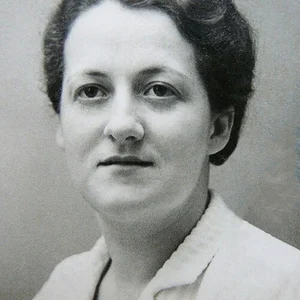
Germaine Tillion
1907 — 2008
A French ethnologist specializing in the Berber societies of Algeria, Germaine Tillion joined the Resistance in 1940 before being deported to Ravensbrück. A survivor and tireless witness, she dedicated her entire life to human rights and understanding between peoples.
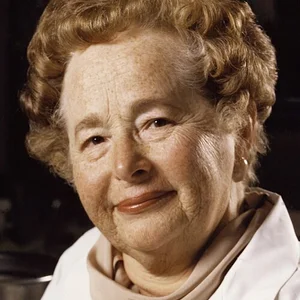
Gertrude B. Elion
1918 — 1999
Gertrude B. Elion (1918-1999) was an American biochemist and pharmacologist, a pioneer of rational drug design. Her research led to the development of treatments for leukemia, gout, transplant rejection, and viral infections. She received the Nobel Prize in Medicine in 1988.
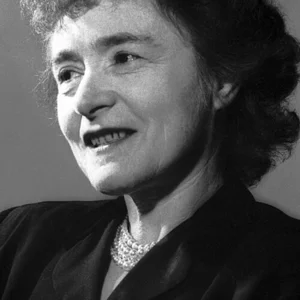
Gerty Cori
1896 — 1957
An American biochemist of Czech origin, Gerty Cori was the first woman to receive the Nobel Prize in Physiology or Medicine in 1947, which she shared with her husband Carl Cori. Her work on glycogen metabolism laid the foundations of modern biochemistry.
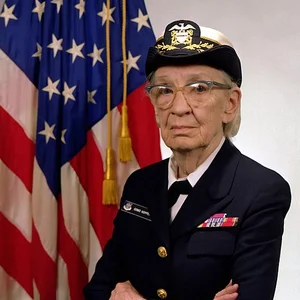
Grace Hopper
1906 — 1992
Grace Hopper, American mathematician and rear admiral, is one of the pioneers of computer science. She developed one of the first compilers and contributed to the creation of the COBOL programming language, revolutionizing programming. She popularized the term "bug" in computing after finding a real insect inside a computer.
Guglielmo Marconi
1874 — 1937
Italian physicist and inventor (1874–1937), Marconi was the pioneer of wireless radio. He achieved the first transatlantic transmission in 1901 and received the Nobel Prize in Physics in 1909.
Gustave Roussy
1874 — 1948
Franco-Swiss neurologist and oncologist (1874–1948), he founded the Paris Cancer Institute in 1921 — today known as the Institut Gustave Roussy — the first cancer center in Europe. His pioneering work on brain tumors and cancer laid the foundations of modern oncology in France.
Hans Geiger
1882 — 1945
German physicist (1882–1945), Hans Geiger is famous for inventing the Geiger counter, an instrument for detecting ionizing radiation. He worked with Ernest Rutherford and contributed to the alpha particle scattering experiment that revealed the structure of the atomic nucleus.
Harriet Creighton
1909 — 2004
American geneticist and botanist, Harriet Creighton is celebrated for her landmark experiment conducted with Barbara McClintock in 1931, proving that genetic crossing-over corresponds to a physical exchange between chromosomes. She taught botany at Wellesley College for decades.
Harry Hess
1906 — 1969
American geologist and geophysicist, and a naval officer during World War II. He is one of the founders of the theory of seafloor spreading, a decisive step toward plate tectonics.
He Zehui
1914 — 2011
He Zehui was a Chinese nuclear physicist and a pioneer of particle physics in China. Together with her husband Qian Sanqiang, she studied the fission of uranium and helped found nuclear research in China. She is sometimes called the “Marie Curie of China.”
Helen Sharman
1963 — ?
British chemist born in 1963, Helen Sharman became in 1991 the first British person and the first Western woman to travel to space, aboard the Soviet station Mir as part of the Juno project.
Herbert Winlock
American Egyptologist and archaeologist, curator and later director of the Metropolitan Museum of Art in New York. He led major excavations at Deir el-Bahari, in Egypt, and advanced knowledge of the Egyptian Middle Kingdom.
Hermann Weyl
1885 — 1955
German mathematician and theoretical physicist (1885–1955), Hermann Weyl profoundly transformed geometry, topology, and mathematical physics. He made major contributions to group theory, general relativity, and quantum mechanics.
Hertha Meyer
A German-Brazilian biophysicist of the 20th century, Hertha Meyer was a pioneer in electron microscopy applied to cell biology. She worked at the Instituto de Biofísica at the Federal University of Rio de Janeiro, contributing to the development of biophysics in Brazil.
Hertha Sponer
1895 — 1968
Hertha Sponer (1895-1968) was a German, later American, physicist and chemist, a pioneer in applying quantum mechanics to atomic and molecular physics. She was one of the first women to teach physics at university level in Germany before emigrating to the United States.
Howard Carter
1874 — 1939
British archaeologist and Egyptologist (1874–1939), Howard Carter is world-famous for discovering in 1922 the nearly intact tomb of Tutankhamun in the Valley of the Kings, Egypt. This discovery is considered the greatest in the history of archaeology.
Iannis Xenakis
1922 — 2001
French-Greek composer, mathematician and architect, a pioneer of algorithmic and stochastic music. He applied mathematics and probability theory to musical composition, revolutionizing the music of the 20th century.
Imre Lakatos
1922 — 1974
Imre Lakatos (1922-1974) was a Hungarian philosopher of science and mathematics who became a naturalized British citizen. A professor at the London School of Economics, he is famous for his theory of “scientific research programmes,” an attempt to move beyond the debate between Popper and Kuhn.
Inge Lehmann
1888 — 1993
Danish seismologist (1888–1993), Inge Lehmann discovered in 1936 that the Earth has a solid inner core, through the analysis of seismic waves. This fundamental discovery reshaped our understanding of Earth's internal structure.
Ingrid Daubechies
1954 — ?
Belgian-born physicist and mathematician, naturalized American, born in 1954. A pioneer of wavelet theory, her work revolutionized signal processing and image compression. First female president of the International Mathematical Union.
Irène Joliot-Curie
1897 — 1956
French physicist and chemist, daughter of Pierre and Marie Curie. With her husband Frédéric Joliot-Curie, she discovered artificial radioactivity in 1934, which earned them the Nobel Prize in Chemistry in 1935.
Jacques Lacan
1901 — 1981
French psychiatrist and psychoanalyst, a major figure of 20th-century psychoanalysis. He calls for a “return to Freud” and rereads psychoanalysis through the lens of structuralism and linguistics, asserting that “the unconscious is structured like a language.”
Jacques Monod
1910 — 1976
French biologist and biochemist (1910–1976), Nobel Prize in Physiology or Medicine in 1965. Together with François Jacob and André Lwoff, he discovered the mechanisms of genetic regulation, most notably the concept of the operon.
Jacques-Yves Cousteau
1910 — 1997
A French naval officer, oceanographer, and filmmaker, Jacques-Yves Cousteau was a pioneer of scuba diving and ocean exploration. Co-inventor of the self-contained underwater breathing apparatus, he popularized knowledge of the marine world through his films and his ship, the Calypso.
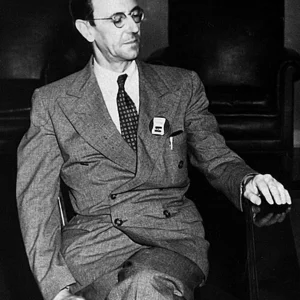
James Chadwick
1891 — 1974
British physicist (1891–1974), James Chadwick discovered the neutron in 1932, earning him the Nobel Prize in Physics in 1935. He later led the British contribution to the Manhattan Project.
James Watson & Francis Crick
1928 — 2004 / 1916 — 2004
British and American biologists who discovered the structure of DNA in 1953. Their work revolutionized the understanding of heredity and laid the foundations of modern molecular biology.
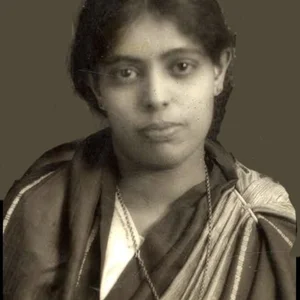
Janaki Ammal
1897 — 1984
Janaki Ammal was an Indian botanist and cytogeneticist, a pioneer in the study of the chromosomes of cultivated plants. She is especially known for her work on improving sugarcane and for helping to preserve India's native flora.
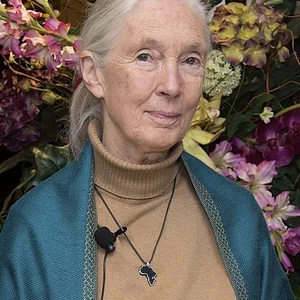
Jane Goodall
1934 — 2025
British ethologist and primatologist born in 1934, Jane Goodall is world-renowned for her pioneering research on chimpanzees in the Gombe forest of Tanzania. Her observations transformed our understanding of animal behaviour and human origins.
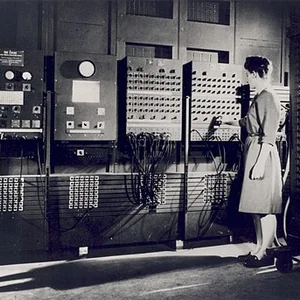
Jean Bartik
1924 — 2011
Jean Bartik (1924-2011) was an American mathematician and computer scientist, one of the first six programmers of the ENIAC, the first fully programmable electronic computer. She helped transform automatic computation into a new discipline: programming.
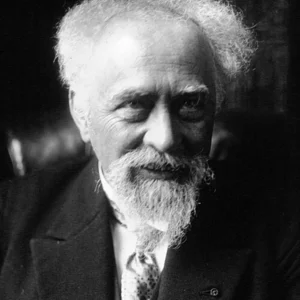
Jean Perrin
1870 — 1942
French physicist (1870–1942), he experimentally demonstrated the existence of atoms through the study of Brownian motion. Winner of the 1926 Nobel Prize in Physics, he founded the CNRS in 1939.
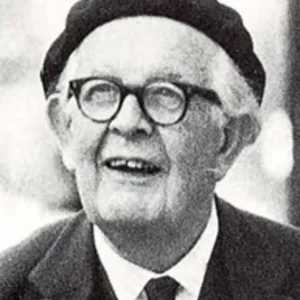
Jean Piaget
1896 — 1980
Jean Piaget was a Swiss psychologist, biologist, and epistemologist, the founder of developmental psychology and genetic epistemology. His work on the stages of children's intellectual development profoundly reshaped pedagogy and the educational sciences in the twentieth century.
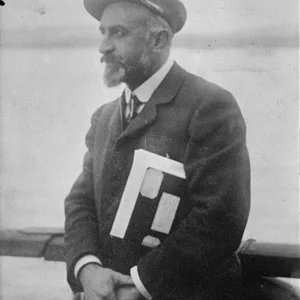
Jean-Baptiste Charcot
1867 — 1936
French physician and polar explorer (1867–1936), Jean-Baptiste Charcot led several scientific expeditions to Antarctica aboard the Pourquoi-Pas?. A pioneer in the exploration of the southern regions, he also contributed to oceanographic research.
Jocelyn Bell Burnell
1943 — ?
British astrophysicist born in 1943, Jocelyn Bell discovered pulsars in 1967 — neutron stars emitting regular radio signals — during her doctoral thesis. Her thesis supervisor received the Nobel Prize for this discovery, sparking a lasting controversy over the recognition of women in science.

John Desmond Bernal
1901 — 1971
A British physicist and pioneer of X-ray crystallography, he applied this method to the study of biological molecules. A committed Marxist scientist, he was also an influential historian and theorist of science.
John von Neumann
1903 — 1957
Hungarian-American mathematician and physicist (1903–1957), pioneer of modern computing and game theory. He is the founding architect of the programmable digital computer and contributed to the development of nuclear energy.
Joseph Schumpeter
1883 — 1950
Austrian economist and political scientist, naturalized American, Joseph Schumpeter is one of the major thinkers of 20th-century economics. He is famous for his analyses of innovation, the entrepreneur, and business cycles.
Julia Robinson
1919 — 1985
Julia Robinson (1919-1985) was an American mathematician famous for her work in number theory and mathematical logic. She made a decisive contribution to solving Hilbert's tenth problem.
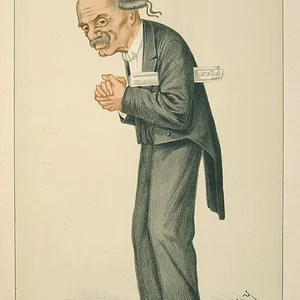
Julius Spier
1887 — 1942
Julius Spier (1887-1942) was a German Jewish psychologist and chirologist. A student of Carl Gustav Jung, he developed “psychochirology,” a reading of the hands with a psychological aim. He is best known today as the mentor and lover of Etty Hillesum.

Kakutani Yoshie
A twentieth-century Japanese mathematician, Kakutani Yoshie contributed to the growth of modern mathematics in Japan. She worked in an academic environment largely dominated by men, paving the way for women in the exact sciences in Japan.

Kamala Sohonie
1911 — 1998
Kamala Sohonie was an Indian biochemist, the first Indian woman to earn a doctorate in science. She broke down gender barriers in scientific research and studied the nutritional value of local foods.
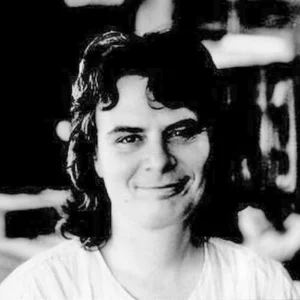
Karen Uhlenbeck
1942 — ?
American mathematician born in 1942, pioneer of geometric analysis and gauge theory. First woman to receive the Abel Prize in 2019, the highest distinction in mathematics. Her work has profoundly influenced theoretical physics and modern geometry.
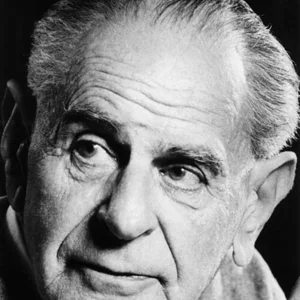
Karl Popper
1902 — 1994
An Austrian-born British philosopher of science, Karl Popper is one of the major thinkers of the 20th century. He revolutionized epistemology with the criterion of falsifiability and defended liberal democracy in *The Open Society and Its Enemies*.
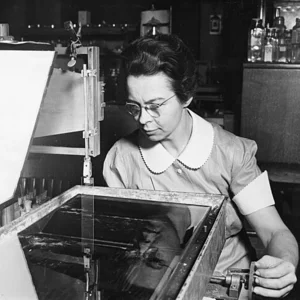
Katharine Burr Blodgett
1898 — 1979
American physicist and inventor (1898-1979), the first woman to earn a doctorate in physics from the University of Cambridge and the first female scientist hired by General Electric. She is known for inventing non-reflective glass (“invisible” glass).
Katherine Johnson
1918 — 2020
African-American physicist, mathematician, and space engineer
Kathleen Booth
1922 — 2022
Kathleen Booth (1922-2022) was a British computer scientist and mathematician, a pioneer of the early days of computing. She is credited with inventing assembly language and designing the first computers at Birkbeck College in London, alongside Andrew Booth.
Ken Thompson
1945 — ?
American computer scientist, Ken Thompson is the co-creator of the Unix operating system with Dennis Ritchie at Bell Labs in the 1970s. He also designed the B programming language, the ancestor of C, and co-developed the Go language.
Kenneth Arrow
1921 — 2017
American economist, a major figure of 20th-century economics. The youngest-ever winner of the Nobel Prize in Economics (1972), he revolutionized social choice theory, welfare economics, and general equilibrium analysis.

Klára Dán von Neumann
American mathematician and programmer of Hungarian origin, regarded as one of the first programmers in history. She wrote and coded programs for the ENIAC computer, notably for weather calculations and simulations related to nuclear weapons.
Kono Yasui
1880 — 1971
Kono Yasui (1880-1971) was a Japanese botanist and cytologist, a pioneer in the study of chromosomes and plant genetics. In 1927, she became the first Japanese woman to earn a doctorate in science.
Kurt Gödel
1906 — 1978
Austrian-American mathematician (1906–1978), Kurt Gödel revolutionized mathematical logic with his incompleteness theorems (1931). He proved that no sufficiently powerful formal system can be both complete and consistent.
Lawrence Bragg
1890 — 1971
British physicist born in Australia, a pioneer of X-ray crystallography. At 25, he became the youngest-ever Nobel laureate in Physics (1915), sharing the prize with his father William Henry Bragg for the study of crystal structure.
Lev Vygotsky
1896 — 1934
Soviet psychologist of Belarusian origin, founder of the cultural-historical approach to the development of the mind. He showed that higher mental functions are built through social interactions and language. He died prematurely of tuberculosis at the age of 37.
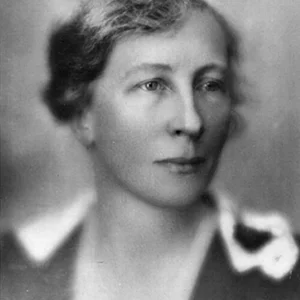
Lillian Gilbreth
American engineer, psychologist, and pioneer of scientific management. The first woman member of the American Society of Mechanical Engineers, she brought the human dimension into the study of industrial efficiency.
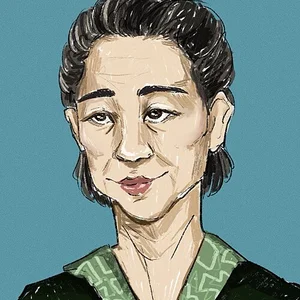
Lin Lanying
1918 — 2003
Lin Lanying was a Chinese engineer and scientist specializing in semiconductor materials. A pioneer of microelectronics in China, she is nicknamed the “mother of Chinese semiconductor materials” for developing the country's first single crystals of silicon and gallium arsenide.
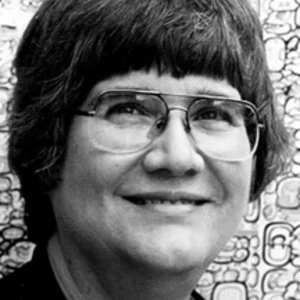
Linda Schele
1942 — 1998
American epigrapher and archaeologist (1942–1998), pioneer in the decipherment of Maya writing. Her work revolutionized our understanding of Maya history, cosmology, and dynasties.
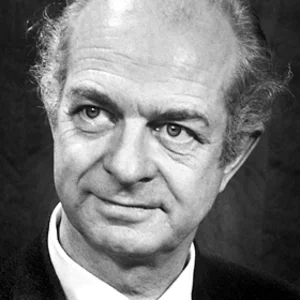
Linus Pauling
1901 — 1994
American chemist (1901–1994), Linus Pauling is one of the founders of modern molecular chemistry. He is one of the very few individuals to have received two Nobel Prizes: Chemistry in 1954 and Peace in 1962.
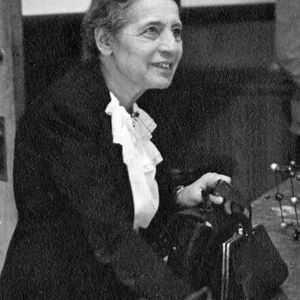
Lise Meitner
1878 — 1968
Austro-Swedish physicist
Louis Bachelier
1870 — 1946
Louis Bachelier was a French mathematician who pioneered the modern theory of probability applied to finance. His 1900 thesis on stock market speculation introduced Brownian motion before Einstein, founding the field of financial mathematics.
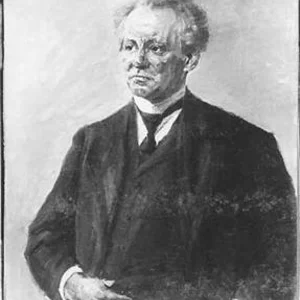
Ludwig Borchardt
1863 — 1938
Ludwig Borchardt (1863-1938) was a German Egyptologist and architect. He led the excavations at Tell el-Amarna, where his team unearthed the famous bust of Nefertiti in 1912. He founded the German Archaeological Institute in Cairo.
Lynn Conway
1938 — 2024
An American computer scientist and engineer, Lynn Conway revolutionized integrated circuit design by co-developing VLSI design rules with Carver Mead. A pioneer of superscalar processor architecture, she also made history as a transgender woman who rebuilt a brilliant career after being fired from IBM.
Maclyn McCarty
1911 — 2005
Maclyn McCarty was an American physician and geneticist. Together with Oswald Avery and Colin MacLeod, he demonstrated in 1944 that DNA is the carrier of genetic information, a founding discovery of molecular biology.
Mae Jemison
1956 —
American physician and astronaut
Marc Bloch
1886 — 1944
French historian and co-founder of the Annales School with Lucien Febvre, Marc Bloch revolutionized historical method by prioritizing social and economic structures over event-driven history. A resistance fighter from the very start, he was arrested by the Gestapo and shot in 1944.

Marcus Rhoades
American geneticist specializing in maize, a pioneer of plant cytogenetics in the 20th century. A close collaborator of Barbara McClintock, he studied cytoplasmic inheritance and the chromosomes of maize.
Margaret Hamilton
1936 — ?
Margaret Hamilton is a pioneering American computer scientist and engineer in the field of software engineering. She led the team that developed the onboard navigation software for the Apollo missions, directly contributing to the 1969 Moon landing. She is considered one of the founders of software engineering as a discipline.
Margherita Hack
1922 — 2013
Italian astrophysicist born in Florence in 1922, she directed the Astronomical Observatory of Trieste for thirty years. A pioneer of stellar spectroscopy and a gifted science communicator, she made astronomy accessible to the general public.
Marguerite Perey
1909 — 1975
French chemist (1909–1975), collaborator of Marie Curie at the Radium Institute. In 1939 she discovered francium, the last natural element to be discovered, and in 1962 became the first woman elected to the French Academy of Sciences.
Maria Goeppert Mayer
1906 — 1972
An American theoretical physicist of German origin, she developed the nuclear shell model of the atomic nucleus. In 1963, she became the second woman in history to receive the Nobel Prize in Physics, after Marie Curie.
Mária Telkes
1900 — 1995
Hungarian-American biophysicist and inventor (1900-1995), nicknamed the “Queen of the Sun.” A pioneer of solar energy, she designed the first solar heating system for a home and a solar distiller used by the US Navy.
Marie Maynard Daly
1921 — 2003
Marie Maynard Daly (1921-2003) was an American biochemist, the first African American woman to earn a doctorate in chemistry in the United States. Her work focused on cholesterol, proteins, and the structure of the cell nucleus.
Marie Tharp
1920 — 2006
Marie Tharp was an American geologist and cartographer who produced the first scientific maps of the ocean floor. By mapping the Mid-Atlantic Ridge, she provided decisive visual proof of the theory of continental drift — long overlooked because of her status as a woman.
Marietta Blau
1894 — 1970
Marietta Blau (1894-1970) was an Austrian physicist who pioneered the photographic method of particle detection. Her sensitive emulsions made it possible to record cosmic rays and nuclear disintegrations, paving the way for particle physics.
Marthe Gautier
1925 — 2022
Marthe Gautier (1925-2022) was a French pediatrician and researcher. Her cell culture work was decisive in the 1958-1959 discovery of the chromosomal anomaly that causes Down syndrome. Long downplayed, her contribution reignited the debate over the recognition of women in science.
Martin Ryle
1918 — 1984
British astronomer and pioneer of radio astronomy. He developed the aperture synthesis technique that made it possible to map the sky with great precision, and was awarded the Nobel Prize in Physics in 1974.
Mary Cartwright
1900 — 1998
British mathematician and pioneer of dynamical systems theory. Her work on nonlinear differential equations foreshadowed chaos theory. She was the first woman mathematician elected to the Royal Society.
Mary Engle Pennington
1872 — 1952
Mary Engle Pennington (1872-1952) was an American chemist, bacteriologist, and engineer, a pioneer of food preservation through refrigeration. She established the scientific standards of the cold chain for milk, eggs, and poultry in the United States.
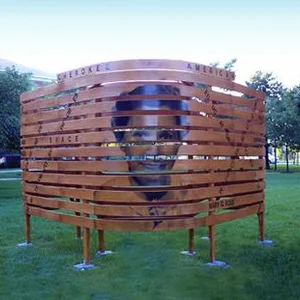
Mary Golda Ross
1908 — 2008
Mary Golda Ross (1908-2008) was an American aerospace engineer, the first female engineer of the Cherokee Nation. A pioneer of astronautics, she took part in the founding work of the American space and defense programs at Lockheed.
Mary Jackson
1910 — 2005
American mathematician and aerospace engineer, Mary Jackson was the first Black female engineer at NASA. A member of the “Hidden Figures,” she contributed to the calculations for the first American space missions and fought for equal rights within the agency.
Mary Kenneth Keller
1913 — 1985
Mary Kenneth Keller was an American Catholic nun and a computing pioneer. She was one of the first people to earn a doctorate in computer science in the United States (1965) and contributed to the development of the BASIC programming language.
Maryam Mirzakhani
1977 — 2017
Maryam Mirzakhani is the first woman to win the Fields Medal in 2014, the highest honor in mathematics. Born in Iran, she revolutionized the understanding of Riemann surfaces and hyperbolic geometry. A professor at Stanford, she passed away from cancer at just 40 years old, leaving behind a landmark body of mathematical work.
Mathilde Krim
1926 — 2018
Mathilde Krim was a medical biology researcher specializing in virology and cancer. She is best known for her pioneering fight against AIDS, having founded a research foundation that became amfAR in the 1980s.
Matthew Meselson
1930 — ?
Matthew Meselson is an American geneticist and molecular biologist born in 1930. Together with Franklin Stahl, he demonstrated in 1958 the semi-conservative replication mechanism of DNA. He also became an advocate against chemical and biological weapons.
Maud Menten
1879 — 1960
Maud Menten (1879-1960) was a pioneering Canadian biochemist and physician. She co-authored the Michaelis-Menten law of enzyme kinetics (1913), a cornerstone of biochemistry. She was one of the first Canadian women to earn a doctorate in medicine.
Maurice Ewing
1906 — 1974
Maurice Ewing was an American geophysicist and a pioneer of oceanography. His research on the seafloor and oceanic crust provided decisive evidence in support of the theory of plate tectonics.
Maurice Wilkins
1916 — 2004
British biophysicist of New Zealand origin. His X-ray diffraction work on DNA contributed to the discovery of the double-helix structure, which earned him the Nobel Prize in Medicine in 1962 alongside James Watson and Francis Crick.
Melanie Klein
1882 — 1960
British psychoanalyst of Austrian origin (1882–1960), pioneer of child psychoanalysis. She developed object relations theory and was one of the first to analyze very young children through play. Her work profoundly influenced child psychiatry and psychoanalytic thought.
Mildred Dresselhaus
1930 — 2017
American physicist nicknamed the “queen of carbon” for her pioneering work on the electronic structure of graphite and carbon-based materials. Her research paved the way for carbon nanotubes and graphene.
Mileva Marić
1875 — 1948
Serbian mathematician and physicist (1875–1948), the first woman admitted to the physics program at the Zurich Polytechnic. First wife of Albert Einstein, she collaborated on his *annus mirabilis* papers of 1905, though her exact contribution remains debated.
Murray Gell-Mann
1929 — 2019
Murray Gell-Mann was an American physicist, a theorist of particle physics. He proposed the existence of quarks, the elementary building blocks of matter, and received the Nobel Prize in Physics in 1969.
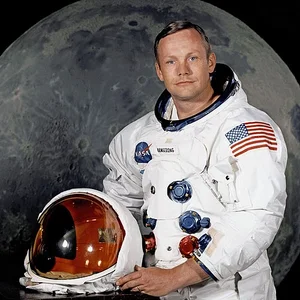
Neil Armstrong
1930 — 2012
American astronaut (1930-2012), Neil Armstrong was the first person to walk on the Moon on July 20, 1969. Commander of the Apollo 11 mission, he marked a major turning point in space exploration and the Cold War.
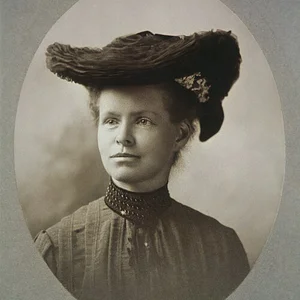
Nettie Stevens
1861 — 1912
American geneticist and pioneer of cytogenetics. In 1905, she demonstrated that an organism's sex is determined by its chromosomes, identifying the role of the Y chromosome in the mealworm beetle (Tenebrio molitor).
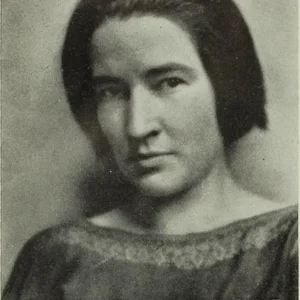
Nicholas Reeves
1956 — ?
Nicholas Reeves is a British Egyptologist and archaeologist born in 1956, a specialist in the 18th Dynasty and the Valley of the Kings. He became famous for his research on Tutankhamun and his theory that the tomb of Queen Nefertiti lies hidden behind the walls of the young pharaoh's own tomb.
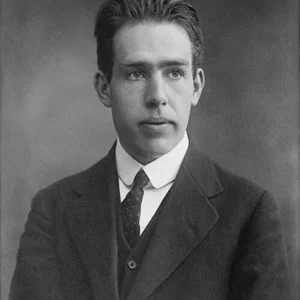
Niels Bohr
Danish physicist (1885–1962), pioneer of quantum mechanics. He proposed a revolutionary model of the atom and received the Nobel Prize in Physics in 1922.
Norbert Wiener
American mathematician (1894-1964), founder of cybernetics, the science of communication and control in living systems and machines. His work laid the theoretical foundations of computing, automation, and artificial intelligence.

Olga Owens Huckins
American journalist and environmental activist (1899–1968), known for writing a letter describing the devastation caused by DDT on the birds of her private sanctuary in Massachusetts. This letter, sent to her friend Rachel Carson in 1958, was the catalyst for the writing of Silent Spring.
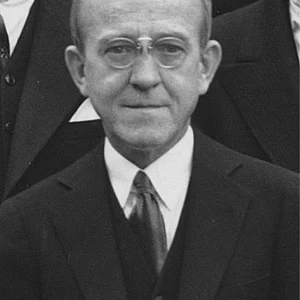
Oswald Avery
1877 — 1955
American-Canadian physician and researcher in microbiology and immunology. In 1944, together with Colin MacLeod and Maclyn McCarty, he demonstrated that DNA is the carrier of heredity, laying one of the foundations of molecular genetics.
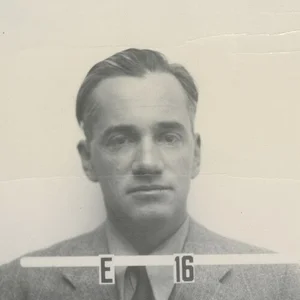
Otto Frisch
1904 — 1979
Austrian-born physicist who became a naturalized British citizen, and nephew of Lise Meitner. Together with his aunt, he provided the first theoretical explanation of nuclear fission in 1939. During the Second World War, he took part in the Manhattan Project and co-wrote the Frisch-Peierls memorandum demonstrating the feasibility of an atomic bomb.
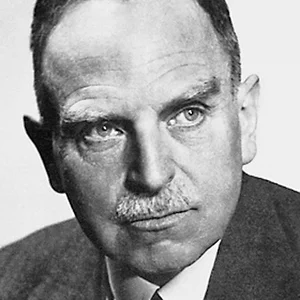
Otto Hahn
1879 — 1968
German chemist (1879–1968), awarded the Nobel Prize in Chemistry in 1944. He discovered nuclear fission of uranium in 1938 with Fritz Strassmann, paving the way for atomic energy.
Patricia Bath
1942 — 2019
An American ophthalmologist and inventor, Patricia Bath revolutionized cataract treatment by developing the Laserphaco Probe, a laser device patented in 1988. The first African American woman to receive a medical patent in the United States, she also co-founded the American Institute for the Prevention of Blindness.
Patsy Sherman
Patsy Sherman (1930-2008) was an American chemist employed by the company 3M. She is known worldwide for co-inventing Scotchgard, a waterproofing and stain-resistant treatment for textiles.
Paul Feyerabend
1924 — 1994
Austrian philosopher of science, a major figure in twentieth-century epistemology. Known for his radical critique of a single scientific method and for the “epistemological anarchism” he defended in *Against Method* (1975).
Paul Hermann Müller
1899 — 1965
Swiss chemist (1899–1965), Paul Hermann Müller synthesized DDT in 1939 and discovered its insecticidal properties. This discovery earned him the Nobel Prize in Physiology or Medicine in 1948, although DDT is now banned for its harmful environmental effects.
Paul Langevin
1872 — 1946
French physicist (1872–1946), student of Pierre Curie and friend of Einstein, pioneer of the theory of magnetism and ultrasonics. A committed philosopher of science, he was a passionate anti-fascist activist and defender of secular public education.
Paul Painlevé
1863 — 1933
A renowned French mathematician, Paul Painlevé (1863–1933) is known for his work on differential equations. He entered politics and served twice as President of the Council in 1917 and 1925, as well as Minister of War.
Pavel Alexandrov
1896 — 1982
Russian and later Soviet mathematician, one of the founders of modern topology. A professor at Moscow University, he left a deep mark on the Soviet school of mathematics in the 20th century.
Philo Farnsworth
1906 — 1971
American inventor and pioneer of electronic television. As a teenager he conceived the principle of the image dissector tube and, in 1927, achieved the first transmission of a fully electronic image.
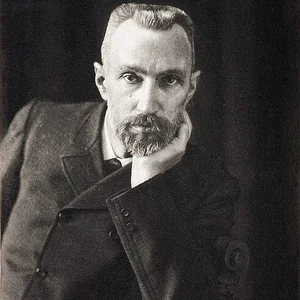
Pierre Curie
1859 — 1906
French physicist (1859–1906), he discovered piezoelectricity with his brother Jacques in 1880, then conducted groundbreaking research on radioactivity alongside Marie Curie. A Nobel Prize laureate in Physics in 1903, he is one of the founding fathers of modern physics.
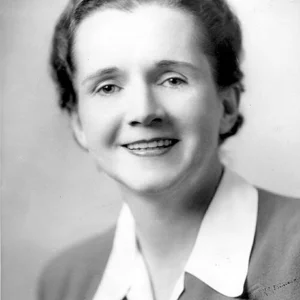
Rachel Carson
1907 — 1964
Marine biologist and American writer, Rachel Carson is the pioneer of the modern environmental movement. Her book *Silent Spring* (1962) exposed the massive use of pesticides and their devastating impact on ecosystems, sparking a global awakening on environmental protection.
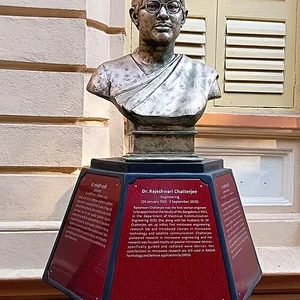
Rajeshwari Chatterjee
1922 — 2010
Rajeshwari Chatterjee was an Indian engineer and scientist, a pioneer of microwave and antenna engineering. The first woman engineer from the state of Karnataka, she taught for decades at the Indian Institute of Science in Bangalore.
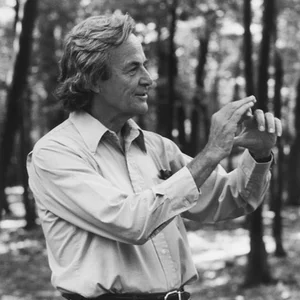
Richard Feynman
1918 — 1988
American physicist (1918–1988), Nobel Prize in Physics 1965 for his work on quantum electrodynamics. Pioneer of Feynman diagrams and a legendary figure in science communication.
Rita Levi-Montalcini
1909 — 2012
An Italian-American neurologist, Rita Levi-Montalcini discovered nerve growth factor (NGF), revolutionizing neurobiology. She won the Nobel Prize in Medicine in 1986, and continued her research despite fascist racial laws that forced her to work in secret. She remained active in science past the age of 100.
Robert Goddard
1882 — 1945
American engineer and physicist (1882–1945), pioneer of astronautics. He designed and launched the first liquid-fueled rocket in 1926, laying the foundations of modern space exploration.
Robert Marshak
1916 — 1992
Robert Marshak was an American theoretical physicist specializing in particle physics. He is known for his theory explaining the energy of stars and for his contribution to the theory of the weak interaction.
Roger Penrose
1931 — ?
British physicist and mathematician born in 1931, Roger Penrose is known for his work on gravitational singularities, black holes, and cosmology. Winner of the 2020 Nobel Prize in Physics, he also developed controversial theories on consciousness and quantum mechanics.
Roman Jakobson
1896 — 1982
Russian-American linguist and theorist, a major figure of structuralism. Founder of the Prague Linguistic Circle, he revolutionized phonology and proposed a model of the functions of language that left its mark on the linguistics, poetics, and humanities of the 20th century.
Rosalind Franklin
1920 — 1958
British molecular biologist (1920–1958), Rosalind Franklin made essential contributions to our understanding of DNA structure through her X-ray crystallography work. She is best known for Photo 51, a landmark image that revealed the double helix structure of DNA.
Rosalind Pitt-Rivers
1907 — 1990
Rosalind Pitt-Rivers was a 20th-century British biochemist who specialized in thyroid hormones. In 1952, together with Jack Gross, she co-discovered triiodothyronine (T3), a major thyroid hormone.
Rosalyn Yalow
1921 — 2011
Rosalyn Yalow was an American medical physicist and a pioneer of nuclear medicine. With Solomon Berson, she developed the radioimmunoassay (RIA), a technique that revolutionized biological diagnostics. She received the Nobel Prize in Medicine in 1977.
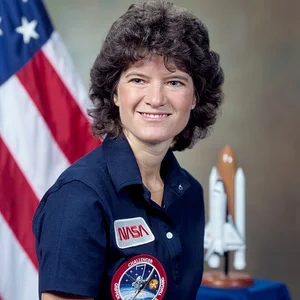
Sally Ride
1951 — 2012
American physicist and astronaut, Sally Ride became in 1983 the first American woman to travel in space aboard the Space Shuttle Challenger. She took part in two space missions and later dedicated herself to promoting science education for young people.
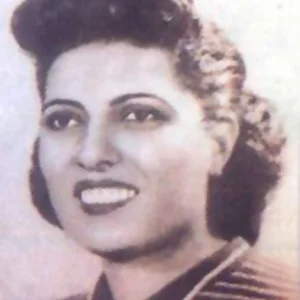
Sameera Moussa
1917 — 1952
Samira Moussa (1917-1952) was an Egyptian nuclear physicist and a pioneer of atomic research in the Arab world. She worked to make the medical uses of nuclear energy accessible to all and died prematurely under circumstances that remain mysterious.
Sandra Harding
1935 — 2025
Sandra Harding is an American philosopher born in 1935, a leading figure in feminist epistemology and the philosophy of science. She theorized the notion of the “situated standpoint” (standpoint theory) and criticized the claim to neutral objectivity in scientific knowledge.
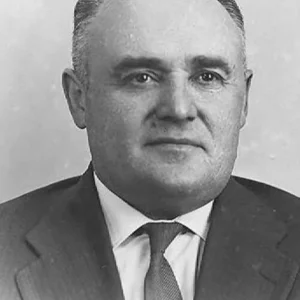
Sergei Korolev
1907 — 1966
Soviet engineer of Ukrainian origin, Korolev is the father of the Soviet space program. He designed Sputnik, the first artificial satellite, and the Vostok capsule that allowed Gagarin to fly in space.
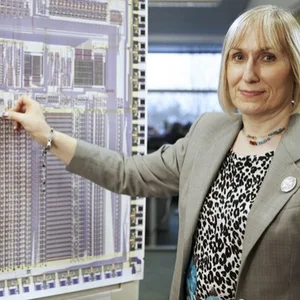
Sophie Wilson
1957 — ?
Sophie Wilson is a British computer scientist born in 1957, who designed the instruction set of the ARM processor. Her architecture now powers nearly all smartphones and mobile devices worldwide.
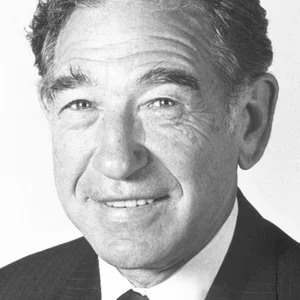
Stanley Cohen
1922 — 2020
Stanley Cohen (1922-2020) was an American biochemist. Together with Rita Levi-Montalcini, he discovered growth factors, notably epidermal growth factor (EGF), proteins essential to the development and repair of cells. This work earned him the Nobel Prize in Physiology or Medicine in 1986.
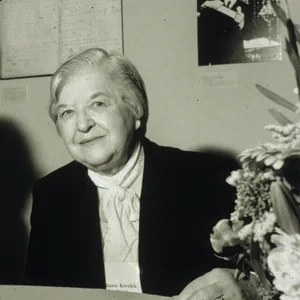
Stephanie Kwolek
1923 — 2014
American chemist (1923-2014), Stephanie Kwolek invented Kevlar in 1965, a synthetic fiber five times stronger than steel. Her discovery revolutionized protective equipment and earned her numerous scientific distinctions.
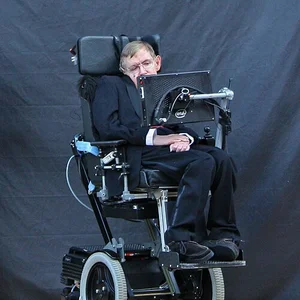
Stephen Hawking
1942 — 2018
British theoretical physicist and cosmologist (1942–2018), Stephen Hawking revolutionized our understanding of black holes and cosmology. Diagnosed with amyotrophic lateral sclerosis at age 21, he went on to have an exceptional scientific career despite severe disability.
Steve Wozniak
1950 — ?
Engineer and co-founder of Apple, Steve Wozniak designed the Apple I and Apple II in the 1970s, laying the foundations of personal computing. Nicknamed “The Woz,” he is considered one of the pioneers of the digital revolution.

Svetlana Savitskaya
Soviet cosmonaut Svetlana Savitskaya was the second woman to travel to space and the first to perform a spacewalk (EVA). She completed two missions aboard the Salyut 7 space station in 1982 and 1984.
Sylvia Earle
1935 — ?
American oceanographer and explorer, Sylvia Earle set a solo dive record in 1979 at a depth of 381 meters. A pioneer of deep-sea exploration, she has led numerous expeditions and advocates tirelessly for ocean protection.
Thomas Kuhn
1922 — 1996
Thomas Kuhn was an American physicist, historian, and philosopher of science. His work *The Structure of Scientific Revolutions* (1962) profoundly transformed our understanding of how science evolves by introducing the notion of the “paradigm”.
Thor Heyerdahl
1914 — 2002
Norwegian anthropologist and navigator, Thor Heyerdahl crossed the Pacific in 1947 on the raft Kon-Tiki to demonstrate that prehistoric migrations from South America to Polynesia were possible. His expeditions combined adventure with archaeological research.
Tim Berners-Lee
1955 — ?
British computer scientist born in 1955, Tim Berners-Lee is the inventor of the World Wide Web (1989–1991). He designed the HTTP and HTML protocols that revolutionized global communication.
Toshiko Yuasa
1909 — 1980
Toshiko Yuasa (1909-1980) was the first female Japanese physicist. A specialist in radioactivity and nuclear physics, she spent the bulk of her career in France, at the CNRS, following in the footsteps of the Joliot-Curies' work.
Tsung-Dao Lee
1926 — 2024
American theoretical physicist of Chinese origin. With Chen Ning Yang, he demonstrated in 1956 the non-conservation of parity in weak interactions, which earned them the Nobel Prize in Physics in 1957.
Tu Youyou
1930 —
Chinese pharmaceutical researcher
Vera Rubin
1928 — 2016
American astronomer (1928–2016), Vera Rubin demonstrated the existence of dark matter through her study of galaxy rotation curves. Her work revolutionized our understanding of the composition of the universe.

Viktor Hamburger
1900 — 2001
Viktor Hamburger was a German-American developmental biologist. His work on the development of the nervous system in the chicken embryo contributed decisively to the discovery of nerve growth factor (NGF), which earned a Nobel Prize awarded to his collaborators.
Vint Cerf
1943 — ?
American computer scientist, co-creator with Bob Kahn of the TCP/IP protocol that forms the technical foundation of the Internet. Nicknamed one of the “fathers of the Internet,” he helped transform a military network into a global communication infrastructure.
Werner Heisenberg
1901 — 1976
German physicist (1901–1976), one of the founders of quantum mechanics. He formulated the uncertainty principle in 1927, which bears his name, revolutionizing the conception of physical reality. Winner of the Nobel Prize in Physics in 1932.
Wernher von Braun
1912 — 1977
A German-American aerospace engineer, he designed the V-2 rocket for Nazi Germany before being recruited by the United States. He then led NASA's Saturn V program, which carried Apollo 11 to the Moon in 1969.
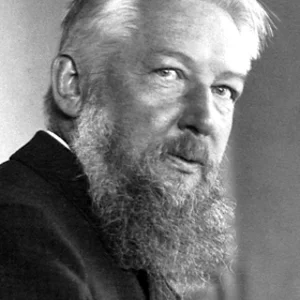
Wilhelm Ostwald
1853 — 1932
Wilhelm Ostwald was a Baltic German chemist, one of the founding fathers of physical chemistry. He received the Nobel Prize in Chemistry in 1909 for his work on catalysis, chemical equilibria and reaction rates.
Wright (Orville and Wilbur)
American brothers, self-taught mechanics and inventors, they achieved the first powered and controlled flight in history on December 17, 1903, at Kitty Hawk, North Carolina. Their Flyer I flew for 12 seconds, launching the age of aviation.

Xie Xide
1921 — 2000
Xie Xide (1921-2000) was a Chinese physicist, a pioneer of solid-state physics and semiconductors in China. The first woman to serve as president of Fudan University in Shanghai, she played a major role in the development of modern Chinese physics.
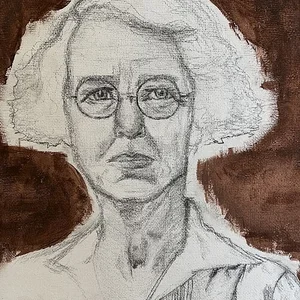
Ynes Mexia
1870 — 1938
Ynes Mexia was a Mexican-American botanist and explorer. Beginning her scientific career at over 50 years old, she led botanical collecting expeditions across North and South America, gathering tens of thousands of plant specimens, including hundreds of species new to science.
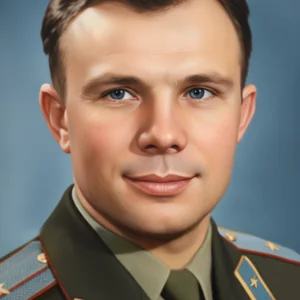
Yuri Gagarin
1934 — 1968
A Soviet cosmonaut, Yuri Gagarin became the first human to travel into space on 12 April 1961 aboard Vostok 1. His flight made him a worldwide hero and a symbol of Soviet space achievement at the height of the Cold War.

Yvette Cauchois
1908 — 1999
Yvette Cauchois (1908-1999) was a French physicist and chemist, a pioneer of X-ray spectroscopy. She designed the curved-crystal spectrograph that bears her name and was one of the first women to head a major scientific laboratory in France.
Yvonne Brill
1924 — 2013
Canadian-American aerospace engineer (1924-2013), a pioneer of spacecraft propulsion. She invented a hydrazine propulsion system that kept satellites in orbit, a technology that became an industry standard.
21st Century(30)
Alex Eskin
1965 — ?
Alex Eskin is an American mathematician born in 1965, a specialist in dynamical systems and geometry. He is famous for the “Magic Wand Theorem” proved with Maryam Mirzakhani.
Andrea Ghez
1965 — ?
Andrea Ghez is an American astrophysicist born in 1965 who specializes in observing the galactic center. Her work provided proof of the existence of a supermassive black hole at the heart of the Milky Way. She received the Nobel Prize in Physics in 2020.
Anne L'Huillier
1958 — ?
Anne L'Huillier is a French-Swedish physicist born in 1958, a pioneer of attosecond physics. She received the 2023 Nobel Prize in Physics for her work on generating ultra-short pulses of light that make it possible to observe the motion of electrons.
Benjamin Radford
1970 — ?
Benjamin Radford is an American writer, investigator, and skeptic who specializes in the rational analysis of paranormal phenomena and urban legends. He notably investigated the chupacabra myth and cryptozoology by applying the scientific method.
Bertrand Piccard
1958 — ?
Swiss psychiatrist and aeronaut born in 1958, Bertrand Piccard completed the first non-stop round-the-world balloon flight in 1999. He then became the driving force behind Solar Impulse, the solar-powered aircraft that completed the first fuel-free circumnavigation of the globe in 2015–2016.
Carol Greider
1961 — ?
Carol Greider is an American molecular biologist born in 1961. In 1984 she discovered telomerase, the enzyme that protects the ends of chromosomes, which earned her the Nobel Prize in Physiology or Medicine in 2009.
Carolyn Bertozzi
1966 — ?
American chemist born in 1966, a pioneer of bioorthogonal chemistry. She developed chemical reactions capable of taking place inside living organisms without disrupting their functioning. She received the Nobel Prize in Chemistry in 2022.
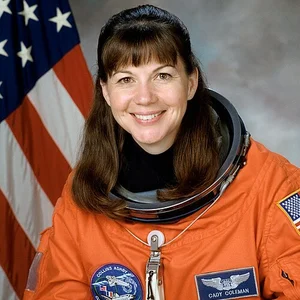
Catherine Coleman
1960 — ?
An American astronaut and chemist, Catherine Coleman completed three spaceflights, including a 159-day stay aboard the International Space Station in 2010–2011. A US Air Force officer, she contributed to scientific experiments in microgravity.
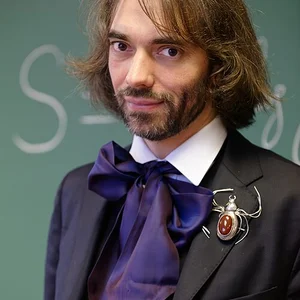
Cédric Villani
1973 — ?
French mathematician born in 1973, awarded the Fields Medal in 2010 for his work on the Boltzmann equation and optimal transport. Director of the Institut Henri-Poincaré, then a member of the National Assembly.
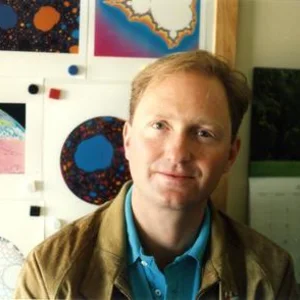
Curtis McMullen
1958 — ?
Curtis McMullen is an American mathematician born in 1958, a professor at Harvard University. A specialist in dynamical systems, hyperbolic geometry, and complex analysis, he was awarded the Fields Medal in 1998.
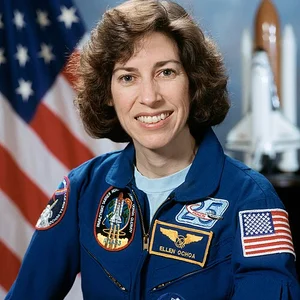
Ellen Ochoa
1958 — ?
Ellen Ochoa is an American engineer and astronaut, the first woman of Hispanic origin to travel into space in 1993. A specialist in optical systems, she flew four missions aboard the space shuttle and later directed NASA's Johnson Space Center.
Emmanuelle Charpentier
1968 — ?
A French microbiologist and geneticist, she co-develops the CRISPR-Cas9 technique with Jennifer Doudna. This revolution in genome editing earns her the Nobel Prize in Chemistry in 2020.
Esther Duflo
1972 — ?
French-American economist born in 1972, a specialist in development economics. She reshaped the fight against poverty by relying on rigorous field experiments. In 2019, she became the youngest person ever to win the Nobel Prize in Economics.
Fei-Fei Li
1976 — ?
American computer scientist of Chinese origin, pioneer in artificial intelligence and computer vision. She created ImageNet, an image database that revolutionized deep learning. A professor at Stanford, she advocates for ethical and inclusive AI.
Frances Arnold
1956 — ?
American chemist and pioneer of directed protein evolution. She received the Nobel Prize in Chemistry in 2018 for applying the principles of natural evolution to enzyme design. Her work is revolutionizing biochemistry and the pharmaceutical industry.
Francisca Nneka Okeke
1968 — ?
Francisca Nneka Okeke is a Nigerian physicist and professor at the University of Nigeria, Nsukka. A specialist in geophysics, she studies the electric currents of the ionosphere (the equatorial electrojet) and their link to the climate. In 2013, she received the L'Oréal-UNESCO Award for Women in Science.
Gérard Mourou
1944 — ?
Gérard Mourou is a French physicist born in 1944, a specialist in lasers. Together with Donna Strickland, he invented the chirped pulse amplification (CPA) technique, which earned him the Nobel Prize in Physics in 2018.
Grigori Perelman
1966 — ?
Russian mathematician born in 1966, famous for proving the Poincaré conjecture in 2003, one of the seven Millennium Prize Problems. He refused the Fields Medal (2006) and the Clay Prize of one million dollars (2010).
Guido van Rossum
1956 — ?
Dutch computer scientist born in 1956, Guido van Rossum is the creator of the Python programming language, which he began developing in 1989. Python is today one of the most widely used languages in the world, particularly in programming education and artificial intelligence.
Jennifer Doudna
1964 — ?
American biochemist and pioneer of CRISPR-Cas9 technology. Her work revolutionized genome editing, opening up enormous possibilities in medicine and biotechnology. She received the Nobel Prize in Chemistry in 2020 alongside Emmanuelle Charpentier.
Katalin Karikó
1955 — ?
Hungarian biochemist and pioneer of messenger RNA technology. Her research, long overlooked, made mRNA vaccines against COVID-19 possible. She received the Nobel Prize in Physiology or Medicine in 2023.
Kizzmekia Corbett
1986 — ?
An American immunologist, Kizzmekia Corbett played a central role in developing the mRNA vaccine against COVID-19 at the NIH. Her work ushered in a new era in vaccination.
Linda B. Buck
1947 — ?
Linda Brown Buck is an American biologist born in 1947. She unraveled how the olfactory system works by discovering the large family of genes that encode odor receptors. Her work earned her the Nobel Prize in Physiology or Medicine in 2004, shared with Richard Axel.
Linus Torvalds
1969 — ?
Finnish computer engineer born in 1969, Linus Torvalds is the creator of the Linux kernel in 1991, which became the most widely used open source operating system in the world. He also developed Git, a version control tool used by millions of developers.
Luke Yuan
Luke Yuan is a 21st-century scientist whose contributions fall within the field of contemporary science. His career path illustrates the internationalization of global scientific research.
May-Britt Moser
1963 — ?
May-Britt Moser is a Norwegian neuroscientist and psychologist born in 1963. Together with her colleague Edvard Moser, she discovered “grid cells,” neurons that form the brain's positioning system. This work earned her the Nobel Prize in Physiology or Medicine in 2014.
Peggy Whitson
1960 — ?
An American NASA astronaut, Peggy Whitson is the woman who has spent the most time in space (665 cumulative days). She commanded the International Space Station on two separate occasions.

Shafi Goldwasser
Israeli-American theoretical computer scientist and pioneer of modern cryptography. Co-recipient of the 2012 Turing Award with Silvio Micali, she laid the mathematical foundations of probabilistic cryptography and zero-knowledge proofs.
Tebello Nyokong
1951 — ?
Tebello Nyokong is a South African chemist born in 1951, a specialist in phthalocyanines. She develops a photodynamic therapy against cancer, an alternative to conventional chemotherapy, and works on cleaning up water through photochemistry.
Terence Tao
1975 — ?
Terence Tao is an Australian-American mathematician born in 1975, considered one of the greatest living mathematicians. A Fields Medal recipient in 2006, he has made major contributions to harmonic analysis, number theory, and partial differential equations.