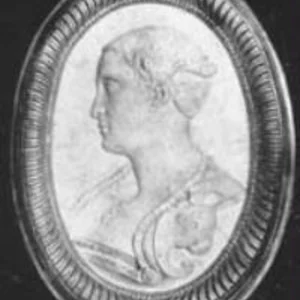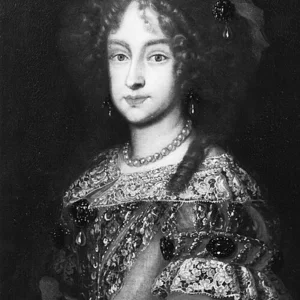

Anna Girò (c. 1710–1748) was an Italian contralto singer, pupil and close collaborator of Antonio Vivaldi. She created many roles in the Venetian composer's operas, becoming one of the most celebrated performers of her time.
Anna Girò(1710 — ?)
Anna Girò
7 min read
Frequently asked questions
Key Facts
- c. 1710: born in Mantua, daughter of a French wigmaker
- 1720s: became the pupil and then protégée of Antonio Vivaldi
- 1726: acclaimed debut on the Venetian stage in Vivaldi's operas
- 1730–1740: created many roles in Vivaldi's works, notably Farnace and Orlando furioso
- 1748: died in Graz, Austria
Works & Achievements
Opera by Vivaldi premiered at the Teatro Sant'Angelo with Anna Girò in the role of Tamiri, Queen of Pontus. This was one of their first major shared successes and the opera Vivaldi revised multiple times for her.
A spectacular opera drawn from Ariosto's epic poem, in which Girò embodied the sorceress Alcina. This production exemplifies the Baroque taste for the marvellous and for powerful female characters.
A setting of Metastasio's celebrated libretto, one of the most frequently adapted by 18th-century composers. Girò took the role of Aristea, contributing to the opera's renown across Europe.
An adaptation of Zeno's libretto on patience and conjugal virtue, with Anna Girò embodying Griselda's noble resignation. This role of a strong, virtuous woman suited perfectly the image she sought to project.
One of the last operas Vivaldi created in Venice with Girò before his departure for Vienna. This work marks both the culmination and the twilight of an exceptional artistic collaboration.
Anecdotes
Anna Girò was nicknamed 'Annina del Prete Rosso' — 'Annina of the Red Priest' — in reference to Antonio Vivaldi, who himself earned that nickname because of the color of his hair. This affectionate sobriquet reflects the close artistic bond between the two musicians over nearly two decades of collaboration.
In 1737, the papal legate cardinal refused to grant Vivaldi permission to stage his operas in Ferrara, scandalized by what he deemed an improper relationship between the priest-composer and the singer. Vivaldi responded by sending a lengthy letter of defense to his patron, the Marquis Bentivoglio, claiming he had never housed Girò in his home and insisting on her exemplary virtue.
Anna's sister, Paolina Girò, accompanied the composer everywhere as nurse and companion, since Vivaldi suffered from a chronic form of asthma that made him dependent on constant care. This inseparable trio traveled through Italian cities to stage the master's operas, attracting as much curiosity as gossip.
Vivaldi composed more than twenty opera roles specifically for Anna Girò's voice, whose unusual contralto timbre was nonetheless judged limited by some critics of the time. The composer passionately defended his protégée, believing that her stage presence and dramatic expressiveness more than compensated for any technical shortcomings.
After Vivaldi's death in Vienna in 1741, Anna Girò continued to perform on stage for a few more years before retiring for good around 1748. She then disappears almost entirely from historical records, leaving the end of her life shrouded in mystery.
Primary Sources
It is now some fourteen years that I have been Anna Girò's teacher [...] she has never entered my house [...] she is a virtuous and honest woman, whose honor cannot be called into question.
Vivaldi has become closely acquainted with me [...] He had me listen to his virtuosa, whom he protects with great zeal, and who did not seem to me to be of superior skill.
Signora Girò performed the lead role with expressive artistry, captivating the audience of the Teatro Sant'Angelo with her dramatic presence and her command of the text.
Key Places
The principal opera house where Vivaldi staged his productions and where Anna Girò created most of her roles. This theatre, now gone, was the heart of their artistic collaboration for two decades.
A leading musical institution where Vivaldi taught and composed for its young orphan musicians. Although Anna Girò was not a resident there, she moved within this foremost Venetian musical world.
A city in northern Italy often cited as Anna Girò's likely place of origin, where her French wigmaker father had settled. Her surname 'Girò' is most probably an Italianisation of the French family name 'Giraud'.
The city where Vivaldi attempted to stage his operas in 1737 but was banned by the papal cardinal legate — an episode directly linked to his relationship with Anna Girò. The incident highlights the precarious social standing of artists at the time.
The Habsburg capital where Vivaldi settled in 1740, most likely bringing the Girò sisters with him. It was there that the composer died in 1741, bringing nearly twenty years of collaboration to an end.