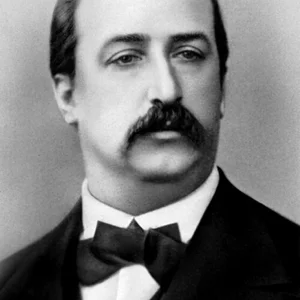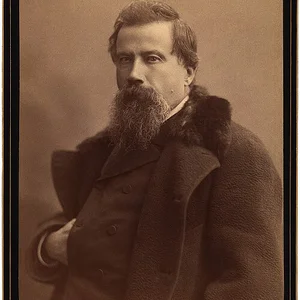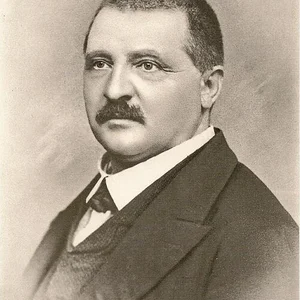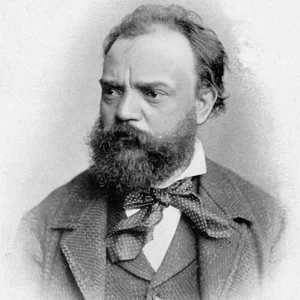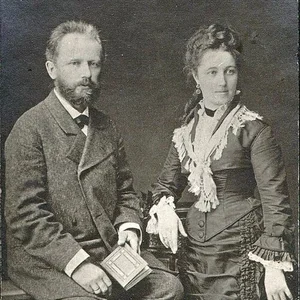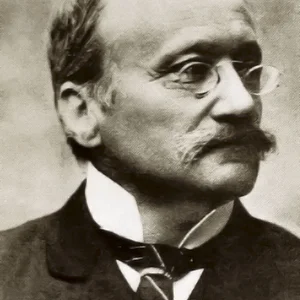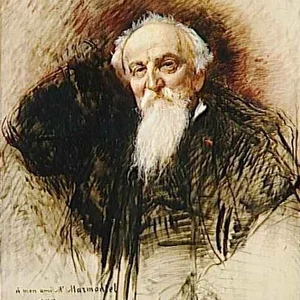

French pianist, composer and pedagogue (1816–1898), professor at the Paris Conservatoire for nearly forty years. He trained generations of pianists, including Bizet, Debussy and d'Indy, and contributed to the rise of music education in France.
Antoine François Marmontel(1816 — 1898)
Antoine-François Marmontel
France
7 min read
Frequently asked questions
Key Facts
- Born 16 July 1816 in Clermont-Ferrand, died 16 January 1898 in Paris
- Piano professor at the Paris Conservatoire from 1848 to 1887
- Among his students: Georges Bizet, Claude Debussy, Vincent d'Indy, Francis Planté
- Author of numerous pedagogical works, including 'L'Art classique et moderne du piano' (1876)
- An avid amateur photographer, he assembled a significant collection of portraits of musicians
Works & Achievements
A major pedagogical treatise laying out the principles of piano playing, from technique to interpretation. This work became an essential reference in French conservatories.
A collection of biographical and artistic portraits of the greatest pianists known to Marmontel, from Mozart to his contemporaries. An irreplaceable record of 19th-century musical life.
A work devoted to the great composers and performers of the Romantic era, analyzing the evolution of style and piano technique across Europe.
A practical guide for piano teachers, distilling forty years of pedagogical experience at the Conservatoire. Used in numerous French music education institutions.
A progressive teaching method aimed at beginners, including technical exercises and graded pieces. Adopted by many teachers of the era in provincial conservatories.
Anecdotes
When the young Claude Debussy joined his class at the Conservatoire in 1872, Marmontel immediately recognized his singular genius. In his annual reports, he noted that Debussy possessed “a brilliant nature” but lacked pianistic discipline. Yet it was Marmontel himself who championed his student's candidacy for the Prix de Rome, convinced that this independent spirit was that of a great creative artist.
Georges Bizet entered Marmontel's class in 1848, at just nine years old. In 1852, he won the First Prize in piano at the Conservatoire, astonishing his teachers with his speed of learning and prodigious memory. Marmontel would later say that Bizet was one of the most gifted students he had ever had the honor of teaching.
In 1848, Marmontel succeeded Pierre Zimmermann as piano professor at the Paris Conservatoire, inheriting a long French pedagogical tradition. A position he would hold for nearly forty years, until 1887, it allowed him to train several hundred pianists and make a lasting contribution to the excellence of the French school of piano.
In 1878, Marmontel published *Les Pianistes célèbres*, a collection of portraits of pianists he had known or encountered, from Mozart to his contemporaries. This work, blending personal memories and musical analysis, stands as a precious record of Parisian musical life in the 19th century and the evolution of piano playing.
Renowned for the rigor of his methods, Marmontel placed great importance on technical work through scales, arpeggios, and Clementi exercises. But he also knew how to nurture the artistic sensibility of his students, insisting that a pianist must first and foremost be a complete musician, trained in harmony, counterpoint, and general musical culture.
Primary Sources
The piano is today the most universal of instruments; it is at the same time the most complete in terms of harmony and the most suited to developing musical feeling in all its nuances.
Mozart the child prodigy, Clementi's rigorous method, Hummel the heir of Mozart, Kalkbrenner's French elegance — so many masters whose works and teaching shaped the European piano school.
The great virtuosos of our century — Liszt, Chopin, Thalberg — each in their own way renewed the art of the piano and pushed back the limits of what was believed technically possible.
The piano teacher must ensure that the student simultaneously develops wrist flexibility, finger independence, and a musical understanding of the work being performed.
Key Places
Home of the National Conservatory of Music and Declamation, where Marmontel taught from 1848 to 1887. It was here that he trained Bizet, Debussy, d'Indy, and hundreds of other pianists who went on to shine across all of Europe.
Marmontel's birthplace, in the Auvergne region. He was born there in 1816 before moving to Paris to study and later teach, building one of the most remarkable pedagogical careers of his century.
A celebrated concert hall in Paris, attached to the Érard piano-making house, where many recitals were held that Marmontel attended regularly and wrote about at length in his published works.
An elegant district of Paris that hosted the aristocratic and bourgeois salons in which Marmontel and his students performed. These venues were essential to the spread of chamber music in the nineteenth century.
Typical Objects

The instrument of choice for Parisian pianists of the 19th century, fitted with the double escapement mechanism patented by Sébastien Érard in 1821. Marmontel used it in class to demonstrate expressive nuance and technical demands to his students.

A collection of progressive exercises, scales, arpeggios, and études that Marmontel composed and assigned to his students. His published methods became standard references in French conservatoires.

Invented in the early 19th century, this mechanical device kept time with precision. Marmontel required his students to use it in order to develop rhythmic regularity — the foundation of any solid piano technique.

Marmontel corrected his students' scores in pencil, marking fingerings, dynamics, and phrasing. These handwritten annotations were regarded as invaluable pedagogical guides passed down from teacher to student.

An indispensable tool for checking the accuracy of pitch. Marmontel used it to train his students' ears to precise intonation — the bedrock of all musicianship.

Marmontel recorded his observations on each student's progress, compiling annual reports submitted to the Conservatoire's administration. These documents are now a valuable resource for music historians.
School Curriculum
Vocabulary & Tags
Key Vocabulary
Daily Life
Morning
Marmontel rose early and devoted his mornings to teaching at the Paris Conservatoire, receiving his students one by one in a classroom equipped with an Érard grand piano. He listened carefully to their prepared work, corrected fingering, and insisted on rhythmic precision and musical expression, taking care to note each student's progress.
Afternoon
Afternoons were often set aside for writing his pedagogical and musicological works, or for annotating and correcting his students' scores. He might also practice the piano himself, or welcome fellow musicians for discussions about developments in the repertoire and in teaching methods.
Evening
In the evenings, Marmontel frequented concerts and Parisian musical salons, where he would meet former students and the leading figures of French music. These evenings — moving between the Opéra and bourgeois drawing rooms — gave him the opportunity to observe emerging talents and to reflect on the evolution of piano playing.
Food
A professor's table at the Conservatoire reflected the bourgeois Parisian life of the nineteenth century: meals taken at fixed hours, traditional French cuisine with soups, meat, and seasonal vegetables. Coffee or tea often accompanied the intellectual work of the afternoon, in keeping with the habits of Parisian intellectual circles.
Clothing
Marmontel wore the dark, formal dress of the Parisian intellectual: a black frock coat, waistcoat, carefully knotted cravat, and a top hat for official outings. At the Conservatoire, this polished appearance contributed to the image of authority and seriousness expected of him by both students and institution.
Housing
Marmontel lived in Paris in a carefully furnished bourgeois apartment, where a piano held pride of place — serving both his personal work and private lessons. The walls were in all likelihood lined with scores, portraits of celebrated musicians, and an extensive musical library built up over his long career.