 flip
flipRoast Goose with Honey, Figs, and Coriander
Roast Goose with Honey, Figs, and Coriander
Why this dish? Meat was rare and reserved for festivals and rich offerings placed in the tombs of nobles. The fat goose, a recurring figure in funerary frescoes, is a prestige dish offered to the gods and to the dead whom I lead to the West.
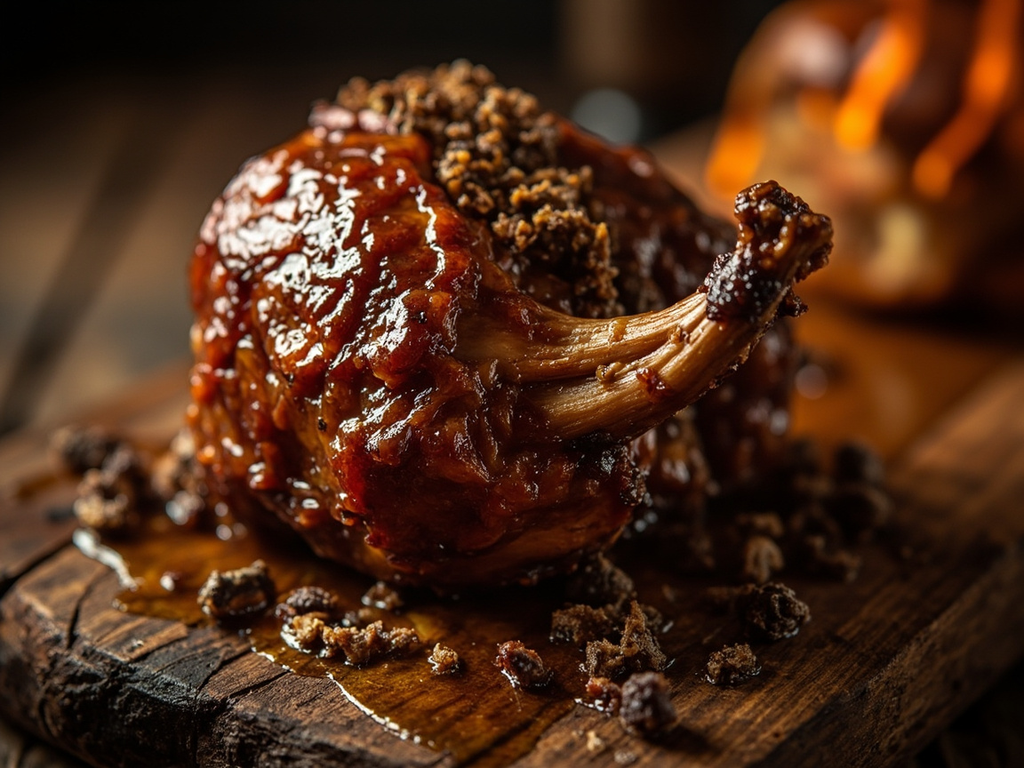
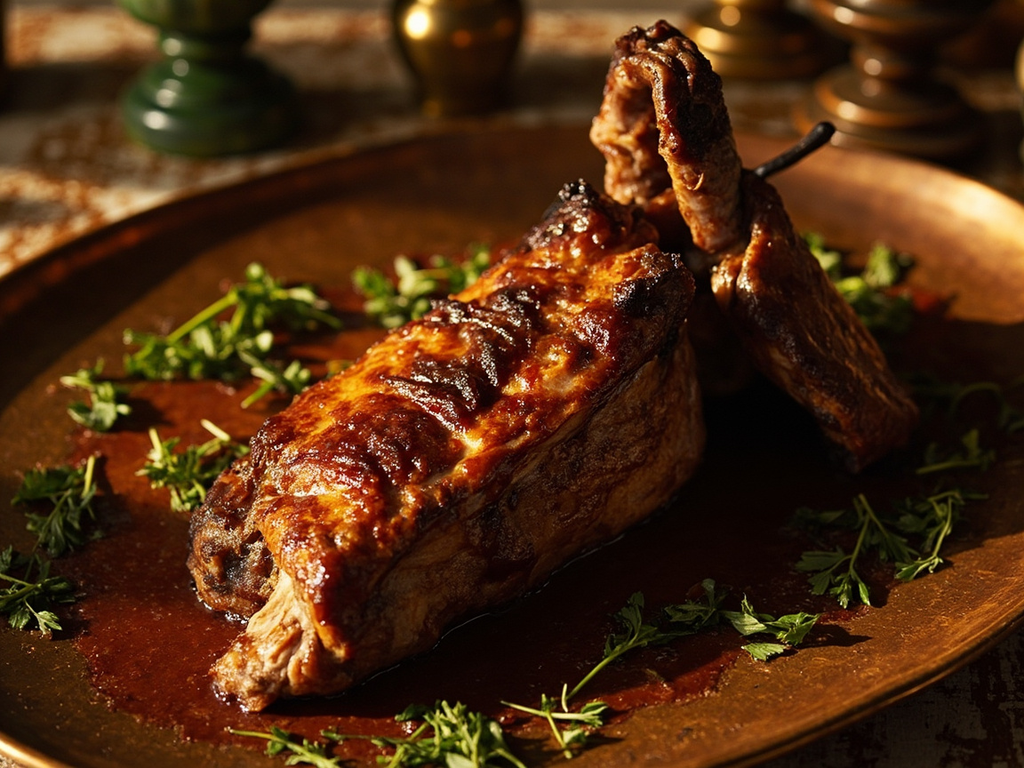
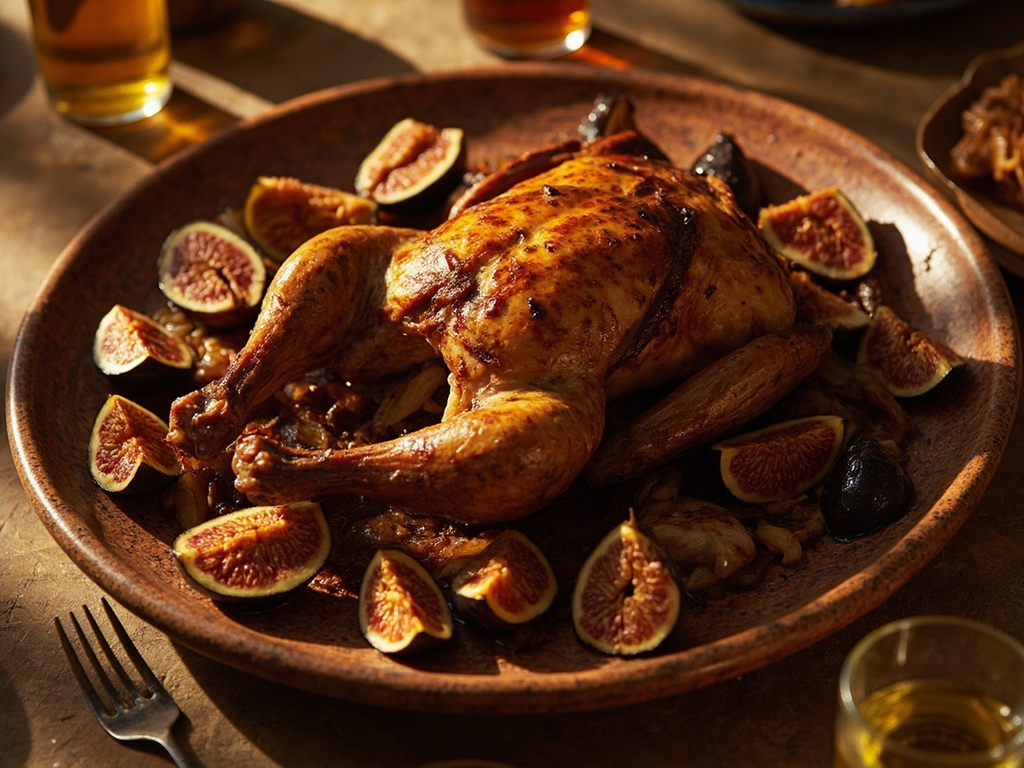
A golden goose, lacquered with honey, stuffed with figs and perfumed with coriander and cumin — the centerpiece of banquets and offerings on feast days.
You who look at me, know that not all ate thus. This fat goose was roasted only at the great temple festivals, or to be placed whole before a noble whom I led to the West. My priests brushed it with honey from the Delta hives, stuffed it with ripe figs, and the scent of cumin rose to the sky like a prayer. Feast today as they feasted to honor the dead: with gratitude, for fatty meat is a rare gift.
- •Fat goose from the Delta — one, whole (centerpiece)
- •Wild honey — a bowl (lacquer and sweetness)
- •Fresh or dried figs — a handful (stuffing)
- •Coriander and cumin seeds — as desired (flavor)
- •Onions — a few (aromatic)
- •Salt — a generous pinch (seasoning)
Roast Goose with Honey, Figs, and Coriander
A golden goose, lacquered with honey, stuffed with figs and perfumed with coriander and cumin — the centerpiece of banquets and offerings on feast days.
Why this dish? Meat was rare and reserved for festivals and rich offerings placed in the tombs of nobles. The fat goose, a recurring figure in funerary frescoes, is a prestige dish offered to the gods and to the dead whom I lead to the West.
You who look at me, know that not all ate thus. This fat goose was roasted only at the great temple festivals, or to be placed whole before a noble whom I led to the West. My priests brushed it with honey from the Delta hives, stuffed it with ripe figs, and the scent of cumin rose to the sky like a prayer. Feast today as they feasted to honor the dead: with gratitude, for fatty meat is a rare gift.
Ingredients (period version)
- Fat goose from the Delta — one, whole (centerpiece)
- Wild honey — a bowl (lacquer and sweetness)
- Fresh or dried figs — a handful (stuffing)
- Coriander and cumin seeds — as desired (flavor)
- Onions — a few (aromatic)
- Salt — a generous pinch (seasoning)
Ingredients
- Goose (or large duck) — 1 (approx. 3.5 kg) (centerpiece)
- Honey — 4 tbsp (lacquer and sweetness)
- Dried figs — 250 g (stuffing)
- Ground coriander and cumin — 1 tbsp each (flavor)
- Onions — 2 (aromatic)
- Salt — 2 tsp (seasoning)
Method
- Rub the goose inside and out with salt, coriander, and cumin.
- Stuff the cavity with figs and quartered onions.
- Roast in the oven at 180 °C, about 30 minutes per kg, basting regularly with the juices.
- Halfway through cooking, generously brush with honey to lacquer the skin.
- Let rest 15 minutes before carving and serving with the softened figs.
How it was made : Frescoes show force-feeding of geese (the ancestor of gavage) and their roasting on a spit. Honey was the only sweetener; there was no sugar or citrus. Spices were limited to local seeds: coriander, cumin, fenugreek.
The contemporary twist : Present the goose on a bed of roasted figs and deglaze the juices with fig vinegar — a 'Banquet of Thebes' touch to serve at the center of the table.
Sources : Pierre Tallet, La cuisine des pharaons (Actes Sud) · Hilary Wilson, Egyptian Food and Drink (Shire Publications)
Anubis · Charactorium