 Flip the card
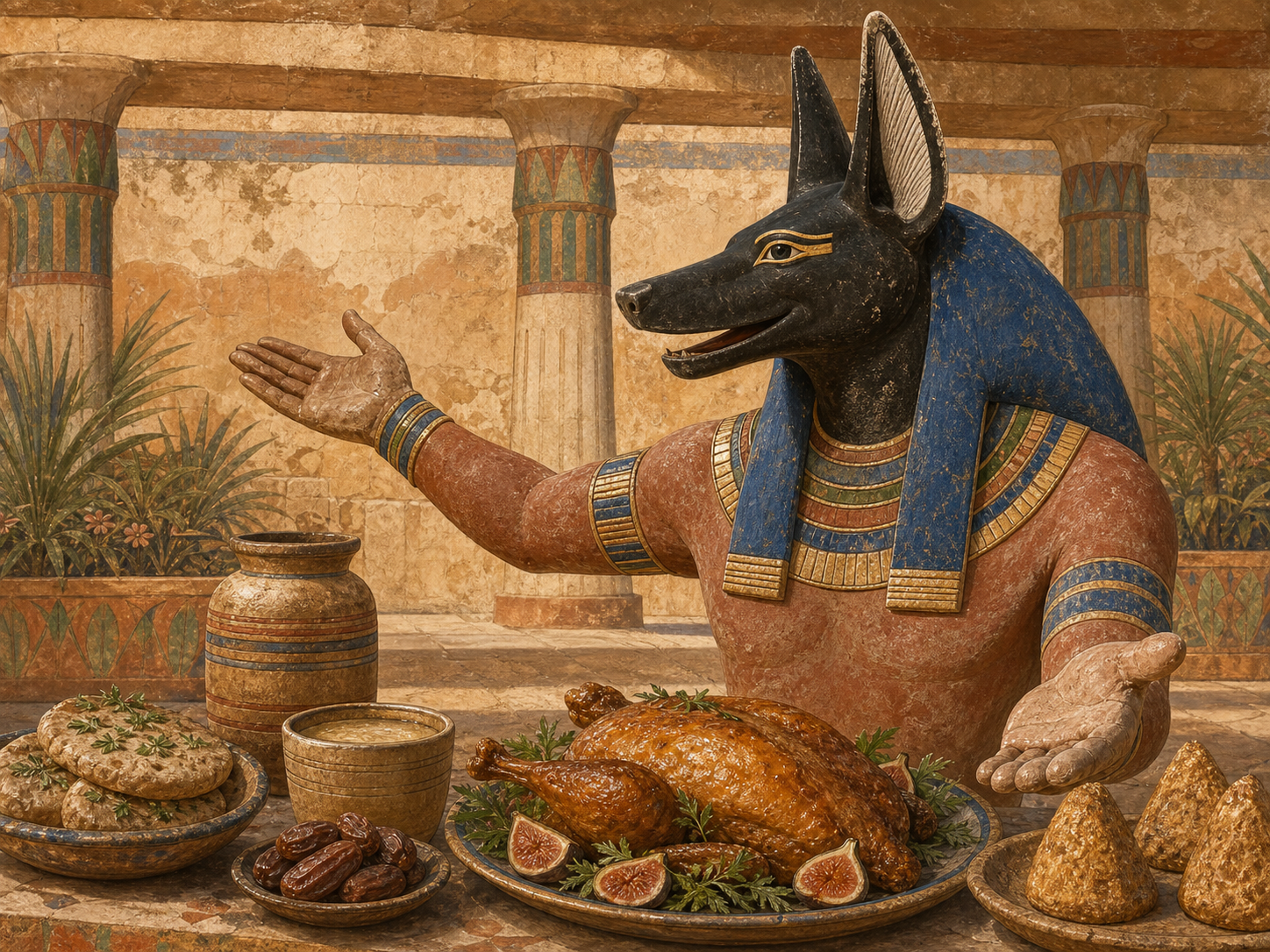
Anubis at the table
On the menu
The Offering Table (hotep) and the Three Meals of the Nile
In pharaonic Egypt, there is no "starter-main course-dessert" but a logic of abundance spread across the offering table (hotep): bread and beer form the absolute foundation of every day, supplemented by onion, fish, and fruits of the Nile. At festivals, grilled meat and honey sweets are added. The same food nourishes the living at noon and the dead in the tomb — for what one eats, one also places before the dead so that they may survive in the afterlife that I guard.
Signature : Emmer wheat (emmer)
The mother grain of ancient Egypt, emmer wheat is the backbone of the diet: ground and baked it gives bread (ta), fermented it gives beer (henqet). Every Egyptian meal stems from this rustic grain, long before modern soft wheat.
click to flip back
Anubis at the table
5 period recipes
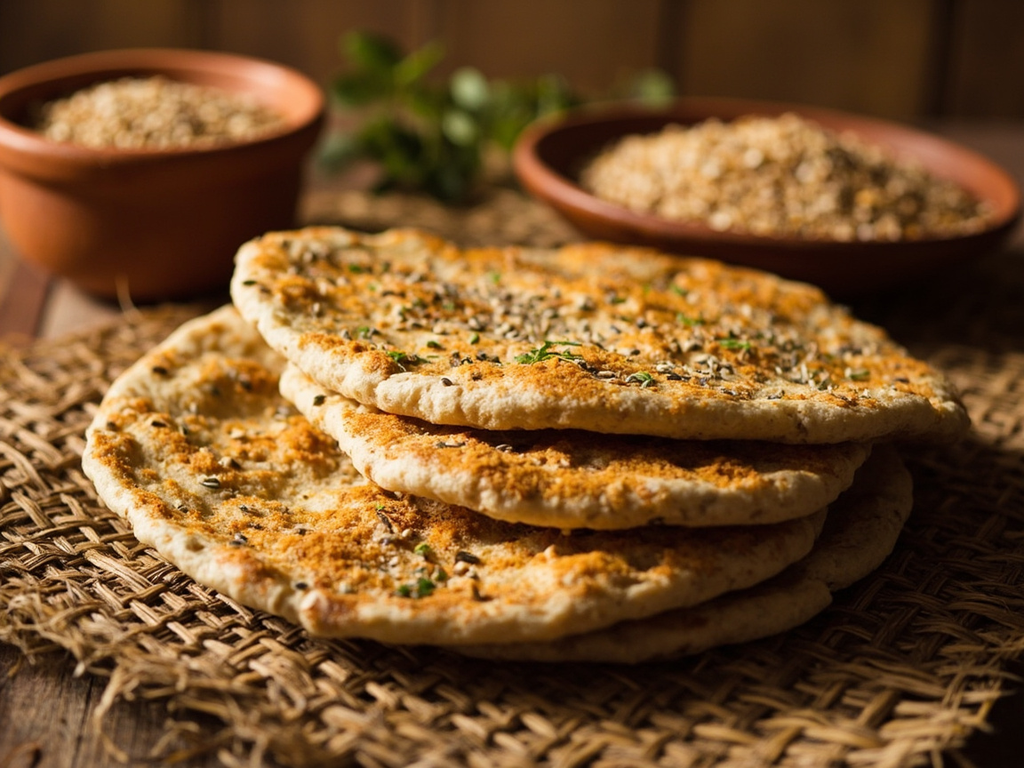 Everyday
Ta — Emmer Round Bread with Coriander
Daily Staple (daily bread, base of every table)
🧂 🫙· 4 h (including fermentation)
View the recipe
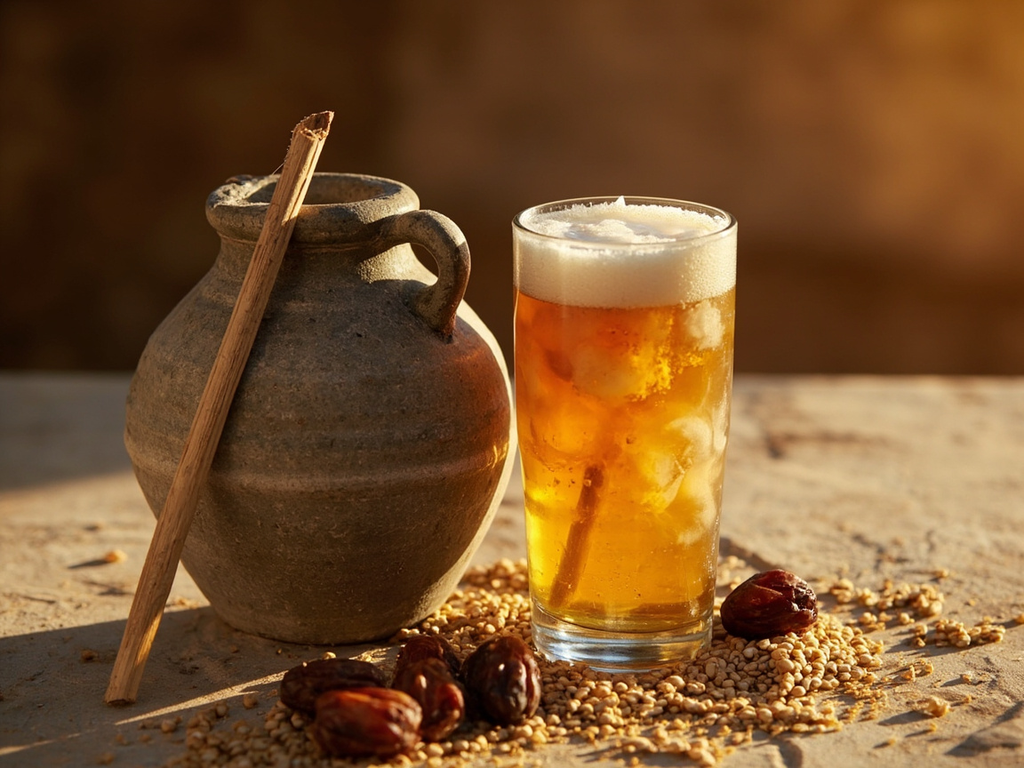 Drink
DrinkHenqet — Emmer Sweet Beer with Dates
Staple Beverage (obligatory companion to bread at every meal)
🫙 🍯· 4 days (fermentation)
View the recipe
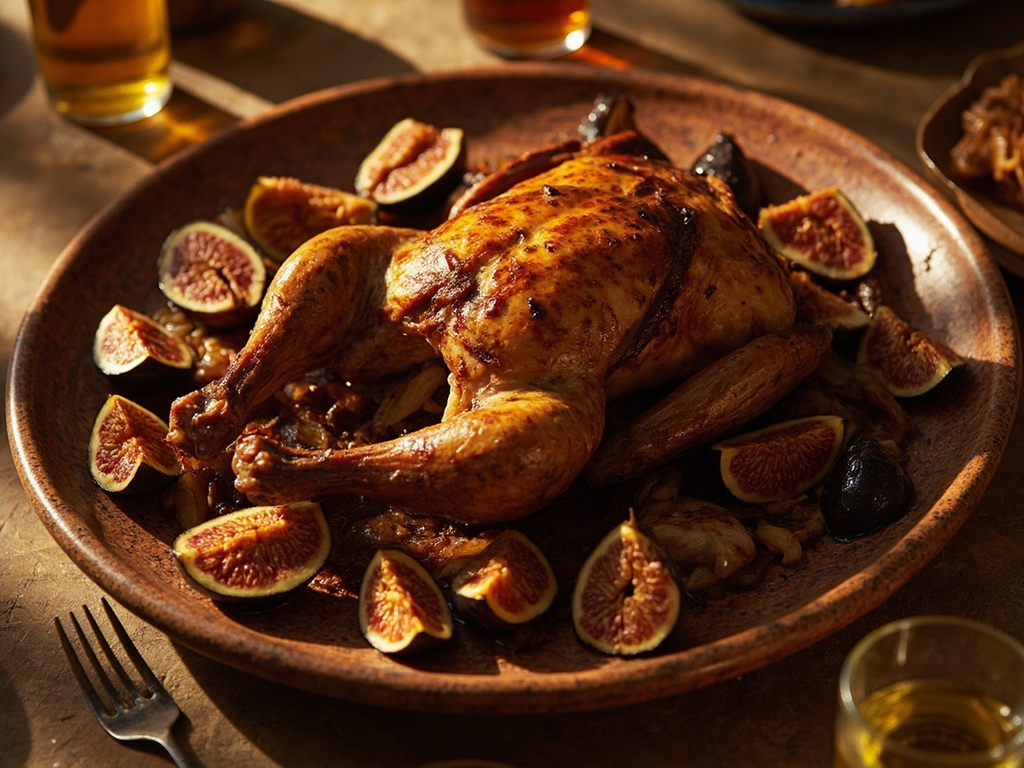 Festive
Roast Goose with Honey, Figs, and Coriander
Festive Dish (meat for banquets and great offerings)
🍯 🧂· 2 h 30
View the recipe
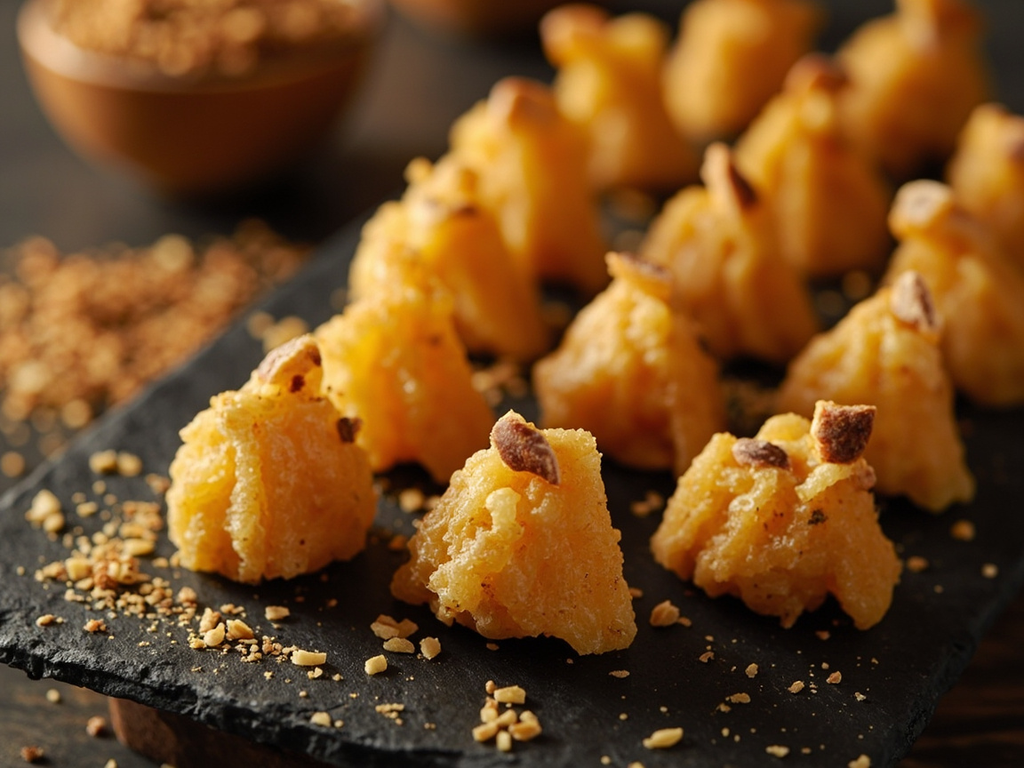 Offering
Tiger Nut Honey Sweets (Conical Cakes)
Sweet Offering (sweet placed on the table of the gods and the dead)
🍯· 1 h 30 (including resting)
View the recipe
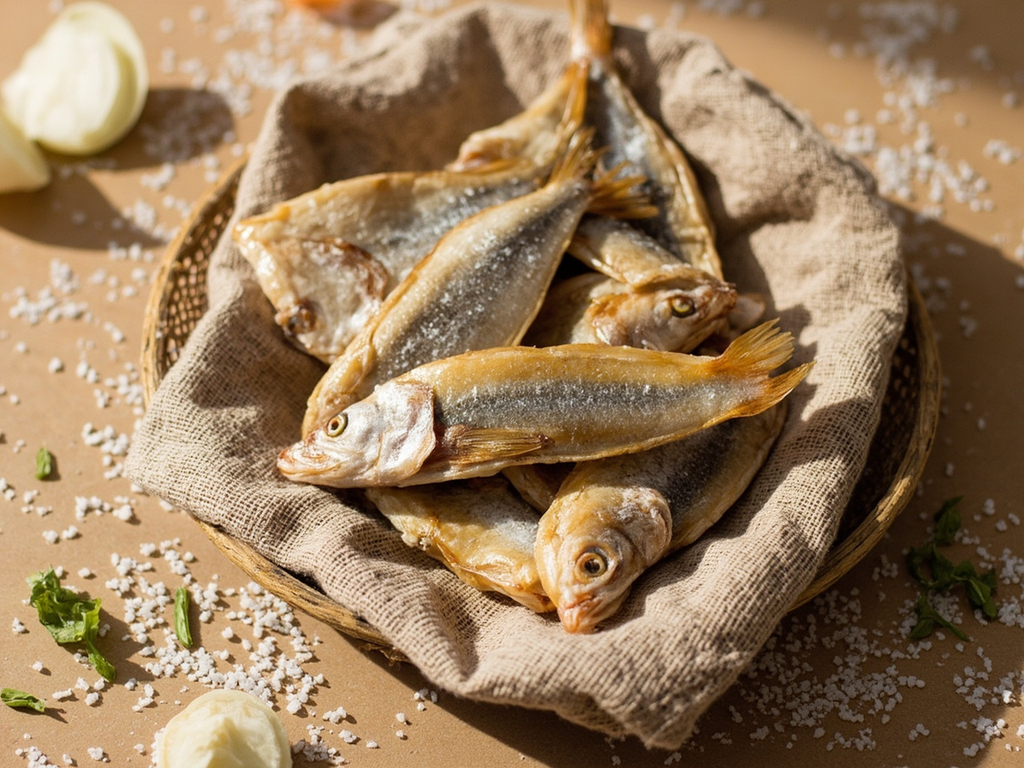 Preserving
Salted and Dried Nile Fish
Preserved Provision (long-term storage and tomb provisions)
🧂 🍄· 3 days (including drying)
View the recipe