 flip
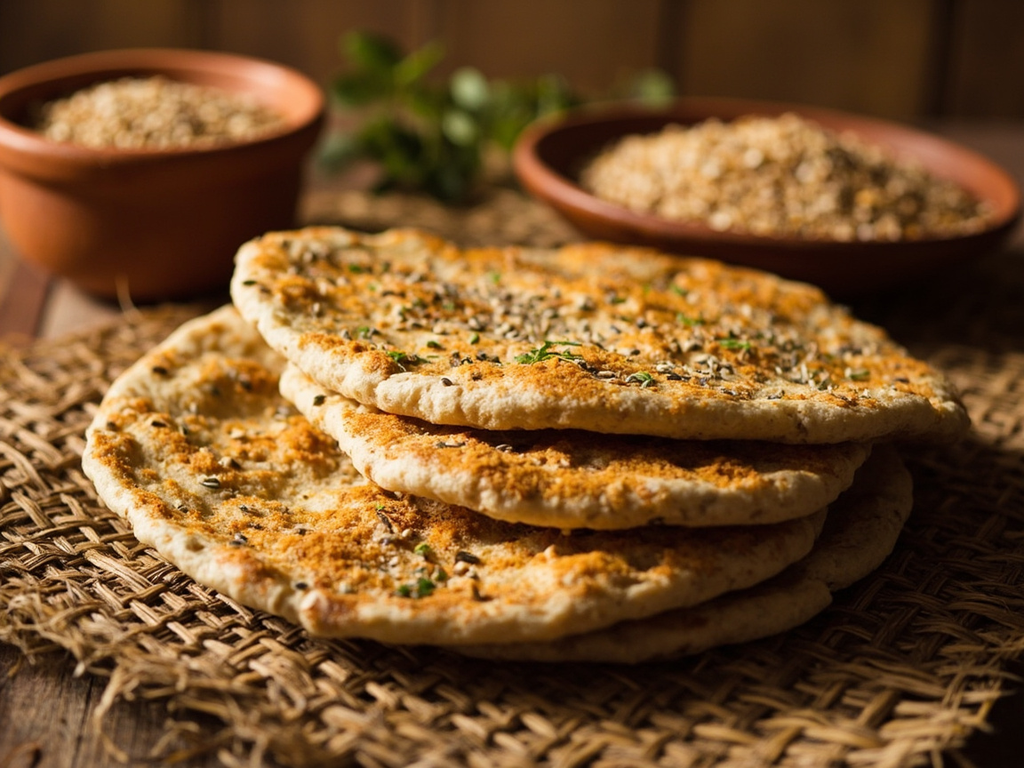
flipTa — Emmer Round Bread with Coriander
Ta — Emmer Round Bread with Coriander
Why this dish? Bread is the primary funerary offering: the formula "hotep-di-nesou" first demands "a thousand loaves, a thousand jars of beer" for the deceased. As god of tombs, Anubis watches over these loaves placed near mummies as provisions for eternity.
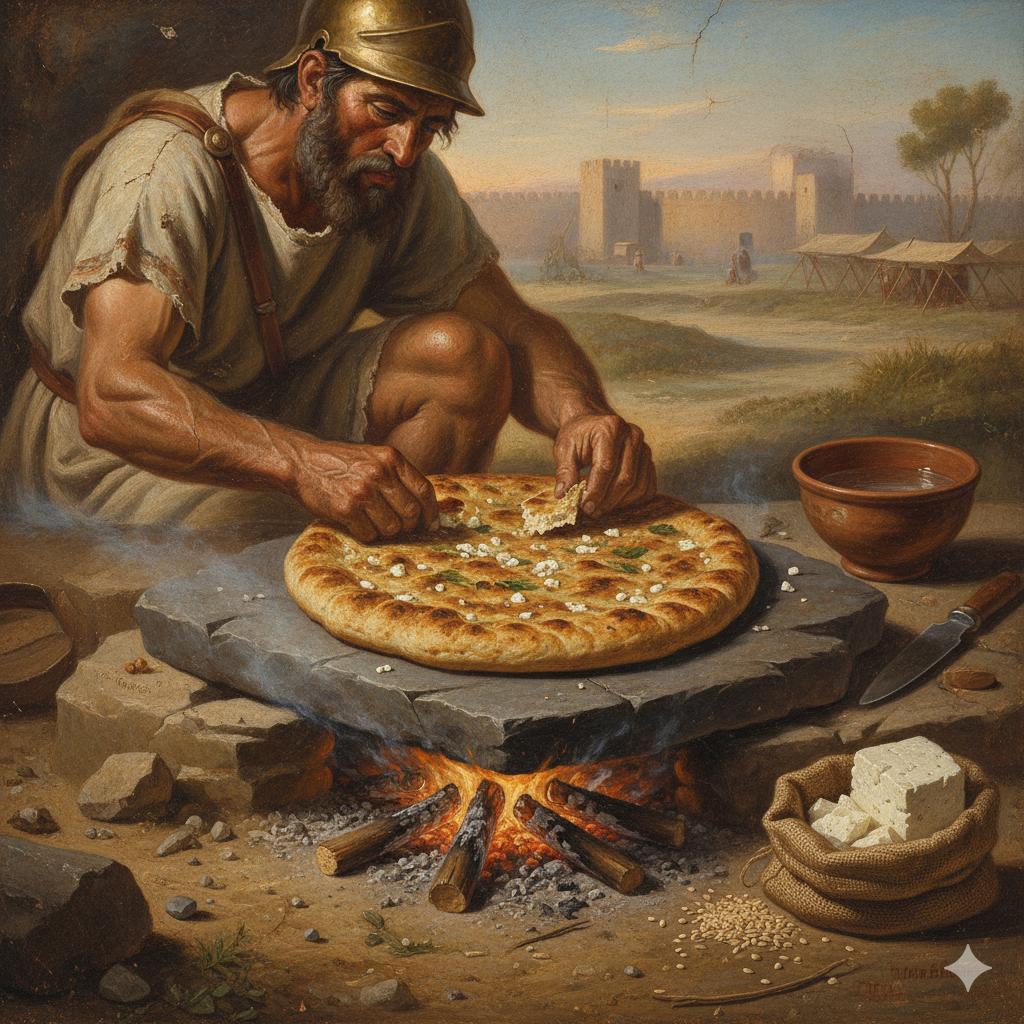
A flat, dense bread with a tight crumb, perfumed with coriander seeds, baked on a hot slab or against the wall of an earthen oven. It is the food that appears at every meal, from peasant to priest.
I am Anubis, guardian of the threshold between the two worlds, and it is I who weigh your heart when your hour comes. Draw near: this round loaf, my priests of Cynopolis kneaded it at dawn with the emmer from the temple granaries, and they placed one in every tomb that I seal. Break it with your fingers, smell the coriander that was crushed in a mortar — it is the same bread that your soul will find before my scales. Eat it and remember: no one crosses the West on an empty stomach.
- •Stone-ground emmer flour — the contents of a large bowl (base of the crumb)
- •Sourdough starter (piece of yesterday's soured dough) — a handful (fermentation)
- •Filtered Nile water — enough to bind (hydration)
- •Salt from the valley — a pinch (seasoning)
- •Crushed coriander seeds — a few pinches (flavor)
Ta — Emmer Round Bread with Coriander
A flat, dense bread with a tight crumb, perfumed with coriander seeds, baked on a hot slab or against the wall of an earthen oven. It is the food that appears at every meal, from peasant to priest.
Why this dish? Bread is the primary funerary offering: the formula "hotep-di-nesou" first demands "a thousand loaves, a thousand jars of beer" for the deceased. As god of tombs, Anubis watches over these loaves placed near mummies as provisions for eternity.
I am Anubis, guardian of the threshold between the two worlds, and it is I who weigh your heart when your hour comes. Draw near: this round loaf, my priests of Cynopolis kneaded it at dawn with the emmer from the temple granaries, and they placed one in every tomb that I seal. Break it with your fingers, smell the coriander that was crushed in a mortar — it is the same bread that your soul will find before my scales. Eat it and remember: no one crosses the West on an empty stomach.
Ingredients (period version)
- Stone-ground emmer flour — the contents of a large bowl (base of the crumb)
- Sourdough starter (piece of yesterday's soured dough) — a handful (fermentation)
- Filtered Nile water — enough to bind (hydration)
- Salt from the valley — a pinch (seasoning)
- Crushed coriander seeds — a few pinches (flavor)
Ingredients
- Spelt flour (or einkorn) — 500 g (base of the crumb)
- Active sourdough starter — 100 g (fermentation)
- Warm water — 300 ml (hydration)
- Salt — 8 g (seasoning)
- Crushed coriander seeds — 1 tsp (flavor)
Method
- Mix the flour, salt, and coriander, then incorporate the starter dissolved in warm water.
- Knead for 10 minutes until you obtain a supple but firm dough.
- Let rise for 3 to 4 hours under a cloth, away from drafts.
- Shape into round flat cakes 2 cm thick.
- Bake for 20 to 25 minutes in a very hot oven (240 °C) on a baking sheet or stone, until the crust is golden.
How it was made : Emmer was ground on a saddle quern, which left sand in the flour — mummies show very worn teeth. The dough rose thanks to wild yeasts and beer. It was baked in conical clay molds or against the walls of a tannour oven.
The contemporary twist : Serve ta warm, split and drizzled with a splash of sesame oil, sprinkled with fresh coriander — a 'scribes' bread' revisited.
Sources : Pierre Tallet, La cuisine des pharaons (Actes Sud) · Delwen Samuel, « Investigation of Ancient Egyptian Baking and Brewing », Science, 1996
Anubis · Charactorium