 flip
flipBarley Maza with Oil and Olives
Barley Maza with Oil and Olives
Why this dish? Arete taught that happiness lies in simple, well-measured pleasures. Barley maza was the daily bread of both ordinary Greeks and philosophers: a sober, never ostentatious food, perfect for a school that distrusted excess.
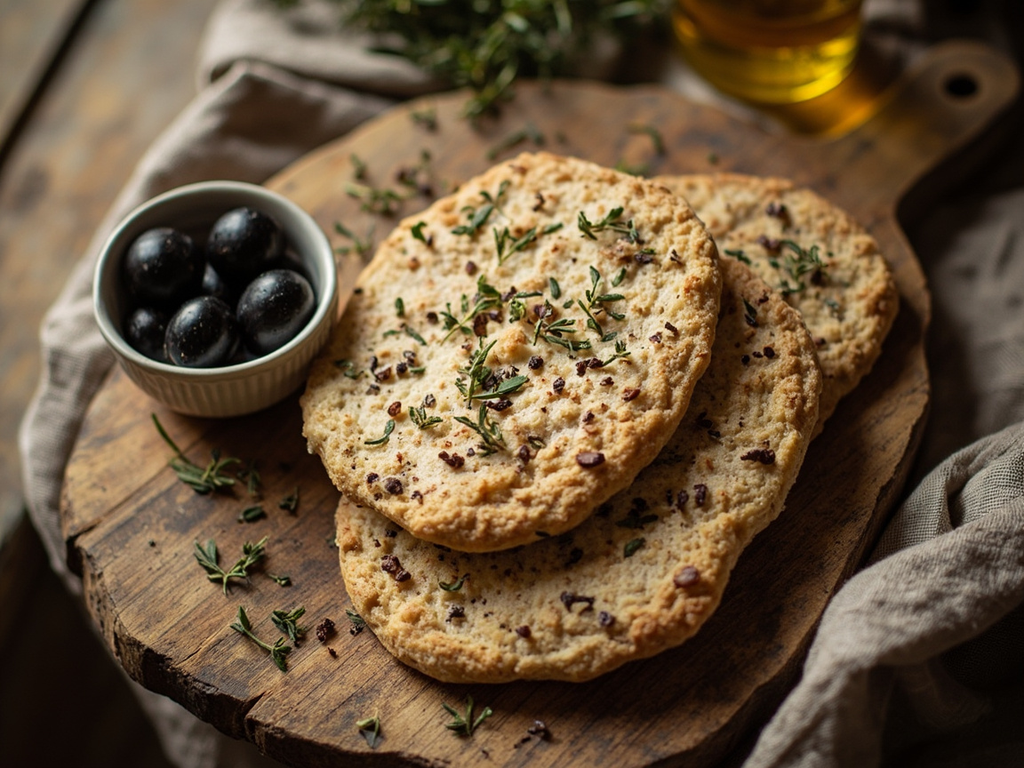
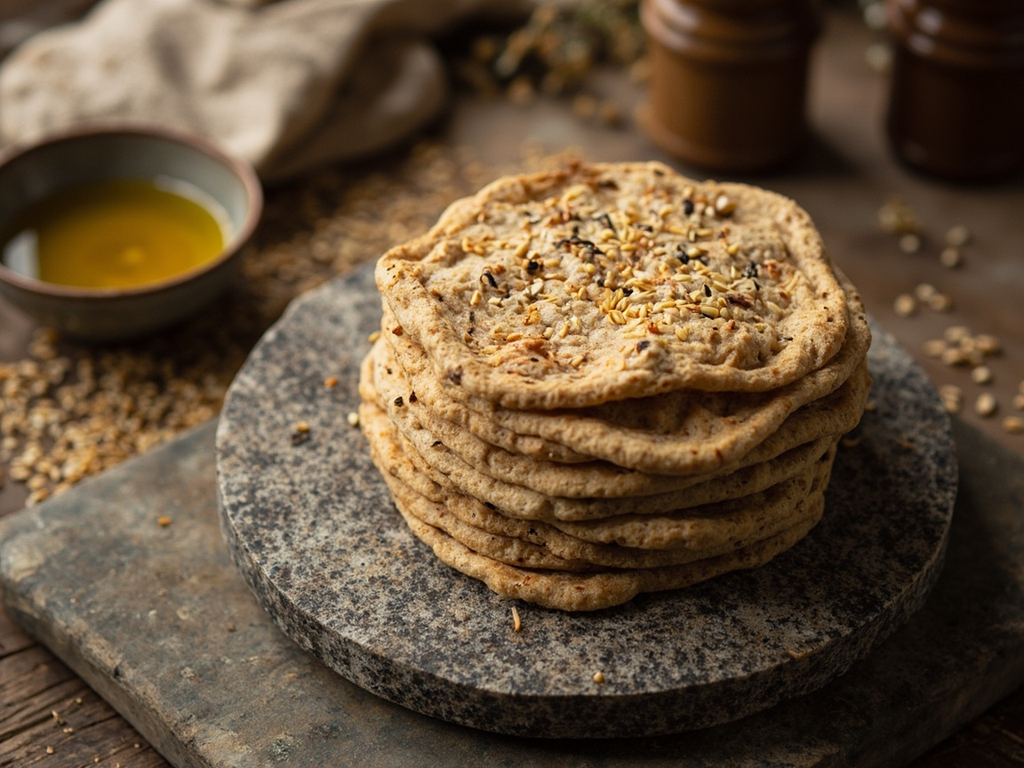
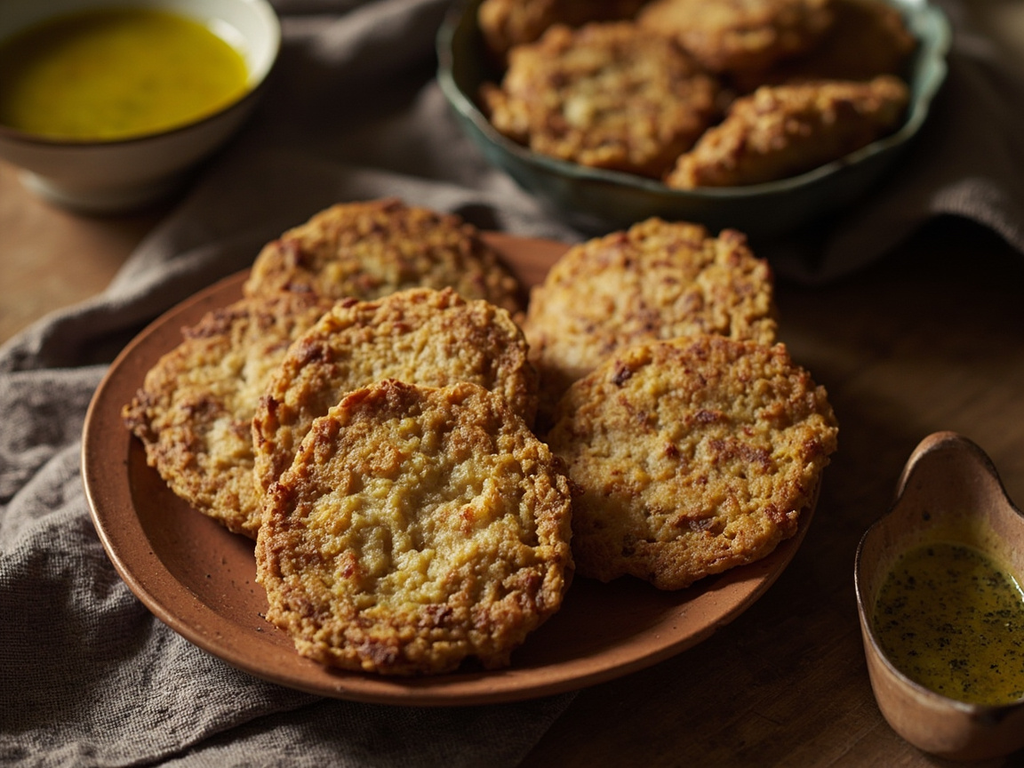
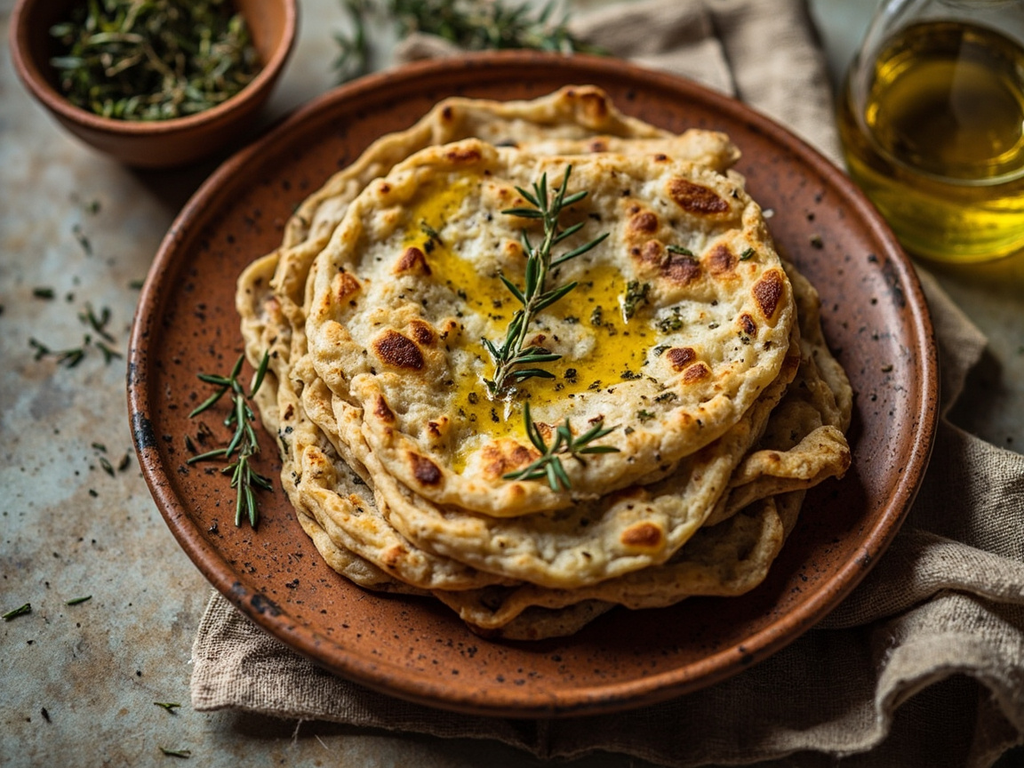
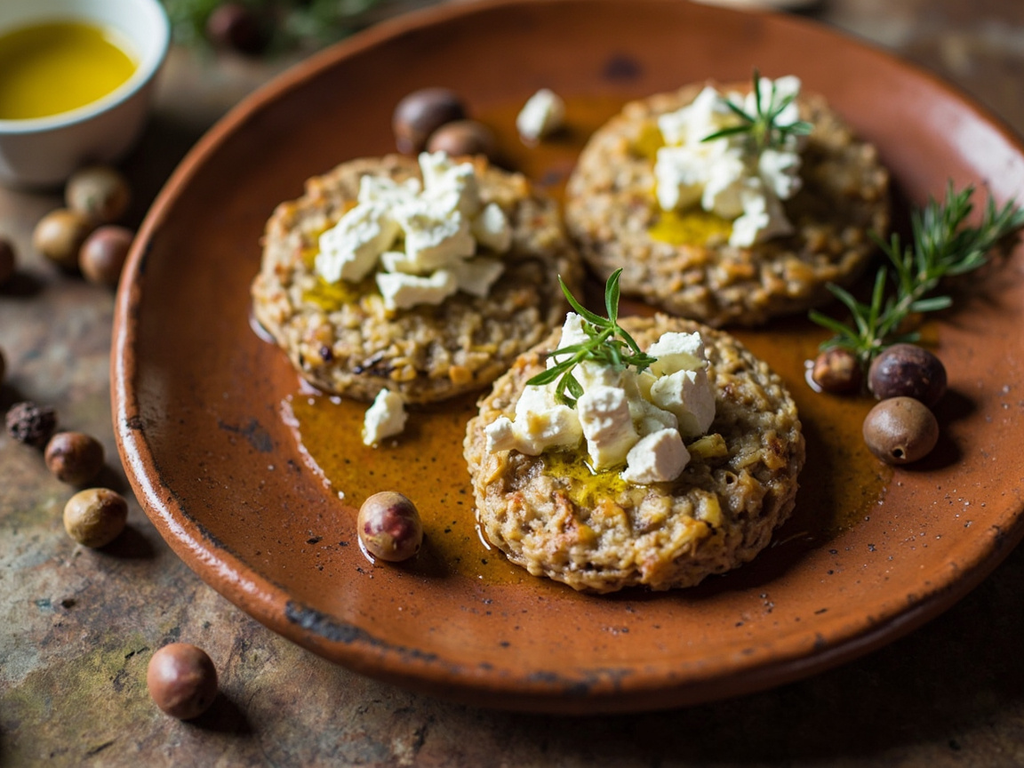
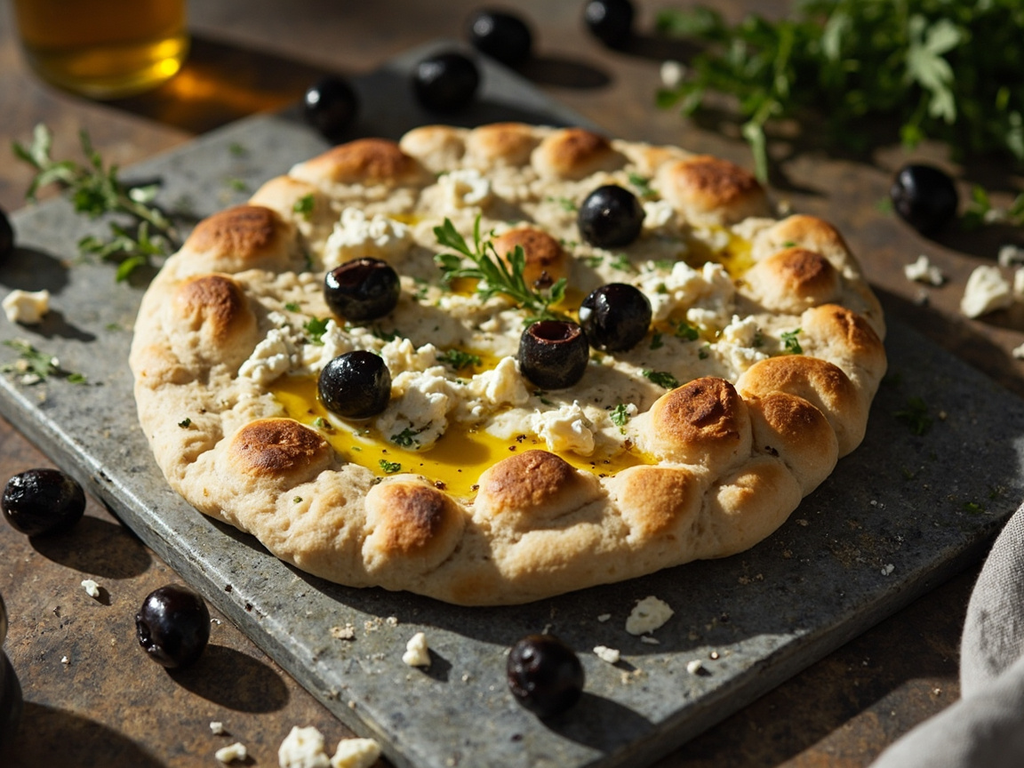
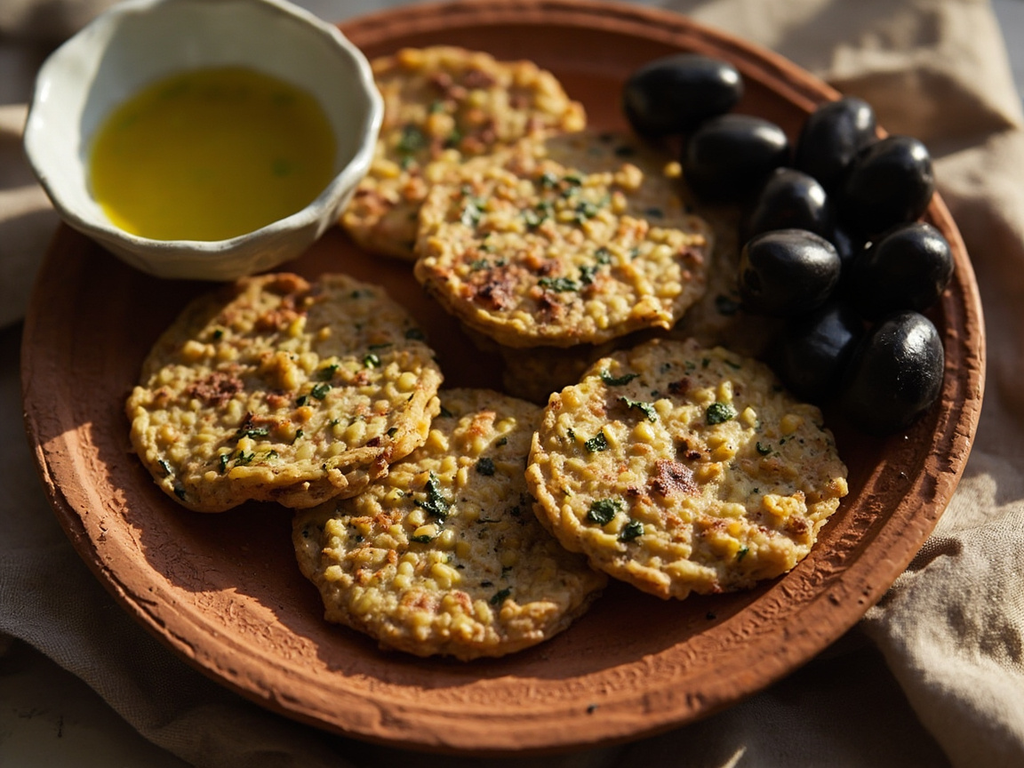
A dough of toasted barley kneaded with water and olive oil, shaped into a dense, nourishing flatbread, served with olives and a drizzle of oil. It was the staple of ancient Greece, more common than wheat bread.
Listen closely, you who believe rare meats are needed for happiness. I toast the barley, grind it, knead it with a little water and our oil, and here is enough to sustain a day of thought. My father Aristippus said: know how to enjoy what you have without becoming its slave—this flatbread, I eat it without coveting it, and that is what makes me free. An olive, a drizzle of oil: pleasure is complete when the mind remains master.
- •Toasted barley flour (alphita) — two handfuls (base grain)
- •Cyrene olive oil — a good drizzle (binder and fat)
- •Water — as needed (dough hydration)
- •Sea salt — a pinch (seasoning)
- •Olives — a handful (accompaniment)
Barley Maza with Oil and Olives
A dough of toasted barley kneaded with water and olive oil, shaped into a dense, nourishing flatbread, served with olives and a drizzle of oil. It was the staple of ancient Greece, more common than wheat bread.
Why this dish? Arete taught that happiness lies in simple, well-measured pleasures. Barley maza was the daily bread of both ordinary Greeks and philosophers: a sober, never ostentatious food, perfect for a school that distrusted excess.
Listen closely, you who believe rare meats are needed for happiness. I toast the barley, grind it, knead it with a little water and our oil, and here is enough to sustain a day of thought. My father Aristippus said: know how to enjoy what you have without becoming its slave—this flatbread, I eat it without coveting it, and that is what makes me free. An olive, a drizzle of oil: pleasure is complete when the mind remains master.
Ingredients (period version)
- Toasted barley flour (alphita) — two handfuls (base grain)
- Cyrene olive oil — a good drizzle (binder and fat)
- Water — as needed (dough hydration)
- Sea salt — a pinch (seasoning)
- Olives — a handful (accompaniment)
Ingredients
- Barley flour (or blended barley flakes) — 120 g (base grain)
- Extra virgin olive oil — 3 tbsp (binder and fat)
- Warm water — 60 to 80 ml (hydration)
- Salt — 1/2 tsp (seasoning)
- Kalamata black olives — about 10 (accompaniment)
Method
- Lightly toast the barley flour in a dry pan, stirring, until fragrant (characteristic toasty taste of alphita).
- Pour into a bowl, add salt, then incorporate olive oil and warm water little by little.
- Knead until you obtain a supple, dense dough that is not sticky.
- Shape into small flat cakes or flattened balls.
- Serve as is, at room temperature, with olives and an extra drizzle of oil.
How it was made : Maza was not always cooked: the barley dough was often eaten raw, simply kneaded, since barley does not leaven well. It was the food of the people and frugal philosophers, as opposed to the more prestigious wheat bread (artos).
The contemporary twist : Present it as small quenelles on an olivewood board, 'sage's appetizer' style, with olives and new oil for dipping.
Sources : Athenaeus of Naucratis, Deipnosophistae (Book III, on maza and Greek breads) · Andrew Dalby, Siren Feasts: A History of Food and Gastronomy in Greece (1996)
Arete of Cyrene · Charactorium