 flip
flipHarðfiskur með smjöri — Dried Fish with Butter
Harðfiskur með smjöri — Dried Fish with Butter
Why this dish? Árni tirelessly traveled the farms and paths of Iceland to buy and save old manuscripts, then crossed the sea many times to Copenhagen. Harðfiskur, which keeps for years and fits in a chest, was the quintessential Icelandic traveler's food — the one carried on horseback or in the hold.
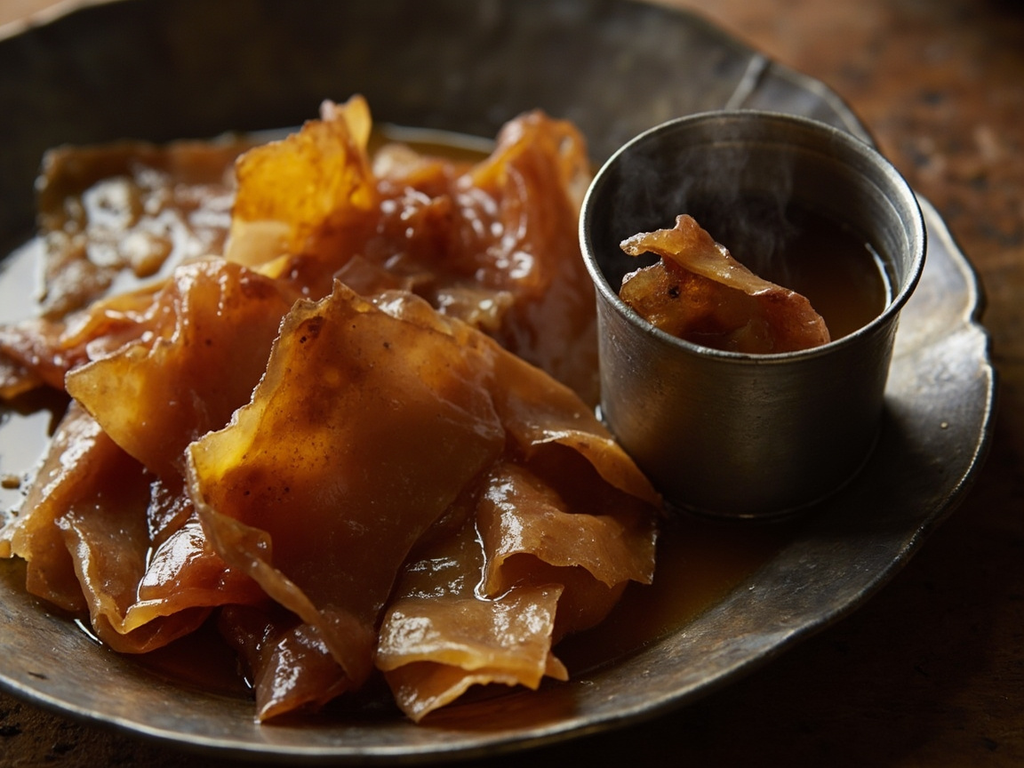
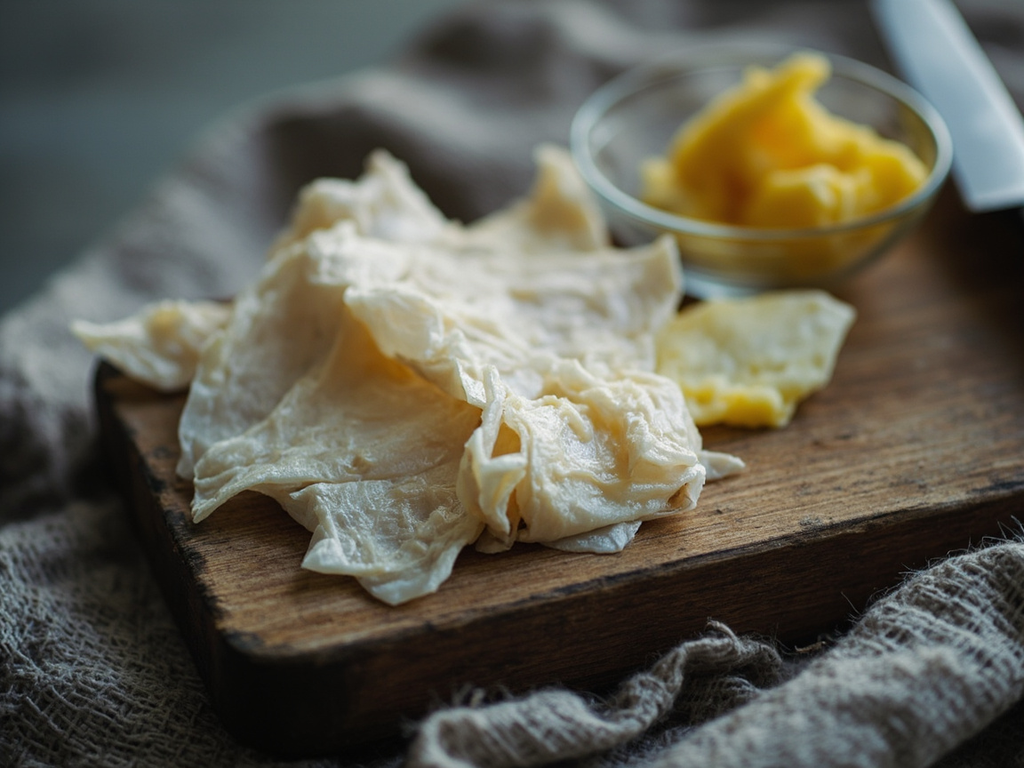
Fine strips of haddock or cod dried in the cold wind until brittle, then tenderized by pounding and eaten spread with butter. Dry, salty, deeply marine: the energy bar of the North Atlantic.
See this fish: the wind of Norðurland has dried it better than any fire could, and no salt was needed. When I rode from farm to farm seeking old books, I always kept a few strips in my satchel, for it does not spoil and nourishes a man all day. Beat it on a stone until it flakes, spread good summer butter on it, and you will hold out until the next shelter. It is poor food, indeed, but it is what carried me along the roads.
- •Haddock or cod — a few whole fish, gutted (base, dried whole in the wind)
- •Farm butter — as needed (fat, softens the salt)
Harðfiskur með smjöri — Dried Fish with Butter
Fine strips of haddock or cod dried in the cold wind until brittle, then tenderized by pounding and eaten spread with butter. Dry, salty, deeply marine: the energy bar of the North Atlantic.
Why this dish? Árni tirelessly traveled the farms and paths of Iceland to buy and save old manuscripts, then crossed the sea many times to Copenhagen. Harðfiskur, which keeps for years and fits in a chest, was the quintessential Icelandic traveler's food — the one carried on horseback or in the hold.
See this fish: the wind of Norðurland has dried it better than any fire could, and no salt was needed. When I rode from farm to farm seeking old books, I always kept a few strips in my satchel, for it does not spoil and nourishes a man all day. Beat it on a stone until it flakes, spread good summer butter on it, and you will hold out until the next shelter. It is poor food, indeed, but it is what carried me along the roads.
Ingredients (period version)
- Haddock or cod — a few whole fish, gutted (base, dried whole in the wind)
- Farm butter — as needed (fat, softens the salt)
Ingredients
- Very fresh haddock or cod fillets — 400 g (base)
- Quality salted butter — 100 g (accompaniment)
Method
- Cut the fillets into thin strips and pat them dry thoroughly.
- Dry either: hung in a cold, dry draft for several days, or in an oven at 50°C with the door ajar for 6–10 hours until the flesh is firm and brittle.
- Once dry, place the strips on a board and gently pound them with a mallet to soften and separate into fibers.
- Spread generously with butter at serving time and enjoy as is, by hand.
How it was made : Fish was dried outdoors on racks or stone walls, the cold and wind doing all the work where wood for smoking was scarce. Harðfiskur served as bread for a people who grew little grain: it was stored in bundles in the *búr* and lasted through winter and long journeys without spoiling.
The contemporary twist : Today, harðfiskur with butter is sold in bags at every gas station in Iceland: the national snack, a hiker's high-protein bar ahead of its time.
Sources : Hallgerður Gísladóttir, Íslensk matarhefð, Mál og menning, 1999
Árni Magnússon · Charactorium