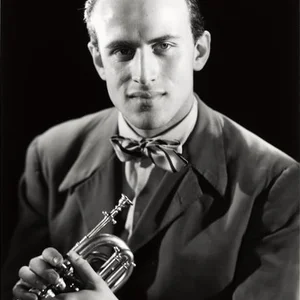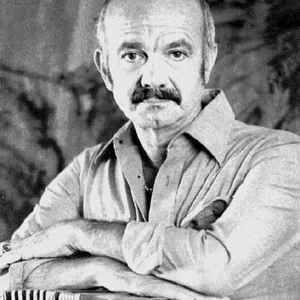

Argentine composer and bandoneon player (1921–1992), Astor Piazzolla revolutionized traditional tango by creating "tango nuevo," a fusion of tango, jazz, and classical music. He is considered one of the most influential musicians in 20th-century Latin America.
Astor Piazzolla(1921 — 1992)
Astor Piazzolla
Argentine
7 min read
Frequently asked questions
Famous Quotes
« Tango is a sad thought that is danced.»
« I didn't kill the tango. I tried to improve it.»
Key Facts
- Born on March 11, 1921 in Mar del Plata (Argentina), died on July 4, 1992 in Buenos Aires
- Student of Alberto Ginastera in Buenos Aires, then of Nadia Boulanger in Paris (1954)
- Composed "Libertango" in 1974, the defining work of tango nuevo
- Founded his first quintet in 1955, the ensemble that defined the tango nuevo style
- Collaborated with jazz artists such as Gary Burton and with classical orchestras
Works & Achievements
Composed in a matter of hours following the sudden death of his father Vicente, this piece is considered his absolute masterpiece. It distills the full emotional depth and harmonic complexity of tango nuevo.
A tango opera in two acts, with a libretto by poet Horacio Ferrer, telling the story of the death and symbolic resurrection of a young woman from Buenos Aires. A landmark work that elevates tango to the status of a lyric genre.
An iconic composition whose title merges liberty and tango. Covered by hundreds of artists worldwide, it has become the universal symbol of tango nuevo and one of the most performed pieces in Argentine music.
A suite of four pieces evoking the seasons of Buenos Aires, composed over several years. Often performed alongside Vivaldi's Four Seasons, it illustrates the ongoing dialogue between tango and European art music.
Written for Italian filmmaker Marco Bellocchio's film *Enrico IV*, this melancholic and spare melody is one of his most widely heard works worldwide. Its simple, poignant beauty has made it an international standard.
An album recorded with his Quinteto Tango Nuevo, unanimously acclaimed by critics as one of the greatest tango records ever made. It definitively established Piazzolla on the international music scene.
Anecdotes
At age 9, Astor's father brought him a bandoneón from New York, an instrument he had no desire to learn at first. Yet this unexpected gift would transform his entire life and make him the greatest performer of that instrument in the twentieth century.
In 1934, at age 13, Astor met Carlos Gardel, the living legend of tango, during a stay in New York. Gardel offered him a role in one of his films, but his father refused, deciding that young Astor was not yet skilled enough as a musician. This encounter remained one of the most vivid memories of his youth.
In 1954, after composing classical music in Paris, Piazzolla played his works for the celebrated teacher Nadia Boulanger. She stopped him and told him she heard “the real Piazzolla” only when he played tango. This revelation convinced him to return to his roots and create the *tango nuevo*.
Back in Buenos Aires with his *tango nuevo* blending jazz and classical music, Piazzolla was violently rejected by traditionalist tango purists. Musicians turned their backs on him during concerts, and he received threats. It would take decades for Argentina to officially recognize his genius.
Piazzolla composed 'Adiós Nonino' in 1959 in just a few hours, overwhelmed by grief after the sudden death of his father Vicente. This deeply moving piece, which he considered his finest work, bears the affectionate nickname 'Nonino' that Vicente used with those close to him.
Primary Sources
El tango es música ciudadana. Nació en los arrabales de Buenos Aires y fue creciendo, cambiando, evolucionando. Yo no lo traicioné, lo hice crecer.
When Piazzolla played me his tango, I immediately understood that this was his own voice, authentic. I told him: never abandon it, it is you.
Il bandoneón non è uno strumento di folklore. È uno strumento da camera, da concerto. Io l'ho portato nelle sale da concerto di tutto il mondo.
Cuando compuse Adiós Nonino, lloré toda la noche. No era música, era mi padre. Fue la única vez que no pensé en el público, sólo pensé en él.
Key Places
Coastal city where Piazzolla was born in 1921. He spent his early years there before his family moved to New York in 1925.
A popular New York neighborhood where the Piazzolla family settled in 1925. Astor grew up there, immersed in American jazz and blues, and met Carlos Gardel during one of the singer's visits to the city.
The capital of tango and the heart of his entire career. It was here that he joined Aníbal Troilo's orchestra, founded his own ensembles, and revolutionized tango — despite fierce resistance from purists.
The city where Piazzolla studied with Nadia Boulanger in 1954, a turning point in his artistic career. He returned there several times, and it was in Paris that he suffered his stroke in 1990.
Piazzolla lived in Rome for several years during the 1970s and early 1980s, composing and recording much of his repertoire with European musicians whose technical precision he greatly admired.
Typical Objects
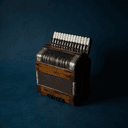
A bellows instrument of German origin that became the soul of Argentine tango. Piazzolla mastered it with exceptional virtuosity, transforming it into a full-fledged concert instrument capable of expressing an unprecedented range of emotions.

Piazzolla composed by hand, filling pages with dense, complex notation. His manuscripts reveal a writing style that blends Baroque counterpoint, jazz harmonies, and the syncopated rhythms distinctive to tango.

A devoted fan of Charlie Parker, Duke Ellington, and Béla Bartók, Piazzolla would listen to them on his record player to fuel his creativity. These direct influences are at the heart of the revolution he brought about in tango.
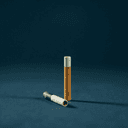
A lifelong heavy smoker, cigarettes were a constant presence during his composition and rehearsal sessions. This habit took a serious toll on his health and contributed to the stroke he suffered in 1990.

The instrument on which he worked out his harmonic arrangements and tested his compositions before writing them out for the ensemble. He had played piano since childhood, which allowed him to conceive complex polyphonic structures.

Piazzolla spent his life moving between Argentina, Italy, France, and the United States. His suitcase symbolizes this nomadic existence as a musician, constantly crossing continents to perform, record, and compose.
School Curriculum
Vocabulary & Tags
Key Vocabulary
Tags
Daily Life
Morning
Piazzolla woke up late, often after 10 a.m., a habit inherited from the nocturnal lifestyle of tango musicians. He would begin his day with a strong black coffee and browse the music and general press before settling at the piano to work on his compositional ideas.
Afternoon
The afternoon was entirely devoted to composition and rehearsals with his musicians. Piazzolla was a demanding perfectionist: sessions lasted several hours, punctuated by cigarette breaks. He meticulously annotated the score of each instrumentalist in his quintet.
Evening
In the evening, he prepared for concerts or studio recordings, which were often held at night. After performances, he enjoyed dining late with his musicians, discussing music and listening to jazz or contemporary music records until the early hours of the morning.
Food
Like many Argentines, Piazzolla enjoyed grilled meat (asado), empanadas, and maté. During his long years in Rome, he readily embraced Italian cuisine, particularly pasta and espresso, which sometimes replaced maté in his daily habits.
Clothing
On stage, Piazzolla invariably wore a dark suit, often black or dark grey, with a tie. He took great care of his appearance and embodied a restrained elegance, halfway between a porteño cabaret musician and a European concert composer.
Housing
Piazzolla lived in many cities throughout his life: New York, Buenos Aires, Paris, Rome. He alternated between modest apartments during his lean years and more comfortable lodgings during his periods of success. His home reflected his passion: piano, stacks of scores, and vinyl records everywhere.