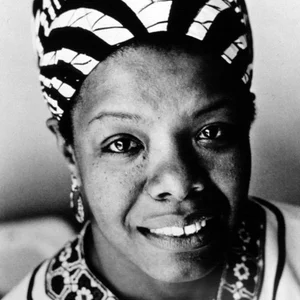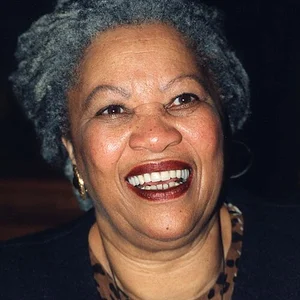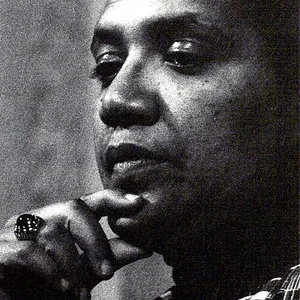

Audre Lorde (1934-1992) was an American poet, essayist, and activist, a leading figure in Black feminism and the civil rights struggle. She theorized intersectionality before the term existed, championing the rights of Black women, LGBT people, and the oppressed.
Audre Lorde(1934 — 1992)
Audre Lorde
États-Unis
8 min read
Frequently asked questions
Famous Quotes
« There is no hierarchy of oppression.»
« Your silence will not protect you.»
« Poetry is not a luxury.»
Key Facts
- 1934: born in New York to Caribbean immigrant parents from Grenada
- 1968: publication of her first poetry collection, The First Cities
- 1977: landmark speech 'Poetry Is Not a Luxury' at the Modern Language Association
- 1980: publication of The Cancer Journals, an account of her struggle with breast cancer
- 1992: death in Saint Croix (U.S. Virgin Islands) from cancer
Works & Achievements
Audre Lorde's debut poetry collection, noted for its lyrical restraint and emotional depth. It marked her official entry into the African American literary landscape.
A poetry collection considered her first major national critical success, published by Norton. The title refers to her unapologetic Blackness — 'I / Is the total black, being spoken' — and her radical assertion of identity.
A collection of 68 poems drawing on Yoruba mythology and figures of African goddesses. Unanimously praised as her poetic masterpiece, it weaves together African spirituality and Black feminism.
An autobiographical account of her battle with breast cancer and her refusal to conceal her mastectomy. A foundational text in feminist writing on the body, illness, and resistance.
A hybrid work between autobiography and novel, tracing her childhood in Harlem, her sexuality, and her identity. Lorde coined the term 'biomythography' to describe this new genre blending personal history with collective myth.
A collection of foundational essays and speeches of Black intersectional feminism, including 'The Master's Tools Will Never Dismantle the Master's House.' A key reference in gender studies, postcolonial studies, and African American studies.
Journal entries and essays written during her battle with liver cancer, winner of the 1989 National Book Award. A testament to life, death, and resistance, in which Lorde continues her reflection on the political body.
Anecdotes
Audre Lorde was born on February 18, 1934, in New York City, to immigrant parents from Grenada. Her mother, who had very poor eyesight, taught her to read at an early age by pointing out words in picture books. Lorde later recounted that as a child she communicated by reciting poems she had memorized, for lack of finding her own words.
In 1968, Audre Lorde participated in the Negro Writers Conference at Fisk University, where she met major figures in African American literature. This event definitively convinced her that her poetic work was inseparable from her political commitment and her identity as a Black woman.
In 1980, Audre Lorde was diagnosed with breast cancer. Rather than concealing her mastectomy behind a prosthesis, she refused to do so and published 'The Cancer Journals', a poignant account of illness, the female body, and resistance. This activist choice earned her considerable criticism, but also immense admiration.
In 1984, at a conference in West Germany, Audre Lorde met Afro-German women who were unaware that a Black community existed in their country. She encouraged them to write their own stories, giving rise to the Afro-German movement and the collective work 'Farbe bekennen' (1986).
Audre Lorde was named Poet Laureate of New York State in 1991, one of the first Black women to receive that honor. She died in 1992 in Saint Croix, U.S. Virgin Islands, having adopted the African name Gamba Adisa — 'Warrior, she who makes her meaning known.'
Primary Sources
For the master's tools will never dismantle the master's house. They may allow us temporarily to beat him at his own game, but they will never enable us to bring about genuine change.
I had to examine, in my dreams as well as in my immune-function tests, the devastating effects of overextension. Physically and psychically, the cancer had already begun its battle with me.
I have come to believe over and over again that what is most important to me must be spoken, made verbal and shared, even at the risk of having it bruised or misunderstood.
How do you spell change, like frfringe? It was my first, and I took pride in my ability to sound out words, at four years old.
For women, then, poetry is not a luxury. It is a vital necessity of our existence. It forms the quality of the light within which we predicate our hopes and dreams toward survival and change.
Key Places
The neighborhood where Audre Lorde was born and raised, at the heart of African American cultural and political life. Harlem's vibrant atmosphere deeply shaped her poetic sensibility and her sense of community.
The institution where Lorde earned her degree and later taught literature for many years. This place was essential to her intellectual development and her introduction to academic feminist circles.
Lorde studied here in 1954 at UNAM, an experience that allowed her to step away from American racial and social constraints. This liberating stay had a lasting influence on her vision of identity and freedom.
Audre Lorde's home for much of her adult life, where she lived with her partner Frances Clayton. It was here that she wrote a large part of her poetic and theoretical work.
Lorde settled here in her final years, drawn by her Caribbean roots and a gentler environment for her health. She died there in 1992, having chosen to end her life close to her island origins.
Typical Objects

Audre Lorde wrote her poems and essays on a typewriter, the central tool of her literary and activist work. For her, the act of writing was an act of survival and resistance.

Lorde kept personal journals from adolescence onward, a practice that fed her autobiographical and theoretical writing. 'The Cancer Journals' grew directly from the private notebooks she kept during her illness.

A voracious reader, Audre Lorde filled the books she consulted with extensive annotations, particularly texts on African philosophy and feminist theory. Her personal library reflected her many intellectual commitments.

A leading voice at feminist and academic conferences throughout the 1970s and 80s, the microphone symbolizes her formidable skill as a speaker. Her speeches — often improvised from notes — became founding texts of Black feminism.

Lorde frequently wore garments inspired by West African textiles, visually asserting her cultural pride and diasporic identity. This choice of dress was a deliberate political act.

Photographs of her Caribbean parents and loved ones held a central place in her New York home. They represented the link between her dual sense of belonging — American and Caribbean — that she explored in 'Zami'.
School Curriculum
Vocabulary & Tags
Key Vocabulary
Tags
Daily Life
Morning
Audre Lorde rose early and often began her days by writing in her journals, before domestic and professional obligations took over. She placed great importance on this time of solitary reflection, which she considered essential to her creative work.
Afternoon
Her afternoons were devoted to teaching at Hunter College or John Jay College, where she taught literature and creative writing. She prepared her classes carefully and maintained close relationships with her students, encouraging them to find their own voices.
Evening
Evenings were often dedicated to political meetings, poetry readings, or discussions in New York's feminist and LGBT circles. She frequently hosted friends and activists at home, with cooking and conversation forming the heart of her community life.
Food
Lorde paid increasing attention to her diet after her cancer diagnosis, turning to a macrobiotic diet and natural remedies. Of Caribbean heritage, she enjoyed cooking dishes from her Grenadian background, combining tropical vegetables, fish, and spices.
Clothing
She frequently wore African-print fabrics — wax prints, kente, or boubous — visually expressing her pride in her diaspora heritage. In professional settings, she chose warm colors and handcrafted African or Caribbean jewelry, always with a strong, confident presence.
Housing
Lorde lived in a Staten Island apartment with her long-time partner Frances Clayton and her two children. The space was filled with books, family photos, and African art, creating a home-studio where intellectual work and family life were intimately intertwined.
Historical Timeline
Period Vocabulary
Visual Style
Une esthétique mêlant le documentaire militant des années 70, les textiles africains colorés et l'intimité chaleureuse des espaces de création féministe noire, entre New York et les Caraïbes.
Sound Ambience
L'univers sonore d'Audre Lorde mêle le bouillonnement urbain de Harlem et New York à la douceur des Caraïbes, ponctuée du cliquetis de sa machine à écrire et des voix des cercles féministes et poétiques.
Liens externes & ressources
Références
Œuvres
The First Cities
1968
The Black Unicorn
1978
The Cancer Journals
1980
Zami: A Biomythography
1982
Sister Outsider: Essays and Speeches
1984
A Burst of Light
1988