 flip
flipOffering Cakes with Figs, Dates, and Honey
Offering Cakes with Figs, Dates, and Honey
Why this dish? Ay completed Tutankhamun's funerary rites — he is depicted in tomb KV62 performing the Opening of the Mouth ceremony dressed as a sem-priest in a leopard skin. Now every royal funeral included sweet provisions placed for the soul's journey: fruit and honey cakes, examples of which were found in tombs.
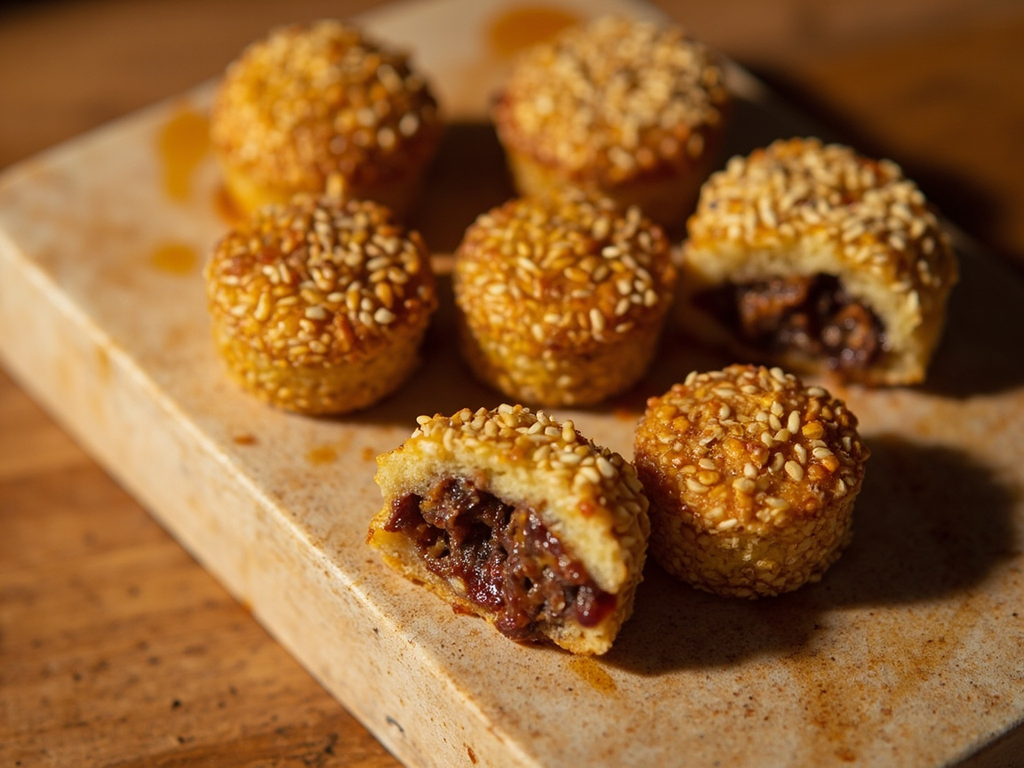
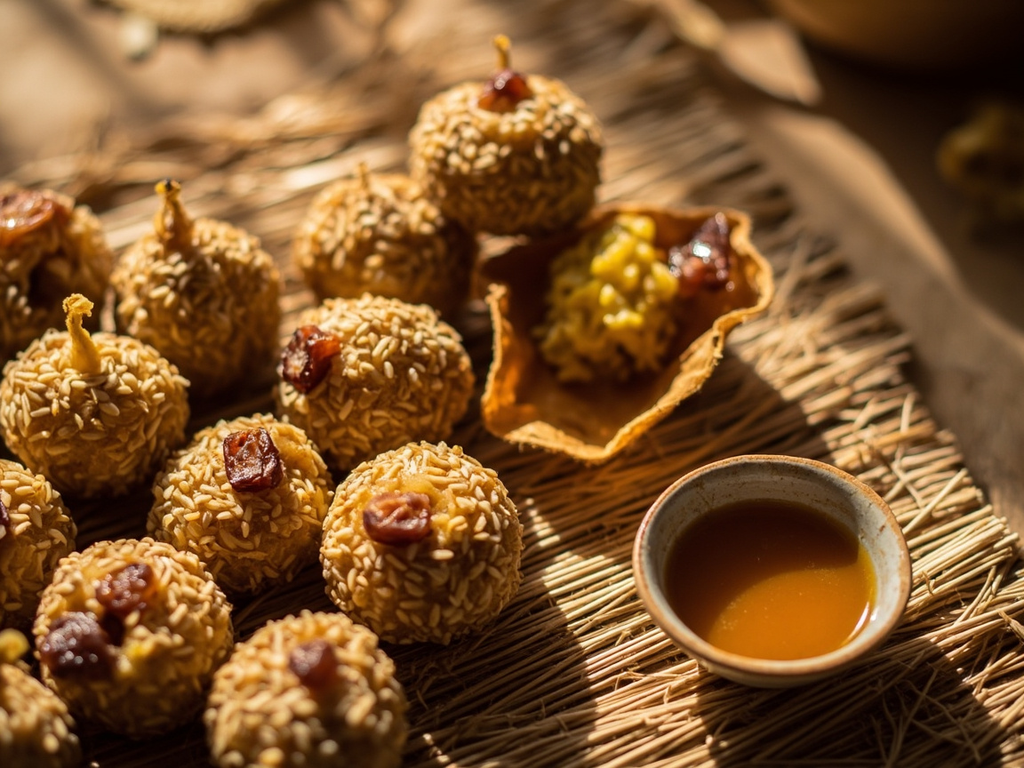
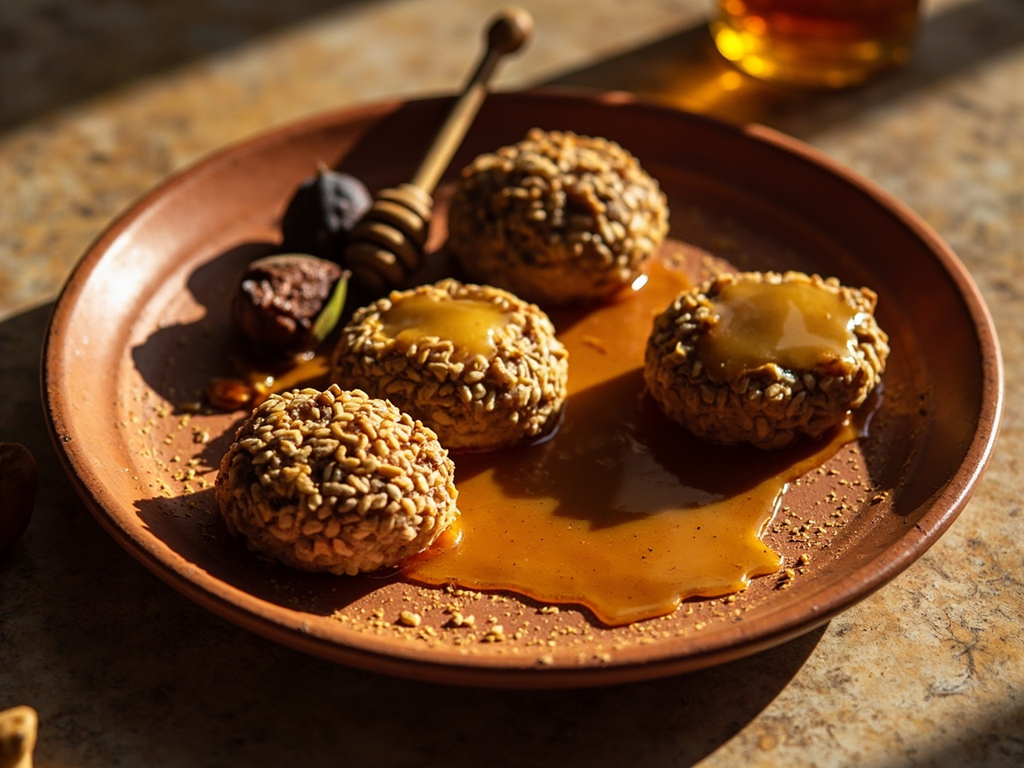
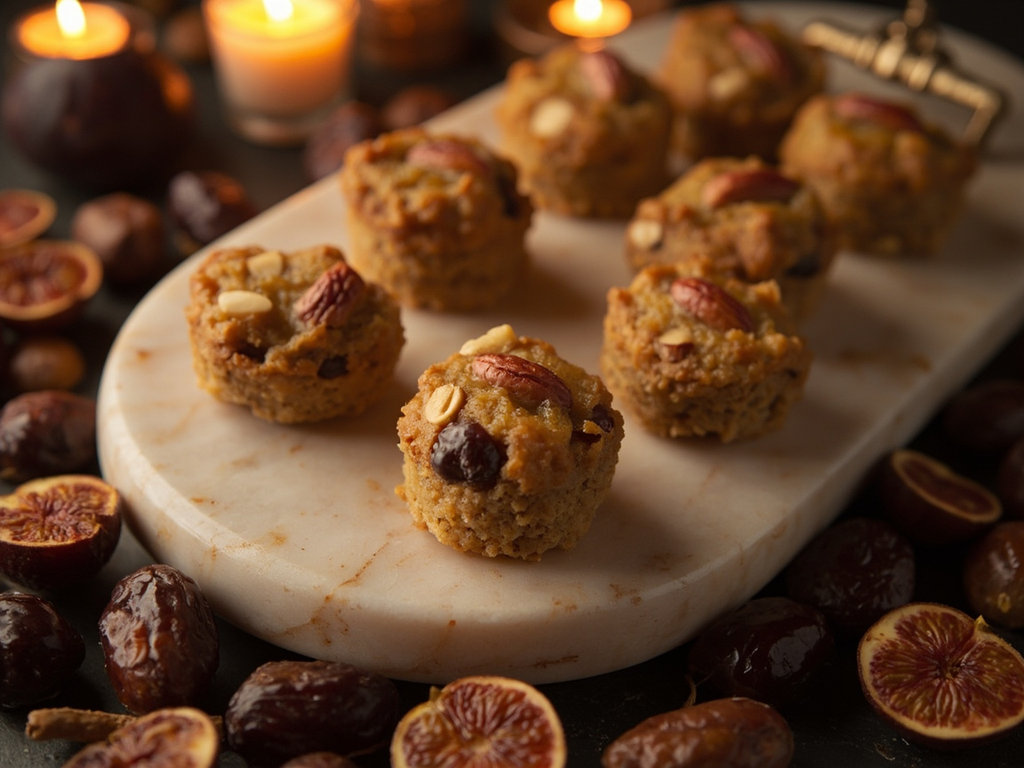
Small dense, moist cakes, heavy with figs and dates, bound with honey and perfumed with sweet cinnamon. Not overly sweet, they keep and travel well — food of the gods and provisions for the dead.
For the young king whose tomb I sealed, I had these cakes placed among the jars and chests, for the soul journeying to the West is hungry like us. Take inspiration from what my bakers shaped: figs and dates from the garden are pounded together, kneaded with honey until they hold in the hand, rolled in fine flour. Set them as an offering, or keep them for the road: the sweetness of honey knows no corruption, and that is why the gods love it.
- •Dried figs — a basket (sweet base)
- •Pitted dates — a handful (sweet binder)
- •Honey — by the spoon (binder and flavor)
- •Emmer wheat flour — as needed (structure)
- •Imported cinnamon or cardamom — a pinch (flavor)
- •Almonds or pine nuts — a few (garnish)
Offering Cakes with Figs, Dates, and Honey
Small dense, moist cakes, heavy with figs and dates, bound with honey and perfumed with sweet cinnamon. Not overly sweet, they keep and travel well — food of the gods and provisions for the dead.
Why this dish? Ay completed Tutankhamun's funerary rites — he is depicted in tomb KV62 performing the Opening of the Mouth ceremony dressed as a sem-priest in a leopard skin. Now every royal funeral included sweet provisions placed for the soul's journey: fruit and honey cakes, examples of which were found in tombs.
For the young king whose tomb I sealed, I had these cakes placed among the jars and chests, for the soul journeying to the West is hungry like us. Take inspiration from what my bakers shaped: figs and dates from the garden are pounded together, kneaded with honey until they hold in the hand, rolled in fine flour. Set them as an offering, or keep them for the road: the sweetness of honey knows no corruption, and that is why the gods love it.
Ingredients (period version)
- Dried figs — a basket (sweet base)
- Pitted dates — a handful (sweet binder)
- Honey — by the spoon (binder and flavor)
- Emmer wheat flour — as needed (structure)
- Imported cinnamon or cardamom — a pinch (flavor)
- Almonds or pine nuts — a few (garnish)
Ingredients
- Soft dried figs — 200 g
- Pitted dates — 100 g
- Honey — 3 tbsp
- Spelt flour — 100 g
- Cinnamon — 1 tsp
- Chopped almonds — 50 g
Method
- Coarsely blend the figs and dates to obtain a thick, sticky paste.
- Incorporate the honey, cinnamon, and chopped almonds, then gradually add the flour until a shapeable dough forms.
- Form small round flat cakes by hand (about 5 cm).
- Place on a baking sheet and bake at 160 °C for 20 to 25 minutes, until just golden and still moist.
- Let cool: they firm up and keep for several days in an airtight container.
How it was made : The Egyptians did not know sugar: all sweetness came from honey, dates, and figs. Cakes of this type, sometimes shaped into spirals, pyramids, or animals, were placed in tombs and on altars as offerings. Tutankhamun's tomb, whose burial Ay supervised, contained baskets of fruit and sweet provisions for the afterlife. Cinnamon and cardamom, imported at great cost, perfumed only the highest tables.
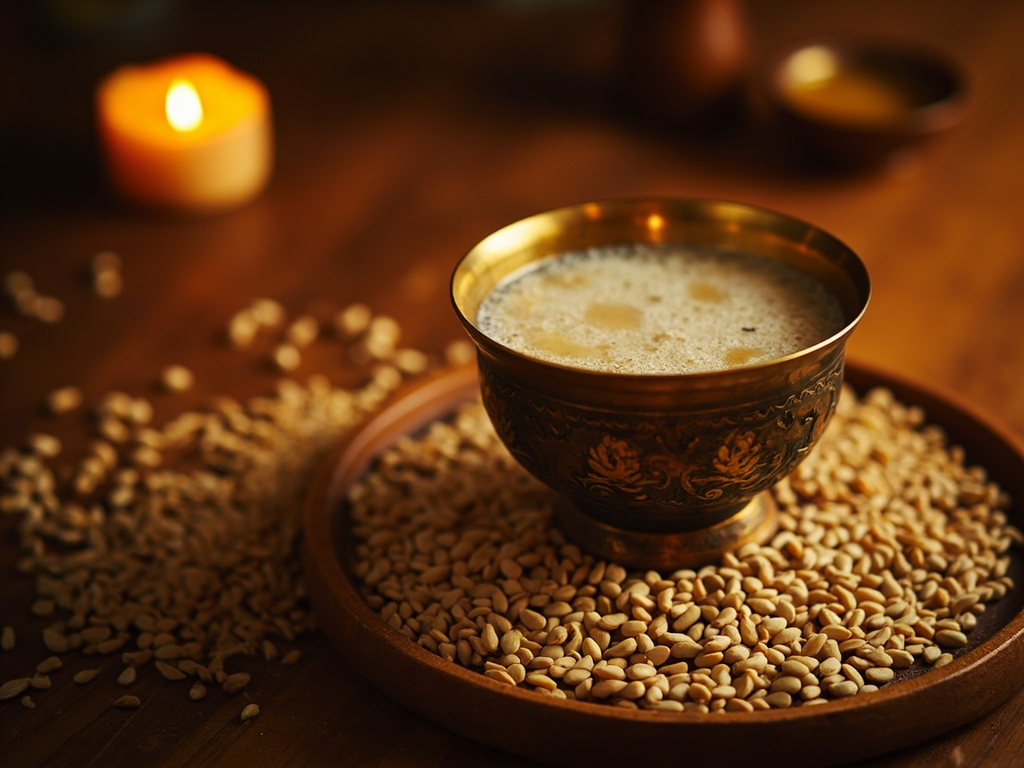
The contemporary twist : Roll the cakes in golden sesame seeds before baking and present them on a sheet of edible gold leaf — the royal offering reimagined as a dessert mignardise.
Sources : Hilary Wilson, Egyptian Food and Drink, Shire Egyptology, 1988 · William J. Darby, Paul Ghalioungui & Louis Grivetti, Food: The Gift of Osiris, Academic Press, 1977
Ay · Charactorium