The Offering Table (hetep)
The Egyptian meal is not divided into starter-main-dessert but is organized around the offering table, the hetep: at the center bread (ta) and beer (heqet), the foundation of all food, surrounded by roasted meats, Nile fish, vegetables, and fruits sweetened with honey. The dishes are presented together, piled on mats or alabaster trays, and this same arrangement — bread, beer, beef, poultry, fruit — is carved on tomb walls as provisions for eternity. Eating, making an offering to the gods, and feeding the dead follow the same grammar.
Signature : Honey and Emmer Wheat
Two pillars of the 18th Dynasty table: emmer wheat flour (Triticum dicoccum), the hulled wheat of the Egyptians, which gives bread and flatbreads; and honey, the only noble sweetener, reserved for royal tables and the gods, which flavors both roast duck and offering cakes.
Ay at the table
1400 av. J.-C. — 1400 av. J.-C.
5 period recipes
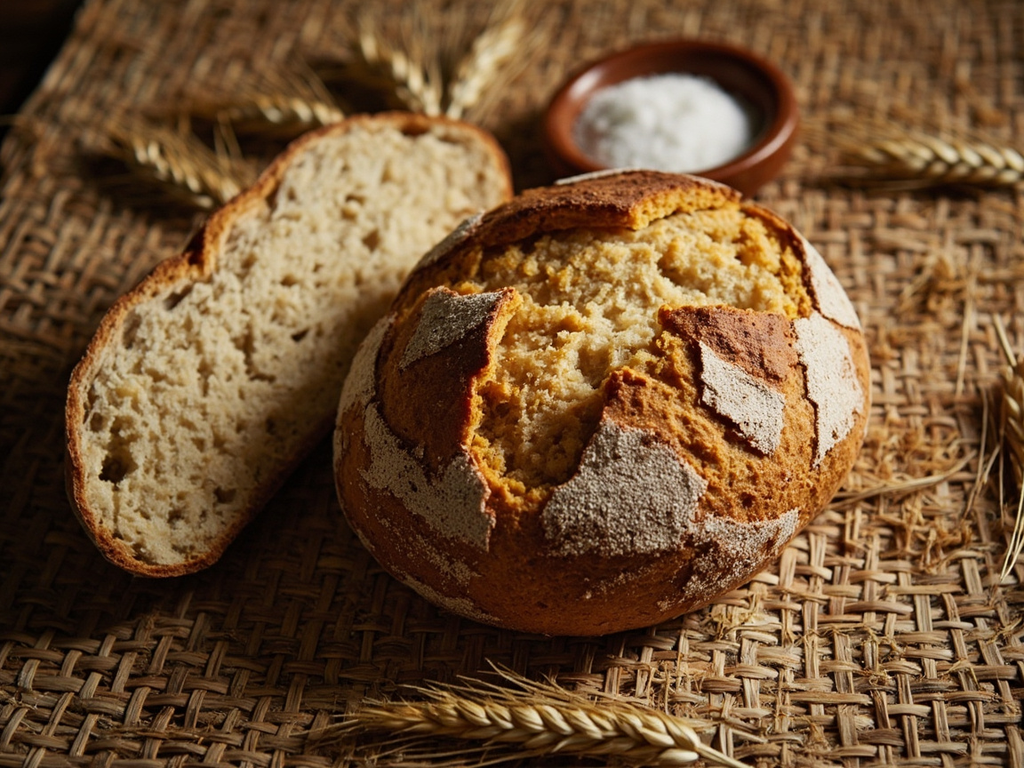 Everyday
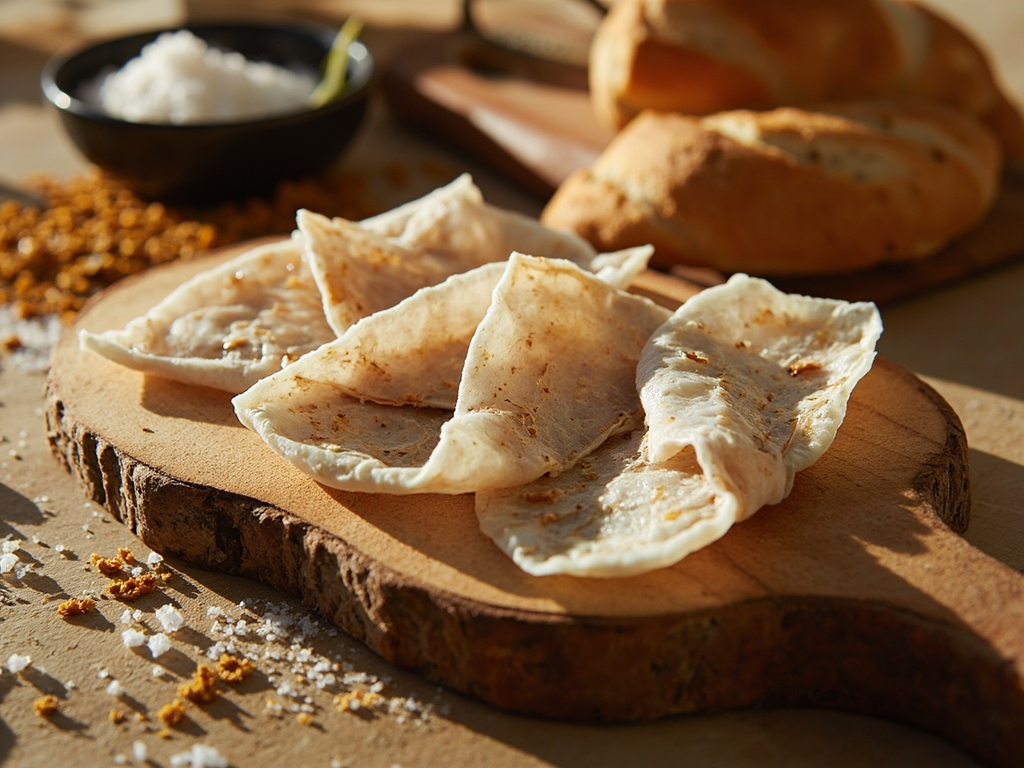
Ta — Emmer Wheat Sourdough Round Bread
Ta (the bread-foundation of the offering table)
🫙 🧂· 1 h (plus rising, 5 to 7 h)
View the recipe
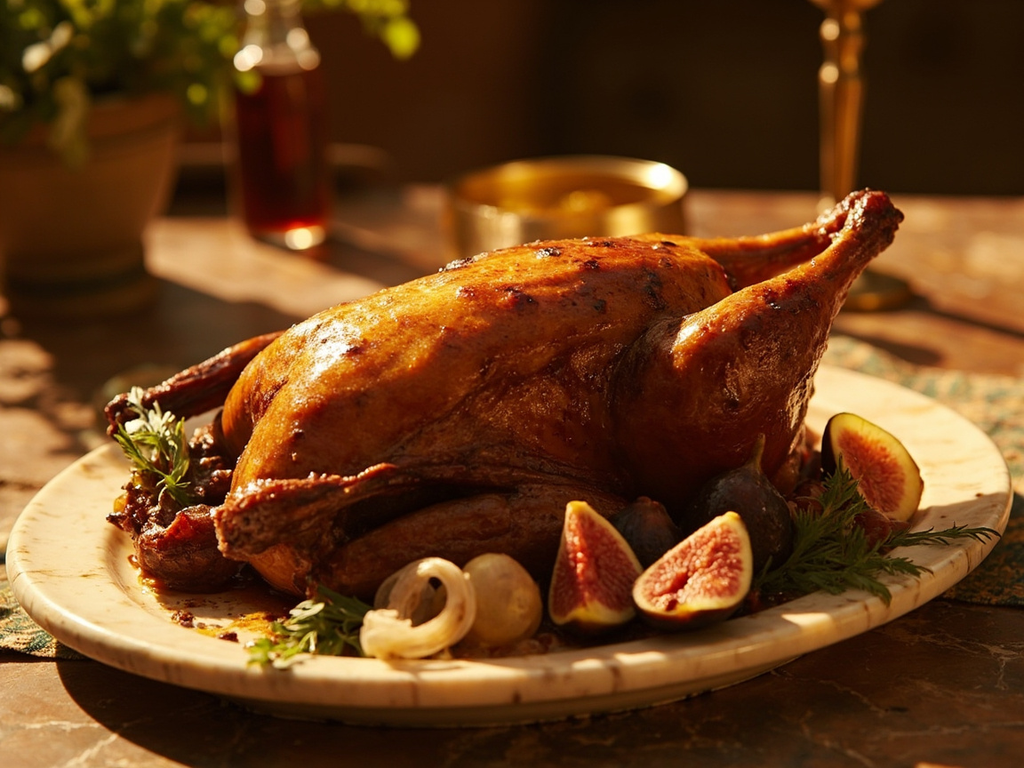 Festive
Honey and Coriander Roasted Nile Duck
Roast piece of the festive hetep
🍯 🍄 🧂· 1 h 45
View the recipe
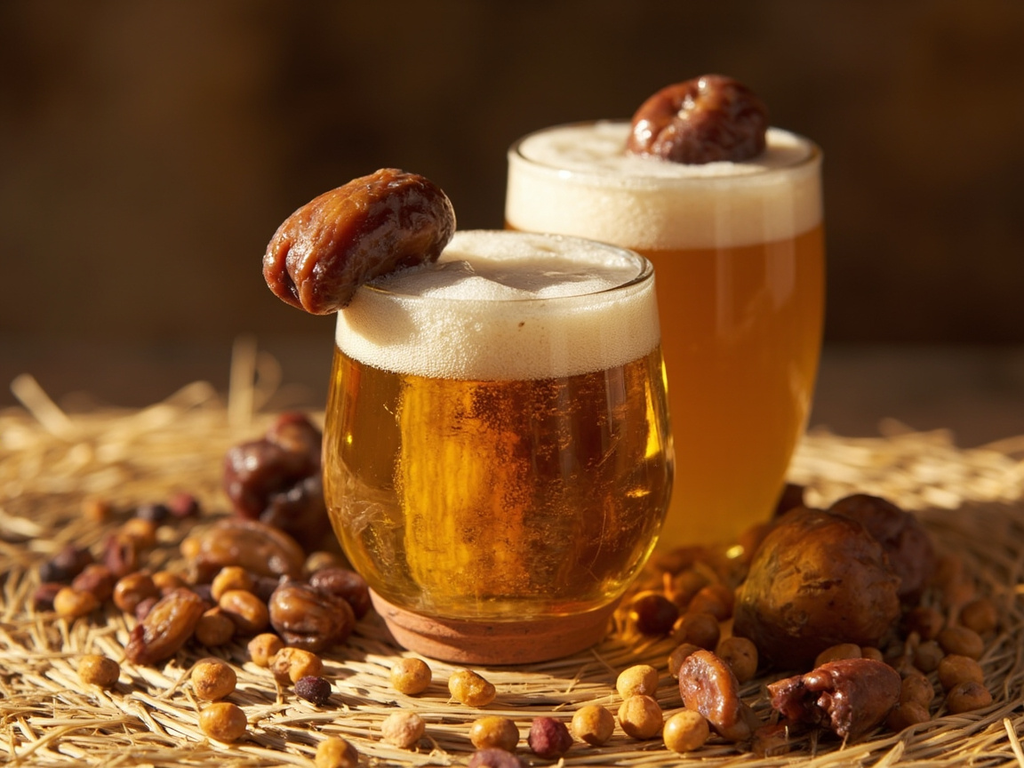 Drink
DrinkHeqet — Sweet Emmer Beer
Heqet (the drink-foundation of the offering table)
🫙 🍯 🍋· 45 min (then 2 to 3 days fermentation)
View the recipe
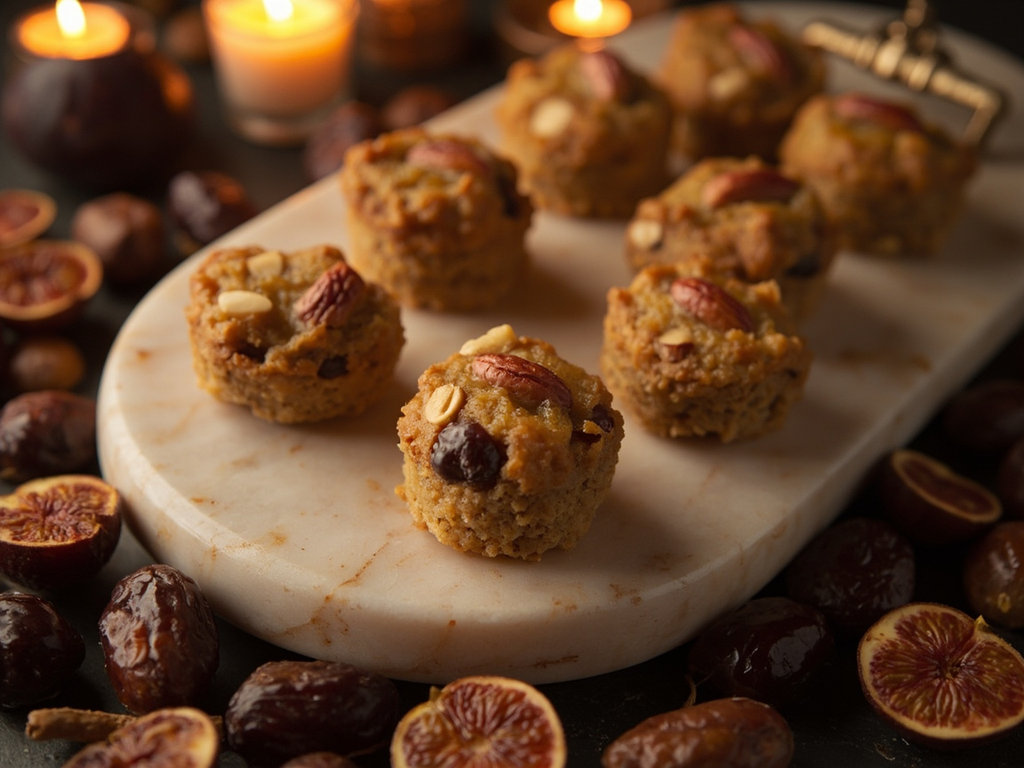 Offering
Offering Cakes with Figs, Dates, and Honey
Shen — funerary offering pastries
🍯 🫙· 40 min
View the recipe
 Preserving
Salt and Cumin Dried Nile Fish
Pantry provision (qedjou)
🧂 🍄· 30 min (then 1 to 3 days salting and drying)
View the recipe