
A Venetian singer and composer of the 17th century, Barbara Strozzi was one of the first women to publish music under her own name. She composed more secular vocal works than any other composer of her era.
Barbara Strozzi(1619 — 1677)
Barbara Strozzi
république de Venise
7 min read
Frequently asked questions
Key Facts
- Born in Venice in 1619, the (adoptive and likely biological) daughter of librettist Giulio Strozzi
- Published 8 collections of vocal music between 1644 and 1664, a record for the time
- Composed more than 125 works, primarily cantatas, arias, and madrigals
- Performed and presented her works at the Accademia degli Unisoni, founded by her father in Venice
- Died in Padua in 1677, long forgotten before being rediscovered in the 20th century
Works & Achievements
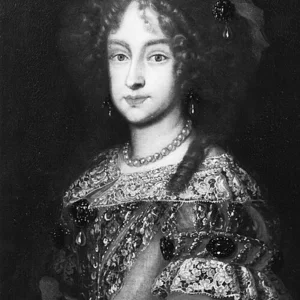
First collection published by Strozzi, dedicated to Vittoria della Rovere. These madrigals for solo voice and ensemble immediately assert her mastery of counterpoint and her gift for vocal expression.
A major collection blending cantatas, ariettes, and duets, dedicated to Archduke Ferdinand Charles of Austria. It illustrates the diversity of vocal forms that Strozzi commanded with equal elegance.
Strozzi's only collection of sacred music. It proves that the composer excelled equally in sacred and secular repertoire, broadening her audience and her network of patrons.
A vast collection of cantatas and arias, one of her most ambitious. It displays a subtle use of basso ostinato and great freedom in the construction of vocal forms.
A cantata for solo voice and basso continuo, and one of Strozzi's masterpieces, regularly performed to this day. Its strikingly expressive vocal line makes it one of the pinnacles of the Italian Baroque cantata.
Her final published collection, dedicated to Sophia of the Palatinate, future Electress of Hanover. It represents the culmination of Strozzi's style and concludes a publishing legacy unmatched by any female composer of the seventeenth century.
Anecdotes
Barbara Strozzi was most likely the illegitimate daughter of the poet and librettist Giulio Strozzi, who gave her an exceptional musical education by placing her under the tutelage of the composer Francesco Cavalli, a student of Monteverdi. In a society where women were rarely trained in composition, this privilege allowed her to become a leading performer and creator in her own right.
In 1637, Giulio Strozzi founded the Accademia degli Unisoni in Venice, a circle of intellectuals and musicians who gathered to debate and perform music. Barbara held a central role there: she sang her own compositions and led the discussions, which was absolutely extraordinary for a woman at that time.
Between 1644 and 1664, Barbara Strozzi published eight collections of vocal music — a record for her era. More than any other composer of her time, men included, she published secular vocal works, establishing herself as an essential figure in the Baroque cantata.
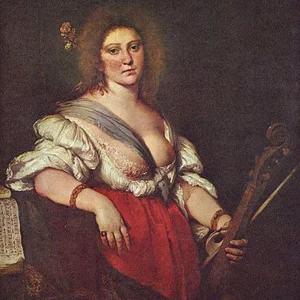
A portrait painted around 1635–1640, attributed to the painter Bernardo Strozzi, depicts a young woman holding a viola da gamba, believed by many to be Barbara. This painting, preserved in Dresden, is one of the rare surviving visual records of the composer.
Barbara Strozzi dedicated her works to high-ranking patrons, including Vittoria della Rovere, Grand Duchess of Tuscany, and Archduke Ferdinand Charles of Austria. These dedications reveal a network of aristocratic protection that was essential for any woman hoping to publish music and earn a living from it in seventeenth-century Venice.
Primary Sources
Dedication to Vittoria della Rovere: “L'umilissima serva Barbara Strozzi si prostra a' piedi di Vostra Altezza Serenissima...” — Strozzi presents herself as a humble servant while asserting the legitimacy of her art as a composer.
Dedication to Archduke Ferdinand Charles of Austria, attesting to the composer's international renown and her ability to attract patrons from the highest ranks of European aristocracy.
Strozzi's only collection of sacred music, whose dedication to a high-ranking patron illustrates the composer's dual mastery of both secular and sacred repertoires.
Last published collection, dedicated to Sophia of the Palatinate, future Electress of Hanover. This volume contains “Lagrime mie,” a cantata now considered Strozzi's masterpiece for its harmonic freedom and expressiveness.
Key Places
Strozzi's birthplace and the center of her entire musical life. Venice was at the time the world capital of opera and Baroque cantata, a vibrant milieu where she was able to establish herself despite the obstacles tied to her gender.
Academy founded by Giulio Strozzi in 1637, where Barbara presided over musical and literary gatherings. There she built her reputation as a singer and composer among Venetian intellectual and aristocratic circles.
The world's first public opera house, opened in 1637. Its existence transformed the musical landscape of Venice in which Strozzi moved, popularizing the vocal forms in which she became a specialist.
University city near Venice where Barbara Strozzi settled in her later years and died in 1677. Padua was home to many intellectuals and artists from Venetian circles.
Typical Objects

A bowed string instrument held between the legs, highly prized in Venetian academies. Strozzi plays it in a portrait attributed to her and incorporates it as harmonic support in her compositions.

An essential keyboard instrument for realizing the baroque basso continuo. Strozzi used it to accompany her cantatas at the meetings of the Accademia degli Unisoni.

A large long-necked lute, the instrument of choice for the basso continuo in Venetian chamber music. It regularly accompanied Strozzi's arias and cantatas at private concerts.

The standard format for Venetian musical publications in the 17th century. Strozzi's eight opuses, bearing her name on the cover, circulated in this form among patrons and academies across Europe.

The tools of musical writing in the 17th century. Strozzi composed and notated her works with a quill — an intellectual act that very few women of her time practiced professionally.

Before printing, works circulated in handwritten copies entrusted to copyists. Strozzi had her compositions reproduced to distribute them to her patrons or to rehearse them with musicians.
School Curriculum
Vocabulary & Tags
Key Vocabulary
Daily Life
Morning
Barbara Strozzi began her day in her Venetian home with study and composition. She worked with a quill, noting her musical ideas in the quiet of the morning before the city came alive on the canals.
Afternoon
The afternoon was devoted to rehearsals and meetings with musicians, copyists, or patrons. She might receive commissioners interested in her new works, or oversee the copying of scores intended for publication.
Evening
Evenings were the time for academies and private concerts. At the Accademia degli Unisoni, she sang her compositions before a circle of intellectuals and aristocrats, accompanied on harpsichord or theorbo, in an atmosphere that was at once learned and worldly.
Food
The Venetian table of the 17th century blended lagoon fish, polenta, vegetables, and spiced meats. In affluent circles like Strozzi's, candied fruits, sweets, and Venetian wine enhanced meals that were often shared in company.
Clothing
Well-to-do Venetian women wore dresses with puffed sleeves and bodices adorned with fine lace, reflecting the splendor of the Serenissima. At academies, Strozzi likely wore elegant attire, as suggested by the portrait attributed to her.
Housing
Strozzi lived in a bourgeois house in Venice, most likely in one of the sestieri close to the centers of cultural power. Her interior included a harpsichord, volumes of scores, and the hallmarks of a cultivated household in the Republic.