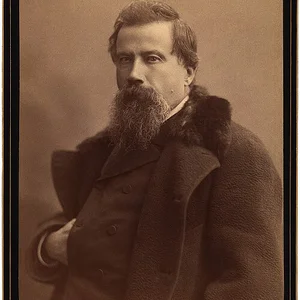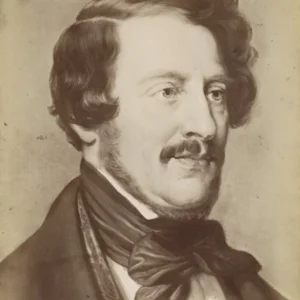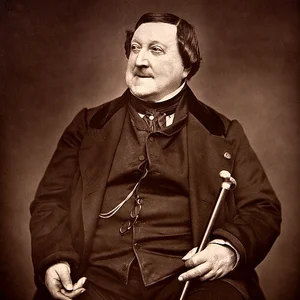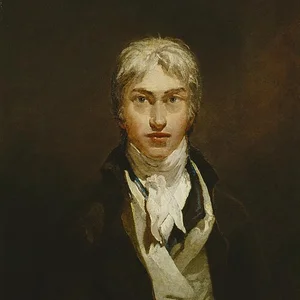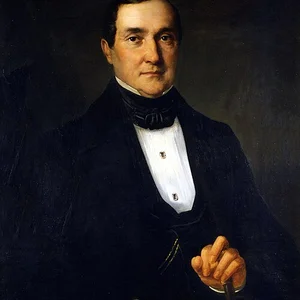

Italian theater director and librettist (1794–1879), Merelli ran La Scala in Milan and the Kärntnertortheater in Vienna. He played a decisive role in Verdi's career by commissioning Nabucco in 1842.
Bartolomeo Merelli(1794 — 1879)
Bartolomeo Merelli
royaume d'Italie
7 min read
Frequently asked questions
Key Facts
- Born in Bergamo in 1794, died in Milan in 1879
- Director of La Scala in Milan on several occasions between 1836 and 1850
- Simultaneously managed the Kärntnertortheater in Vienna
- Commissioned Verdi's opera Nabucco (1842), launching his international career
- Collaborated with Donizetti and other major composers of his era
Works & Achievements
The most important decision of Merelli's career: commissioning and producing this opera for a despondent Verdi was a risky gamble that turned into a historic triumph, launching Verdi's golden age.
For fourteen years, Merelli made La Scala the world centre of Italian Romantic opera, programming Donizetti, Bellini and the young Verdi before an elite European audience.
Running both the foremost Austrian opera house and La Scala simultaneously was an unprecedented feat, establishing Italian opera at the heart of the Habsburg capital.
Merelli staged Verdi's second opera at La Scala, reaffirming his support for the composer and consolidating the thunderous success of Nabucco.
Before his career as an impresario, Merelli wrote several libretti for composers in northern Italy, gaining an intimate understanding of the constraints of the operatic form.
Anecdotes
One winter evening in 1840, Verdi, crushed by the deaths of his wife and two children, refused to write anything at all. Merelli forcibly slipped the libretto of Nabucco into his coat pocket as he walked him to the door. Back home, Verdi opened the booklet at random to the line “Va, pensiero, sull'ali dorate” — and he could not stop reading. That is how the opera that would make him famous came to be.
Merelli was one of the few impresarios of his era to simultaneously run two major opera houses in two European capitals: La Scala in Milan and the Kärntnertortheater in Vienna. He spent part of the year in Milan and the other in Vienna, juggling singers' contracts, premieres, and tours — a logistical feat that earned the admiration of his contemporaries.
Before becoming a theater director, Merelli had himself written opera librettos in his youth in Bergamo. It was this dual expertise as a writer and manager that allowed him to intuitively understand the needs of composers and build lasting relationships of trust with giants such as Donizetti and Verdi.
During the revolutions of 1848 that shook Europe, Vienna's theaters were forced to close their doors. Merelli lost his contract with the Kärntnertortheater in the political upheaval, illustrating just how closely the life of an opera impresario was bound up with the turbulence of history.
Primary Sources
Merelli grabbed me, stuffed the libretto in my pocket, took me by the shoulders and pushed me outside, locking the door behind him. [...] I went home and threw the manuscript on the table with an almost violent gesture. It fell open; my eyes landed on the page and I read: 'Va, pensiero, sull'ali dorate.'
Merelli is a man of prodigious energy; he holds Milan and Vienna in his hands at the same time, and fulfils his commitments with a punctuality that many a director would envy.
La signora Strepponi agrees to perform the role of Abigaille in the new opera entitled Nabucco, music by maestro Giuseppe Verdi, for the Carnival-Lent season of 1842.
Impresario Merelli has rendered an immense service to the lyric art by pressing a discouraged composer into setting this biblical subject to music; the success surpasses all expectations.
Key Places
The main venue of Merelli's career: he served as its director from 1836 to 1850, then again from 1861 to 1863. It was on this stage that he premiered *Nabucco* and decisively launched Verdi's career.
Merelli directed this prestigious Viennese imperial opera house simultaneously with La Scala from 1836 to 1848, programming Italian works for the Habsburg court.
Merelli's birthplace, and also the hometown of Donizetti. This rich cultural environment nurtured his vocation as a librettist and his early connections in the operatic world.
Another Milanese theatre that Merelli managed during certain periods, serving as a complementary venue to La Scala for smaller-scale productions.
Typical Objects

A key document in Merelli's work: he evaluated and commissioned texts intended to be set to music. It was a libretto — that of Nabucco — that he slipped into Verdi's pocket to convince him to compose again.

Merelli drafted and signed dozens of contracts each season with singers, composers, and set designers. These documents codified fees, roles, penalties, and terms of engagement, forming the administrative backbone of his theaters.

A daily working tool that Merelli read to evaluate new works submitted to his theater. His background as a librettist gave him a genuine ability to judge the musical and dramatic value of a score.

In the anecdotal tradition of the era, Merelli is associated with the image of the man who opens and closes doors — literally, he is said to have locked the door behind Verdi on the evening he handed him the libretto of Nabucco.

Managing La Scala and the Kärntnertortheater involved complex bookkeeping: subscription revenues, set construction costs, chorus salaries. These ledgers were the daily tool of any serious impresario.

Merelli coordinated his two theaters through a constant flow of letters between Milan and Vienna. The speed of postal mail at the time — still largely by horse — made remote management precarious and required planning several weeks in advance.
School Curriculum
Vocabulary & Tags
Key Vocabulary
Daily Life
Morning
Merelli began his day early in his theater office, going through the mail that had arrived overnight from Vienna or other Italian venues. He received composers and artists' agents, examined libretto proposals, and signed engagement contracts for the upcoming season.
Afternoon
The afternoon was devoted to stage rehearsals, which Merelli attended regularly to arbitrate the inevitable tensions between singers, conductors, and set designers. He also negotiated with set and costume suppliers, keeping a close eye on the ever-tight budget.
Evening
Merelli was present in his box during performances, watching the audience as closely as the stage — the reactions of the stalls and the subscribers shaped his programming decisions. After the show, he received guests backstage, building his network in both artistic and social circles.
Food
The table of a prosperous Milanese impresario in the nineteenth century was defined by Lombard cuisine: risotto, ossobuco, polenta served with braised meats. Business dinners after premieres, in restaurants near La Scala, were occasions to seal contracts over a fine Barolo or a Franciacorta.
Clothing
Merelli wore the distinguished bourgeois dress of his class and era: a black tailcoat, silk waistcoat, high white cravat, and a top hat for official outings. Backstage, he sometimes swapped the tailcoat for a more practical frock coat.
Housing
As director of La Scala, Merelli had a bourgeois apartment in central Milan, close to the theater, furnished with the understated comfort of the great Lombard bourgeoisie: a reception room, a library, and a study cluttered with scores and correspondence.