 flip
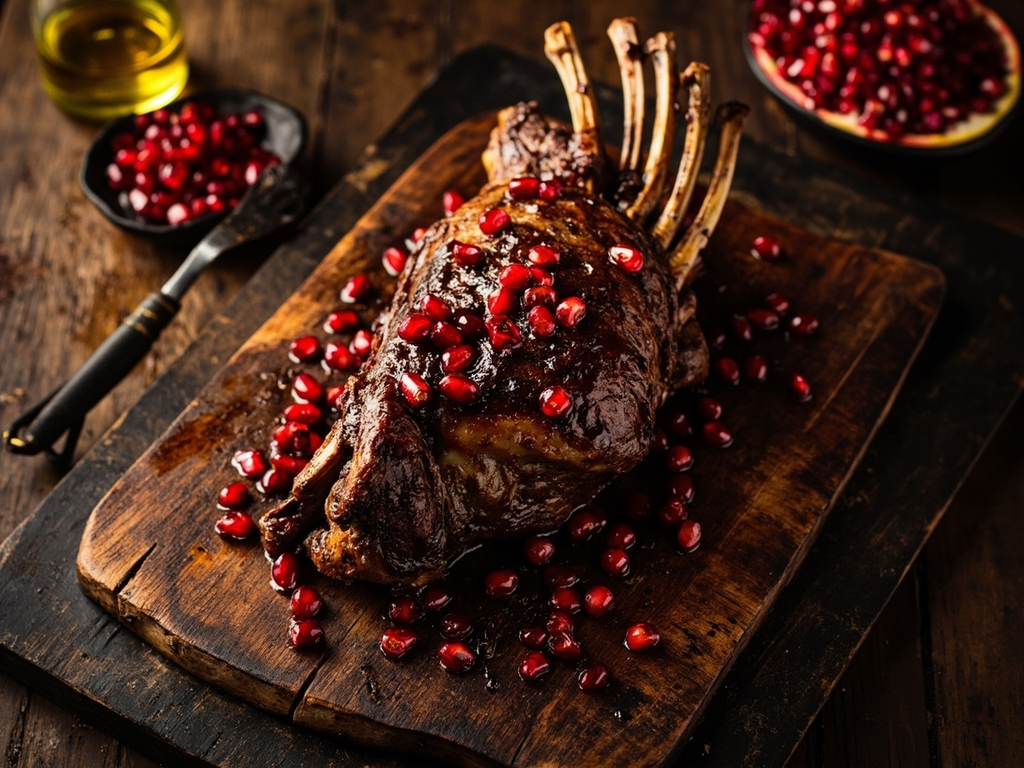
flipFire-Roasted Lamb with Pomegranate and Coriander
Fire-Roasted Lamb with Pomegranate and Coriander
Why this dish? Baal-Zebub of Ekron received, like any great Canaanite god, cattle sacrifices whose smoke rose to him while his clergy feasted on the rest. This roast embodies the altar banquet: the sizzling fatty meat, the smell that attracts — even the flies from which the 'Lord' took his name.
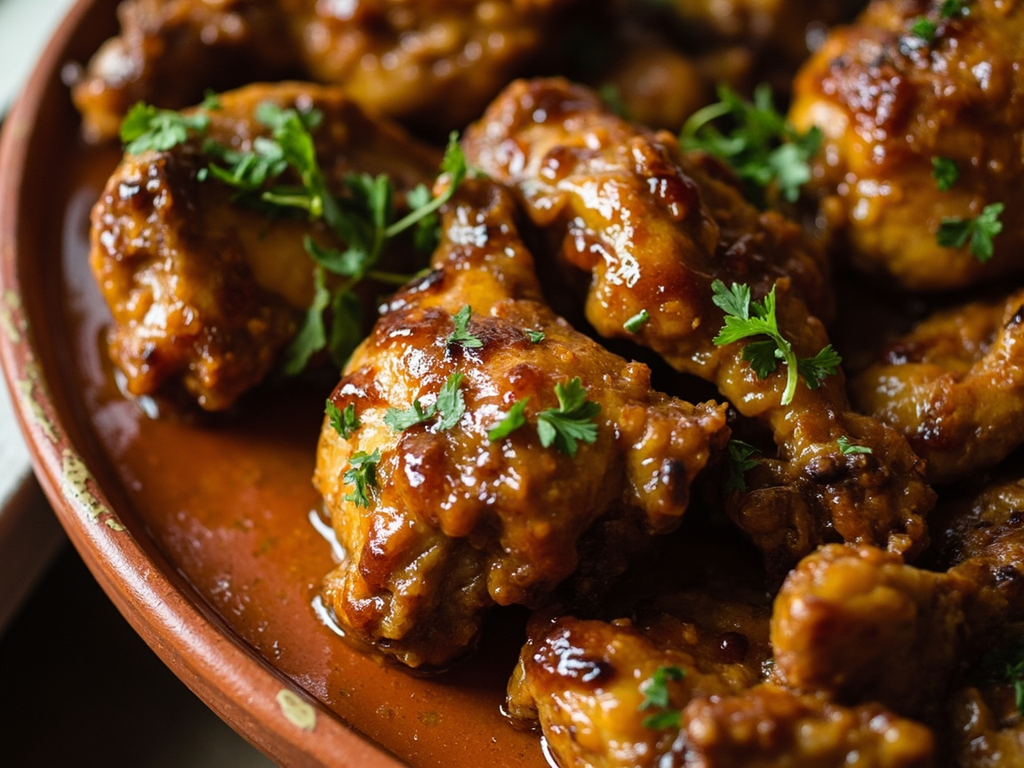
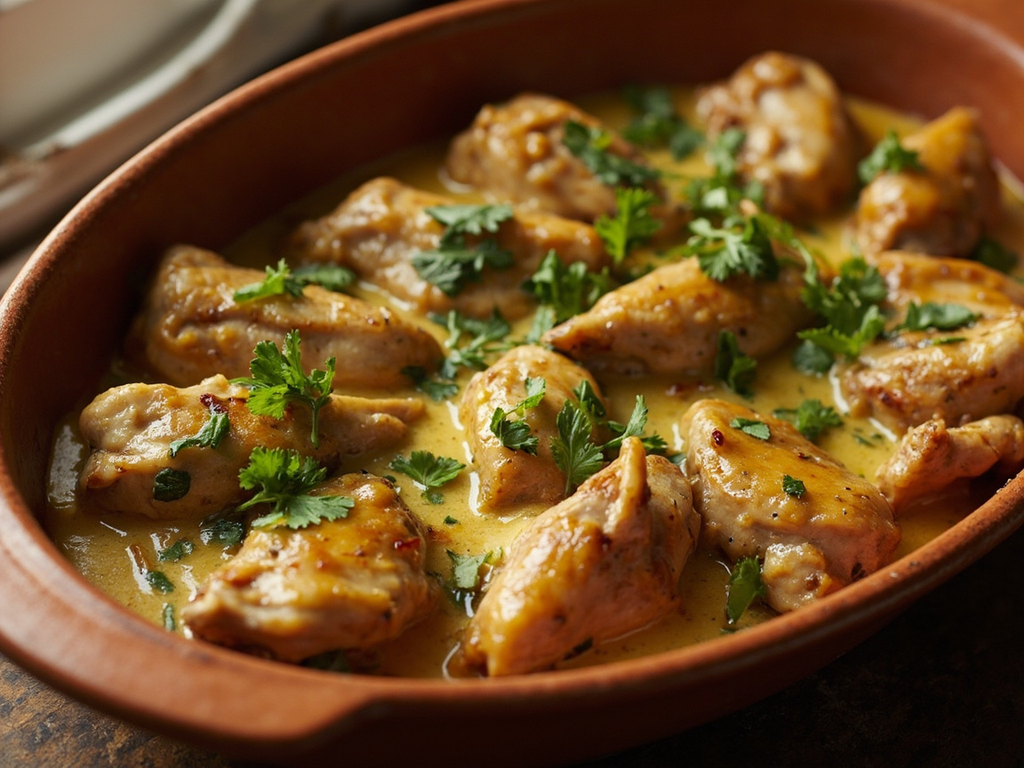
Lamb shoulder rubbed with olive oil, coriander, and cumin, fire-roasted until golden crust, then drizzled with tart pomegranate juice. A festive, opulent, fragrant meat, such as would have been offered on the horned altar.
Approach, mortal, and watch the smoke rise: that is my portion, and you shall not touch it. In Ekron they brought me the fat beast, split it on the four-horned altar, and the smell of burnt fat filled the whole sanctuary — do you see why the flies made me king? Rub the flesh with oil and coriander, let it sing on the embers, and when the pomegranate blood beads upon it, know that my priests were already eating, sated, before my bronze statue. Eat in turn, if you dare.
- •Shoulder of lamb or kid — one whole piece (sacrificial meat)
- •Ekron olive oil — as needed (fat and sacred anointing)
- •Coriander and cumin seeds — a handful, crushed (flavor)
- •Pomegranate — a few fruits, pressed (acidity)
- •Salt — to taste (seasoning and ritual preservation)
Fire-Roasted Lamb with Pomegranate and Coriander
Lamb shoulder rubbed with olive oil, coriander, and cumin, fire-roasted until golden crust, then drizzled with tart pomegranate juice. A festive, opulent, fragrant meat, such as would have been offered on the horned altar.
Why this dish? Baal-Zebub of Ekron received, like any great Canaanite god, cattle sacrifices whose smoke rose to him while his clergy feasted on the rest. This roast embodies the altar banquet: the sizzling fatty meat, the smell that attracts — even the flies from which the 'Lord' took his name.
Approach, mortal, and watch the smoke rise: that is my portion, and you shall not touch it. In Ekron they brought me the fat beast, split it on the four-horned altar, and the smell of burnt fat filled the whole sanctuary — do you see why the flies made me king? Rub the flesh with oil and coriander, let it sing on the embers, and when the pomegranate blood beads upon it, know that my priests were already eating, sated, before my bronze statue. Eat in turn, if you dare.
Ingredients (period version)
- Shoulder of lamb or kid — one whole piece (sacrificial meat)
- Ekron olive oil — as needed (fat and sacred anointing)
- Coriander and cumin seeds — a handful, crushed (flavor)
- Pomegranate — a few fruits, pressed (acidity)
- Salt — to taste (seasoning and ritual preservation)
Ingredients
- Lamb shoulder — 1.2 kg (meat)
- Extra virgin olive oil — 5 tbsp (marinade)
- Coriander seeds — 1 tbsp (spice)
- Ground cumin — 2 tsp (spice)
- Pomegranate molasses — 3 tbsp (tart glaze)
- Coarse salt — 2 tsp (seasoning)
Method
- Coarsely crush coriander and cumin, mix with olive oil, salt, and a little pomegranate molasses.
- Score the lamb shoulder and massage it thoroughly with the paste. Refrigerate for at least 3 hours.
- Roast in the oven at 160°C (or over coals) for 2.5 to 3 hours, basting regularly with cooking juices.
- In the last 20 minutes, brush with pomegranate molasses and increase heat to caramelize the crust.
- Let the meat rest for 15 minutes before shredding and serving with a final drizzle of oil.
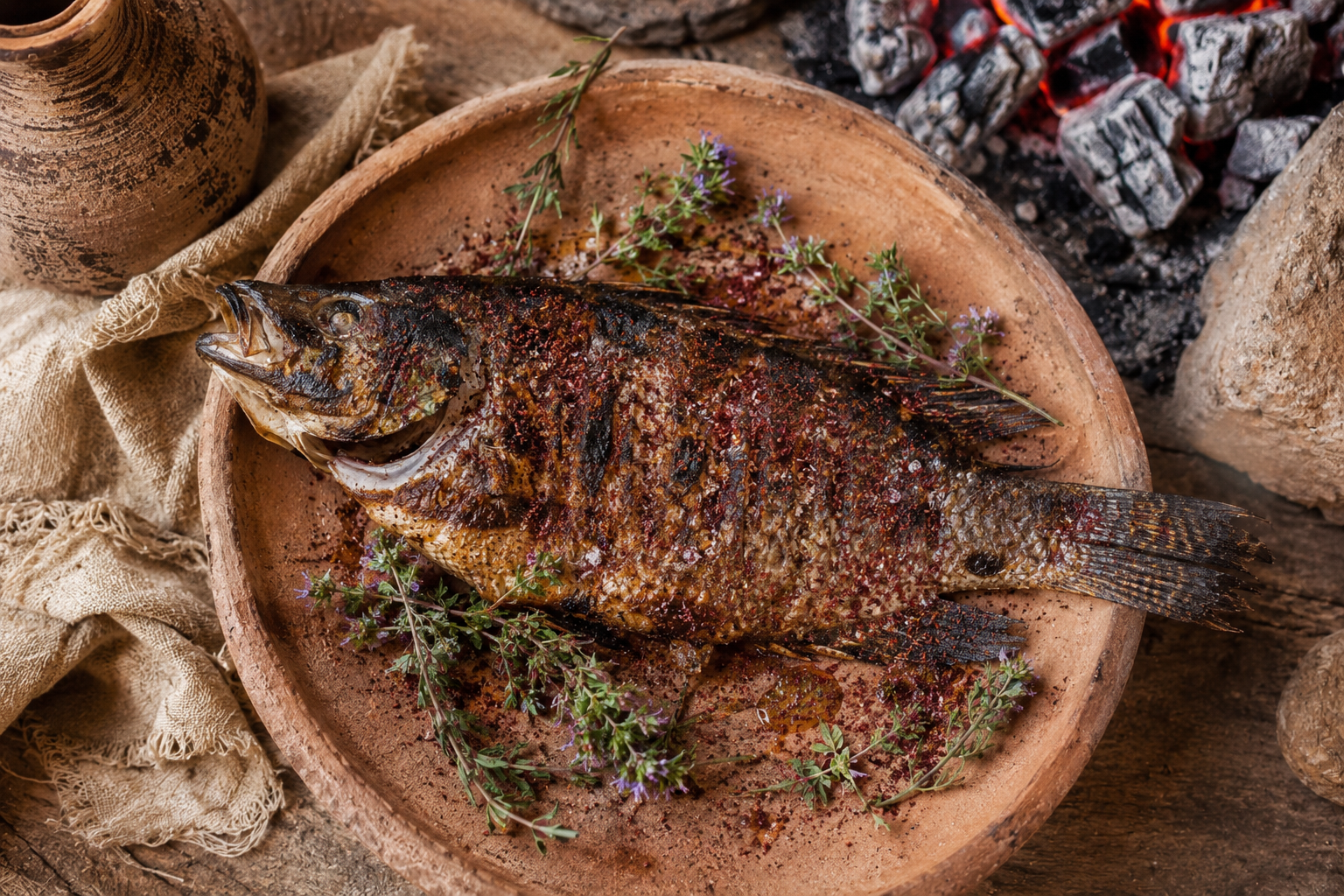
How it was made : On Canaanite and Philistine altars, fat and certain portions were burned for the deity, while the clergy consumed the rest during a sacred meal. Open fire, abundant olive oil, and caravan spices (cumin, coriander) marked a prestige meal. Pomegranate, the royal fruit of the Levant, signified festive tables.
The contemporary twist : Serve shredded on a board, scattered with fresh pomegranate seeds that burst in the mouth — a blood-red nod to the 'banquet of the prince of demons.'
Sources : Trude Dothan, The Philistines and Their Material Culture · Seymour Gitin, studies on the olive oil industry at Tel Miqne-Ekron · 2 Kings 1 (mention of Baal-Zebub, god of Ekron)
Beelzebub · Charactorium