 flip
flipApūpa — honey fritter in ghee
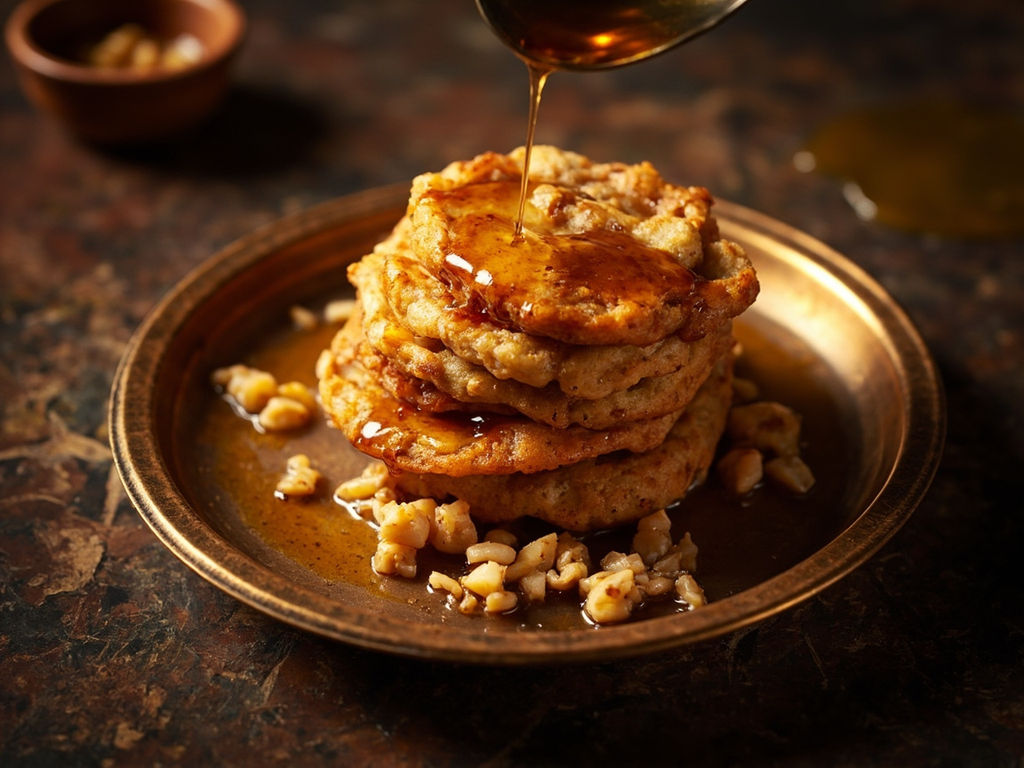
Apūpa — honey fritter in ghee
Why this dish? Apūpa is one of the oldest named sweets in the Ṛgveda, a cake of barley flour and honey fried in butter, shared during festivals and sacrifices. For Bhūmi Devi, goddess of grains and abundance, it is the festive pastry born directly from her gifts: flour, honey, butter.
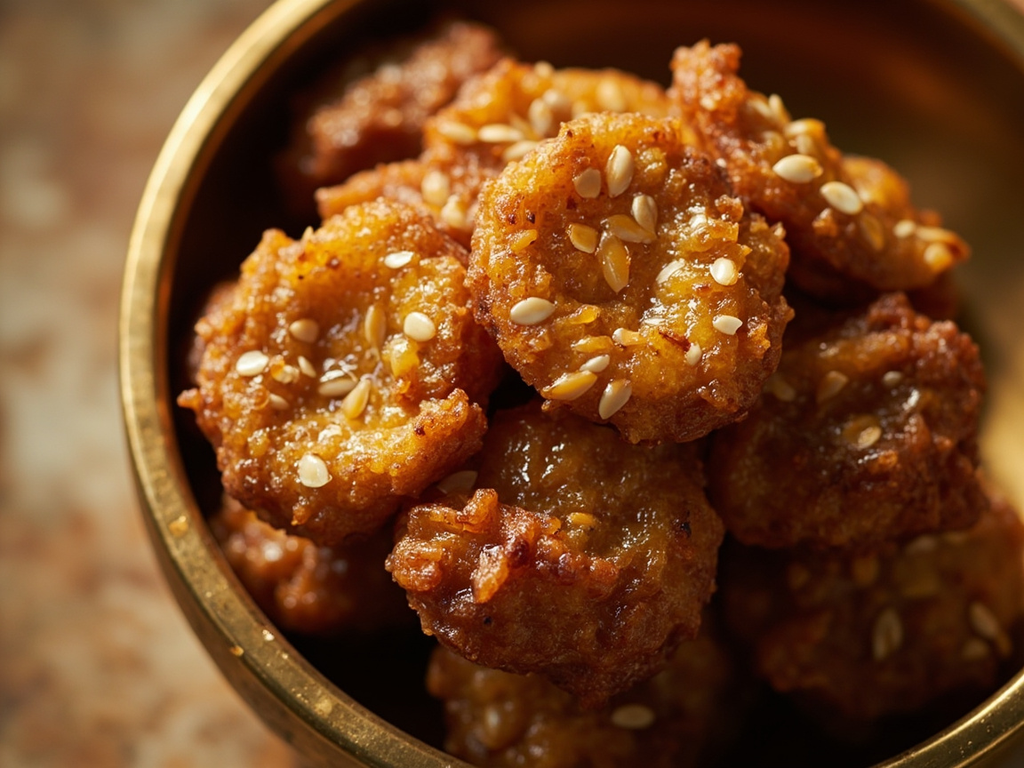
A small golden fritter, crispy at the edges and soft at the heart, made from barley flour bound with honey and fried in ghee. The cake of joyful days, celebrating the generosity of the earth.
On days of jubilation, when the ears of grain bend and the granaries sing, they make these fritters for me — smell how the butter sings when the dough plunges in! Mix the ground barley with the honey from my flowers, shape with your fingertips, and let it brown until the color of the setting sun. Eat it warm, child: it is my feast, the earth rejoicing at having given so much.
- •Barley flour (yava) — two handfuls (cereal base)
- •Honey (madhu) — generously (binder and sweetness)
- •Clarified butter (ghṛta) — for frying (ritual cooking)
- •Curdled milk (dadhi) — a little (softness (optional))
- •Long pepper or dried ginger — a pinch (subtle warmth)
Apūpa — honey fritter in ghee
A small golden fritter, crispy at the edges and soft at the heart, made from barley flour bound with honey and fried in ghee. The cake of joyful days, celebrating the generosity of the earth.
Why this dish? Apūpa is one of the oldest named sweets in the Ṛgveda, a cake of barley flour and honey fried in butter, shared during festivals and sacrifices. For Bhūmi Devi, goddess of grains and abundance, it is the festive pastry born directly from her gifts: flour, honey, butter.
On days of jubilation, when the ears of grain bend and the granaries sing, they make these fritters for me — smell how the butter sings when the dough plunges in! Mix the ground barley with the honey from my flowers, shape with your fingertips, and let it brown until the color of the setting sun. Eat it warm, child: it is my feast, the earth rejoicing at having given so much.
Ingredients (period version)
- Barley flour (yava) — two handfuls (cereal base)
- Honey (madhu) — generously (binder and sweetness)
- Clarified butter (ghṛta) — for frying (ritual cooking)
- Curdled milk (dadhi) — a little (softness (optional))
- Long pepper or dried ginger — a pinch (subtle warmth)
Ingredients
- Barley flour — 150 g (or half barley, half whole wheat) (base)
- Honey — 4 tbsp (binder, sweetness)
- Ghee — 200 g for frying (cooking)
- Plain yogurt — 2 tbsp (softness)
- Ginger powder — 1 pinch (fragrance)
- Warm water — if needed (adjust dough)
Method
- Mix the barley flour, honey, yogurt, and ginger into a soft dough, neither too runny nor too firm (add a little warm water if necessary).
- Let rest for 15 minutes.
- Heat the ghee in a deep pan until a drop of dough rises immediately sizzling.
- Drop flattened spoonfuls of dough, fry 2 to 3 minutes per side until a beautiful golden color.
- Drain, drizzle with a final stream of honey, and serve hot.
How it was made : The term apūpa appears in the Ṛgveda and the Atharvaveda; it designated barley (sometimes rice) cakes fried or baked in ghee and soaked in honey, offered to the gods and distributed during rites. The flour was ground on a stone mill, and frying took place in earthen or bronze vessels.
The contemporary twist : Serve stacked on a bed of thick cardamom yogurt, like mini Vedic pancakes for an ancient-inspired brunch.
Sources : Achaya, K.T., A Historical Dictionary of Indian Food · Prakash, Om, Food and Drinks in Ancient India
Bhumi Devi · Charactorium