 Flip the card
Bhumi Devi at the table
On the menu
Naivedya — the sattvic offering placed at the goddess's feet
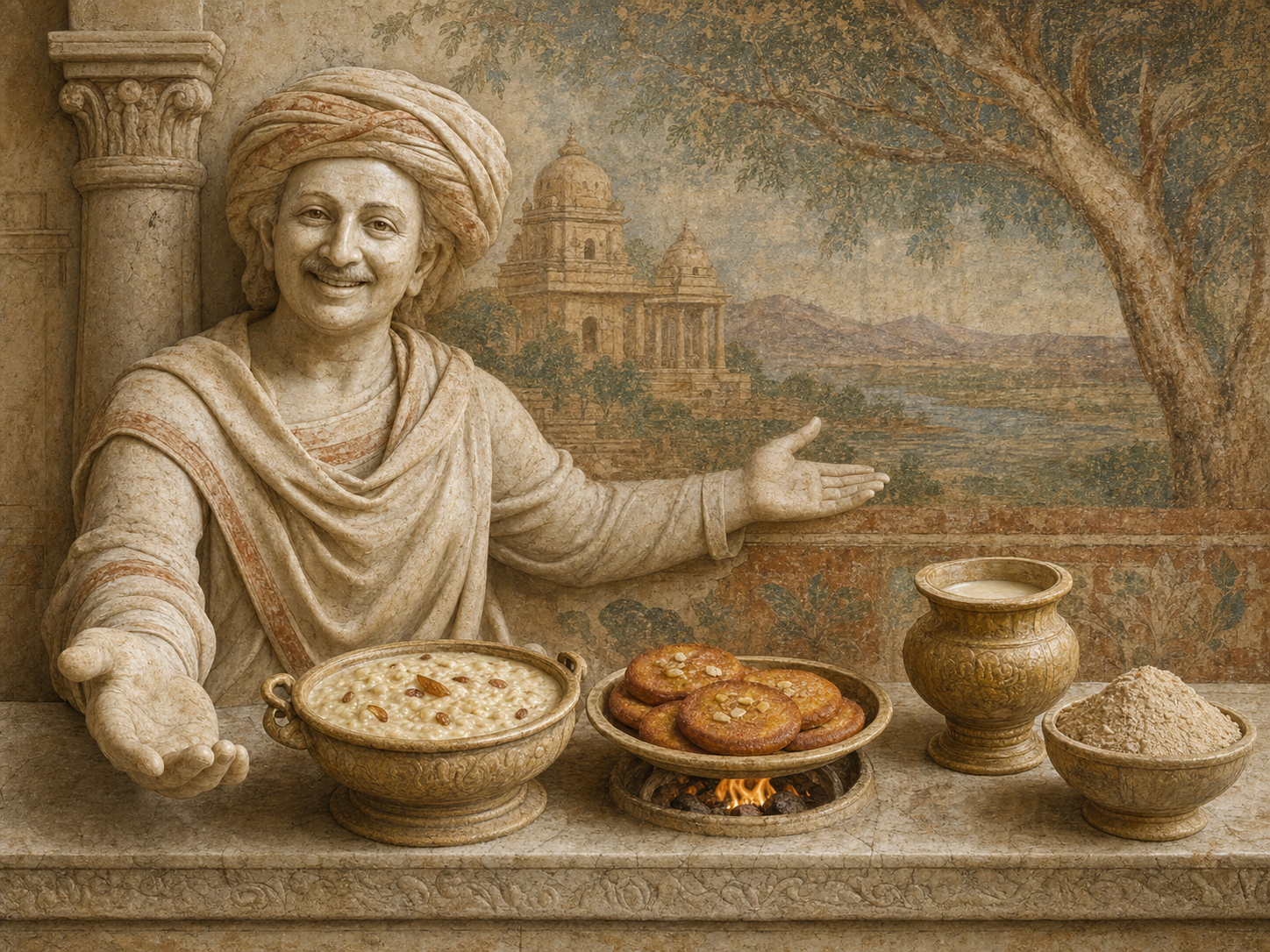
In Hindu devotion, one does not serve a meal to Bhūmi Devi: one returns what she has grown. The foods are first presented as naivedya (pure, sattvic offering: no meat, no alcohol, no excess of spices) on a banana leaf or a copper plate, then shared among the devotees as prasāda, blessed food. The structure does not oppose starter/main/dessert but follows the nature of the Vedic havis: a grain boiled in milk (havis), a honey cake (apūpa), a sacred welcoming drink (madhuparka), a travel flour (saktu), a daily porridge (yavāgū). Sweetness dominates, for sweet is the offering of gratitude par excellence.
Signature : Ghṛta & Madhu — clarified butter and honey
Ghee (ghṛta) and honey (madhu) are the two sacred substances of the Vedic texts, poured into the fire and into offerings. Together with the grains (rice, barley) that the Earth raises, they form the triad of all food returned to Bhūmi Devi. A spoonful of ghee melting on hot grain, a drizzle of honey: that is her signature, the gift of the earth returned to the earth.
click to flip back
Bhumi Devi at the table
5 period recipes
 Offering
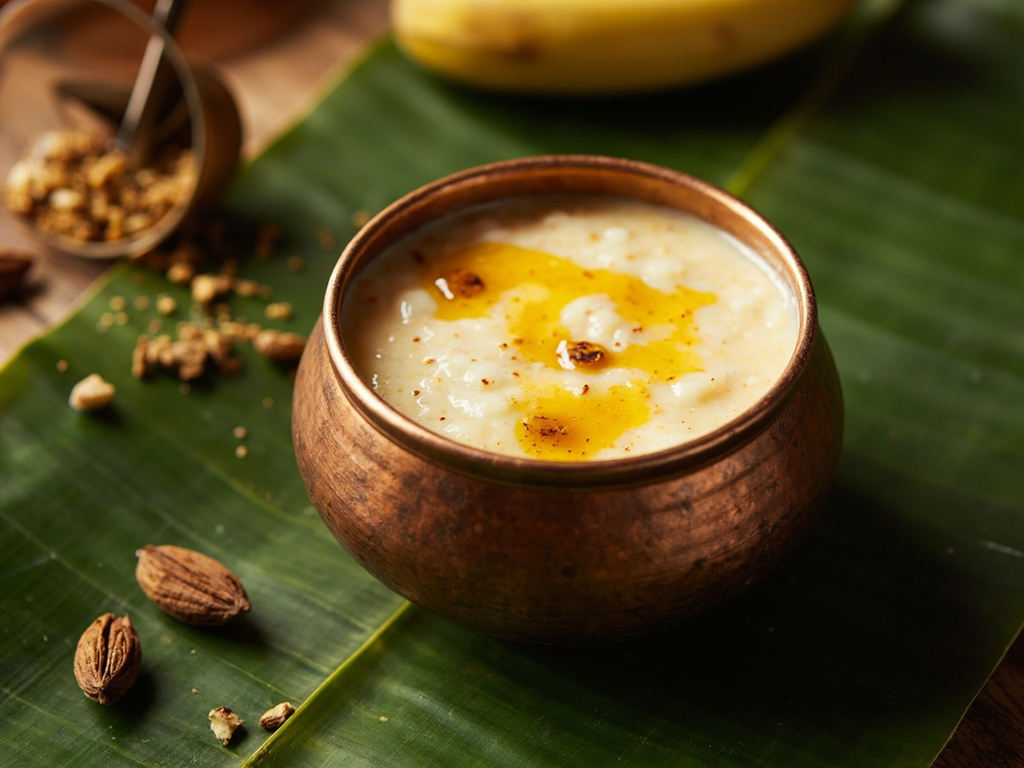
Kṣīraudana — milk rice of the offerings
Havis (offering of grain cooked in milk)
🍯· 50 min
View the recipe
 Festive
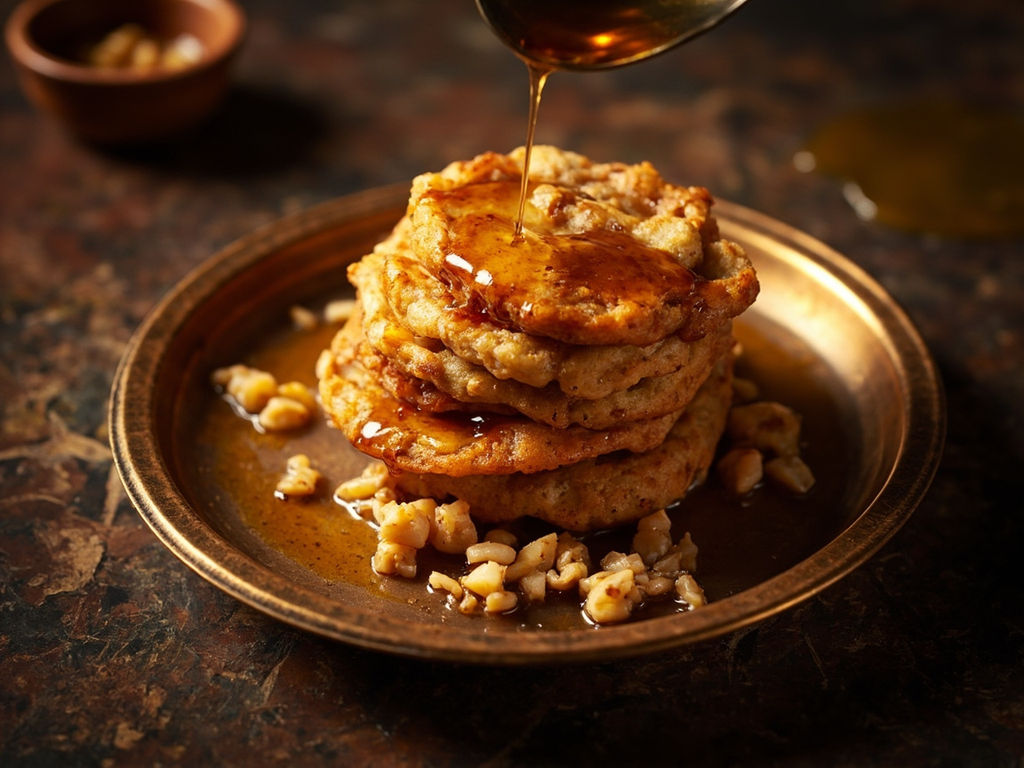
Apūpa — honey fritter in ghee
Apūpa (fried cake, Vedic ritual sweet)
🍯· 40 min
View the recipe
 Drink
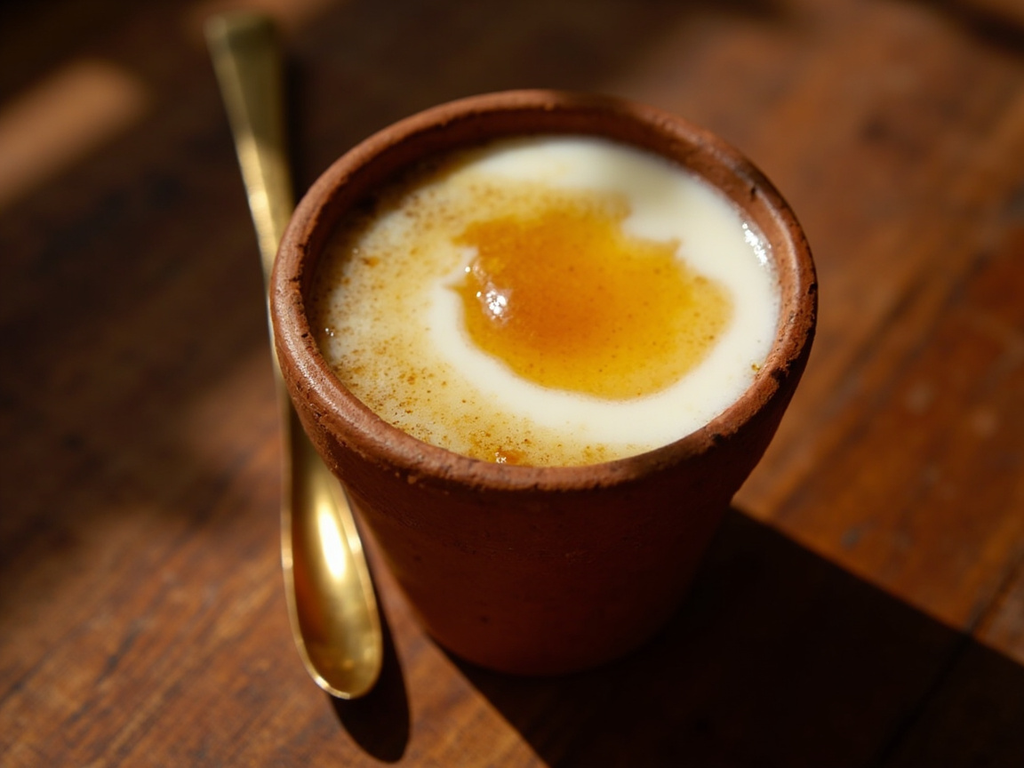
DrinkMadhuparka — the sacred welcoming drink
Madhuparka (hospitality mixture offered to an honored guest)
🍯 🍋· 10 min
View the recipe
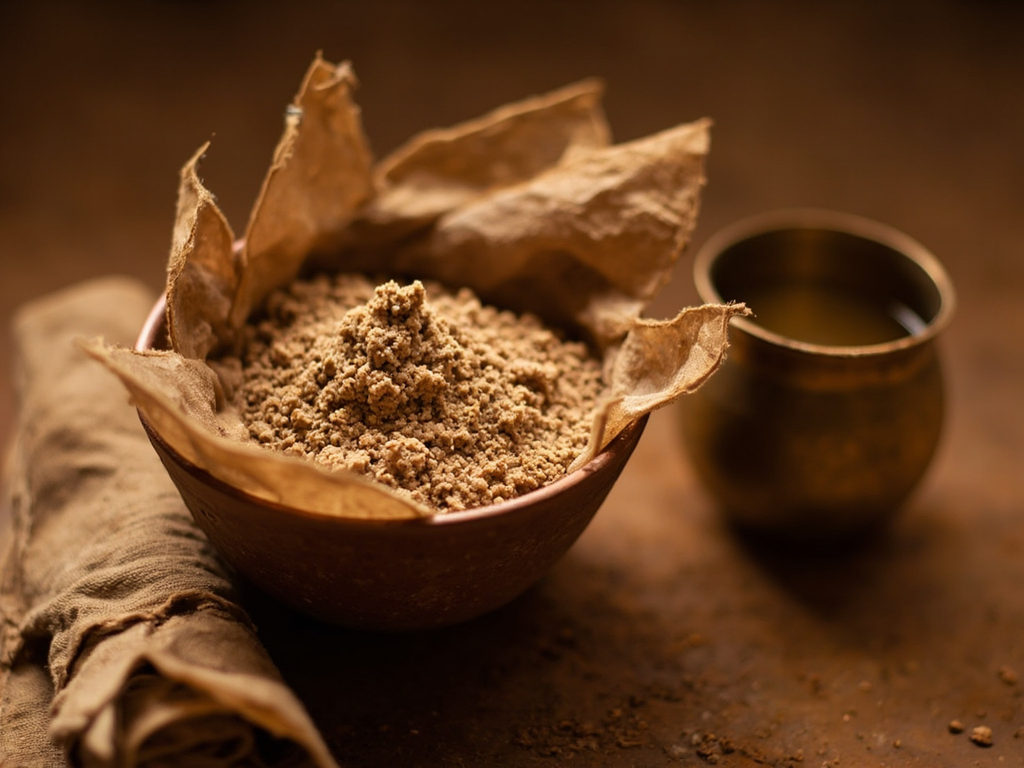 Travel
Saktu — roasted barley flour of the traveler
Saktu (toasted grain flour, portable provision)
🧂 🍄· 15 min
View the recipe
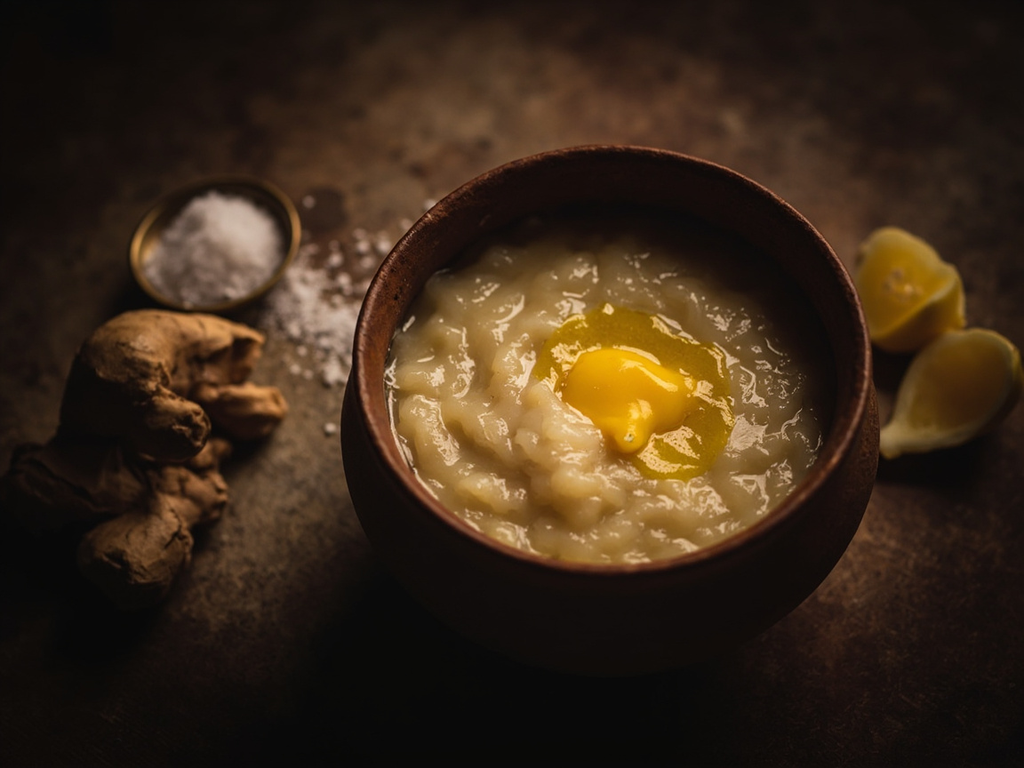 Everyday
Yavāgū — daily barley porridge
Yavāgū (grain gruel, ordinary domestic meal)
🧂 🍄· 45 min
View the recipe