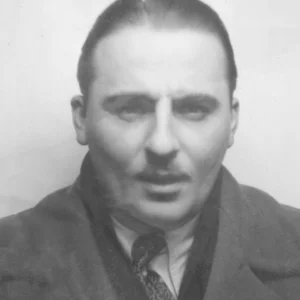

Bruno Coquatrix (1910-1979) was the legendary director of the Olympia in Paris, which he bought in 1954 and transformed into the temple of French music hall. He launched or cemented the careers of major artists such as Édith Piaf, Jacques Brel, and Johnny Hallyday.
Bruno Coquatrix(1910 — 1979)
Bruno Coquatrix
France
7 min read
Frequently asked questions
Key Facts
- Born on 26 March 1910 in Arcachon
- Purchased the Olympia in 1954 and made it the leading music-hall venue in France
- Launched the careers of numerous artists: Édith Piaf, Jacques Brel, Johnny Hallyday, Sylvie Vartan
- Saved the Olympia from demolition in 1961 thanks to a series of concerts by Édith Piaf
- Died on 7 April 1979, leaving the Olympia as a landmark of French cultural heritage
Works & Achievements
By purchasing the bankrupt Olympia, Coquatrix achieved the great work of his life: transforming a dilapidated venue into the most prestigious stage in France, a rite of passage for any artist seeking popular recognition.
Faced with the singer's colossal debts, Coquatrix organized a series of concerts at the Olympia that allowed Piaf to repay her creditors while delivering one of the greatest triumphs of her career.
Coquatrix was the first French venue director to welcome the Beatles, then at the very start of their global conquest. This bold choice confirmed his instinct and the Olympia's openness to new music.
By booking the young Johnny Hallyday, Coquatrix took a risky bet on French rock. The triumph was immediate and definitively launched the career of the man who would become the idol of French youth.
Before his career as a director, Coquatrix wrote numerous songs for the artists of his day. This experience gave him a unique artistic sensitivity that set him apart as an impresario.
Anecdotes
In 1954, Bruno Coquatrix bought the Olympia in Paris when the venue was on the verge of bankruptcy and at risk of closing permanently. Thanks to his showmanship and his network of contacts in the entertainment world, he transformed this declining music hall into the undisputed home of French and international chanson within just a few years.
In 1961, Édith Piaf, worn down by illness and drowning in debt, seemed to have reached the end of her rope. Coquatrix, ever loyal in friendship, arranged a series of concerts for her at the Olympia to help her pay off her creditors. Against all odds, Piaf triumphed on stage night after night, and those concerts remain among the most moving performances in the history of French music hall.
In January 1964, Coquatrix welcomed the Beatles to the Olympia as the Liverpool group was beginning its conquest of the world. The Parisian audience, less immediately won over than their British counterparts, was gradually won around, and the band's stay in Paris helped spark Beatlemania in France.
Before becoming a venue director, Bruno Coquatrix had worked as a songwriter and had written songs for major artists of the 1930s and 1940s. This background as a working artist gave him a unique sensitivity when it came to selecting performers to book and understanding what musicians needed.
In the 1970s, a demolition threat hung over the Olympia, coveted by property developers. Coquatrix fought relentlessly to defend his legendary venue before the authorities. He died in 1979 without having secured any firm guarantee, but his campaign helped raise public awareness, and the Olympia was ultimately preserved.
Primary Sources
The Olympia is my home. Bruno Coquatrix welcomed me there when I needed it most, without counting the cost. He believed in me when others had their doubts.
Mme Piaf triumphed last night to a standing ovation. M. Coquatrix's venue was sold out for the fifth consecutive evening.
Over twenty years at the helm, M. Coquatrix turned the Olympia into a mandatory stop for any artist aspiring to popular acclaim. He discovered or confirmed several generations of singers.
Playing the Olympia means being recognized. Coquatrix had that rare gift: he knew which room proved an artist right.
Key Places
The legendary venue that Coquatrix bought in 1954 and transformed into the temple of French music-hall. This is where he devoted his entire life and launched the greatest artists of the 20th century to stardom.
Bruno Coquatrix's birthplace, born in 1910. This seaside resort in south-west France was the cradle of the man who would become the greatest music-hall director in French history.
The historic heart of popular Parisian entertainment, home to a concentration of theatres, cabarets and music-halls. The Olympia found its natural place here, and Coquatrix was one of its most iconic figures.
ORTF and public radio stations regularly broadcast concerts recorded at the Olympia, spreading the venue's reputation across France and bringing national recognition to the artists Coquatrix programmed.
Typical Objects

The center-stage standing microphone at the Olympia was the working tool of every artist who performed there. For Coquatrix, it symbolized the communion between the artist and their audience.

Coquatrix kept a notebook in which he jotted down the names of artists to book, available dates, and his impressions of their performances. This notebook was the heart of his work as an impresario.

The large illustrated posters announcing upcoming shows at the Olympia were works of art in their own right. Coquatrix attached great importance to them, viewing the poster as an artist's first showcase.

The rotary telephone had a permanent place on Coquatrix's desk. He used it to negotiate with talent agents, record labels, and the artists themselves — often late into the night.

The dressing rooms at the Olympia were the backstage of legend. Coquatrix personally ensured that artists were comfortably received there, viewing this space as essential to the quality of the performance.

The grand piano on the Olympia stage accompanied rehearsals and concerts alike. For Coquatrix — a former musician and songwriter — it represented the very soul of music hall.
School Curriculum
Vocabulary & Tags
Key Vocabulary
Daily Life
Morning
Bruno Coquatrix began his day late, around 10 or 11 in the morning, after evenings that often stretched into the early hours. He would have his coffee while reading the trade press and reviews of the previous night's shows, paying close attention to critics and audience reactions.
Afternoon
His afternoons were devoted to business: meetings with talent agents, contract negotiations, technical walkthroughs of the venue, and rehearsals with resident artists. His office at the Olympia was a hive of activity, with musicians, promoters, and journalists constantly crossing paths.
Evening
Coquatrix spent his evenings in the auditorium, watching shows from the wings or the control booth. He personally greeted artists before they took the stage, offered encouragement, and would often join them after the show to share a meal and talk through the evening.
Food
A theatre man who kept irregular hours, Coquatrix dined late, often at the brasseries along the Grands Boulevards where show-business people gathered. He had a taste for traditional French cuisine and enjoyed convivial meals over a good bottle of wine.
Clothing
Coquatrix had the understated elegance of a showman: a dark suit, white shirt, and tie were his standard attire when receiving artists and partners. He took care of his appearance without ostentation, aware that he represented an institution.
Housing
He lived in Paris, in a flat in the centre of the city, close to the Olympia. His home blended theatrical mementos — signed posters, photographs of artists — with a comfortable, bourgeois setting that reflected both his success and his deep passion for the world of performance.