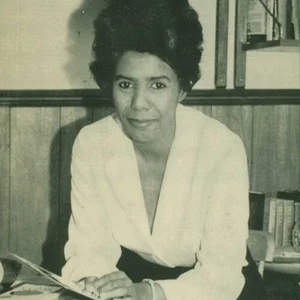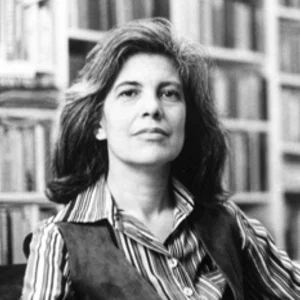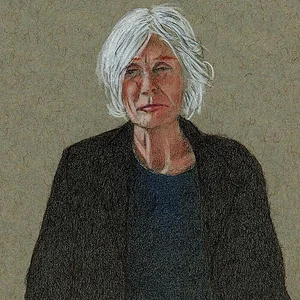

British playwright born in 1938, a major figure of feminist and political theatre. Her plays such as “Top Girls” (1982) and “Cloud Nine” (1979) deconstruct gender, capitalism, and power relations. Associated with the Royal Court Theatre in London, she has profoundly renewed contemporary dramatic forms.
Caryl Churchill(1938 — ?)
Caryl Churchill
Royaume-Uni
8 min read
Frequently asked questions
Famous Quotes
« I want plays to be disturbing, unsettling, difficult — I don’t want to reassure people.»
Key Facts
- 1938: born in London
- 1961: first radio plays for the BBC
- 1972: resident dramatist at the Royal Court Theatre, London
- 1979: premiere of “Cloud Nine”, exploring gender and sexuality across two historical periods
- 1982: “Top Girls”, a landmark feminist play questioning the price of women’s success in a capitalist society
Works & Achievements
A two-act play exploring colonialism and sexuality: the first act is set in Victorian Africa, the second in 1970s London. The play deconstructs gender norms by having men play female roles and vice versa.
A masterpiece of feminist theatre centering on Marlene, a Thatcherite businesswoman who is confronted first by iconic female figures from history, then by her own family. The play interrogates the human cost of liberal feminism and individual success.
Created with the Joint Stock Theatre Company, the play follows female agricultural labourers in the English Fens and explores the exploitation of rural women under contemporary capitalism.
A verse satire of deregulated London finance in the wake of the 1986 Big Bang. The play skewers the greed of Thatcherite City traders with a formal virtuosity that makes it one of the most important political texts of the 1980s.
An experimental, dreamlike play featuring a supernatural creature from English folklore. Fragmented language, dark magic, and ecological catastrophe intertwine to evoke the disasters of the modern world.
A two-hander — a father and his son — exploring the ethical implications of human cloning through taut, stripped-down dialogue. The work questions identity, parentage, and parental responsibility.
Made up of fifty-seven short, self-contained scenes, the play explores how humanity processes, shares, and loses information in the digital age. Its fragmented format is a formal manifesto against narrative convention.
Anecdotes
Caryl Churchill began her career as a playwright writing radio plays for the BBC in the 1960s, while raising her three children in London. She wrote in the mornings, before the household woke up, proving that motherhood and artistic vocation could be reconciled — a challenge her plays would go on to stage directly.
To create *Cloud Nine* (1979), Churchill spent several weeks in an improvisation residency with the Joint Stock Theatre Company. The actors collectively explored their own experiences of sexuality and gender before Churchill wrote the final text — a rare and radical method of collective creation for the time.
The opening scene of *Top Girls* (1982) brings together women from different eras at an imaginary dinner: the Flemish painter Dull Gret, the alleged Pope Joan, the Japanese courtesan Lady Nijo, the Victorian traveller Isabella Bird, and Patient Griselda from medieval tales. Churchill had spent months researching these figures who had been forgotten or marginalised by official history.
*Serious Money* (1987), a biting satire of London's financial world, premiered just months after the 1986 stock market "Big Bang." The play generated a delicious paradox: the traders and City high-flyers it mocked came to see it in droves and sometimes even funded its tours, proudly recognising themselves in the greedy characters portrayed on stage.
Churchill is known for her near-absolute refusal of interviews and public life. She declines to comment on her plays once they are published, believing the text must speak for itself. This reticence stands in sharp contrast to the radical political commitment of her work, and has helped make her an almost mythical figure in contemporary British theatre.
Primary Sources
MARLENE: I feel I have to make a choice. If I go back I'll have lost everything. But if I stay — I don't know. I think I can manage. I think I can do it.
CLIVE: This is my family. Though far from home / We serve the Queen wherever we may roam / I am a father to the natives here / And father to my family so dear.
SCILLA: A lot of people were getting very rich very fast. Some of them were my friends and I was going to be one of them. The money was like champagne in the morning.
ALICE: If we're witches, it's because something is being done to us. And what's being done to us is worse than anything they say we do.
Tell her we won the war. Tell her our children can go out to play. Tell her there are people who want to destroy us. Tell her she can be proud of the army.
Key Places
Birthplace of Caryl Churchill and the center of her entire theatrical career. She has lived and worked there since returning from Oxford in the 1960s.
Churchill studied English literature here from 1957 to 1960. It was at Oxford that she began writing and staging her first plays in a university setting.
This Sloane Square theatre dedicated to contemporary work has been the birthplace of most of Churchill's major plays since *Owners* in 1972.
Churchill wrote numerous radio plays for the BBC throughout the 1960s and 1970s — a formative step in her development as a playwright before her major stage successes.
*Top Girls* and *Serious Money* both received landmark productions here, establishing Churchill as one of the rare British playwrights to make a lasting impact on the American stage.
Typical Objects

Churchill long wrote her plays on a typewriter, often in the solitude of her London home. Her writing process is solitary and meticulous, even when plays emerge from collaborative workshops.

Churchill revises her texts right up to opening night, working closely with directors and actors. Her annotated manuscripts bear witness to a dramaturgical process in constant evolution.

The Royal Court Theatre on Sloane Square has been inseparable from Churchill's work since the 1970s. Its house programmes form the living archive of her career and artistic commitments.

Churchill was profoundly influenced by Brecht's epic theatre and his technique of estrangement. His texts are constant points of reference for the artistic teams staging her plays.

During collective creations with the Joint Stock Theatre Company, logbooks documented improvisation sessions and debates. These notebooks provided the raw material from which Churchill shaped her texts.

In *Cloud Nine*, female roles are played by men and vice versa. These hybrid or inverted costumes have become a powerful visual symbol of the deconstruction of gender that Churchill enacts on stage.
School Curriculum
Vocabulary & Tags
Key Vocabulary
Tags
Daily Life
Morning
Churchill works in the mornings in the quiet of her London home, in isolation. During the 1960s and 1970s, she would write her radio plays before her children woke up, balancing family life and writing under the very conditions her plays would go on to examine.
Afternoon
Afternoons are often devoted to rehearsals at the theatre, particularly at the Royal Court. During the collective creation phases with Joint Stock, long improvisation workshops and dramaturgical discussions would bring together actors, directors, and Churchill around a working table.
Evening
Churchill attends performances and theatre working evenings. Not one for social life, she avoids receptions and noisy opening nights, preferring to quietly observe the work in progress.
Food
Little precise information is available about Churchill's diet, as she maintains a great deal of privacy about her personal life. Like many British intellectuals of her generation, she lived in modest circumstances before the commercial success of her major plays.
Clothing
Churchill is known for a plain, understated appearance, in keeping with her political convictions and rejection of bourgeois conventions. She makes no effort to present herself physically on the rare public occasions when she agrees to appear.
Housing
Churchill has lived in London throughout her career, in flats or houses in residential neighbourhoods of the capital. Her home has remained a space for creation and retreat, away from the media attention she consistently avoids.
Historical Timeline
Period Vocabulary
Liens externes & ressources
Références
Œuvres
Cloud Nine
1979
Top Girls
1982
Serious Money
1987
The Skriker
1994
A Number
2002
Love and Information
2012