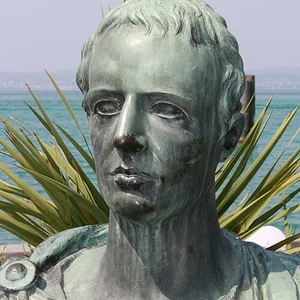

Catullus was a Latin lyric poet of the Roman Republic, born around 83 BC in Verona. A contemporary of Caesar and Cicero, he authored a collection of 116 poems blending passionate love, friendship, and political satire.
Catullus(83 av. J.-C. — 53 av. J.-C.)
Catullus
Rome antique
8 min read
Frequently asked questions
Famous Quotes
« Odi et amo. Quare id faciam, fortasse requiris. Nescio, sed fieri sentio et excrucior.»
« Da mi basia mille, deinde centum.»
« Vivamus, mea Lesbia, atque amemus.»
Key Facts
- Born around 83 BC in Verona (Cisalpine Gaul), died around 53 BC
- Author of a collection of 116 poems (carmina) preserved through a single medieval manuscript
- His muse and passion, Clodia Metelli, is immortalized under the poetic pseudonym 'Lesbia'
- Contemporary and poetic rival of Caesar, whom he attacks in several epigrams
- Introduced Greek metrical forms into Latin poetry, notably the hendecasyllable
Works & Achievements
The complete surviving works of Catullus, bringing together short lyric poems, mythological epyllia, and epigrams. This collection, preserved through a single medieval manuscript discovered in Verona, forms the foundation of all Latin lyric poetry.
A love cycle devoted to 'Lesbia', the poetic name for Clodia Metella. These poems trace the full arc of a passionate affair: wonder, happiness, betrayal, rupture, and disillusionment.
Two lengthy wedding songs composed for ceremonies among the Roman aristocracy, following the Greek tradition. They demonstrate Catullus's mastery of longer, more solemn poetic forms.
A mythological epyllion of 408 lines, considered Catullus's masterpiece in the grand style. It tells of the wedding of the hero Peleus to the goddess Thetis, with an extended ekphrasis on Ariadne's abandonment by Theseus.
A frenzied poem in galliambic meter on the myth of Cybele and her priest Attis, who mutilates himself in a fit of mystical madness. A unique work for its breathless rhythm and emotional intensity.
A series of biting poems attacking Caesar, Mamurra, and other political figures of the day. They reflect the poet's fearless wit and political boldness in the face of the powerful.
Anecdotes
Catullus was madly in love with a woman he called 'Lesbia' in his poems — in reality Clodia Metelli, the wife of a Roman governor. Their turbulent and painful relationship inspired his most celebrated verses, swinging between absolute adoration and burning hatred.
Catullus did not hesitate to take aim at the powerful men of Rome in his satirical epigrams. He mocked Julius Caesar himself in several biting poems — and Caesar, far from holding a lasting grudge, reportedly invited the poet to dinner to reconcile with him.
Catullus's shortest and most famous poem fits in two Latin lines: 'Odi et amo' ('I hate and I love'). This paradoxical phrase, expressing the ambivalence of romantic feeling, has remained one of the most widely quoted Latin lines in all of Western literature.
Catullus traveled all the way to Bithynia (present-day Turkey) in the retinue of the governor Memmius, hoping to make his fortune there. He returned empty-handed, but brought back a poem about his voyage home by boat to his villa at Sirmio, on the shores of Lake Garda.
Upon the death of his beloved brother, who had died in Asia Minor, Catullus wrote one of the most moving funeral poems of antiquity. In it he describes his journey to the tomb to perform the funeral rites and say a final farewell: 'Ave atque vale' ('Hail and farewell').
Primary Sources
Vivamus, mea Lesbia, atque amemus, / rumoresque senum severiorum / omnes unius aestimemus assis. ('Let us live, my Lesbia, and let us love, / and all the rumors of stern old men / let us value at a single penny.')
Odi et amo. Quare id faciam, fortasse requiris. / Nescio, sed fieri sentio et excrucior. ('I hate and I love. Why I do this, perhaps you ask. / I do not know, but I feel it happening and I am tormented.')
Multas per gentes et multa per aequora vectus / advenio has miseras, frater, ad inferias. ('Carried through many peoples and many seas, / I come, my brother, to this sorrowful funeral rite.')
Ille mi par esse deo videtur, / ille, si fas est, superare divos, / qui sedens adversus identidem te / spectat et audit. ('He seems to me to be equal to a god, / he surpasses the gods, if that is possible, / he who, sitting opposite you, again and again / watches and hears you.')
Key Places
Catullus's hometown in Cisalpine Gaul, a Roman province in northern Italy. He owned a family property there and likely returned several times throughout his life.
Catullus's family villa on a peninsula of Lake Garda, celebrated in Poem 31 as the 'jewel of peninsulas and islands.' Roman ruins known as the 'Grottos of Catullus' are still visible there today.
Catullus lived in Rome, moving through literary and social circles, the taverns of the Subura, and the aristocratic homes of the Palatine Hill where Clodia — his 'Lesbia' — resided. It was here that he composed the greater part of his work.
A Roman province corresponding to the northwestern part of modern-day Turkey. Catullus accompanied the governor Memmius there around 57 BC, hoping to make his fortune; he returned disappointed, but while there he visited the tomb of his brother, who had died in the Troad.
A coastal region of Asia Minor where Catullus's brother died. It was here that the poet traveled to perform the funeral rites and speak his famous 'Ave atque vale' ('Hail and farewell,' Poem 101).
Typical Objects

The Romans' everyday writing surface, consisting of a wooden frame filled with wax on which one wrote with a stylus. Catullus drafted his poems on these tablets before having them copied onto papyrus.

The form of the ancient book: a long sheet of papyrus rolled around a stick. It was in this form that Catullus's 116 poems were read and circulated in Roman literary circles.

An instrument made of metal or bone, pointed at one end for writing on wax and flat at the other for erasing. The essential tool of the Roman poet for revising and reworking his verses.

A clay or metal vessel used at banquets. Catullus frequently evokes wine and symposia in his poems, most notably in his warm invitations to his friends Fabullus and Veranius.

A stringed instrument symbolizing lyric poetry. Although Catullus wrote to be read rather than sung, Latin lyric poetry maintained this symbolic connection to music inherited from the Greek tradition.

A ring bearing an engraved motif used to seal letters with wax. Catullus sent notes and poems to Lesbia and his friends; the seal guaranteed the authenticity and confidentiality of the message.
School Curriculum
Vocabulary & Tags
Key Vocabulary
Tags
Daily Life
Morning
Catullus rose early, as most Romans did, at sunrise. After a quick wash and a light meal (ientaculum) of bread, olives, and cheese, he devoted the first hours of the day to reading and composing poetry — a quiet time before the bustle of the forum.
Afternoon
Afternoons were often given over to visits and social obligations: frequenting literary circles at the homes of friends like Calvus or Licinius Calvus, heading to the baths (thermae) to relax and talk poetry, or strolling through the forum to observe political life and skewer it in his epigrams.
Evening
Catullus spent many of his evenings at banquets (convivia) hosted by aristocratic friends, where guests recited poems, drank wine mixed with water, and debated literature and politics. It was at these symposia that he met Clodia, and where his most passionate verses were born.
Food
The diet of Rome's wealthier classes consisted of wheat bread, vegetables (cabbage, leeks, broad beans), cheese, salted fish, meat at banquets, olive oil, and wine. In his poems, Catullus mentions meager dinners at the homes of less well-off friends, revealing that the quality of a meal depended heavily on one's social circumstances.
Clothing
In public, Catullus wore the white toga (toga virilis) of a Roman citizen, sometimes trimmed with a purple stripe if his rank allowed. Indoors, he dressed in a linen tunic (tunica). His poems evoke fine fabrics and elegant clothing associated with aristocratic Roman life.
Housing
Catullus owned a domus in Rome, likely in a respectable neighborhood — though he frequently complained about his finances. His family also held the villa at Sirmio on the shores of Lake Garda, an ideal retreat for writing. Roman aristocratic townhouses typically featured an atrium, a tablinum (study), an interior garden (hortus), and a triclinium for entertaining guests.
Historical Timeline
Period Vocabulary
Visual Style
Un style visuel ancré dans l'esthétique de la fin de la République romaine, alternant la chaleur terracotta des fresques de Villa et la vivacité colorée des scènes de rue du Subure.
Sound Ambience
L'atmosphère sonore du monde de Catulle mêle le calme studieux d'un atelier de poète et l'animation des banquets romains où ses vers étaient déclamés à voix haute.
Liens externes & ressources
Références
Œuvres
Carmina (recueil de 116 poèmes)
vers 65-54 av. J.-C.
Poèmes à Lesbie (Carmina 2, 3, 5, 7, 8, 51, 58, 72, 75, 85…)
vers 61-58 av. J.-C.
Épithalames (Carmina 61 et 62)
vers 60 av. J.-C.
Poème de Pélée et Thétis (Carmen 64)
vers 57 av. J.-C.
Poème à Attis (Carmen 63)
vers 57 av. J.-C.
Épigrammes satiriques contre César et ses partisans (Carmina 29, 57, 93…)
vers 60-55 av. J.-C.
See also
Related Characters
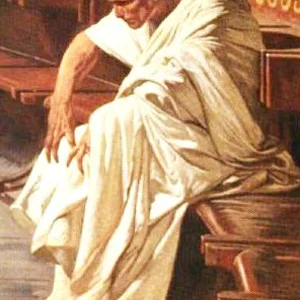
Catiline
107 av. J.-C. — 61 av. J.-C.
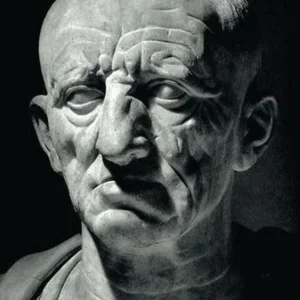
Cato the Elder
233 av. J.-C. — 148 av. J.-C.
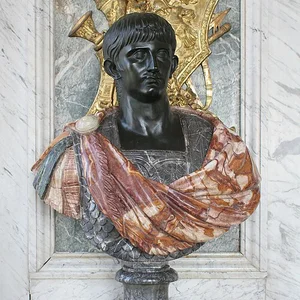
Claudius
9 av. J.-C. — 54
Cornelia
190 av. J.-C. — 100 av. J.-C.
Horace
64 av. J.-C. — 7 av. J.-C.
Plautus
249 av. J.-C. — 183 av. J.-C.