 Flip the card
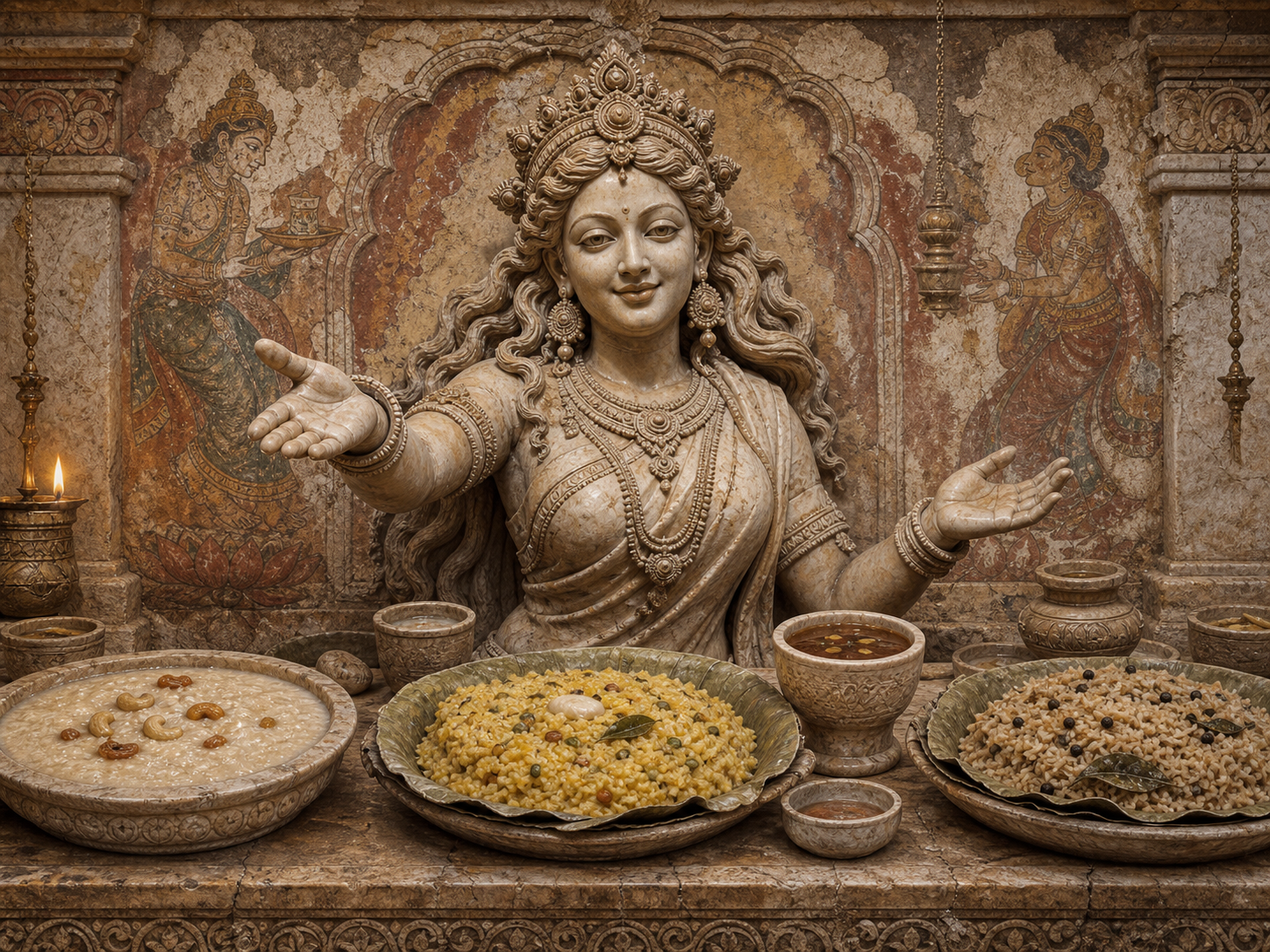
Chandika at the table
On the menu
Naivedya & Bhog — the consecrated offering then shared
In the worship of the Great Goddess, the meal is not organized as starter-main-dessert but around naivedya: foods prepared with purity (without tasting them beforehand), presented before the image of the goddess during the recitation of the Devi Mahatmya, then transformed into prasada — blessed food redistributed to devotees. Bhog is its festive and abundant version on major days (Navaratri, Durga Puja). It includes a sweet offering, a rice base dish, a beverage, and a travel food for pilgrims, each cooked in ghee and ideally served on a banana leaf or in a copper bowl.
Signature : Jaggery (cane gur) and ghee
Unrefined cane sugar (gur/jaggery), golden and fragrant with molasses, and clarified butter (ghee) define the offering cuisine of classical India. Before the arrival of chili from the Americas, black pepper, long pepper, and ginger provided heat; cardamom and saffron provided luxury. No New World products appear in these recipes — faithful to the 5th-6th century.
click to flip back
Chandika at the table
4 period recipes
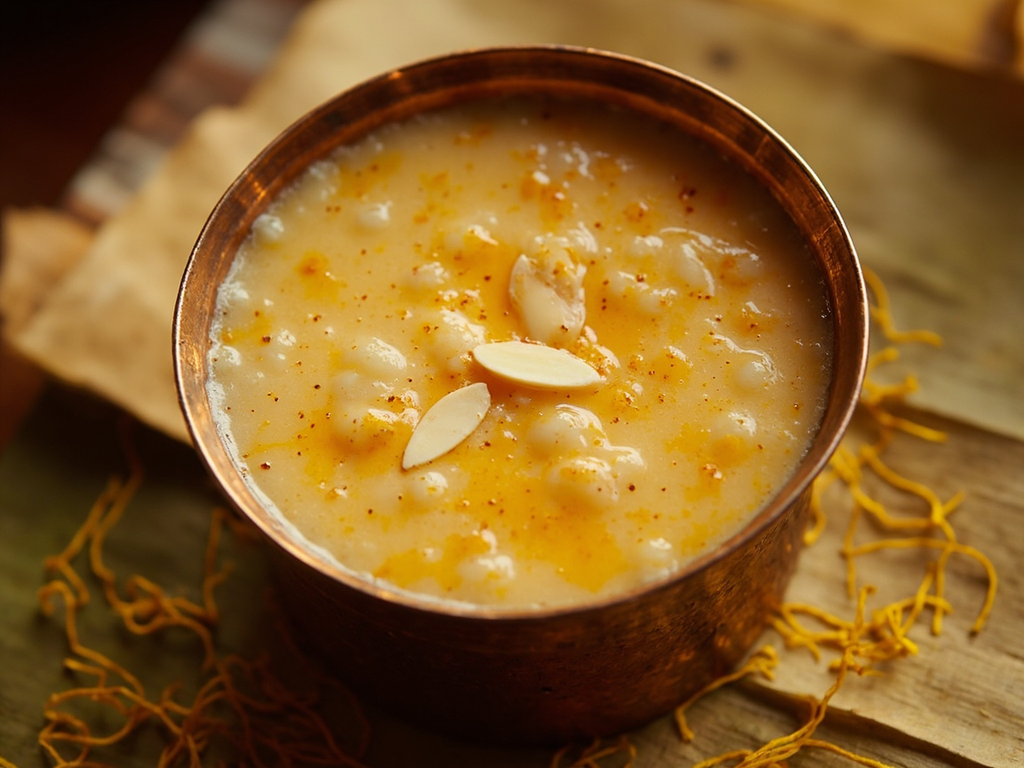 Offering
Rice Payasam with Milk and Jaggery
Naivedya (sweet offering presented to the goddess before being shared)
🍯· 50 min
View the recipe
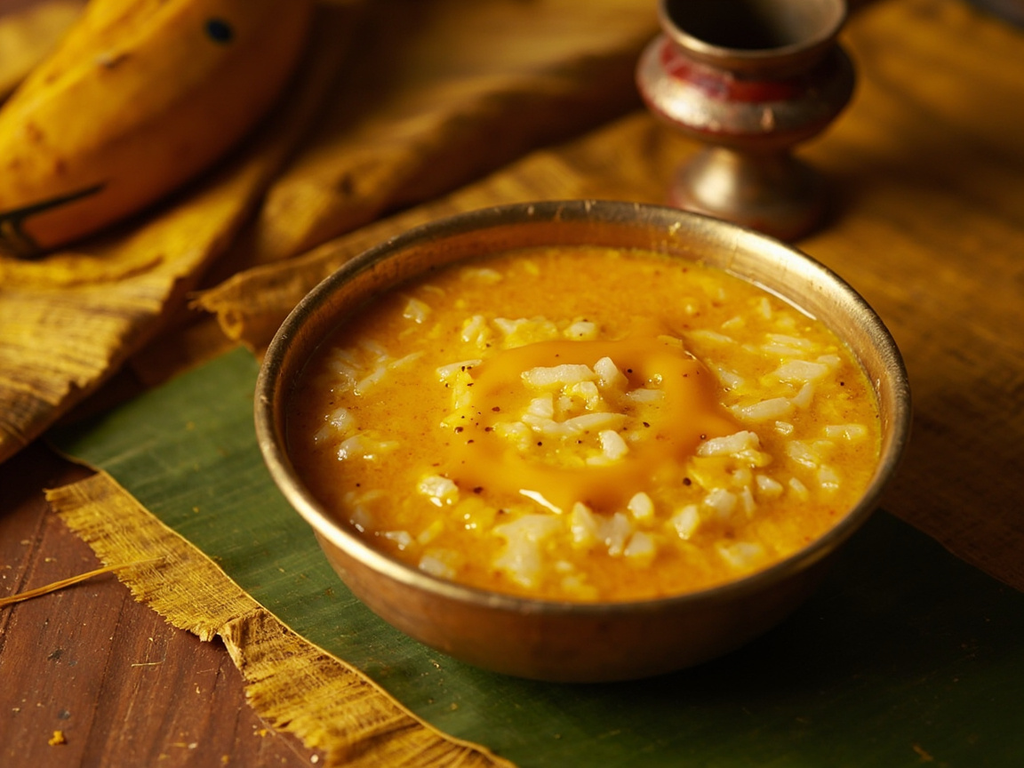 Festive
Bhog Khichuri with Mung Dal and Ghee
Bhog (consecrated feast of Durga Puja, shared in community)
🧂 🍄· 45 min
View the recipe
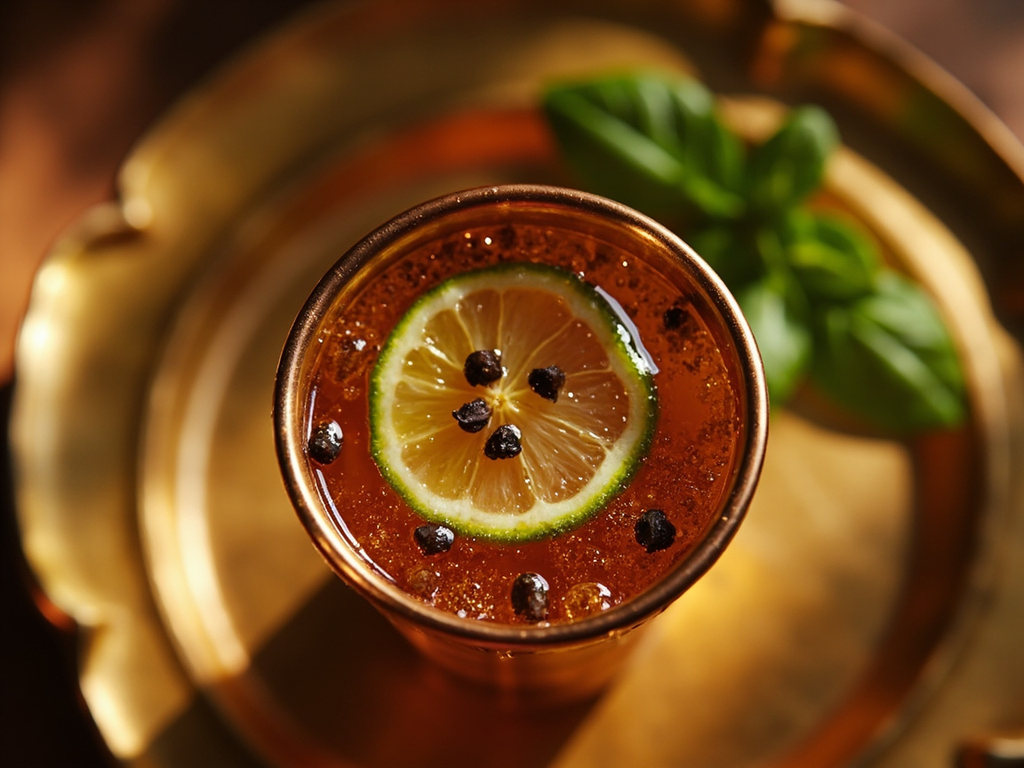 Drink
DrinkPanakam — Jaggery, Ginger and Pepper Drink
Panaka (ritual beverage offered to deities and drunk communally)
🍯 🌶️· 30 min
View the recipe
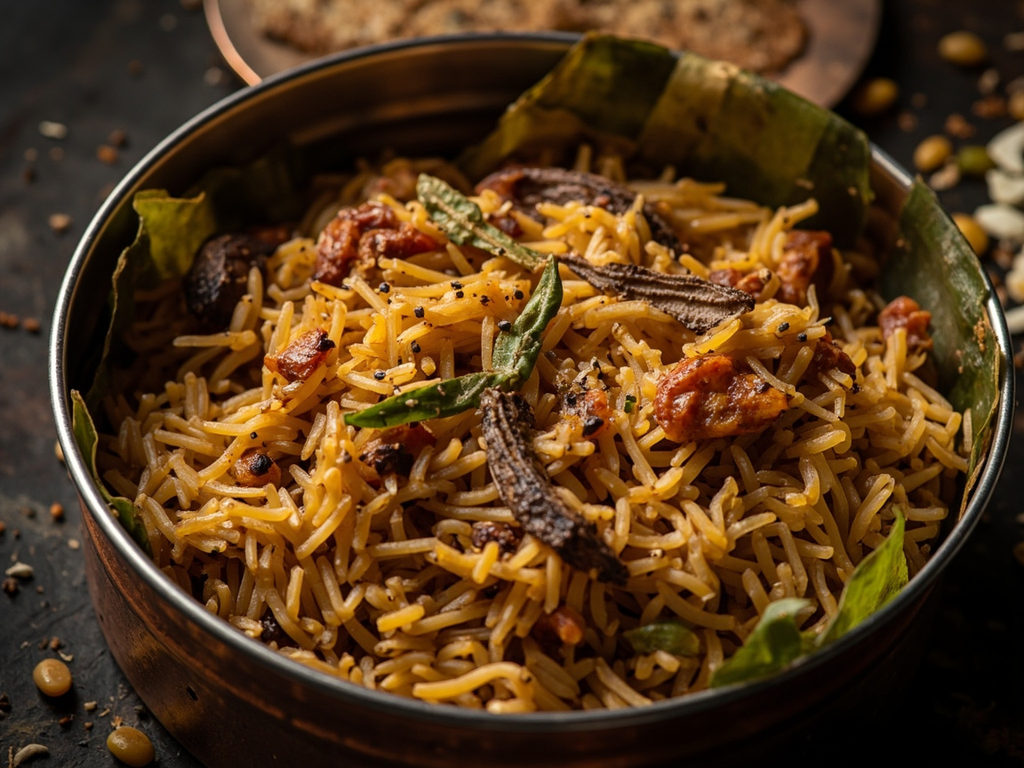 Travel
Tamarind and Pepper Rice for Pilgrims
Prasadam for travel (consecrated rice that keeps for the road)
🍋 🧂 🌶️· 40 min
View the recipe