 flip
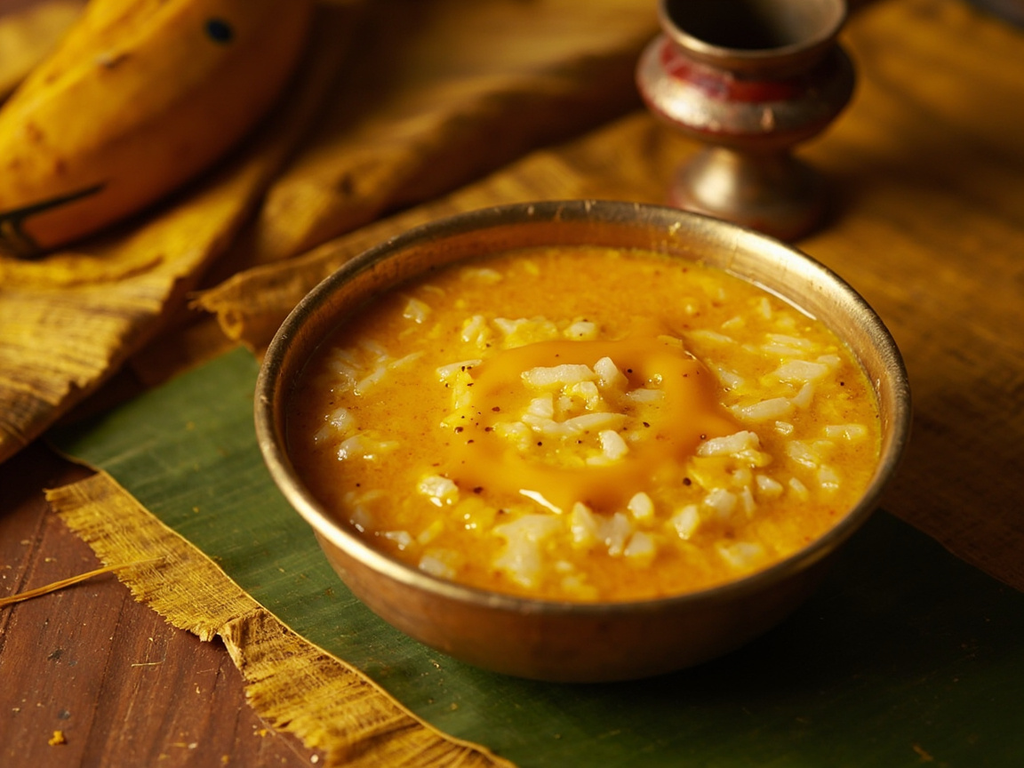
flipBhog Khichuri with Mung Dal and Ghee
Bhog Khichuri with Mung Dal and Ghee
Why this dish? In Kolkata, Bengal, the great autumn festival celebrates the goddess victorious over Mahishasura. The bhog khichuri — rice and lentils simmered in ghee — is consecrated to the goddess and then shared by thousands of devotees. This dish, inspired by this living tradition, speaks of the maternal abundance of Chandika who nourishes the entire community.
A creamy blend of rice and mung bean cooked together, golden with ghee, spiced with ginger, cumin, turmeric, and pepper. Comforting, golden, it is the base dish of great days, generous and communal.
When I vanquished the buffalo of darkness, it was not to rule alone, but so that my children might eat in peace. So cook the rice and lentil in the same cauldron, that they melt into each other like the world in my hand. Make the cumin sing in hot ghee before anything else — that sizzle is my voice. Salt with a measured hand, pepper without fear, and give to whoever passes: none leaves my threshold with an empty belly.
- •Rice — one measure (base cereal)
- •Mung dal (split mung bean) — half a measure (legume, umami binder)
- •Ghee — generous (ritual cooking fat)
- •Cumin seeds — a pinch (tempering spice)
- •Fresh grated ginger — a piece (heat)
- •Turmeric — a pinch (color, earthiness)
- •Black pepper and long pepper — to taste (heat (pre-chili))
- •Asafoetida (hing) — a pinch (umami, digestive)
- •Salt — measured (seasoning)
Bhog Khichuri with Mung Dal and Ghee
A creamy blend of rice and mung bean cooked together, golden with ghee, spiced with ginger, cumin, turmeric, and pepper. Comforting, golden, it is the base dish of great days, generous and communal.
Why this dish? In Kolkata, Bengal, the great autumn festival celebrates the goddess victorious over Mahishasura. The bhog khichuri — rice and lentils simmered in ghee — is consecrated to the goddess and then shared by thousands of devotees. This dish, inspired by this living tradition, speaks of the maternal abundance of Chandika who nourishes the entire community.
When I vanquished the buffalo of darkness, it was not to rule alone, but so that my children might eat in peace. So cook the rice and lentil in the same cauldron, that they melt into each other like the world in my hand. Make the cumin sing in hot ghee before anything else — that sizzle is my voice. Salt with a measured hand, pepper without fear, and give to whoever passes: none leaves my threshold with an empty belly.
Ingredients (period version)
- Rice — one measure (base cereal)
- Mung dal (split mung bean) — half a measure (legume, umami binder)
- Ghee — generous (ritual cooking fat)
- Cumin seeds — a pinch (tempering spice)
- Fresh grated ginger — a piece (heat)
- Turmeric — a pinch (color, earthiness)
- Black pepper and long pepper — to taste (heat (pre-chili))
- Asafoetida (hing) — a pinch (umami, digestive)
- Salt — measured (seasoning)
Ingredients
- Rice (basmati or gobindobhog) — 150 g (cereal)
- Yellow mung dal — 100 g (legume)
- Ghee — 3 tbsp (cooking)
- Cumin seeds — 1 tsp (tempering)
- Fresh ginger — 1 tbsp grated (aromatic)
- Turmeric — 1/2 tsp (color)
- Ground black pepper — 1/2 tsp (warm spice)
- Asafoetida (hing) — 1 pinch (umami)
- Indian bay leaf (tej patta) — 1 (perfume)
- Salt — to taste (seasoning)
- Water — about 1 liter (cooking)
Method
- Dry-roast the mung dal for 2-3 minutes until fragrant, then rinse it with the rice.
- In a pot, heat the ghee, crackle the cumin, bay leaf, and asafoetida.
- Add ginger, turmeric, and pepper, stir for 30 seconds.
- Pour in rice and dal, coat them, cover with hot water and salt.
- Cook covered on low heat for 25-30 minutes until a soft porridge-like consistency; add water if needed. Serve piping hot with a final drizzle of ghee.
How it was made : Mung (mung bean, native to India — not to be confused with the common American bean) and rice cooked together form khichri, attested as a staple since ancient Indian antiquity and praised by travelers. At the temple, it was prepared in enormous quantities in bronze cauldrons, with ghee replacing any impure fat.
The contemporary twist : A spoonful of sizzling ghee poured at the table just before serving, and some golden fried onions (beresta) on top: the Durga Puja khichuri in its Kolkata version today.
Sources : K. T. Achaya, A Historical Dictionary of Indian Food, Oxford University Press, 1998
Chandika · Charactorium