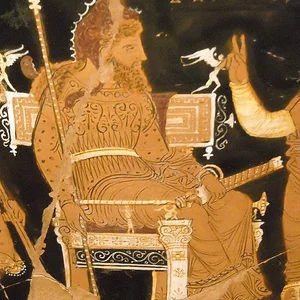

Darius I (c. 549–485 BC) was the third great king of the Achaemenid Persian Empire. He expanded the empire to its greatest territorial extent, from the Indus River to Thrace, and profoundly reorganized its administration. He was defeated by the Greeks at the Battle of Marathon in 490 BC.
Darius I(549 av. J.-C. — 485 av. J.-C.)
Darius I
Empire achéménide
9 min read
Frequently asked questions
Key Facts
- c. 522 BC: Darius seizes power following the death of Cambyses II and crushes a series of revolts
- 518 BC: construction begins on Persepolis, the empire's new ceremonial capital
- 513 BC: campaign against the Scythians, crossing of the Bosphorus and expansion into Thrace
- 490 BC: Persian defeat by the Athenians at the Battle of Marathon
- 486 BC: death of Darius I, leaving his son Xerxes an empire spanning 50 peoples
Works & Achievements
Darius undertook the construction of this monumental ceremonial capital on an artificial terrace, adorned with reliefs depicting the 28 tribute nations of the empire. Left unfinished at his death, it remained the most enduring symbol of Achaemenid power.
Darius divided the empire into 20 satrapies (provinces), each governed by a satrap (governor), an independent military commander, and a royal secretary — a system of mutual oversight designed to ensure loyalty. This structure became the model for imperial administration.
Darius introduced a unified gold coin (the daric) and a silver coin (the shekel) at a fixed exchange rate, making it easier to collect taxes and conduct trade across regions. This monetary system outlasted the empire itself.
Darius improved and expanded the road network connecting Sardis (in modern-day Turkey) to Susa over more than 2,500 km, with relay stations every 25 kilometers. This network enabled rapid communication and administration across the vast empire.
Darius ordered the digging or restoration of a canal linking the Nile to the Red Sea — a forerunner of the Suez Canal — facilitating maritime trade between Egypt and Persia. Commemorative stelae inscribed in both hieroglyphics and cuneiform attest to this achievement.
A monumental trilingual inscription carved into a cliff face in Iran, recounting Darius's rise to power and establishing his dynastic legitimacy. Deciphered in the 19th century, this text is the foundational document of Achaemenid history.
Anecdotes
Darius I came to the throne in dramatic fashion in 522 BC, after killing the usurper Gaumata, who had been impersonating Cambyse II. He rallied six Persian nobles to overthrow the false king and cemented his legitimacy with a monumental inscription at Behistun — carved in three languages on a cliff face 100 meters high.
To unify his vast empire, Darius built a network of royal roads stretching over 2,500 kilometers, connecting Sardis in Anatolia to Susa in Persia. Relay stations with fresh horses allowed imperial messengers to cover this distance in a week — a feat that deeply impressed the Greeks.
After his defeat at Marathon in 490 BC, Darius reportedly vowed revenge against the Athenians. According to Herodotus, he ordered a servant to repeat to him every evening before dinner: 'Sire, remember the Athenians.' He died while preparing a new expedition against Greece, leaving that task to his son Xerxes.
Darius was the first Persian king to mint uniform gold coins throughout the empire, known as 'darics' after his name. Bearing the image of a royal archer, these coins facilitated trade across thousands of kilometers, from Egypt to India.
To build his palace at Persepolis, Darius brought in craftsmen from across the empire: Egyptian stoecutters, Lydian carpenters, Median goldsmiths. An inscription found on site records that he employed workers from eighteen different nations — a testament to the cosmopolitan diversity of his empire.
Primary Sources
I am Darius, the great king, king of kings, king of Persia, king of the provinces, son of Hystaspes, grandson of Arsames, an Achaemenid. Darius the king says: My father is Hystaspes; the father of Hystaspes is Arsames; the father of Arsames is Ariaramnes.
After their defeat at Marathon, the Persians sailed toward Attica, hoping to find Athens undefended. But the Athenians rushed back in great haste to protect their city, and the Persians, seeing they had been outpaced, withdrew to Asia.
Darius the great king says: This palace which I built at Susa, its materials were brought from afar. The earth was dug deep, the gravel was heaped up, the bricks were molded — it was the Babylonians who made them. The cedar timber was brought from a mountain called Lebanon.
Darius the great king says: By the grace of Ahura Mazda, these are the lands I seized beyond Persia; I ruled them, they brought me tribute; what was commanded of them, that they did — my law held them.
Darius was the first to divide Asia into twenty governorships, which the Persians call satrapies. He appointed governors and fixed for each nation the tribute it was to pay.
Key Places
Ceremonial capital founded by Darius around 518 BCE at the heart of Persia. Its monumental terraces, reliefs depicting delegations from every nation in the empire, and its apadana (audience hall) embody the Achaemenid imperial ideology.
A cliff in western Iran where Darius had a trilingual inscription carved in 519 BCE (in Old Persian, Elamite, and Babylonian) recounting his rise to power. This monument, deciphered in the 19th century by Rawlinson, became the key to unlocking cuneiform script.
The administrative capital and winter residence of Darius, inherited from the Elamite kings. It was here that Darius built his great palace using materials brought from across the empire, and where the stele of Hammurabi's Code — looted by the Elamites — was kept.
A coastal plain in Attica (Greece) where in 490 BCE the Persian army of Darius was defeated by Athenian hoplites led by Miltiades. This battle, a symbol of Greek resistance, marked a turning point in the Greco-Persian Wars.
The first capital of the Achaemenid Empire, founded by Cyrus II, where his venerated tomb still stands. Darius performed royal enthronement rites here and preserved the site as a founding memorial of the dynasty.
Liens externes & ressources
Références
Œuvres
Construction de Persépolis
518-490 av. J.-C.
Réforme administrative des satrapies
518 av. J.-C.
Création du darique et réforme monétaire
515 av. J.-C.
La Route royale
510 av. J.-C.
Canal du Nil à la mer Rouge
497 av. J.-C.
Inscription de Béhistoun
519 av. J.-C.
Rechercher
See also
Related Characters
Ashurbanipal
684 av. J.-C. — 630 av. J.-C.
Cyrus II
599 av. J.-C. — 529 av. J.-C.
Nebuchadnezzar II
641 av. J.-C. — 561 av. J.-C.
Sammu-ramat (Semiramis)
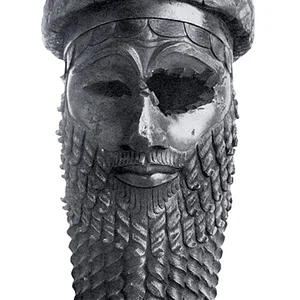
Sargon of Akkad
2350 av. J.-C. — 2300 av. J.-C.
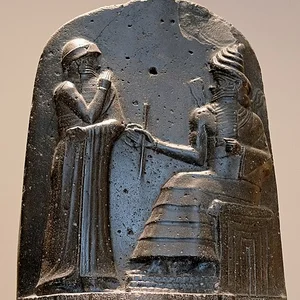
Hammurabi
1809 av. J.-C. — 1749 av. J.-C.