
Principal deity of the ancient Hebrew religion, Yahweh is the one God worshiped by the Israelites. His cult, attested from the 2nd millennium BCE, structures the foundational narratives of the Hebrew Bible and gives rise to Abrahamic monotheism.
God (Yahweh)
Yahweh (YHWH)
8 min read
Frequently asked questions
Famous Quotes
« I AM WHO I AM. (Exodus 3:14 — revelation of the divine name to Moses)»
« You shall have no other gods before me. (Exodus 20:3 — first commandment of the Decalogue)»
Key Facts
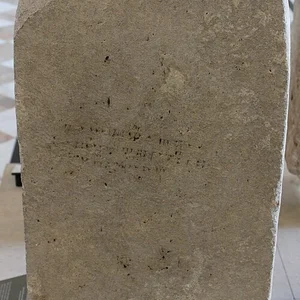
- 13th century BCE: earliest attestations of the name YHWH associated with Israelites in Egyptian sources (Merneptah Stele, ca. 1208 BCE)
- 10th–9th century BCE: royal cult of Yahweh in Jerusalem under Solomon; construction of the First Temple (ca. 950 BCE)
- 8th century BCE: affirmation of strict monotheism by the Hebrew prophets (Elijah, Isaiah, Amos)
- 621 BCE: Josiah's Deuteronomic reform — centralization of Yahweh's worship in Jerusalem
- 587 BCE: destruction of the First Temple by Nebuchadnezzar II; the Babylonian Exile strengthens Yahwist identity and the writing of foundational texts
Works & Achievements
Yahweh creates the universe in six days by his word alone, forming light, the heavens, the earth, and humankind in his image. This account is the foundational text of Abrahamic monotheism.
Yahweh liberates the Hebrew people from slavery through ten plagues and opens the Red Sea. This foundational event is celebrated annually at Passover (Pesach).
Yahweh makes a solemn covenant with Israel and gives a complete law governing all aspects of social and religious life. The Torah becomes the founding charter of the Jewish people.
Yahweh brings a universal flood but saves Noah and his family, then makes a covenant with all humanity symbolized by a rainbow.
Yahweh forms Adam from the dust of the earth and creates Eve, then places them in the Garden of Eden. This account illustrates themes of human freedom, disobedience, and the relationship between God and humanity.
Anecdotes
During the encounter with Moses in the Sinai desert, Yahweh manifests in a bush that burns without being consumed. It is during this episode that he reveals his mysterious name in the form of the four Hebrew consonants YHWH, answering Moses' question with the enigmatic phrase: “I am who I am.” This event, recounted in the book of Exodus, marks the beginning of the Covenant between Yahweh and the Hebrew people.
At the summit of Mount Sinai, Yahweh brings Moses down amid lightning, thunder, and a thick cloud. He gives him the Tablets of the Law engraved in stone, containing the Ten Commandments—the foundation of the religious and social ethics of the Israelites. When Moses descends, his face shines with such intense light that the Hebrews dare not look at him directly.
For forty years of wandering in the desert, Yahweh guides the people of Israel by a pillar of cloud by day and a pillar of fire by night. He also provides them with manna, a mysterious food falling from heaven each morning, and water gushing from a rock. These miracles are seen as living proof that Yahweh watches over his people.
The prophet Elijah, fleeing Queen Jezebel, takes refuge on Mount Horeb and waits for Yahweh's manifestation. Contrary to all expectations, Yahweh appears neither in the violent wind, nor in the earthquake, nor in the fire, but in a “still small voice”—one of the most striking representations of the divine in the entire Hebrew Bible.
King Solomon builds a magnificent Temple in Jerusalem to house the Ark of the Covenant, the place of Yahweh's presence. At the Temple's dedication, a dense cloud fills the building so that the priests cannot perform their service. This inauguration makes Jerusalem the sole center of Yahwistic worship, a centralization further reinforced by the reform of King Josiah in 622 BCE.
Primary Sources
God said to Moses: 'I am who I am.' He added: 'Thus you shall say to the Israelites: I-am has sent me to you.' This is my name forever, and this my title for all generations. (Ex 3:14-15)
The voice of the Lord is over the waters; the God of glory thunders, the Lord, over mighty waters. The voice of the Lord is powerful; the voice of the Lord is majestic.
I bless you by Yahweh of Samaria and by his Asherah [...]
For I am the Lord your God who takes hold of your right hand and says to you: 'Do not fear; I will help you.' (Is 41:13)
And the vessels of Yahweh I dragged before Chemosh [...] Yahweh said: Go, take Nebo against Israel.
Key Places
Sacred mountain in the desert where Yahweh reveals himself to Moses in the burning bush and then gives him the Tablets of the Law. The quintessential place of theophany in all Hebrew tradition.
Earthly dwelling of Yahweh built by Solomon around 970 BC, the Temple was the unique place of sacrifice and divine presence until its destruction in 586 BC.
First great centralized sanctuary of Israel where the Ark of the Covenant was kept before the construction of the Temple, heart of Yahwist worship in the 11th–10th centuries BC.
Site of the confrontation between the prophet Elijah and the priests of Baal, where Yahweh manifests his power through fire, demonstrating his supremacy over Canaanite deities.
First city conquered by the Hebrews under Joshua through Yahweh’s intervention — its walls collapse at the sound of trumpets and the people’s shouts, a striking sign of divine power.
Liens externes & ressources
Références
Œuvres
La Création du monde (Genèse 1–2)
Mythe de fondation — rédaction VIIe–Ve siècle av. J.-C.
L'Exode d'Égypte
XIIIe siècle av. J.-C. (tradition biblique)
L'Alliance du Sinaï et la révélation de la Torah
XIIIe siècle av. J.-C. (tradition) — VIIe–Ve siècle av. J.-C. (rédaction)
Le Déluge et l'alliance avec Noé (Genèse 6–9)
Mythe repris de traditions mésopotamiennes — rédaction VIIe–VIe siècle av. J.-C.
La Création d'Adam et Ève (Genèse 2–3)
Mythe fondateur — rédaction IXe–VIe siècle av. J.-C.