Mythology
Mythes, légendes, figures mythologiques et épopées
537 characters
537 characters
Before Christ(281)
Abel
Abel is the second son of Adam and Eve in Genesis. A devout shepherd, he offers God the finest of his flock. Slain by his brother Cain, he becomes the first murder victim in the Abrahamic tradition.
Absyrtos
Absyrtos (or Apsyrtus) is a prince of Colchis, son of King Aeëtes and brother of Medea. He appears in the mythological cycle of the Argonauts, where he dies during the flight of Medea and Jason carrying off the Golden Fleece.
Aeëtes
King of Colchis in Greek mythology, son of the god Helios and the Oceanid Perseis. Father of Medea, he is the guardian of the Golden Fleece and the main adversary of Jason during the quest of the Argonauts.
Aegeus
Legendary king of Athens and father of Theseus. Believing his son dead after spotting the black sails on his ship returning from Crete, he threw himself into the sea that now bears his name.
Aethra
Aethra is an Oceanid of Greek mythology, one of the daughters of the Titan Oceanus and Tethys. The wife of the Titan Atlas, she is the mother of the Hyades and of their brother Hyas. Her figure belongs to the primordial deities connected with the waters.
Agamemnon
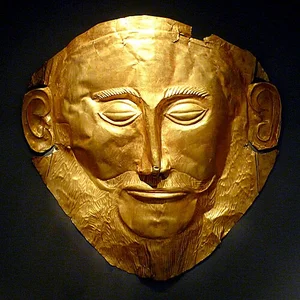
King of Mycenae and supreme commander of the Greek forces during the Trojan War. A central figure in Homer's Iliad and Aeschylus's Oresteia, his tragic fate — from the sacrifice of Iphigenia to his murder by Clytemnestra — makes him an archetype of hubris and fatality.
Agni
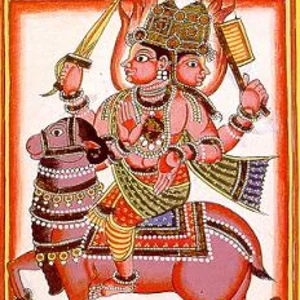
Agni is the god of fire in Vedic and Hindu mythology. The personification of sacrificial fire, he serves as an intermediary between humans and the gods by carrying offerings up to the heavens through smoke. He ranks among the most frequently invoked deities of the Rigveda.
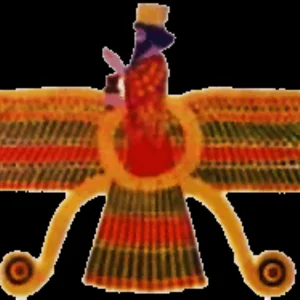
Ahura Mazda
The supreme deity of Zoroastrianism, Ahura Mazda is the creator god of wisdom and light in the religion founded by Zoroaster (Zarathustra) around the 6th century BCE in Persia. He embodies the principle of Good, opposed to Ahriman, the principle of Evil, in a dualistic vision of the cosmos.
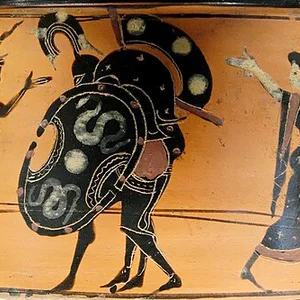
Ajax
Ajax, son of Telamon, king of Salamis, is one of the greatest Greek heroes of the Trojan War. Renowned for his colossal size and strength, he is considered, after Achilles, the finest warrior in the Achaean camp.
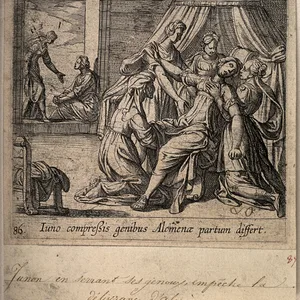
Alcmene
Greek princess, daughter of Electryon king of Mycenae and wife of Amphitryon. Zeus seduced her by taking on her husband's appearance, and she thus conceived Heracles, the most famous of all Greek heroes.
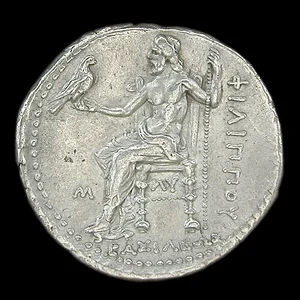
Alexander II of Macedon
King of Macedon from 370 to 368 BC, son of Amyntas III and elder brother of Philip II. His brief reign was marked by internal unrest before his assassination by Ptolemy of Aloros.
Ambika
Ambika is a figure from the Mahabharata, the Sanskrit epic of ancient India. Daughter of the king of Kashi and mother of Dhritarashtra, she plays a central role in the Kuru lineage. Her fate is bound to the practice of niyoga.
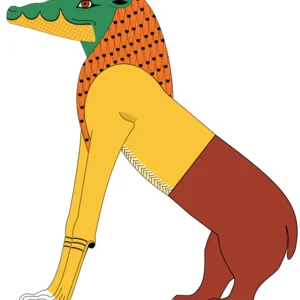
Ammit
Ammit is a hybrid Egyptian deity, part lion, part hippopotamus, part crocodile. She presides over the Weighing of the Heart in the Hall of Judgment of the Dead. Souls deemed unworthy are devoured by her, condemned to the second death.
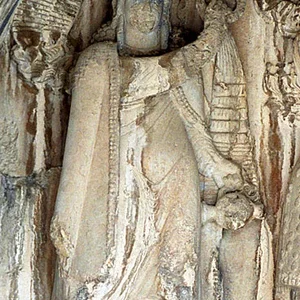
Anahita
Anahita is a major goddess of ancient Iranian mythology, associated with fertilizing waters, fertility, and victory. Venerated throughout the Achaemenid Empire and beyond, she was integrated into Zoroastrianism as a yazata (benevolent celestial being).

Anand (Nemain)
Nemain is a warrior goddess of Irish Celtic mythology, associated with the frenzy and panic of the battlefield. She is one of the figures linked to the Morrígan, a trinity of war goddesses, and her name is sometimes connected to Anann (Anu).
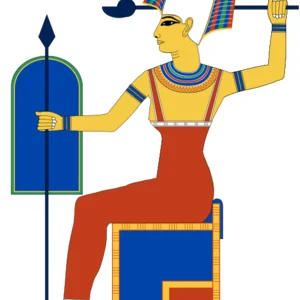
Anat
Anat is a warrior goddess of the Ugaritic pantheon (ancient Syria), venerated in the 2nd millennium BCE. A fierce virgin warrior, she is the sister of the god Baal and ranks among the most formidable deities of the ancient Near East.
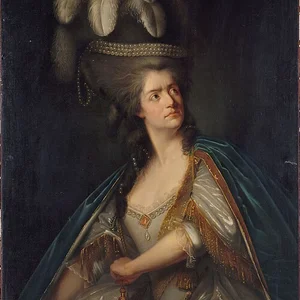
Andromache
Princess of Thebe in Mysia and wife of Hector in the Greek epic tradition, Andromache is the figure of the woman and mother struck by the Trojan War. Immortalized by Homer in the Iliad and by Racine in his eponymous tragedy (1667), she embodies conjugal fidelity and grief.
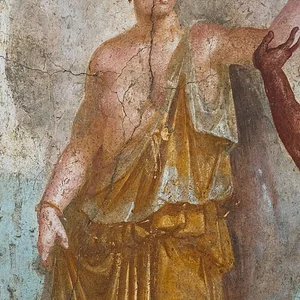
Andromeda
Andromeda is a princess of Greek mythology, the daughter of Cepheus, king of Ethiopia, and Cassiopeia. Chained to a rock to be offered to a sea monster, she is rescued by the hero Perseus, whom she later marries.
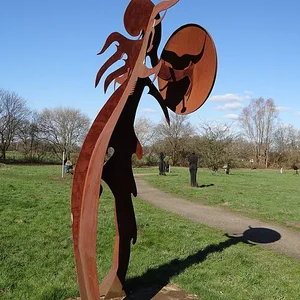
Angra Mainyu
Angra Mainyu, also known as Ahriman, is the evil deity of Zoroastrianism, opposed to Ahura Mazda. The embodiment of evil, deceit, and destruction, he stands at the heart of the cosmic dualism in the ancient Persian religion founded by Zarathustra.
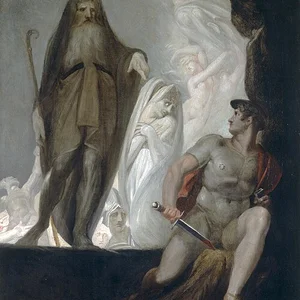
Anticleia
Anticleia is a figure from Greek mythology, daughter of the cunning Autolycus and mother of Odysseus (Ulysses). Wife of Laertes, king of Ithaca, she dies of grief during the long absence of her son, who has gone off to the Trojan War.
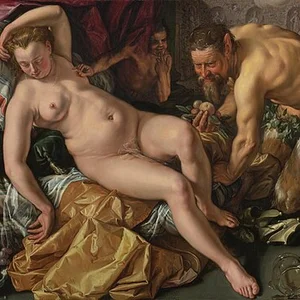
Antiope
Antiope is a figure from Greek mythology, daughter of Nycteus, king of Thebes (or of the river-god Asopus, depending on the version). Seduced by Zeus disguised as a satyr, she gave birth to the twins Amphion and Zethus, future builders of the walls of Thebes.
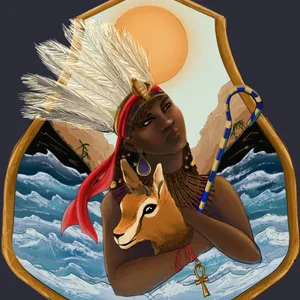
Anuket
Anuket is an Egyptian goddess personifying the Nile and its annual floods, venerated at Elephantine and in Nubia. She is depicted wearing a crown of feathers and is associated with the fertility of lands irrigated by the river.
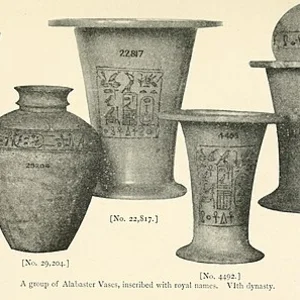
Apep
Apophis, or Apep, is the giant serpent of chaos in ancient Egyptian mythology. Each night, he attacks the solar barque of Ra in the underworld, threatening cosmic order. He is the absolute embodiment of chaos, darkness, and oblivion.
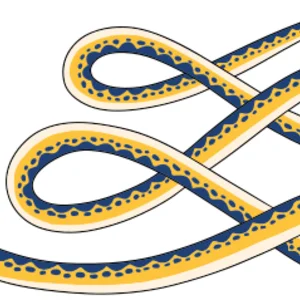
Apophis
Apophis is the great serpent of chaos in Egyptian mythology, the embodiment of darkness and absolute disorder. The eternal enemy of the sun god Ra, he attempts each night to swallow the solar barque during its journey through the underworld. The Egyptians performed daily rituals to ward off his attacks and preserve cosmic order.
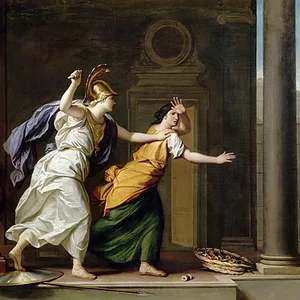
Arachne
A mortal weaver from Lydia in Greek mythology, Arachne challenged the goddess Athena to a weaving contest. Defeated or shamed, she was transformed into a spider — giving arachnids their name.
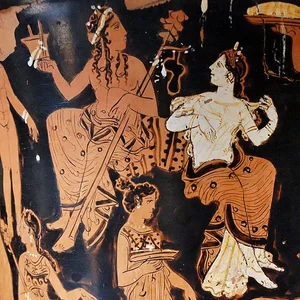
Ariadne
Cretan princess of Greek mythology, daughter of King Minos and Pasiphae. She helps the Athenian hero Theseus defeat the Minotaur by giving him a thread to navigate the labyrinth. Abandoned on the island of Naxos, she becomes the wife of the god Dionysus.
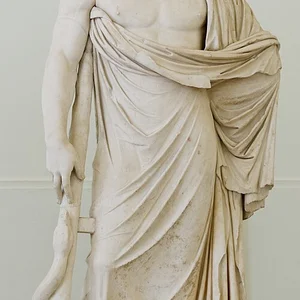
Asclepius
Greek god of medicine and healing, son of Apollo and Coronis. Raised by the centaur Chiron, he mastered the healing arts so completely that he could resurrect the dead — a transgression that led Zeus to strike him down with a thunderbolt.
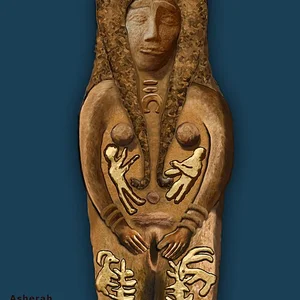
Asherah
Asherah is a major mother goddess of the Canaanite and Syrian pantheon, venerated as queen of the heavens and consort of the god El. Her cult, attested as early as the 2nd millennium BCE, stretched from Phoenicia to Ugarit and influenced the religious practices of the ancient Near East, including in Israel.
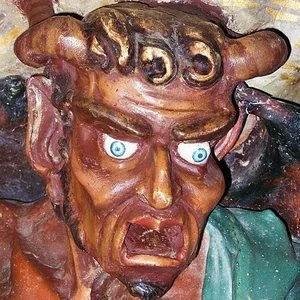
Asmodeus
A demon of lust and wrath in Judeo-Christian and Persian traditions, Asmodeus is one of the oldest demonic figures in religious literature. He appears notably in the Book of Tobit, a deuterocanonical text, under the name Asmodaeus.
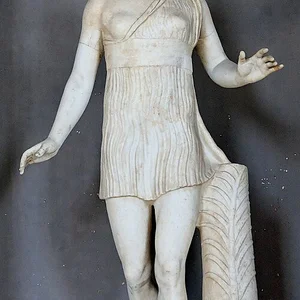
Atalanta
Heroine of Greek mythology, Atalanta is a huntress of unmatched agility and speed. An Argonaut and participant in the Calydonian Boar Hunt, she is famous for her challenge: any suitor had to outrun her on pain of death.
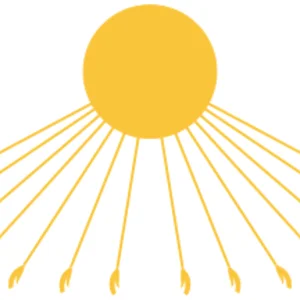
Aten
Aten is the solar deity of ancient Egypt, represented as the sun disk whose rays end in human hands. Elevated to the status of sole god by Pharaoh Akhenaten in the 14th century BCE, Aten stood at the heart of an unprecedented religious revolution.
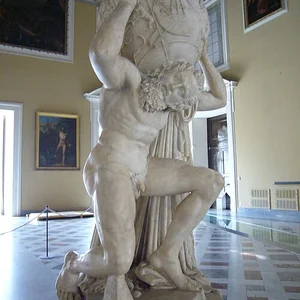
Atlas
Titan of Greek mythology, son of Iapetus and Clymene. Condemned by Zeus to hold up the sky on his shoulders after the defeat of the Titans in the Titanomachy. He is also the father of the Pleiades and the Hesperides.
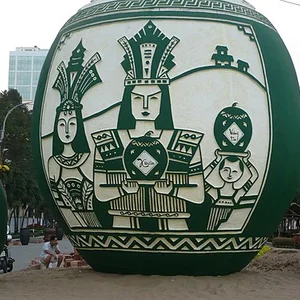
Âu Cơ
2825 — 2520
Âu Cơ is a legendary figure of Vietnamese mythology, wife of Lạc Long Quân and regarded as the mythical mother of the Viet people [1]. Her story, passed down through the Lĩnh Nam chích quái, tells of the birth of one hundred sons from a sack of eggs [1].

Azazel
Demonic figure from Hebrew traditions and fallen angel of the Book of Enoch. In Leviticus, he is associated with the scapegoat ritual. According to Enochic tradition, he taught humans the metallurgy of weapons and the art of cosmetics.
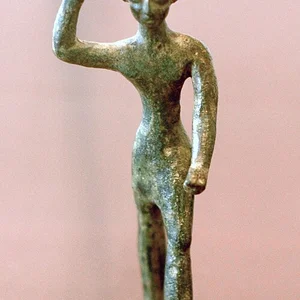
Baal
Supreme god of the Canaanite pantheon, master of rain, storms, and fertility. His cult was practiced across the ancient Near East from the 2nd millennium BCE and came into conflict with Hebrew monotheism. Demonized by the Abrahamic traditions, he became a demonic figure in medieval texts.

Badb
Badb is a war goddess from Irish Celtic mythology. Often depicted in the form of a crow, she soars above battlefields to spread terror and influence the outcome of the fighting. She sometimes forms a triad with Macha and the Morrígan.

Baiame
Baiame is the central creator deity of several Aboriginal peoples of southeastern Australia, notably the Kamilaroi and the Wiradjuri. Supreme being and sky father, he is considered the source of laws, initiation rites, and cosmic order.
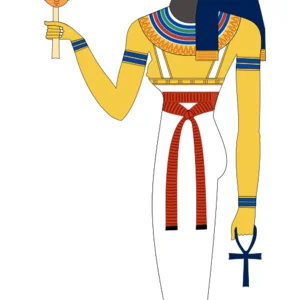
Bastet
Cat goddess of ancient Egyptian mythology, Bastet is the daughter of the sun god Ra and the protector of the home, women, and children. Venerated by the Egyptian people since the Old Kingdom, she embodies both maternal gentleness and protective power. Her cult, centered in Bubastis (Lower Egypt), reached its peak during the 1st millennium BCE.
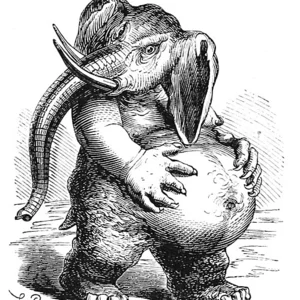
Behemoth
Behemoth is a monstrous creature from the Hebrew Bible, described as a colossal, primordial land beast. In the Book of Job, God invokes it to illustrate his omnipotence before humankind. Jewish tradition makes it the terrestrial counterpart of the sea monster Leviathan.
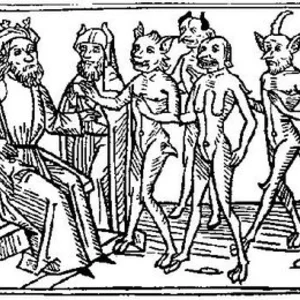
Belial
Belial is a demonic figure from ancient Hebrew and Jewish traditions, whose name means 'worthless' or 'wickedness'. He appears in the Dead Sea Scrolls as a prince of darkness opposed to the Archangel Michael. He is considered one of the four crowned princes of Hell in medieval demonology.
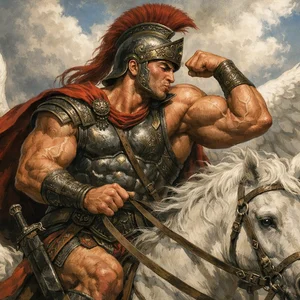
Bellerophon
Hero of Greek mythology from Corinth, Bellerophon tames the winged horse Pegasus and slays the Chimera. A victim of his own hubris, he attempts to reach Olympus and is cast down to earth by Zeus.
Bhumi Devi
Bhūmi Devi is the goddess of the Earth in Hindu mythology, the personification of the nurturing planet. Wife of the god Vishnu, she is also known by the names Bhūdevi or Prithvi. She embodies the patience, fertility, and generosity of the earth.
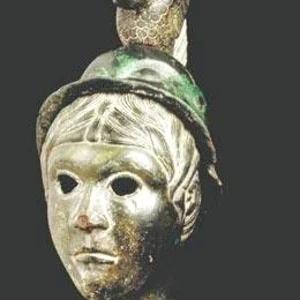
Brigid
A major goddess of Irish Celtic mythology, Brigid is the daughter of the Dagda and patroness of fire, poetry, and healing. Venerated by Celtic peoples, her cult survived Christianization by merging with that of Saint Brigid of Kildare.
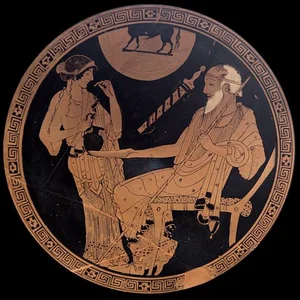
Briseis
Briseis is a figure from Greek mythology, a war captive whose possession sparks the famous quarrel between Achilles and Agamemnon in Homer's Iliad. Her seizure by Agamemnon drives Achilles to withdraw from the fighting, a pivotal event in the tale of the Trojan War.
Bunyip
The Bunyip is a creature from the mythology of the Aboriginal peoples of Australia, said to haunt swamps, billabongs, creeks, and waterholes. Described as a threatening water spirit that devours those who approach the water at night, it embodies the real dangers of Australian wetlands.
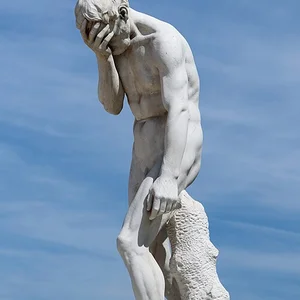
Cain
3899 av. J.-C. — 3199 av. J.-C.
Eldest son of Adam and Eve in the Bible, Cain committed the first murder in human history by killing his brother Abel out of jealousy. Condemned to wander the earth, he received a protective mark from God.
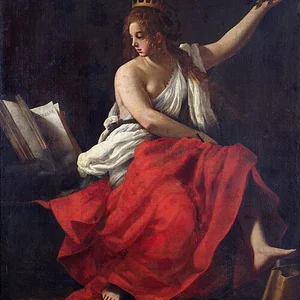
Calliope
Calliope, in Greek mythology, is the eldest of the nine Muses, daughters of Zeus and the Titaness Mnemosyne. She presides over epic poetry and eloquence, and is reputed to be the mother of the poet Orpheus. Her name means “she of the beautiful voice.”
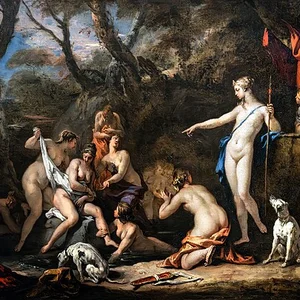
Callisto
Callisto is a nymph from Greek mythology and a companion of Artemis, goddess of the hunt. Seduced by Zeus, she was transformed into a bear by the jealous Hera, then placed in the sky as the constellation Ursa Major.
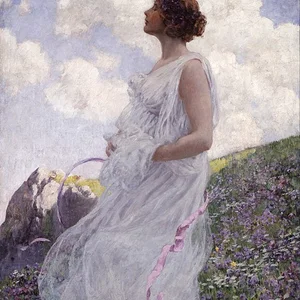
Calypso
An Oceanid nymph of Greek mythology, Calypso rules over the island of Ogygia. In Homer's Odyssey, she holds Odysseus captive through her love for seven years, offering him immortality in exchange for his company. Forced by Zeus to release him, she embodies the figure of impossible love set against the longing to return home.
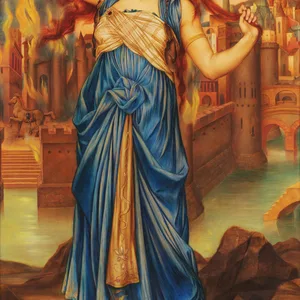
Cassandra
Trojan prophetess and daughter of King Priam, Cassandra was granted the gift of prophecy by Apollo, then cursed so that no one would ever believe her. A tragic figure of Greek mythology, she foretold the fall of Troy but could not prevent it.
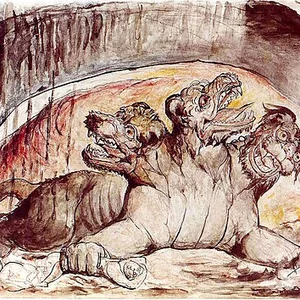
Cerberus
Cerberus is the monstrous three-headed dog who guards the entrance to the Underworld in Greek mythology. Son of Typhon and Echidna, he prevents the living from entering and the dead from leaving. Heracles captured him alive during his twelfth and final labor.
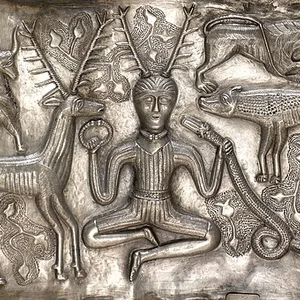
Cernunnos
Cernunnos is a horned Gaulish deity, god of wild animals and nature. His name is attested only once, on the Pillar of the Boatmen discovered in Paris. He is depicted seated cross-legged, wearing antlers, surrounded by deer and serpents.
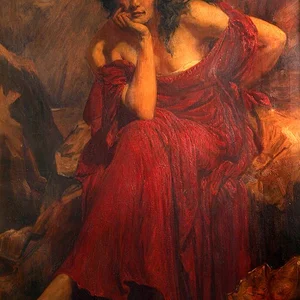
Cerridwen
An enchantress and goddess of Welsh Celtic mythology, Ceridwen is the keeper of the cauldron of knowledge and inspiration (Awen). A figure of wisdom, transformation, and magic, she appears in medieval Welsh tales passed down orally before being recorded in the Mabinogion and other bardic texts.
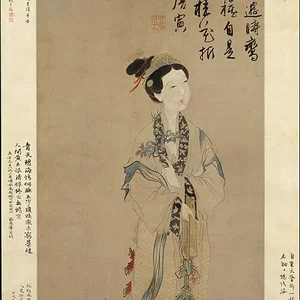
Chang'e
Chang'e is the goddess of the Moon in Chinese mythology. Wife of the divine archer Hou Yi, she swallowed the elixir of immortality and flew to the Moon, where she has resided ever since in her jade palace with the moon rabbit.
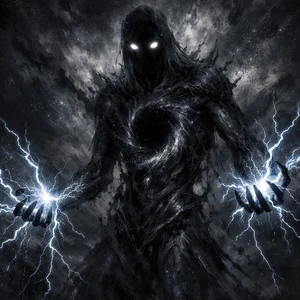
Chaos
Chaos is the primordial deity of Greek mythology, personification of the original void or abyss from which the universe was born. According to Hesiod in the Theogony (c. 700 BCE), Chaos is the first being to have existed. From Chaos emerge Gaia, Tartarus, Eros, Nyx, and Erebus.
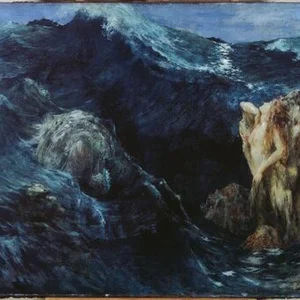
Charybdis
Charybdis is a sea monster from Greek mythology, daughter of Poseidon and Gaia, transformed into a devastating whirlpool by Zeus. She swallows the waters three times a day in the Strait of Messina, threatening any ship that draws near. Odysseus encounters her during his long journey home to Ithaca.
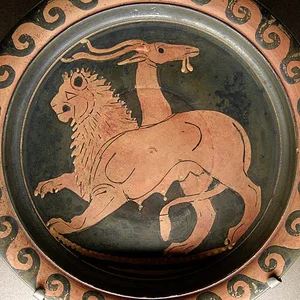
Chimera
Monster from Greek mythology, born of Typhon and Echidna. A flame-breathing hybrid creature, she was slain by the hero Bellerophon riding the winged horse Pegasus.
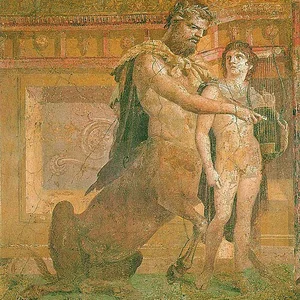
Chiron
Chiron is a centaur from Greek mythology, son of Cronus and the nymph Philyra. Renowned for his wisdom, he served as tutor to many Greek heroes, including Achilles, Jason, and Asclepius. He excelled in medicine, music, hunting, and philosophy.
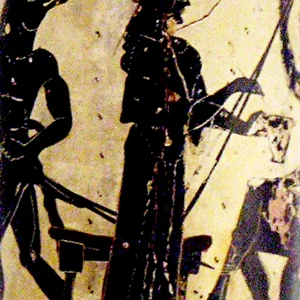
Circe
Circe is an enchantress from Greek mythology, daughter of the sun god Helios, known for her magical powers. In Homer's Odyssey, she transforms Odysseus's companions into pigs before becoming the hero's ally.
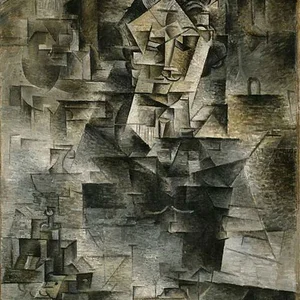
Clitô
Cléito is a figure from Greek mythology, daughter of Evenor and Leucippe, known through Plato's dialogue 'Critias'. A mortal woman living on the island that would become Atlantis, she was beloved by the god Poseidon, who surrounded her home with concentric ramparts and fathered with her the ten first kings of Atlantis.
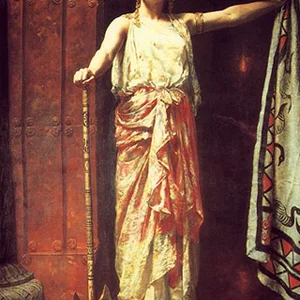
Clytemnestra
A major figure in Greek mythology, Clytemnestra is the wife of King Agamemnon of Mycenae. She murders him upon his return from the Trojan War to avenge the sacrifice of their daughter Iphigenia. She is the central character of Aeschylus's Oresteia (458 BCE).
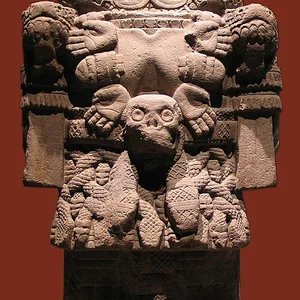
Coatlicue
Mother goddess of Aztec mythology, Coatlicue is the mother of the sun god Huitzilopochtli. Venerated by the Mexica people (Aztecs), she embodies life, death, and regeneration all at once. Her depiction — wearing a necklace of skulls and a skirt of serpents — symbolizes the perpetual cycle of creation and destruction.
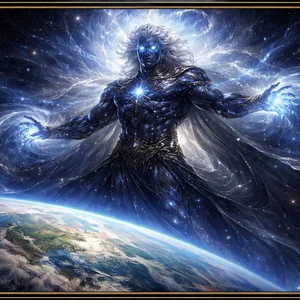
Coeus
Titan of Greek mythology, son of Uranus and Gaia, Coeus personifies heavenly intelligence and the axis of the world. Husband of Phoebe, he is the father of Leto and Asteria, and thus the grandfather of Apollo and Artemis.
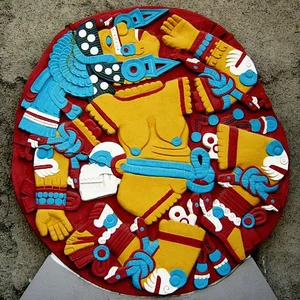
Coyolxauhqui
Coyolxauhqui is a lunar deity of Aztec mythology, daughter of the goddess Coatlicue and sister of the solar god Huitzilopochtli. According to the myth, she was beheaded and dismembered by her brother atop Mount Coatepec, becoming the Moon.
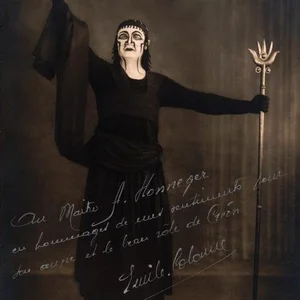
Creon
Creon is a character from Greek mythology, king of Thebes. Brother of Jocasta and uncle of Antigone, he seizes power after the death of Oedipus's sons. He embodies the authority of the state in conflict with divine and family laws.
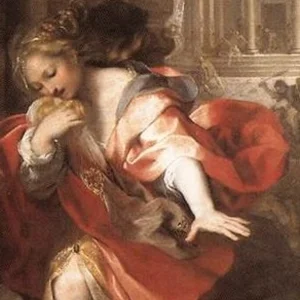
Creusa
Creusa is a princess from Greek mythology, daughter of King Priam and Hecuba, and wife of the Trojan hero Aeneas. She disappears during the fall of Troy, and her ghost appears to Aeneas to foretell his destiny.
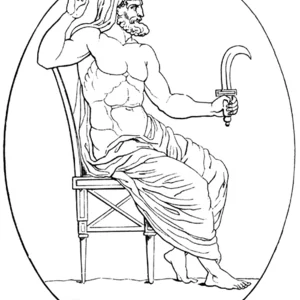
Cronos
Cronos is the youngest of the Titans, son of Uranus and Gaia. He overthrew his father, ruled over the Golden Age, then devoured his own children for fear of being dethroned. Zeus, saved by his mother Rhea, eventually defeated him.
Dagda
The Dagda is one of the great deities of Irish Celtic mythology, father and chief of the Tuatha Dé Danann. God of fertility, wisdom, and the arts, he owns an inexhaustible cauldron of abundance and a club with magical powers.
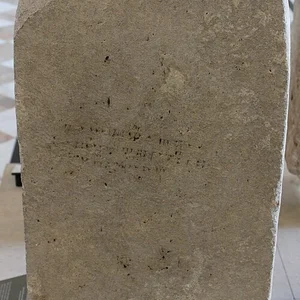
Dagon
Dagon is a Semitic deity worshipped by the Philistines and Canaanites, associated with fertility and the harvest. His cult is attested throughout the ancient Near East, notably at Ugarit and Gaza. He was later reinterpreted as a demonic figure in Christian literature and in John Milton's Paradise Lost.
Daji
A nine-tailed fox spirit who transformed herself into the concubine of King Zhou, the last ruler of the Shang dynasty (11th century BCE). A demonic figure in Chinese mythology, she embodies seductive evil and tyranny. Her legendary cruelty helped bring about the fall of the Shang dynasty, which was defeated by King Wu of Zhou.
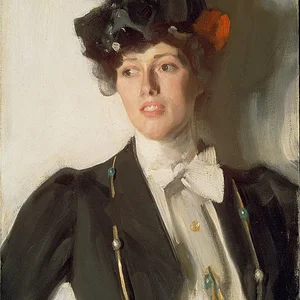
Dana
Mother goddess of Irish Celtic mythology, Dana is the ancestral figure of the Tuatha Dé Danann, the divine people of Ireland. Known only through oral tradition and medieval Irish texts, she embodies the nurturing earth and the primordial forces of nature.
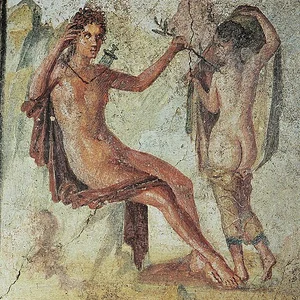
Daphne
Daphne is a nymph from Greek mythology, daughter of the river-god Peneus (or of the river Ladon according to some versions). Pursued by the god Apollo who had fallen in love with her, she is transformed into a laurel tree to escape his embrace. Her myth is one of the most famous tales of metamorphosis from antiquity.
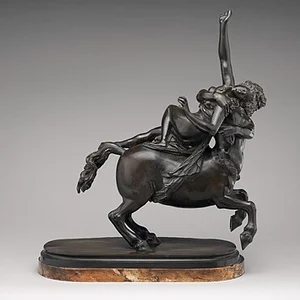
Deianira
Wife of Heracles and princess of Calydon, Deianira is a tragic figure in Greek mythology. Deceived by the centaur Nessus, she gives her husband a tunic soaked in poison, believing it to be a love potion, thereby causing his death.
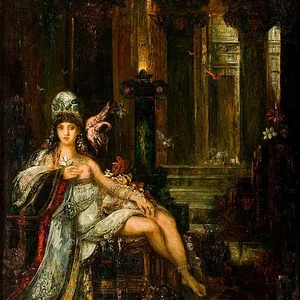
Delilah
1100 av. J.-C. — 1100 av. J.-C.
Delilah is a female figure from the Book of Judges, in the Hebrew Bible. Loved by Samson, she is bribed by the Philistine lords to discover the secret of the hero's superhuman strength: his hair. She betrays him by having his head shaved, thus delivering him to his enemies.
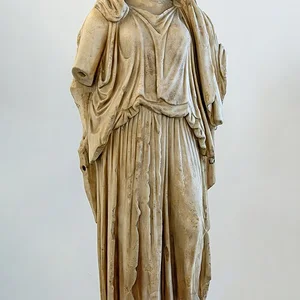
Demeter
Greek goddess of agriculture and the harvest, venerated in ancient Greek religion. Daughter of Cronus and Rhea, she is the mother of Persephone. Her myth, passed down through oral tradition and later codified by the Greeks, explains the cycle of the seasons.
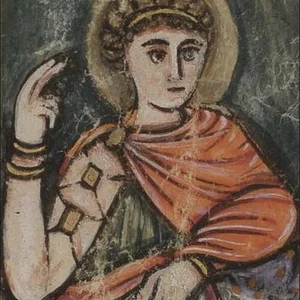
Dido
A Phoenician princess from Tyre, Dido is the legendary founder of Carthage (in present-day Tunisia), according to Greek and Latin tradition. Made famous by Virgil's Aeneid, she embodies the figure of the queen-builder and the tragic woman abandoned by Aeneas.
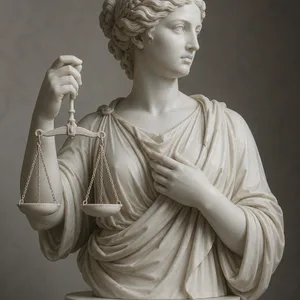
Dike
Dike is the Greek goddess of human justice and moral order. The daughter of Zeus and Themis, she is one of the Horae (Hours) and watches over the upholding of law among mortals, denouncing injustices to her father.
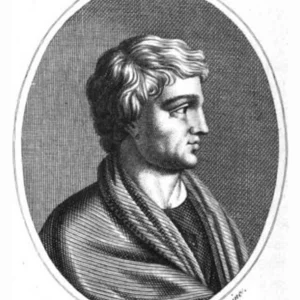
Diodorus Siculus
89 av. J.-C. — 19 av. J.-C.
Greek historian of the 1st century BC, born in Sicily, author of the Bibliotheca historica, a vast universal history encyclopedia in 40 volumes covering mythical origins through the age of Caesar.
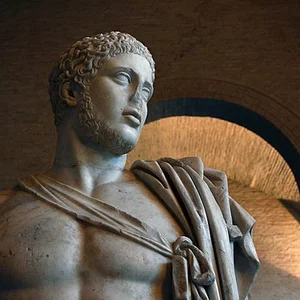
Diomedes
Hero of Greek mythology, king of Argos and son of Tydeus, Diomedes is one of the greatest Greek warriors of the Trojan War. Renowned for his exceptional bravery, he dared to wound the gods Ares and Aphrodite in battle.
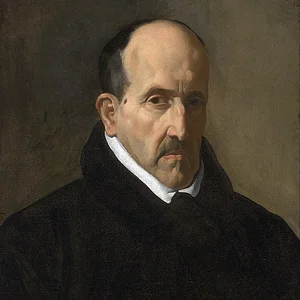
Don
Dôn is the mother goddess of Welsh mythology, ancestor of the divine family known as the “Children of Dôn” (Plant Dôn) mentioned in the Mabinogi. The Welsh equivalent of the Irish goddess Danu, she embodies the matriarchal figure of the Celtic deities of Britain, of whom she is the source.

Dragon of Colchis
A creature of Greek mythology, the Dragon of Colchis is a gigantic serpent with ever-open eyes that guards the Golden Fleece in the sacred grove of Ares, in Colchis. It never sleeps — until the sorceress Medea lulls it into slumber so that Jason can seize the precious trophy.
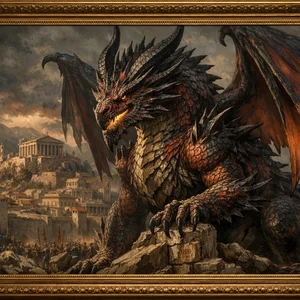
Dragon of Thebes
A monstrous creature sacred to Ares in Greek mythology, it guarded the divine spring near Thebes. Slain by the Phoenician hero Cadmus, its teeth were sown into the earth and gave rise to the Spartoi, the ancestral warriors of Thebes.
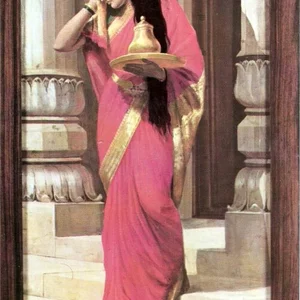
Draupadi
Central heroine of the Mahābhārata, the Sanskrit epic of the Hindu tradition. Shared wife of the five Pandava brothers, she symbolizes justice, dignity, and resistance to humiliation. Her story was passed down through a long oral tradition before being written down around the 4th century BCE.
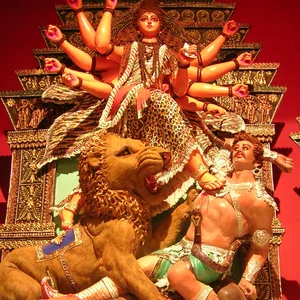
Durga
A warrior goddess of Hinduism, Durga embodies Shakti, the divine feminine energy and protective force of the universe. Venerated in the Hindu tradition since the Vedic era, she is the great goddess (Mahadevi) who vanquishes the forces of evil.
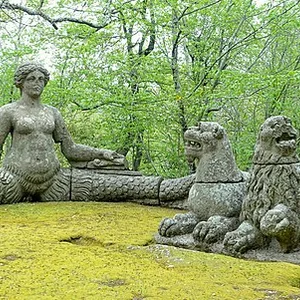
Echidna
Echidna is a creature from Greek mythology, half-woman and half-serpent, known as the "Mother of All Monsters." Mate of the giant Typhon, she gave birth to the most terrifying creatures of the ancient Greek world.
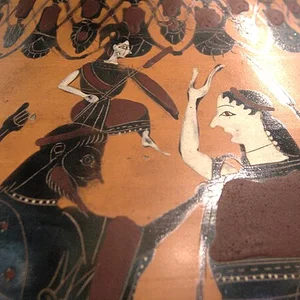
Eileithyia
Eileithyia (Ilithyia) is the Greek goddess of childbirth and labor. The daughter of Zeus and Hera, she presides over births and either eases or prolongs the pains of women in labor. She plays a decisive role in several myths, notably during the births of Heracles and Apollo.
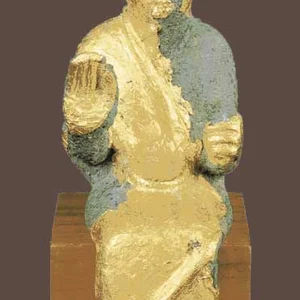
El
El is the supreme deity of the Canaanite and Ugaritic pantheon, father of gods and men. A creator god and divine judge, he presides over the council of the gods. His cult is attested throughout the ancient Semitic Near East.
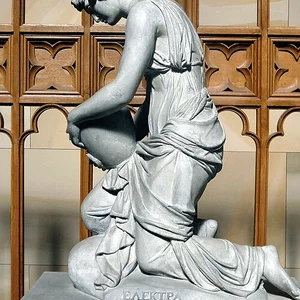
Electra
Electra is a heroine of Greek mythology, daughter of Agamemnon and Clytemnestra. After her father is murdered by her mother and her lover Aegisthus, she convinces her brother Orestes to avenge him. Her tragic fate inspired all three of the great Greek tragedians.
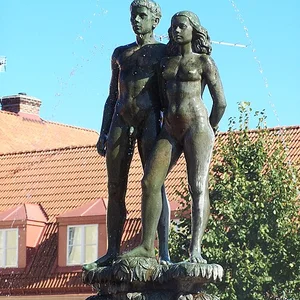
Embla
In Norse mythology, Embla is the first woman, created along with Ask (the first man) by the gods from two pieces of wood found on the shore. The couple are the ancestors of humankind in Scandinavian cosmogony.

Emer
Emer is the wife of Cúchulainn, the central hero of the Ulster Cycle of Irish Celtic mythology. The daughter of Forgall Monach, she is said to possess the six gifts of the ideal woman (beauty, voice, sweet speech, wisdom, skill at needlework, and virtue). Her meeting with the hero is told in “The Wooing of Emer” (Tochmarc Emire).
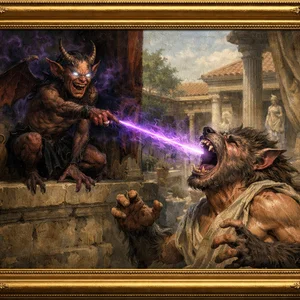
Empousa
A demonic creature of Greek mythology, servant of Hecate. Endowed with one leg of bronze and one leg of a donkey, she transforms herself to seduce lone travelers before devouring them.
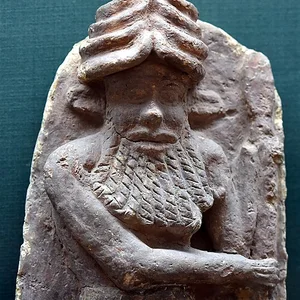
Enkidu
Legendary figure from the Epic of Gilgamesh, created by the gods to be the companion of King Gilgamesh. Born wild and raised among animals, he becomes the hero's inseparable friend before his death triggers the quest for immortality.
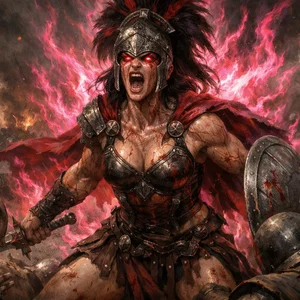
Enyo
Greek goddess of war and destruction, Enyo is the companion or sister of Ares. She embodies the bloody turmoil of battle and spreads terror across the battlefield in Greek mythology.
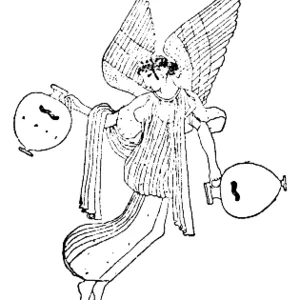
Eos
Eos is the Greek goddess of the Dawn, daughter of the Titans Hyperion and Theia, sister of Helios (the Sun) and Selene (the Moon). Each morning, she opens the gates of the sky to herald the rising of the day, riding her chariot drawn by two winged horses.
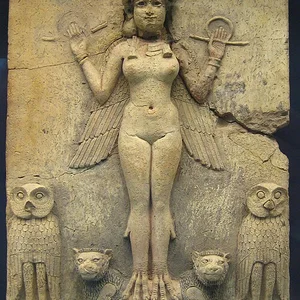
Ereshkigal
Sumerian queen of the Underworld in Mesopotamian mythology, Ereshkigal rules the kingdom of the dead known as Kur or Irkalla. Sister of the goddess Inanna, she embodies the relentless power of death and the underworld, as described in Sumerian cuneiform texts.
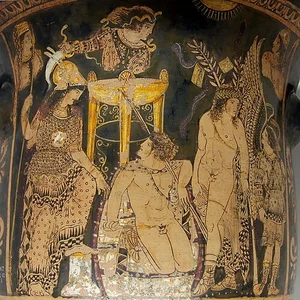
Erinyes
The Erinyes are three chthonic deities of Greek mythology tasked with punishing crimes against the natural order, especially perjury and the murder of kin. Alecto, Megaera, and Tisiphone relentlessly pursue the guilty, driving them to madness and torment.
Ernmas
Ernmas is a mother goddess of Irish Celtic mythology, belonging to the Tuatha Dé Danann. She is best known as the mother of the three goddesses of war and sovereignty of Ireland.
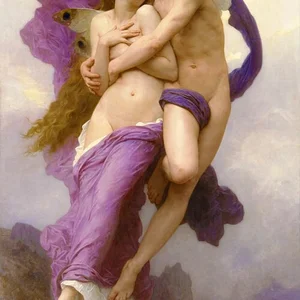
Eros
Eros is the Greek god of love and desire. The son of Aphrodite and Ares according to classical tradition, he is depicted as a winged young child armed with a bow and golden arrows. His Roman equivalent is Cupid.
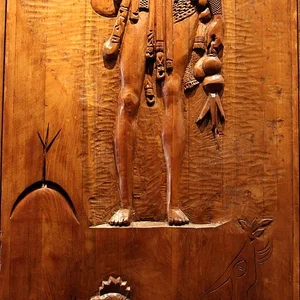
Eshu
Eshu is a trickster orisha from the Yoruba tradition of West Africa, guardian of crossroads and messenger between humans and the gods. Master of communication and cunning, he must be propitiated before any ritual.
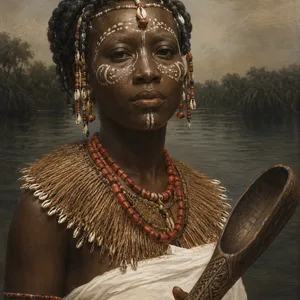
Esimirin
Esimirin is an aquatic deity from the Ijaw (Ijo) mythology, a people of the Niger Delta in Nigeria. A spiritual figure associated with water and prosperity, she holds a central place in the beliefs and traditional rituals of this community.

Eteocles
Eteocles is a mythical king of Thebes, son of Oedipus and Jocasta, brother of Polynices, Antigone, and Ismene. He refuses to hand over the throne to his brother as their power-sharing agreement required, triggering the war of the Seven against Thebes, at the end of which the two brothers kill each other.
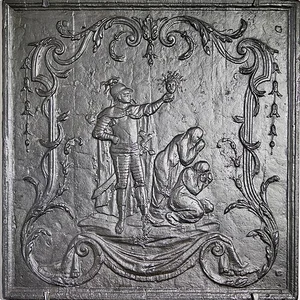
Euryale
Euryale is one of the three Gorgons of Greek mythology, sister of Stheno and of the famous Medusa. Unlike the latter, Euryale is immortal. Daughter of the primordial sea deities Phorcys and Ceto, she is often depicted as a monster with a petrifying gaze.
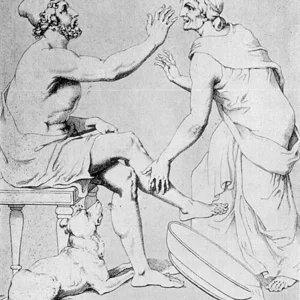
Eurycleia
In Greek mythology, Eurycleia is the faithful nurse of Odysseus, king of Ithaca, whom she raised from his birth. A character in Homer's Odyssey, she is the first to recognize her master on his return, thanks to a scar on his leg.
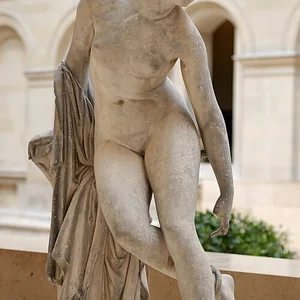
Eurydice
Nymph of Greek mythology and wife of the poet Orpheus. Bitten by a serpent, she descends to the Underworld. Orpheus attempts to bring her back to life through his music, but loses her forever by looking back.

Fotla
Fódla (or Fotla) is a goddess of Irish mythology, a member of the Tuatha Dé Danann. Along with her sisters Banba and Ériu, she personifies the sovereignty of Ireland and gives the island one of its poetic names.
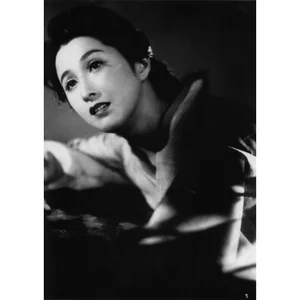
Fujin
Fujin is the god of wind in Japanese Shinto mythology. He is depicted as a demon carrying a large bag containing the winds of the world. Twin of Raijin, the god of thunder, he is one of the oldest deities in the Japanese pantheon.
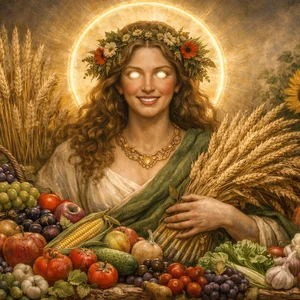
Gaia
A primordial deity of Greek mythology, Gaia personifies the Earth Mother. Emerging from the primordial Chaos, she gives birth to Uranus (the Sky), the Mountains, and Pontus (the Sea). With Uranus, she bears the Titans, the Cyclopes, and the Hecatoncheires.
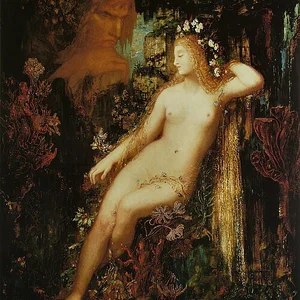
Galatea
Galatea is a Nereid in Greek mythology, one of the fifty daughters of the sea god Nereus and the Oceanid Doris. She is famous for her love affair with the Sicilian shepherd Acis and for the advances of the Cyclops Polyphemus, who, out of jealousy, crushes Acis beneath a boulder.
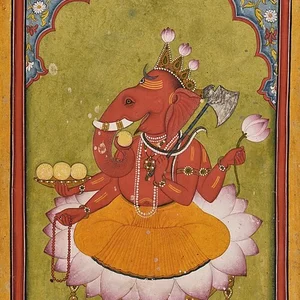
Ganesh
Ganesh is one of the most revered deities in Hinduism, instantly recognizable by his elephant head. Son of Shiva and Parvati, he is the god of wisdom, intellect, and success, and the “Lord of Obstacles,” invoked at the beginning of any new endeavor.
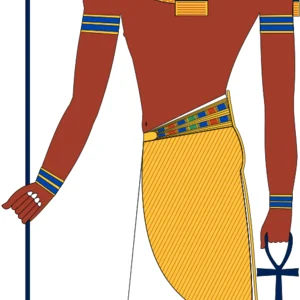
Geb
Geb is the Egyptian god of the Earth, son of Shu and Tefnut, and husband of Nut, the goddess of the sky. He belongs to the Ennead of Heliopolis and is the father of Osiris, Isis, Seth, and Nephthys.
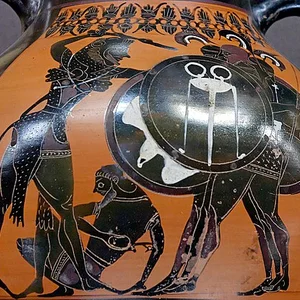
Geryon
Geryon is a monstrous giant of Greek mythology, endowed with three bodies joined at the waist. The guardian of a herd of red cattle on the island of Erytheia, he is slain by Heracles during the hero's tenth Labour.
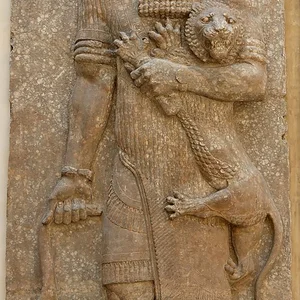
Gilgamesh
Gilgamesh is a legendary king of Sumer, whose story is told in the Epic of Gilgamesh, the oldest known literary text in human history. This Mesopotamian work explores themes of friendship, the quest for immortality, and the human condition in the face of death.
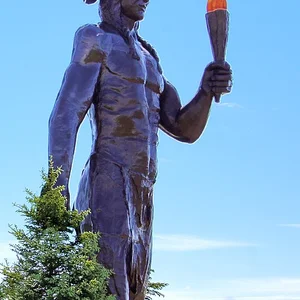
Glooscap
Creator hero and central figure of Mi'kmaq and Abenaki mythology in North America. A cultural being who shaped the world, defeated monsters, and taught humans the arts of survival. A figure from the Indigenous oral tradition of northeastern America, passed down from generation to generation.
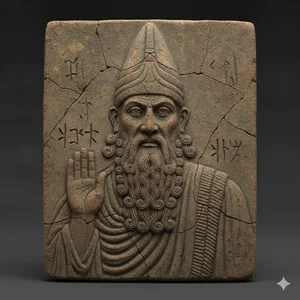
God (Yahweh)
Principal deity of the ancient Hebrew religion, Yahweh is the one God worshiped by the Israelites. His cult, attested from the 2nd millennium BCE, structures the foundational narratives of the Hebrew Bible and gives rise to Abrahamic monotheism.
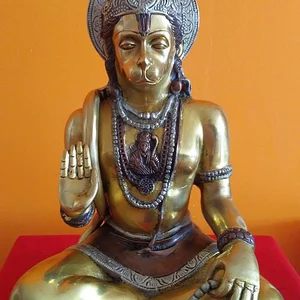
Hanuman
A Hindu deity in the form of a monkey, Hanuman is the devoted servant of the god Rama in the epic Ramayana. A symbol of devotion, strength, and courage, he is one of the most venerated figures in Hinduism.
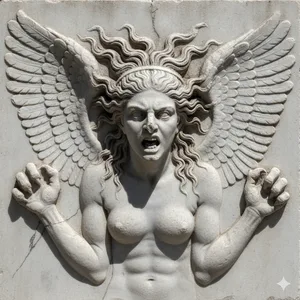
Harpies
The Harpies are creatures from Greek mythology, half-woman and half-bird, personifying violent and destructive winds. Sent by the gods to torment the blind prophet Phineus, they would defile or steal his food. They were driven away by the Argonauts Zetes and Calais, sons of the wind god Boreas.
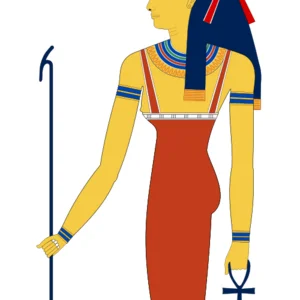
Hathor
An Egyptian goddess venerated since the Old Kingdom (c. 2700 BCE), Hathor is associated with love, music, joy, femininity, and the sky. Depicted as a cow or as a woman with bovine horns bearing the solar disk, she is one of the most popular deities in the Egyptian pantheon.
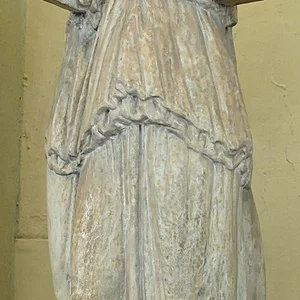
Hecate
Greek goddess of magic, crossroads, and the underworld, daughter of Perses and Asteria. Often depicted with three faces, holding torches and accompanied by dogs. A chthonic deity associated with the moon, nocturnal rites, and witchcraft.
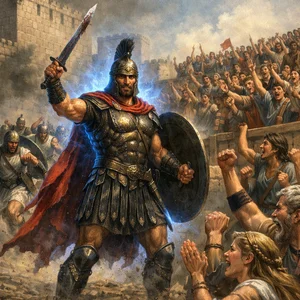
Hector
Prince of Troy and eldest son of King Priam, Hector is the greatest Trojan warrior of the Trojan War according to the Greek tradition handed down by Homer. Husband of Andromache and father of Astyanax, he embodies martial honor and love of his homeland. He kills Patroclus before being defeated by Achilles, whose fury leads him to drag Hector's body around the city walls.
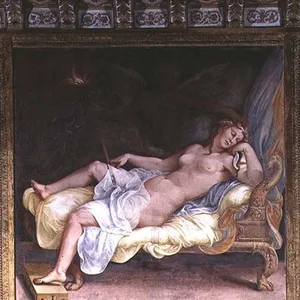
Hecuba
Queen of Troy in Greek mythology, wife of King Priam and mother of Hector, Paris, and Cassandra. A central figure in the Iliad and Greek tragedies, she embodies maternal grief and the fall of an entire civilization.
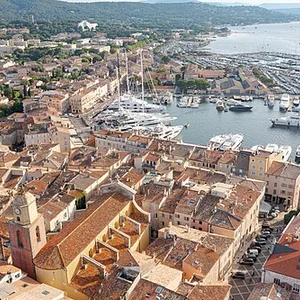
Heraclea
Heraclea refers to several Greek cities founded in honor of the hero Heracles, the most famous of which is Heraclea Pontica. These colonial foundations illustrate the role of mythological heroes in shaping ancient Greek identity.
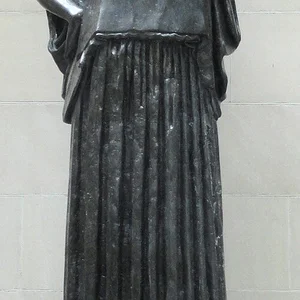
Hestia
Hestia is the Greek goddess of the hearth, domestic fire, and family in ancient Greek mythology. Daughter of Cronus and Rhea, sister of Zeus, she is one of the twelve Olympian deities. An eternal virgin, she embodies stability, purity, and the sacred heart of the home.

Hiʻiaka
Hiʻiaka is a goddess of Hawaiian mythology, the younger sister of the volcano goddess Pele. Patron of hula dancers, of chant, and of medicine, she is the heroine of a cycle of epic chants recounting her journey across the archipelago.
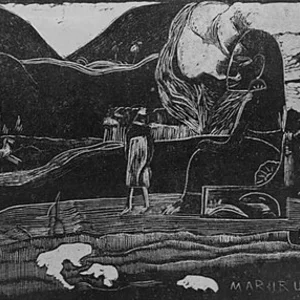
Hina
Hina is a major goddess of the Polynesian pantheon, venerated across many Pacific cultures (Tahiti, Hawaii, Māori, Samoa). The quintessential lunar figure, she embodies femininity, natural cycles, and the arts of tapa cloth-making. Her tradition is exclusively oral, passed down through myths and sacred chants since the pre-colonial era.
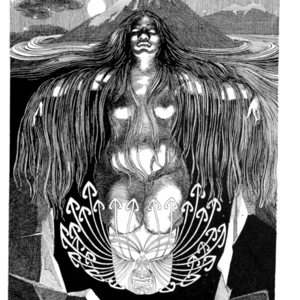
Hine-nui-te-pō
Māori goddess of death and guardian of the underworld (Te Pō), according to Polynesian oral traditions. Daughter of Tāne, she rules over the realm of the dead and receives the souls of the departed. Her myth illustrates the fundamental life-death cycle in Māori cosmology.
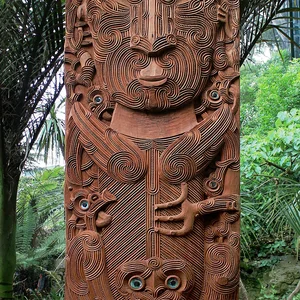
Hineahuone
Hineahuone is the first woman in Māori cosmogony, fashioned by the god Tāne from the red earth (one) of Kurawaka. A founding figure of Māori oral tradition, she embodies the sacred bond between humanity and the earth.

Hinetītama
Hinetītama is the “dawn maiden” in the Māori mythology of New Zealand. The daughter of the god Tāne, she becomes Hine-nui-te-pō, the great goddess of night and of the dead, after discovering that he was also her father.
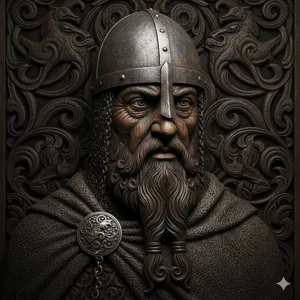
Hjalmgunnar
Hjalmgunnar is a warrior king from Norse mythology, mentioned in the heroic sagas. He was slain by the valkyrie Brynhildr on Odin's orders, which led to her being punished by the chief god.
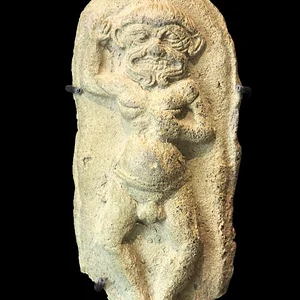
Humbaba
Humbaba (or Huwawa) is a monstrous creature from Mesopotamian mythology, the guardian of the Cedar Forest on behalf of the god Enlil. He appears in the Epic of Gilgamesh, where he is defeated and killed by Gilgamesh and Enkidu.
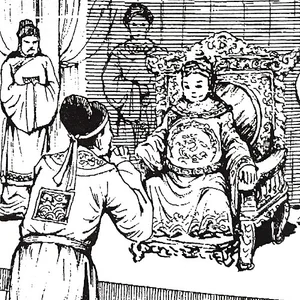
Hùng Vương
Title held by the semi-legendary rulers of the kingdom of Văn Lang, founded by the Lạc Việt people and attested between the 7th and 2nd centuries BCE [1]. Eighteen generations of kings are said to have held this title, but their historicity remains debated among historians [1].
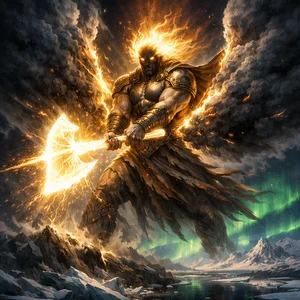
Hyperion
Titan of light in Greek mythology, son of Ouranos and Gaia. Husband of Theia, he is the father of Helios (the Sun), Selene (the Moon), and Eos (the Dawn). His name means "the one who walks above" in ancient Greek.
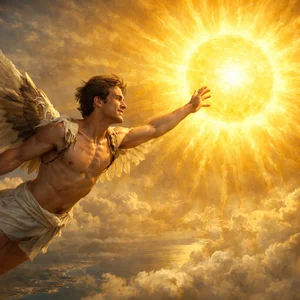
Icarus
Son of Daedalus, the ingenious craftsman of Greek mythology, Icarus escapes the Labyrinth of Crete using wings made of feathers and wax. Intoxicated by flight, he soars too close to the sun despite his father's warnings, melts his wings, and perishes in the sea that now bears his name.
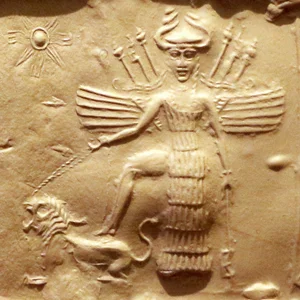
Inanna
Sumerian goddess of love, war, and fertility, venerated in Mesopotamia since the 4th millennium BCE. She is the best-documented female deity of the ancient world, celebrated in cuneiform hymns among the oldest known literary texts. Her cult, centered on the city of Uruk, influenced the religious traditions of the ancient Near East.

Inanna / Ishtar
Inanna (Sumerian) or Ishtar (Akkadian) is the great goddess of love, war, and fertility in ancient Mesopotamia. She stands at the heart of many foundational myths, including the famous Descent into the Underworld. Her cult, one of the most important in the ancient Near East, spans more than three millennia.
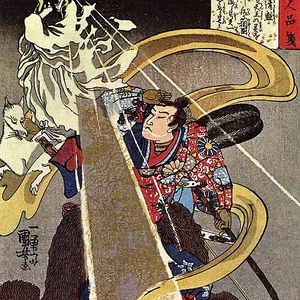
Inari
Japanese Shintō deity associated with rice, fertility, foxes, and commerce. Inari is one of the most venerated deities in Japan, with shrines (inari-sha) found throughout the country.
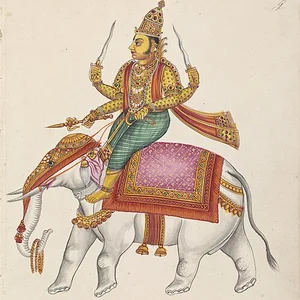
Indra
Indra is the king of the gods and the master of the sky in the Vedic mythology of ancient India. A warrior god of thunder, storms, and rain, he fights demons with his weapon, the thunderbolt (vajra). He is one of the central deities of the Rig Veda.
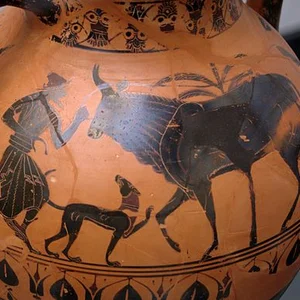
Io
Io is a figure from Greek mythology, a priestess of Hera and daughter of the river-god Inachus. Loved by Zeus, she was transformed into a heifer and pursued across the world by Hera's jealousy before regaining her human form in Egypt.
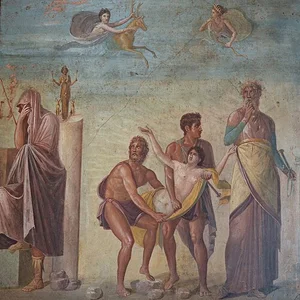
Iphigenia
Daughter of Agamemnon and Clytemnestra, Iphigenia was condemned to be sacrificed at Aulis to appease Artemis and allow the Greek fleet to sail for Troy. Saved by the goddess, she was transported to Tauris where she became a priestess. Her fate inspired major tragedies by Euripides.
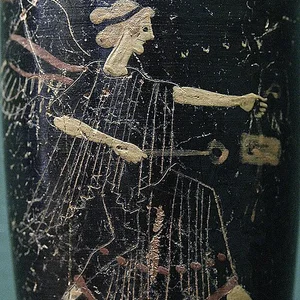
Iris
Iris is the Greek goddess of the rainbow and messenger of the Olympian gods, most notably Zeus and Hera. Daughter of Thaumas and Electra, she serves as an intermediary between the divine world and the human world, carrying messages from the immortals to mortals.
Itzamná
Itzamná is the supreme deity of the Maya pantheon, creator of the world and inventor of hieroglyphic writing. God of the sky, wisdom, and medicine, he is depicted as a wise old man. He is the husband of Ixchel, goddess of the moon.
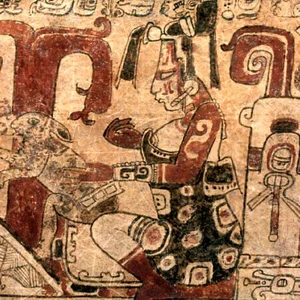
Ixchel
Ix Chel is a goddess of Maya mythology, venerated as a figure of the moon, medicine, weaving, and fertility. According to oral traditions and colonial written sources (Maya codices), she embodied both the creative power and the destruction associated with water and lunar cycles.
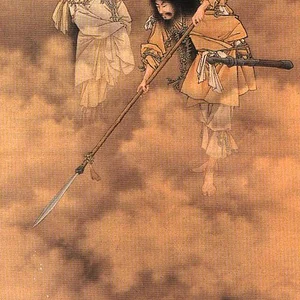
Izanami
Japanese goddess of creation and death, wife of Izanagi, from the Shinto tradition. According to the Kojiki (c. 8th century), she and Izanagi gave birth to the islands of Japan and the primordial deities. Her death during the birth of the fire god led her to reign over the land of the dead, Yomi.
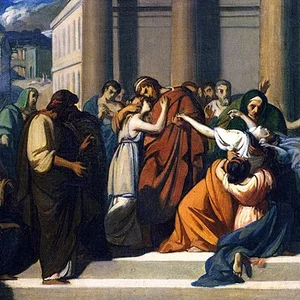
Jocasta
Queen of Thebes in Greek mythology, Jocasta is the mother and wife of Oedipus. Unaware of the true identity of the man she had married, she took her own life upon the revelation of the incest. Her story is at the heart of Sophocles' tragedy Oedipus Rex.
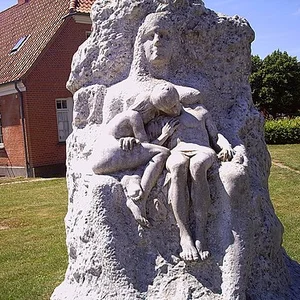
Jörð
Jörð (“the Earth”) is a goddess of Norse mythology, the personification of the Earth. A giantess or goddess depending on the source, she is one of Odin's companions and the mother of Thor, the god of thunder.
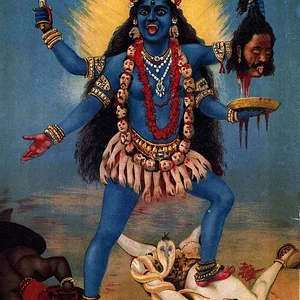
Kali
A Hindu goddess rooted in Vedic and Tantric tradition, Kali is the fierce and destructive aspect of the goddess Durga. Venerated by the people of India since antiquity, she embodies both the destruction of evil and cosmic renewal. Her complex figure symbolizes the cycle of death and rebirth.

Kuntî
Kuntî is a major figure in the Indian epic of the Mahâbhârata. Mother of the Pândava, she is known for having obtained a boon granting her the power to conceive children by gods. She embodies devotion, maternal sacrifice, and wisdom in the Hindu tradition.
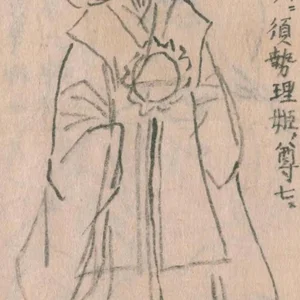
Kushinadahime
A divine princess of Japanese Shinto mythology, Kushinadahime is known through the Kojiki (712 AD) and the Nihon Shoki (720 AD), two imperial Japanese chronicles recording oral traditions that are far older. According to these sacred texts, she was rescued from the eight-headed serpent Yamata no Orochi by the god Susanoo, who then took her as his wife.
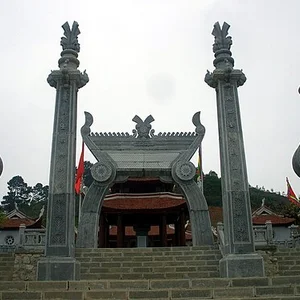
Lạc Long Quân
Lạc Long Quân, a semi-legendary figure of Vietnamese mythology, is regarded as one of the founding ancestors of the Vietnamese people [1]. According to the legend of the “sack of a hundred eggs,” he united with Âu Cơ to beget a hundred sons, the eldest of whom became the first Hùng King [1]. He is said to have ruled the legendary state of Xích Quỷ before the founding of Văn Lang [1].
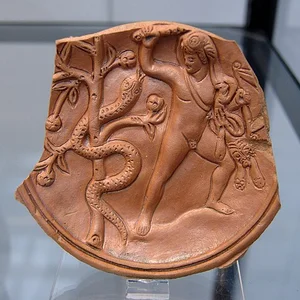
Ladon
Ladon is a dragon from Greek mythology tasked with guarding the golden apples of the Garden of the Hesperides. Often described as a many-headed creature whose sleep was eternally watchful, he was defeated during the eleventh of the Labors of Heracles.
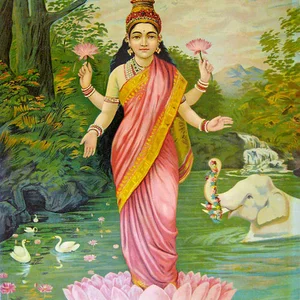
Lakshmi
Hindu goddess of prosperity, fortune, and beauty, venerated in the Vedic tradition since antiquity. Consort of the god Vishnu, she symbolizes abundance, grace, and good fortune in the mythology of Indian civilization.
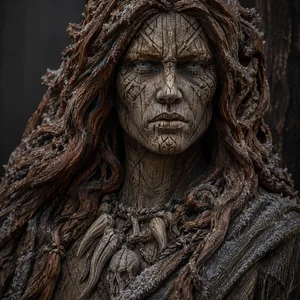
Laufey
Laufey, also called Nál, is a figure from Norse mythology known as the mother of the god Loki. Medieval sources present her as a giantess (or goddess), wife of the giant Fárbauti.
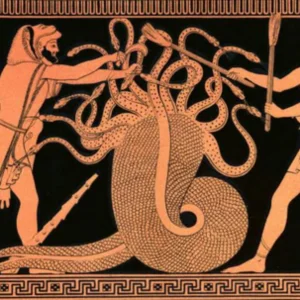
Lernaean Hydra
An aquatic monster from Greek mythology, the Lernaean Hydra was a multi-headed serpent whose heads would grow back two-fold whenever they were cut off. It was slain by Heracles during his second labor, with the help of his nephew Iolaus.
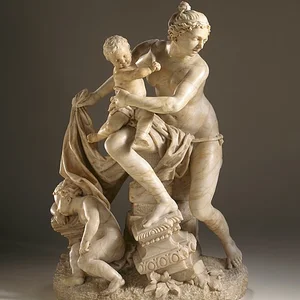
Leto
A Titaness of Greek mythology, Leto is the mother of Apollo and Artemis, born of her union with Zeus. Pursued by a jealous Hera, she gave birth on the island of Delos after a long wandering.
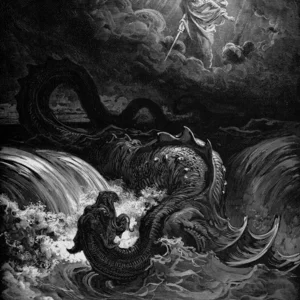
Leviathan
A sea monster from biblical texts and the mythologies of the ancient Near East, Leviathan embodies primordial chaos and the forces of evil. Described as a gigantic sea serpent, it appears notably in the Book of Job and the Psalms. During the Middle Ages, it became the guardian of the gates of Hell in the Christian tradition.
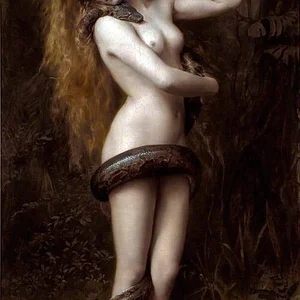
Lilith
A demonic figure rooted in Mesopotamian mythology (Lilitu), Lilith was incorporated into Jewish tradition as Adam's first wife, before Eve. Refusing to submit, she leaves the Garden of Eden and becomes a nocturnal demon threatening newborns and sleeping men.
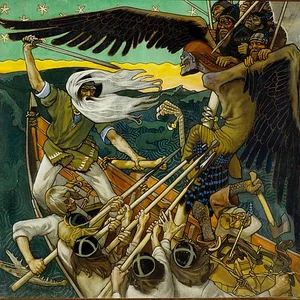
Louhi
Louhi is the powerful witch-queen of Pohjola in Finnish mythology, a central figure of the Kalevala. Mistress of magic and dark forces, she opposes the heroes Väinämöinen and Ilmarinen. She holds the Sampo, a mysterious object that brings prosperity.
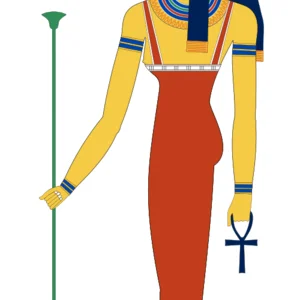
Maat
Egyptian goddess of justice, truth, and cosmic order, Maat is a central figure in the religion and moral thought of ancient Egypt. Depicted with an ostrich feather on her head, she embodies the universal principle of balance and harmony that governs the cosmos, society, and the afterlife.
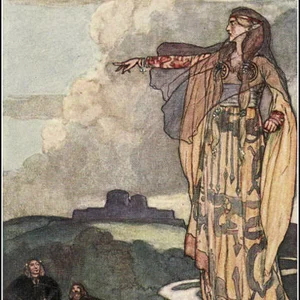
Macha
Macha is a goddess of Irish Celtic mythology, a sovereign figure linked to war, fertility, and kingship. She appears in several forms and is one of the goddesses associated with the warrior triad of the Morrígna.
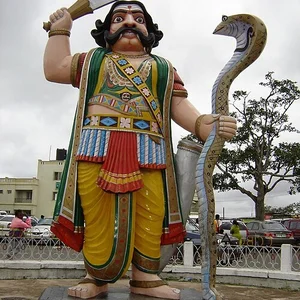
Mahishasura
Mahishasura is a buffalo-demon (asura) from Hindu mythology who, after obtaining invincibility against any man or god, conquered the three worlds and drove the gods from paradise. The goddess Durga, created from the combined energy of all the gods, ultimately defeated him after nine days of battle.
Mahuika
Mahuika is the goddess of fire in the Māori mythology of New Zealand. Guardian of the flames she carries in her fingernails, she is famous for her confrontation with the hero Māui, to whom she ultimately yields the secret of fire.
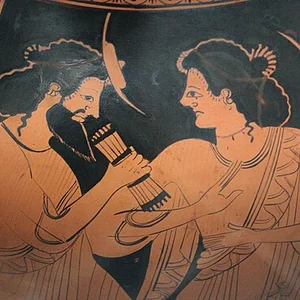
Maia
Maia is a deity of Greek mythology, daughter of the Titan Atlas and the Oceanid Pleione. She is the eldest and most beautiful of the seven Pleiades. She is best known as the mother of Hermes, whom she conceived with Zeus in a cave on Mount Cyllene.
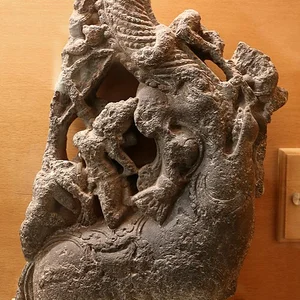
Makara
The makara is a hybrid aquatic creature from Hindu mythology, blending features of a crocodile, an elephant and a fish. It serves as the mount (vahana) of the deities Varuna, god of the waters, and Ganga, goddess of the Ganges.
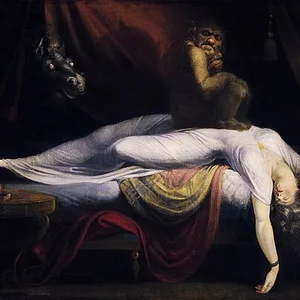
Mara
In Buddhist tradition, Mara is the supreme demon of desire and illusion. He attempted to prevent Siddhartha Gautama from attaining Enlightenment by subjecting him to temptations and trials beneath the Bodhi tree. He personifies the forces of attachment and ignorance that bind beings to the cycle of rebirth.
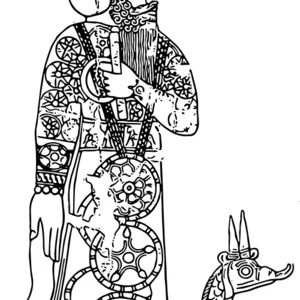
Marduk
Marduk is the supreme god of the Babylonian pantheon, tutelary deity of the city of Babylon. He embodies creation, justice, and divine sovereignty. His rise to king of the gods is narrated in the creation epic *Enûma Eliš*.
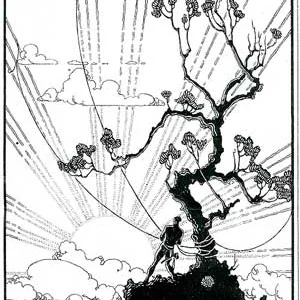
Maui-tikitiki-a-Taranga
Demigod and trickster hero of Māori and Polynesian mythology. Born prematurely and abandoned in the ocean by his mother Taranga, he accomplished extraordinary feats: fishing up the islands, slowing the sun, and stealing fire from the gods.
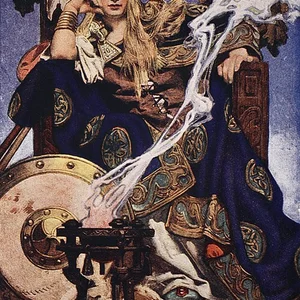
Medb
Legendary queen of Connacht in Irish mythology. A central figure of the Ulster Cycle, she leads the great cattle raid of the Táin Bó Cúailnge to seize the Brown Bull of Cooley. She embodies sovereignty, war, and fertility in the Celtic tradition.
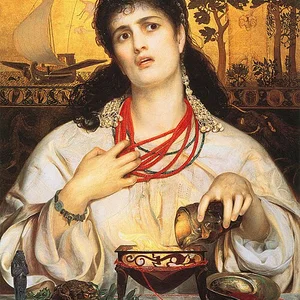
Medea
A tragic figure of Greek mythology, Medea is a sorceress from Colchis, daughter of King Aeëtes and granddaughter of Helios. Driven by love for Jason, she helps him seize the Golden Fleece, but when he betrays her, she exacts a terrible revenge by killing her own children.

Menā
Menā is a goddess of Hindu mythology, the wife of Himavat, the personification of the Himalayas, and queen of the mountains. Mother of the great goddess Pārvatī as well as of Gangā and Mount Maināka, she is celebrated in the Purāṇas as the mind-born daughter (mānasaputrī) of the Pitṛ ancestors.
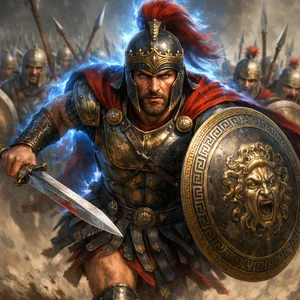
Menelaus
King of Sparta in Greek mythology, husband of Helen, the most beautiful woman in the world. The abduction of Helen by the Trojan Paris leads him to seek the aid of his brother Agamemnon and to unite the Greek kings against Troy.
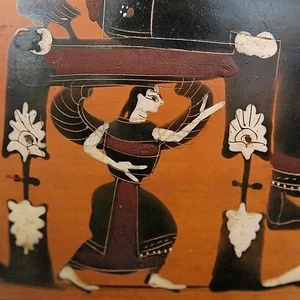
Metis
Metis is an Oceanid of Greek mythology, daughter of the Titans Oceanus and Tethys. The personification of cunning and wisdom, she was Zeus's first wife and the mother of Athena. Zeus swallowed her while she was pregnant, fearing a prophecy that their child would dethrone him.
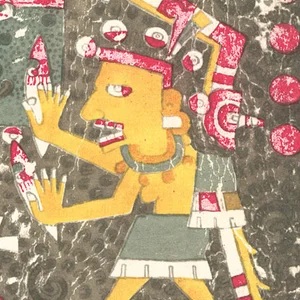
Mictecacihuatl
Aztec goddess of death and queen of Mictlan, the realm of the dead. She rules alongside her husband Mictlantecuhtli and watches over the bones of the deceased. She is celebrated today during Día de los Muertos.
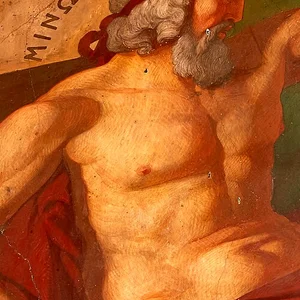
Minos
Legendary king of Crete, son of Zeus and Europa. He had the Labyrinth built to imprison the Minotaur, a monster born of the union between his wife Pasiphae and a divine bull. After his death, he became one of the judges of the Underworld.
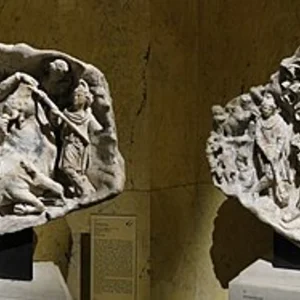
Mithra
An Indo-Iranian deity of contracts and light, Mithra was venerated in Persian Zoroastrianism before becoming a mysterious solar god of the Roman Empire. His cult, Mithraism, spread among Roman soldiers from the 1st to the 4th centuries AD.
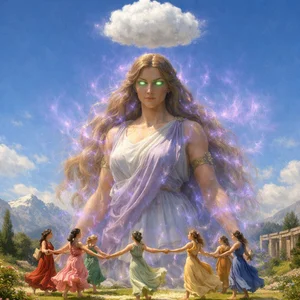
Mnemosyne
Greek Titaness personifying Memory, daughter of Ouranos and Gaia. United with Zeus for nine consecutive nights, she gave birth to the nine Muses, divine patrons of the arts and sciences. Her name is the origin of the word “mnemonic.”
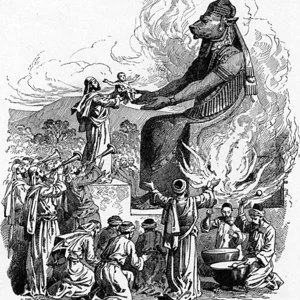
Moloch
A Canaanite Semitic deity associated with child sacrifice, Moloch is mentioned in the Bible as an abhorrent idol. Depicted as a bull or a bronze statue, he became in Judeo-Christian and literary tradition the symbol of idolatrous cruelty.
Morrigan
Irish Celtic goddess of war, fate, and death, belonging to the mythical people of the Tuatha Dé Danann. Present in medieval Irish texts that preserve much older oral traditions, she embodies sovereignty and the violence of the battlefield. She appears notably in the Ulster Cycle epic, in confrontation with the hero Cú Chulainn.

Muri-ranga-whenua
Muri-ranga-whenua is an ancestor (grandmother) of the hero Māui in the Māori mythology of New Zealand. She entrusts him with her enchanted jawbone, from which he fashions the weapon and magic fish-hook of his great deeds, notably the fishing up of the North Island and the snaring of the Sun.
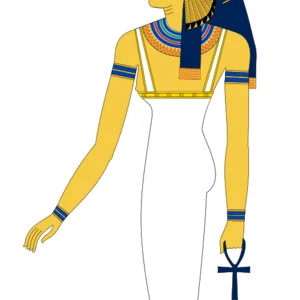
Mut
Mut is a goddess of Egyptian mythology, venerated as a mother goddess and queen of the deities. Wife of the god Amun and mother of Khonsu, she forms the Theban triad with them. Her cult was centered in Thebes, in the temple of Karnak.
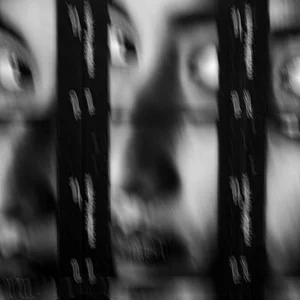
Nāmaka
Nāmaka (or Nāmaka-o-Kahaʻi) is a goddess of water and the sea in Hawaiian mythology. The elder sister and rival of the fire goddess Pele, she embodies the forces of the ocean that are eternally opposed to those of the volcano.
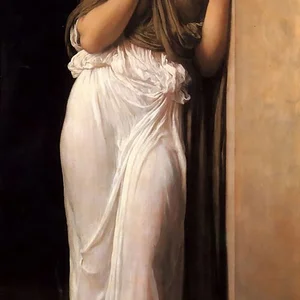
Nausicaa
Nausicaa is a Phaeacian princess from Greek mythology, the daughter of King Alcinous and Queen Arete. In Homer's Odyssey, she discovers the shipwrecked Odysseus on the shore of the island of Scheria and welcomes him to her father's court.
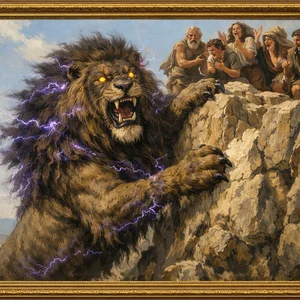
Nemean Lion
A monstrous creature of Greek mythology, the Nemean Lion terrorized the region of Nemea in Argolis. Its hide was said to be impenetrable by any weapon. Heracles strangled it with his bare hands during the first of his twelve labors, then wore its skin as armor.
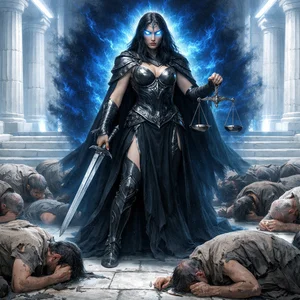
Nemesis
Greek goddess of divine vengeance and just retribution, Nemesis punishes hubris — the arrogance and excess of mortals who rise above their station. She embodies cosmic balance and immanent justice in the tradition of Greek mythology.
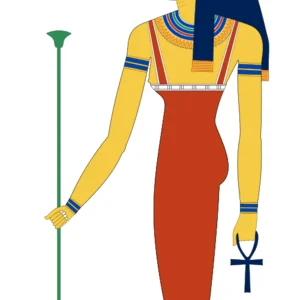
Nephthys
An ancient Egyptian goddess, Nephthys is the protector of the dead and the deceased. Sister of Isis, Osiris, and Set, she plays a fundamental role in Egyptian funerary rites. Her tradition is passed down through the Pyramid Texts and the Coffin Texts.
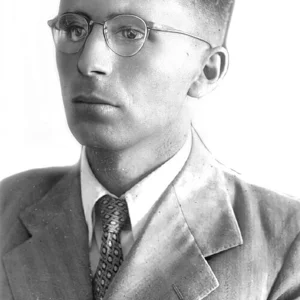
Nestis
Nestis is a deity from Greek mythology associated with water, mentioned by the philosopher Empedocles (5th century BCE) as one of the four fundamental roots of the universe. Sometimes identified with Persephone, she personifies the element of water in Empedoclean cosmology.
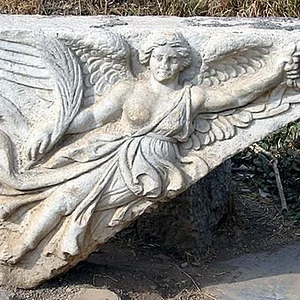
Nike
Nike is the personified goddess of victory in Greek mythology. Daughter of Pallas and Styx, she is depicted as winged, holding a laurel wreath or a palm branch. She accompanies Zeus and Athena and presides over both military and athletic victories.

Nitocris
2250 av. J.-C. — 2191 av. J.-C.
Nitocris is a legendary queen or female pharaoh of ancient Egypt, associated with the end of the Sixth Dynasty (c. 2184 BC). Mentioned by Herodotus and Manetho, she is said to have avenged the murder of her brother before taking her own life. Her historical existence remains debated.
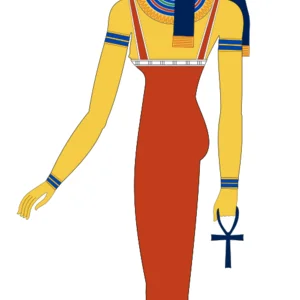
Nut
Nut is the Egyptian goddess of the sky in ancient Egyptian mythology. Her arched body, scattered with stars, forms the celestial vault that protects the earth. She swallows the sun each evening and gives birth to it again each morning.
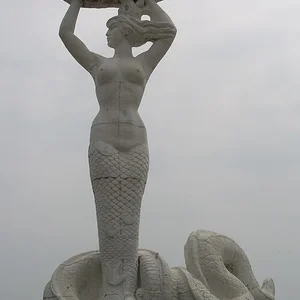
Nüwa
Creator goddess of Chinese mythology, Nüwa molded the first humans from yellow clay. She then repaired the vault of heaven by melting stones of five colors after the pillars of the sky collapsed.
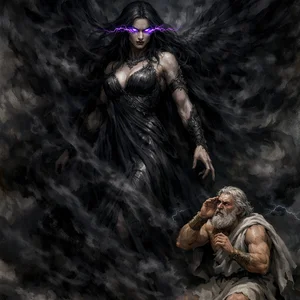
Nyx
Primordial goddess of Night in Greek mythology, born from the original Chaos. Mother of countless deities including Hypnos (Sleep), Thanatos (Death), and the Moirai (Fate). So fearsome that even Zeus refused to cross her.
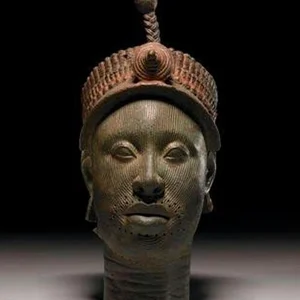
Olokun
Olokun is a Yoruba deity of the ocean depths, venerated in West Africa and in Afro-diasporic traditions. Orisha of the abyss, he symbolizes wealth, unfathomable mysteries, and the power of the deep waters.

Otrera
In Greek mythology, Otrera is a queen of the Amazons, the people of warrior women. As the daughter or consort of Ares, the god of war, she is presented as the mother of the famous queens Hippolyta and Penthesilea.
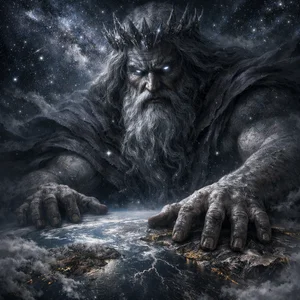
Ouranos
A primordial Greek deity personifying the starry Sky, Ouranos is the husband of Gaia (the Earth) and the father of the Titans, the Cyclopes, and the Hecatoncheires. Hated by the children he refused to release, he was castrated by his son Cronus, giving rise to Aphrodite according to the Hesiodic tradition.
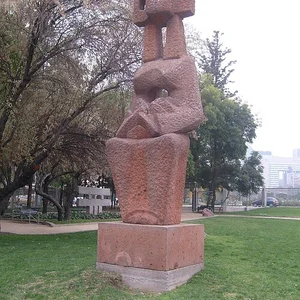
Pachamama
A major deity of the Andean peoples, particularly the Inca, Pachamama is the Earth Mother — goddess of fertility, agriculture, and the cycle of seasons. Venerated since pre-colonial times, she embodies the nourishing earth and is the subject of ritual offerings still practiced today in the Andes.
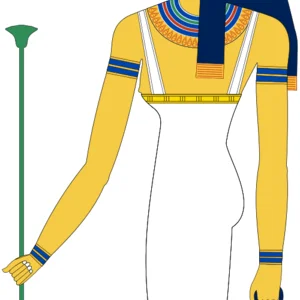
Pakhet
Pakhet (“she who scratches”) is a lioness goddess of Egyptian mythology, a deity of the hunt associated with the desert and the wadis. A protective figure with a warlike nature, she was identified by the Greeks with Artemis during the Ptolemaic period.
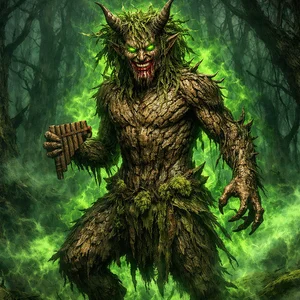
Pan
Greek deity of wild nature, shepherds, and flocks, Pan is depicted as half-man, half-goat. Inventor of the reed flute (syrinx), he embodies the uncontrollable forces of nature and is the origin of the word "panic."

Papatuanuku
Papatuanuku is the Earth Mother of Māori cosmogony, a central figure passed down through oral tradition in Polynesia. Wife of Ranginui (Sky Father), her separation from him by their children gave birth to the world as the Māori conceive it.
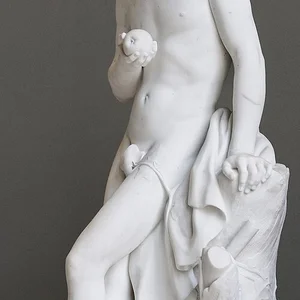
Paris
Trojan prince, son of Priam and Hecuba, Paris triggers the Trojan War by abducting Helen, wife of the Spartan king Menelaus. His judgment among the three goddesses determines the fate of Troy.
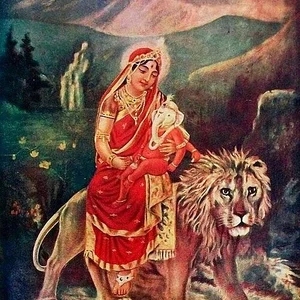
Parvati
Pārvatī is a major goddess of the Hindu tradition, daughter of the mountain god Himavat and consort of Shiva. Venerated as the goddess of fertility, maternal love, and devotion, she embodies the divine feminine energy (Shakti). Her figure appears in the great Sanskrit epics and the Purāṇas, texts composed between the 4th and 12th centuries CE.

Pasiphae
Pasiphae is a figure from Greek mythology, daughter of Helios and wife of Minos, king of Crete. Struck by an unnatural passion for a bull sent by Poseidon, she gave birth to the Minotaur — half man, half bull — who was imprisoned in the Labyrinth built by Daedalus.
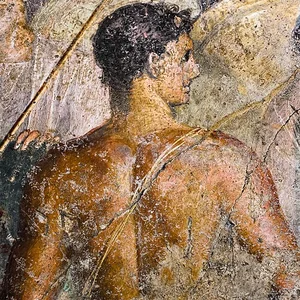
Patroclus
Greek hero of mythology and faithful companion of Achilles during the Trojan War. After donning Achilles' armor to restore the Greeks' courage, he is killed by Hector, triggering his friend's furious revenge.
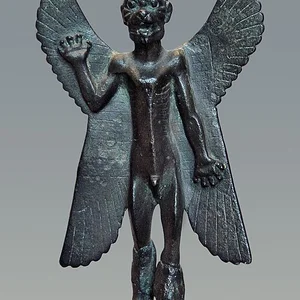
Pazuzu
Pazuzu is a Mesopotamian demon of the evil wind, depicted with a canine face, raptor wings, and a hybrid body. Paradoxically, he was invoked as a protector against Lamashtu, the demon of childbirth. His image adorned amulets to protect pregnant women and newborns.
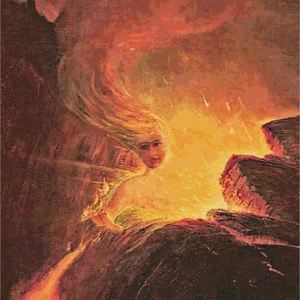
Pele
Goddess of fire, volcanoes, and creation in Hawaiian mythology, Pele is a central figure in Polynesian oral tradition. She is said to dwell in the Halemaʻumaʻu crater of the Kīlauea volcano on the island of Hawaiʻi. Her myth, passed down orally by the Hawaiian people, explains the formation of the volcanic islands of the Pacific.
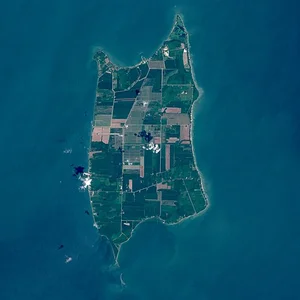
Peleus
Hero of Greek mythology, king of Phthia in Thessaly. Son of Aeacus and grandson of Zeus, he is famous for his marriage to the Nereid Thetis and for being the father of Achilles.
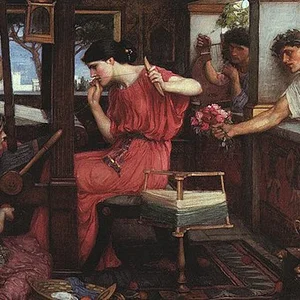
Penelope
A figure from Greek mythology, wife of Odysseus and mother of Telemachus. During her husband's twenty-year absence, she fends off her suitors with a famous trick: each night she unravels the shroud she weaves by day. She embodies faithfulness, patience, and female intelligence in the Homeric epic.
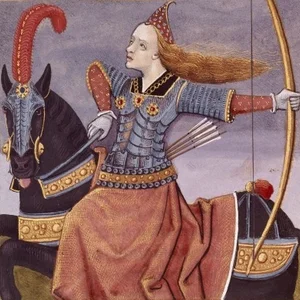
Penthesilea
Queen of the Amazons in Greek mythology, daughter of Ares and Otrera. According to the epic tradition, she led her warrior women to the aid of Troy after Hector's death and faced Achilles in single combat, who killed her even as he fell in love with her.
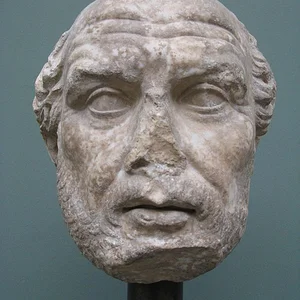
Phidias
499 av. J.-C. — 429 av. J.-C.
Phidias is considered the greatest sculptor of ancient Greece in the 5th century BC. He created the chryselephantine statue of Athena Parthenos and the statue of Zeus at Olympia, counted among the Seven Wonders of the Ancient World.
Pisistratus
Youngest son of Nestor, king of Pylos, Pisistratus is a character in Homer's Odyssey. He welcomes Telemachus at Pylos and accompanies him to Sparta to meet Menelaus. A figure of friendship and hospitality, he embodies the aristocratic virtues of the Greek epic.

Polybus
In Greek mythology, Polybus is the king of Corinth who takes in and raises Oedipus, abandoned as a child, knowing nothing of his true origins. Oedipus believes himself to be his legitimate son, which drives him to flee Corinth to escape the oracle foretelling that he will kill his father and marry his mother.
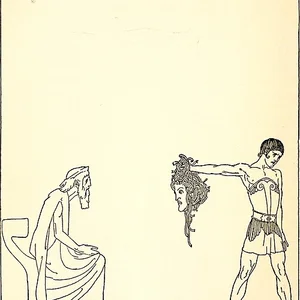
Polydectes
King of the island of Seriphos in Greek mythology, son of Magnes. Consumed by desire for Danaë, he sent her son Perseus to retrieve the head of the Gorgon Medusa in order to get rid of him. Upon his return, Perseus turned Polydectes to stone by showing him Medusa's head.
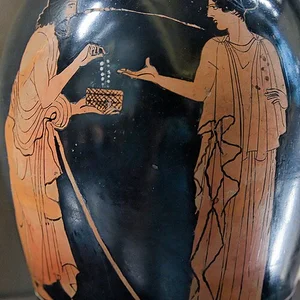
Polynices
Polynices is a figure from Greek mythology, the son of Oedipus and Jocasta, and brother of Eteocles, Antigone, and Ismene. His conflict with his brother over the throne of Thebes triggers the war of the Seven Champions and inspires Sophocles's tragedy.
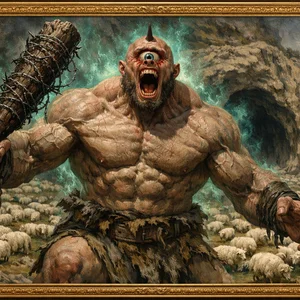
Polyphemus
A one-eyed Cyclops, son of Poseidon and the nymph Thoosa, Polyphemus is one of the monstrous giants of Greek mythology. Famous for imprisoning Odysseus and his companions in his cave, he is ultimately blinded by the hero, who outsmarts his revenge by calling himself “Nobody.”
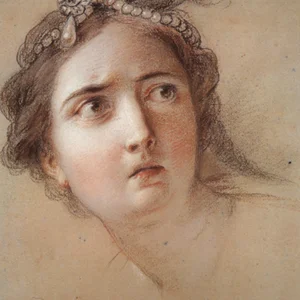
Potiphar's Wife
Biblical character from the Old Testament, wife of Potiphar, captain of Pharaoh's guard. She attempts to seduce Joseph, son of Jacob, and, after being rejected, falsely accuses him of assault, leading to Joseph's imprisonment.
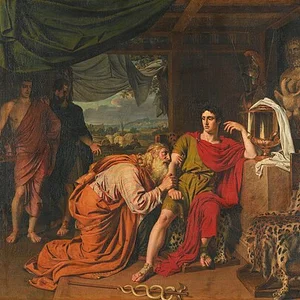
Priam
Priam is the last king of Troy in Greek mythology, father of fifty sons including Hector and Paris. His reign is defined by the Trojan War, triggered by the abduction of Helen. He dies during the fall of the city, killed by Neoptolemus.
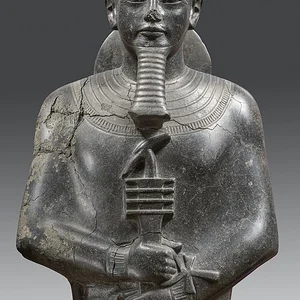
Ptah
Ptah is one of the oldest and most important gods of ancient Egypt, a creator god and patron of craftsmen and architects. Venerated at Memphis since the Old Kingdom, he embodies creation through thought and speech. His triad with Sekhmet and Nefertum forms the heart of the Memphite cult.
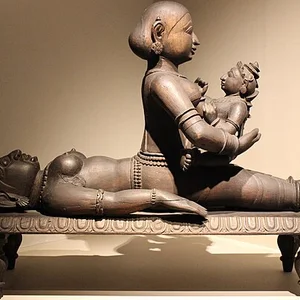
Putana
Putana is a demoness from Hindu mythology, sent by King Kamsa to kill the infant Krishna by nursing him with poisoned milk. Krishna, recognizing her divine nature, slew her while granting her spiritual liberation.
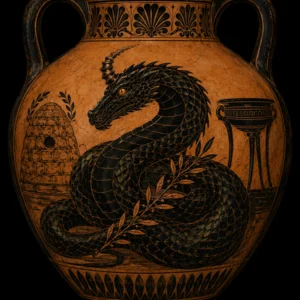
Python
A massive serpent-dragon of Greek mythology, guardian of the sanctuary of Delphi. Slain by the god Apollo, who seized the site and established the famous oracle there. Its name was given to the Pythia, the prophetic priestess of Apollo.
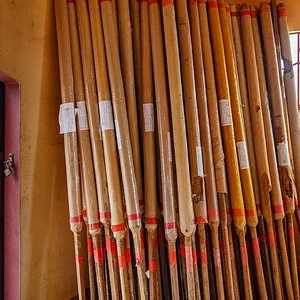
Qilin
A fabulous creature of Chinese mythology, the Qilin is a benevolent chimera with the body of a deer, horse's hooves, and dragon's scales, often nicknamed the “unicorn of the East.” A creature of good omen, it heralds the birth or death of a sage and embodies peace and prosperity.
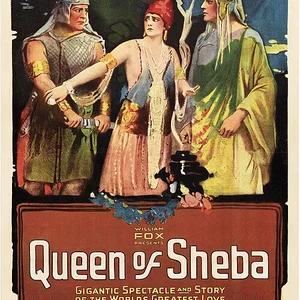
Queen of Sheba
Legendary ruler mentioned in the Bible, the Quran, and Ethiopian tradition. She is said to have visited King Solomon in Jerusalem, drawn by his wisdom. An iconic figure of exchange between ancient Arabia, Africa, and the Near East.
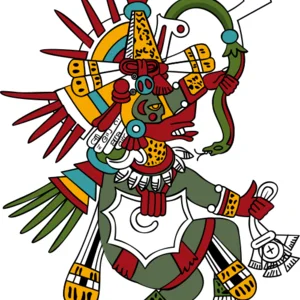
Quetzalcoatl
Quetzalcoatl, the "Feathered Serpent," is one of the most important deities in Mesoamerica. Venerated by the Aztecs and the Toltecs, he is the god of wind, wisdom, and creation. His figure spans several pre-Hispanic civilizations across more than two millennia.
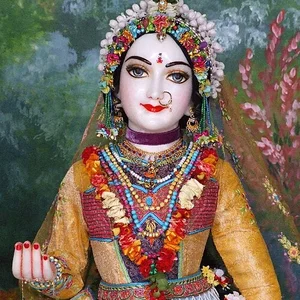
Radha
A central figure in Hindu tradition, Radha is the divine companion of Krishna and the embodiment of pure, absolute love (bhakti). Rooted in Vedic culture and popularized through medieval Sanskrit texts, she symbolizes the human soul seeking union with the divine. Her legend, passed down primarily through oral tradition before being set in writing in texts such as the Gita Govinda (12th century), lies at the heart of Vaishnava spirituality.

Raijin
Raijin is the god of thunder and lightning in Japanese Shinto mythology. He is depicted as a demon surrounded by drums that he strikes to produce thunder. Often paired with Fūjin, the god of wind, he stands as a guardian at the gates of major Buddhist and Shinto temples.
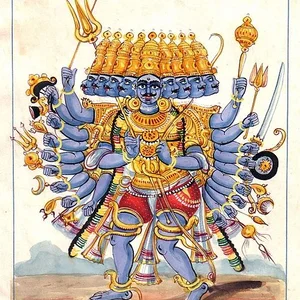
Ravana
Ravana is the ten-headed demon king of Lanka in the Hindu epic the Ramayana. As the principal antagonist, he abducts Sita, the wife of Rama, triggering a cosmic war. Despite his demonic nature, he is recognized as a scholar, accomplished musician, and devoted worshipper of Shiva.
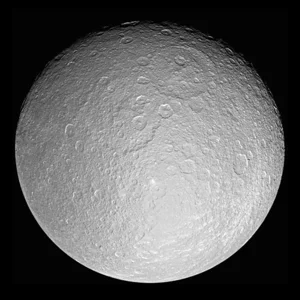
Rhea
Titaness of Greek mythology, daughter of Uranus and Gaia, wife of Cronus. Mother of the six great Olympian gods, she saved Zeus by substituting a swaddled stone for the infant to deceive Cronus. Identified with Cybele, she is venerated as the Great Mother of all the gods.
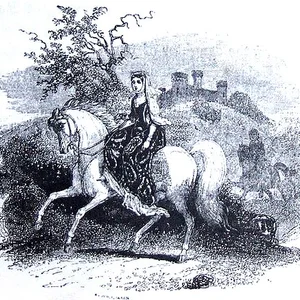
Rhiannon
A Welsh goddess from Celtic mythology, Rhiannon appears in the Mabinogion, a collection of Welsh prose tales compiled around the 11th–12th centuries from older oral traditions. A figure of the Otherworld (Annwn), she is associated with white horses, magic, and sovereignty.
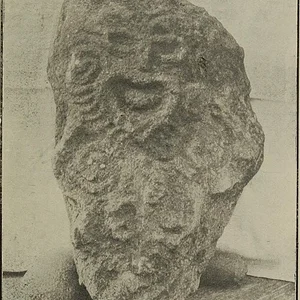
Rongo
Rongo is a major deity of Polynesian mythology, venerated especially by the Māori of New Zealand. God of peace, agriculture, and cultivated plants, he is one of the great atua (gods) born of the union of Ranginui (the sky) and Papatūānuku (the earth). He symbolizes harmony and fertility, in contrast to his brother Tū, god of war.
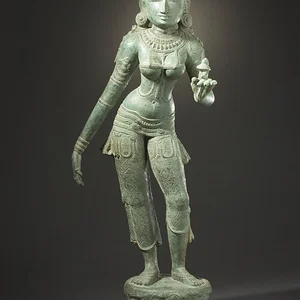
Rukmini
Rukmini is the principal wife of Krishna and the goddess of prosperity in Hinduism. A princess of the kingdom of Vidarbha, she eloped with Krishna to escape a forced marriage, symbolizing divine love and absolute devotion.
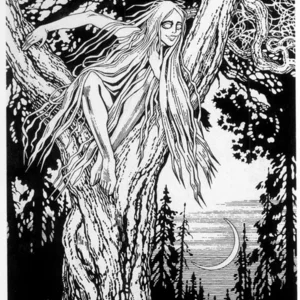
Rusalka
The rusalka is a female water spirit from Slavic folklore, often depicted as a young woman with long hair haunting rivers, lakes, and ponds. According to tradition, she is said to be the soul of a drowned woman or of a young girl who died before marriage, luring men down into the depths.

Sammu-ramat (Semiramis)
Regent of the Assyrian Empire around 811–808 BC, Sammu-ramat held power in the name of her son Adad-nirari III. A historical figure, she quickly became a legendary character in the Greek world, symbolizing the warrior queen and great builder of the ancient Near East.
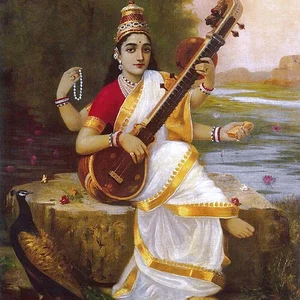
Sarasvati
A major goddess of the Hindu tradition, Saraswati is venerated as the deity of knowledge, speech, the arts, and music. Rooted in the Vedic civilization of ancient India, she is mentioned as early as the hymns of the Rig-Veda (c. 1500–1200 BCE). She embodies the ideal of pure knowledge and spiritual creativity.
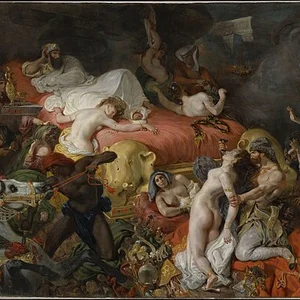
Sardanapalus
Sardanapalus is a legendary king of Assyria, a figure from ancient Greek tradition. Renowned for his extreme luxury and dissolute lifestyle, he is said to have chosen to die in flames rather than surrender to his enemies. His tragic fate inspired numerous works of art, most notably the painting by Eugène Delacroix.
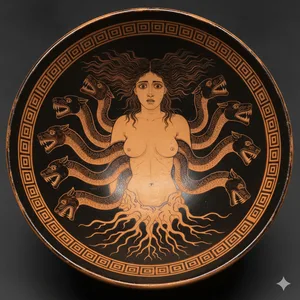
Scylla
A sea monster of Greek mythology, Scylla was a nymph transformed into a six-headed creature by the sorceress Circe. She devours sailors from her rock in the Strait of Messina, forcing Odysseus to choose between her and the whirlpool Charybdis.
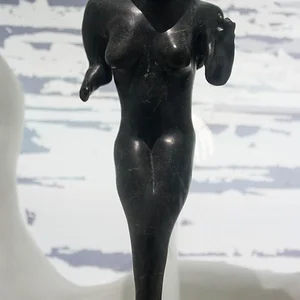
Sedna
Sedna is the Inuit goddess of the sea and marine animals, drawn from the oral traditions of Arctic peoples (Inuit, Yupik). A central figure in circumpolar cosmology, she rules the ocean depths and determines the abundance or scarcity of sea game.
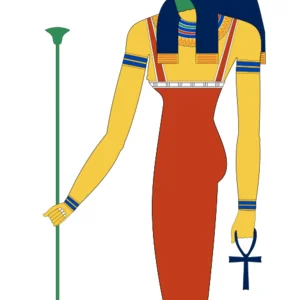
Sekhmet
A lioness goddess of ancient Egyptian mythology, Sekhmet embodies both warlike destruction and healing power. Daughter of Ra, she is the protector of the pharaoh on the battlefield and the patron of physicians. Her cult, attested as far back as the Old Kingdom, was especially vibrant in Memphis.
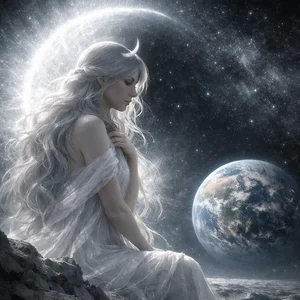
Selene
A Greek Titaness personifying the Moon, Selene crosses the sky each night on her silver chariot drawn by white horses. Daughter of Hyperion and Theia, she is the sister of Helios (the Sun) and Eos (the Dawn). Her passion for the shepherd Endymion, whom she caused to fall into an eternal sleep so she could gaze upon him forever, is one of the most celebrated myths in the Greek tradition.
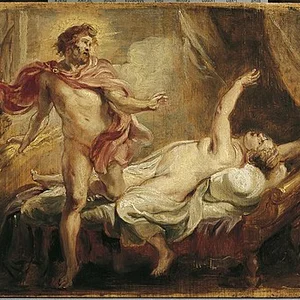
Semele
Semele is a princess of Thebes in Greek mythology, daughter of Cadmus and Harmonia. Loved by Zeus, she becomes the mother of Dionysus, god of wine. She perishes struck by lightning after asking to see Zeus in all his divine splendor.
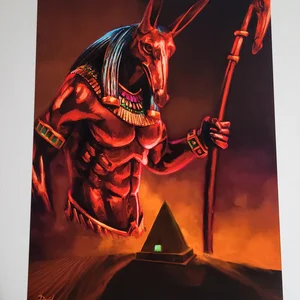
Set
Set is the Egyptian god of chaos, storms, and the desert. Brother of Osiris, whom he murdered to seize the throne of Egypt, he was later defeated by his nephew Horus. An ambivalent figure, he was also venerated as the protector of Ra against the serpent Apophis.
Seth
3873 av. J.-C. — 2957 av. J.-C.
Egyptian god of chaos, storms, and the desert, Seth is one of the most complex deities in the Egyptian pantheon. Brother of Osiris, whom he murdered, he embodies primal violence but also the protective force necessary for cosmic order.
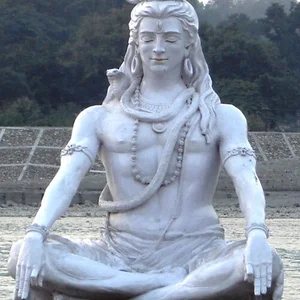
Shiva
Shiva is one of the three principal deities of Hinduism, forming the Trimūrti alongside Brahmā and Vishnu. God of destruction and transformation, he also embodies meditation, the arts, and fertility. His cult, rooted in the Indus Valley civilization, is one of the oldest in the world.
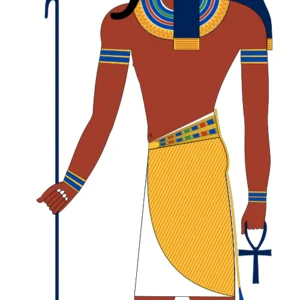
Shou
Shou is the ancient Egyptian deity personifying air and light. Son of Ra and husband of Tefnut, he supports the vault of the sky by separating Nut (the sky) from Geb (the earth). He embodies the vital space between the cosmos and the earthly world.
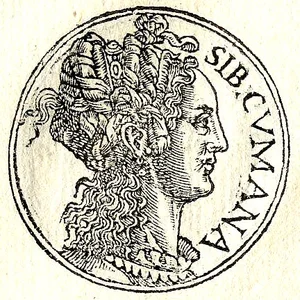
Sibyl of Cumae
A legendary prophetess of Antiquity, she presided over Apollo's oracle at Cumae, in Campania. According to tradition, she lived for a thousand years and sold the Sibylline Books to King Tarquin. Virgil makes her the guide of Aeneas in the Underworld in the Aeneid.
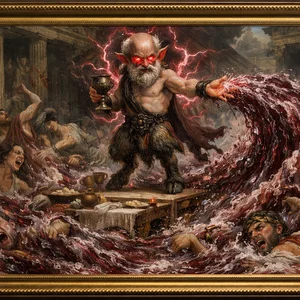
Silenus
A deity of Greek mythology, Silenus is the old satyr companion and foster-father of Dionysus, god of wine. Perpetually drunk yet reputed for profound wisdom, he is often depicted riding a donkey, unable to stand on his own. His paradoxical figure — drunkenness as a path to truth — resonated throughout Greek and Roman Antiquity.
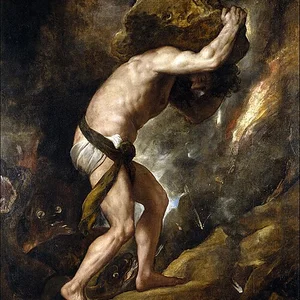
Sisyphus
Legendary king of Corinth, Sisyphus is famous for having outsmarted the gods on several occasions. Condemned by Zeus to the Underworld, he must eternally push a boulder to the top of a mountain, from which it rolls back down endlessly.
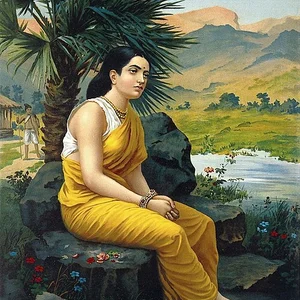
Sita
Central heroine of the Ramayana, the Sanskrit epic of the Hindu tradition, Sita is the wife of Rama and the adopted daughter of King Janaka. Born of the earth according to tradition (her name means "furrow"), she embodies purity, faithfulness, and virtue in Indian culture.
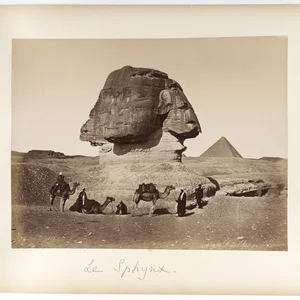
Sphinx
A monster from Greek mythology with the body of a lion and the head of a woman, the Sphinx guarded the gates of Thebes. It posed a deadly riddle to travelers and devoured those who failed to answer. Defeated by Oedipus, it threw itself off a cliff.
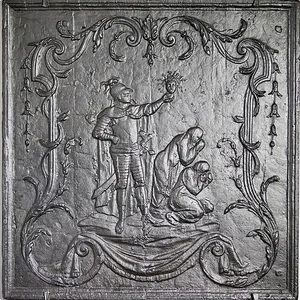
Stheno
In Greek mythology, Stheno is the eldest of the three Gorgons, daughters of the sea deities Phorcys and Ceto. Unlike her sister Medusa, she is immortal. Her name means “the strong one” or “the mighty one.”
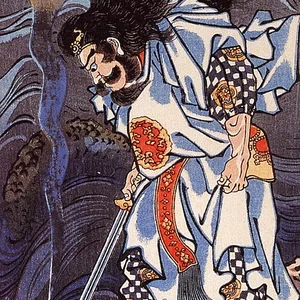
Susanoo
Susanoo is the god of storms in Japanese Shinto, son of Izanagi and brother of Amaterasu. Banished from the heavens, he accomplished the feat of slaying the eight-headed serpent Yamata no Orochi, discovering within its body the sacred sword Kusanagi.
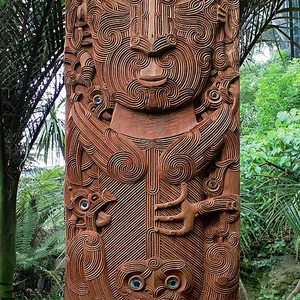
Tane
Tāne is the god of the forest and birds in Māori mythology. Son of Rangi (the Sky) and Papa (the Earth), he separated them to let light into the world. He is also the creator of the first woman, shaped from the red clay of the earth.
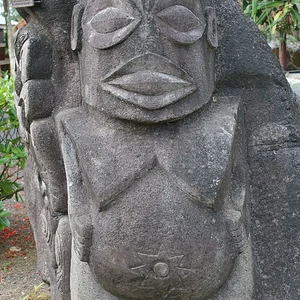
Tangaroa
Tangaroa is the god of the sea and oceans in Polynesian mythology, venerated across the Pacific (Māori, Samoa, Tahiti, Hawaii). Son of Rangi (sky) and Papa (earth), he rules over the ocean depths and is often regarded as the creator of many islands and living beings.
Tantalus
Legendary king of Lydia or Phrygia, son of Zeus, Tantalus was condemned to the Underworld for offending the gods by serving them the flesh of his son Pelops. His eternal torment — surrounded by water and fruit forever out of reach — gave rise to the word "tantalize."
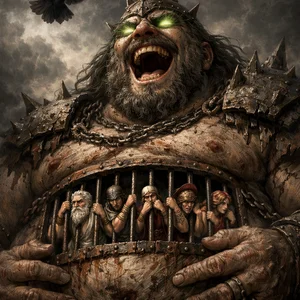
Tartarus
In Greek mythology, Tartarus is both a primordial deity born of Chaos and a cosmic place: the deepest abyss in the universe, located beneath the Underworld, where Zeus imprisoned the defeated Titans and where the greatest criminals atone for their crimes for eternity.
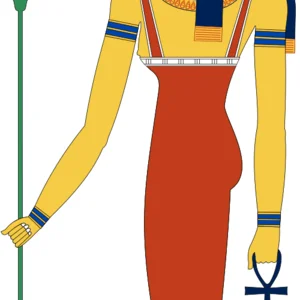
Tefnut
Tefnut is an Egyptian goddess with the head of a lioness, personification of moisture and dew. Daughter of Ra and sister-wife of Shu, she is part of the Ennead of Heliopolis. She embodies life-giving rain and plays a role in maintaining cosmic balance.

Telegonus
Son of Odysseus and the sorceress Circe, Telegonus is a figure from Greek mythology. He accidentally killed his father Odysseus without recognizing him, thus fulfilling a tragic prophecy.
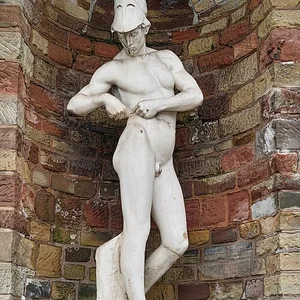
Telemachus
Telemachus is the son of Odysseus and Penelope in Greek mythology. A young man at the time of his father's return to Ithaca, he sets out to search for him and then helps him eliminate the suitors besieging his mother.
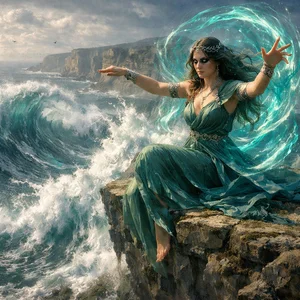
Tethys
Titaness of the sea and freshwaters in Greek mythology, daughter of Gaia and Ouranos. Wife of the Titan Oceanus, she is the mother of the 3,000 Oceanids and the great river gods, personifying the nourishing waters of the world.
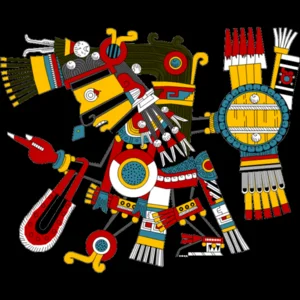
Tezcatlipoca
Tezcatlipoca, "Smoking Mirror," is one of the major deities of the Aztec pantheon. God of the night, the starry sky, sorcery, and fate, he is the eternal rival of Quetzalcóatl. His emblematic attribute is an obsidian mirror in which he reads the thoughts of men.
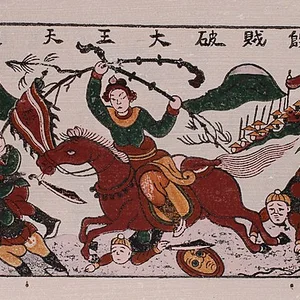
Thánh Gióng
Legendary hero of Vietnam, one of the Four Immortals (Tứ bất tử) of Vietnamese popular belief. A miraculous child who remained mute until the age of three, he suddenly awakens to repel a foreign invasion, then ascends to the heavens. He symbolizes resistance against invaders and the strength of youth.
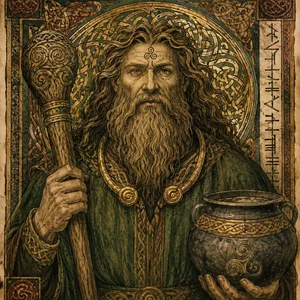
The Dagda
A major deity of Irish mythology, father and chief of the Tuatha Dé Danann. God of fertility, wisdom, and abundance, he wields a colossal club and owns a magical cauldron with inexhaustible provisions.
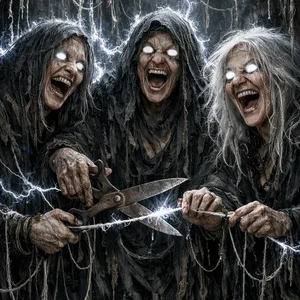
The Moirai
Greek goddesses embodying Fate, the Moirai are three sisters who spin, measure, and cut the thread of life of every mortal and immortal. Daughters of Zeus and Themis according to Hesiod, they hold absolute authority over the course of all lives — an authority that no one, not even the gods, can challenge.
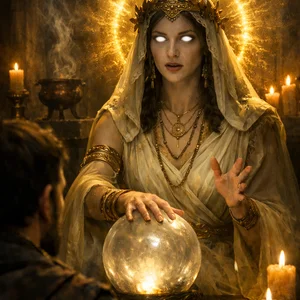
The Pythia
Priestess of Apollo at Delphi, the Pythia delivered her oracles in a trance, seated on a tripod above a fissure in the earth. A central figure in ancient Greek polytheistic religion, her oracle influenced the decisions of city-states and kings.
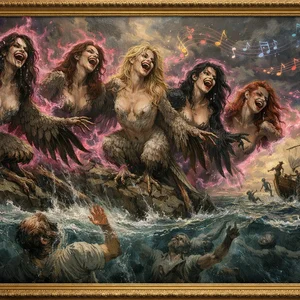
The Sirens
Hybrid creatures of Greek mythology — half-woman, half-bird (later half-fish in the Middle Ages) — whose bewitching song lures sailors to their deaths. Odysseus, lashed to the mast of his ship, is the only mortal ever to have heard them and survived.
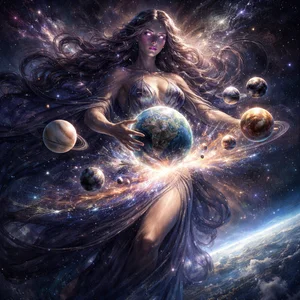
Theia
Titaness of celestial light and vision in Greek mythology. Daughter of Ouranos and Gaia, she united with her brother Hyperion and gave birth to the three great astral deities: Helios (the Sun), Selene (the Moon), and Eos (the Dawn).
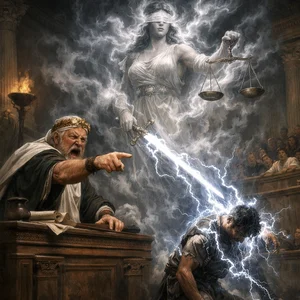
Themis
A Titaness daughter of Ouranos and Gaia, Themis personifies divine law, justice, and cosmic order in the Greek tradition. A privileged counselor of Zeus and his second divine wife, she is the mother of the Horae and the Moirai, guardians of fate and the seasons.
Thetis
Thetis is a Nereid, a sea deity of Greek mythology, daughter of Nereus and mother of the hero Achilles. She plays a central role in Homer's Iliad, interceding with the gods on behalf of her son. An embodiment of divine maternal power, she stands at the heart of Greece's great epic narratives.
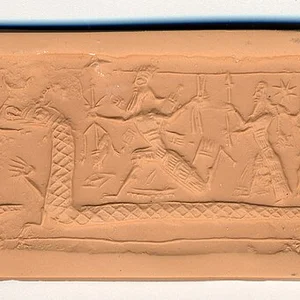
Tiamat
Primordial Babylonian goddess personifying the salt ocean and original chaos. In the Enuma Elish, the Mesopotamian creation epic, she is defeated by the god Marduk, whose body is used to create the sky and the earth.
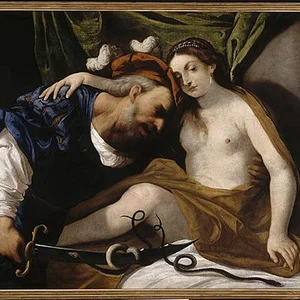
Tiresias
The blind seer of Greek mythology, Tiresias was the most celebrated prophet of Thebes, serving Apollo. Struck blind by the gods, he received in return the gift of prophecy and an exceptionally long life. He appears in many of the greatest works of antiquity, from Sophocles to Homer.
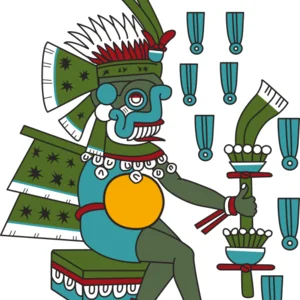
Tlaloc
Tlaloc is the Aztec god of rain, water, and fertility. Venerated since the pre-Classic Mesoamerican civilizations, he was one of the most important deities in the Aztec pantheon, associated with both life and death.
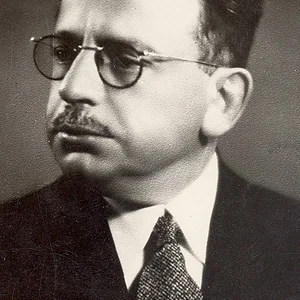
Toci
Toci, whose name means “Our Grandmother” in Nahuatl, is a mother goddess in Aztec mythology. Associated with the earth, healing, and midwives, she was venerated as the “heart of the Earth” and ranks among the major deities of the Mexica pantheon.
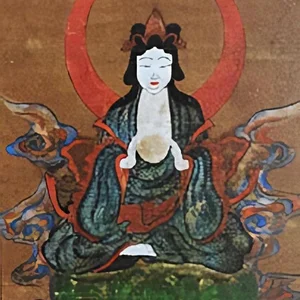
Tsukuyomi
Tsukuyomi is the god of the Moon in Japanese Shintō mythology. Born from the right eye of Izanagi during the primordial purification, he reigns over the night. His quarrel with the sun goddess Amaterasu explains the separation of day and night.
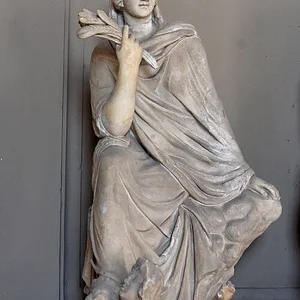
Tyche
Tyche is the Greek goddess of fortune, chance, and destiny. Daughter of Oceanus and Tethys, she personifies the whims of fate that govern the lives of mortals and the destinies of cities. Her cult spread throughout the Hellenistic world.
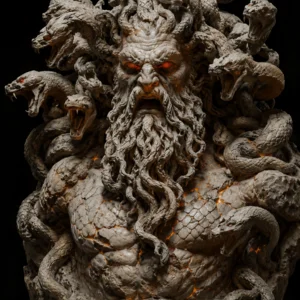
Typhon
Typhon is the ultimate monster of Greek mythology, born of Gaia and Tartarus. A giant with a hundred fire-breathing serpent heads, he challenged Zeus for dominion over the cosmos and was ultimately crushed beneath Mount Etna. He is considered the father of all monstrous creatures.
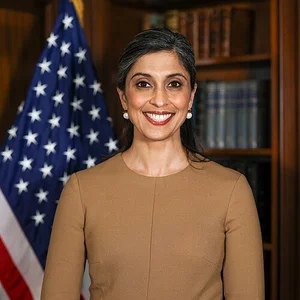
Ushas
Ushas is the goddess of the dawn in Vedic and Hindu mythology. Celebrated in the Rigveda, she personifies the rising morning light that chases away the darkness and awakens the living world.
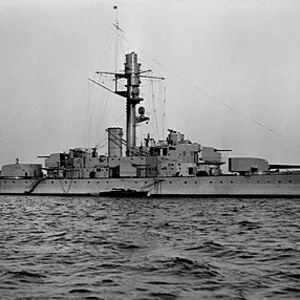
Väinämöinen
Väinämöinen is the central hero of the Kalevala, Finland's national epic. A primordial sage and shamanic bard, he embodies wisdom, magic, and music in Finnic mythology. His kantele casts spells over men, animals, and nature alike.
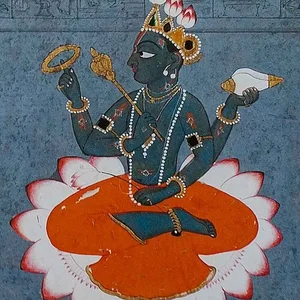
Vishnu
Vishnu is one of the three principal deities of Hinduism, forming the Trimurti alongside Brahma and Shiva. God of protection and preservation of the universe, he manifests in multiple avatars including Krishna and Rama, central figures in Indian mythology.
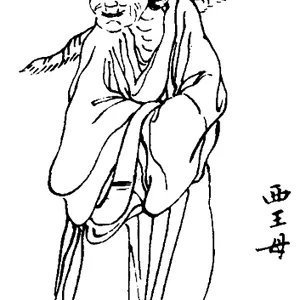
Xiwangmu
Xiwangmu, the Queen Mother of the West, is one of the great deities of Chinese mythology and religion. Guardian of the peaches of immortality, she reigns over Mount Kunlun and presides over the fate of immortals. Her cult, attested as early as the Shang dynasty, spans the entire religious history of China.
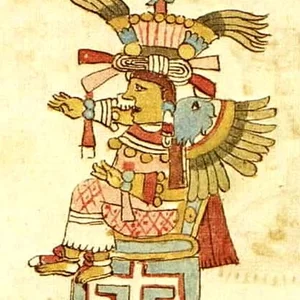
Xochiquetzal
Aztec goddess of beauty, love, fertility, and the creative arts, associated with flowers, plants, and femininity. She represents eternal youth and sensuality in the Mesoamerican pantheon.
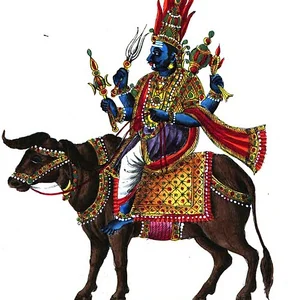
Yama
Yama is the god of death and justice in Hindu and Buddhist traditions. He rules over the realm of the dead and weighs souls to determine their rebirth according to the deeds performed during their lifetime.
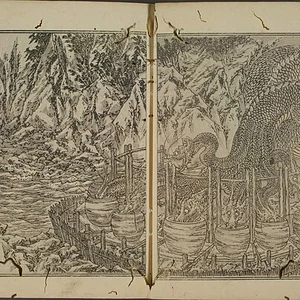
Yamata no Orochi
Yamata no Orochi is a colossal eight-headed, eight-tailed serpent-dragon from Japanese mythology. It is defeated by the storm god Susanoo, who gets it drunk on sake and beheads it, discovering inside one of its tails the sacred sword Kusanagi-no-Tsurugi.
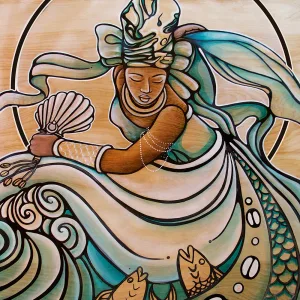
Yemanjá
Yemanjá is a female water deity from the Yoruba religion of West Africa, venerated as the mother of the gods (orishas) and protector of the sea. Carried to the Americas by the Atlantic slave trade, she became a major figure in Brazilian Candomblé and Cuban Santería.
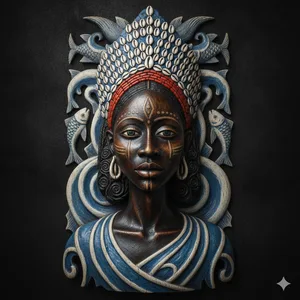
Yemoja
Yemoja is a major orisha of the Yoruba pantheon, goddess of waters and protective mother. Venerated in West Africa, she became a central figure in Afro-American religions (candomblé, santería) born of the diaspora.
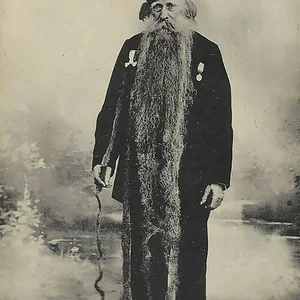
Yhi
Yhi is the goddess of the sun, light, and creation in the mythology of the Aboriginal peoples of Australia, particularly the Karraur. Asleep at the beginning of time, her awakening illuminated the world and brought all life on Earth into being.
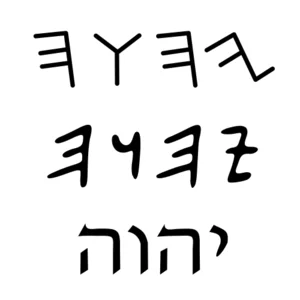
YHWH
YHWH is the divine name in the Hebrew religion, composed of four letters (yod, he, vav, he). It designates the one God of Israel, at the heart of the Abrahamic monotheistic tradition.
Antiquity(106)
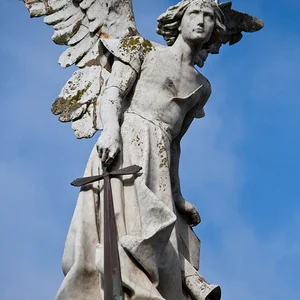
Abaddon
A biblical figure from the Book of Revelation, Abaddon is the angel-king of the bottomless pit, whose Hebrew name means 'destruction.' He commands the devastating locusts during the fifth seal and embodies the ambiguous boundary between destroying angel and demonic power.
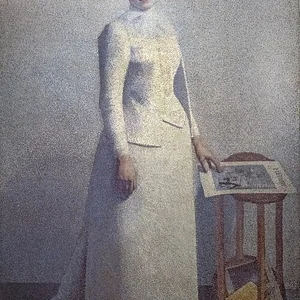
Achilles
Achilles is the greatest Greek warrior in mythology and the central hero of Homer's Iliad. Son of Thetis and Peleus, he is invulnerable except for his heel — his legendary weak point. He embodies the ideal of the Greek warrior hero, renowned for his strength, courage, and pride.
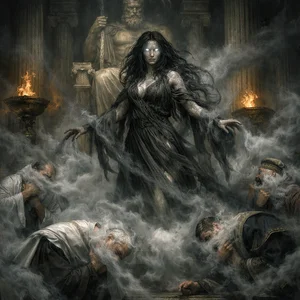
Achlys
Greek deity personifying the darkness of death and the mist that veils the eyes of the dying. Rooted in Greek mythological tradition, she ranks among the primordial entities who preceded the Olympians.
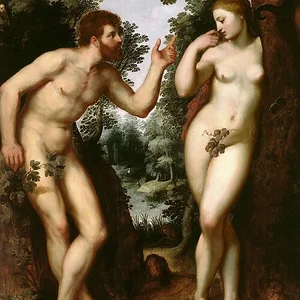
Adam and Eve
Adam and Eve are the first human beings according to biblical and Judeo-Christian tradition. Created in the image of God, they live in the Garden of Eden before committing the original sin by eating the forbidden fruit, which leads to their expulsion and marks the beginning of humanity.
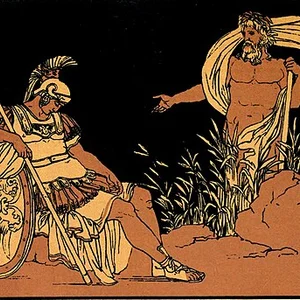
Aeneas
Hero of Greco-Roman mythology, son of Aphrodite and Anchises. Aeneas is the central figure of Virgil's Aeneid, a Latin epic recounting his journey from Troy to Italy, where he becomes the mythical ancestor of ancient Rome and the Julio-Claudian dynasty.
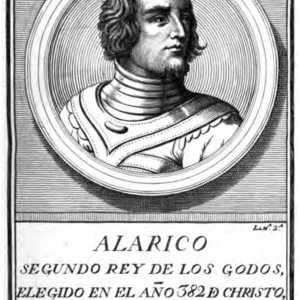
Alaric I
370 — 410
King of the Visigoths from 395 to 410, Alaric I is famous for leading the sack of Rome in 410, a symbolic event marking the beginning of the end of the Western Roman Empire.
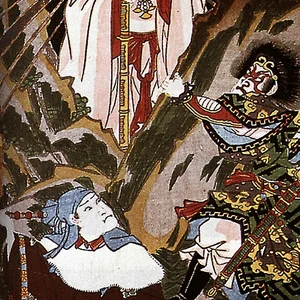
Amaterasu
Goddess of the sun and major deity of Japanese Shinto, venerated as the legendary ancestor of the imperial family. According to Japanese mythology, she is the most important of the kami (spirits) in the Shinto pantheon.
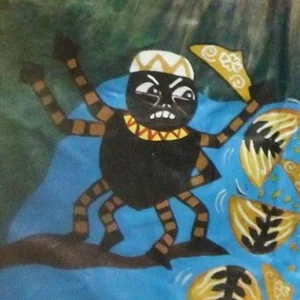
Anansi
Anansi is a cunning and mischievous spider from Akan and Ashanti mythology, originating in West Africa. A central figure in folk tales, he represents intelligence, trickery, and survival through wit. These stories crossed the Atlantic through the slave trade and continue to influence the oral traditions of the Caribbean and the Americas.
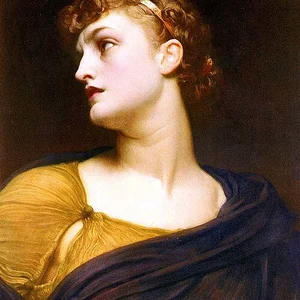
Antigone
Heroine of Greek mythology, daughter of Oedipus and Jocasta, princess of Thebes. Antigone embodies the conflict between divine law and human law by daring to defy the decree of King Creon in order to give her brother Polynices a proper burial, which leads to her condemnation to death.
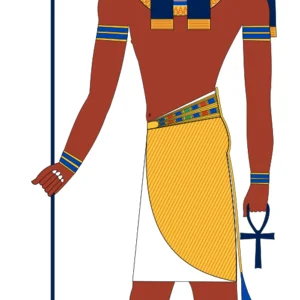
Anubis
Anubis is the funerary god of ancient Egypt, depicted with a black jackal's head. He is the protector of the dead and of cemeteries, and guides souls into the afterlife.
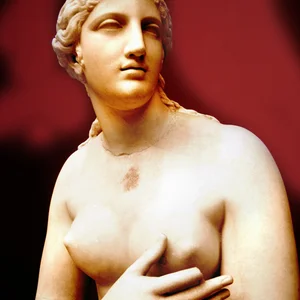
Aphrodite
Greek goddess of love, beauty, and fertility in ancient mythology. Venerated throughout Greece and the Roman Empire under the name Venus. A central figure in mythological narratives and ancient art.
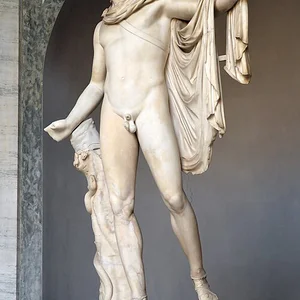
Apollo
Greek god of music, poetry, the sun, and prophecy, Apollo is one of the most important deities in Greek mythology. Son of Zeus and Leto, he embodies harmony, beauty, and knowledge. His cult spread throughout the ancient Greek world, most notably at Delphi, where his famous oracle was located.
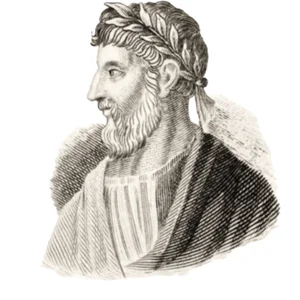
Apollonius of Rhodes
294 av. J.-C. — 214 av. J.-C.
Apollonius of Rhodes was a Greek poet and grammarian of the 3rd century BC, a major figure of Hellenistic literature. He directed the famous Library of Alexandria and composed the Argonautica, a great epic recounting the quest for the Golden Fleece by Jason and the Argonauts.
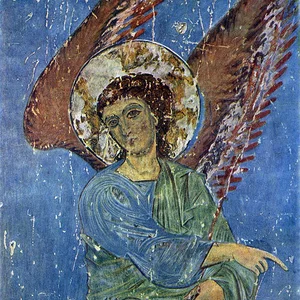
Archangel Gabriel
Archangel and divine messenger present in all three monotheistic religions. In Christianity, he announces to Mary the birth of Jesus. In Islam, he reveals the Quran to the prophet Muhammad.

Archangel Michael
Supreme archangel of the Abrahamic traditions, commander of the heavenly armies and protector of Israel in the Hebrew Bible. Victor over Satan in the Book of Revelation, he is venerated in Judaism, Christianity, and Islam.
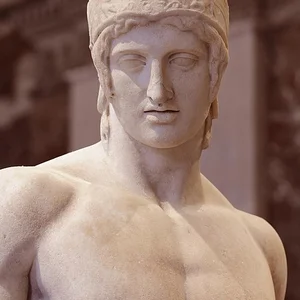
Ares
Ares is the god of war in ancient Greek mythology. Son of Zeus and Hera, he embodies violence, chaos, and the brutality of battle. He is one of the twelve major deities of Mount Olympus.
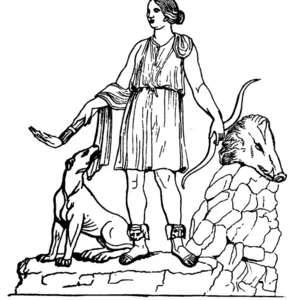
Artemis
Greek goddess of the hunt, the moon, and the wilderness, Artemis is one of the twelve major deities of Olympus. Twin sister of Apollo, she embodies independence and remains a virgin according to Greek mythology. She is the protector of young girls and wild animals.
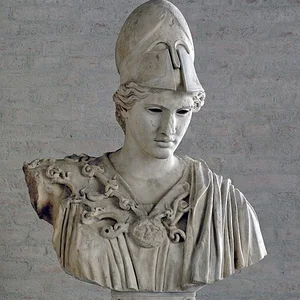
Athena
Athena is the Greek goddess of wisdom, military strategy, and the arts in ancient mythology. Patron of the city of Athens, she is depicted armed with an aegis and a spear, embodying intelligence and strategic thinking.
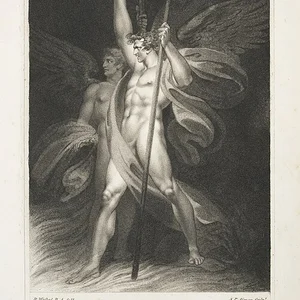
Beelzebub
An ancient Philistine deity (Baal-Zebub, "Lord of the Flies"), worshipped at Ekron. Reinterpreted in the Judeo-Christian tradition as one of the princes of demons, a central figure in medieval demonology.
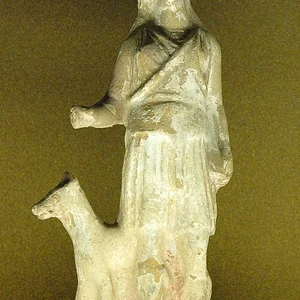
Bendis
Bendis is a Thracian goddess of the moon, the hunt, and the wild, often identified with the Greek Artemis. Her cult, introduced in Athens in the 5th century BC, was celebrated there with a public festival, the Bendideia.
Bona Dea
Bona Dea (“the Good Goddess”) is a Roman deity of fertility, healing and chastity, worshipped exclusively by women. Her secret cult excluded men, and the empress Livia had her temple on the Aventine restored and rededicated.
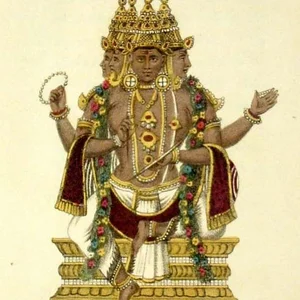
Brahma
Brahmā is the creator god in Hinduism, forming with Vishnu and Shiva the Trimūrti, the divine trinity of Hinduism. He is the master of the Vedas and cosmic knowledge, responsible for the creation of the universe and all living beings.
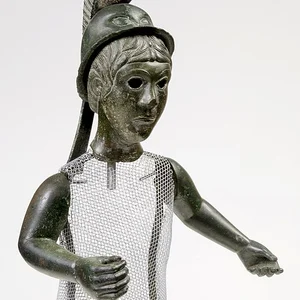
Brigantia
Brigantia is a Celtic goddess honoured in Roman Britain, notably by the **Brigantes** confederation in the north of present-day England. A tutelary and protective deity, she was associated through syncretism with the Roman **Minerva** and with **Victory**. She is often linked to the Irish goddess **Brigid**.
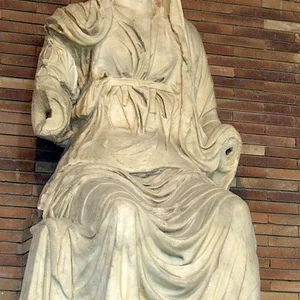
Ceres
Roman goddess of agriculture, harvests, and fertility, equivalent to the Greek Demeter. She is the origin of the word “cereals” and held a central place in Roman religion and daily life.

Chandika
Chandika, also called Chandi, is a fearsome form of the Great Goddess (Devi) in Hinduism. An embodiment of feminine energy (shakti), she is celebrated as the slayer of the buffalo-demon Mahishasura and the forces of chaos. Her worship is central to the sacred text *Devi Mahatmya*.
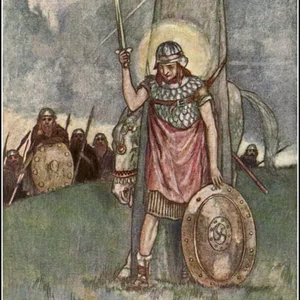
Cúchulainn
A mythological hero of the Irish tradition, Cúchulainn is the protagonist of the Ulster Cycle, a collection of Celtic legends. A legendary warrior figure, he embodies the ideal of the Celtic hero through his superhuman strength and code of honor.
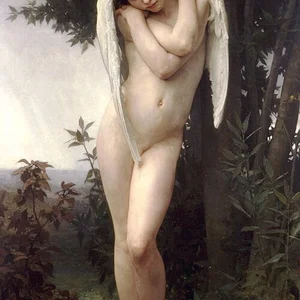
Cupid
God of love in Roman mythology, Cupid is the son of Venus and Mars (or Mercury, depending on the version). Armed with a bow and golden arrows, he strikes humans with romantic passion. His Greek equivalent is Eros.
Cybele
Cybele is the great mother goddess of Phrygian origin, mistress of wild nature, mountains, animals, and fertility. Adopted by the Greeks and then officially introduced to Rome in 204 BC under the name Magna Mater, she was honored there with a mystery cult famous for its ecstatic priests.
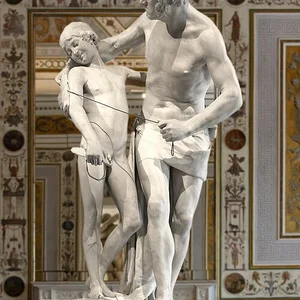
Daedalus and Icarus
Legendary figures from Greek mythology: Daedalus is a brilliantly skilled craftsman and inventor who builds the Labyrinth of Crete, while Icarus is his son. Their story illustrates the themes of ambition, disobedience, and the limits of human nature when faced with greater forces.
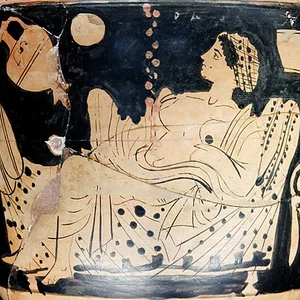
Danaë
Danaë is a princess of Argos, daughter of King Acrisius. Imprisoned by her father in a bronze chamber to prevent a prophecy, she is seduced by Zeus transformed into a shower of gold and gives birth to Perseus, the hero who will kill Medusa.
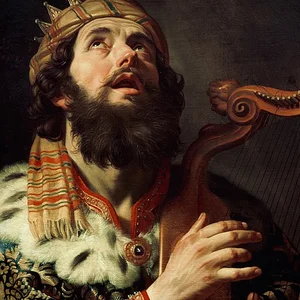
David
1038 av. J.-C. — 968 av. J.-C.
David is a major figure in the Hebrew Bible, the second king of Israel and Judah (c. 1038–968 BCE). Famous for his victory over the giant Goliath and for his psalms, he unified the Israelite kingdoms and established Jerusalem as the religious capital.
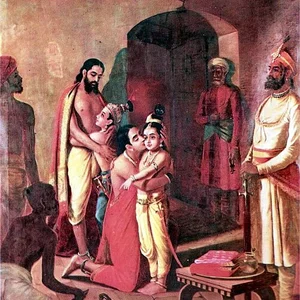
Devaki
In Hindu mythology, Devaki is the mother of the god Krishna, one of the major incarnations of Vishnu. Imprisoned by her brother, the tyrant Kamsa, she saw her first children killed before giving birth to Krishna, who was miraculously saved. She embodies maternal love and devotion.
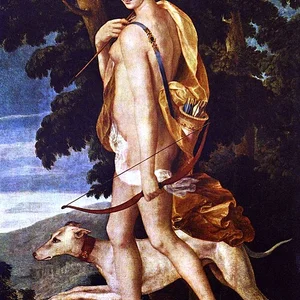
Diana
Diana is the Roman goddess of the hunt, the Moon, and the wild, identified with the Greek Artemis. Daughter of Jupiter and Latona, twin sister of Apollo, she is depicted as a huntress carrying a bow and arrows. An eternal virgin, she also protects women in childbirth and presides over lunar cycles.
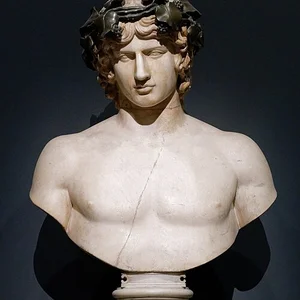
Dionysus
Greek god of wine, theater, fertility, and ecstasy, worshipped in ancient Greece. Son of Zeus and the mortal Semele, he embodies the duality between civilization and the wild, reason and intoxication. A central figure in mystery cults and ancient theatrical performances.
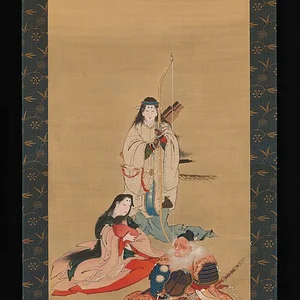
Empress Jingu
A legendary empress of Japan, Jingū is said to have reigned in the 3rd century according to Japanese chronicles. Tradition credits her with a military campaign against the Korean peninsula, carried out while she was pregnant. Her historical existence is unattested and she belongs to Japan's founding mythology.
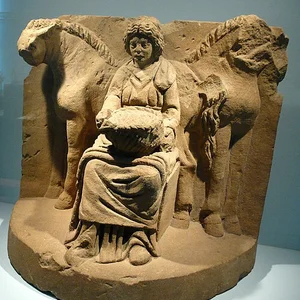
Epona
Epona is a goddess of Gaulish Celtic mythology, the protector of horses, mares, foals, donkeys and mules. Her cult, tied to fertility and the protection of riders, was widely adopted by the Roman cavalry and spread throughout the Empire.
Griffin
The griffin is a legendary creature with the body of a lion and the head and wings of an eagle, a guardian of treasures and a symbol of power. Present as early as the ancient Near East and then in the Greco-Roman world, it travels through the imagination all the way to the medieval bestiary.
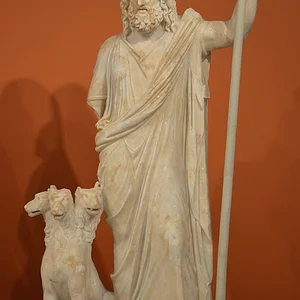
Hades
Hades is the god of the underworld and the dead in Greek mythology. Brother of Zeus and Poseidon, he rules over the realm of souls and the mineral riches of the earth. He is often portrayed as a just and unyielding god, though mortals feared him greatly.
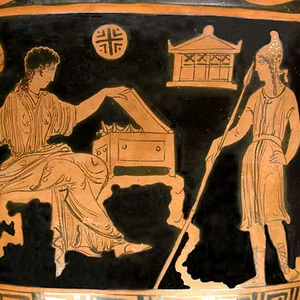
Helen of Troy
A central figure in Greek mythology, Helen is the wife of King Menelaus of Sparta. Her abduction by the Trojan prince Paris triggers the Trojan War, one of the greatest conflicts in ancient mythology. She symbolizes both ideal beauty and the destructive consequences of passion.
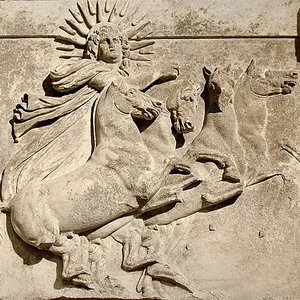
Helios
Helios is the sun god of Greek mythology, son of the Titan Hyperion and Theia. Each day, he crosses the sky in his fiery chariot pulled by four spirited horses, bringing light to mortals and gods alike.
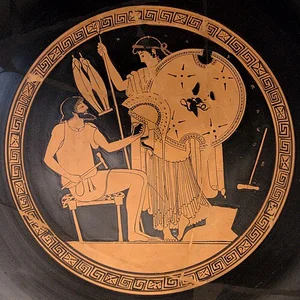
Hephaestus
Greek god of fire, the forge, and metalworking, Hephaestus is the patron of craftsmen and blacksmiths. Son of Zeus and Hera according to Greek mythology, he is depicted as a lame god who works in his underground workshop creating wondrous objects.
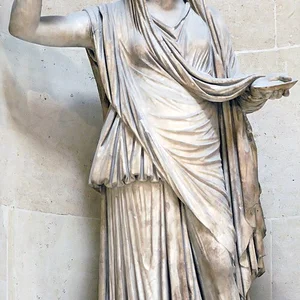
Hera
Hera is the queen of the gods and goddess of marriage in ancient Greek mythology. Wife of Zeus, she is venerated as the protector of marriage and family. Her legends reflect the values and conflicts of the Greek pantheon.
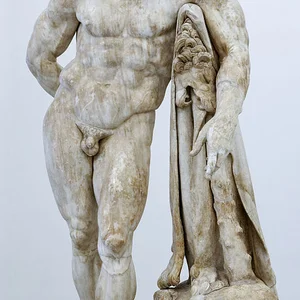
Hercules
Heracles is a hero of Greek mythology, son of the god Zeus and the mortal Alcmene. Famous for completing the twelve labors imposed by the goddess Hera, he embodies strength, courage, and perseverance. His story, passed down by Greek poets, has influenced Western literature and art for millennia.
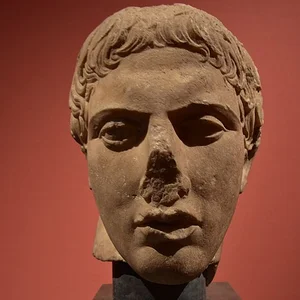
Hermes
Hermes is a major deity in Greek mythology, son of Zeus and Maia. He is venerated as the messenger of the gods, protector of commerce, travelers, and thieves, and identified with Mercury in Roman mythology.
Hermione
Hermione Granger is a fictional character created by J.K. Rowling, the heroine of the "Harry Potter" series published from 1997 onward. Born to Muggle parents in 1979, she embodies the brilliant, studious, and loyal witch whose intelligence and courage play a decisive role in the fight against Voldemort.
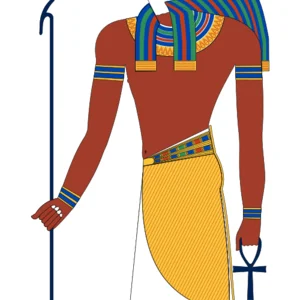
Horus
Horus is a major deity of ancient Egyptian mythology, depicted with the head of a falcon. Son of Osiris and Isis according to legend, he embodies the sky and the sun. He is one of the most important gods in the Egyptian pantheon, venerated since the Old Kingdom.
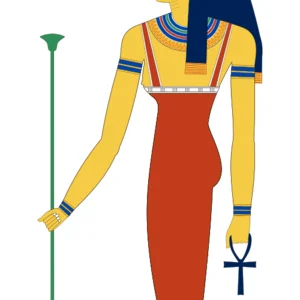
Isis
Isis is a major goddess of Egyptian mythology, associated with magic, motherhood, and protection. She is best known for having resurrected her husband Osiris after his murder by his brother Set, embodying the power of life and regeneration.
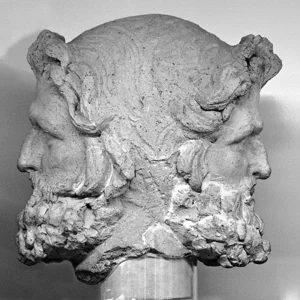
Janus
Janus is an ancient Roman deity depicted with two faces looking simultaneously toward the past and the future. God of beginnings, transitions, and doorways, he symbolizes thresholds and passages between two states. He was especially venerated at the New Year and at the start of any important undertaking.
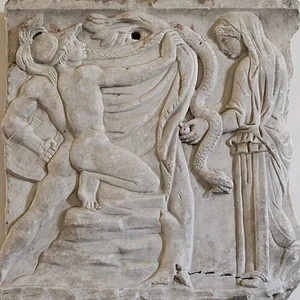
Jason
Jason is a hero of Greek mythology, son of Aeson and leader of the Argonauts. He undertakes a legendary quest to seize the Golden Fleece, a symbol of royal power. This adventure is one of the most celebrated in all of Greek mythology.
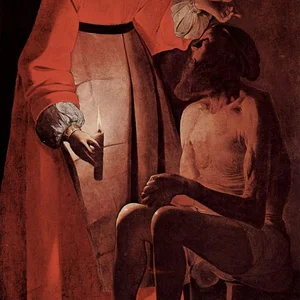
Job
A biblical figure from the Old Testament, the archetypal Righteous Man whose faith is tested through suffering. Job embodies the question of evil and divine providence in the face of undeserved trials. His story raises the timeless questions of human suffering and trust in God despite adversity.
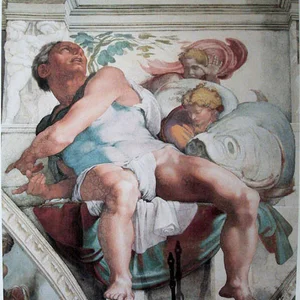
Jonas
822 av. J.-C. — 719 av. J.-C.
A biblical prophet from the kingdom of Israel (8th century BCE), Jonah is known for being sent by God to Nineveh to preach repentance. According to the Book of Jonah, he was swallowed by a great fish after attempting to flee his divine mission.
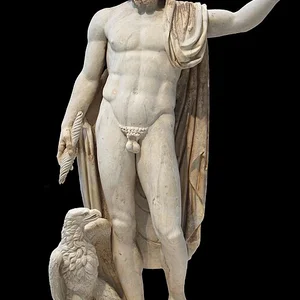
Jupiter
Jupiter is the supreme god of the Roman pantheon, master of the sky, lightning, and thunder. The Roman equivalent of Greek Zeus, he reigns over gods and men from Mount Olympus. He is the protector of Rome and the guarantor of cosmic order.
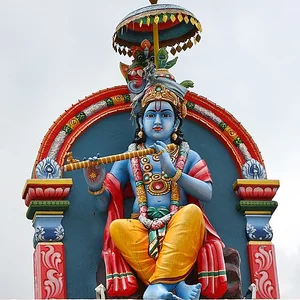
Krishna
3227 av. J.-C. — 3101 av. J.-C.
A major deity of Hinduism, Krishna is venerated as an avatar of Vishnu. A central figure of the Bhagavad Gita, he embodies divine wisdom and plays a crucial role in the Mahabharata epic as the spiritual guide of the warrior Arjuna.
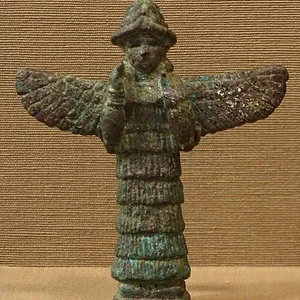
Lamassu
The lamassu is a protective deity of ancient Mesopotamia, depicted as a winged spirit with the body of a bull (or lion), the wings of an eagle and a bearded human head. Standing guard at the gates of Assyrian palaces and cities, these monumental figures warded off the forces of evil.
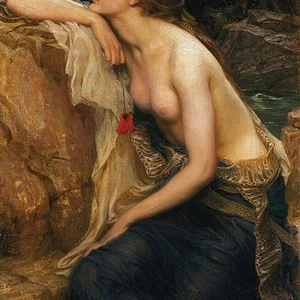
Lamia
Lamia is a figure from Greek mythology, a queen of Libya loved by Zeus. Struck by Hera's jealousy, who stole her children from her, she became a devastating monster who devoured the children of others.
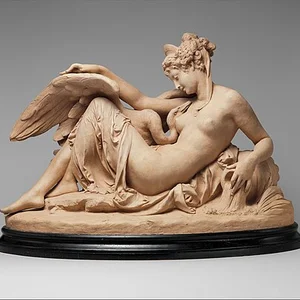
Leda
Queen of Sparta and figure from Greek mythology, Leda is seduced by Zeus in the form of a swan. From this union are born Helen of Troy, Clytemnestra, Castor, and Pollux — central figures of the Greek epic tradition.
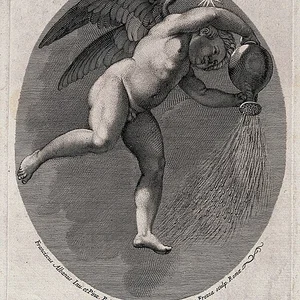
Lucifer
Latin name meaning 'Light-bearer', originally referring to the morning star (Venus). In Christian tradition, it designates the fallen angel cast from Heaven by God for his pride, becoming the figure of absolute Evil.
Mammon
Mammon is a demonic figure from the New Testament, a personification of material wealth and greed. Taken up in medieval literature and by Milton in Paradise Lost, he embodies the temptation of earthly riches over spiritual values.
Manticore
A fabulous creature of Persian origin, the manticore has the body of a lion, a human face, and a venomous scorpion tail. Described by Ctesias of Cnidus in the 5th century BC, it was later referenced by Pliny the Elder in his Natural History.
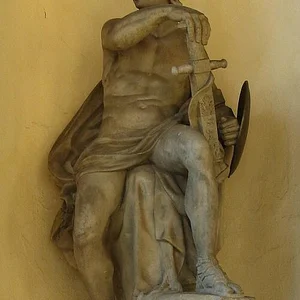
Mars
Roman god of war and protector of agriculture, Mars is one of the most venerated deities in the Roman pantheon. Legendary father of Romulus and Remus, he embodies Rome's military power and its destiny of conquest.
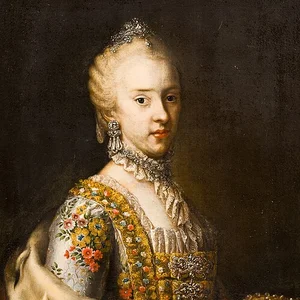
Mary of Nazareth
Mary of Nazareth is, according to the Gospels, the mother of Jesus of Nazareth. A central figure in Christianity and venerated in Islam under the name Maryam, she holds a major place in the religious and cultural history of the West.
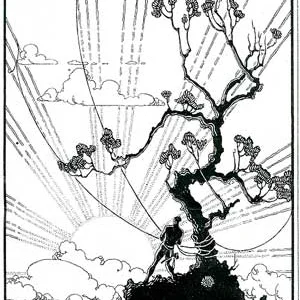
Maui
Demigod and trickster hero of Polynesian mythologies, Māui is one of the most celebrated figures in Pacific oral tradition. He accomplishes extraordinary feats: fishing islands up from the ocean floor, slowing the sun, and stealing fire from the gods to give to humankind.
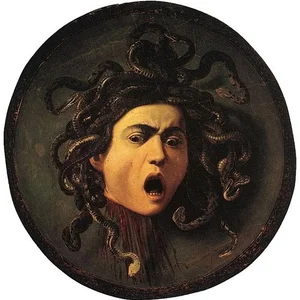
Medusa
In Greek mythology, Medusa is one of the three Gorgons — fearsome female monsters with snakes for hair whose gaze turns anyone who looks at them to stone. She is slain by the hero Perseus, who uses his shield as a mirror to face her without being petrified.

Metatron
Metatron is the highest of the angels in certain Jewish mystical traditions. Celestial scribe and chancellor of Heaven, he is said to be the angelic incarnation of the patriarch Enoch. He appears notably in Merkabah literature and in the Hebrew Book (3 Enoch).
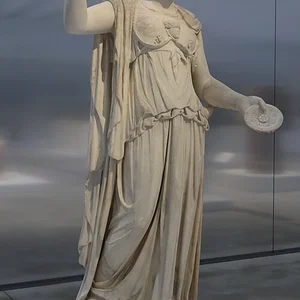
Minerva
Roman goddess of wisdom, the arts, and crafts, Minerva is the Roman equivalent of Athena in Greek mythology. Born fully armed from Jupiter's head, she protects Rome, artisans, and poets, and together with Jupiter and Juno forms the Capitoline Triad.
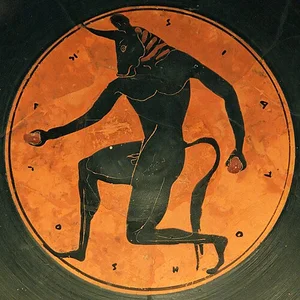
Minotaur
A monstrous creature of Greek mythology, half-man and half-bull, born from the unnatural union of Pasiphae and a bull sent by Poseidon. Imprisoned in the Labyrinth of Crete by King Minos, he was ultimately slain by the hero Theseus.
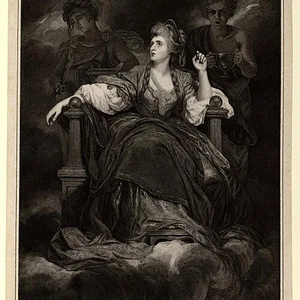
Muse
In Greek mythology, the Muses are the nine goddesses of the arts, sciences, and inspiration. Daughters of Zeus and the Titaness Mnemosyne (Memory), they preside over poetry, music, dance, and knowledge.
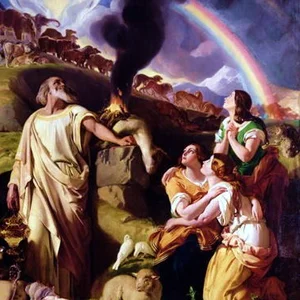
Noah
A biblical figure and patriarch in the Judeo-Christian tradition, Noah is the protagonist of the story of the Flood. According to the Bible, he built the Ark to save his family and the animals from the flood sent by God, thereby establishing a new covenant with humanity.
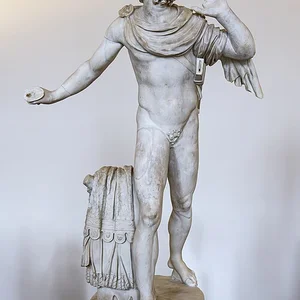
Odysseus
Legendary king of Ithaca, hero of Greek mythology celebrated for his intelligence and cunning. He is the central character of Homer's Odyssey, an epic poem recounting his ten years of wandering to return home after the Trojan War.
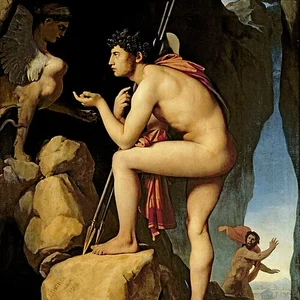
Oedipus
Legendary king of Thebes in Greek mythology, Oedipus is the hero of a classic tragedy exploring inevitable fate and destiny. Having unknowingly killed his father Laius and married his mother Jocasta, he embodies the archetype of a character caught in forces beyond his control.
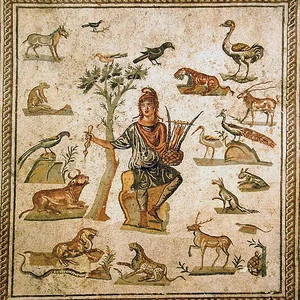
Orpheus
Legendary musician and poet of Greek mythology, son of Apollo and the Muse Calliope. He is famous for his magical lyre whose music enchanted gods, mortals, and nature alike. His love for Eurydice and his descent into the Underworld make up one of the greatest myths of Antiquity.
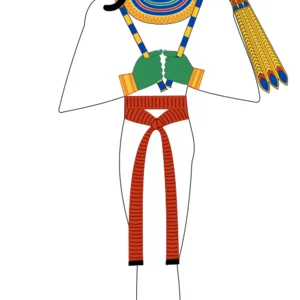
Osiris
Osiris is a major deity of ancient Egyptian mythology, associated with fertility, agriculture, and above all the afterlife and resurrection. According to Egyptian legend, he was killed by his brother Set and then resurrected by his wife Isis, becoming the king of the underworld and the symbol of eternal life.
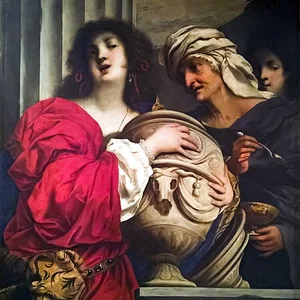
Pandora
Pandora is the first female figure in Greek mythology, created by the gods to punish humanity. She receives a jar (or box) containing all the evils of the world, which she opens out of curiosity, releasing suffering among humankind. Her myth illustrates the consequences of disobedience and the human condition.
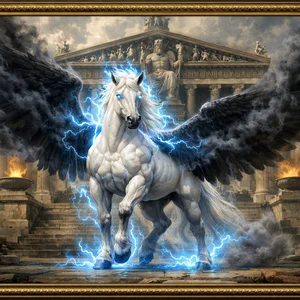
Pegasus
Winged horse of Greek mythology, born from the blood of Medusa when Perseus severed her head. Tamed by the hero Bellerophon with a golden bridle, he helped him defeat the Chimera. He ended his celestial journey among the stars, transformed into a constellation by Zeus.
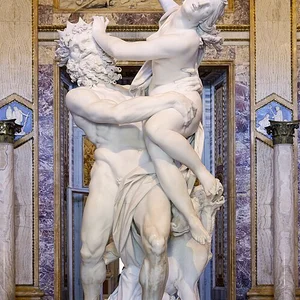
Persephone
Persephone is a goddess of Greek mythology, daughter of Demeter and Zeus. Abducted by Hades, the god of the Underworld, she becomes queen of the dead and rules alongside her husband. Her myth explains the changing of the seasons: her annual return to her mother brings about spring and summer.
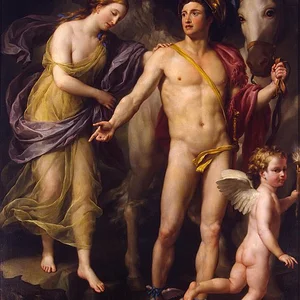
Perseus
Perseus is a hero of Greek mythology, son of Zeus and Danaë. He is famous for slaying the Gorgon Medusa and rescuing the princess Andromeda from a sea monster. His exploits make him one of the most important heroes in Greek mythology.

Philostratus of Athens
300 — ?
Greek writer and sophist of the 2nd–3rd century AD, Philostratus of Athens is celebrated for his Life of Apollonius of Tyana and his Lives of the Sophists. He moved in the literary circle of Empress Julia Domna in Rome.
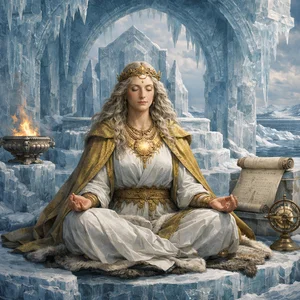
Phoebe
50 — 100
Titaness of brilliance and prophecy in Greek mythology, Phoebe is the daughter of Gaia and Ouranos, wife of the Titan Coeus. Mother of Leto, she is the grandmother of Apollo and Artemis, and is said to have held the oracle of Delphi before passing it on to her grandson.
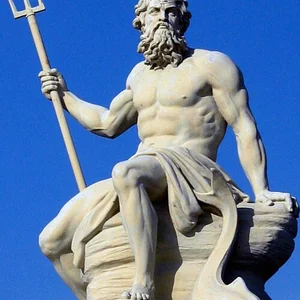
Poseidon
Greek god of the sea, oceans, and earthquakes, worshipped in ancient Greek mythology. Brother of Zeus and Hades, Poseidon rules over the seas and is often depicted wielding a trident. A central figure of the Olympian pantheon, he embodies the power of marine and seismic forces.
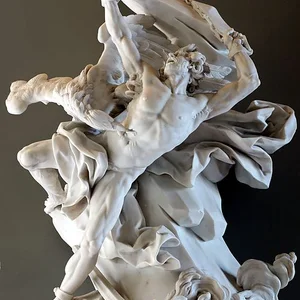
Prometheus
A Titan of Greek mythology, Prometheus is the symbol of human progress and rebellion against divine authority. He stole fire from the heavens to give it to humankind, transforming their condition and granting them access to civilization. Punished by Zeus for this act of defiance, he embodied the values of humanity and self-sacrifice.
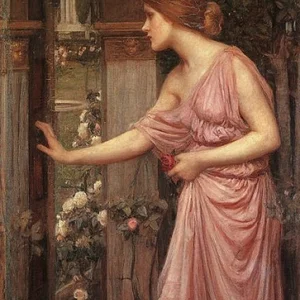
Psyche
Psyche is a mortal of extraordinary beauty whose legend tells of her love for Eros (Cupid). Her myth, transmitted by Apuleius, symbolizes the soul's journey toward divine perfection through trial and love.
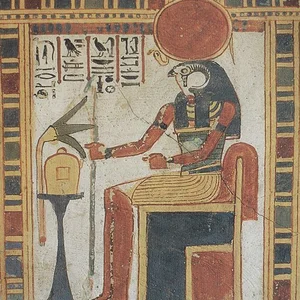
Ra
Ra is the principal solar deity of ancient Egypt, worshipped as the creator of the world and king of the gods. He embodies the life-giving power of the sun and its daily journey across the sky. His cult spanned more than three millennia of Egyptian civilization.
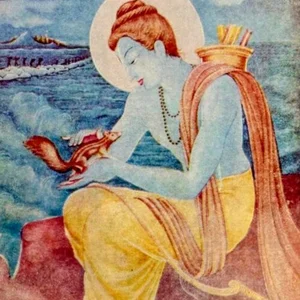
Rama
Rāma is the seventh avatar (incarnation) of the god Vishnu in Hindu mythology. The central hero of the Rāmāyaṇa, one of the two great epics of ancient India, he embodies the values of dharma (duty) and virtue. His story, blending epic adventure with moral teachings, remains foundational to Hindu culture and religion.
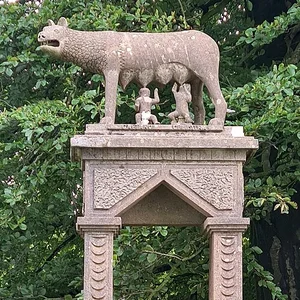
Romulus and Remus
Twin brothers of Roman mythology, legendarily raised by a she-wolf after being abandoned at birth. Romulus is presented as the founder and first king of Rome in 753 BC, while Remus is said to have perished during the founding of the city.
Romulus Augustulus
462 — ?
Last emperor of the Western Roman Empire, Romulus Augustulus reigned in 475–476 AD, placed on the throne by his father Orestes. Deposed at around age 15 by the Germanic chieftain Odoacer, his abdication marks the conventional end of the Western Roman Empire.
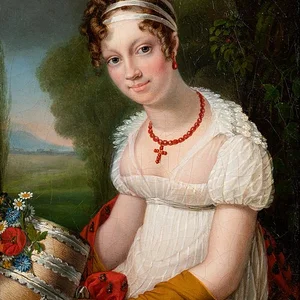
Saint George
Christian martyr of the 4th century, a Roman officer put to death under Diocletian around 303. His medieval legend — the fight against a dragon to rescue a princess — made him the symbol of chivalry and the victory of good over evil.
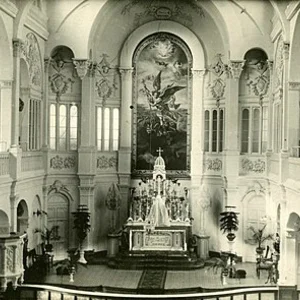
Saint Michael the Archangel
Commander of the heavenly armies in Jewish, Christian, and Muslim tradition, Saint Michael is first mentioned in the Book of Daniel (2nd century BC). Slayer of the dragon in the Book of Revelation, weigher of souls at the Last Judgment, he is also the patron of knights and the guardian saint of Mont-Saint-Michel.
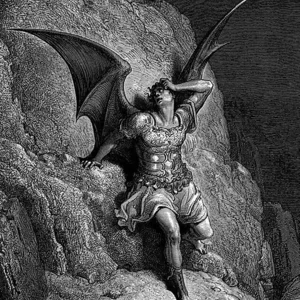
Samael
Samael is a malevolent angel in Jewish tradition, often identified with the Angel of Death and the Accuser (Satan). A central figure in Kabbalah and the Talmud, he embodies evil and opposition to the divine.
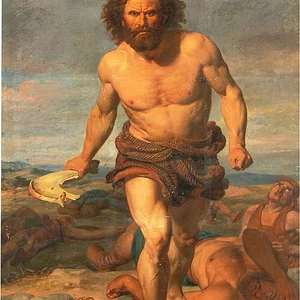
Samson
1117 av. J.-C. — 1077 av. J.-C.
Samson was a judge of Israel in antiquity, renowned for his superhuman strength granted by God. His exploits against the Philistines and his tragic relationship with Delilah make him a major figure in the Hebrew Bible.
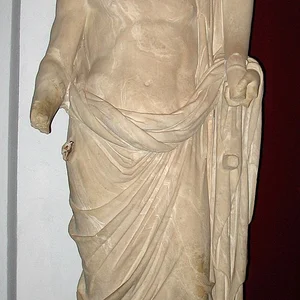
Saturn
Saturn is a major god of Roman mythology, assimilated with the Greek Cronus. God of agriculture, time, and abundance, he ruled over the Golden Age. His festival, the Saturnalia, was one of the most important celebrations in ancient Rome.
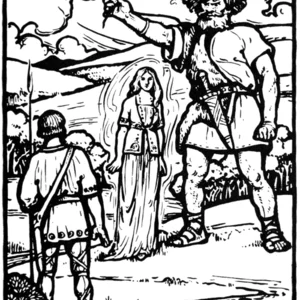
Scáthach
Scáthach is a legendary warrior and weapons master of Irish Celtic mythology. Living on the Isle of Skye, she trains the hero Cú Chulainn in the arts of combat and passes on to him the magical spear Gáe Bolg.
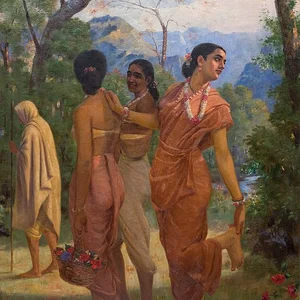
Shakuntala
Shakuntala is a heroine of Hindu mythology, the daughter of the ascetic Vishvamitra and the apsara Menaka. Raised in a hermitage, she marries King Dushyanta and becomes the mother of Bharata, the eponymous ancestor of the dynasty that gave India its name. Her story, told in the Mahabharata, was immortalized by the playwright Kalidasa.
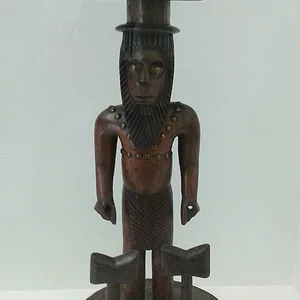
Shango
Shango is the orisha of thunder and lightning in the Yoruba religion of West Africa. A warrior deity associated with divine justice, he is depicted wielding a double axe (oshe) and rules over storms. His cult spread to the Americas through the African diaspora.
Simurgh
The Simurgh is a fabulous and benevolent bird from Persian mythology, a gigantic creature often described as nesting in the Tree of Life. A symbol of wisdom and healing, it protects and guides the heroes of the great Iranian epic tales.
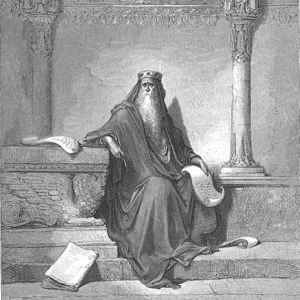
Solomon
989 av. J.-C. — 930 av. J.-C.
King of Israel (c. 970–931 BCE), son of David, renowned for his legendary wisdom and for building the Temple in Jerusalem. A major figure in the Hebrew Bible, he embodies justice and knowledge in the Judeo-Christian tradition.
Talos
Talos is a bronze giant from Greek mythology, forged by Hephaestus to guard the island of Crete. He circled it three times a day and drove off intruders by hurling rocks at them. His life hung on a single vein of ichor sealed by a nail in his ankle.

Tenazuchi
Tenazuchi is an earthly deity (kunitsukami) of Japanese Shinto mythology. Wife of Ashinazuchi and mother of Kushinada-hime, she appears in the myth where the god Susanoo saves her daughter from the eight-headed serpent Yamata-no-Orochi.
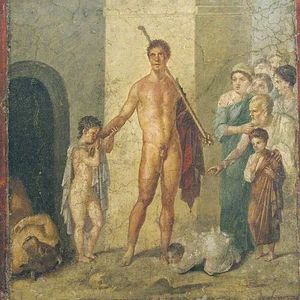
Theseus
Legendary hero of Greek mythology and king of Athens. Theseus is best known for slaying the Minotaur, a half-man half-bull monster imprisoned in the Labyrinth of Crete. He embodies the civilizing hero and unifier of Attica.
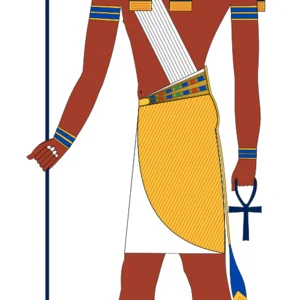
Thoth
Thoth is a deity of ancient Egyptian mythology, associated with wisdom, writing, and knowledge. Depicted with the head of an ibis or a baboon, he was venerated as the inventor of hieroglyphic writing and as the scribe of the gods.
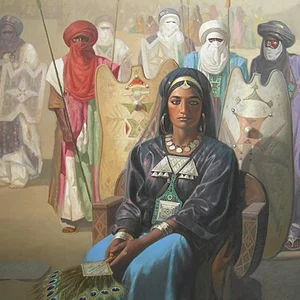
Tin Hinan
350 — ?
Legendary queen of the Tuareg people, Tin Hinan is considered by oral tradition to be the matriarchal ancestor of the Hoggar (Ahaggar) nobles. A founding figure said to have come from the Tafilalt region, according to stories passed down through generations, she is believed to have lived around the 4th–5th century CE.

Titus Vinius
12 — 69
Roman consul in 69 AD, Titus Vinius was one of Emperor Galba's most influential advisors. A central figure of the 'Year of the Four Emperors', he was assassinated during Otho's coup in January 69.
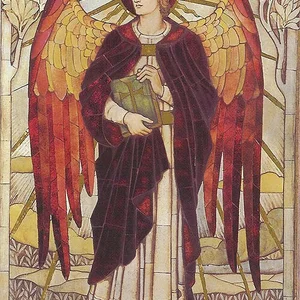
Uriel
Uriel is one of the major archangels of the Abrahamic traditions, whose name means "Fire of God" or "Light of God". He is associated with divine wisdom, repentance, and the guardianship of Eden with a flaming sword.
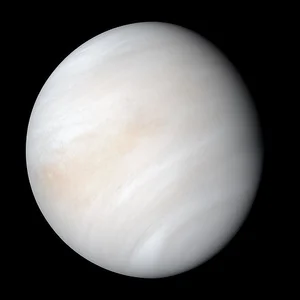
Venus
Venus is the Roman goddess of love, beauty, and fertility, equivalent to the Greek Aphrodite. Daughter of Jupiter according to some traditions, she plays a central role in Roman mythology and has inspired countless works of art throughout the centuries.
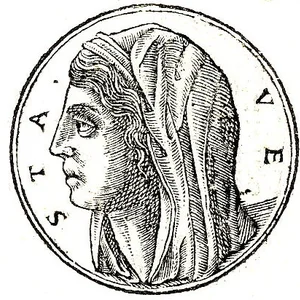
Vesta
Roman goddess of the hearth, sacred fire, and family. Her cult, one of the oldest in Rome, was maintained by the Vestal Virgins — priestesses bound to chastity who were charged with tending the eternal flame in the Temple of Vesta in the Forum.
Yashoda
Yashoda is a central figure in Hindu mythology, the foster mother of the god Krishna. Wife of Nanda, chief of the cowherds of Vrindavan, she raises Krishna with unconditional maternal love, a symbol of devotion (bhakti) in Hinduism.
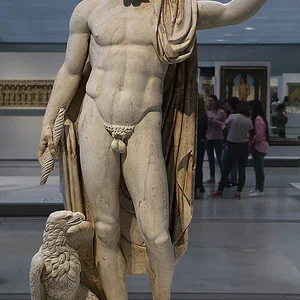
Zeus
Zeus is the king of the Olympian gods in ancient Greek mythology. God of the sky, lightning, and thunder, he embodies divine authority and celestial justice. A central figure in Greek religion, he was worshipped throughout the ancient Greek world.
Middle Ages(118)

Agatha Southeil
Agatha Southeil is a legendary character associated with Arthurian folklore and tales of medieval witchcraft. Portrayed as a sorceress or prophetess, she belongs more to legendary tradition than to documented history.
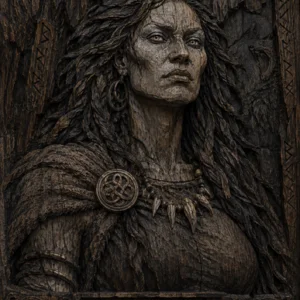
Angrboða
A giantess of Norse mythology, Angrboða is the consort of Loki and mother of three formidable beings: the wolf Fenrir, the serpent Jörmungandr, and the goddess Hel. She embodies the forces of chaos and the destruction to come at Ragnarök.
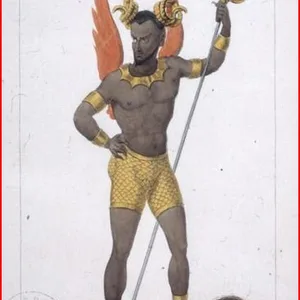
Astaroth
Astaroth is a grand duke of Hell from medieval demonology, considered a corrupted form of the Phoenician goddess Astarte. Described in the Goetia as riding a dragon and holding a serpent, he embodies vanity and sloth. His name illustrates the process by which medieval Christian theology demonized the deities of ancient religions.

Azrael
Azrael is the angel of death in Islamic and Jewish traditions. He is responsible for separating the soul from the body at the moment of death and for recording births and deaths in a great celestial book.
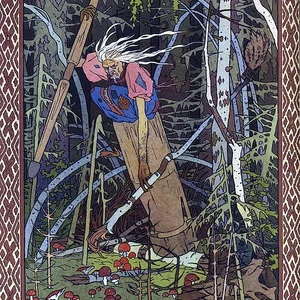
Baba Yaga
An iconic figure of Slavic folklore, Baba Yaga is an ambivalent witch from the oral tradition of Slavic peoples. She lives in an izba perched on chicken legs deep in the forest, playing the role of initiator at times and flesh-eating ogress at others.
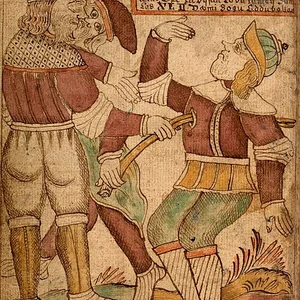
Baldr
Norse god of light and goodness, son of Odin and Frigg. His tragic death, orchestrated by Loki using a mistletoe arrow, heralds Ragnarök. He embodies sacrificed innocence and the promise of a renewed world.
Banshee
The Banshee is a female spirit from medieval Irish folklore whose nocturnal wailing announces the imminent death of a member of a native Irish family. Her Gaelic name, Bean Sídhe, means "woman of the fairy mounds".
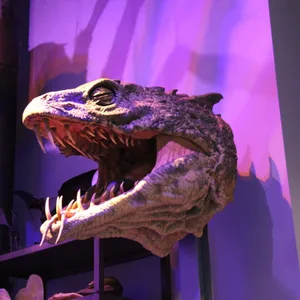
Basilisk
A legendary creature of the Middle Ages, the Basilisk is the king of serpents, said to kill with a single glance or its poisonous breath. It hatches from a rooster's egg incubated by a snake, and ranks among the most feared beasts in medieval bestiaries.
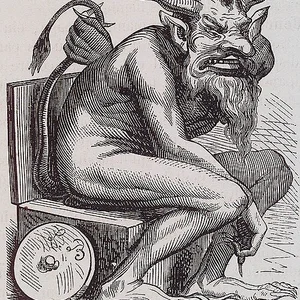
Belphegor
Belphegor is a demon from Hebrew and medieval Christian traditions, associated with the deadly sin of sloth. Considered one of the seven princes of Hell, he tempts humans with promises of wealth and ingenious inventions. His name derives from Baal-Peor, a Moabite deity mentioned in the Bible.
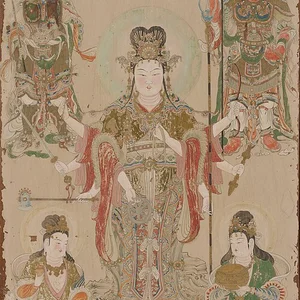
Benzaiten
A Japanese goddess of Buddhist and Shinto tradition, Benzaiten is associated with music, the arts, wisdom, and water. Derived from the Hindu goddess Sarasvati, she was introduced to Japan through Buddhism around the 6th century. She is the only female figure among the Seven Gods of Fortune (Shichifukujin).
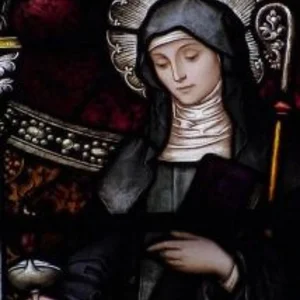
Brigid of Kildare
451 — 525
Saint Brigid of Kildare (c. 451-525) was an Irish abbess and the founder of the great monastery of Kildare. Together with Saint Patrick and Saint Columba, she is one of the three patron saints of Ireland. A largely legendary figure, she is often associated with the Celtic goddess Brigid.
Brynhildr
A Valkyrie from Norse mythology, Brynhildr is a central heroic figure in the Völsunga saga and the Nibelung cycle. An invincible warrior punished by Odin for disobeying his orders, she is imprisoned in a castle surrounded by flames until Sigurd frees her. Her tragic fate — woven from love, betrayal, and revenge — makes her one of the most complex heroines in the Germanic and Scandinavian traditions.
Cockatrice
The cockatrice is a legendary creature from medieval bestiaries, half-rooster and half-serpent, reputedly born from a rooster's egg incubated by a toad or a snake. Similar to the basilisk, it was believed to kill with a single glance or its venomous breath. It haunted the European imagination from the Middle Ages through the Renaissance.
Dede Korkut
0900 — 0999
Dede Korkut is the legendary sage and bard of the Oghuz Turks, a tutelary figure of the Turkic-Central Asian epic tradition. Storyteller, shaman, and musician, he embodies the oral memory of a nomadic people. His name is inseparable from the famous collection of epics attributed to him.
Domovoi
A protective spirit of the home in Slavic mythology, the Domovoi watches over the household and its inhabitants. A tutelary being of the polytheistic Slavic tradition, he embodies the bond between the living and their ancestors. He persists in popular folklore after Christianization.
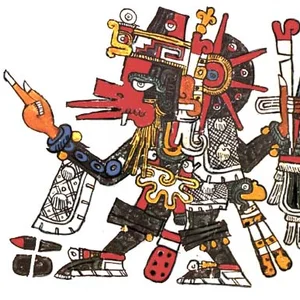
Ehecatl
Ehecatl is the Aztec god of wind, often identified with Quetzalcoatl in the composite form Ehecatl-Quetzalcoatl. He is regarded as the creative breath that set the world in motion and made the birth of the current sun possible.
El Cid
Rodrigo Díaz de Vivar (1043-1099), nicknamed El Cid (meaning 'the Lord' in Arabic), was a Castilian knight who became a legendary figure of the Reconquista. A mercenary warrior and military strategist, he fought both for and against Christian kingdoms, ultimately serving the cause of Castile. His epic tale, immortalized in the Cantar de Mio Cid, made him a symbol of chivalric honor and the struggle against Muslim rule in medieval Hispania.
Fafnir
Fafnir is a dwarf from Norse mythology, son of Hreidmar, transformed into a dragon by his own greed after seizing a cursed hoard of gold. He is slain by the hero Sigurd (Siegfried) who drinks his blood to understand the language of birds. His story lies at the heart of the Völsunga saga and the Nibelung cycle.
Fenrir
Fenrir is a gigantic wolf from Norse mythology, son of the god Loki and the giantess Angrboða. Feared by the gods for his immense power, he was bound by the Aesir using the magical fetter Gleipnir. At Ragnarök, he will break free to devour Odin, before being slain by Víðarr.
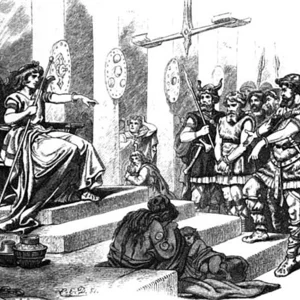
Forseti
Forseti is the Norse god of justice and reconciliation in Scandinavian mythology. Son of Baldr and Nanna, he presides over the divine tribunal Glitnir, whose golden walls and silver roof symbolize the brilliance of justice. He is considered the greatest judge among gods and men.
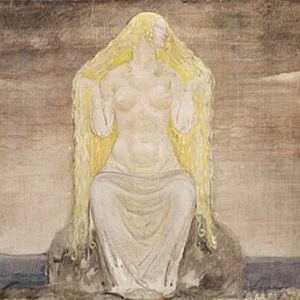
Freya
Freyja is a major goddess in Norse mythology, associated with love, fertility, beauty, and seiðr magic. She belongs to the Vanir in the Norse pantheon and has been venerated across Scandinavian cultures from the Middle Ages to the modern era.
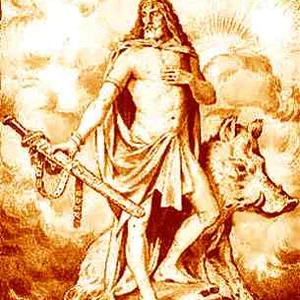
Freyr
Freyr is one of the major deities of Norse mythology, belonging to the Vanir, gods of fertility and prosperity. Son of Njörðr and twin brother of Freya, he rules over Álfheimr and is invoked to ensure good harvests, peace, and abundance.
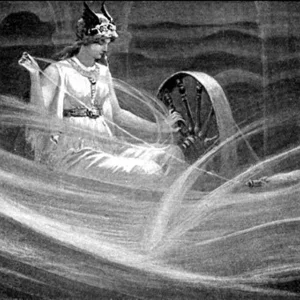
Frigg
Norse goddess of marriage, motherhood, and wisdom, Frigg is the wife of Odin and queen of the Aesir in Scandinavian mythology. Known among Germanic and Nordic peoples, she is associated with the protection of the home and with foreknowledge. Her figure is conveyed primarily through medieval Icelandic written sources (the Eddas).
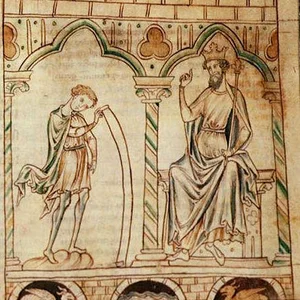
Geoffrey of Monmouth
1100 — 1155
Geoffrey of Monmouth is a 12th-century Welsh cleric and chronicler, famous for his *Historia regum Britanniae* (c. 1136). This work, blending history and legend, popularized the figures of King Arthur and the enchanter Merlin, durably shaping the Matter of Britain.
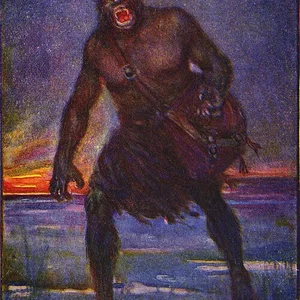
Grendel
Grendel is a monster descended from the cursed lineage of Cain, who terrorizes the mead-hall of Heorot — home of the Danish king Hrothgar — for twelve years. A creature of darkness and marshes, he is ultimately defeated by the Geatish hero Beowulf in the oldest epic poem in English literature (8th century).
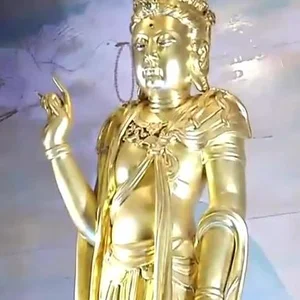
Guan Yin
Guan Yin is the Buddhist goddess of compassion and mercy, venerated throughout East Asia. Originating from the bodhisattva Avalokiteśvara tradition, she gradually took on a feminine form in China between the 7th and 12th centuries. She is one of the most popular religious figures in Mahayana Buddhism.
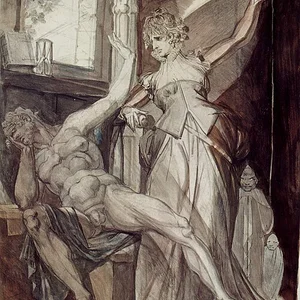
Gudrun
Tragic heroine of Germanic and Norse mythology, Gudrun/Kriemhild is the wife of the hero Sigurd/Siegfried. A figure of vengeance and grief, she embodies conjugal loyalty taken to the point of total destruction.
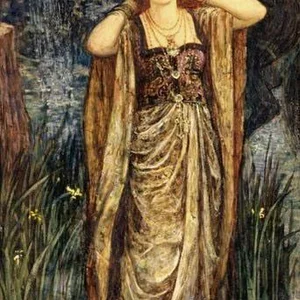
Guinevere
Legendary queen of Britain and wife of King Arthur in the Arthurian cycle. A central figure of medieval literature, she is also known for her tragic affair with the knight Lancelot of the Lake, which contributes to the fall of Camelot.

Hagere
A legendary figure from Ethiopian oral tradition, Hagere is portrayed as a founding queen whose name means "land" or "homeland" in Ge'ez and Amharic. Associated with the mythic origins of the Solomonic dynasty, she embodies in Ethiopian oral narratives the idea of the mother-land and sacred sovereignty.
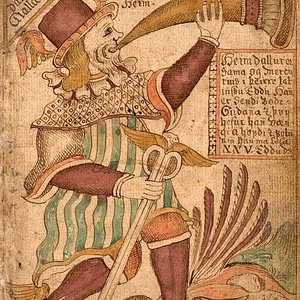
Heimdall
Heimdall is the guardian god of the Aesir in Norse mythology. Sentinel of the gods, he watches over the Bifröst bridge connecting the realms and will sound the Gjallarhorn to herald Ragnarök. He is associated with dawn, light, and vigilance.
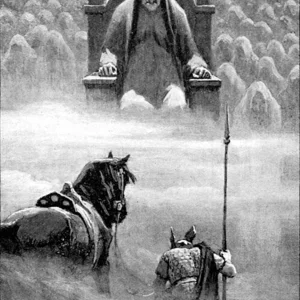
Hel
In Norse mythology, Hel is the daughter of Loki and the giantess Angrboða. Goddess of the dead, she rules over Niflheim (or Helheim), the underworld realm where those who died of illness or old age dwell. Her very name refers both to the deity and to the realm she governs.
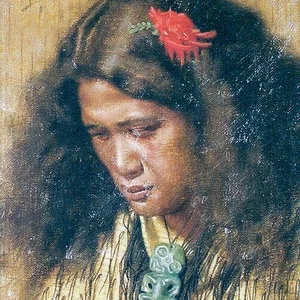
Hinemoa
Hinemoa is a heroine of Māori oral tradition, from the Arawa tribe, whose legend has been passed down since pre-colonial times in New Zealand. According to tradition, she swam across Lake Rotorua to reach her lover Tūtānekai on Mokoia Island, defying her family's prohibition. Her story symbolizes the power of love and the courage to challenge social conventions.
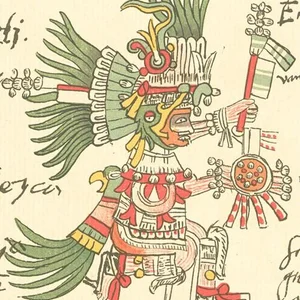
Huitzilopochtli
Huitzilopochtli is the god of war and the sun in Aztec mythology. The patron deity of the Mexica people, he guides them from Aztlan to the founding of Tenochtitlan. He lies at the heart of Aztec cosmology and the sacrificial rituals intended to feed the sun.
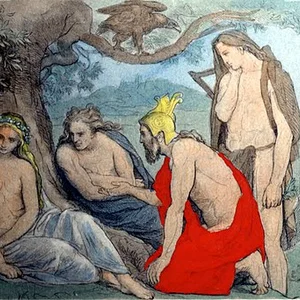
Idunn
Goddess of Norse mythology, Idunn is the keeper of the golden apples that preserve the eternal youth of the Æsir gods. Her abduction by the giant Thiazi causes the gods to age, illustrating her central role in the Viking cosmic order.
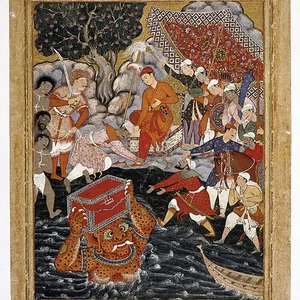
Ifrit
The ifrit is a powerful category of jinn in Islamic tradition, created from smokeless fire. Known for their cunning and danger, they appear in the Quran and One Thousand and One Nights. These supernatural beings hold a central place in medieval Muslim folklore and cosmology.
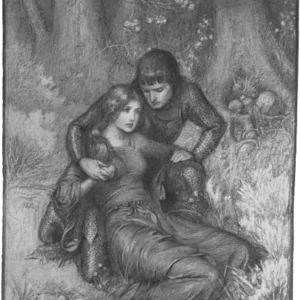
Igraine
Igraine is a character from Arthurian legend, wife of Gorlois, Duke of Cornwall, and later of King Uther Pendragon. Seduced by Uther through a spell cast by Merlin that gives him the appearance of Gorlois, she becomes the mother of King Arthur.

Incubus
A male demon from medieval demonology, the incubus was believed to have intercourse with women while they slept. It embodied the fear of sexuality and sin in medieval Christian thought. Its female counterpart is the succubus.
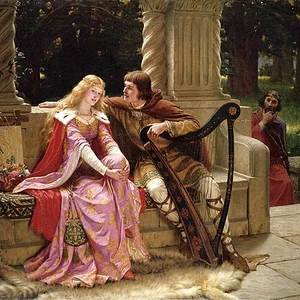
Iseult
Iseult the Fair is the heroine of the medieval legend of Tristan and Iseult. An Irish princess who became the wife of King Mark of Cornwall, she lives a fatal, adulterous passion with the knight Tristan after accidentally drinking a love potion. Her story is one of the great love myths of the Matter of Britain.

Iseult of the White Hands
Princess of Brittany, daughter of Duke Hoël, in the medieval legend of Tristan and Iseult. Tristan marries her because her name resembles that of Iseult the Fair, his true love, but he never consummates the marriage.
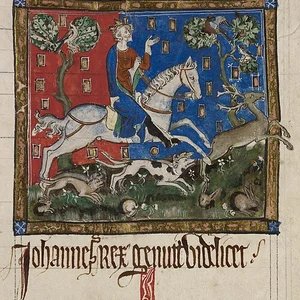
John Lackland
1166 — 1216
King of England from 1199 to 1216, son of Henry II and Eleanor of Aquitaine. He lost most of the Plantagenet continental possessions to Philip Augustus and was forced to sign Magna Carta in 1215.
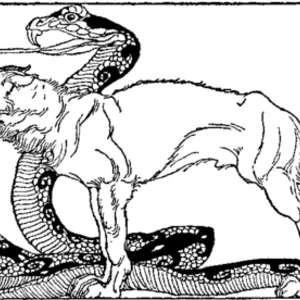
Jormungandr
Jörmungand, the Midgard Serpent, is a colossal creature from Norse mythology, son of Loki and the giantess Angrboða. He encircles the world by biting his own tail, a symbol of infinity and chaos. The sworn enemy of Thor, he will slay him at Ragnarök before succumbing to his venom.
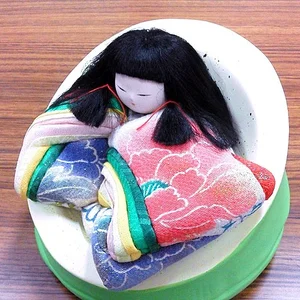
Kaguya-hime
Legendary princess from Japanese folklore and heroine of The Tale of the Bamboo Cutter (Taketori monogatari), one of the oldest works in Japanese literature. Found as a child inside a glowing bamboo stalk and raised by a peasant couple, she grows into a woman of extraordinary beauty before returning to the Moon, her true home.
Kappa
The Kappa is an aquatic creature from Japanese folklore, depicted as a turtle-shelled being with a water-filled dish on its head. Known for drowning humans and animals, it is nonetheless bound by the rules of politeness: bowing before it forces the creature to bow back, spilling its vital water. An iconic figure of Japanese yōkai, it embodies the ambivalent relationship between humans and water.
Kelpie
The kelpie is a supernatural creature from Scottish folklore, most often appearing in the form of a horse that haunts lochs and rivers. It lures unwary travellers onto its back before dragging them underwater to drown and devour them.

King Arthur
Legendary king of Britain, Arthur is a central figure in Celtic mythology and medieval literature. Founder of the Round Table and lord of Camelot castle, he embodies the medieval chivalric ideal. His story, passed down through legends and tales of knighthood, blends possible historical fact with supernatural elements.

Kitsune
The kitsune is a fox-spirit (yōkai) from Japanese folklore, gifted with supernatural powers and able to shapeshift, notably into a woman. The longer it lives, the more tails it gains, up to nine, a sign of its wisdom and power.

Kraken
A colossal sea creature from medieval Scandinavian legend, often described as a giant squid or octopus capable of swallowing entire ships. Mentioned in Norse texts as early as the 13th century, it embodies sailors' terror of the unfathomable depths of the ocean.
Kupe
1000 — 1099
Kupe is a legendary Polynesian navigator, the founding hero of Maori tradition. According to mythology, he discovered Aotearoa (New Zealand) around the year 1000, guided by a giant octopus. His voyage from Hawaiki symbolizes the mastery of star navigation achieved by the Polynesian peoples.
Lada
Lada is the Slavic goddess of love, beauty, and fertility. Venerated in medieval Slavic folk traditions, she presided over spring celebrations, weddings, and fertility. Her cult is attested in ritual songs and seasonal festivals of Slavic peoples.
Lady of the Lake
An enchanting figure from medieval Arthurian legend, the Lady of the Lake is a fairy who presents the sword Excalibur to King Arthur and raises Lancelot. She embodies magic and the bond between the mortal world and the fairy realm.
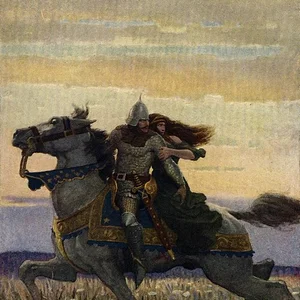
Lancelot du Lac
Lancelot du Lac is a legendary knight of the Round Table, son of King Ban of Benwick. Raised by the Lady of the Lake, he becomes the greatest warrior in Arthur's kingdom and the lover of Queen Guinevere. His story symbolizes the conflict between chivalric honor and romantic passion.
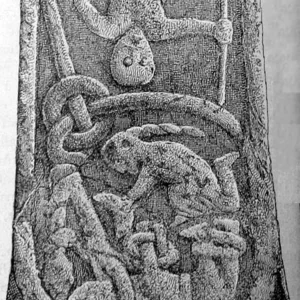
Loki
The trickster god of Norse mythology, Loki is an ambivalent deity capable of shapeshifting. A figure of chaos and transgression, he plays a crucial role in the stories of the end of the world (Ragnarök), where he fights against the Aesir alongside the giants.
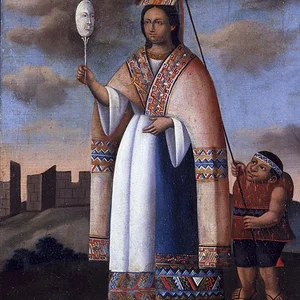
Mama Ocllo
1197 — 1230
Founding goddess of Inca civilization, according to Quechua oral tradition. Wife of Manco Cápac, she is said to have emerged from Lake Titicaca and taught women the art of weaving and domestic skills, thereby establishing the Inca social order.
Mama Quilla
Goddess of the Moon in Inca mythology, Mama Quilla is the protector of women, marriage, and the lunar calendar. Wife of Inti, the Sun god, she held a central place in Inca religion and society during the pre-colonial era.
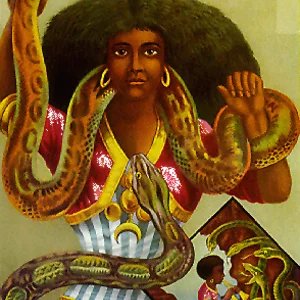
Mami Wata
An aquatic deity venerated in West and Central Africa and throughout the African diaspora in the Americas. A water spirit associated with fertility, healing, and prosperity, Mami Wata is a central figure in vodoun worship and many oral traditions. Her origins are pre-colonial, but her iconography was enriched through contact with Atlantic exchange.
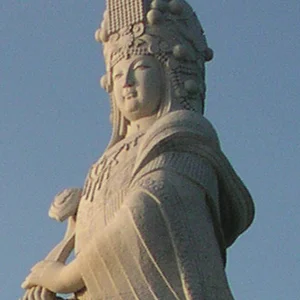
Mazu
960 — 987
Mazu is the protective goddess of sailors in Chinese tradition. According to legend, she was born around 960 CE in Fujian province under the name Lin Mo, and was deified after her death. Her cult spread across all the coasts of China and into Chinese communities throughout Southeast Asia.
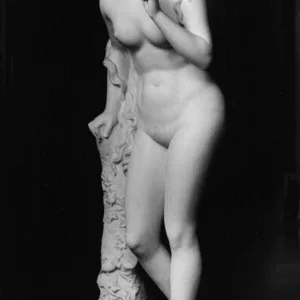
Melusine
A legendary figure of the Middle Ages, Melusine is a fairy or supernatural creature of dual nature: part woman, part water serpent. According to legend, she founded the Lusignan dynasty after her marriage to the knight Raymond. Her story weaves together medieval wonder, a curse, and dynastic origins.
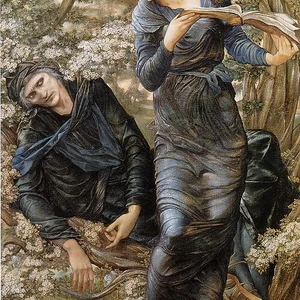
Merlin
Merlin is a legendary wizard or druid from Arthurian legend, known as advisor and sorcerer to King Arthur. A central figure in medieval literature, he embodies magical wisdom and supernatural influence in the kingdoms of Britain.
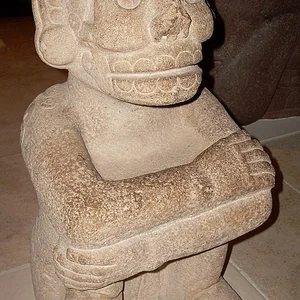
Mictlantecuhtli
Mictlantecuhtli is the god of death in Aztec mythology, ruler of Mictlan, the kingdom of the dead located in the deepest reaches of the underworld. Depicted as a skeleton adorned with necklaces of human eyes and cobwebs, he embodied natural death and the cycle of existence.

Mokoch
Mokoch is one of the great goddesses of the pre-Christian Slavic pantheon, associated with moist earth, fertility, and fate. A protective deity of women, she presides over spinning, birth, and harvests. Her cult is attested among Eastern Slavs before the Christianization of Kievan Rus' in 988.
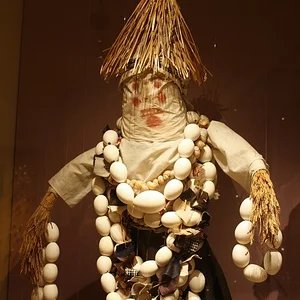
Morana
Slavic goddess of winter, death, and night, Morana is a central figure in the mythology of Slavic peoples. Known under various forms (Marzanna in Polish, Morena in Czech and Slovak), she personifies the cycle of nature: her symbolic death in spring marks renewal. Her cult, passed down through oral tradition, is attested from the early Middle Ages to the present day.
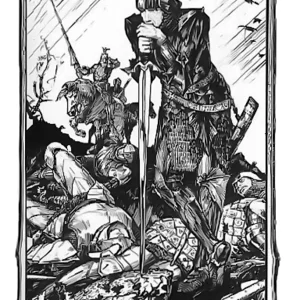
Mordred
Mordred is a character from Arthurian legend, the incestuous son of King Arthur and his half-sister. A traitor to the kingdom of Camelot, he brings about Arthur's downfall at the Battle of Camlann, where the two slay each other.
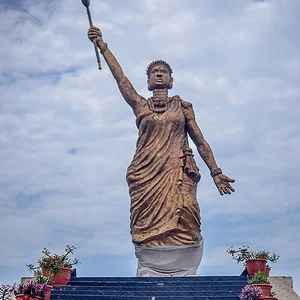
Moremi Ajasoro
Legendary heroine of the Yoruba people of Ilé-Ifè (present-day Nigeria), a figure of African oral tradition. According to legend, she sacrificed herself to infiltrate the ranks of Ifè's enemies and liberate her people through cunning and courage.
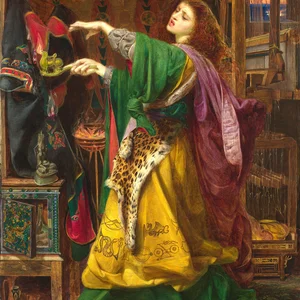
Morgan le Fay
Morgan le Fay is a major figure in Arthurian legend, portrayed as an enchantress and half-sister of King Arthur. She embodies magic and moral ambiguity in medieval narratives, shifting between adversary and protector depending on the version of the story.
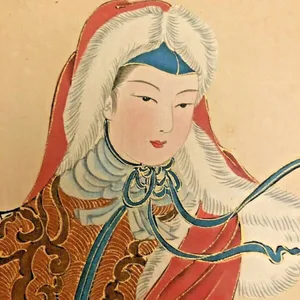
Mulan
Mulan is a legendary figure from Chinese literature — a young woman said to have disguised herself as a man to take her father's place in the army. Her story, popularized by the Disney animated film, embodies the values of filial piety and courage.
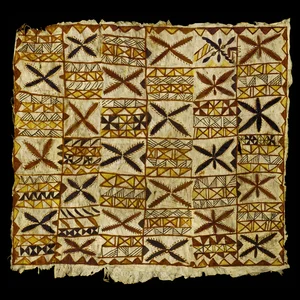
Nafanua
A warrior goddess of Samoan mythology, Nafanua is a central figure of feminine power in Polynesia. According to the oral traditions of the Samoan people, she led armies to victory and contributed to the unification of the Samoan islands in the pre-colonial era.
Nana Triban
Sister of Sundiata Keita, a figure from the 13th-century Mande epic. According to griot oral tradition, she accompanied her brother into exile and played a decisive diplomatic role in the reconquest of the Mande against Soumaoro Kante.
Nasreddin Hodja
1208 — 1284
Nasreddin Hodja is a legendary figure of Seljuk Anatolia, an imam, kadi, and icon of popular wisdom. His colorful anecdotes, blending humor and philosophy, have traveled across centuries and across the borders of the Muslim world to become a universal heritage.
Níðhöggr
Níðhöggr is a dragon (or serpent) from Norse mythology who relentlessly gnaws at one of the roots of Yggdrasil, the world-tree. Lurking in the spring of Hvergelmir, he also devours the corpses of oath-breakers and murderers, embodying the forces of corruption that threaten the cosmic order.
Odin
Odin is the chief god of Norse mythology, king of Asgard and father of all the gods. God of wisdom, war, and magic, he was worshipped by Germanic and Scandinavian peoples throughout Antiquity and the Middle Ages. He sacrifices his eye to gain knowledge and presides over the cosmic order embodied by Yggdrasil, the World Tree.
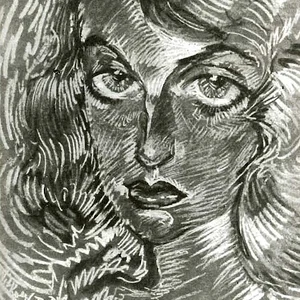
Oni
Oni are demonic creatures from Japanese folklore, depicted as giant ogres with horns, wielding iron clubs (kanabō). Associated with the Buddhist underworld (Jigoku), they serve as tormentors tasked with punishing the souls of the dead.
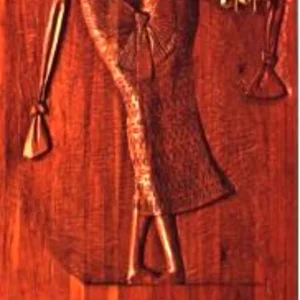
Oshun
Oshun is an orisha (deity) of the Yoruba people of West Africa, venerated as the goddess of love, rivers, and fertility. Passed down through oral tradition, she embodies gentleness, beauty, and healing. Her cult, alive since pre-colonial times, spread to the Americas with the African diaspora.
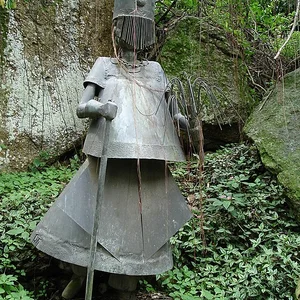
Oya
Oya is an orisha of the Yoruba tradition, deity of wind, storms, lightning, and transformation. Venerated by the Yoruba people of West Africa (present-day Nigeria, Benin, Togo), she is associated with the Niger River and the forces of change. Her figure crossed the Atlantic with the African diaspora, becoming integrated into the Candomblé and Santería traditions.
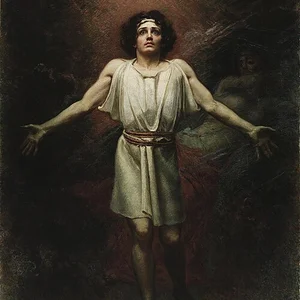
Perceval
Perceval is a legendary Knight of the Round Table and the central hero of the Grail quest in medieval Arthurian literature. Raised by a mother who kept him sheltered from the world, he gradually becomes an accomplished knight through his adventures and his spiritual search for the Grail.
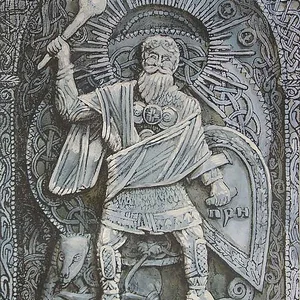
Perun
Perun is the supreme god of thunder and lightning in Slavic mythology. Master of the celestial elements, he is eternally opposed to Veles, deity of the underworld and waters. He is the Slavic equivalent of Zeus or Thor in the Indo-European pantheons.
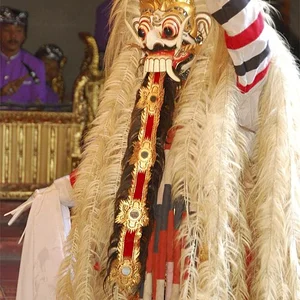
Rangda
Rangda is the demon queen of Balinese mythology, embodiment of evil and the dark forces. She leads an army of witches called Leyaks and is locked in eternal opposition with Barong, the protective spirit of good. This cosmic battle lies at the heart of Balinese spirituality and ritual theater.
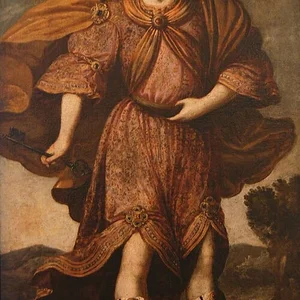
Raziel
Raziel is an archangel from Jewish Kabbalistic tradition, guardian of divine secrets and celestial mysteries. According to legend, he gave Adam the Sefer Raziel HaMalakh, a book containing the secrets of the universe. His name means "secret of God" in Hebrew.
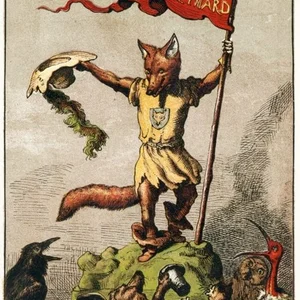
Renart
Renart is an anthropomorphic character from the Roman de Renart, a celebrated cycle of satirical tales from the Middle Ages. This cunning and mischievous fox embodies trickery and deception through picaresque adventures that critique the customs and social order of the time.
Robin Hood
A legendary hero of English folklore, Robin Hood is an archer and outlaw said to have operated in England during the Middle Ages. An iconic figure of popular resistance, he embodies the ideal of robbing from the rich to give to the poor.
Roc
The Roc is a fabulous bird of gigantic size from Persian and Arab folklore, made popular by the tales of the One Thousand and One Nights. Powerful enough to carry off an elephant in its talons, it embodies the boundless excess of Eastern marvels.
Roland
A legendary hero of French medieval literature, Roland is Charlemagne's paladin immortalized in the Song of Roland. A central figure of the medieval epic, he embodies the values of chivalry, loyalty, and sacrifice.
Shuten-doji
Shuten-doji is the king of oni (demons) in Japanese mythology, known for kidnapping and devouring young women from the capital from his fortress on Mount Ōe. He was defeated and beheaded by the hero Minamoto no Raikō and his four lieutenants through a ruse involving poisoned sake.
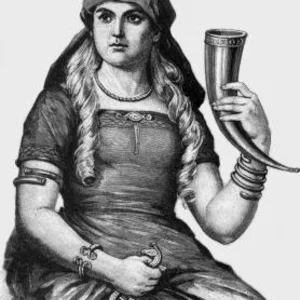
Sif
Sif is a goddess in Norse mythology, wife of the god Thor. She is famous for her magnificent golden hair, a symbol of the fertility of fields and harvests, which Loki treacherously cut off while she slept and which the dwarves reforged in pure gold.
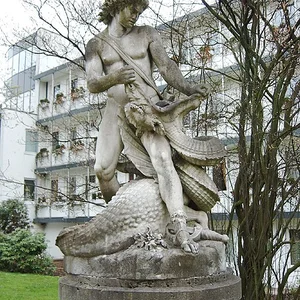
Sigurd
Hero of Norse and Germanic mythology, Sigurd is the slayer of the dragon Fáfnir according to the Völsunga Saga. An iconic figure of Germanic legend, he embodies the archetype of the warrior-conqueror cursed by his own heroic deed.
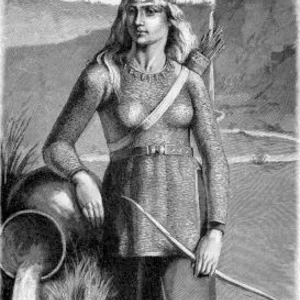
Skadi
Skadi is a giantess (jötunn) from Norse mythology, goddess of winter, hunting, and mountains. Daughter of the giant Þjazi, she is known for negotiating her place among the Aesir gods after her father's death. Her figure illustrates the boundary between the world of the gods and that of the giants in Viking cosmology.
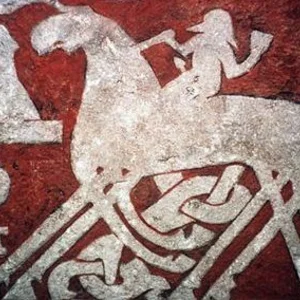
Sleipnir
In Norse mythology, Sleipnir is the eight-legged horse of the god Odin, considered the best of all horses. Born of the god Loki transformed into a mare, he carries his master across the nine worlds, over land, over sea, and through the air.
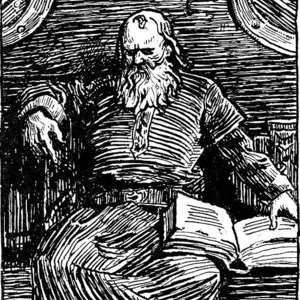
Snorri Sturluson
1179 — 1241
Icelandic writer, historian, and politician of the 13th century (1179–1241). He is the author of the Prose Edda, a major source on Norse mythology, and the Heimskringla, a chronicle of the kings of Norway.
Sogolon Kondé
A central figure in the Mande epic tradition preserved by griots, Sogolon Kondé is the mother of Sundiata Keita, founder of the Mali Empire in the 13th century. Said to be ugly yet endowed with supernatural powers, she embodies hidden strength and maternal dignity in the oral tradition of the Mande peoples.

Succubus
The succubus is a female demon from medieval demonology, believed to visit men in their sleep to unite with them and drain their vital energy. Ubiquitous in the theological and demonological treatises of the Middle Ages, it embodies religious anxieties about sexuality and evil.
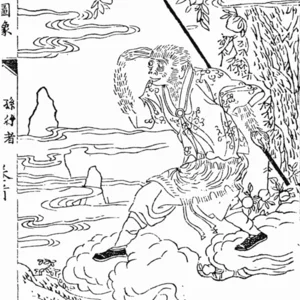
Sun Wukong
Sun Wukong, the Monkey King, is the main character of the classic Chinese novel Journey to the West (16th century). This mythological hero, gifted with superhuman powers and great wisdom, accompanies the monk Xuanzang on his spiritual journey to India to retrieve the Buddhist scriptures.
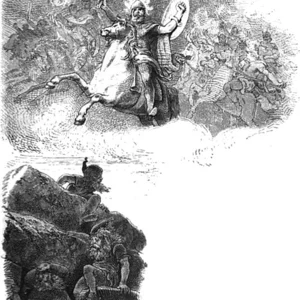
Surtr
Surtr is a fire giant from Norse mythology, guardian of the realm of Muspelheim. He wields a blazing sword and will play a central role during Ragnarök, destroying the world in flames.
Tấm
Heroine of the Vietnamese popular tale Tấm Cám, a young woman mistreated by her stepmother and half-sister Cám, who becomes queen through the magical help of Bụt. An emblematic figure of Vietnamese oral literature, her story is compared to the universal Cinderella motif. [1]
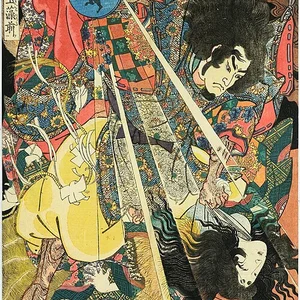
Tamamo-no-Mae
Tamamo-no-Mae is a figure from Japanese mythology, a nine-tailed fox (kitsune) who transformed herself into a court lady of incomparable beauty and intelligence. She bewitched Emperor Toba in the 12th century before being unmasked and slain, at which point she became the Killing Stone (Sessho-seki), said to poison anyone who approaches it.

Tarasque
The Tarasque is an amphibious dragon from Provençal legend that ravaged the banks of the Rhône near Tarascon. According to Christian tradition, it was tamed by Saint Martha with the sign of the cross and holy water, before being put to death by the townspeople.
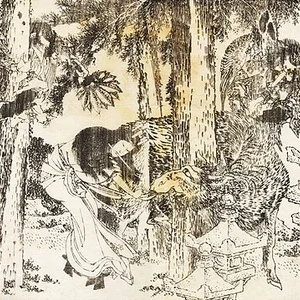
Tengu
Tengu are supernatural creatures from Japanese folklore — mountain spirits, fearsome warriors, and tricksters all at once. Depicted with a long nose or a crow's beak, they are renowned masters of martial arts and military strategy.
The Lady of the Lake
A legendary figure of Arthurian mythology, Viviane is a fairy and sorceress presented as the Lady of the Lake in medieval tales. She plays a crucial role in the story of King Arthur as his protector, advisor, and keeper of the sword Excalibur.

Thökk
Þökk is a giantess (jötunn) from Norse mythology. She is the only creature to refuse to weep for the god Baldr, thereby preventing his return from the realm of the dead. She is suspected of being Loki in disguise.
Thomas Becket
Archbishop of Canterbury in the 12th century, he clashed fiercely with King Henry II of England over the rights and freedoms of the Church. Murdered in his cathedral in 1170, he was canonized as early as 1173.
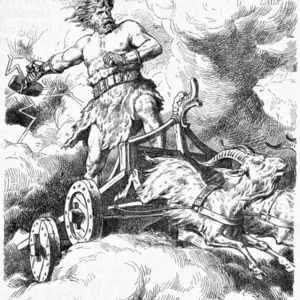
Thor
Thor is the god of Thunder and Lightning in Norse mythology. Son of Odin, he is the protector of humans and gods against the giants. He is depicted with his magical hammer Mjölnir, one of the most powerful weapons in the nine worlds.
Tristan and Iseult
A medieval legend telling the story of two lovers whose impossible love, sparked by the accidental drinking of a magic potion, leads them to tragedy. This tale of courtly love has inspired countless literary and artistic adaptations from the Middle Ages to the present day.
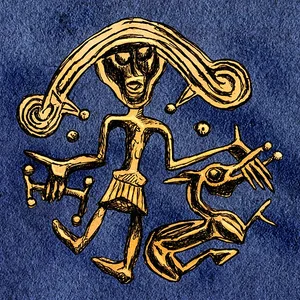
Tyr
Týr is the Germanic god of war and justice in Norse mythology. He is famous for having sacrificed his right hand during the binding of the wolf Fenrir, a symbol of courage and martial honor. His name gave rise to “Tuesday” in English and “Dienstag” in German.
Urban II
1035 — 1099
Pope from 1088 to 1099, Urban II was the instigator of the First Crusade, proclaimed at the Council of Clermont in 1095. A Cluniac monk of French origin, he strengthened papal authority and continued the Gregorian Reform of the Church.
Vampire
A creature of Eastern European folklore, the vampire is an undead being said to rise from its grave to feed on the blood of the living. This mythological figure, rooted in medieval Slavic and Balkan beliefs, has endured through the centuries to become one of the most powerful archetypes in the Western imagination.
Vasilisa the Beautiful
Vasilisa the Beautiful is the heroine of a Russian folktale. An orphan mistreated by her stepmother, she overcomes trials imposed by the witch Baba Yaga with the help of a magical doll bequeathed by her mother, and eventually marries the tsar.
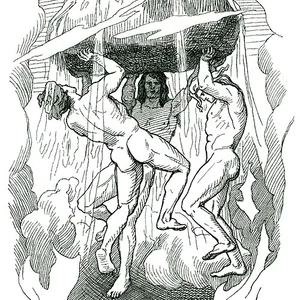
Vé
Vé is one of the three primordial deities of Norse mythology, son of Borr and brother of Odin and Vili. Together with his brothers, he took part in the creation of the world from the body of the giant Ymir, and breathed sense and form into the first humans, Ask and Embla.
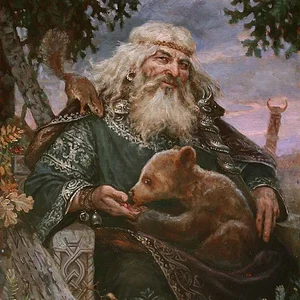
Veles
Veles is one of the major deities of the Slavic pantheon, ruler of the underworld, protector of cattle, and god of magic. He stands in eternal opposition to Perun, the god of thunder, in a cosmic battle symbolizing the duality between darkness and light. His cult, widespread among Slavic peoples, survived in syncretic form after the Christianization of the 9th–12th centuries.
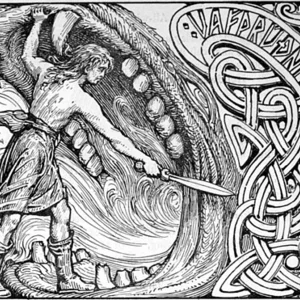
Vidar
Vidar is a god of Norse mythology, son of Odin and the giantess Grid. Known for his silence and colossal strength, he is destined to avenge his father's death by slaying the wolf Fenrir at Ragnarök.

Víli
Víli is a deity in Norse mythology, son of Borr and brother of Odin and Vé. Together with his brothers, he takes part in the creation of the world by slaying the primordial giant Ymir, and grants the first humans reason and the ability to move.
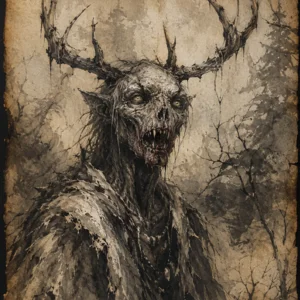
Wendigo
A malevolent spirit from Algonquian traditions (Ojibwe, Cree), the Wendigo embodies insatiable hunger, winter madness, and cannibalism. A mythic creature said to transform anyone who consumes human flesh into a monster, it symbolizes fundamental taboos and the dangers of winter isolation.

Werewolf
A hybrid creature, half-human and half-wolf, the werewolf is a mythological figure found across many cultures. Lycanthropy — the belief in human transformation into a wolf — is attested as far back as ancient Greece with the myth of Lycaon. During the Middle Ages, this belief intensified and led to actual trials for lycanthropy.
William Tell
Legendary Swiss hero of the 14th century, symbol of the struggle against oppression and Swiss independence. According to tradition, he defied an Austrian bailiff by shooting an arrow at an apple placed on his son's head, before taking part in the revolt against Habsburg rule.

Wyvern
The wyvern is a legendary creature of medieval European heraldry and folklore, depicted as a winged, two-legged dragon with a venomous, barb-tipped tail. Distinct from the classic four-legged dragon, it frequently appears on coats of arms and heraldic emblems.
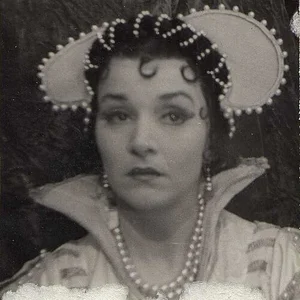
Ximena
Ximena Díaz was the wife of Rodrigo Díaz de Vivar, known as El Cid. A semi-legendary figure of medieval Spanish literature, she was immortalized in the 'Cantar de mio Cid' and later in Corneille's 'Le Cid' (1637), where she embodies the conflict between love and honor.
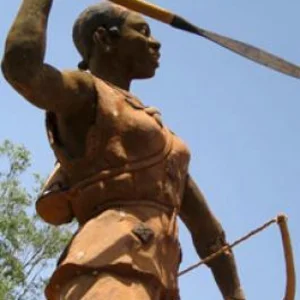
Yennenga
1101 — 1101
A warrior princess of the Dagomba people (present-day Ghana/northern Burkina Faso), Yennenga is venerated in Mossi oral tradition as the founding mother of the Moogo kingdom. Daughter of King Nedega, she united with a hunter named Riale, and their son Ouédraogo became the eponymous ancestor of the Mossi.
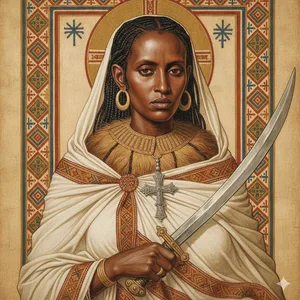
Yodit
Semi-legendary warrior queen of Ethiopia (10th century), whose name means "Judith." She is said to have overthrown the Kingdom of Aksum, burned its churches, and ruled for several decades over the Ethiopian highlands.
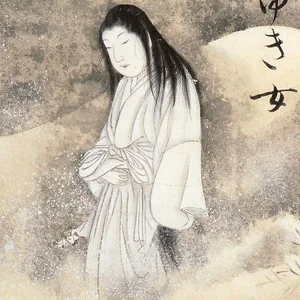
Yuki-onna
Yuki-onna is a supernatural figure from Japanese folklore, appearing as a woman of glacial and terrifying beauty. She emerges during blizzards and condemns lost travelers to death by freezing cold. Her character embodies both the beauty and the cruelty of winter nature.
Zhong Kui
Zhong Kui is a deity from Chinese mythology, a demon-slayer and protector of households. Depicted as a fierce-looking bearded man, he is invoked to ward off evil spirits. His image is traditionally painted on house doors during festivals.
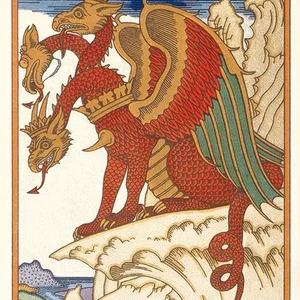
Zmey Gorynych
Zmey Gorynych is a multi-headed dragon from East Slavic folklore, an iconic figure of the Russian bylinas. A fire-breather, he embodies evil and abducts princesses, until he is slain by heroes such as Dobrynya Nikitich.
Renaissance(5)
Ahuizotl
1450 — 1502
A legendary creature of Aztec mythology, the Ahuizotl is an aquatic monster resembling a small dog, with smooth black fur and a grasping hand at the tip of its tail. Lurking in lakes and ponds, it lures and drowns its victims to devour their eyes, teeth, and nails.
Golem
The Golem is a clay creature from Jewish folklore, shaped by human hands and brought to life through sacred formulas. Its most famous version, the Golem of Prague, is said to have been created in the 16th century by Rabbi Judah Loew (the Maharal) to protect the Jewish ghetto. Deprived of speech and a soul, it embodies the limits of human creation.

Inti
Inti is the principal solar deity of the Inca pantheon, venerated as the father of the Incas and the source of all life. His cult was at the heart of the state religion of the Inca Empire (Tawantinsuyu). The Sapa Inca was considered his direct son on Earth.
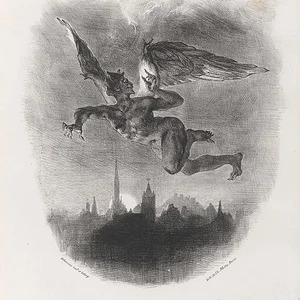
Mephistopheles
The demon of the Faustian pact, Mephistopheles is the Devil's agent tasked with seducing the scholar Faust. Made famous by Marlowe in Doctor Faustus (1592) and then by Goethe in Faust (1808), he embodies intellectual temptation and the corruption of the soul through the thirst for knowledge.
Mother Shipton
1488 — 1561
Legendary English prophetess and seer of the 16th century, born around 1488 in Knaresborough, Yorkshire. Famous for her prophecies in verse, she became a major folk figure of Tudor England. Her actual historical existence remains uncertain, as legend has far outgrown the facts.
Early Modern(15)
Abel Tasman
1603 — 1659
Abel Tasman was a Dutch navigator and explorer in the service of the Dutch East India Company (VOC). In 1642, he became the first European to reach Tasmania and New Zealand, pushing the boundaries of geographical knowledge of his time.
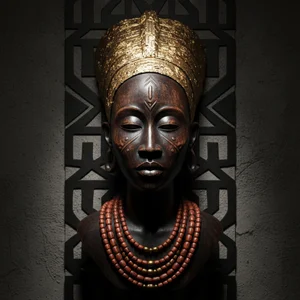
Abla Pokou II
Legendary queen of the Baoulé people in the 18th century, she led her people from the Ashanti kingdom to present-day Ivory Coast. Oral tradition holds that she sacrificed her only son to allow her people to cross the Comoé River, a founding act of Baoulé identity.

Akwa Boni
1708 — ?
Ivorian political figure and prominent voice in Côte d'Ivoire's public life. Embodying the meeting point between African cultural traditions and modern political engagement, she represents women's participation in the institutions of postcolonial West Africa.
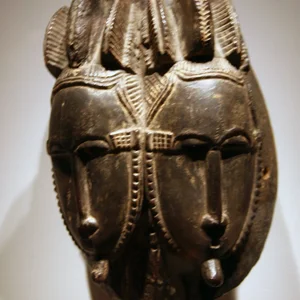
Aura Pokou
Founding queen of the Baoulé people (Côte d'Ivoire) in the 18th century, according to Akan oral tradition. To allow her people to cross the Comoé River during a forced exile, she is said to have sacrificed her only son. Her name means "the child who does not return."
Baron Samedi
Baron Samedi is the loa of death in Haitian Vodou. Depicted in undertaker's attire — top hat and dark glasses — he is the guardian of the passage between the living and the dead. An ambivalent figure, at once protector and obscene trickster, he embodies the boundary between life and death.

Davy Jones
Davy Jones is a legendary figure in Anglo-Saxon maritime folklore, appearing in the 18th century. His name refers to the "Davy Jones's Locker," a metaphor for the bottom of the ocean where drowned sailors and sunken ships rest. He embodies the malevolent spirit of the seas.
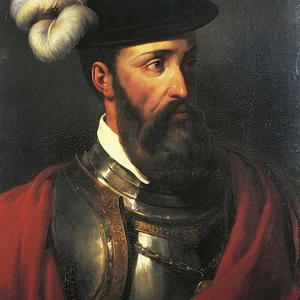
Francisco Pizarro
1478 — 1541
Spanish conquistador (c. 1478–1541), he led the conquest of the Inca Empire in Peru between 1532 and 1533, captured the emperor Atahualpa, and founded Lima in 1535. His expedition transformed the New World and opened South America to Spanish colonization.
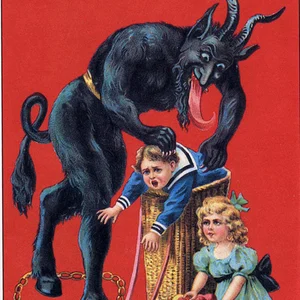
Krampus
A demonic half-man, half-goat creature from Germanic Alpine folklore, Krampus is the punishing companion of Saint Nicholas. While Saint Nicholas rewards well-behaved children, Krampus punishes the naughty ones by whipping them with birch branches or carrying them away in his basket.
La Llorona
La Llorona is a ghost from Latin American folklore, the figure of a woman who, according to legend, drowned her own children and has since wandered weeping along rivers and lakes. This legend, deeply rooted in Mexico and Latin America, blends pre-Hispanic and Spanish colonial influences.
Lasiren
Lasirèn is a major lwa (spirit) of Haitian Vodou, depicted as a mermaid with long flowing hair holding a mirror. A spirit of the waters, wealth, and beauty, she is associated with Erzulie and rules over the ocean depths where the dead reside.
Louis II de Bourbon, prince de Condé
Nicknamed “the Great Condé,” this prince of the blood distinguished himself at the Battle of Rocroi (1643) by crushing the Spanish infantry. A key figure in the Fronde, he eventually reconciled with Louis XIV and remained one of the greatest military commanders of the Grand Siècle.

Papa Legba
Papa Legba is the loa guardian of crossroads in Haitian Vodou religion. Depicted as an old man with a cane, he is the essential intermediary between humans and the other spirits. No ceremony can begin without first invoking his permission.
The Flying Dutchman
The Flying Dutchman is a legendary ghost ship doomed to wander the seas forever, never able to make port. Born from the maritime folklore of the great European voyages of exploration, it has become a universal symbol of curse and damnation. The legend has inspired operas, novels, and films.
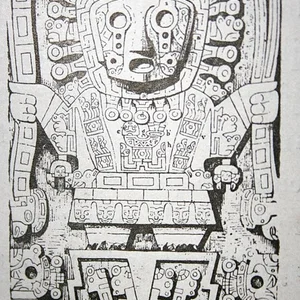
Viracocha
Viracocha is the supreme creator deity of the Andean civilizations of Tiwanaku, Huari, and the Incas. According to Inca cosmogony, he created the world, the sun, the moon, the stars, and humanity from Lake Titicaca. He is depicted as a wandering god who taught civilization to mankind before disappearing toward the ocean.

Wakan Tanka
Wakan Tanka, the “Great Spirit” or “Great Mystery,” is the supreme divine principle of Lakota spirituality. This central concept of the Lakota Sioux refers to a sacred, all-pervading force that animates all things. It structures the cosmology, rituals, and ethics of an entire people.
19th Century(6)
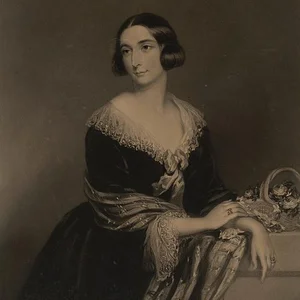
Charlotte Guest
1812 — 1895
British translator and businesswoman (1812–1895), celebrated for her English translation of the Mabinogion, a foundational collection of medieval Welsh myths and legends. She also managed the Dowlais ironworks in Wales, becoming one of the first women to run a major industrial enterprise.
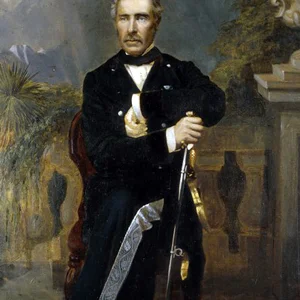
George Grey
1812 — 1898
British colonial governor and ethnologist, George Grey successively administered South Australia, New Zealand, and the Cape Colony. Passionate about indigenous cultures, he devoted part of his life to collecting and publishing Māori myths and language.
Hippolyte Fauche
1797 — 1869
A French Orientalist and Sanskritist of the 19th century, Hippolyte Fauche was the first to produce a complete French translation of the Mahabharata. His monumental work opened Indian epic literature to French-speaking audiences.
J. M. W. Turner
1775 — 1851
British painter and engraver (1775-1851), Turner is considered the master of Romantic landscape. A forerunner of Impressionism, he revolutionized the depiction of light, water, and atmosphere.
Napoleon III
1808 — 1873
Nephew of Napoleon I, he was elected President of the Republic in 1848, then seized power through a coup d'état on December 2, 1851, before proclaiming the Second Empire. His reign profoundly transformed France: the modernization of Paris under Haussmann, industrial and railway expansion — until the defeat at Sedan in 1870.
Richard Wagner
1813 — 1883
German composer (1813–1883), Wagner revolutionized opera by creating the concept of the total work of art (Gesamtkunstwerk). His music dramas, including the Ring Cycle and Tristan und Isolde, remain towering monuments of Romanticism.
20th Century(6)
Bigfoot
Bigfoot, also known as Sasquatch, is a legendary creature of North American cryptozoology, described as a large, hairy hominid living in the forests. Its existence is not supported by any scientific evidence: it belongs to folklore and popular culture.
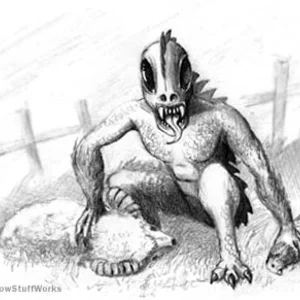
Chupacabra
The Chupacabra is a legendary creature from Latin America whose name means "goat-sucker" in Spanish. First reported in Puerto Rico in the 1990s, it is associated with mysterious livestock mutilations and has become a major cultural and folkloric phenomenon.
Igor Stravinsky
1882 — 1971
Igor Stravinsky is one of the most influential composers of the 20th century. With his ballets for the Ballets Russes — *The Firebird*, *Petrushka*, and above all *The Rite of Spring* — he revolutionized musical language through bold rhythms and dissonances. Naturalized as a French then American citizen, he traversed all the major aesthetic movements of his time.

Loch Ness Monster
The Loch Ness Monster, nicknamed “Nessie,” is a legendary lake creature said to live in Loch Ness, Scotland. Described as a large, long-necked animal resembling a plesiosaur, it has become a global icon of cryptozoology since the 1930s.
Serge de Diaghilev
1872 — 1929
Russian impresario and patron of the arts, Diaghilev founded the Ballets Russes in 1909, revolutionizing choreographic art by bringing together the greatest artists of his era. He collaborated with Stravinsky, Picasso, Matisse, and Nijinsky to create total spectacles blending dance, music, and the visual arts.
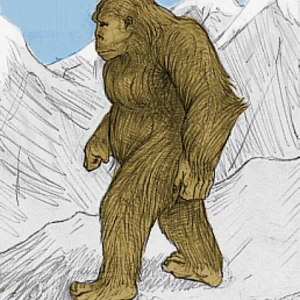
Yeti
A legendary creature of the Himalayas, the Yeti is described as a large bipedal ape-like being living in the eternal snows. A central figure in Tibetan and Nepalese folklore, it has fascinated explorers and scientists since the 19th century.