The Hearth of the Slavic Home (Around the Pech)
In medieval Slavic households, meals were not divided into starter-main-dessert: everything revolved around the large clay stove, the pech, heart of the izba. Kasha (grain porridge), the daily staple, slowly cooked there; rye bread and salt sat at the center as symbols of hospitality; kvass quenched thirst; and during ancestral vigils, honey-sweetened dishes connected the living to the dead. A portion of each dish was left by the hearth—for the Domovoi.
Signature : Buckwheat (Grechka) Baked in the Pech
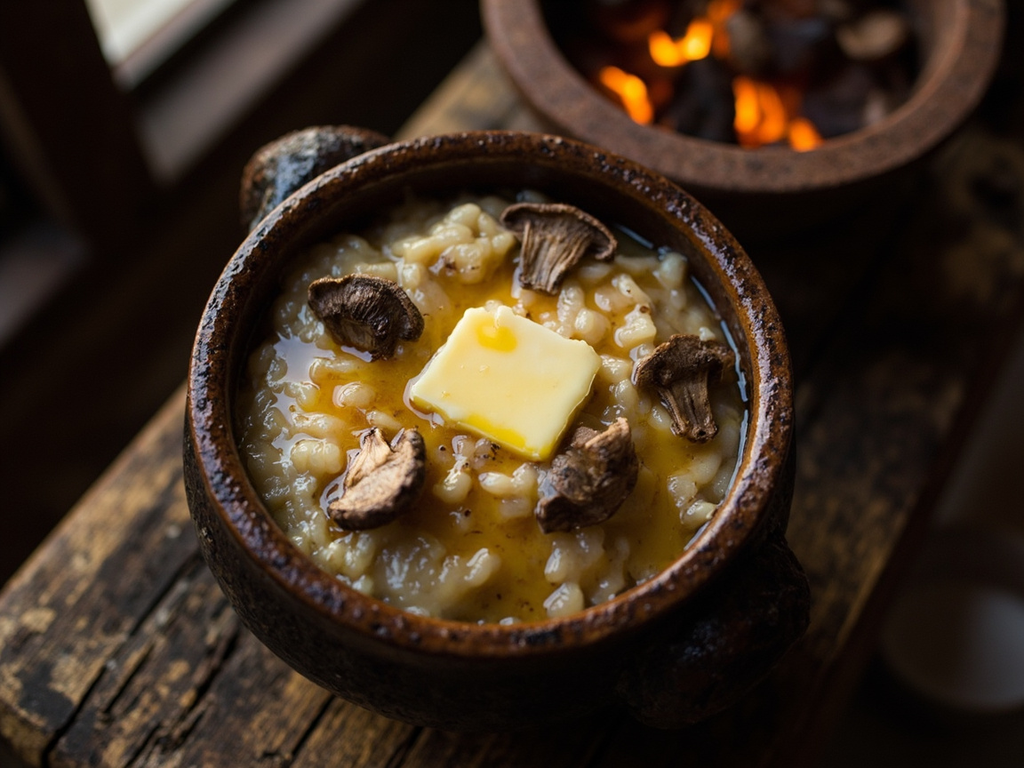
Toasted buckwheat groats, slowly steamed in the dying heat of the clay stove, are the soul of medieval Slavic cooking. Its nutty, earthy flavor embodies the hearth itself—it is the preferred offering left for the house spirit.
Domovoi at the table
5 period recipes
 Offering
Buckwheat Kasha from the Hearth (Grechnevaya Kasha)
Staple porridge from the pech (the base of every meal)
🍄 🧂· 40 min
View the recipe
 Everyday
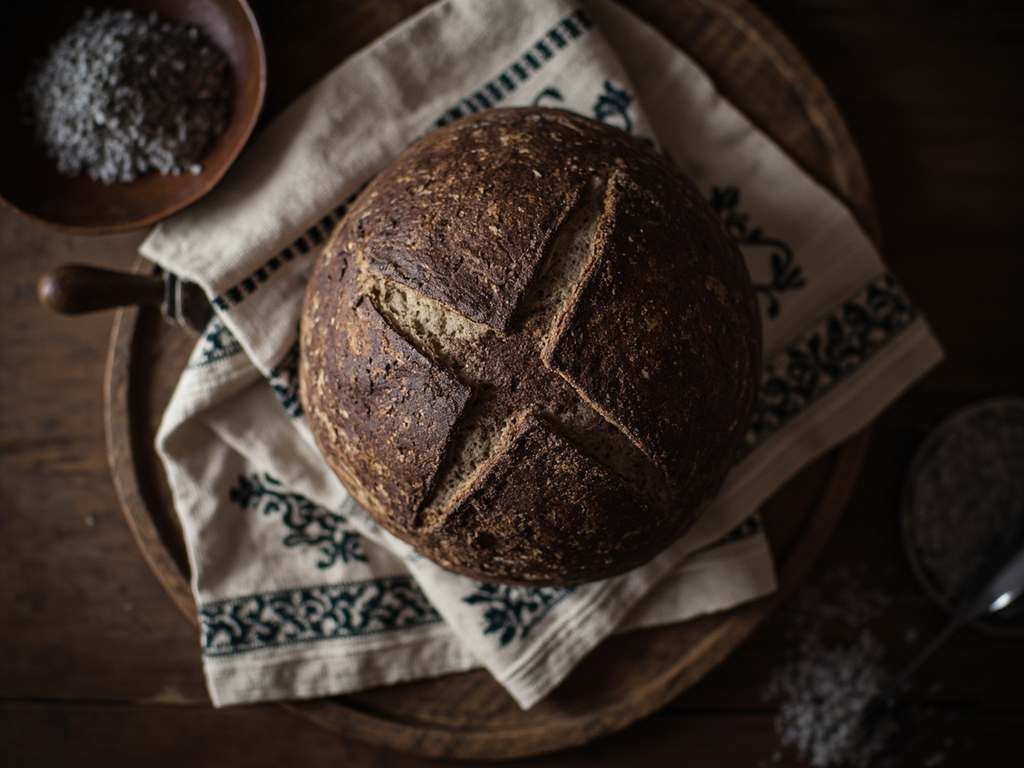
Rye Bread with Salt (Khleb da Sol)
Bread-symbol of hospitality (center of the table)
🧂 🫙· 5 h (including resting)
View the recipe
 Drink
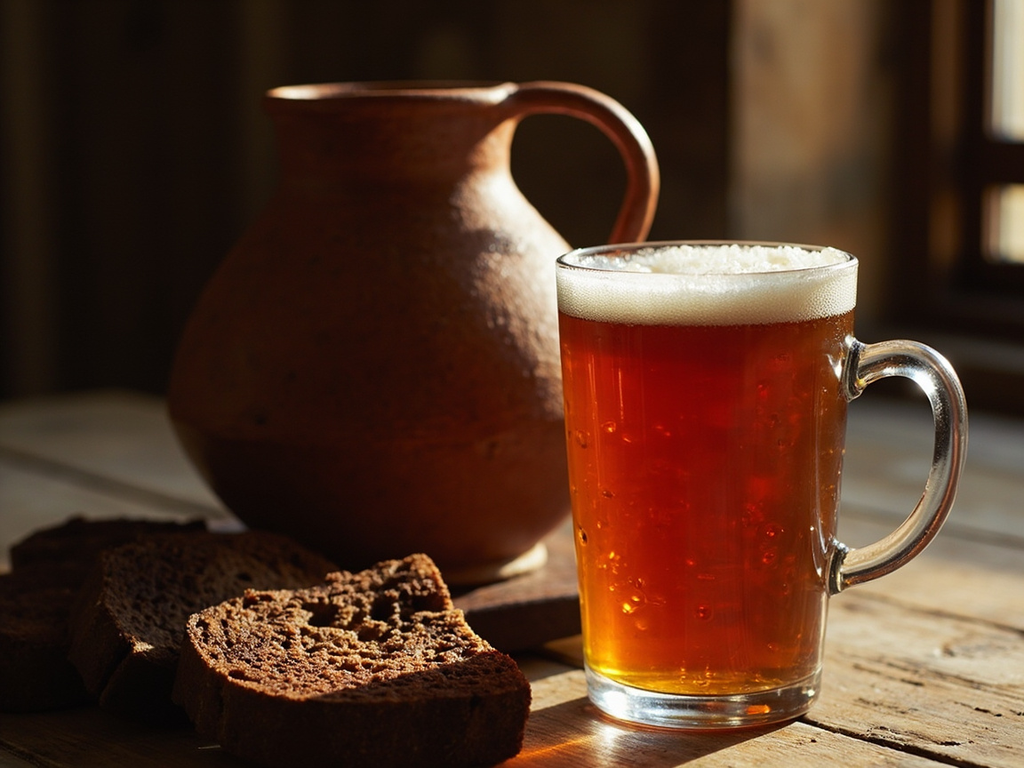
DrinkRye Bread Kvass
Fermented household beverage (barrel by the stove)
🍋 🫙 🍯· 2 days (fermentation)
View the recipe
 Festive
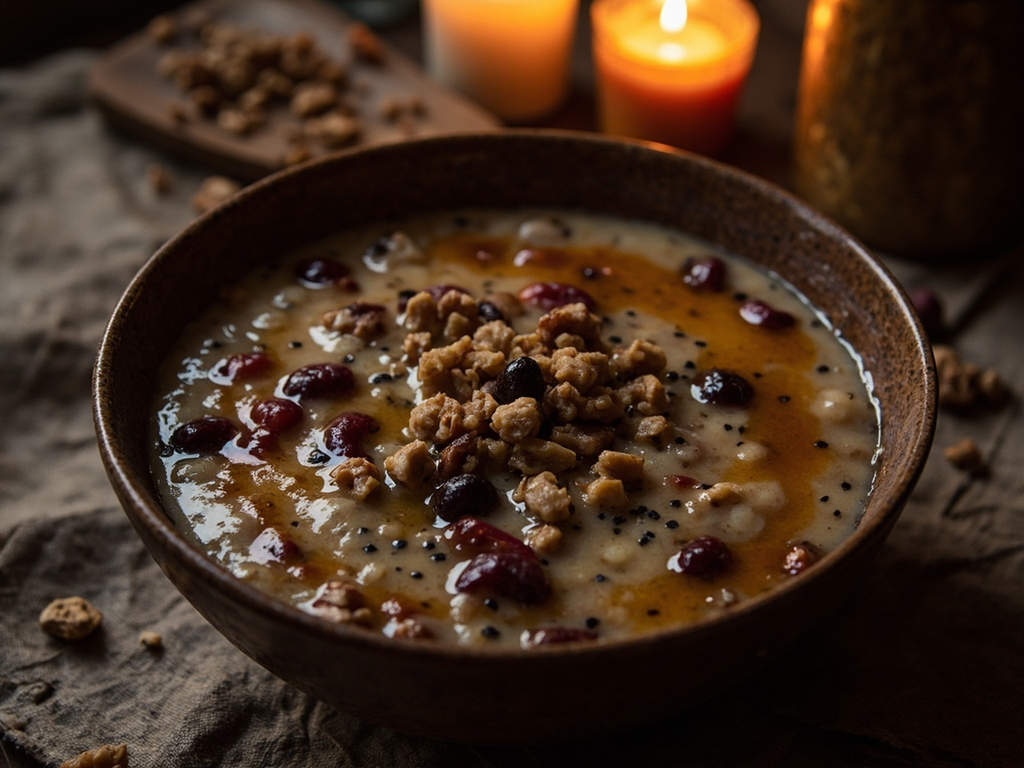
Ancestral Kutia (Wheat, Honey and Poppy Seed)
Dish for vigils and the dead (connects living and ancestors)
🍯 🍄· 2 h 30 (plus soaking)
View the recipe
 Remedy
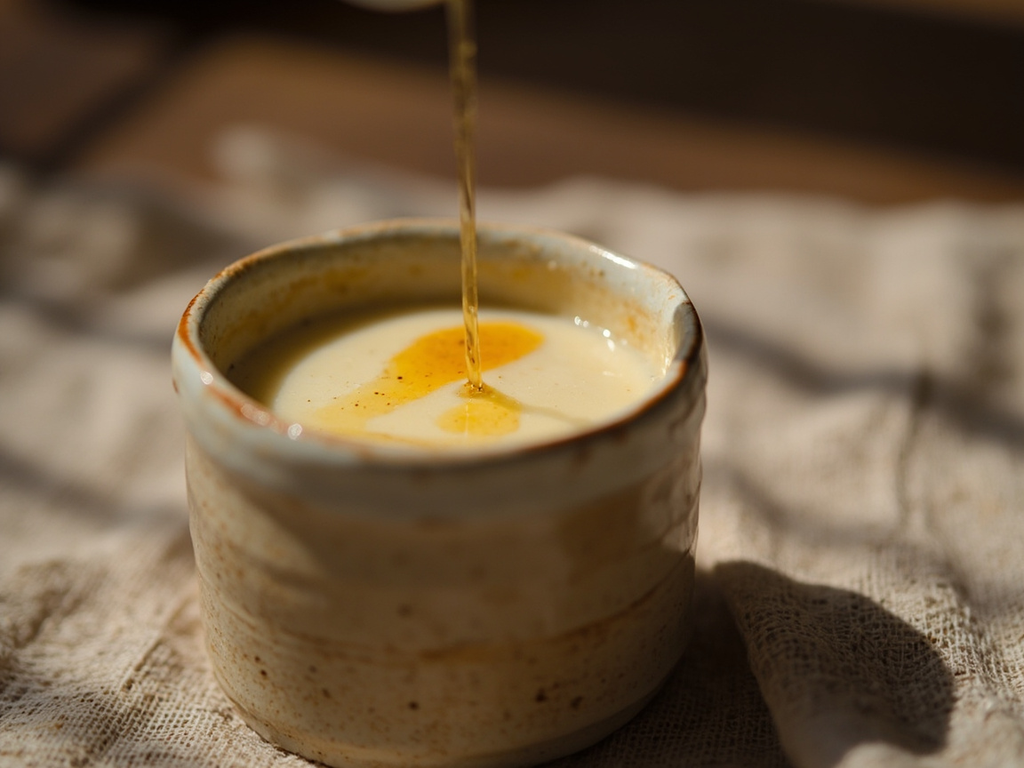
Oatmeal Kissel (Ovsyany Kissel)
Warm remedy jelly (comfort and convalescence)
🍋 🍯· 30 min (plus fermentation)
View the recipe