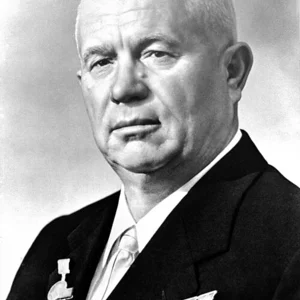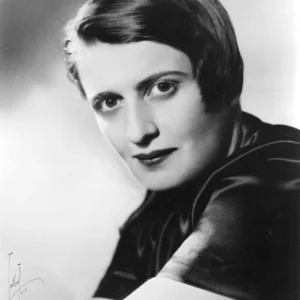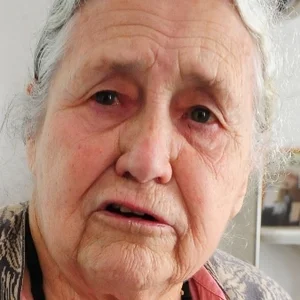

Doris Lessing (1919-2013) was a British novelist born in Persia and raised in Southern Rhodesia. A major figure of 20th-century literature, she is best known for The Golden Notebook. She was awarded the Nobel Prize in Literature in 2007.
Doris Lessing(1919 — 2013)
Doris Lessing
Royaume-Uni, Royaume-Uni de Grande-Bretagne et d'Irlande
7 min read
Frequently asked questions
Famous Quotes
« There is only one sin, and that is theft. When you lie, you steal someone's right to the truth.»
« Growing old is essentially a loss of memory.»
Key Facts
- 1919: Born in Kermanshah (Persia, present-day Iran) to British parents
- 1949: Arrived in London with the manuscript of her first novel, The Grass is Singing
- 1962: Publication of The Golden Notebook, a landmark feminist novel
- 1965: Banned from entering Rhodesia and South Africa for her anti-racist activism
- 2007: Nobel Prize in Literature — one of the oldest laureates in the prize's history
Works & Achievements
Lessing's debut novel depicts the violence of the colonial system in Rhodesia through the murderous relationship between a white farm woman and her Black servant. It was banned in South Africa upon publication.
A semi-autobiographical cycle following Martha Quest from colonial Rhodesia to a post-apocalyptic futuristic London. A monumental work tracing four decades of political and social history.
Lessing's masterpiece and a founding text of literary feminism, it explores the fragmentation of female identity through four differently colored notebooks kept by a woman writer. Translated worldwide.
A novel that plunges into the psyche of a man hospitalized in a psychiatric ward, questioning the boundaries between madness and lucidity. Lessing draws on alternative psychiatry and the ideas of R. D. Laing.
A five-volume science fiction cycle in which Lessing uses intergalactic civilizations to explore the great questions of human history, colonialism, and spiritual evolution.
The first volume of her autobiography, covering her childhood and youth in Africa. A remarkably clear-eyed account of the colonial experience from the inside and the contradictions of a white childhood in Rhodesia.
Lessing's final major work, in which she imagines the lives her parents might have led had the First World War never happened. A moving meditation on fate, war, and family legacy.
Anecdotes
Doris Lessing left Southern Rhodesia in 1949 for London with the manuscript of her first novel in her luggage. She had almost no money and knew no one in England, but she was determined to become a professional writer. The Grass is Singing was published as early as 1950 and met with immediate success.
In 1983, Doris Lessing published two novels under the pseudonym Jane Somers to test the publishing industry. Her own regular publishers rejected the manuscripts without knowing they were hers. This experiment allowed her to demonstrate just how easily publishers could overlook unknown new authors.
When the Nobel Prize in Literature was announced to her in October 2007, Doris Lessing was returning home by taxi. Journalists were waiting outside her door; she stepped out of the vehicle and said with her characteristic composure: 'Oh, my God.' She was 88 years old and became the oldest woman to receive the prize.
Doris Lessing was placed on a blacklist in Rhodesia and South Africa because of her anti-racist stance. For years, she was unable to return to the country where she had grown up. It was not until 1992 that she was able to visit Zimbabwe for the first time since her forced departure.
Lessing was a member of the British Communist Party in the 1940s and 1950s, drawn by its anti-colonial and anti-racist positions. She left the party in 1956, following Khrushchev's revelations about Stalin's crimes. This political trajectory profoundly shaped her literary work and her critical perspective on ideologies.
Primary Sources
"Free women — that is what we call ourselves — but what does the word freedom mean?"
"There was something rotten in that country, something that corrupted everything it touched."
"I grew up on a farm in Southern Rhodesia, in a beautiful and brutal country, under a pitiless sun, among people who did not see what they were doing."
"We must read, read, read. We must cherish our libraries. A book is the most precious of things, even for the poorest of countries."
"She looked out at the veld and told herself: one day I will leave this place. One day I will live as I choose."
Key Places
Doris Lessing's birthplace in 1919, where her war-wounded father had settled as a banker. She spent her earliest years here before the family departed for Africa.
The region where the Tayler family settled to run a maize and tobacco farm. It was here that Doris grew up, in the isolation of the African bush, and where her anti-colonial consciousness was forged.
The capital where Doris Lessing settled as a young adult, working as a telephone operator and secretary. She joined left-wing circles there, married twice, and eventually left everything behind for London.
The city where Lessing settled permanently in 1949 and where she lived and wrote until her death in 2013. Her Hampstead neighbourhood and London's literary cafés formed the backdrop of her life as a writer.
The city where Doris Lessing received the Nobel Prize in Literature in December 2007 at the annual award ceremony, at the age of 88.
Typical Objects

Doris Lessing took her typewriter with her when she left Rhodesia for London in 1949. She wrote the bulk of her work on it, and it became a symbol of her independence and discipline as a writer.

Central to her most celebrated work, the notebook represents in Lessing's writing a space for fragmented, multi-voiced, and honest expression. She had kept notebooks herself since her Rhodesian youth.

A self-taught woman, Lessing educated herself through intensive reading of Marx, Freud, and world literature. Books were her only means of an education that colonial schooling had never given her.

A hallmark of her appearance during her years in southern Africa, the hat shielded her from the blazing sun of the Rhodesian veld and is associated with the image of the white woman in the colony.

Deeply British in her daily habits despite her singular life journey, Lessing placed great importance on the ritual of tea, which punctuated her writing days at her London home.

The geography of her Rhodesian childhood haunted Lessing's work throughout her life. The map of that region — its veld, kopjes, and isolated farms — forms the mental landscape of her early novels.
School Curriculum
Vocabulary & Tags
Key Vocabulary
Tags
Daily Life
Morning
Doris Lessing rose early and devoted the first hours of the morning to writing, before the demands of daily life could disrupt her concentration. During her Rhodesian years, she also managed the farm's domestic chores from dawn.
Afternoon
Afternoons were often reserved for reading, manuscript revisions, and, in London, meetings with other intellectuals and writers in the cafés of Soho or Camden. She was an active participant in left-wing political and literary circles.
Evening
Evenings in London could be filled with political meetings, dinners with fellow writers, or philosophical discussions. In her later decades, she also devoted time to her cats — she was passionate about felines and wrote several pieces about them.
Food
Lessing's cooking was simple and unpretentious, typically British — strong tea, sandwiches, hearty stews. During her African youth, the farm diet included local produce, biltong (dried meat), and vegetables from the garden.
Clothing
Practical and without excessive vanity, Lessing wore functional clothes — wide skirts, loose blouses, sometimes a cardigan. Her outfits reflected her rejection of bourgeois conventions rather than the elegance expected of a woman of letters.
Housing
In London, Lessing lived in several modest flats before settling in a house in north London. She described rooms cluttered with books, manuscripts, and notes, with a central desk where the heart of her creative life took place.
Historical Timeline
Period Vocabulary
Visual Style
Un style visuel en contraste entre la lumière crue et les ocres brûlants de l'Afrique australe et les gris doux, la brume et les intérieurs chargés de livres du Londres d'après-guerre.
Sound Ambience
Un voyage sonore entre la veld rhodésienne de l'enfance — herbes sèches, oiseaux tropicaux, ferme isolée — et le Londres littéraire d'après-guerre où claque la machine à écrire sous la pluie.
Liens externes & ressources
Références
Œuvres
L'Herbe chante (The Grass is Singing)
1950
Les Enfants de la violence (Children of Violence, 5 volumes)
1952–1969
Le Carnet d'or (The Golden Notebook)
1962
Briefing for a Descent into Hell
1971
Le Survivant des Canopus (série Canopus dans Argos : Archives)
1979–1983
Sous ma peau (Under My Skin) — tome 1 de son autobiographie
1994
Alfred et Emily
2008