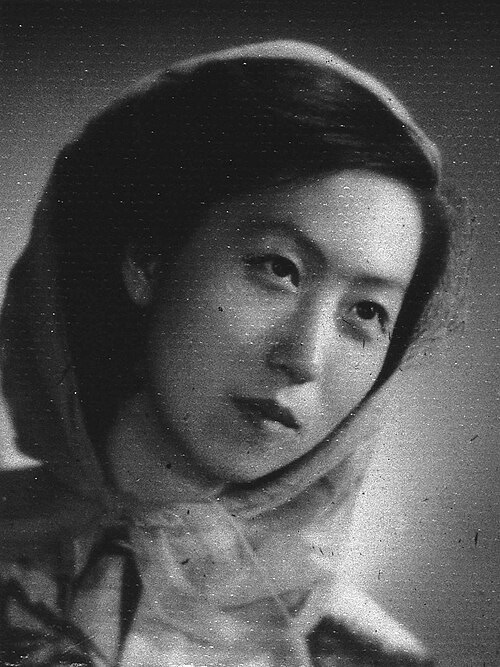
Eileen Chang(1920 — 1995)
Zhang Ailing
États-Unis, République populaire de Chine, Taïwan
9 min read
Chinese novelist born in Shanghai in 1920, Eileen Chang is considered one of the greatest voices in modern Chinese literature. Her works explore with remarkable subtlety the romantic relationships and Shanghainese society of the first half of the twentieth century.
Famous Quotes
« Fame must be seized while you are young, or not at all. »
« To meet the right person, you must cross deserts of time. »
Key Facts
- 1920: born in Shanghai into a declining aristocratic family
- 1943: publication of her major short stories, including 'Love Devastates' in Shanghai literary magazines
- 1952: leaves mainland China for Hong Kong and then Taiwan
- 1955: emigrates to the United States, continuing her literary career in exile
- 1995: dies in Los Angeles, leaving behind a body of work translated around the world
Works & Achievements
Considered her masterpiece, this novella paints an unflinching portrait of a woman trapped in a mercenary marriage who ends up poisoning everything she loves. It is one of the most powerful works in modern Chinese literature, compared by some critics to Flaubert.
First a short story, then a stage play, it tells the story of a divorced woman and a libertine man who can only find love after Hong Kong falls to the Japanese. Zhang Ailing explores with irony how war can paradoxically free individuals from social constraints.
A serialized novel first published under a pseudonym, it tells an impossible love story between two young people in Shanghai separated by family conventions. It is Zhang Ailing's most widely read work in mainland China and Taiwan today.
A collection of autobiographical essays in which she reflects on fashion, music, cinema, food, and everyday life in Shanghai. These pieces reveal an original perspective on modernity and remain among the finest essays in twentieth-century Chinese literature.
A novel written directly in English, it describes with clinical coldness the devastation wrought by forced collectivization in Communist China in the 1950s. Partly commissioned by the American USIS, it stands as a testament to Zhang Ailing's anti-totalitarian convictions during her years of exile.
An autobiographical novel written in the 1970s but published after her death in accordance with her final instructions, it retraces with brutal frankness her relationship with Hu Lancheng and her formative years. Its publication caused a sensation and reignited debates about the author's life and work.
Anecdotes
Zhang Ailing was born into a declining Shanghainese aristocratic family: her father, an opium addict prone to violence, imprisoned her for several months in their home after she tried to join her mother in Europe. This captivity left a deep mark on her work, which is filled with characters trapped by family conventions and money.
A brilliant student, she won a scholarship to the University of Hong Kong in 1939, but was forced to abandon her studies when the Japanese seized the city in December 1941. She made her way back to occupied Shanghai by foot and boat — a traumatic experience she later transformed into literary material in her novella 'Love in a Fallen City'.
In 1944, she married Hu Lancheng, an intellectual who collaborated with Wang Jingwei's pro-Japanese puppet government. This scandalous marriage earned her harsh criticism after the war. She divorced him in 1947 after discovering his repeated infidelities, sending him a farewell letter along with a sum of money.
Zhang Ailing was famous for her extravagant outfits in 1940s Shanghai: she wore qipaos in vivid colors and bold prints that she designed herself, bucking the austerity imposed by the war. For her, this sartorial eccentricity was a form of resistance and self-assertion.
After emigrating to the United States in 1955, she lived an increasingly reclusive life, moving frequently to escape what she described as invisible parasites. In September 1995, her body was discovered in her Los Angeles apartment several days after her death, lying on her mattress surrounded by unfinished manuscripts.
Primary Sources
There was Bai Liusu, divorced, who had passed thirty. In Shanghai, a divorced woman of thirty was hardly worth anything at all.
Thirty years have passed under this moon, as if one had walked through a long, dark, narrow, oppressive corridor. The further one goes, the more time slips away, and the moon sleeps at the other end, shining for the people on the other side.
I want to live in a flash of brilliance right now, this very instant. I have no patience for waiting. In this world, there is nothing more perishable than time.
She had believed that love could overcome everything. But love was also a worn garment that one eventually folds away in a drawer.
We loved each other as well as I was capable of loving. I am sending you enough to live on for six months, so that we may part as equals.
Key Places
Her birthplace and the primary setting of her work, Shanghai in the 1940s was a cosmopolitan metropolis blending Chinese, British, French, and American influences. It is in this hybrid, war-torn Shanghai that Zhang Ailing set nearly all of her novels and short stories.
Zhang Ailing studied literature there from 1939 to 1941, until the Japanese invasion cut her studies short. This period left a deep mark on her worldview: she witnessed firsthand a colonial city being brutally plunged into war.
It was in this bourgeois household that her father held her prisoner for several months after she attempted to join her mother. This confinement directly gave rise to the claustrophobic atmosphere that characterizes her portraits of women trapped by their families.
After leaving Communist China, Zhang Ailing spent several years in Hong Kong, where she worked for the United States Information Service, translating novels and writing anti-communist works. This transitional period was painful but productive.
Zhang Ailing's final place of residence, where she lived alone and reclusive for decades, moving frequently and refusing nearly all interviews. It was in an apartment in Westwood that she died in September 1995, her body discovered several days after her death.