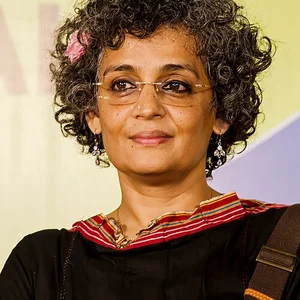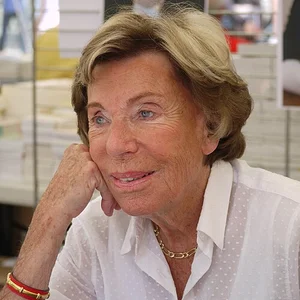

French-Venezuelan anthropologist and ethnologist. In 1982, in Paris, she gathered the testimony of the Guatemalan activist Rigoberta Menchú, giving rise to the book “I, Rigoberta Menchú,” a landmark work of Latin American testimonial literature.
Elisabeth Burgos
Elisabeth Burgos-Debray
6 min read
Frequently asked questions
Key Facts
- Born in 1941 in Venezuela, she pursued a career as an anthropologist between Latin America and Europe.
- In 1982, in Paris, she recorded and shaped the account of Rigoberta Menchú.
- Publication in 1983 of “Me llamo Rigoberta Menchú y así me nació la conciencia,” translated into French under the title “I, Rigoberta Menchú.”
- The work helped bring Rigoberta Menchú to international prominence, the future winner of the Nobel Peace Prize in 1992.
- The book became a reference point for the testimonial genre and fueled debates about the authenticity of ethnographic testimony.
Works & Achievements
Testimonial book gathered and shaped by Elisabeth Burgos-Debray; a founding work of Latin American testimonio, translated throughout the world.
Original Spanish-language edition of the testimony, published in Barcelona, which brought the cause of the Indigenous Maya people to a wide audience.
A body of research devoted to the cultures and struggles of the Latin American continent, which shaped her approach to testimony.
Institutional and intellectual commitment to spreading Latin American cultures in France.
Anecdotes
In January 1982, Elisabeth Burgos-Debray welcomed into her home in Paris a young, still-unknown Guatemalan activist: Rigoberta Menchú. Over the course of a week, she recorded hours of testimony on a tape recorder, then transcribed and organized this flow of words to turn it into a book.
Elisabeth Burgos-Debray was the wife of the French intellectual Régis Debray, a fellow traveler of Che Guevara in Bolivia. This marriage placed her at the heart of the Latin American revolutionary networks that passed through Paris in the 1960s and 1970s.
Ten years after the book's publication, in 1992, Rigoberta Menchú was awarded the Nobel Peace Prize. The testimony gathered by Elisabeth Burgos-Debray had made the plight of Guatemala's indigenous Maya known to the entire world.
In 1999, the American anthropologist David Stoll challenged the accuracy of certain episodes in the account, sparking a heated international controversy over the boundary between testimony, memory, and historical truth. Elisabeth Burgos-Debray's book then became a textbook case studied in universities.
The book's original Spanish title, *Me llamo Rigoberta Menchú y así me nació la conciencia* (“My name is Rigoberta Menchú and this is how my conscience was born”), emphasizes the awakening of political awareness, whereas the shorter French title that was chosen highlights the activist's name.
Primary Sources
This book is the story of Rigoberta Menchú's life. For one week, I welcomed her into my home in Paris; I listened to her, recorded her, then I transcribed and arranged her words.
Me llamo Rigoberta Menchú. Tengo veintitrés años. Quisiera dar este testimonio vivo que no he aprendido en un libro y que tampoco he aprendido sola.
I wanted to let Rigoberta speak, to efface my own presence so that her voice, and that of an entire people, could be heard.
Key Places
Region of Latin America where Elisabeth Burgos was born, the starting point of her interest in the cultures of the continent.
City where Elisabeth Burgos-Debray lived and worked, and where she gathered Rigoberta Menchú's testimony in 1982.
Homeland of Rigoberta Menchú, at the heart of the Maya communities whose suffering her account describes. The central setting of the testimony that was gathered.
Cradle of the Latin American revolution that Elisabeth Burgos frequented during her militant youth, in contact with revolutionary networks.
Typical Objects
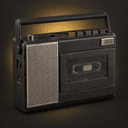
Device with which Elisabeth Burgos-Debray recorded the hours of testimony given by Rigoberta Menchú. It is the founding tool of testimonio literature.

Magnetic medium onto which the raw words of the testimony were captured. These tapes form the raw material of the book.

Instrument used to transcribe and arrange the oral account into a continuous text. It marks the shift from voice to writing.
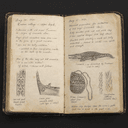
Notebook in which the anthropologist records observations and details during interviews. A classic tool of fieldwork.
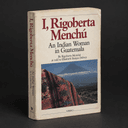
Work published in 1983, the result of the effort to collect and shape the testimony. It became a classic of testimonial literature.
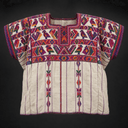
Traditional embroidered blouse worn by Rigoberta Menchú during the interviews, a living symbol of the Guatemalan indigenous identity evoked in the account.
School Curriculum
Vocabulary & Tags
Key Vocabulary
Tags
Daily Life
Morning
An anthropologist based in Paris, she often devotes her mornings to reading, correspondence, and going through her field notes. Intellectual work sets the rhythm of her days in a cosmopolitan city.
Afternoon
In the afternoon, she hosts intellectuals, exiles, and Latin American activists passing through the French capital. These encounters feed her research and her networks.
Evening
Evenings are devoted to writing and transcription: during that week in 1982, she listens tirelessly to the cassette recordings of Rigoberta Menchú's testimony in order to give the narrative its shape.
Food
Living between European and Latin American cultures, her diet blends Parisian cuisine with the flavors of the American continent she knows so well. Coffee accompanies her long hours of work.
Clothing
She wears the plain, urban attire of a Parisian academic of the last third of the 20th century. Her appearance contrasts with the traditional *huipil* of her Maya interlocutor.
Housing
She lives in a Parisian apartment that also serves as a workplace and a gathering spot. It was there, in her home, that the founding interviews with Rigoberta Menchú took place.
Historical Timeline
Period Vocabulary
Liens externes & ressources
Références
Œuvres
Moi, Rigoberta Menchú. Une vie et une voix, la révolution au Guatemala
1983
Me llamo Rigoberta Menchú y así me nació la conciencia
1983
Travaux d'anthropologie et d'ethnologie sur l'Amérique latine
années 1970-1990
Direction de la Maison de l'Amérique latine et activités éditoriales à Paris
fin XXe siècle