 flip
flipCotignac, Quince Marmalade
Cotignac, Quince Marmalade
Why this dish? Quince "marmalades," firm and sliceable, garnished the banquet and kept for months. The Queen received such sweet gifts as New Year's presents; this amber paste, a marriage of precious sugar and tart fruit, embodied Tudor luxury preserves.
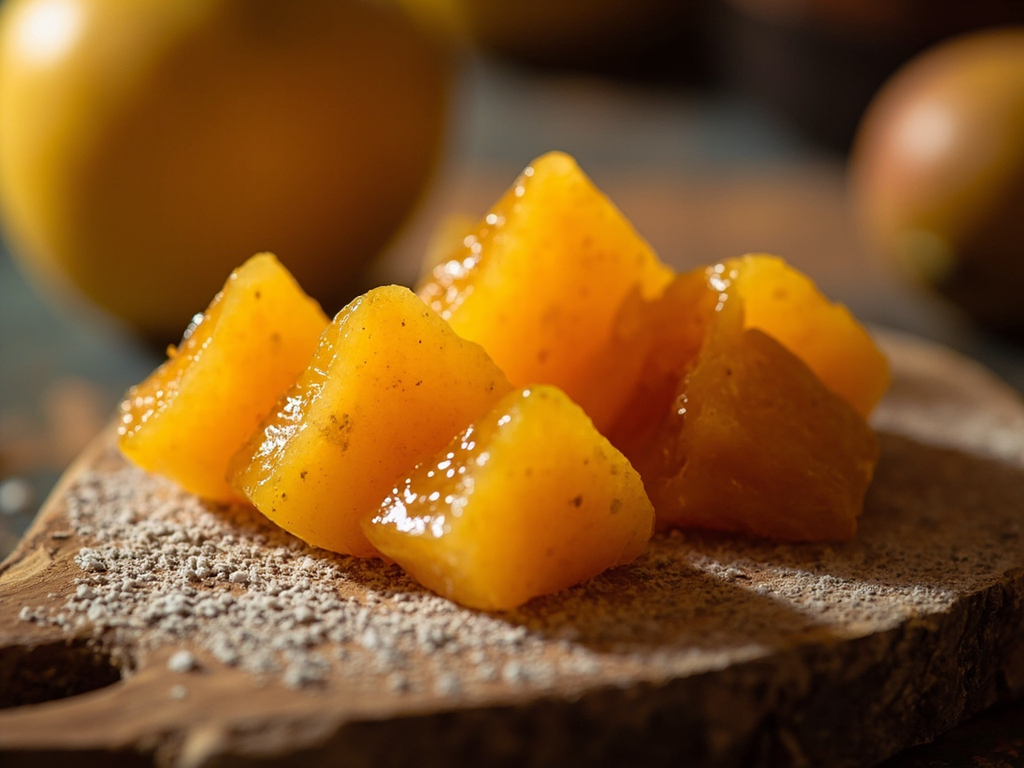
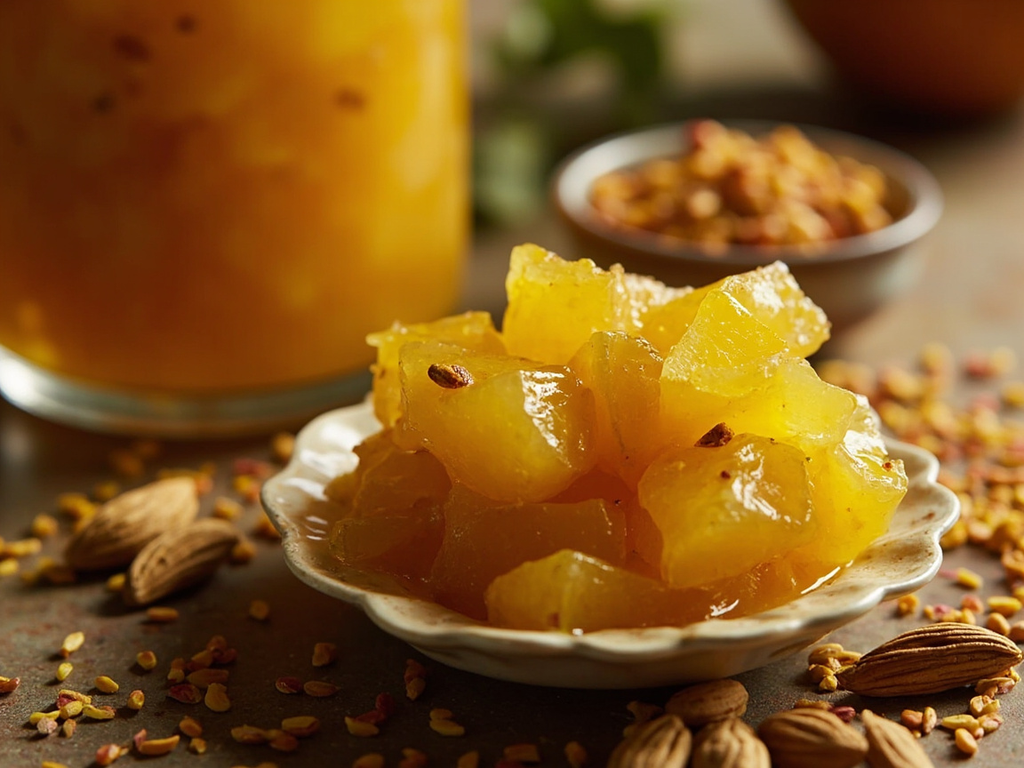
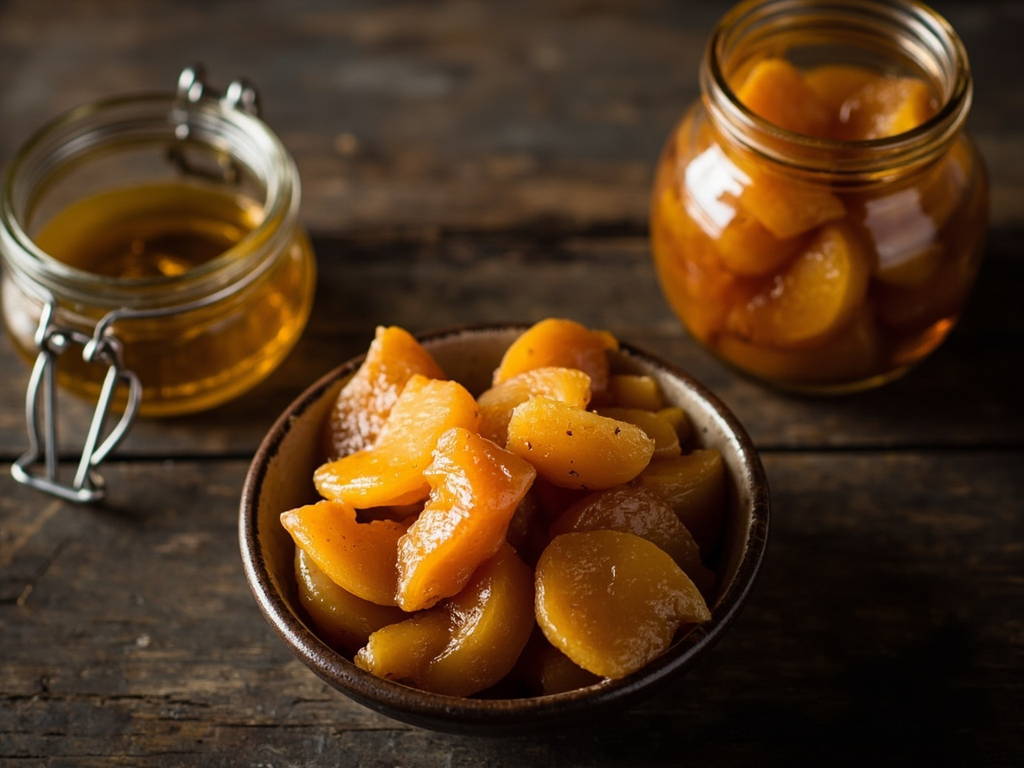
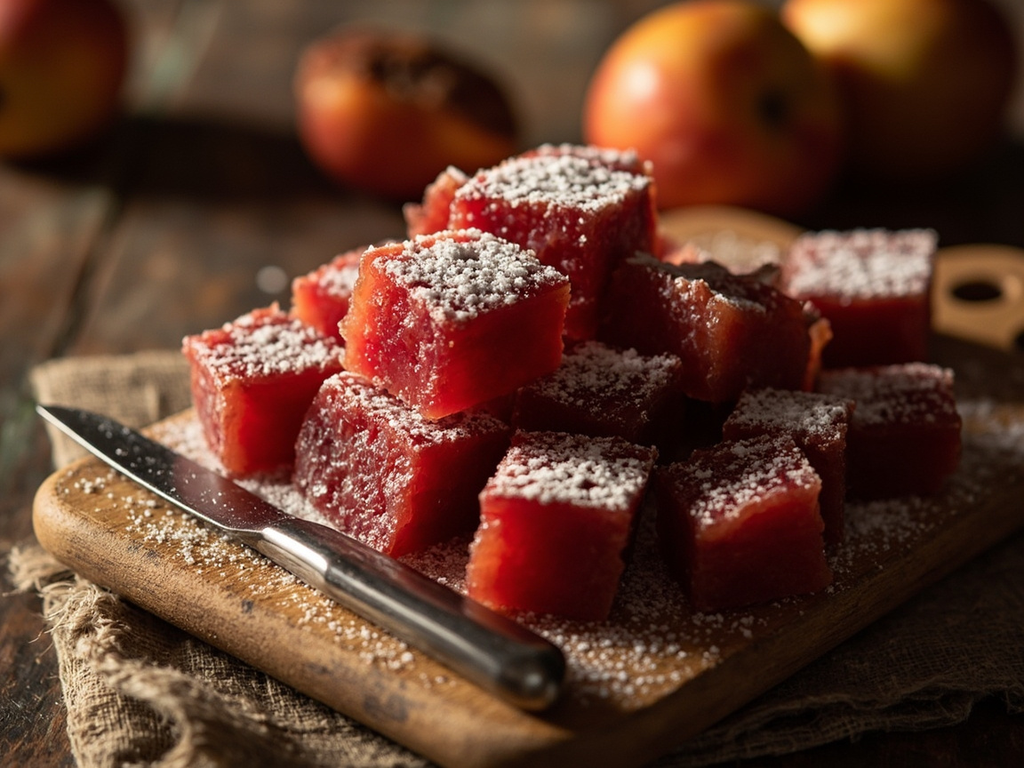
A quince paste cooked long with sugar until firm enough to slice—a fragrant preserve that defies winter and closes the banquet on the palate.
The quince, that tart and fragrant fruit, cannot be eaten raw; but cooked long with sugar, it becomes one of the wonders of Our banquet. My confectioners reduce it to a thick, amber paste, until it holds under the knife and keeps all winter long. I am offered them at New Year, prettily molded and stamped. Cut a small piece: its scent will tell you why kings vie for it.
- •Ripe quinces — several (fruit)
- •Sugar — equal weight of pulp (preservation and sweetness)
- •Rosewater — a splash (flavoring (optional))
Cotignac, Quince Marmalade
A quince paste cooked long with sugar until firm enough to slice—a fragrant preserve that defies winter and closes the banquet on the palate.
Why this dish? Quince "marmalades," firm and sliceable, garnished the banquet and kept for months. The Queen received such sweet gifts as New Year's presents; this amber paste, a marriage of precious sugar and tart fruit, embodied Tudor luxury preserves.
The quince, that tart and fragrant fruit, cannot be eaten raw; but cooked long with sugar, it becomes one of the wonders of Our banquet. My confectioners reduce it to a thick, amber paste, until it holds under the knife and keeps all winter long. I am offered them at New Year, prettily molded and stamped. Cut a small piece: its scent will tell you why kings vie for it.
Ingredients (period version)
- Ripe quinces — several (fruit)
- Sugar — equal weight of pulp (preservation and sweetness)
- Rosewater — a splash (flavoring (optional))
Ingredients
- Quinces — 1 kg (fruit)
- Sugar — about 700 g (weight of cooked pulp) (preservation and sweetness)
- Lemon juice — 1 tbsp (acidity and set)
- Rosewater — 1 tsp (flavoring (optional))
Method
- Peel and core the quinces, cut into pieces.
- Cook in a little water until very tender, then puree finely.
- Weigh the pulp and add about 70% of its weight in sugar, plus lemon juice.
- Cook over low heat, stirring constantly, for 30-45 minutes: the paste thickens, darkens, and pulls away from the pan.
- Stir in rosewater, pour into a flat mold lined with paper.
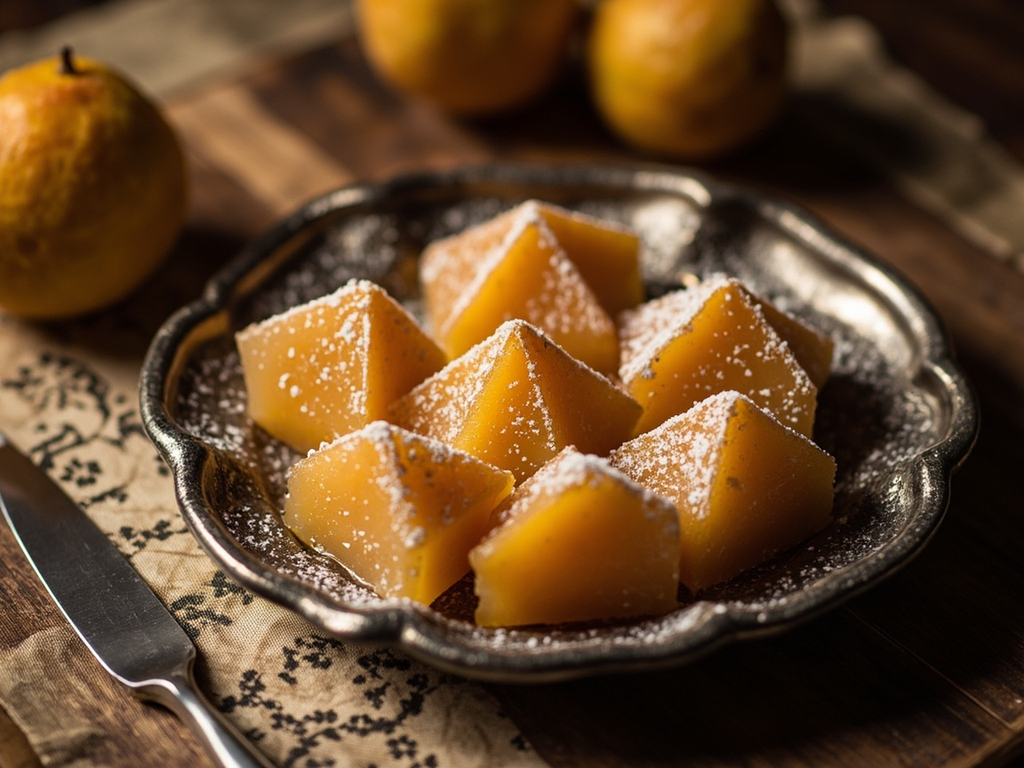
- Let dry and firm for a day or two, then slice into diamonds.
How it was made : The word "marmalade" then referred to this firm quince paste (from Portuguese marmelo, quince), imported then made in England. It was cooked until it could be molded and sliced, sometimes stamped with patterns, and kept long due to high sugar content.
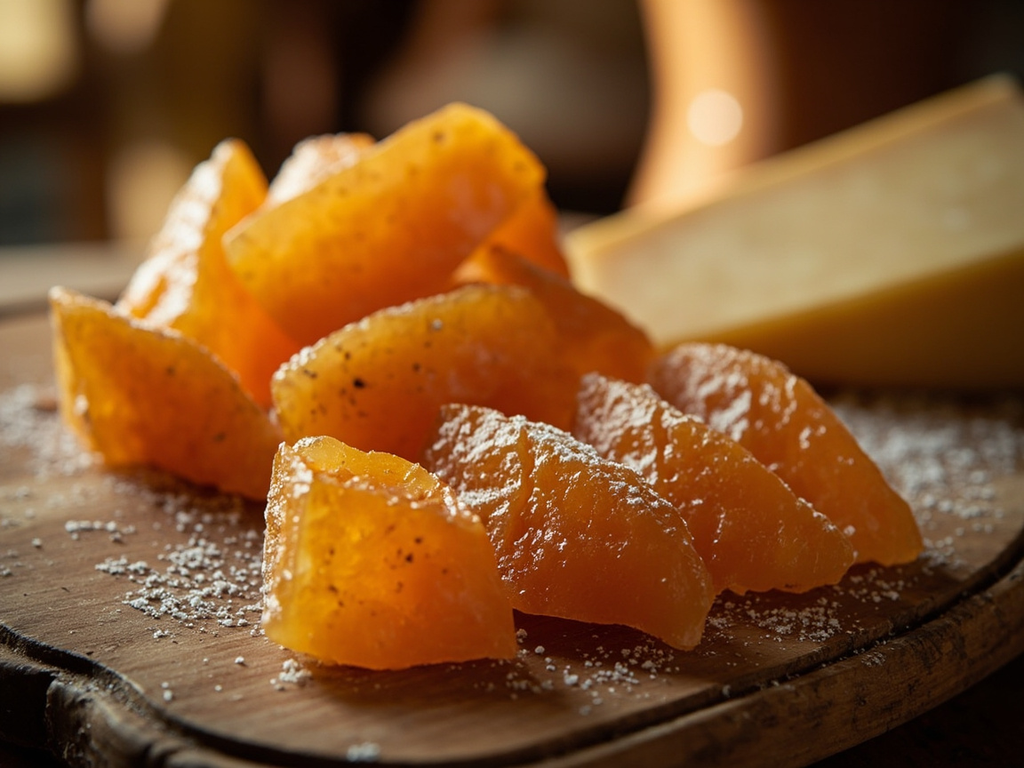
The contemporary twist : Cut into small cubes rolled in crystal sugar and serve with aged cheese, a nod to modern quince paste.
Sources : The Good Huswifes Jewell, 1585 · C. Anne Wilson, The Book of Marmalade, 1985
Elizabeth I of England · Charactorium