 flip
flipQuince Paste (Cotignac)
Quince Paste (Cotignac)
Why this dish? To spare his delicate stomach, Erasmus would have appreciated quince preserves, which Renaissance doctors recommended at the end of meals as a digestive remedy. Quince, astringent and fragrant, was part of the "electuaries" at the end of the meal. A food-medicine fitting for a man attentive to his health.
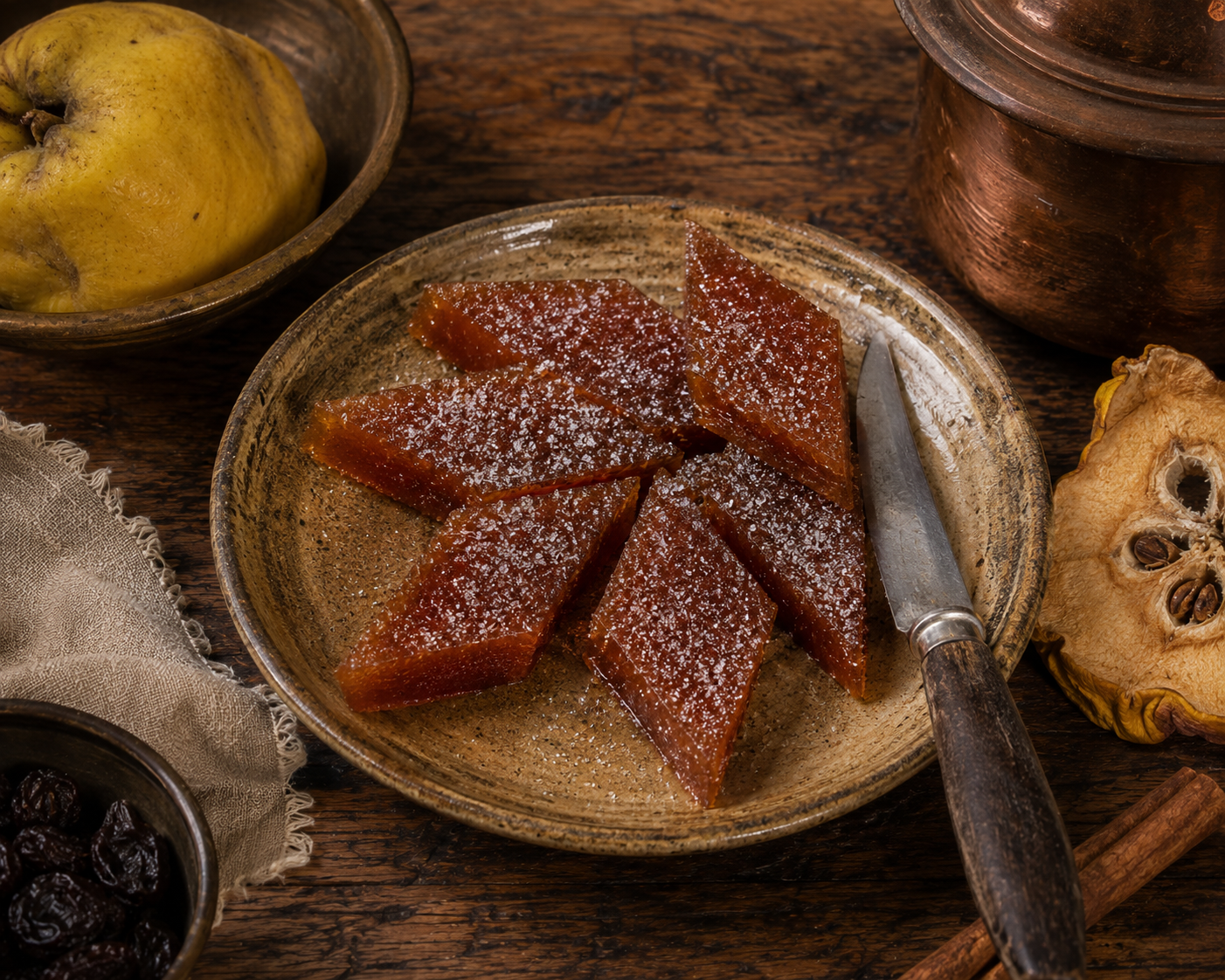
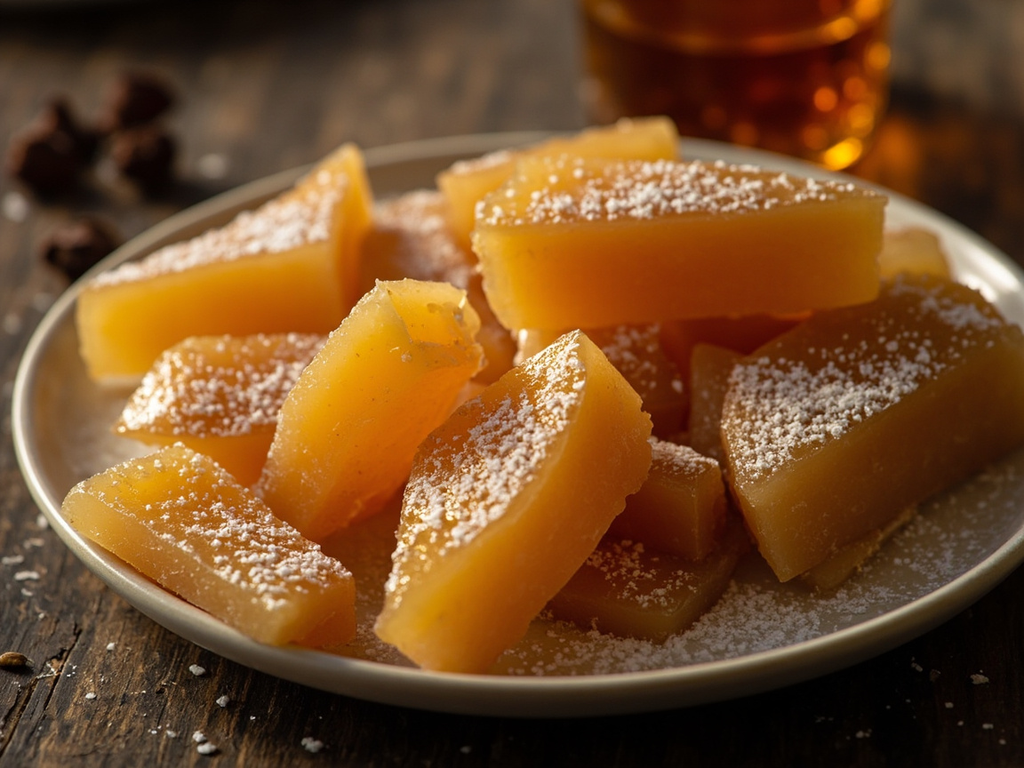
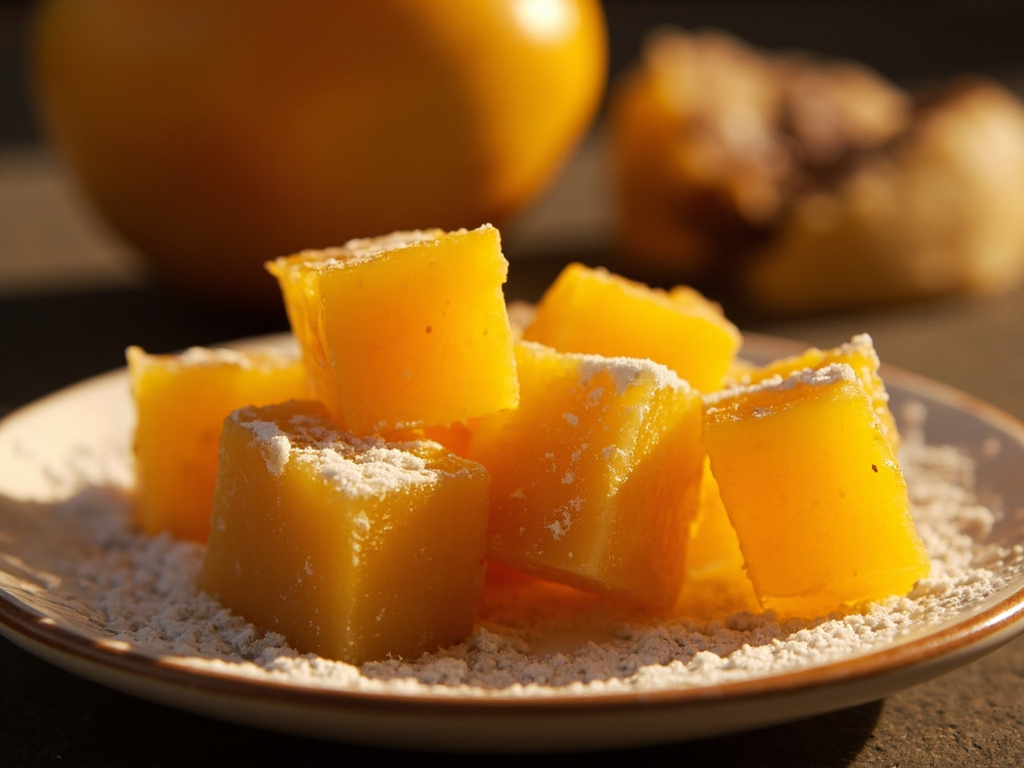
A thick, amber, translucent quince paste, halfway between jam and candy. Perfumed with sweet spices, sweet and tart, eaten in small cubes at the end of the meal to "close the stomach."
My belly, as I have told you, is a stern censor that condemns half of what I swallow. So after a good meal, I allow myself a square of cotignac: this quince cooked long in sugar until it takes on the color of amber and the firmness of wax. Doctors hold it sovereign against heavy humors — and I hold it especially very pleasant, which does not spoil anything. Suck it slowly, reader, as one savors a well-struck sentence from the Ancients.
- •Ripe quinces — several (base fruit)
- •Sugar or honey — equal weight to pulp (preservation and sweetness)
- •Cinnamon and ginger — a pinch (sweet spices)
- •Rose water — a dash (flavoring)
Quince Paste (Cotignac)
A thick, amber, translucent quince paste, halfway between jam and candy. Perfumed with sweet spices, sweet and tart, eaten in small cubes at the end of the meal to "close the stomach."
Why this dish? To spare his delicate stomach, Erasmus would have appreciated quince preserves, which Renaissance doctors recommended at the end of meals as a digestive remedy. Quince, astringent and fragrant, was part of the "electuaries" at the end of the meal. A food-medicine fitting for a man attentive to his health.
My belly, as I have told you, is a stern censor that condemns half of what I swallow. So after a good meal, I allow myself a square of cotignac: this quince cooked long in sugar until it takes on the color of amber and the firmness of wax. Doctors hold it sovereign against heavy humors — and I hold it especially very pleasant, which does not spoil anything. Suck it slowly, reader, as one savors a well-struck sentence from the Ancients.
Ingredients (period version)
- Ripe quinces — several (base fruit)
- Sugar or honey — equal weight to pulp (preservation and sweetness)
- Cinnamon and ginger — a pinch (sweet spices)
- Rose water — a dash (flavoring)
Ingredients
- Quinces — 1 kg (base fruit)
- Sugar — approx. 700 g (weight of cooked pulp) (preservation and sweetness)
- Ground cinnamon — 1/2 tsp (sweet spice)
- Ground ginger — 1 pinch (warming spice)
- Rose water — 1 tsp (flavoring (optional))
Method
- Wash the quinces, cut into quarters (do not peel for pectin), and cook in water until very tender.
- Drain, remove cores and seeds, then pass the flesh through a sieve or blend to a smooth puree.
- Weigh the pulp and return to the pot with nearly equal weight of sugar, cinnamon, and ginger.
- Cook over low heat, stirring constantly, for 30-45 minutes, until the paste pulls away from the bottom and darkens to an amber color.
- Flavor with rose water, spread 1.5 cm thick in a lined dish, let dry 1-2 days, then cut into cubes.
How it was made : Cotignac (from *cotoneum*, Latin for quince) is one of the oldest confections in Europe, a descendant of medicinal "electuaries." The quince paste was thickened with sugar or honey until sliceable, then stored for months. Orléans made it a famous specialty. Served at the end of the meal, it combined pleasure with supposed digestive benefit.
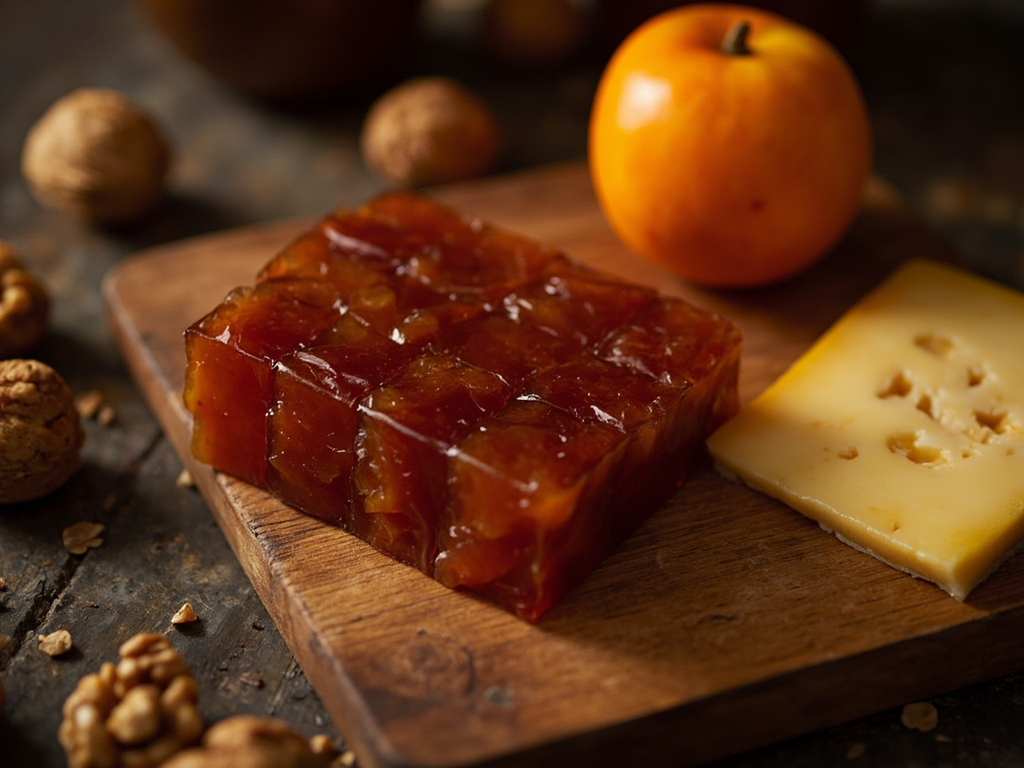
The contemporary twist : Cut into small cubes rolled in sugar and arranged on a slate with a wedge of aged cheese: the quince paste-cheese pairing, straight from the Renaissance.
Sources : Nostradamus, Traité des fardements et confitures (1555) · Platine, De honesta voluptate (1474)
Erasmus · Charactorium