 flip
flipMâza, the everyday barley cake
Mâza, the everyday barley cake
Why this dish? Aesop, they say, was born a slave before winning his freedom through his wit. Mâza was the bread of the common people as well as the frugal sage: no oven, no wealth, just barley, water and a little oil. It is the food of one who observes the world without encumbrance.
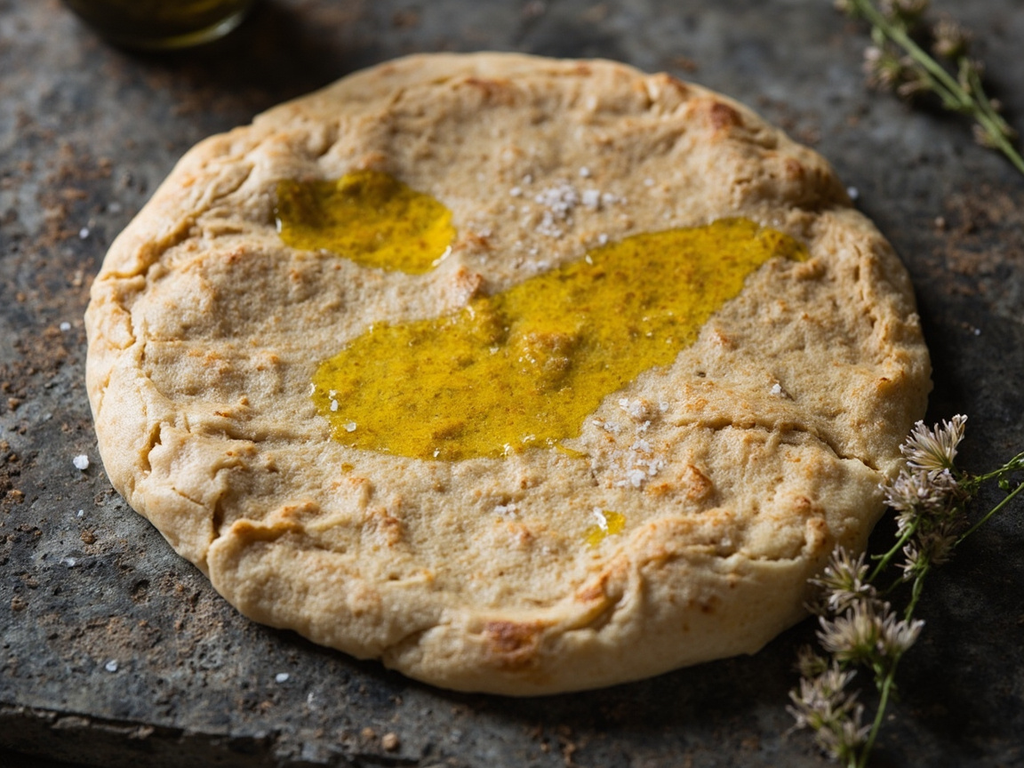
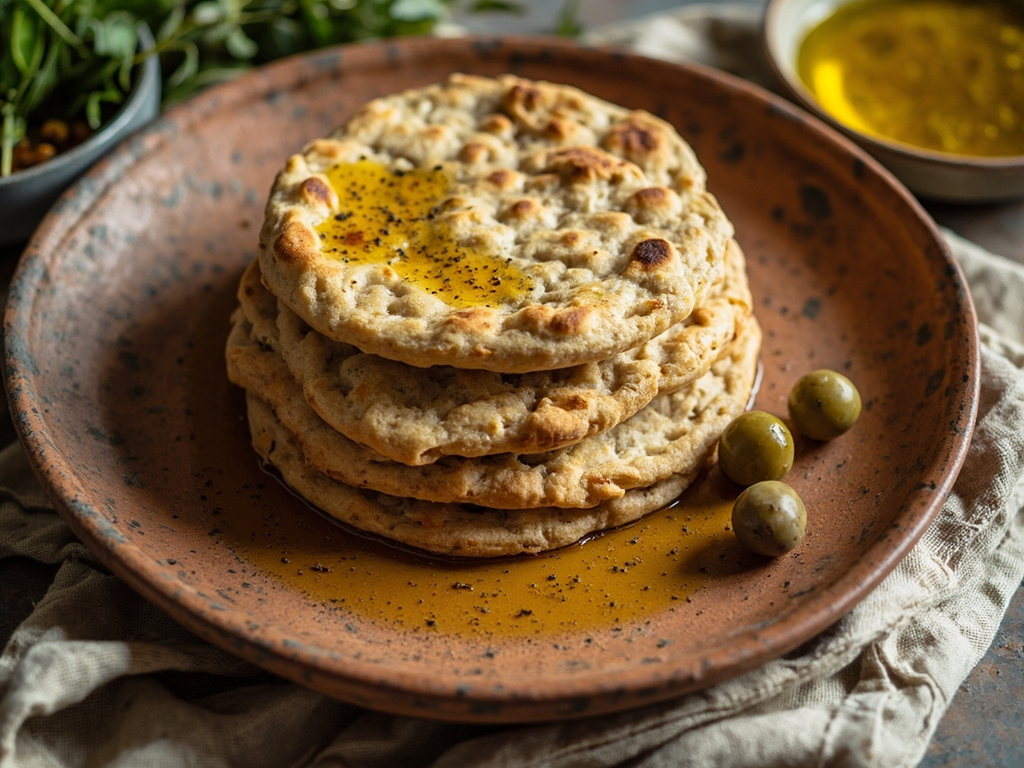
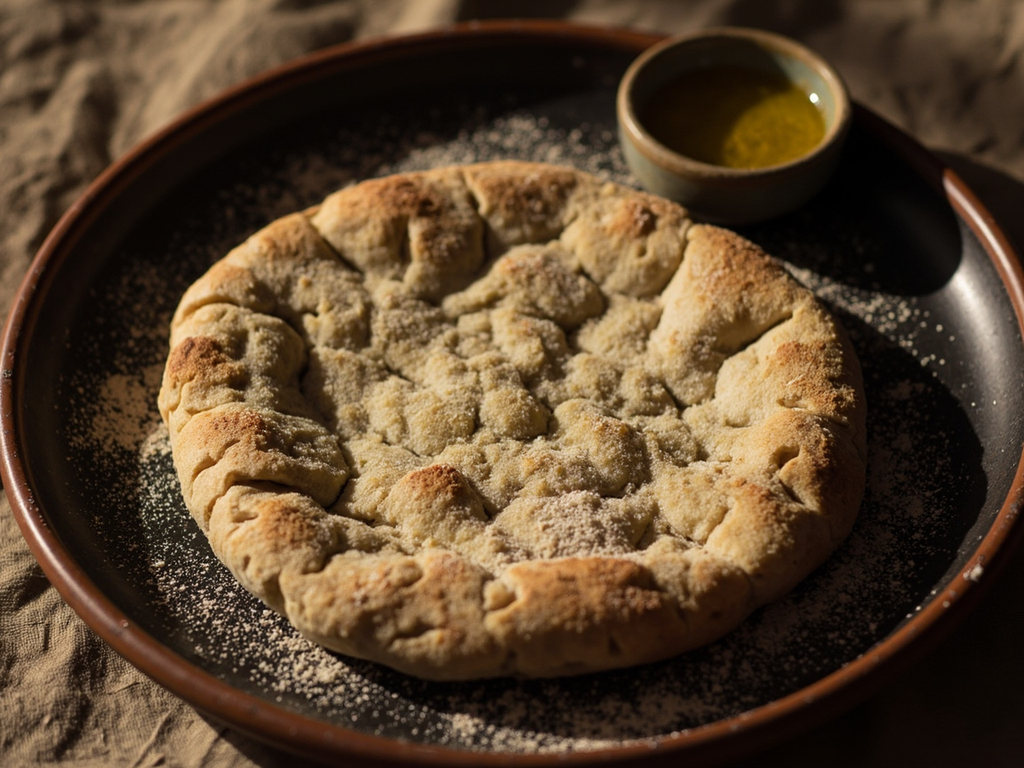
A dense, rustic cake of toasted barley, kneaded raw with a drizzle of olive oil and a pinch of salt, eaten as is or dipped in watered wine. The roasted taste of barley dominates, slightly bitter, comforting.
Listen well, you who pass by: the ant stores its grain while the cicada sings, and it is the ant that survives the winter. This cake I knead with my own hands, without oven or servant — toasted barley, a little water, a drop of oil, and it's done. Dip it in your watered wine, and you will understand that a free man fills his belly with little, where the rich chokes on too much.
- •Álphita (toasted barley flour) — two handfuls (base)
- •Spring water — enough to bind (binder)
- •Olive oil — a drizzle (softness)
- •Sea salt — a pinch (seasoning)
Mâza, the everyday barley cake
A dense, rustic cake of toasted barley, kneaded raw with a drizzle of olive oil and a pinch of salt, eaten as is or dipped in watered wine. The roasted taste of barley dominates, slightly bitter, comforting.
Why this dish? Aesop, they say, was born a slave before winning his freedom through his wit. Mâza was the bread of the common people as well as the frugal sage: no oven, no wealth, just barley, water and a little oil. It is the food of one who observes the world without encumbrance.
Listen well, you who pass by: the ant stores its grain while the cicada sings, and it is the ant that survives the winter. This cake I knead with my own hands, without oven or servant — toasted barley, a little water, a drop of oil, and it's done. Dip it in your watered wine, and you will understand that a free man fills his belly with little, where the rich chokes on too much.
Ingredients (period version)
- Álphita (toasted barley flour) — two handfuls (base)
- Spring water — enough to bind (binder)
- Olive oil — a drizzle (softness)
- Sea salt — a pinch (seasoning)
Ingredients
- Barley flour (or ground toasted barley) — 200 g (base)
- Warm water — 100 to 120 ml (binder)
- Extra virgin olive oil — 2 tbsp (softness)
- Salt — 1 pinch (seasoning)
Method
- If starting from whole barley, toast it dry in a pan until fragrant, then grind finely.
- Mix barley flour with salt, add oil then water little by little until a soft, non-sticky dough forms.
- Knead for 2 minutes, shape into a cake about 1 cm thick.
- Cook on a hot stone or dry pan for 4 to 5 minutes per side, until colored.
- Eat warm, plain, or dipped in wine diluted with water.
How it was made : Mâza was often eaten without cooking: toasted barley flour simply kneaded with a liquid (water, milk, oil, even wine or honey) formed a paste eaten raw. It was the staple food of most Greeks, leavened wheat bread remaining an urban luxury.
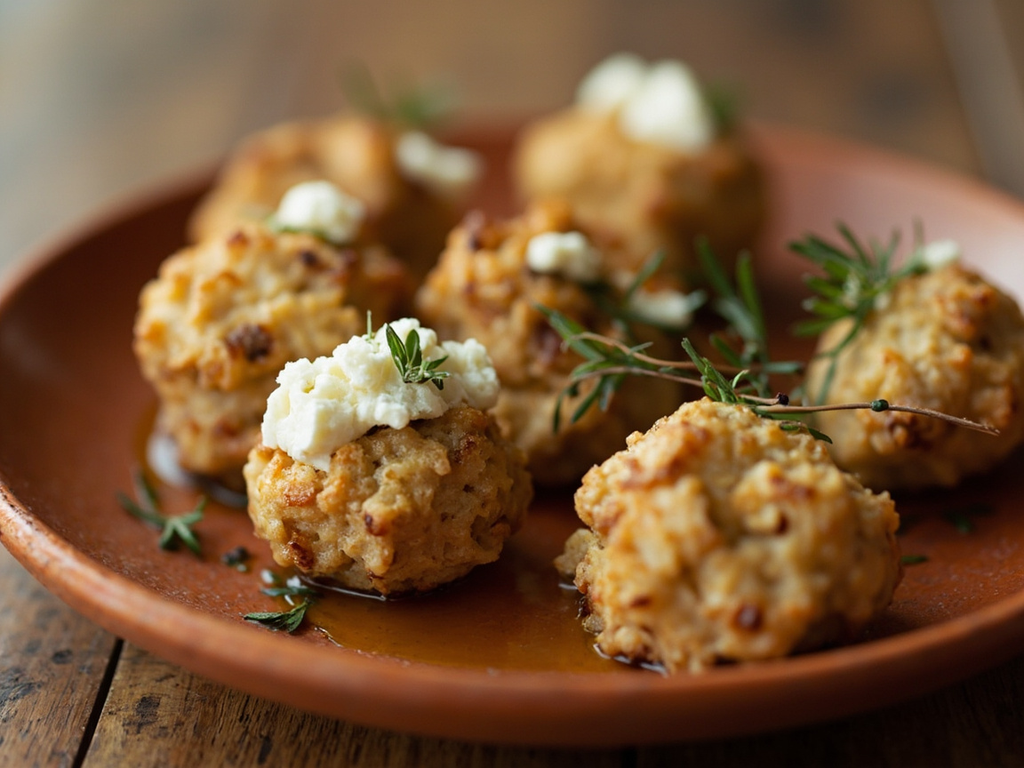
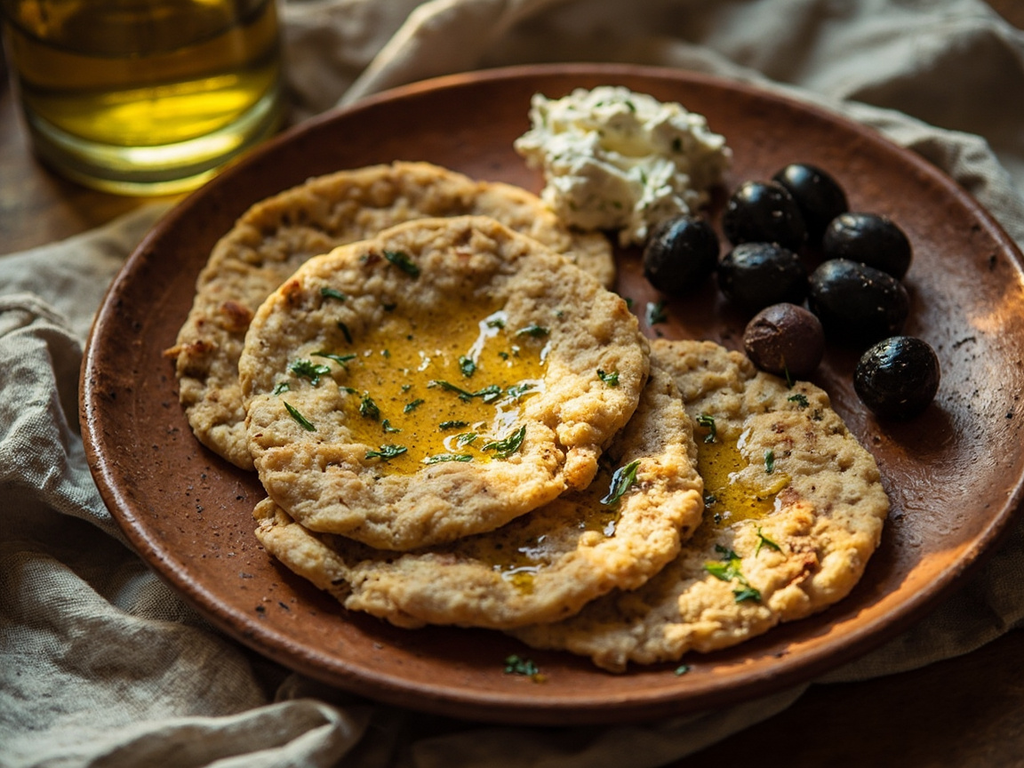
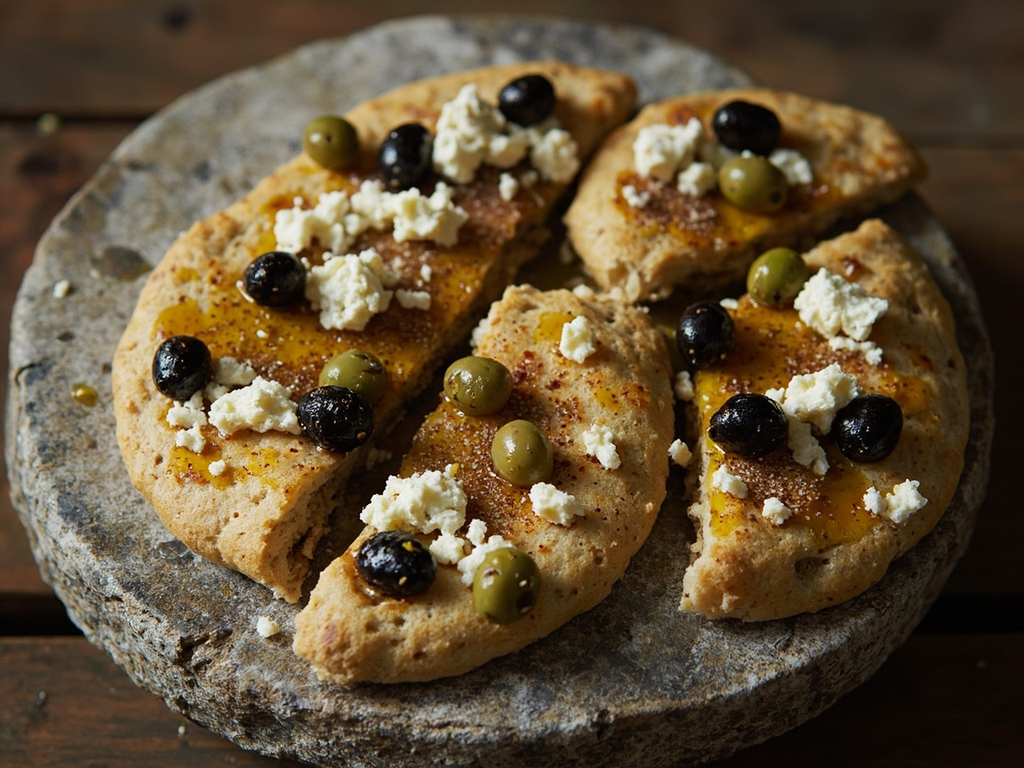
The contemporary twist : Serve it cut into dippers with a dip of new olive oil and fresh thyme — a 'mâza-apéritif' that takes you back 2600 years.
Sources : Andrew Dalby, Siren Feasts: A History of Food and Gastronomy in Greece · Athenaeus of Naucratis, Deipnosophistae (The Banquet of the Learned)
Aesop · Charactorium