 Flip the card
Aesop at the table
619 av. J.-C. — 563 av. J.-C.
On the menu
Sîtos & ópson, then the sympósion
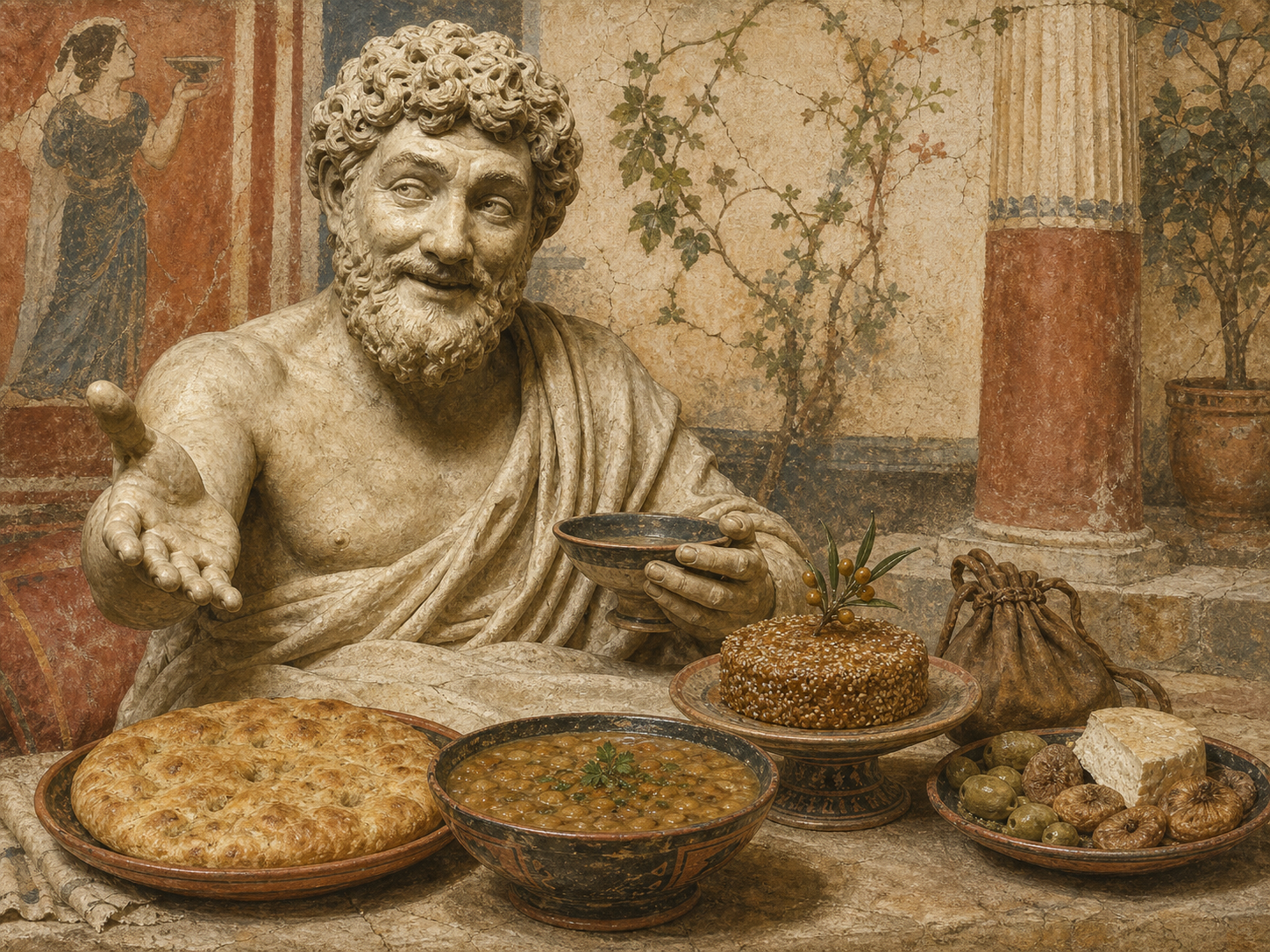
The ancient Greek meal revolves around the sîtos, the staple cereal food (barley cake or porridge, wheat bread), accompanied by the ópson, the "what-goes-with-it": olives, cheese, legumes, fish, sometimes a bit of meat on sacrifice days. Little is drunk during the meal; afterwards, at the sympósion, wine mixed with water is shared, along with figs and honey sweets, while discussing and telling stories — the favorite ground of Aesop.
Signature : Barley and wild honey
Toasted then ground barley (álphita) is the heart of the archaic Greek table: kneaded raw into a cake or diluted into a drink, it nourishes both the poor and the wise. Honey, the only known sweetener, is its luminous counterpart, from offering cakes to dessert fruits.
click to flip back
Aesop at the table
619 av. J.-C. — 563 av. J.-C.
5 period recipes
 Everyday
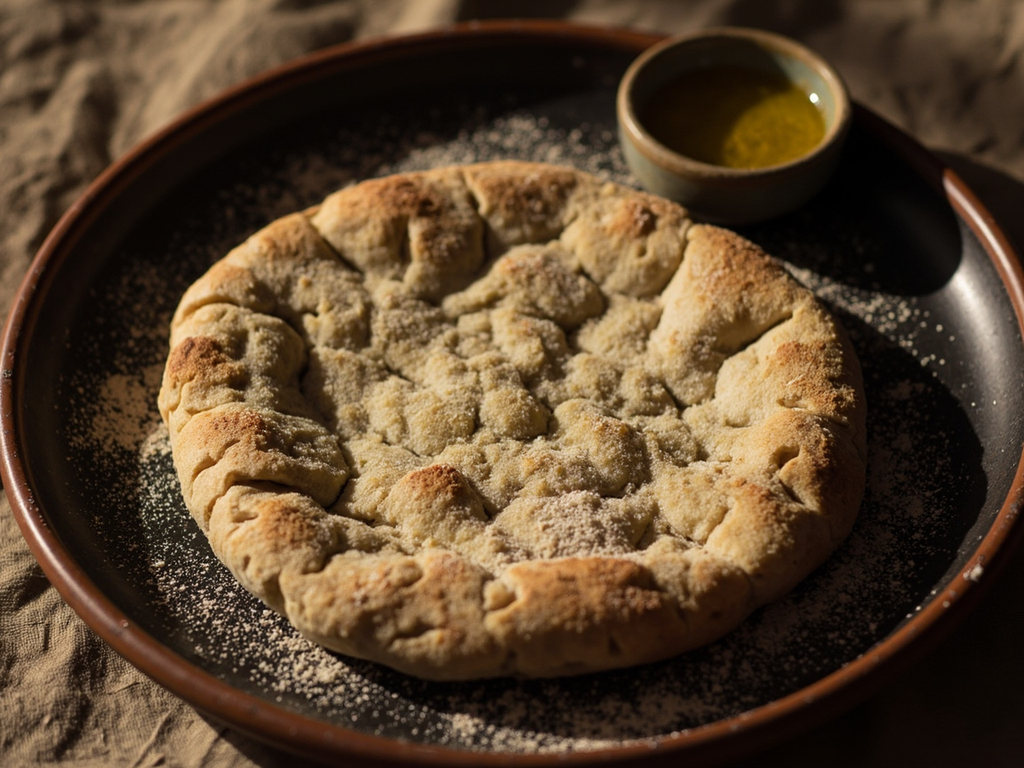
Mâza, the everyday barley cake
Sîtos (staple food of the table)
☕ 🧂· 20 min
View the recipe
 Remedy
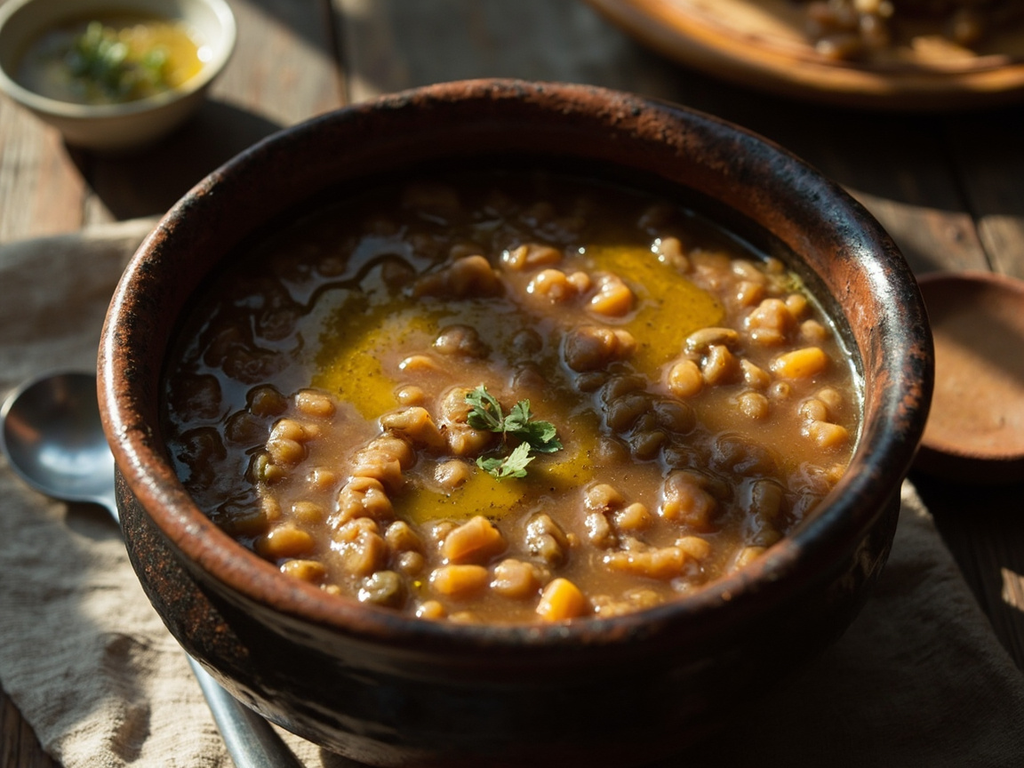
Phakê, the lentil soup with herbs
Ópson (the nourishing accompaniment to the staple)
🧂 🍄· 50 min
View the recipe
 Offering
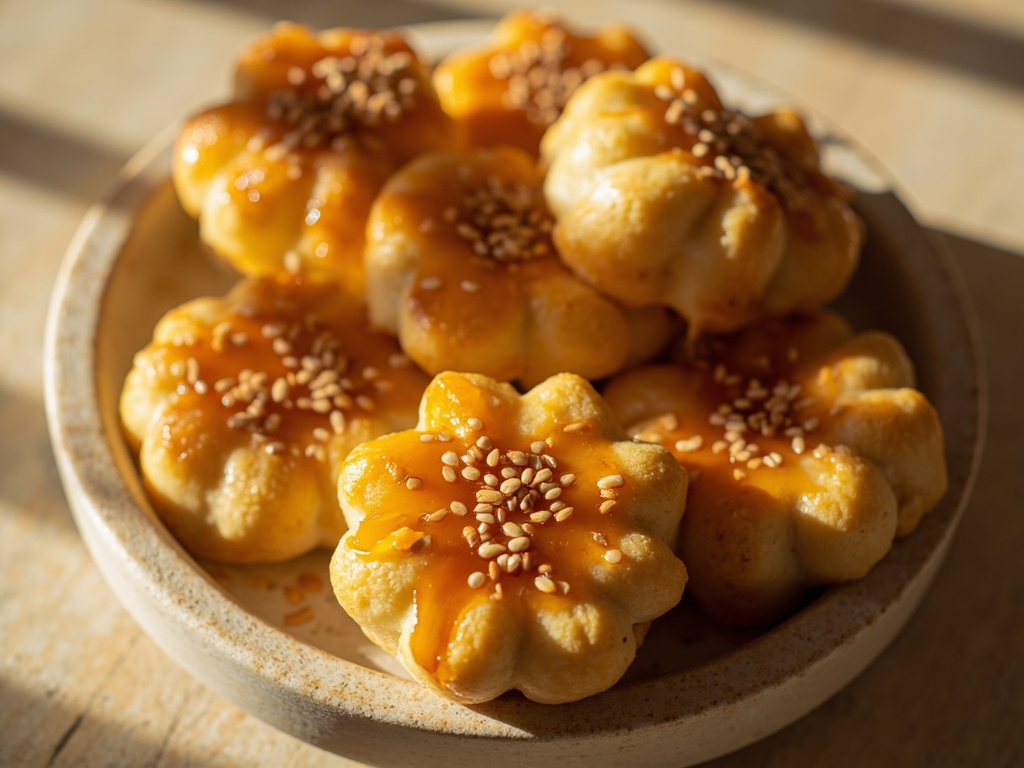
Melitoûtta, the honey and sesame cake for the gods
Pémmata (sweet offerings and sympósion treats)
🍯· 35 min
View the recipe
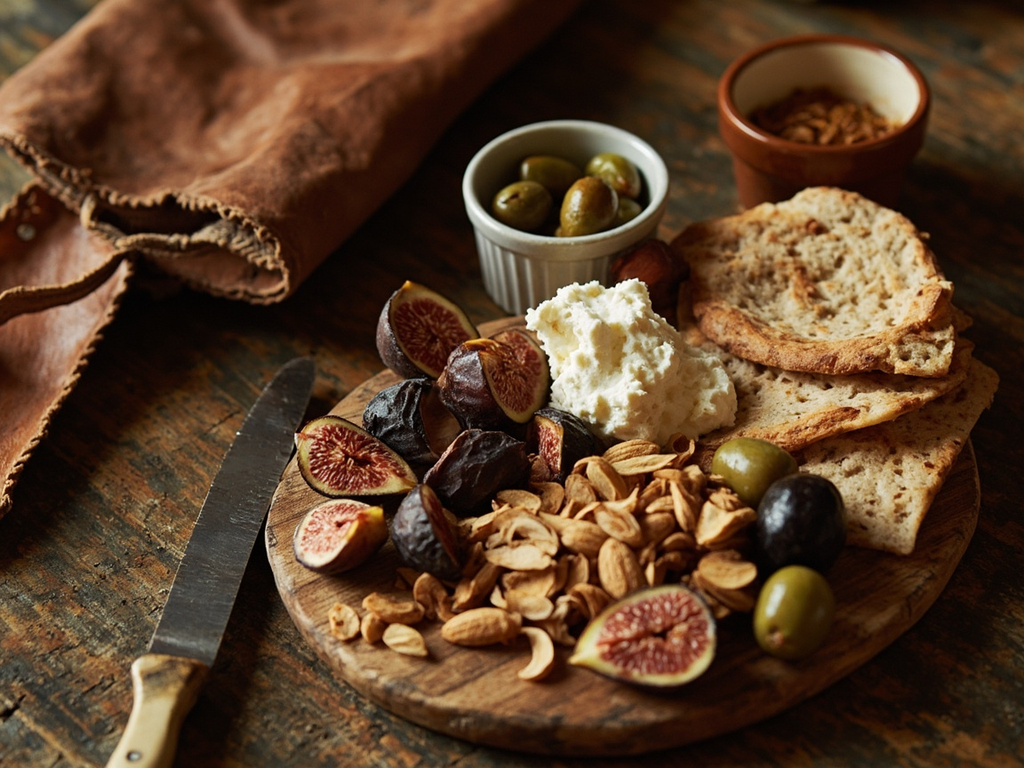 Travel
The traveler's pouch: dried figs, cheese and olives
Ephódia (road provisions, what one carries in a pouch)
🍯 🧂· 10 min
View the recipe
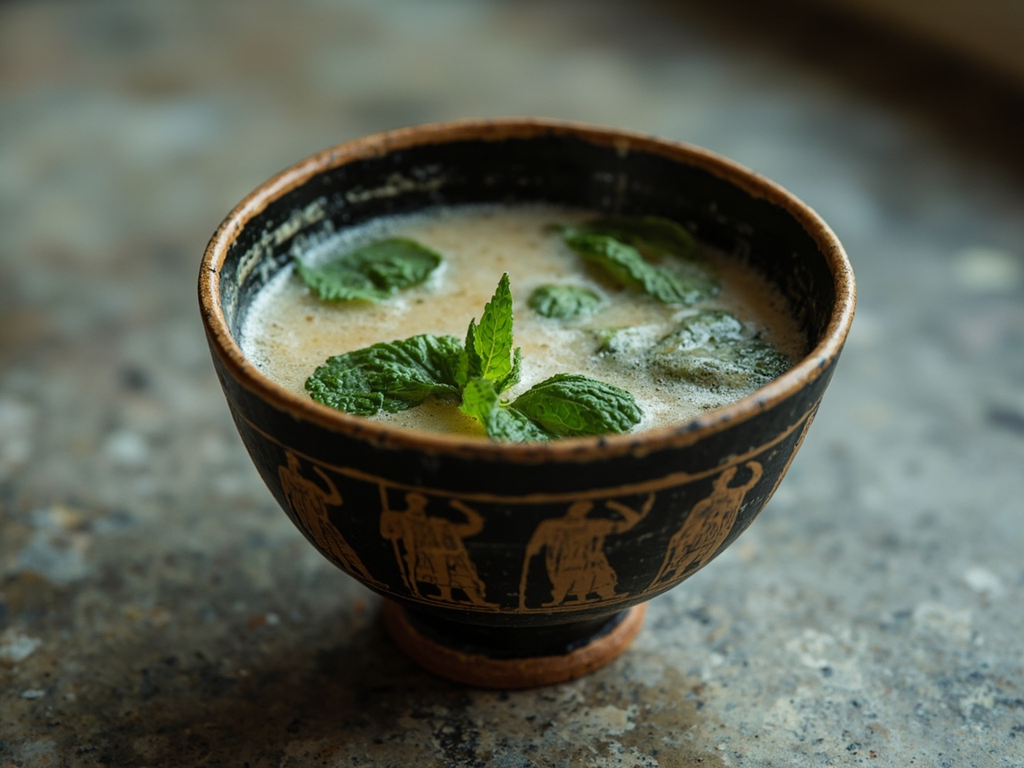 Drink
DrinkKykéôn, the barley and herb drink
Pôma (nourishing beverage of the sympósion and the road)
🫙 🍋· 10 min
View the recipe