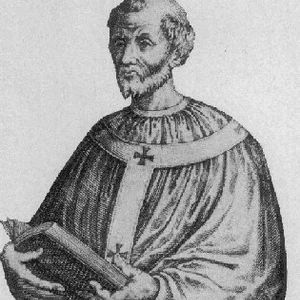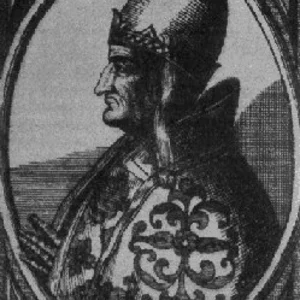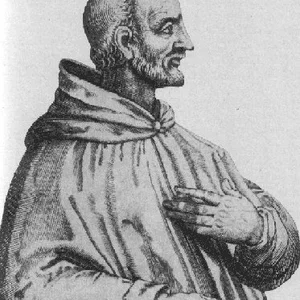

Pope from 1145 to 1153, Eugene III was the first Cistercian to rise to the papacy. A disciple of Saint Bernard of Clairvaux, he preached the Second Crusade and sought to reform the Church by strengthening papal authority.
Eugene III(1200 — 1153)
Eugene III
6 min read
Frequently asked questions
Key Facts
- Elected pope on February 15, 1145, the first Cistercian pope in history
- Issued the bull Quantum praedecessores (1145) calling for the Second Crusade
- Worked closely with Saint Bernard of Clairvaux to preach the Crusade
- Co-authored the treatise De consideratione with Saint Bernard, a guide to papal governance
- Died on July 8, 1153; beatified in 1872 by Pope Pius IX
Works & Achievements
The first official document calling for the Second Crusade, addressed to the Christian princes of Europe. This bull is one of the founding texts of papal crusading policy in the twelfth century.
A papal document organizing the Wendish Crusade in Northern Europe, allowing German knights to fight the Slavic peoples rather than journey to the Holy Land.
A collection of letters and decretals addressed to the sovereigns, bishops, and monasteries of Europe, bearing witness to the breadth of papal action and the development of canon law.
A major diplomatic agreement between the papacy and the Empire laying the groundwork for cooperation to restore papal authority in Rome in the face of Arnold of Brescia.
Anecdotes
Elected pope in 1145, Bernardo Pignatelli was so surprised by his election that he had to be convinced by his fellow monks to accept the charge. His mentor Bernard of Clairvaux, though proud of him, wrote with a touch of irony that he had sent “a monk, not a bishop” to lead Christendom.
Eugene III was never able to settle permanently in Rome: the republican commune led by Arnold of Brescia controlled the city and had driven him out. He thus spent most of his pontificate in exile in France and central Italy, governing the Church from his wanderings — which earned him the nickname “the wandering pope.”
It was Eugene III who officially launched the Second Crusade in 1145 with the bull *Quantum praedecessores*, but it was his mentor Bernard of Clairvaux who, through his extraordinary eloquence, convinced the crowds at Vézelay in 1146. King Louis VII of France and Conrad III of Germany took the cross — but the crusade ended in disaster before Damascus in 1148.
Concerned for his own salvation and that of the Church, Eugene III asked Bernard of Clairvaux to write him a spiritual guide for sovereign pontiffs. Bernard then composed the *De Consideratione*, a treatise in five books advising him not to let himself be overwhelmed by judicial and political affairs at the expense of his inner life.
Primary Sources
Quantopere praedecessores nostri Romani pontifices pro liberatione orientalis Ecclesiae laboraverint, vos, fratres carissimi, ex traditionibus patrum didicistis et ex historiis inde conscriptis frequenter audistis.
Considera ergo primum quid sis, deinde quid officii tui sit... Non hoc dico ut te retraham a cura pastorali, sed ut non absorberi sinas.
Mandamus et in virtute Spiritus Sancti praecipimus ut pro defensione orientalis Ecclesiae et liberatione Terrae Sanctae omnes qui voto se obligaverunt iter arripiant.
Inter sedem apostolicam et regem Romanorum pax et concordia reformata est, ita ut ecclesiae libertates serventur et imperium suis iuribus gaudeat.
Key Places
Official residence of the popes, from which Eugene III was frequently expelled by Arnold of Brescia's republican commune. The Lateran was the symbolic center of Western Christendom.
Cistercian monastery founded by Bernard of Clairvaux where Eugene III received his spiritual formation. It was here that he became Bernard's disciple before being sent as abbot to Rome.
Burgundian town where Bernard of Clairvaux preached the Second Crusade in 1146 before an immense crowd, at the call of Eugene III. A symbolic point of departure for the crusading venture.
Town near Rome where Eugene III frequently resided in exile and where he died on July 8, 1153. He is buried in the Cathedral of San Lorenzo.
Town in central Italy where the 1153 treaty between Eugene III and Frederick Barbarossa was signed, laying the groundwork for the restoration of papal authority in Rome.
Typical Objects

A multi-crowned headdress symbolizing the spiritual and temporal authority of the pope. Eugene III wore it during major ceremonies, but his Cistercian austerity made him deeply uncomfortable with the pomp of the Roman court.

A lead disc attached to official documents that authenticated the bulls and decrees of the Holy See. The bull *Quantum praedecessores*, sealed with this lead, was the founding document of the Second Crusade.

A simple wooden cross with no ornamentation, embodying the Cistercian austerity that Eugene III practiced throughout his life. Even after becoming pope, he held on to the habits of simplicity inherited from his order.

A treatise in five books written by Bernard of Clairvaux at Eugene III's request to guide him in his pontifical duties. This work of spiritual wisdom served as the pope's companion for meditation and reflection.

A red cloth cross sewn onto the cloaks of knights setting out for the Holy Land. Eugene III symbolically distributed these crosses to the kings who pledged to join the Second Crusade.

A curved staff symbolizing the shepherd guiding his flock. Eugene III had carried the abbot's crosier before his election as pope, and remained deeply attached to this symbol of pastoral duty.
School Curriculum
Vocabulary & Tags
Key Vocabulary
Daily Life
Morning
Eugene III rose before dawn to recite Matins with his brothers, faithful to the Cistercian rule even in his palaces of exile. Communal prayer set the rhythm of the early hours before the affairs of the Church began.
Afternoon
The afternoon was devoted to audiences, judicial decisions, and the drafting of papal bulls. Eugene III received ambassadors, bishops, and princes who came to seek the Holy See's arbitration on major political and religious questions.
Evening
The evening closed with Compline and spiritual reading, in keeping with the Rule of Saint Benedict. The pope sought to preserve moments of silence and meditation despite the constant pressure of affairs.
Food
True to Cistercian asceticism, Eugene III ate frugally: vegetables, legumes, bread, and water made up the bulk of his meals. He avoided the meat and fine wines that other princes of the Church consumed freely.
Clothing
He wore the white Cistercian habit beneath his pontifical vestments, a sign of his loyalty to his order despite the splendor of the papal office. At great ceremonies he put on the embroidered cope, the white alb, and the tiara, but without seeking the pomp of princely courts.
Housing
Driven from Rome by the commune of Arnold of Brescia, Eugene III lived in various castles and abbeys across central Italy and France. These residences of exile, often Cistercian, allowed him to maintain a monastic way of life despite his rank as sovereign pontiff.
Historical Timeline
Period Vocabulary
Liens externes & ressources
Références
Œuvres
Bulle Quantum praedecessores
1145
Bulle Divina dispensatione
1147
Corpus des Epistolae d'Eugène III
1145-1153