Middle Ages
Knights, queens, scholars and cathedral builders — a thousand years between the fall of Rome and the Renaissance.
652 characters


652 characters
Politics(126)
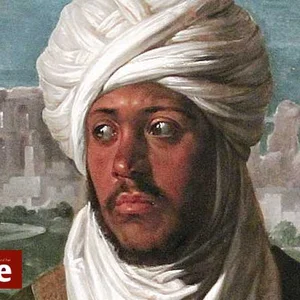
Abdallah ibn Saad
Arab general and administrator of the 7th century, foster brother of Caliph Uthman. As governor of Egypt, he led the conquest of Ifriqiya and commanded the first Muslim fleet to defeat the Byzantines.
Abou Inan
Marinid sultan of Morocco (1348–1358), Abou Inan Faris is known for welcoming Ibn Battuta at his court and commissioning the writing of his famous travel account. A great patron of the arts, he had the Bou Inania madrasa built in Fez.
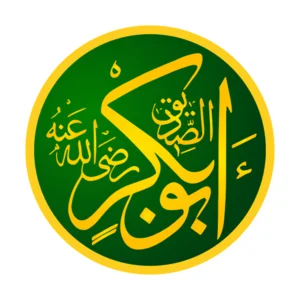
Abu Bakr as-Siddiq
573 — 634
A close companion of the Prophet Muhammad, Abu Bakr became the first caliph of Islam following the Prophet's death in 632. His two-year reign consolidated the unity of the Muslim community and laid the foundations of the first Islamic state.
Abu Lu'lu'a Fīrūz
A slave of Persian origin captured during the Arab conquests, he assassinated the second caliph of Islam, Umar ibn al-Khattab, in the mosque of Medina in 644. His act, driven by personal and fiscal grievances, left a lasting mark on the history of the young caliphate.
Abu Yaqub Yusuf
The second Almohad caliph (not Almoravid), he reigned from 1163 to 1184 over the Maghreb and al-Andalus. A man of letters and a patron of scholars, he brought the philosophers Ibn Tufayl and Averroes (Ibn Rushd) to his court. He died during the siege of Santarém in Portugal.
Adalberon of Reims
Archbishop of Reims from 969 to 989, Adalberon was a major political figure of the late 10th century. Advised by Gerbert of Aurillac, he played a decisive role in the accession of Hugh Capet to the throne in 987, bringing the Carolingian dynasty to an end.
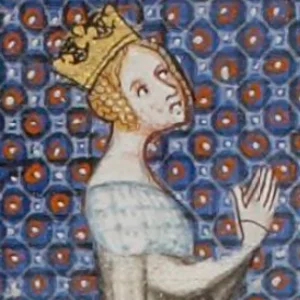
Adela of Champagne
1140 — 1206
Queen of France through her marriage to Louis VII in 1160, Adela of Champagne is best known as the mother of Philip II Augustus. She served as regent of the kingdom during her son's crusade in 1190–1191.
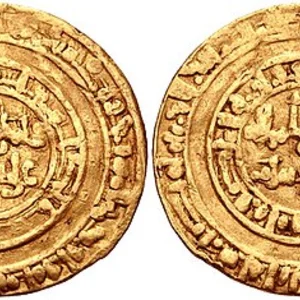
Al-Hakim bi-Amr Allah
985 — 1021
Sixth Fatimid caliph of Egypt (996–1021), Al-Hakim is a controversial figure known for his unpredictable decrees and uncompromising religious policies. He is venerated as a divine manifestation by the Druze religion, which emerged during his reign.
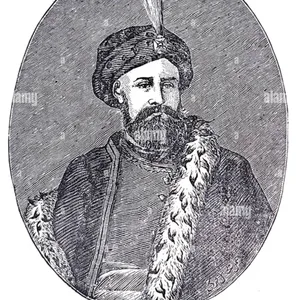
Al-Ma'mun
786 — 833
Seventh Abbasid caliph (reigned 813-833), son of Harun al-Rashid. A patron of scholars, he expanded the House of Wisdom (Bayt al-Hikma) in Baghdad, a center of translation and scientific research.
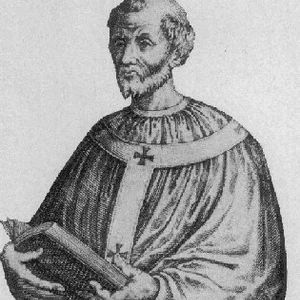
Alexander IV
1200 — 1261
Rinaldo di Jenne, nephew of Gregory IX, became the 181st pope under the name Alexander IV from 1254 to 1261. His pontificate was marked by conflict with the Hohenstaufen and the promotion of the mendicant orders.
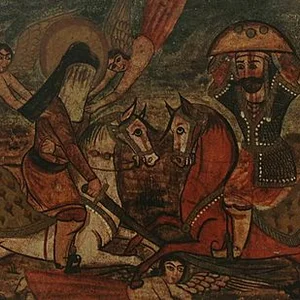
Ali ibn Abi Talib
599 — 661
Cousin and son-in-law of the Prophet Muhammad, Ali ibn Abi Talib was the fourth caliph of Islam (656–661). A central figure of Shia Islam, he is regarded by Shia Muslims as the first rightful imam. His caliphate was marked by the First Fitna, a civil war that gave rise to the foundational Sunni-Shia divide.

Amr ibn al-As
570 — 664
Amr ibn al-As (c. 573-664) was an Arab military commander and administrator, a companion of the Prophet Muhammad. He led the conquest of Byzantine Egypt on behalf of the caliphate and became its first governor, founding the city of Fustat.
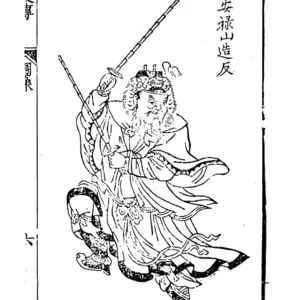
An Lushan
703 — 757
A general of Sogdian and Turkic origin in the service of the Tang dynasty, An Lushan rebelled in 755 against Emperor Xuanzong and proclaimed himself emperor of the short-lived Yan dynasty. His rebellion plunged China into a devastating civil war before his assassination in 757.
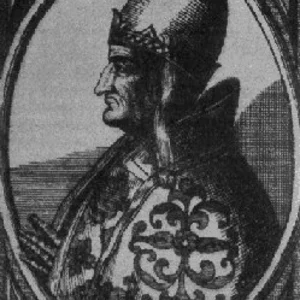
Anastasius IV
Pope of the Catholic Church from 1153 to 1154, Anastasius IV was the 168th successor of Peter. His brief pontificate was marked by efforts at reconciliation with the Byzantine Empire and the management of ecclesiastical affairs across Europe.
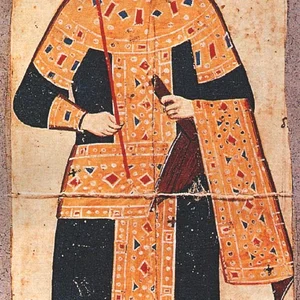
Andronikos III Palaiologos
1297 — 1341
Andronikos III Palaiologos (1297–1341) was Byzantine emperor from 1328 to 1341. He came to power after a civil war against his grandfather Andronikos II. His reign was marked by military campaigns and the rising power of the Ottoman Empire.

Anna Komnene
Byzantine princess (1083–c.1153), daughter of Emperor Alexios I Komnenos, Anna Komnene is one of the earliest female historians in recorded history. She is the author of the Alexiad, an epic narrative chronicling her father's reign and an invaluable testimony on Byzantium and the Crusades.
Anne I
Anne I was Queen of Great Britain and Ireland from 1702 to 1714, the last sovereign of the Stuart dynasty. Her reign saw the birth of the Kingdom of Great Britain through the union of England and Scotland in 1707.
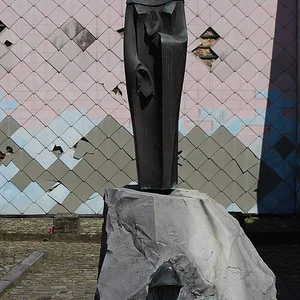
Arlette
1010 — 1050
Arlette of Falaise, daughter of a tanner or leather-worker from Falaise, in Normandy, was the concubine of Duke Robert the Magnificent. From this union was born William, the future William the Conqueror, King of England. Born among the common people, she became the mother of a royal line.
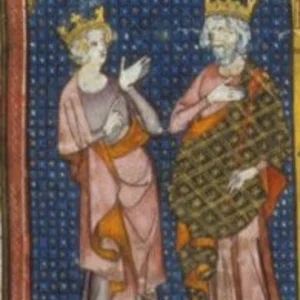
Basina of Thuringia
438 — 477
Queen of the Salian Franks in the 5th century, wife of King Childeric I and mother of Clovis I. A semi-legendary figure of the origins of the Merovingian dynasty, passed down through the accounts of Gregory of Tours.
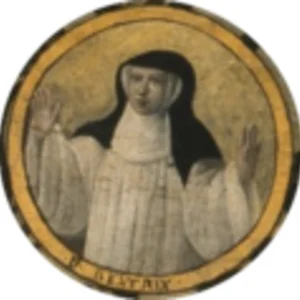
Beatrice of Nazareth
1200 — 1268
Flemish Cistercian nun (c. 1200–1268), abbess of the monastery of Nazareth near Lier. Author of The Seven Manners of Love, one of the earliest mystical works written in the vernacular Dutch language.
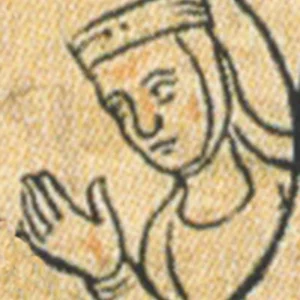
Berthe de Bourgogne
964 — 1010
Daughter of Duke Conrad of Burgundy, Berthe was first Countess of Blois through her marriage to Odo I. After becoming a widow, she married King Robert II the Pious around 997, but this union, deemed incestuous by the Church due to their close kinship, was condemned by the pope and annulled around 1001.
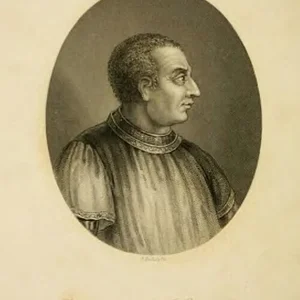
Bertrand du Guesclin
1320 — 1380
Bertrand du Guesclin (c. 1320-1380) was a Breton knight who became Constable of France under Charles V. A skilled strategist of the Hundred Years' War, he reconquered much of French territory from the English through guerrilla warfare and harassment tactics.
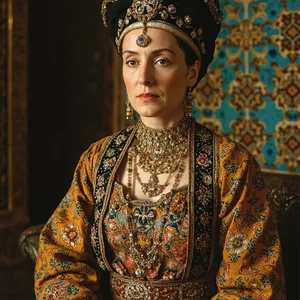
Bibi Khanym
1341 — 1408
Bibi Khanym, the principal wife of Tamerlane, was one of the most powerful women of the Timurid Empire. Her name is inseparable from the great mosque of Samarkand that Tamerlane had built in her honor upon his return from the Indian campaign (1399). A symbol of Timurid magnificence, she embodies the political and symbolic role of women at Tamerlane's court.
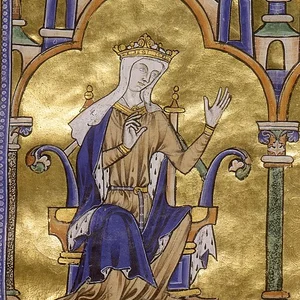
Blanche de Castille
1188 — 1252
Queen of France and regent, Blanche de Castille (1188–1252) governed the kingdom during the minority of her son Louis IX (Saint Louis) and again during his crusade. A woman of exceptional power, she successfully asserted royal authority against the great barons.
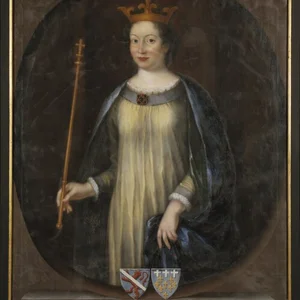
Blanche de Namur
1320 — 1363
Princess of Namur (c. 1320–1363), she married Magnus IV of Sweden in 1335 and became Queen of Sweden and Norway. Mother of Eric XII of Sweden and Haakon VI of Norway, she played a role of dynastic representation in medieval Northern Europe.
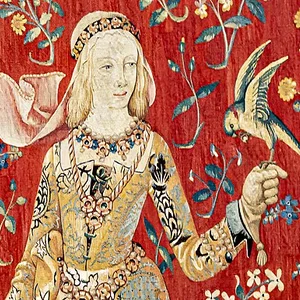
Blanche of Lancaster
1342 — 1368
Blanche of Lancaster (c. 1341–1368) was the daughter of Henry of Grosmont, first Duke of Lancaster, and the wife of John of Gaunt, son of King Edward III of England. Her early death inspired her husband to commission the poem *The Book of the Duchess* from Geoffrey Chaucer.

Blanchefleur
460 — 510
A Frankish princess and sister of King Clovis I, Audofleda married Theodoric the Great, king of the Ostrogoths, around 493. This union sealed a major diplomatic alliance between the Franks and the Ostrogoths in the aftermath of the fall of the Western Roman Empire.
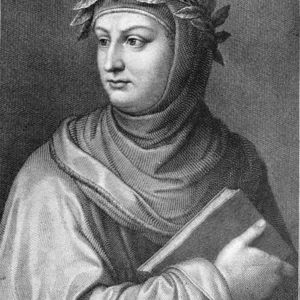
Boccaccio
1313 — 1375
A 14th-century Italian writer, Boccaccio is the author of the Decameron, a collection of one hundred tales told by a group of people sheltering from the Black Death in 1348. A diplomat in the service of Florence, he was also a pioneering humanist and close friend of Petrarch.
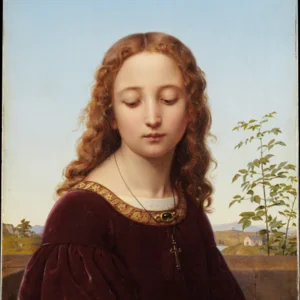
Börte
1161 — 1230
Börte was the first wife and principal empress of Genghis Khan. Abducted shortly after her marriage and then rescued by her husband, she ruled the imperial court and played a major political role, with her four sons becoming the heirs of the Mongol Empire.
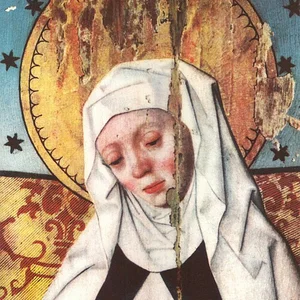
Bridget of Sweden
1303 — 1373
A mystic and Swedish saint of the 14th century, Bridget of Sweden was a wife, mother of eight children, then a pilgrim and founder of the Order of the Most Holy Savior. Her divine revelations, dictated and spread throughout Europe, gave her exceptional spiritual authority.
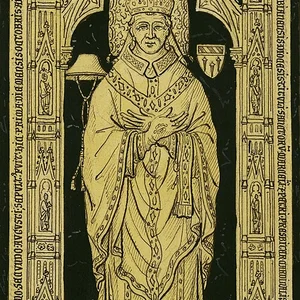
Cardinal Jean Lemoine
French cardinal (c. 1250–1313), renowned canonist and papal legate, he founded the Collège du Cardinal Lemoine in Paris in 1302 to train young clerics from Picardy. Close to Popes Boniface VIII and Clement V, he played a key role at the Roman Curia during the transfer of the papacy to Avignon.
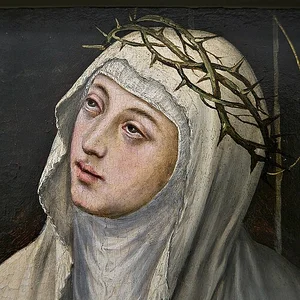
Catherine of Siena
1347 — 1380
An Italian mystic and theologian of the 14th century, Catherine of Siena played a major political role by convincing Pope Gregory XI to leave Avignon and return to Rome. A Doctor of the Church, she left behind a remarkable body of spiritual and epistolary work.
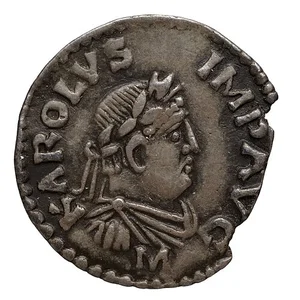
Charlemagne
742 — 814
Charlemagne (742-814) was a Frankish king who became the first Emperor of the West. He founded the Carolingian Empire and established an education policy that shaped the Middle Ages. His reign was marked by major territorial conquests and cultural reforms.
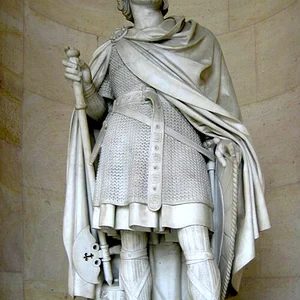
Charles Martel
688 — 741
Charles Martel was mayor of the palace of Austrasia and then de facto ruler of the kingdom of the Franks. Born into the Pippinid family, he imposed Carolingian authority and halted the Arab-Muslim advance at the Battle of Poitiers in 732. The grandfather of Charlemagne, he paved the way for the rise of the Carolingian dynasty.
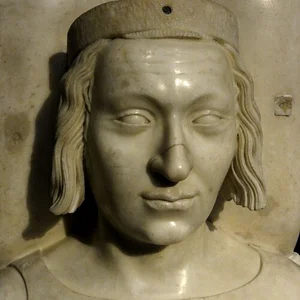
Charles V the Wise
1338 — 1380
King of France from 1364 to 1380, Charles V restored the kingdom after the defeats of the early Hundred Years' War. Thanks to his constable Du Guesclin, he reconquered nearly all the lost territory and reestablished royal authority.
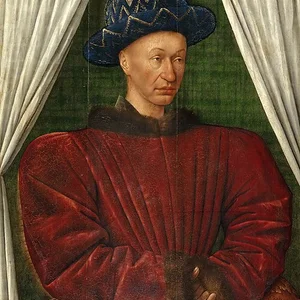
Charles VII
1403 — 1461
King of France (1422–1461), Charles VII is best known for his coronation at Reims in 1429, made possible by Joan of Arc, who restored French confidence during the Hundred Years' War. He continued the reconquest of French territory and ended the conflict with England in 1453.
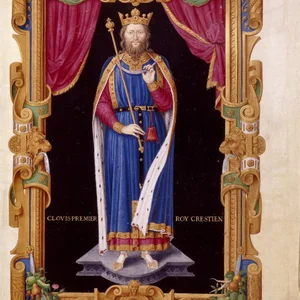
Clovis
466 — 511
Clovis I (466-511) was the king of the Franks who unified the Frankish kingdoms and founded the Merovingian dynasty. His baptism in 496 sealed the alliance between the Franks and the Catholic Church. He laid the foundations of what would become the kingdom of France.
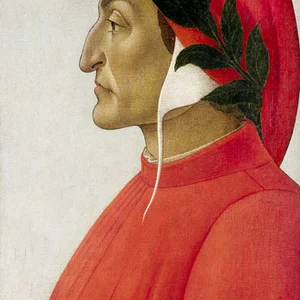
Dante Alighieri
1265 — 1321
Florentine poet of the 13th–14th century, author of *The Divine Comedy*, a masterpiece of medieval literature. Exiled from Florence for political reasons, he laid the foundations of the Italian literary language.
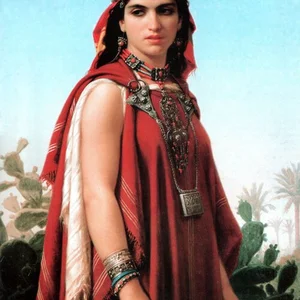
Dihya
668 — 703
A Berber queen and prophetess of the Djerawa people, Dihya led the resistance against the Arab conquest of North Africa in the late 7th century. Known as the Kahina ("the seeress"), she is a central figure in Amazigh memory, preserved chiefly through oral tradition.
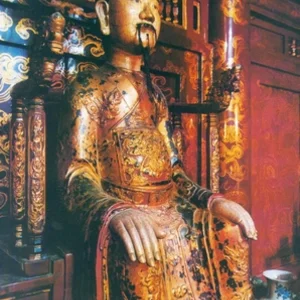
Đinh Bộ Lĩnh
924 — 979
Born in 924 in Đại Hoàng (present-day Ninh Bình), Đinh Bộ Lĩnh ended the War of the Twelve Warlords (loạn 12 sứ quân) and unified the country in 968 [1]. He founded the state of Đại Cồ Việt and became the first emperor of independent Vietnam after the period of Chinese domination (Bắc thuộc) [1].
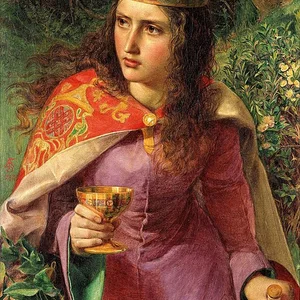
Eleanor of Aquitaine
1124 — 1204
Duchess of Aquitaine and Countess of Poitou, Eleanor of Aquitaine (1124–1204) was Queen of France through her marriage to Louis VII, then Queen of England after her union with Henry II Plantagenet. A towering figure of the Middle Ages, she wielded considerable political influence and was the mother of several kings of England.

Empress Teishi
Empress consort of Japan (976–1001), wife of Emperor Ichijō and daughter of regent Fujiwara no Michitaka. She was the patron of Sei Shōnagon, whose celebrated *The Pillow Book* bears witness to the brilliant life at her court. Her rivalry with Fujiwara no Shōshi, patroness of Murasaki Shikibu, illustrates the literary ferment of the Heian period.
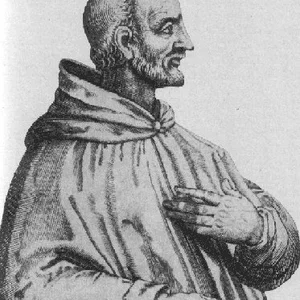
Eugene III
1200 — 1153
Pope from 1145 to 1153, Eugene III was the first Cistercian to rise to the papacy. A disciple of Saint Bernard of Clairvaux, he preached the Second Crusade and sought to reform the Church by strengthening papal authority.
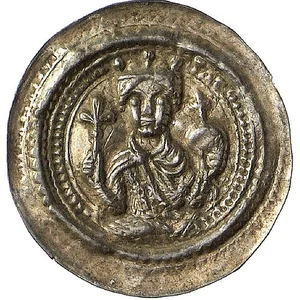
Frederick Barbarossa
1122 — 1190
Holy Roman Emperor from 1155 to 1190 and a major figure of the Hohenstaufen dynasty. He sought to restore imperial authority in Italy against the Lombard communes and the papacy, and drowned during the Third Crusade.
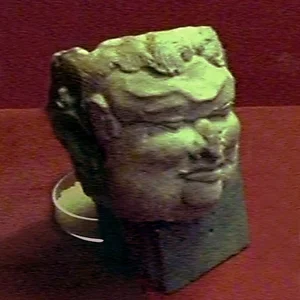
Gajah Mada
1290 — 1364
Gajah Mada was the Mahapatih (Prime Minister) of the Majapahit Empire in the 14th century. A strategist and conqueror, he pronounced the famous Palapa Oath, pledging to unify the entire Nusantara archipelago under Majapahit’s authority before tasting spices. He led the empire to its zenith and remains an Indonesian national hero.
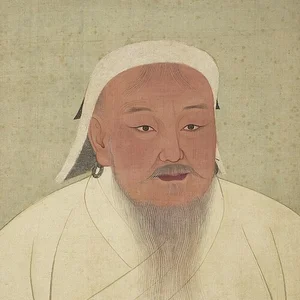
Gengis Khan
1162 — 1227
Founder and first Great Khan of the Mongol Empire, Genghis Khan unified the nomadic tribes of Central Asia in the early 13th century. His conquests created the largest contiguous empire in history.
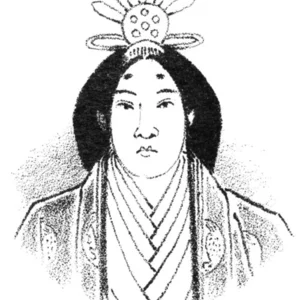
Genmei
661 — 722
Reigning empress of Japan from 707 to 715, Genmei is one of the few women to have held supreme power in Japan. She is notably responsible for commissioning the Kojiki, Japan's first historical chronicle.
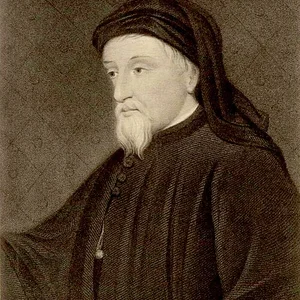
Geoffrey Chaucer
1343 — 1400
Geoffrey Chaucer (c. 1343–1400) is the greatest English poet of the Middle Ages, author of The Canterbury Tales. A diplomat and royal official, he brought the vernacular English language into high literature, leaving a lasting influence on English letters.
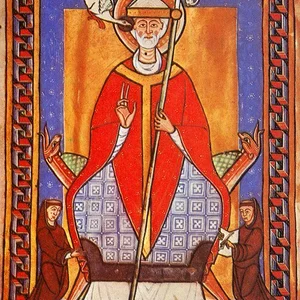
Gregory I
540 — 604
Pope from 590 to 604, Gregory I is one of the greatest pontiffs of Late Antiquity and the early Middle Ages. A reformer of the Church, he organized the evangelization mission to England and left a remarkable theological and liturgical legacy.
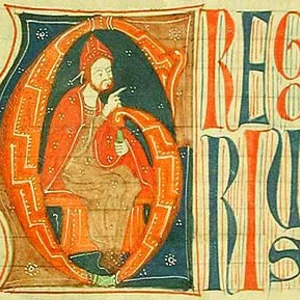
Gregory IX
1170 — 1241
Gregory IX was the 178th pope of the Catholic Church, from 1227 to 1241. A jurist and a man of power, he fiercely opposed Emperor Frederick II and institutionalized the papal Inquisition by entrusting it to the mendicant orders.
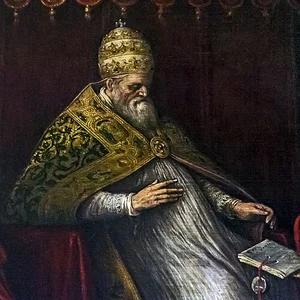
Honorius III
1148 — 1227
177th pope of the Catholic Church from 1216 to 1227. A skilled diplomat, he approved the emerging mendicant orders and worked to organize the Fifth Crusade.
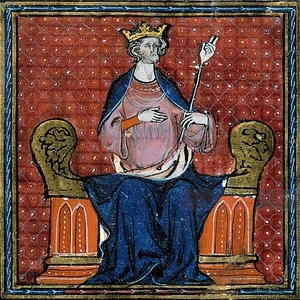
Hugh Capet
940 — 996
Hugh Capet (940–996) was a French nobleman who founded the Capetian dynasty by becoming King of the Franks in 987. He brought an end to the Carolingian dynasty and established a new royal lineage from which all kings of France would descend until the Revolution.
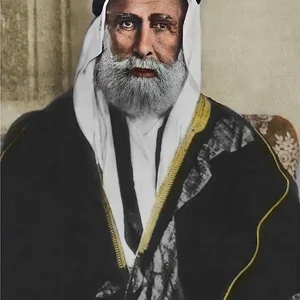
Husayn ibn Ali
626 — 680
Grandson of the prophet Muhammad and son of Ali, he is the third imam of Shia Islam. His refusal to pledge allegiance to the Umayyad caliph Yazid I led to his death at the Battle of Karbala in 680, a founding event of Shia Islam.
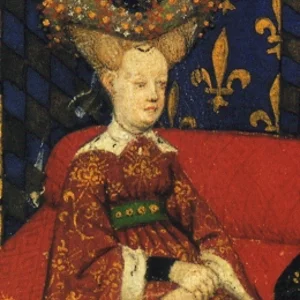
Isabeau of Bavaria
1370 — 1435
Queen of France through her marriage to Charles VI, Isabeau of Bavaria played a major political role during the king's bouts of madness. Regent and a central figure in the civil war between the Armagnacs and the Burgundians, she remains associated with the Treaty of Troyes of 1420.
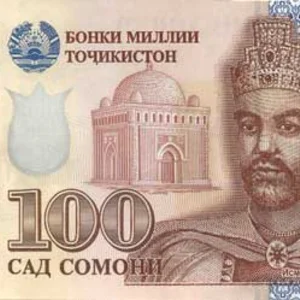
Ismail Samani
849 — 907
Ismail Samani (849-907) is the true founder of the Samanid Empire, the first great Persian dynasty to break free from the Abbasid caliphate. A visionary ruler and brilliant strategist, he made Bukhara a shining center of the Persian cultural and linguistic renaissance.
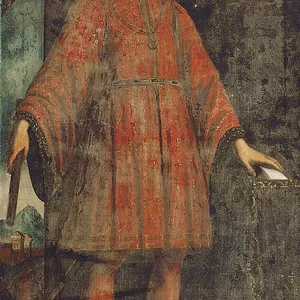
Jacques Cœur
1395 — 1456
A French merchant and financier of the 15th century, Jacques Cœur became the chief treasurer (*grand argentier*) of King Charles VII. The builder of a vast trading empire reaching toward the Levant, he was one of the wealthiest men in the kingdom before falling from grace.
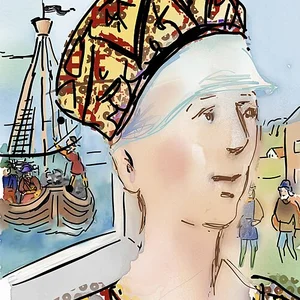
Jeanne de Clisson
1300 — 1359
A 14th-century Breton noblewoman, Jeanne de Clisson became a privateer after the execution of her husband Olivier IV de Clisson by the King of France in 1343. Nicknamed “the Lioness of Brittany,” she armed a fleet to wage a war of vengeance in the English Channel during the Hundred Years' War.
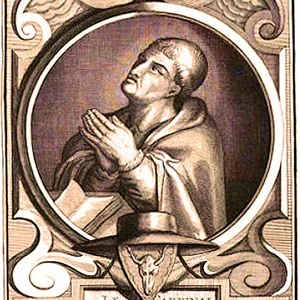
John XXIII (antipope)
Antipope from 1410 to 1415, elected during the Western Schism when three simultaneous claimants contested the papal throne. Deposed by the Council of Constance, he embodies the deep crisis of the medieval Church and the triumph of conciliarism.
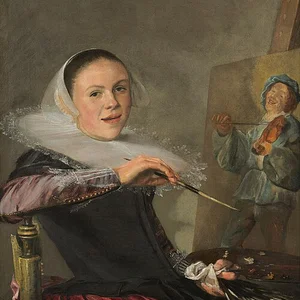
Judith
950 — ?
Legendary ruler of the Kingdom of Semien, Gudit led a revolt around 960 CE that overthrew the Aksumite dynasty of Ethiopia. This warrior queen is said to have reigned for several decades over the Ethiopian highlands, leaving a lasting mark on the collective memory of the region.
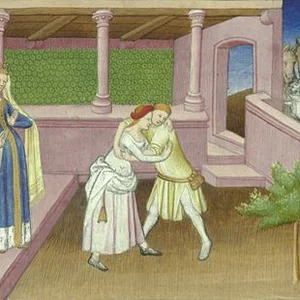
Khutulun
1260 — 1306
Mongol princess of the 13th century, great-niece of Kublai Khan and daughter of Khan Kaidu. A legendary warrior and wrestler, she challenged her suitors to wrestling matches and remained undefeated, winning horses with each victory.
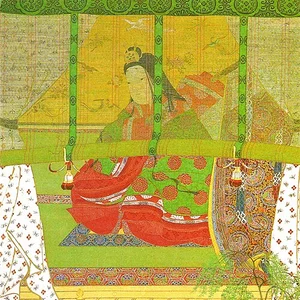
Koken
718 — 770
Empress of Japan who reigned twice (749–758 then 764–770), she is one of the very few women to have occupied the Japanese imperial throne. A devout Buddhist, she actively promoted the spread of Buddhism throughout the country and commissioned the construction of numerous temples.
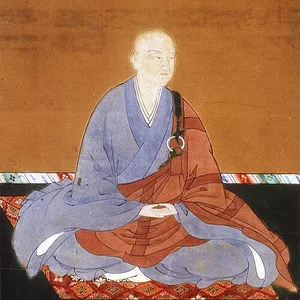
Kōmyō
1322 — 1380
Kōmyō was emperor of Japan from the Northern Court (1336–1348), enthroned by shogun Ashikaga Takauji during the great imperial split of the Nanboku-chō period. After his abdication, he withdrew from political life and became a Buddhist monk, ending his days in prayer and contemplation.
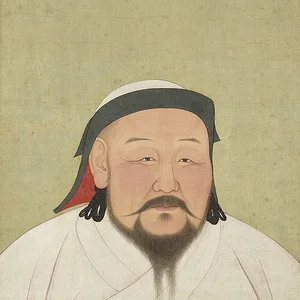
Kublai Khan
1215 — 1294
Grandson of Genghis Khan, Kublai Khan founded the Yuan dynasty in China and ruled from 1260 to 1294. He expanded the Mongol Empire to its greatest extent and opened China to international trade, most notably welcoming Marco Polo.
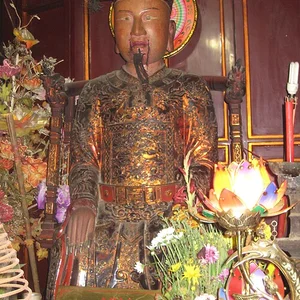
Lê Hoàn
941 — 1005
Founder of the Tiền Lê dynasty (980–1005), Lê Hoàn ruled Đại Cồ Việt for 25 years. A general under the Đinh dynasty who became regent and then emperor, he victoriously repelled the Song invasion in 981 and defended the country's independence.
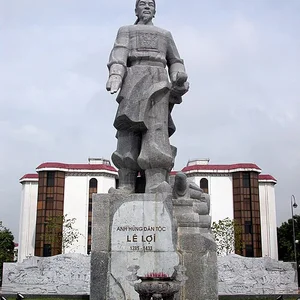
Lê Lợi
1384 — 1433
Vietnamese military and political leader (1385–1433), he led ten years of resistance against Ming occupation (1418–1428) and founded the Later Lê dynasty by restoring the independence of Đại Việt.
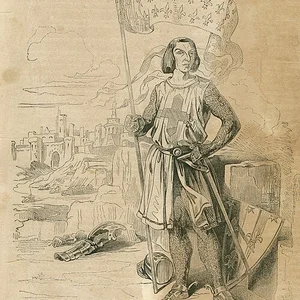
Louis IX (Saint Louis)
1214 — 1270
King of France from 1226 to 1270, Louis IX is renowned for his piety, his commitment to the Crusades, and his reform of royal justice. Canonized in 1297, he embodies the ideal of the medieval Christian king and strengthened the prestige of the French monarchy.
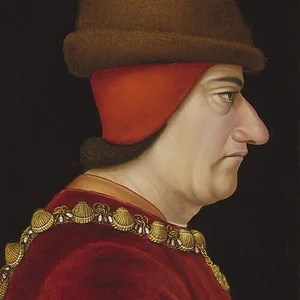
Louis XI
1423 — 1483
King of France from 1461 to 1483, nicknamed “the Prudent” or “the Universal Spider.” Son of Charles VII, he consolidated royal power by weakening the great nobility, notably Charles the Bold, Duke of Burgundy, and considerably expanded the territory of the kingdom.
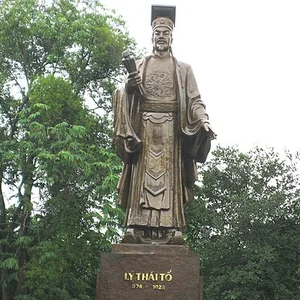
Lý Thái Tổ
974 — 1028
Founder of the Lý dynasty in Vietnam (1009–1028), he moved the capital from Hoa Lư to Đại La, renaming it Thăng Long (present-day Hanoi) in 1010, inaugurating over a thousand years of the Vietnamese capital's history.
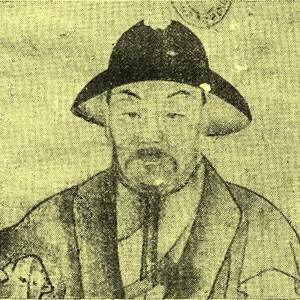
Lý Thường Kiệt
1019 — 1105
General and statesman of Đại Việt (1019–1105), he served under three emperors of the Lý dynasty. Renowned for his preemptive strike against the Song prefectures (1075–1076) and his victory against the Song invasion, he is regarded as one of the greatest military heroes in Vietnamese history.
Magira
Title held by the queen mother in the Kanem-Bornu Empire (present-day Chad and Nigeria), a figure of female political authority in the Kanuri tradition. According to Kanuri oral traditions, the Magira served as advisor and regent to the mai (king), embodying an institutionalized form of female power within one of the largest political structures of medieval sub-Saharan Africa.
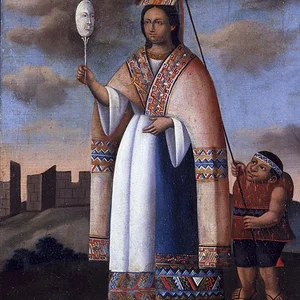
Mama Ocllo
1197 — 1230
Founding goddess of Inca civilization, according to Quechua oral tradition. Wife of Manco Cápac, she is said to have emerged from Lake Titicaca and taught women the art of weaving and domestic skills, thereby establishing the Inca social order.
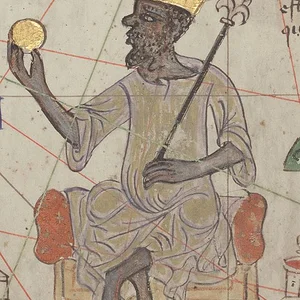
Mansa Musa
1280 — 1337
Mansa Musa (c. 1280–1337) was the tenth mansa (king) of the Mali Empire, one of the largest and wealthiest empires in the medieval world. His pilgrimage to Mecca in 1324–1325 revealed to the world the extraordinary riches of his kingdom.

Mansa Souleymane
1400 — 1360
Mansa (emperor) of the Mali Empire from 1341 to 1360, Souleymane was the brother and successor of Mansa Musa. His reign was marked by rigorous administration, economic prosperity, and the Islamic prestige of the empire.
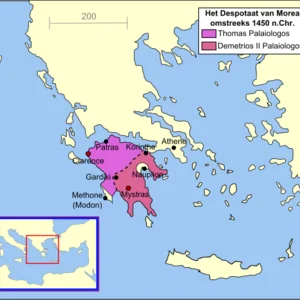
Manuel I
1326 — 1380
Manuel Kantakouzenos was Despot of the Morea in the fourteenth century, ruling the Byzantine despotate of the Peloponnese. Son of Emperor John VI Kantakouzenos, he defended Byzantine presence in Greece against the Ottomans and the Latins.
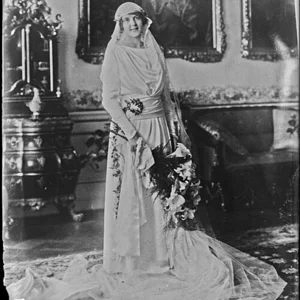
Margaret I of Denmark
Regent and then de facto sovereign of Denmark, Norway, and Sweden, she founded the Kalmar Union in 1397, uniting the three Scandinavian kingdoms under a single crown. Considered the most influential woman of power in the Nordic Middle Ages.
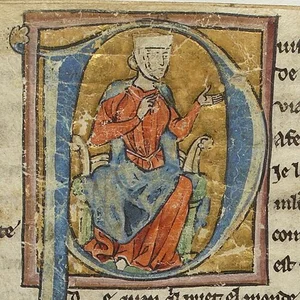
Marie of Champagne
1145 — 1198
Daughter of King Louis VII and Eleanor of Aquitaine, Marie of Champagne was Countess of Champagne and one of the greatest patrons of letters in the 12th century. A patron of Chrétien de Troyes, she made her court at Troyes a radiant center of courtly literature.

Mas'ud I of Ghazni
Sultan of the Ghaznavid Empire from 1030 to 1040, son of Mahmud of Ghazni. He led numerous military campaigns but was crushed by the Seljuks at the Battle of Dandanaqan (1040), hastening the decline of his empire.
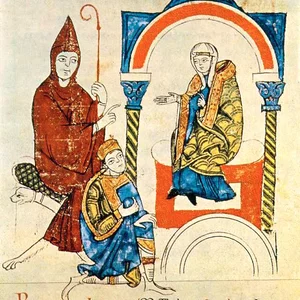
Matilda of Tuscany
1040 — 1115
Countess of Tuscany (1046–1115), Matilda was one of the most powerful women of the medieval Western world. An unwavering ally of the papacy, she played a decisive role in the Investiture Controversy, hosting at her Castle of Canossa the famous penance of Henry IV before Gregory VII in 1077.
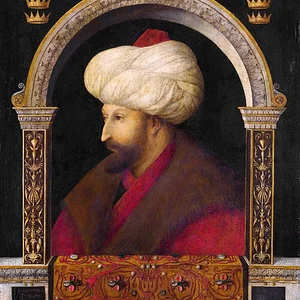
Mehmed
Ottoman Sultan (1432–1481), Mehmed II captured Constantinople in 1453, bringing the Byzantine Empire to an end. This event traditionally marks the close of the Middle Ages in Western historiography.
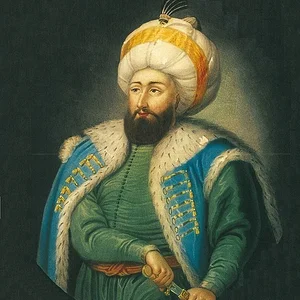
Mehmet II
1432 — 1481
Mehmed II, known as the Conqueror (1432–1481), was an Ottoman sultan who conquered Constantinople in 1453, bringing the Byzantine Empire to an end. He modernized Ottoman administration and transformed Constantinople into the capital of his empire.
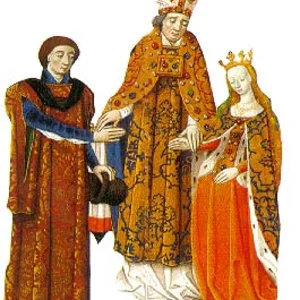
Melisende of Jerusalem
1105 — 1161
Queen of Jerusalem from 1131 to 1153, Melisende was one of the most powerful rulers of the Crusader States. She governed with authority, resisting attempts by her son Baldwin III to remove her from power.

Mohammed ben Toughlouq
Sultan of the Delhi Sultanate from 1324 to 1351, Muhammad ibn Tughluq was one of the most ambitious and controversial rulers of medieval India. A bold reformer, he attempted to relocate the capital from Delhi to Daulatabad and to introduce copper currency — projects that failed and ruined the sultanate.
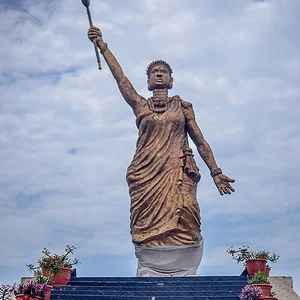
Moremi Ajasoro
Legendary heroine of the Yoruba people of Ilé-Ifè (present-day Nigeria), a figure of African oral tradition. According to legend, she sacrificed herself to infiltrate the ranks of Ifè's enemies and liberate her people through cunning and courage.
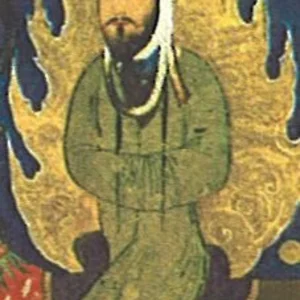
Muhammad
571 — 632
Born around 571 in Mecca, Muhammad is the founder of Islam and the prophet of the Muslim faith. A merchant turned preacher, he received what he believed to be a divine revelation at the age of 40 and united the Arab tribes under a new monotheistic religion.
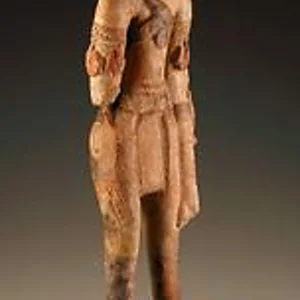
Nana Triban
Sister of Sundiata Keita, a figure from the 13th-century Mande epic. According to griot oral tradition, she accompanied her brother into exile and played a decisive diplomatic role in the reconquest of the Mande against Soumaoro Kante.

Naré Maghann Konaté
1135 — 1212
King of Manding in the 12th century, Naré Maghann Konaté is best known as the father of Sundiata Keita, founder of the Mali Empire. According to Mande oral tradition, a prophecy foretold that he would father a conqueror who would unite the Mande peoples.
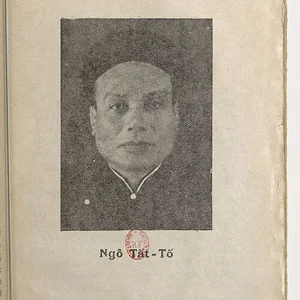
Ngô Quyền
897 — 944
Ngô Quyền (898–944) was the first king of the Ngô dynasty in Vietnam. In 938, he led the Vietnamese resistance and crushed the Southern Han fleet at the Battle of Bạch Đằng, ending nearly a millennium of Chinese domination and ushering in an era of lasting independence [1].
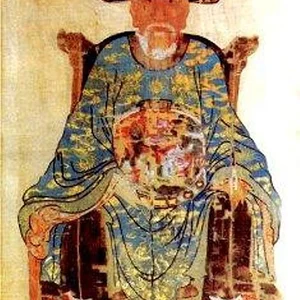
Nguyễn Trãi
Nguyễn Trãi (1380–1442) was a Vietnamese scholar, poet, and statesman, a central figure in the resistance against Ming occupation of Đại Việt. Strategic adviser to Lê Lợi during the Lam Sơn uprising, he is one of the founding fathers of the Hậu Lê dynasty and a cornerstone of classical Vietnamese literature.
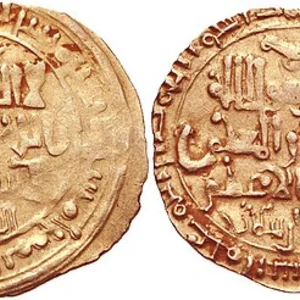
Nizam al-Mulk
1018 — 1092
Nizam al-Mulk was the grand vizier of the Seljuk sultans Alp Arslan and Malik-Shah I in the 11th century. A brilliant administrator, he equipped the Seljuk Empire with lasting institutions and founded a network of madrasas, the Nizamiyya, which left a deep mark on the teaching of Sunni Islam.

Nuh ibn Mansur
Nuh ibn Mansur (961–997) was the Samanid emir who ruled over Khorasan and Transoxiana. His reign witnessed the flourishing of Persian culture, and he welcomed the young Avicenna to his court, where the latter began his medical career.
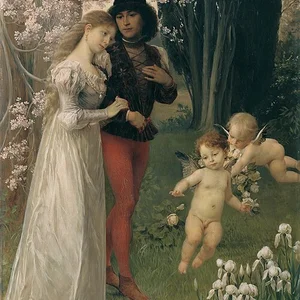
Paolo Malatesta
1246 — 1285
A thirteenth-century Italian nobleman and lord of Rimini, Paolo Malatesta is best known for his tragic passion with Francesca da Rimini, his sister-in-law. Immortalized by Dante in the Inferno of the Divine Comedy, he has become one of the great symbols of courtly and fatal love in medieval literature.
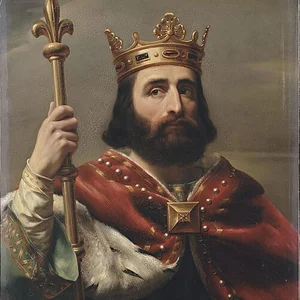
Pepin the Short
714 — 768
Pepin the Short (714–768) was the first king of the Carolingian dynasty. He overthrew the last Merovingian kings and founded a new dynasty that would dominate Western Europe for several centuries.
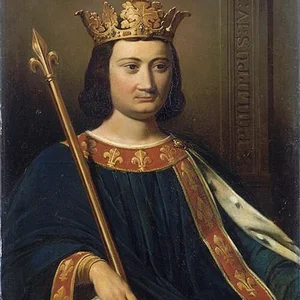
Philip the Fair
King of France from 1285 to 1314, Philip the Fair considerably strengthened the royal Capetian power against the papacy and the great feudal lords. His reign is marked by the trial of the Knights Templar and the convening of the first Estates General.
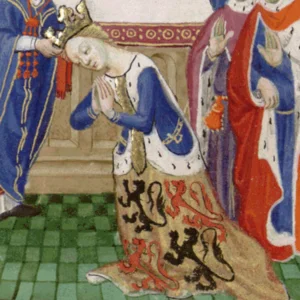
Philippa de Hainaut
1310 — 1369
Queen of England through her marriage to Edward III in 1328, Philippa of Hainaut was a respected sovereign, known for her clemency and benevolent influence. She played an important role in the English court and was a patron of the arts and letters.
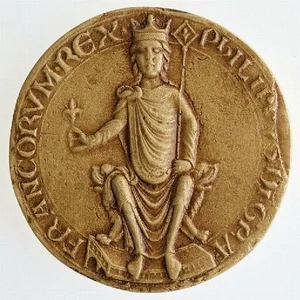
Philippe Auguste
1165 — 1223
King of France from 1180 to 1223, Philippe Auguste is one of the greatest monarchs of the Middle Ages. He strengthened royal power, vastly expanded the royal domain, and won the decisive victory of Bouvines in 1214. His reign marks the beginning of medieval France's rise as a major power.
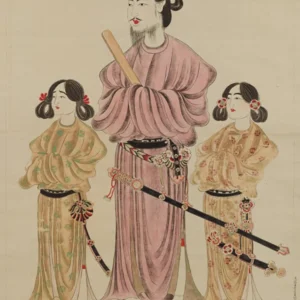
Prince Shōtoku
574 — 622
Regent of Japan under Empress Suiko (593–622), he promoted the spread of Buddhism and Confucianism, promulgated Japan's first constitution, and modernized the state by drawing on the Chinese model.
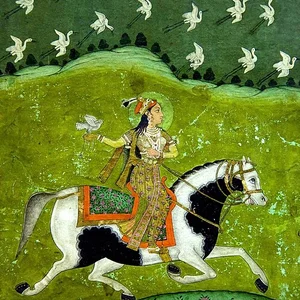
Razia Sultana
1205 — 1240
Razia Sultana was the first and only woman to rule the Delhi Sultanate (1236–1240). Daughter of Sultan Iltutmish, she governed unveiled and on horseback, defying the conventions of her time. A revolt by Turkish nobles led to her downfall and death in 1240.

Razia Sultana
The first woman to reign over the Delhi Sultanate (1236–1240), Razia Sultana was chosen by her father Iltutmish as his successor. She led her armies in person and governed unveiled, defying the conventions of her era, before being overthrown and killed by a coalition of nobles.
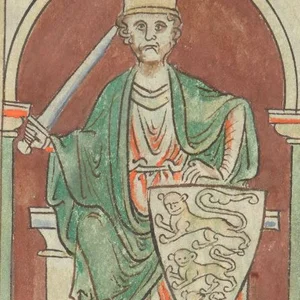
Richard the Lionheart
1157 — 1199
King of England from 1189 to 1199, Richard the Lionheart was a medieval monarch renowned for his leading role in the Third Crusade (1191–1192). He embodied the chivalric ideal of his era, though he spent very little time in England during his reign.
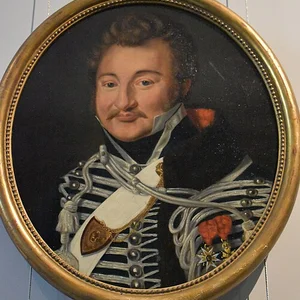
Saint Louis
King of France from 1226 to 1270, Louis IX is a major figure of the Middle Ages. Renowned for his piety and his sense of justice, he was canonized in 1297. He led two crusades and died in Tunis in 1270.
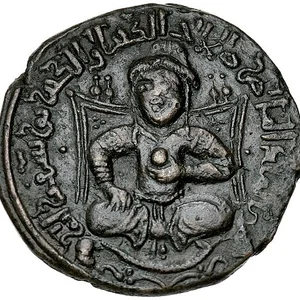
Saladin
1138 — 1193
Saladin (1138–1193) was a Muslim sultan of Egypt and Syria and the founder of the Ayyubid dynasty. He is renowned for uniting the Muslim world and recapturing Jerusalem from the Crusaders in 1187, bringing an end to the Latin Kingdom of Jerusalem established after the First Crusade.
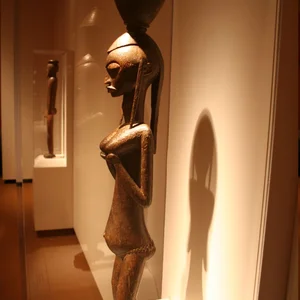
Sassuma Bérété
First wife of King Naré Maghann Konaté in the Sundiata epic, Sassuma Bérété is a figure of political ambition in the Mandinka griot tradition (13th century). A fierce rival of Sogolon, mother of Sundiata, she seeks to place her son Dankaran Touman on the throne of Mande.
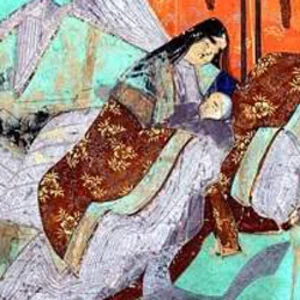
Shōshi
988 — 1074
Empress consort of Emperor Ichijō and daughter of regent Fujiwara no Michinaga, Shōshi was one of the most influential women in Heian-period Japan. Her court was a leading intellectual and artistic hub, most notably welcoming the author Murasaki Shikibu.
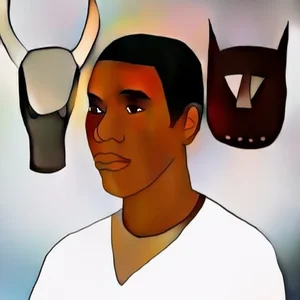
Sogolon Kondé
A central figure in the Mande epic tradition preserved by griots, Sogolon Kondé is the mother of Sundiata Keita, founder of the Mali Empire in the 13th century. Said to be ugly yet endowed with supernatural powers, she embodies hidden strength and maternal dignity in the oral tradition of the Mande peoples.
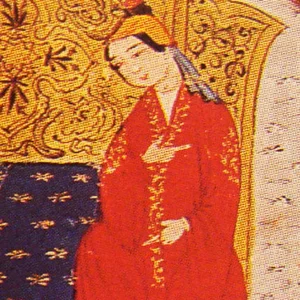
Sorghaghtani Beki
1190 — 1252
Mongol princess, daughter-in-law of Genghis Khan and wife of Tolui. Mother of four sons, including the emperors Möngke and Kublai Khan and the Ilkhan Hulagu, she exerted a decisive political influence on the succession of the Mongol Empire in the 13th century.

Soundiata Keïta
1190 — 1255
Founder of the Mali Empire in the 13th century, Soundiata Keïta united the Mandinka peoples and defeated King Soumaoro Kanté at the Battle of Kirina (c. 1235). His epic, passed down by griots, is one of the great works of African oral literature.

Sumanguru Kante
King of the Sosso Kingdom in the 13th century, Sumanguru Kante was a formidable ruler who dominated West Africa following the fall of the Ghana Empire. He was defeated by Sundiata Keita at the Battle of Kirina around 1235, an event that marked the birth of the Mali Empire.
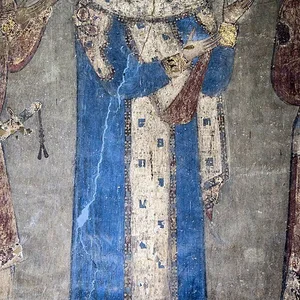
Tamar of Georgia
1166 — 1213
Queen of Georgia (1184–1213), the first woman to rule alone over this Caucasian kingdom. Her reign marks the Georgian Golden Age: territorial expansion, cultural and religious flourishing, and decisive military victories against the Seljuks.
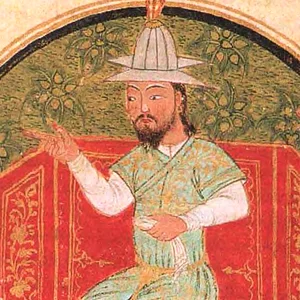
Tamerlane
1336 — 1405
Timur, known as Tamerlane (“Timur the Lame”), was a Turco-Mongol conqueror who built one of the vastest empires of the 14th century, stretching from Anatolia to India. Claiming descent from Genghis Khan, he subdued dozens of kingdoms through fearsome violence. His capital, Samarkand, shone as a great center of Islamic culture and architecture.
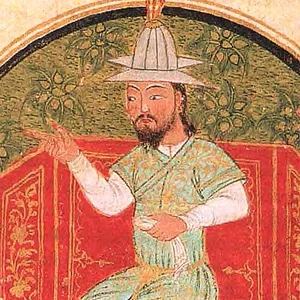
Tamerlane
1336 — 1405
A Turco-Mongol conqueror of the 14th century, Tamerlane founded an empire stretching from Anatolia to India. His military campaigns, marked by extreme violence, reshaped the map of Central Asia.

Tata Oule
Mandinka princess of the 13th century, daughter of Sundiata Keita according to the oral traditions of the Kouyaté griots. She is celebrated as a guardian figure of the Manden Charter, the first proclamation of rights in the Mali Empire.
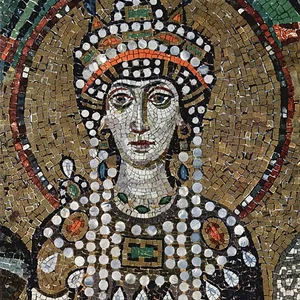
Theodora
497 — 548
Theodora, empress of Byzantium alongside Justinian I, is one of the most powerful women of late antiquity. Born into humble origins, she became co-regent and played a decisive role in Byzantine imperial politics, most notably during the suppression of the Nika revolt in 532.
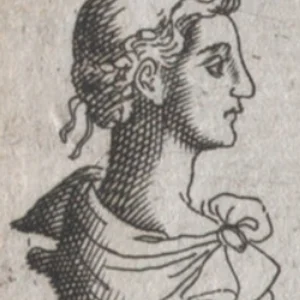
Theophanu
Byzantine princess, she married Emperor Otto II in 972, becoming Empress of the Holy Roman Empire. After her husband's death in 983, she served as regent on behalf of their son Otto III until her own death in 991, governing with authority and introducing Byzantine influence to the Ottonian court.
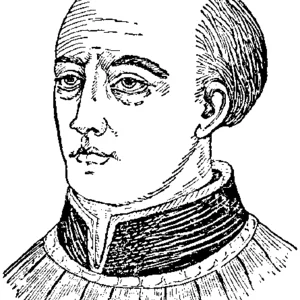
Thomas Becket
Archbishop of Canterbury in the 12th century, he clashed fiercely with King Henry II of England over the rights and freedoms of the Church. Murdered in his cathedral in 1170, he was canonized as early as 1173.
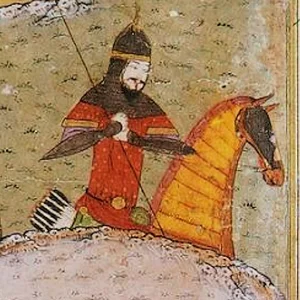
Tokhtamysh
1342 — 1406
Tokhtamysh was one of the last great khans of the Golden Horde, managing to reunify this fragmented Mongol empire in the late 14th century. Backed by Tamerlane before becoming his rival, he sacked Moscow in 1382 and clashed with the Timurid army several times, suffering devastating defeats that sealed the decline of the Horde.
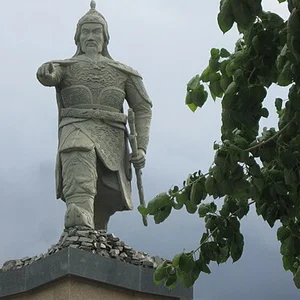
Trần Hưng Đạo
1228 — 1300
Vietnamese prince and great general of the Trần dynasty (c. 1228–1300), he commanded the armies of Đại Việt during the three Mongol-Yuan invasions (1258, 1285, 1288) and repelled each one, most notably through the decisive victory on the Bạch Đằng River.
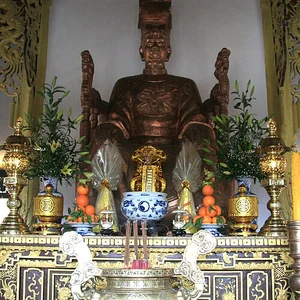
Trần Nhân Tông
1258 — 1308
Third emperor of the Trần dynasty in Đại Việt (r. 1278–1293), he led the victorious resistance against two Mongol invasions under Kublai Khan (1285, 1287). After abdicating, he became a Buddhist monk and founded the Trúc Lâm Yên Tử sect, the first truly Vietnamese school of Chan meditation.
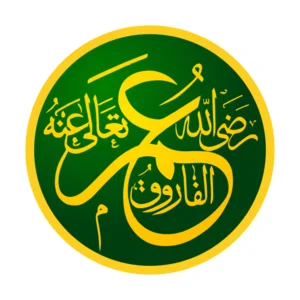
Umar ibn al-Khattab
586 — 644
A close companion of the Prophet Muhammad, Umar ibn al-Khattab became the second caliph of Islam (634–644). His reign saw a lightning expansion of the Muslim empire, from Persia to Egypt.
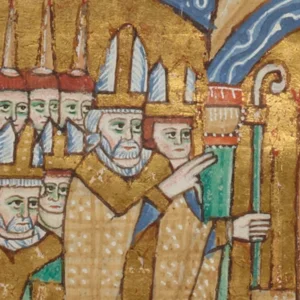
Urban II
1035 — 1099
Pope from 1088 to 1099, Urban II was the instigator of the First Crusade, proclaimed at the Council of Clermont in 1095. A Cluniac monk of French origin, he strengthened papal authority and continued the Gregorian Reform of the Church.
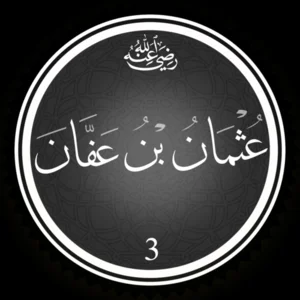
Uthman ibn Affan
574 — 656
The third caliph of Islam (644–656), Uthman ibn Affan was one of the closest companions of the Prophet Muhammad. His caliphate was marked by the standardization of the Quran and the expansion of the Muslim empire, but also by internal tensions that ultimately led to his assassination.

William of Poitiers
969 — 1030
Count of Poitiers and Duke of Aquitaine, nicknamed "the Great," he was one of the most powerful lords in the feudal West around the year 1000. He consolidated the Duchy of Aquitaine, protected the Church, and distinguished himself as a pilgrim to Santiago de Compostela.
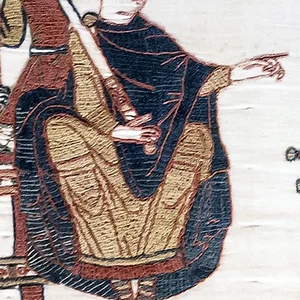
William the Conqueror
1028 — 1087
Duke of Normandy, William the Conqueror became King of England after his victory at the Battle of Hastings in 1066. This event marked one of the most significant conquests of the Middle Ages and profoundly transformed English society.
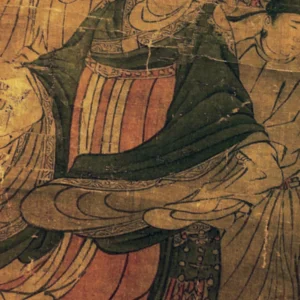
Wu Zetian
624 — 705
Wu Zetian (624–705) is the only woman ever to have ruled as reigning empress of China. A concubine of Emperor Taizong and later wife of Emperor Gaozong, she gradually seized power before founding her own Zhou dynasty in 690. An ambitious reformer, she modernized the imperial administration and championed merit-based examinations.

Yahya ibn Muhammad
829 — 864
Idrisid emir of Morocco from 849 to 863, reigning from Fez. His reign was marked by the rise of the city and the founding, in 859, of the al-Qarawiyyin mosque and university.
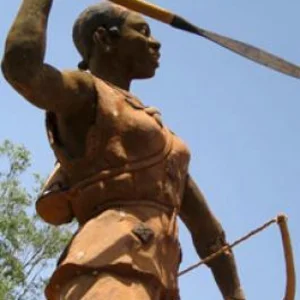
Yennenga
1101 — 1101
A warrior princess of the Dagomba people (present-day Ghana/northern Burkina Faso), Yennenga is venerated in Mossi oral tradition as the founding mother of the Moogo kingdom. Daughter of King Nedega, she united with a hunter named Riale, and their son Ouédraogo became the eponymous ancestor of the Mossi.
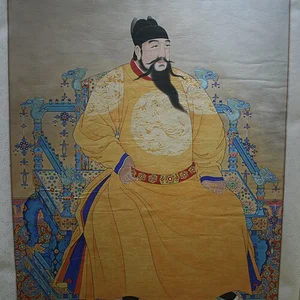
Yongle
Third emperor of the Ming dynasty (1402–1424), Yongle is known for moving the capital to Beijing, commissioning Zheng He's great maritime expeditions, and consolidating Chinese imperial power.
Mythology(118)

Agatha Southeil
Agatha Southeil is a legendary character associated with Arthurian folklore and tales of medieval witchcraft. Portrayed as a sorceress or prophetess, she belongs more to legendary tradition than to documented history.
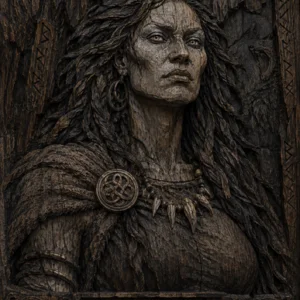
Angrboða
A giantess of Norse mythology, Angrboða is the consort of Loki and mother of three formidable beings: the wolf Fenrir, the serpent Jörmungandr, and the goddess Hel. She embodies the forces of chaos and the destruction to come at Ragnarök.
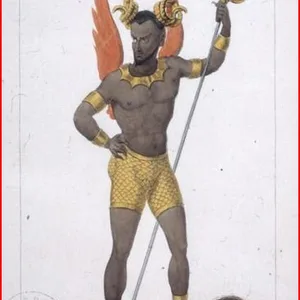
Astaroth
Astaroth is a grand duke of Hell from medieval demonology, considered a corrupted form of the Phoenician goddess Astarte. Described in the Goetia as riding a dragon and holding a serpent, he embodies vanity and sloth. His name illustrates the process by which medieval Christian theology demonized the deities of ancient religions.

Azrael
Azrael is the angel of death in Islamic and Jewish traditions. He is responsible for separating the soul from the body at the moment of death and for recording births and deaths in a great celestial book.
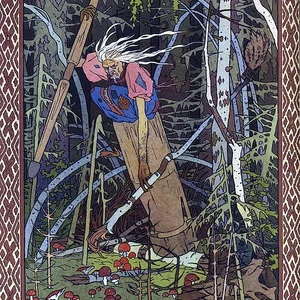
Baba Yaga
An iconic figure of Slavic folklore, Baba Yaga is an ambivalent witch from the oral tradition of Slavic peoples. She lives in an izba perched on chicken legs deep in the forest, playing the role of initiator at times and flesh-eating ogress at others.
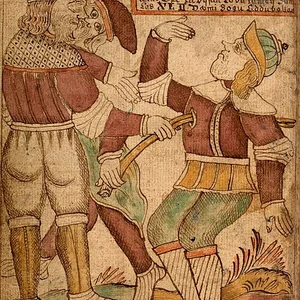
Baldr
Norse god of light and goodness, son of Odin and Frigg. His tragic death, orchestrated by Loki using a mistletoe arrow, heralds Ragnarök. He embodies sacrificed innocence and the promise of a renewed world.

Banshee
The Banshee is a female spirit from medieval Irish folklore whose nocturnal wailing announces the imminent death of a member of a native Irish family. Her Gaelic name, Bean Sídhe, means "woman of the fairy mounds".

Basilisk
A legendary creature of the Middle Ages, the Basilisk is the king of serpents, said to kill with a single glance or its poisonous breath. It hatches from a rooster's egg incubated by a snake, and ranks among the most feared beasts in medieval bestiaries.
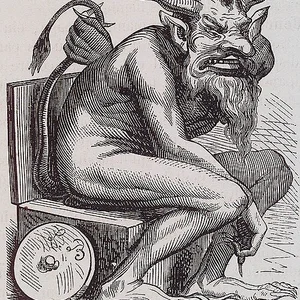
Belphegor
Belphegor is a demon from Hebrew and medieval Christian traditions, associated with the deadly sin of sloth. Considered one of the seven princes of Hell, he tempts humans with promises of wealth and ingenious inventions. His name derives from Baal-Peor, a Moabite deity mentioned in the Bible.
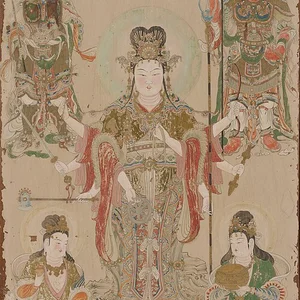
Benzaiten
A Japanese goddess of Buddhist and Shinto tradition, Benzaiten is associated with music, the arts, wisdom, and water. Derived from the Hindu goddess Sarasvati, she was introduced to Japan through Buddhism around the 6th century. She is the only female figure among the Seven Gods of Fortune (Shichifukujin).
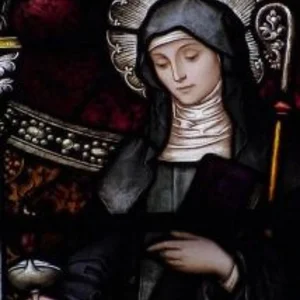
Brigid of Kildare
451 — 525
Saint Brigid of Kildare (c. 451-525) was an Irish abbess and the founder of the great monastery of Kildare. Together with Saint Patrick and Saint Columba, she is one of the three patron saints of Ireland. A largely legendary figure, she is often associated with the Celtic goddess Brigid.

Brynhildr
A Valkyrie from Norse mythology, Brynhildr is a central heroic figure in the Völsunga saga and the Nibelung cycle. An invincible warrior punished by Odin for disobeying his orders, she is imprisoned in a castle surrounded by flames until Sigurd frees her. Her tragic fate — woven from love, betrayal, and revenge — makes her one of the most complex heroines in the Germanic and Scandinavian traditions.
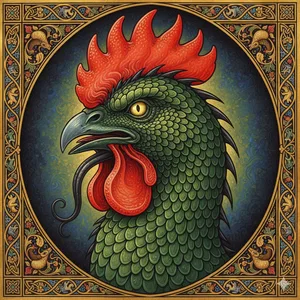
Cockatrice
The cockatrice is a legendary creature from medieval bestiaries, half-rooster and half-serpent, reputedly born from a rooster's egg incubated by a toad or a snake. Similar to the basilisk, it was believed to kill with a single glance or its venomous breath. It haunted the European imagination from the Middle Ages through the Renaissance.
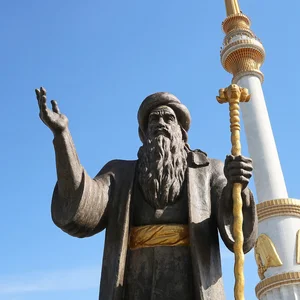
Dede Korkut
0900 — 0999
Dede Korkut is the legendary sage and bard of the Oghuz Turks, a tutelary figure of the Turkic-Central Asian epic tradition. Storyteller, shaman, and musician, he embodies the oral memory of a nomadic people. His name is inseparable from the famous collection of epics attributed to him.
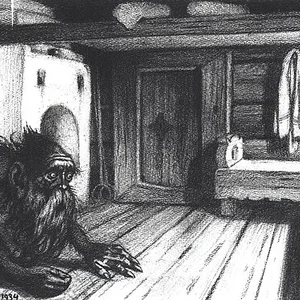
Domovoi
A protective spirit of the home in Slavic mythology, the Domovoi watches over the household and its inhabitants. A tutelary being of the polytheistic Slavic tradition, he embodies the bond between the living and their ancestors. He persists in popular folklore after Christianization.
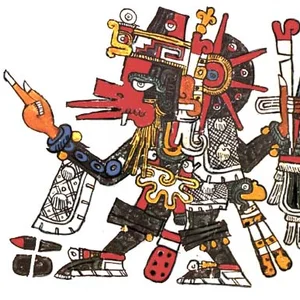
Ehecatl
Ehecatl is the Aztec god of wind, often identified with Quetzalcoatl in the composite form Ehecatl-Quetzalcoatl. He is regarded as the creative breath that set the world in motion and made the birth of the current sun possible.
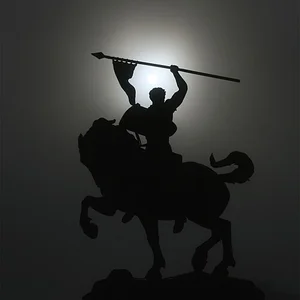
El Cid
Rodrigo Díaz de Vivar (1043-1099), nicknamed El Cid (meaning 'the Lord' in Arabic), was a Castilian knight who became a legendary figure of the Reconquista. A mercenary warrior and military strategist, he fought both for and against Christian kingdoms, ultimately serving the cause of Castile. His epic tale, immortalized in the Cantar de Mio Cid, made him a symbol of chivalric honor and the struggle against Muslim rule in medieval Hispania.
Fafnir
Fafnir is a dwarf from Norse mythology, son of Hreidmar, transformed into a dragon by his own greed after seizing a cursed hoard of gold. He is slain by the hero Sigurd (Siegfried) who drinks his blood to understand the language of birds. His story lies at the heart of the Völsunga saga and the Nibelung cycle.
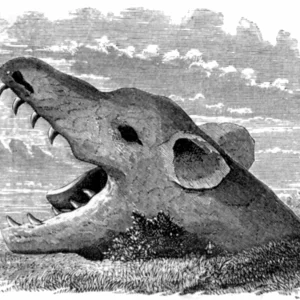
Fenrir
Fenrir is a gigantic wolf from Norse mythology, son of the god Loki and the giantess Angrboða. Feared by the gods for his immense power, he was bound by the Aesir using the magical fetter Gleipnir. At Ragnarök, he will break free to devour Odin, before being slain by Víðarr.
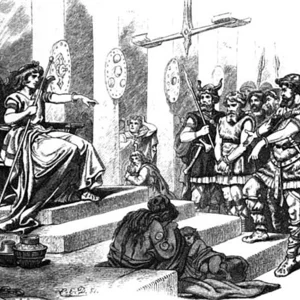
Forseti
Forseti is the Norse god of justice and reconciliation in Scandinavian mythology. Son of Baldr and Nanna, he presides over the divine tribunal Glitnir, whose golden walls and silver roof symbolize the brilliance of justice. He is considered the greatest judge among gods and men.
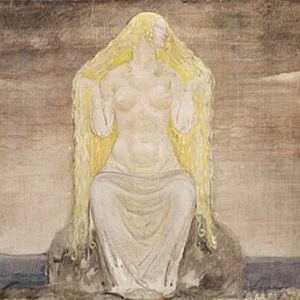
Freya
Freyja is a major goddess in Norse mythology, associated with love, fertility, beauty, and seiðr magic. She belongs to the Vanir in the Norse pantheon and has been venerated across Scandinavian cultures from the Middle Ages to the modern era.
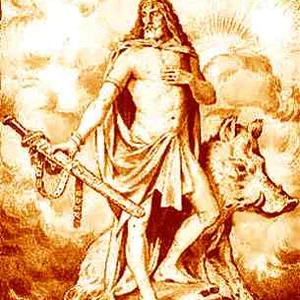
Freyr
Freyr is one of the major deities of Norse mythology, belonging to the Vanir, gods of fertility and prosperity. Son of Njörðr and twin brother of Freya, he rules over Álfheimr and is invoked to ensure good harvests, peace, and abundance.
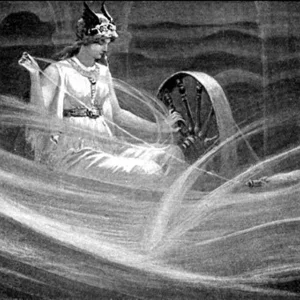
Frigg
Norse goddess of marriage, motherhood, and wisdom, Frigg is the wife of Odin and queen of the Aesir in Scandinavian mythology. Known among Germanic and Nordic peoples, she is associated with the protection of the home and with foreknowledge. Her figure is conveyed primarily through medieval Icelandic written sources (the Eddas).
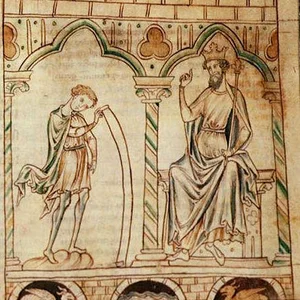
Geoffrey of Monmouth
1100 — 1155
Geoffrey of Monmouth is a 12th-century Welsh cleric and chronicler, famous for his *Historia regum Britanniae* (c. 1136). This work, blending history and legend, popularized the figures of King Arthur and the enchanter Merlin, durably shaping the Matter of Britain.
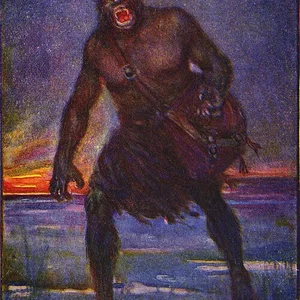
Grendel
Grendel is a monster descended from the cursed lineage of Cain, who terrorizes the mead-hall of Heorot — home of the Danish king Hrothgar — for twelve years. A creature of darkness and marshes, he is ultimately defeated by the Geatish hero Beowulf in the oldest epic poem in English literature (8th century).
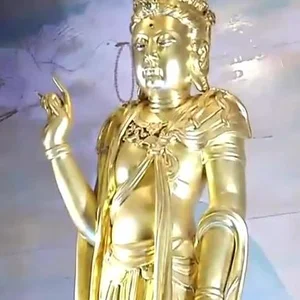
Guan Yin
Guan Yin is the Buddhist goddess of compassion and mercy, venerated throughout East Asia. Originating from the bodhisattva Avalokiteśvara tradition, she gradually took on a feminine form in China between the 7th and 12th centuries. She is one of the most popular religious figures in Mahayana Buddhism.
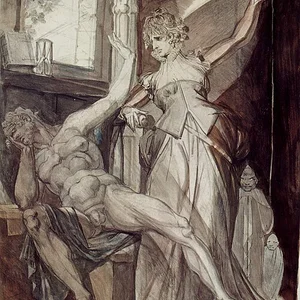
Gudrun
Tragic heroine of Germanic and Norse mythology, Gudrun/Kriemhild is the wife of the hero Sigurd/Siegfried. A figure of vengeance and grief, she embodies conjugal loyalty taken to the point of total destruction.
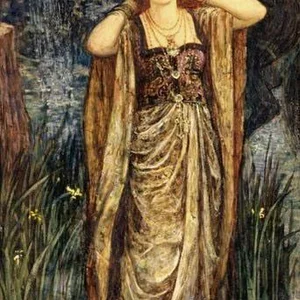
Guinevere
Legendary queen of Britain and wife of King Arthur in the Arthurian cycle. A central figure of medieval literature, she is also known for her tragic affair with the knight Lancelot of the Lake, which contributes to the fall of Camelot.

Hagere
A legendary figure from Ethiopian oral tradition, Hagere is portrayed as a founding queen whose name means "land" or "homeland" in Ge'ez and Amharic. Associated with the mythic origins of the Solomonic dynasty, she embodies in Ethiopian oral narratives the idea of the mother-land and sacred sovereignty.
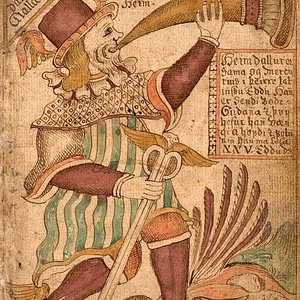
Heimdall
Heimdall is the guardian god of the Aesir in Norse mythology. Sentinel of the gods, he watches over the Bifröst bridge connecting the realms and will sound the Gjallarhorn to herald Ragnarök. He is associated with dawn, light, and vigilance.
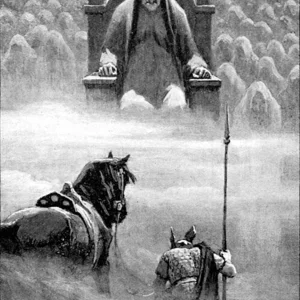
Hel
In Norse mythology, Hel is the daughter of Loki and the giantess Angrboða. Goddess of the dead, she rules over Niflheim (or Helheim), the underworld realm where those who died of illness or old age dwell. Her very name refers both to the deity and to the realm she governs.
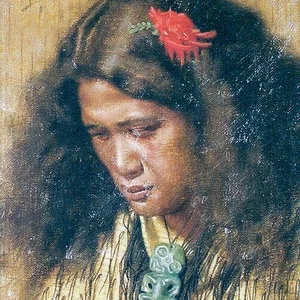
Hinemoa
Hinemoa is a heroine of Māori oral tradition, from the Arawa tribe, whose legend has been passed down since pre-colonial times in New Zealand. According to tradition, she swam across Lake Rotorua to reach her lover Tūtānekai on Mokoia Island, defying her family's prohibition. Her story symbolizes the power of love and the courage to challenge social conventions.
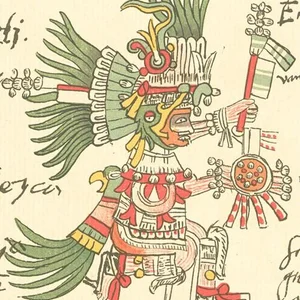
Huitzilopochtli
Huitzilopochtli is the god of war and the sun in Aztec mythology. The patron deity of the Mexica people, he guides them from Aztlan to the founding of Tenochtitlan. He lies at the heart of Aztec cosmology and the sacrificial rituals intended to feed the sun.
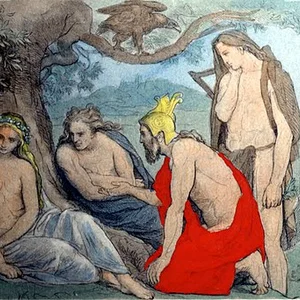
Idunn
Goddess of Norse mythology, Idunn is the keeper of the golden apples that preserve the eternal youth of the Æsir gods. Her abduction by the giant Thiazi causes the gods to age, illustrating her central role in the Viking cosmic order.
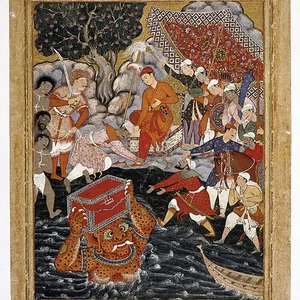
Ifrit
The ifrit is a powerful category of jinn in Islamic tradition, created from smokeless fire. Known for their cunning and danger, they appear in the Quran and One Thousand and One Nights. These supernatural beings hold a central place in medieval Muslim folklore and cosmology.
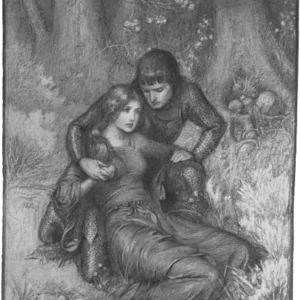
Igraine
Igraine is a character from Arthurian legend, wife of Gorlois, Duke of Cornwall, and later of King Uther Pendragon. Seduced by Uther through a spell cast by Merlin that gives him the appearance of Gorlois, she becomes the mother of King Arthur.
Incubus
A male demon from medieval demonology, the incubus was believed to have intercourse with women while they slept. It embodied the fear of sexuality and sin in medieval Christian thought. Its female counterpart is the succubus.
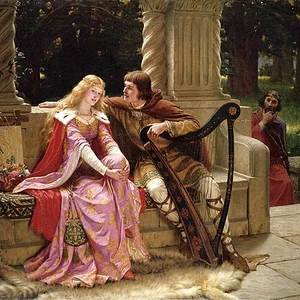
Iseult
Iseult the Fair is the heroine of the medieval legend of Tristan and Iseult. An Irish princess who became the wife of King Mark of Cornwall, she lives a fatal, adulterous passion with the knight Tristan after accidentally drinking a love potion. Her story is one of the great love myths of the Matter of Britain.

Iseult of the White Hands
Princess of Brittany, daughter of Duke Hoël, in the medieval legend of Tristan and Iseult. Tristan marries her because her name resembles that of Iseult the Fair, his true love, but he never consummates the marriage.
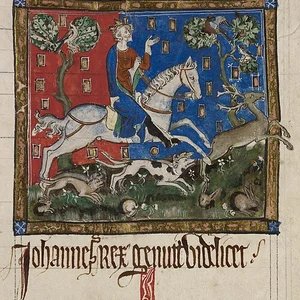
John Lackland
1166 — 1216
King of England from 1199 to 1216, son of Henry II and Eleanor of Aquitaine. He lost most of the Plantagenet continental possessions to Philip Augustus and was forced to sign Magna Carta in 1215.
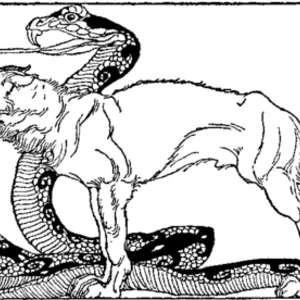
Jormungandr
Jörmungand, the Midgard Serpent, is a colossal creature from Norse mythology, son of Loki and the giantess Angrboða. He encircles the world by biting his own tail, a symbol of infinity and chaos. The sworn enemy of Thor, he will slay him at Ragnarök before succumbing to his venom.

Kaguya-hime
Legendary princess from Japanese folklore and heroine of The Tale of the Bamboo Cutter (Taketori monogatari), one of the oldest works in Japanese literature. Found as a child inside a glowing bamboo stalk and raised by a peasant couple, she grows into a woman of extraordinary beauty before returning to the Moon, her true home.
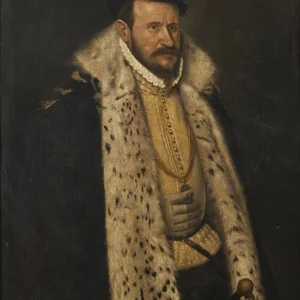
Kappa
The Kappa is an aquatic creature from Japanese folklore, depicted as a turtle-shelled being with a water-filled dish on its head. Known for drowning humans and animals, it is nonetheless bound by the rules of politeness: bowing before it forces the creature to bow back, spilling its vital water. An iconic figure of Japanese yōkai, it embodies the ambivalent relationship between humans and water.
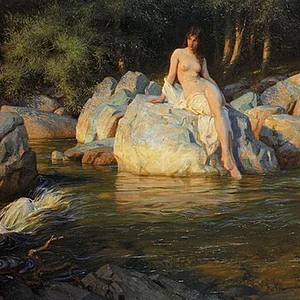
Kelpie
The kelpie is a supernatural creature from Scottish folklore, most often appearing in the form of a horse that haunts lochs and rivers. It lures unwary travellers onto its back before dragging them underwater to drown and devour them.

King Arthur
Legendary king of Britain, Arthur is a central figure in Celtic mythology and medieval literature. Founder of the Round Table and lord of Camelot castle, he embodies the medieval chivalric ideal. His story, passed down through legends and tales of knighthood, blends possible historical fact with supernatural elements.
Kitsune
The kitsune is a fox-spirit (yōkai) from Japanese folklore, gifted with supernatural powers and able to shapeshift, notably into a woman. The longer it lives, the more tails it gains, up to nine, a sign of its wisdom and power.

Kraken
A colossal sea creature from medieval Scandinavian legend, often described as a giant squid or octopus capable of swallowing entire ships. Mentioned in Norse texts as early as the 13th century, it embodies sailors' terror of the unfathomable depths of the ocean.
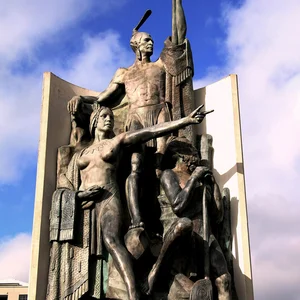
Kupe
1000 — 1099
Kupe is a legendary Polynesian navigator, the founding hero of Maori tradition. According to mythology, he discovered Aotearoa (New Zealand) around the year 1000, guided by a giant octopus. His voyage from Hawaiki symbolizes the mastery of star navigation achieved by the Polynesian peoples.
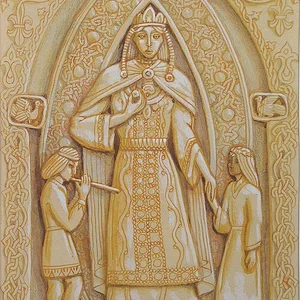
Lada
Lada is the Slavic goddess of love, beauty, and fertility. Venerated in medieval Slavic folk traditions, she presided over spring celebrations, weddings, and fertility. Her cult is attested in ritual songs and seasonal festivals of Slavic peoples.
Lady of the Lake
An enchanting figure from medieval Arthurian legend, the Lady of the Lake is a fairy who presents the sword Excalibur to King Arthur and raises Lancelot. She embodies magic and the bond between the mortal world and the fairy realm.
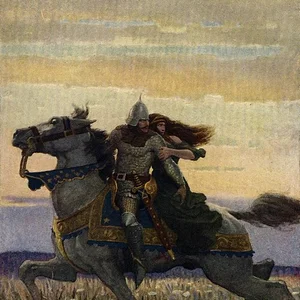
Lancelot du Lac
Lancelot du Lac is a legendary knight of the Round Table, son of King Ban of Benwick. Raised by the Lady of the Lake, he becomes the greatest warrior in Arthur's kingdom and the lover of Queen Guinevere. His story symbolizes the conflict between chivalric honor and romantic passion.
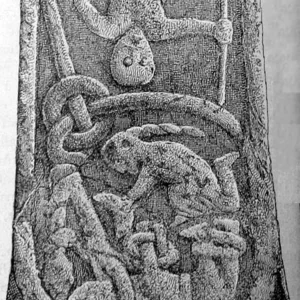
Loki
The trickster god of Norse mythology, Loki is an ambivalent deity capable of shapeshifting. A figure of chaos and transgression, he plays a crucial role in the stories of the end of the world (Ragnarök), where he fights against the Aesir alongside the giants.
Mama Ocllo
1197 — 1230
Founding goddess of Inca civilization, according to Quechua oral tradition. Wife of Manco Cápac, she is said to have emerged from Lake Titicaca and taught women the art of weaving and domestic skills, thereby establishing the Inca social order.
Mama Quilla
Goddess of the Moon in Inca mythology, Mama Quilla is the protector of women, marriage, and the lunar calendar. Wife of Inti, the Sun god, she held a central place in Inca religion and society during the pre-colonial era.
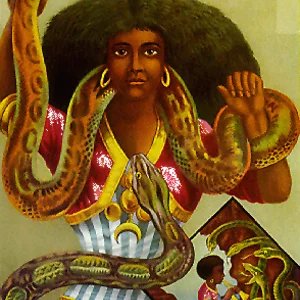
Mami Wata
An aquatic deity venerated in West and Central Africa and throughout the African diaspora in the Americas. A water spirit associated with fertility, healing, and prosperity, Mami Wata is a central figure in vodoun worship and many oral traditions. Her origins are pre-colonial, but her iconography was enriched through contact with Atlantic exchange.
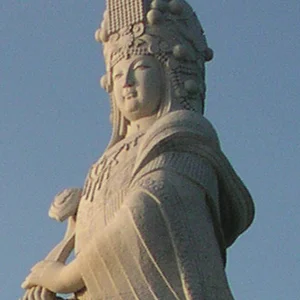
Mazu
960 — 987
Mazu is the protective goddess of sailors in Chinese tradition. According to legend, she was born around 960 CE in Fujian province under the name Lin Mo, and was deified after her death. Her cult spread across all the coasts of China and into Chinese communities throughout Southeast Asia.
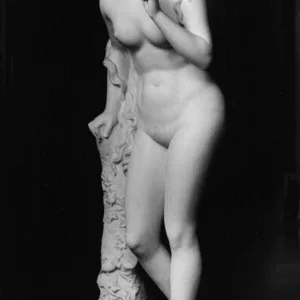
Melusine
A legendary figure of the Middle Ages, Melusine is a fairy or supernatural creature of dual nature: part woman, part water serpent. According to legend, she founded the Lusignan dynasty after her marriage to the knight Raymond. Her story weaves together medieval wonder, a curse, and dynastic origins.
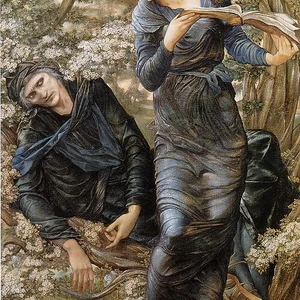
Merlin
Merlin is a legendary wizard or druid from Arthurian legend, known as advisor and sorcerer to King Arthur. A central figure in medieval literature, he embodies magical wisdom and supernatural influence in the kingdoms of Britain.
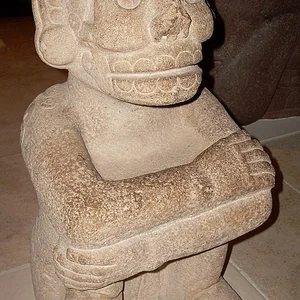
Mictlantecuhtli
Mictlantecuhtli is the god of death in Aztec mythology, ruler of Mictlan, the kingdom of the dead located in the deepest reaches of the underworld. Depicted as a skeleton adorned with necklaces of human eyes and cobwebs, he embodied natural death and the cycle of existence.

Mokoch
Mokoch is one of the great goddesses of the pre-Christian Slavic pantheon, associated with moist earth, fertility, and fate. A protective deity of women, she presides over spinning, birth, and harvests. Her cult is attested among Eastern Slavs before the Christianization of Kievan Rus' in 988.
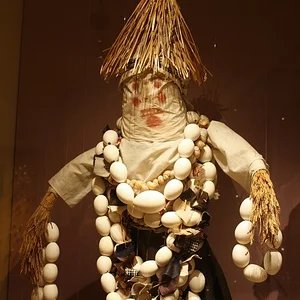
Morana
Slavic goddess of winter, death, and night, Morana is a central figure in the mythology of Slavic peoples. Known under various forms (Marzanna in Polish, Morena in Czech and Slovak), she personifies the cycle of nature: her symbolic death in spring marks renewal. Her cult, passed down through oral tradition, is attested from the early Middle Ages to the present day.
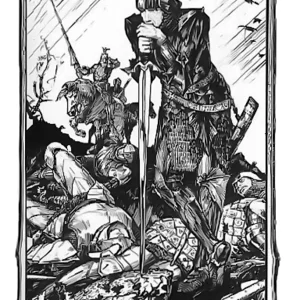
Mordred
Mordred is a character from Arthurian legend, the incestuous son of King Arthur and his half-sister. A traitor to the kingdom of Camelot, he brings about Arthur's downfall at the Battle of Camlann, where the two slay each other.
Moremi Ajasoro
Legendary heroine of the Yoruba people of Ilé-Ifè (present-day Nigeria), a figure of African oral tradition. According to legend, she sacrificed herself to infiltrate the ranks of Ifè's enemies and liberate her people through cunning and courage.
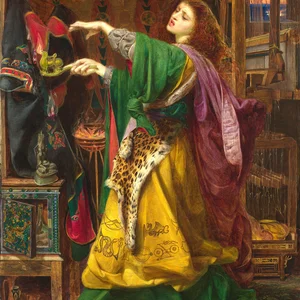
Morgan le Fay
Morgan le Fay is a major figure in Arthurian legend, portrayed as an enchantress and half-sister of King Arthur. She embodies magic and moral ambiguity in medieval narratives, shifting between adversary and protector depending on the version of the story.
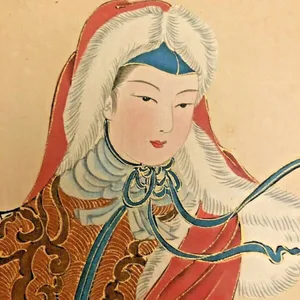
Mulan
Mulan is a legendary figure from Chinese literature — a young woman said to have disguised herself as a man to take her father's place in the army. Her story, popularized by the Disney animated film, embodies the values of filial piety and courage.
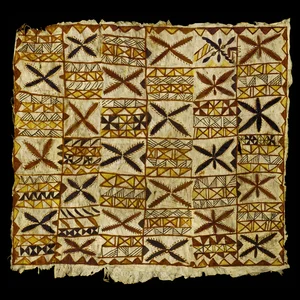
Nafanua
A warrior goddess of Samoan mythology, Nafanua is a central figure of feminine power in Polynesia. According to the oral traditions of the Samoan people, she led armies to victory and contributed to the unification of the Samoan islands in the pre-colonial era.
Nana Triban
Sister of Sundiata Keita, a figure from the 13th-century Mande epic. According to griot oral tradition, she accompanied her brother into exile and played a decisive diplomatic role in the reconquest of the Mande against Soumaoro Kante.
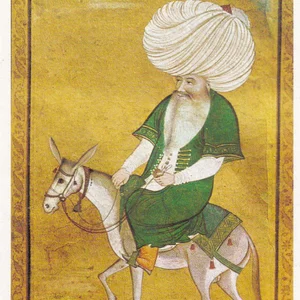
Nasreddin Hodja
1208 — 1284
Nasreddin Hodja is a legendary figure of Seljuk Anatolia, an imam, kadi, and icon of popular wisdom. His colorful anecdotes, blending humor and philosophy, have traveled across centuries and across the borders of the Muslim world to become a universal heritage.
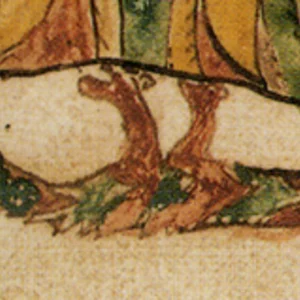
Níðhöggr
Níðhöggr is a dragon (or serpent) from Norse mythology who relentlessly gnaws at one of the roots of Yggdrasil, the world-tree. Lurking in the spring of Hvergelmir, he also devours the corpses of oath-breakers and murderers, embodying the forces of corruption that threaten the cosmic order.
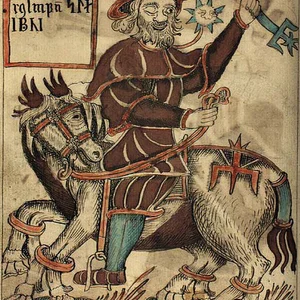
Odin
Odin is the chief god of Norse mythology, king of Asgard and father of all the gods. God of wisdom, war, and magic, he was worshipped by Germanic and Scandinavian peoples throughout Antiquity and the Middle Ages. He sacrifices his eye to gain knowledge and presides over the cosmic order embodied by Yggdrasil, the World Tree.
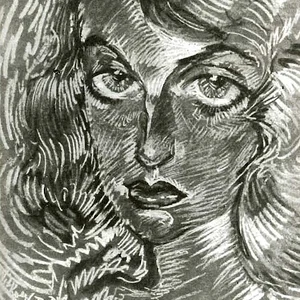
Oni
Oni are demonic creatures from Japanese folklore, depicted as giant ogres with horns, wielding iron clubs (kanabō). Associated with the Buddhist underworld (Jigoku), they serve as tormentors tasked with punishing the souls of the dead.
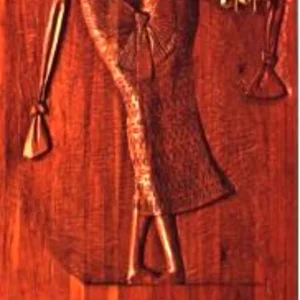
Oshun
Oshun is an orisha (deity) of the Yoruba people of West Africa, venerated as the goddess of love, rivers, and fertility. Passed down through oral tradition, she embodies gentleness, beauty, and healing. Her cult, alive since pre-colonial times, spread to the Americas with the African diaspora.
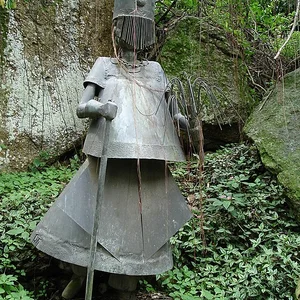
Oya
Oya is an orisha of the Yoruba tradition, deity of wind, storms, lightning, and transformation. Venerated by the Yoruba people of West Africa (present-day Nigeria, Benin, Togo), she is associated with the Niger River and the forces of change. Her figure crossed the Atlantic with the African diaspora, becoming integrated into the Candomblé and Santería traditions.
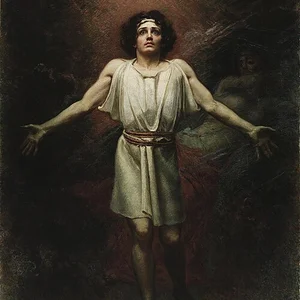
Perceval
Perceval is a legendary Knight of the Round Table and the central hero of the Grail quest in medieval Arthurian literature. Raised by a mother who kept him sheltered from the world, he gradually becomes an accomplished knight through his adventures and his spiritual search for the Grail.
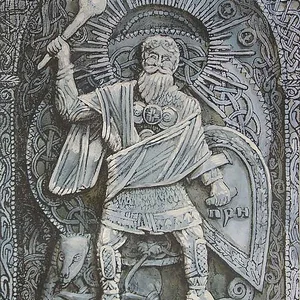
Perun
Perun is the supreme god of thunder and lightning in Slavic mythology. Master of the celestial elements, he is eternally opposed to Veles, deity of the underworld and waters. He is the Slavic equivalent of Zeus or Thor in the Indo-European pantheons.
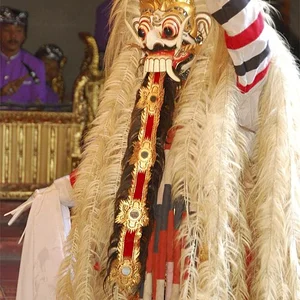
Rangda
Rangda is the demon queen of Balinese mythology, embodiment of evil and the dark forces. She leads an army of witches called Leyaks and is locked in eternal opposition with Barong, the protective spirit of good. This cosmic battle lies at the heart of Balinese spirituality and ritual theater.
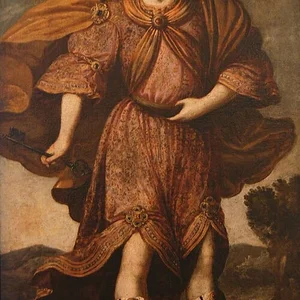
Raziel
Raziel is an archangel from Jewish Kabbalistic tradition, guardian of divine secrets and celestial mysteries. According to legend, he gave Adam the Sefer Raziel HaMalakh, a book containing the secrets of the universe. His name means "secret of God" in Hebrew.
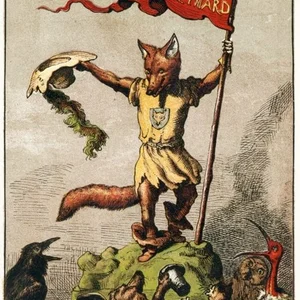
Renart
Renart is an anthropomorphic character from the Roman de Renart, a celebrated cycle of satirical tales from the Middle Ages. This cunning and mischievous fox embodies trickery and deception through picaresque adventures that critique the customs and social order of the time.
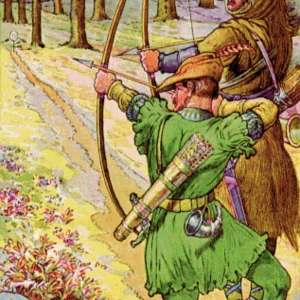
Robin Hood
A legendary hero of English folklore, Robin Hood is an archer and outlaw said to have operated in England during the Middle Ages. An iconic figure of popular resistance, he embodies the ideal of robbing from the rich to give to the poor.

Roc
The Roc is a fabulous bird of gigantic size from Persian and Arab folklore, made popular by the tales of the One Thousand and One Nights. Powerful enough to carry off an elephant in its talons, it embodies the boundless excess of Eastern marvels.
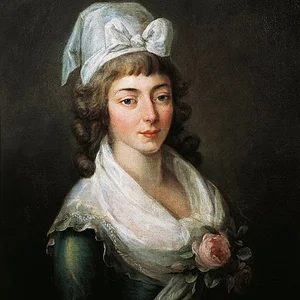
Roland
A legendary hero of French medieval literature, Roland is Charlemagne's paladin immortalized in the Song of Roland. A central figure of the medieval epic, he embodies the values of chivalry, loyalty, and sacrifice.
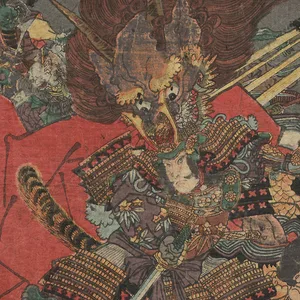
Shuten-doji
Shuten-doji is the king of oni (demons) in Japanese mythology, known for kidnapping and devouring young women from the capital from his fortress on Mount Ōe. He was defeated and beheaded by the hero Minamoto no Raikō and his four lieutenants through a ruse involving poisoned sake.
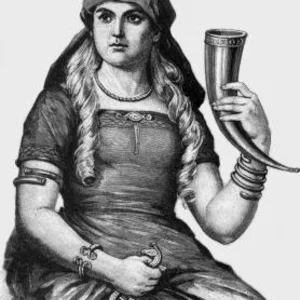
Sif
Sif is a goddess in Norse mythology, wife of the god Thor. She is famous for her magnificent golden hair, a symbol of the fertility of fields and harvests, which Loki treacherously cut off while she slept and which the dwarves reforged in pure gold.
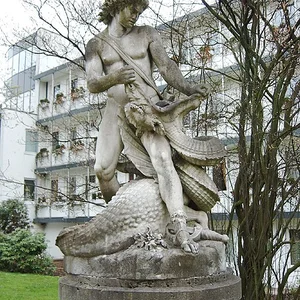
Sigurd
Hero of Norse and Germanic mythology, Sigurd is the slayer of the dragon Fáfnir according to the Völsunga Saga. An iconic figure of Germanic legend, he embodies the archetype of the warrior-conqueror cursed by his own heroic deed.
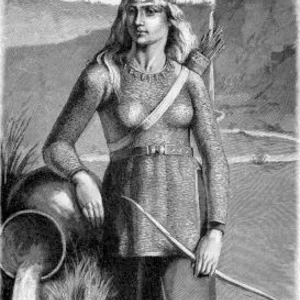
Skadi
Skadi is a giantess (jötunn) from Norse mythology, goddess of winter, hunting, and mountains. Daughter of the giant Þjazi, she is known for negotiating her place among the Aesir gods after her father's death. Her figure illustrates the boundary between the world of the gods and that of the giants in Viking cosmology.
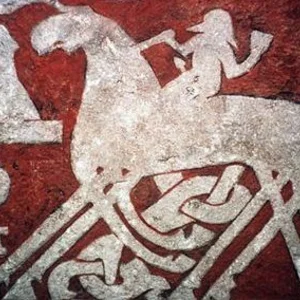
Sleipnir
In Norse mythology, Sleipnir is the eight-legged horse of the god Odin, considered the best of all horses. Born of the god Loki transformed into a mare, he carries his master across the nine worlds, over land, over sea, and through the air.
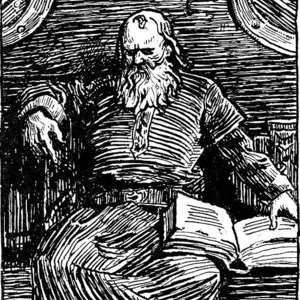
Snorri Sturluson
1179 — 1241
Icelandic writer, historian, and politician of the 13th century (1179–1241). He is the author of the Prose Edda, a major source on Norse mythology, and the Heimskringla, a chronicle of the kings of Norway.
Sogolon Kondé
A central figure in the Mande epic tradition preserved by griots, Sogolon Kondé is the mother of Sundiata Keita, founder of the Mali Empire in the 13th century. Said to be ugly yet endowed with supernatural powers, she embodies hidden strength and maternal dignity in the oral tradition of the Mande peoples.

Succubus
The succubus is a female demon from medieval demonology, believed to visit men in their sleep to unite with them and drain their vital energy. Ubiquitous in the theological and demonological treatises of the Middle Ages, it embodies religious anxieties about sexuality and evil.
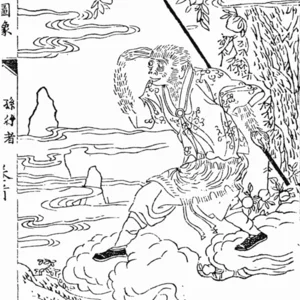
Sun Wukong
Sun Wukong, the Monkey King, is the main character of the classic Chinese novel Journey to the West (16th century). This mythological hero, gifted with superhuman powers and great wisdom, accompanies the monk Xuanzang on his spiritual journey to India to retrieve the Buddhist scriptures.
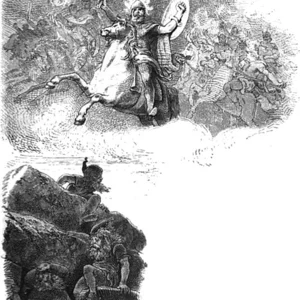
Surtr
Surtr is a fire giant from Norse mythology, guardian of the realm of Muspelheim. He wields a blazing sword and will play a central role during Ragnarök, destroying the world in flames.
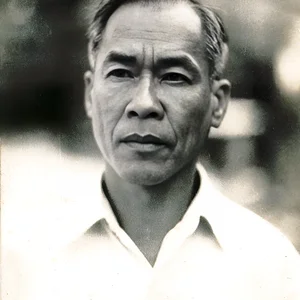
Tấm
Heroine of the Vietnamese popular tale Tấm Cám, a young woman mistreated by her stepmother and half-sister Cám, who becomes queen through the magical help of Bụt. An emblematic figure of Vietnamese oral literature, her story is compared to the universal Cinderella motif. [1]
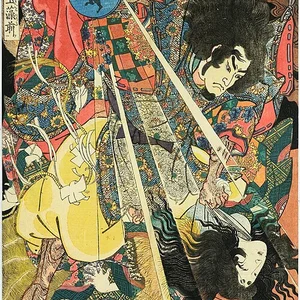
Tamamo-no-Mae
Tamamo-no-Mae is a figure from Japanese mythology, a nine-tailed fox (kitsune) who transformed herself into a court lady of incomparable beauty and intelligence. She bewitched Emperor Toba in the 12th century before being unmasked and slain, at which point she became the Killing Stone (Sessho-seki), said to poison anyone who approaches it.

Tarasque
The Tarasque is an amphibious dragon from Provençal legend that ravaged the banks of the Rhône near Tarascon. According to Christian tradition, it was tamed by Saint Martha with the sign of the cross and holy water, before being put to death by the townspeople.
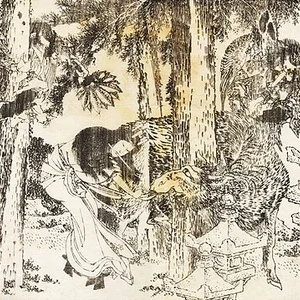
Tengu
Tengu are supernatural creatures from Japanese folklore — mountain spirits, fearsome warriors, and tricksters all at once. Depicted with a long nose or a crow's beak, they are renowned masters of martial arts and military strategy.
The Lady of the Lake
A legendary figure of Arthurian mythology, Viviane is a fairy and sorceress presented as the Lady of the Lake in medieval tales. She plays a crucial role in the story of King Arthur as his protector, advisor, and keeper of the sword Excalibur.

Thökk
Þökk is a giantess (jötunn) from Norse mythology. She is the only creature to refuse to weep for the god Baldr, thereby preventing his return from the realm of the dead. She is suspected of being Loki in disguise.
Thomas Becket
Archbishop of Canterbury in the 12th century, he clashed fiercely with King Henry II of England over the rights and freedoms of the Church. Murdered in his cathedral in 1170, he was canonized as early as 1173.
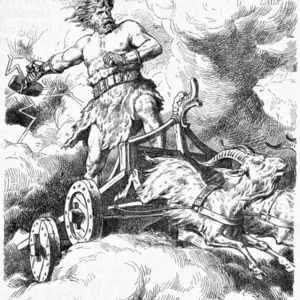
Thor
Thor is the god of Thunder and Lightning in Norse mythology. Son of Odin, he is the protector of humans and gods against the giants. He is depicted with his magical hammer Mjölnir, one of the most powerful weapons in the nine worlds.
Tristan and Iseult
A medieval legend telling the story of two lovers whose impossible love, sparked by the accidental drinking of a magic potion, leads them to tragedy. This tale of courtly love has inspired countless literary and artistic adaptations from the Middle Ages to the present day.
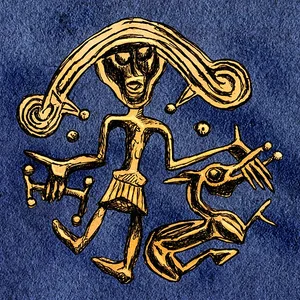
Tyr
Týr is the Germanic god of war and justice in Norse mythology. He is famous for having sacrificed his right hand during the binding of the wolf Fenrir, a symbol of courage and martial honor. His name gave rise to “Tuesday” in English and “Dienstag” in German.
Urban II
1035 — 1099
Pope from 1088 to 1099, Urban II was the instigator of the First Crusade, proclaimed at the Council of Clermont in 1095. A Cluniac monk of French origin, he strengthened papal authority and continued the Gregorian Reform of the Church.
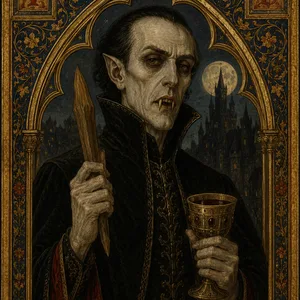
Vampire
A creature of Eastern European folklore, the vampire is an undead being said to rise from its grave to feed on the blood of the living. This mythological figure, rooted in medieval Slavic and Balkan beliefs, has endured through the centuries to become one of the most powerful archetypes in the Western imagination.
Vasilisa the Beautiful
Vasilisa the Beautiful is the heroine of a Russian folktale. An orphan mistreated by her stepmother, she overcomes trials imposed by the witch Baba Yaga with the help of a magical doll bequeathed by her mother, and eventually marries the tsar.
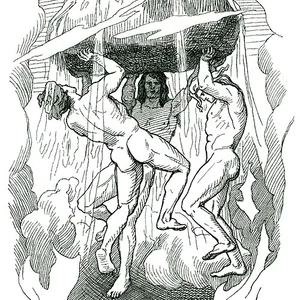
Vé
Vé is one of the three primordial deities of Norse mythology, son of Borr and brother of Odin and Vili. Together with his brothers, he took part in the creation of the world from the body of the giant Ymir, and breathed sense and form into the first humans, Ask and Embla.
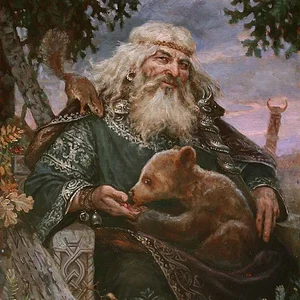
Veles
Veles is one of the major deities of the Slavic pantheon, ruler of the underworld, protector of cattle, and god of magic. He stands in eternal opposition to Perun, the god of thunder, in a cosmic battle symbolizing the duality between darkness and light. His cult, widespread among Slavic peoples, survived in syncretic form after the Christianization of the 9th–12th centuries.
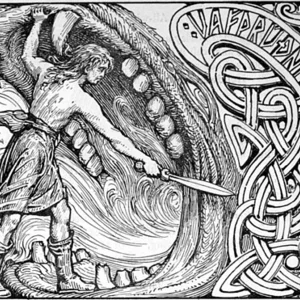
Vidar
Vidar is a god of Norse mythology, son of Odin and the giantess Grid. Known for his silence and colossal strength, he is destined to avenge his father's death by slaying the wolf Fenrir at Ragnarök.

Víli
Víli is a deity in Norse mythology, son of Borr and brother of Odin and Vé. Together with his brothers, he takes part in the creation of the world by slaying the primordial giant Ymir, and grants the first humans reason and the ability to move.
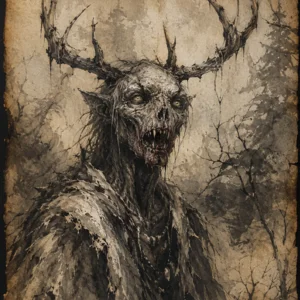
Wendigo
A malevolent spirit from Algonquian traditions (Ojibwe, Cree), the Wendigo embodies insatiable hunger, winter madness, and cannibalism. A mythic creature said to transform anyone who consumes human flesh into a monster, it symbolizes fundamental taboos and the dangers of winter isolation.

Werewolf
A hybrid creature, half-human and half-wolf, the werewolf is a mythological figure found across many cultures. Lycanthropy — the belief in human transformation into a wolf — is attested as far back as ancient Greece with the myth of Lycaon. During the Middle Ages, this belief intensified and led to actual trials for lycanthropy.
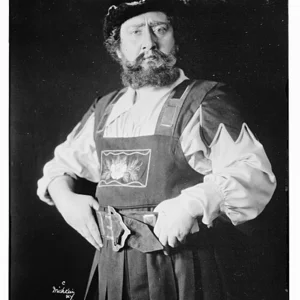
William Tell
Legendary Swiss hero of the 14th century, symbol of the struggle against oppression and Swiss independence. According to tradition, he defied an Austrian bailiff by shooting an arrow at an apple placed on his son's head, before taking part in the revolt against Habsburg rule.

Wyvern
The wyvern is a legendary creature of medieval European heraldry and folklore, depicted as a winged, two-legged dragon with a venomous, barb-tipped tail. Distinct from the classic four-legged dragon, it frequently appears on coats of arms and heraldic emblems.
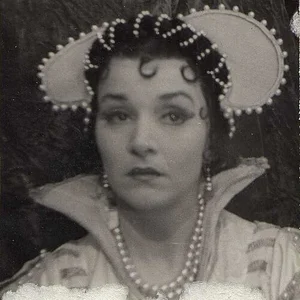
Ximena
Ximena Díaz was the wife of Rodrigo Díaz de Vivar, known as El Cid. A semi-legendary figure of medieval Spanish literature, she was immortalized in the 'Cantar de mio Cid' and later in Corneille's 'Le Cid' (1637), where she embodies the conflict between love and honor.
Yennenga
1101 — 1101
A warrior princess of the Dagomba people (present-day Ghana/northern Burkina Faso), Yennenga is venerated in Mossi oral tradition as the founding mother of the Moogo kingdom. Daughter of King Nedega, she united with a hunter named Riale, and their son Ouédraogo became the eponymous ancestor of the Mossi.
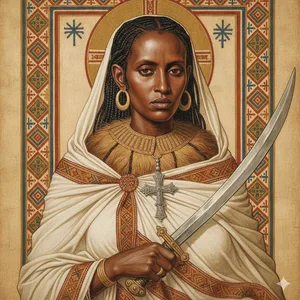
Yodit
Semi-legendary warrior queen of Ethiopia (10th century), whose name means "Judith." She is said to have overthrown the Kingdom of Aksum, burned its churches, and ruled for several decades over the Ethiopian highlands.
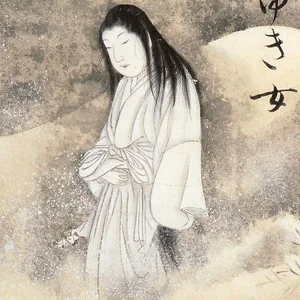
Yuki-onna
Yuki-onna is a supernatural figure from Japanese folklore, appearing as a woman of glacial and terrifying beauty. She emerges during blizzards and condemns lost travelers to death by freezing cold. Her character embodies both the beauty and the cruelty of winter nature.
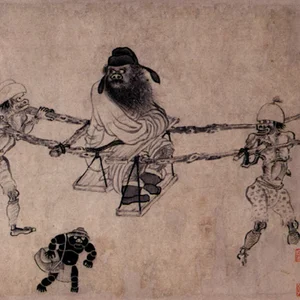
Zhong Kui
Zhong Kui is a deity from Chinese mythology, a demon-slayer and protector of households. Depicted as a fierce-looking bearded man, he is invoked to ward off evil spirits. His image is traditionally painted on house doors during festivals.
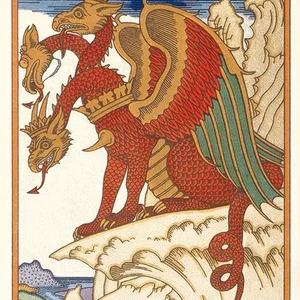
Zmey Gorynych
Zmey Gorynych is a multi-headed dragon from East Slavic folklore, an iconic figure of the Russian bylinas. A fire-breather, he embodies evil and abducts princesses, until he is slain by heroes such as Dobrynya Nikitich.
Spirituality(114)

Abdal Hayy ibn Mawlud
A figure of Yemeni Sufism, presented as a spiritual master (sheikh) connected to the mystical tradition of Islam. Reliable biographical sources about him are scarce, and his existence as well as his dates remain poorly documented.
Abu Yaqub Yusuf
The second Almohad caliph (not Almoravid), he reigned from 1163 to 1184 over the Maghreb and al-Andalus. A man of letters and a patron of scholars, he brought the philosophers Ibn Tufayl and Averroes (Ibn Rushd) to his court. He died during the siege of Santarém in Portugal.
Adalberon of Reims
Archbishop of Reims from 969 to 989, Adalberon was a major political figure of the late 10th century. Advised by Gerbert of Aurillac, he played a decisive role in the accession of Hugh Capet to the throne in 987, bringing the Carolingian dynasty to an end.
Agatha Southeil
Agatha Southeil is a legendary character associated with Arthurian folklore and tales of medieval witchcraft. Portrayed as a sorceress or prophetess, she belongs more to legendary tradition than to documented history.
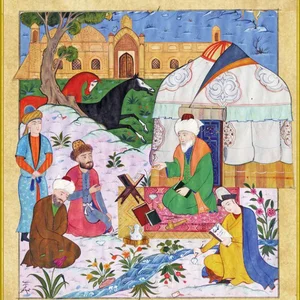
Ahmad Yasawi
1093 — 1166
Ahmad Yasawi was a 12th-century Turkic-speaking Sufi mystic poet, founder of the Yasawiyya order. Born in Sayram, he lived in Yasi (present-day Kazakhstan), where he composed the Divan-i Hikmet, a collection of spiritual poems in popular Turkic language that helped spread Islam across the Central Asian steppes.
Al-Hakim bi-Amr Allah
985 — 1021
Sixth Fatimid caliph of Egypt (996–1021), Al-Hakim is a controversial figure known for his unpredictable decrees and uncompromising religious policies. He is venerated as a divine manifestation by the Druze religion, which emerged during his reign.
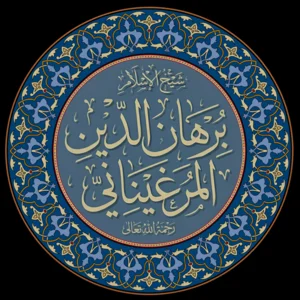
Al-Marghinani
1123 — 1197
Al-Marghinani was the greatest Hanafi jurist of the 12th century. Born in Marghinan in Central Asia, he composed Al-Hidaya, a treatise on Islamic law that served as a reference for centuries throughout the Muslim world and into the Ottoman Empire.
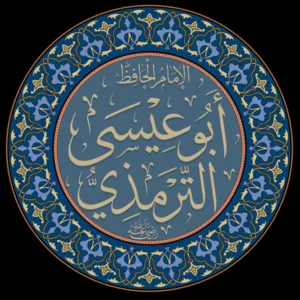
Al-Tirmidhi
0824 — 0892
Al-Tirmidhi was one of the great hadith compilers of medieval Islam. Born in Tirmidh in Khorasan, he traveled across Iraq, the Hejaz, and Persia to gather the traditions of the Prophet. His collection, the Jami' al-Tirmidhi, is one of the six canonical books (Kutub al-Sitta) of hadith science.
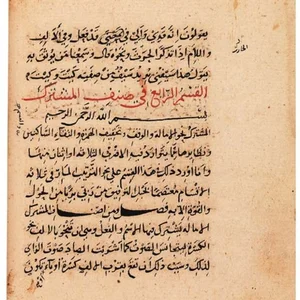
Al-Zamakhshari
1075 — 1144
Al-Zamakhshari was a 12th-century Muslim grammarian, exegete, and theologian, born in Khwarezm. Nicknamed “Jār Allāh” (the neighbor of God) for his long stays in Mecca, he authored the famous Quranic commentary Al-Kashshāf, a monument of Arabic rhetoric. A supporter of the Mu'tazilite movement, he championed a rational reading of the sacred text.
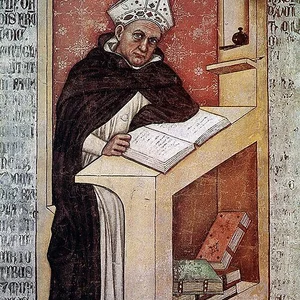
Albert the Great
1200 — 1280
A German Dominican of the 13th century — philosopher, theologian, and naturalist. Teacher of Thomas Aquinas in Paris and Cologne, he introduced the works of Aristotle into Christian thought and observed nature with an almost experimental spirit.
Alexander IV
1200 — 1261
Rinaldo di Jenne, nephew of Gregory IX, became the 181st pope under the name Alexander IV from 1254 to 1261. His pontificate was marked by conflict with the Hohenstaufen and the promotion of the mendicant orders.
Amr ibn al-As
570 — 664
Amr ibn al-As (c. 573-664) was an Arab military commander and administrator, a companion of the Prophet Muhammad. He led the conquest of Byzantine Egypt on behalf of the caliphate and became its first governor, founding the city of Fustat.
Anastasius IV
Pope of the Catholic Church from 1153 to 1154, Anastasius IV was the 168th successor of Peter. His brief pontificate was marked by efforts at reconciliation with the Byzantine Empire and the management of ecclesiastical affairs across Europe.
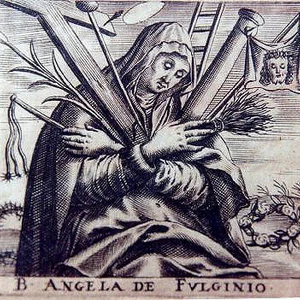
Angela of Foligno
1248 — 1309
A 13th-century Italian mystic, Angela of Foligno was a Franciscan tertiary whose visions were recorded in the Book of Visions and Instructions. A major figure in medieval spirituality, she was beatified in 1693 and canonized in 2013.
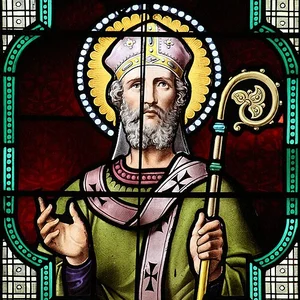
Anselm of Canterbury
1033 — 1109
An Italian-born Benedictine monk who became Archbishop of Canterbury, Anselm is one of the foremost thinkers of early scholasticism. He is famous for his ontological argument, which seeks to demonstrate the existence of God through reason alone.
Astaroth
Astaroth is a grand duke of Hell from medieval demonology, considered a corrupted form of the Phoenician goddess Astarte. Described in the Goetia as riding a dragon and holding a serpent, he embodies vanity and sloth. His name illustrates the process by which medieval Christian theology demonized the deities of ancient religions.
Azrael
Azrael is the angel of death in Islamic and Jewish traditions. He is responsible for separating the soul from the body at the moment of death and for recording births and deaths in a great celestial book.
Beatrice of Nazareth
1200 — 1268
Flemish Cistercian nun (c. 1200–1268), abbess of the monastery of Nazareth near Lier. Author of The Seven Manners of Love, one of the earliest mystical works written in the vernacular Dutch language.
Belphegor
Belphegor is a demon from Hebrew and medieval Christian traditions, associated with the deadly sin of sloth. Considered one of the seven princes of Hell, he tempts humans with promises of wealth and ingenious inventions. His name derives from Baal-Peor, a Moabite deity mentioned in the Bible.
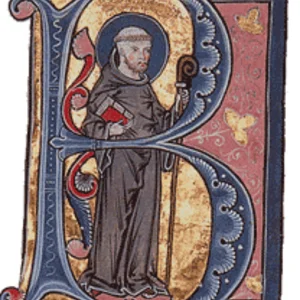
Bernard of Clairvaux
1091 — 1153
A French Cistercian monk, founder and abbot of the Abbey of Clairvaux, he was one of the most influential spiritual figures of the 12th century. A monastic reformer and preacher, he preached the Second Crusade and was canonized and later proclaimed a Doctor of the Church.
Blanche de Castille
1188 — 1252
Queen of France and regent, Blanche de Castille (1188–1252) governed the kingdom during the minority of her son Louis IX (Saint Louis) and again during his crusade. A woman of exceptional power, she successfully asserted royal authority against the great barons.
Bridget of Sweden
1303 — 1373
A mystic and Swedish saint of the 14th century, Bridget of Sweden was a wife, mother of eight children, then a pilgrim and founder of the Order of the Most Holy Savior. Her divine revelations, dictated and spread throughout Europe, gave her exceptional spiritual authority.
Brigid of Kildare
451 — 525
Saint Brigid of Kildare (c. 451-525) was an Irish abbess and the founder of the great monastery of Kildare. Together with Saint Patrick and Saint Columba, she is one of the three patron saints of Ireland. A largely legendary figure, she is often associated with the Celtic goddess Brigid.
Cardinal Jean Lemoine
French cardinal (c. 1250–1313), renowned canonist and papal legate, he founded the Collège du Cardinal Lemoine in Paris in 1302 to train young clerics from Picardy. Close to Popes Boniface VIII and Clement V, he played a key role at the Roman Curia during the transfer of the papacy to Avignon.
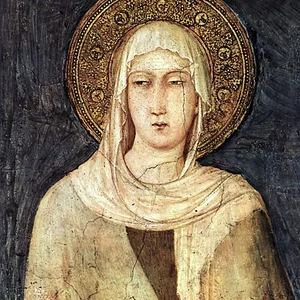
Clare of Assisi
1194 — 1253
Clare of Assisi (1194–1253) was an Italian Catholic saint and founder of the Order of Poor Ladies, known as the Poor Clares. Inspired by Francis of Assisi, she chose monastic life and absolute poverty. She was the first woman to write a religious rule approved by the papacy.
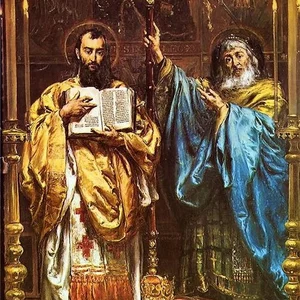
Cyril and Methodius
Cyril and Methodius were two Byzantine brothers of the 9th century, Christian missionaries among the Slavic peoples. They created the Glagolitic alphabet to translate liturgical texts into the Slavic language, laying the foundations of Slavic written culture.
Dante Alighieri
1265 — 1321
Florentine poet of the 13th–14th century, author of *The Divine Comedy*, a masterpiece of medieval literature. Exiled from Florence for political reasons, he laid the foundations of the Italian literary language.
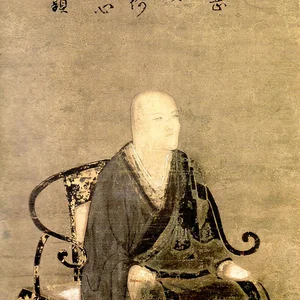
Dogen
Japanese Buddhist monk of the 13th century, founder of the Sōtō school of Zen in Japan. After a stay in China, he taught the practice of seated meditation (zazen) and wrote the Shōbōgenzō, a major work of Buddhist thought.
Domovoi
A protective spirit of the home in Slavic mythology, the Domovoi watches over the household and its inhabitants. A tutelary being of the polytheistic Slavic tradition, he embodies the bond between the living and their ancestors. He persists in popular folklore after Christianization.
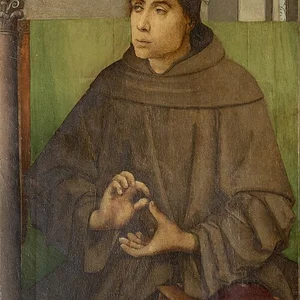
Duns Scotus
1266 — 1308
John Duns Scotus was a Scottish Franciscan philosopher and theologian, one of the major figures of late scholasticism. Nicknamed the “Subtle Doctor” for the refinement of his reasoning, he profoundly renewed medieval metaphysics.
Ehecatl
Ehecatl is the Aztec god of wind, often identified with Quetzalcoatl in the composite form Ehecatl-Quetzalcoatl. He is regarded as the creative breath that set the world in motion and made the birth of the current sun possible.
Eugene III
1200 — 1153
Pope from 1145 to 1153, Eugene III was the first Cistercian to rise to the papacy. A disciple of Saint Bernard of Clairvaux, he preached the Second Crusade and sought to reform the Church by strengthening papal authority.
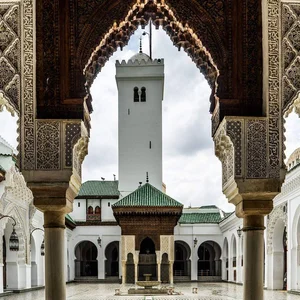
Fatima al-Fihri
A Muslim scholar and patron from Kairouan (present-day Tunisia), Fatima al-Fihri founded the al-Qarawiyyin mosque-university in Fez in 859, considered the oldest continuously operating university in the world. Born into a Berber-Arab family that emigrated to Morocco, she devoted her entire fortune to this institution of learning.
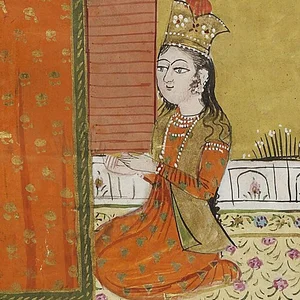
Fatima Zahra
604 — 632
Daughter of the prophet of Islam Muhammad and his first wife Khadija. Wife of Ali ibn Abi Talib, she is a major and venerated figure in Islam, particularly in Shiism, where she holds a central place.
Forseti
Forseti is the Norse god of justice and reconciliation in Scandinavian mythology. Son of Baldr and Nanna, he presides over the divine tribunal Glitnir, whose golden walls and silver roof symbolize the brilliance of justice. He is considered the greatest judge among gods and men.
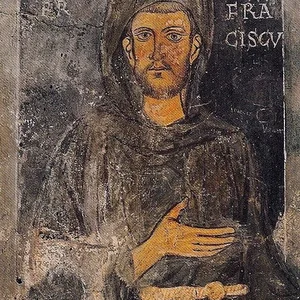
Francis of Assisi
1182 — 1226
Born in Assisi in 1182, Francis renounced his family's wealth to live in evangelical poverty. He founded the Order of Friars Minor (Franciscans) and championed a form of Christianity rooted in closeness to the poor and to nature. Canonized as early as 1228, he is one of the most influential spiritual figures of the Middle Ages.
Freyr
Freyr is one of the major deities of Norse mythology, belonging to the Vanir, gods of fertility and prosperity. Son of Njörðr and twin brother of Freya, he rules over Álfheimr and is invoked to ensure good harvests, peace, and abundance.
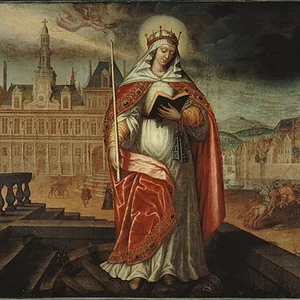
Geneviève de Paris
423 — 502
Christian saint born around 422, venerated for having protected Paris from Attila in 451 through her religious fervor. An advisor to Clovis I, she embodied the emerging alliance between the Church and Frankish royalty. Patron saint of Paris, her feast day is January 3.
Geoffrey of Monmouth
1100 — 1155
Geoffrey of Monmouth is a 12th-century Welsh cleric and chronicler, famous for his *Historia regum Britanniae* (c. 1136). This work, blending history and legend, popularized the figures of King Arthur and the enchanter Merlin, durably shaping the Matter of Britain.
Gregory IX
1170 — 1241
Gregory IX was the 178th pope of the Catholic Church, from 1227 to 1241. A jurist and a man of power, he fiercely opposed Emperor Frederick II and institutionalized the papal Inquisition by entrusting it to the mendicant orders.
Guan Yin
Guan Yin is the Buddhist goddess of compassion and mercy, venerated throughout East Asia. Originating from the bodhisattva Avalokiteśvara tradition, she gradually took on a feminine form in China between the 7th and 12th centuries. She is one of the most popular religious figures in Mahayana Buddhism.
Hadewijch of Antwerp
1300 — 1260
Thirteenth-century Brabantine poet and mystic, a towering figure of medieval female spirituality. She was most likely a beguine and left an exceptional literary and mystical body of work written in Middle Dutch.
Hallaj
Persian Sufi mystic of the medieval Muslim world, famous for his ecstatic proclamation “Ana al-Haqq” (“I am the Truth/the Real”). Accused of blasphemy, he was imprisoned and then executed in Baghdad in 922, becoming a major figure of mystical martyrdom in Islam.
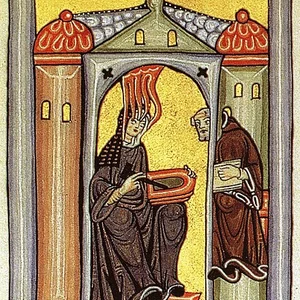
Hildegard von Bingen
1098 — 1179
First known composer, visionary, Doctor of the Church
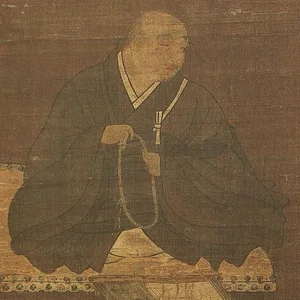
Hōnen
1133 — 1212
Hōnen was a Japanese Buddhist monk who founded the Pure Land school (Jōdo-shū). He taught that simply reciting the nembutsu, the invocation of Amida Buddha, was enough to achieve salvation, making the practice accessible to everyone.
Honorius III
1148 — 1227
177th pope of the Catholic Church from 1216 to 1227. A skilled diplomat, he approved the emerging mendicant orders and worked to organize the Fifth Crusade.
Huitzilopochtli
Huitzilopochtli is the god of war and the sun in Aztec mythology. The patron deity of the Mexica people, he guides them from Aztlan to the founding of Tenochtitlan. He lies at the heart of Aztec cosmology and the sacrificial rituals intended to feed the sun.
Husayn ibn Ali
626 — 680
Grandson of the prophet Muhammad and son of Ali, he is the third imam of Shia Islam. His refusal to pledge allegiance to the Umayyad caliph Yazid I led to his death at the Battle of Karbala in 680, a founding event of Shia Islam.
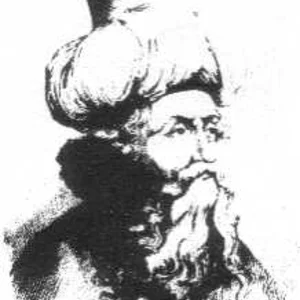
Ibn Arabi
1165 — 1240
Ibn Arabi was a Muslim mystic, theologian, and philosopher born in Murcia in al-Andalus. Nicknamed al-Shaykh al-Akbar (the Greatest Master), he is one of the major figures of Sufism and profoundly shaped the metaphysical thought of Islam.
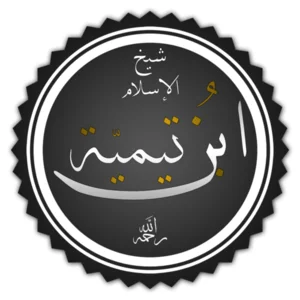
Ibn Taymiyya
1263 — 1328
A Muslim theologian, jurist, and philosopher of the Hanbali school, born in Harran in 1263 and died imprisoned in Damascus in 1328. A rigorist and controversial thinker, he advocated a return to the scriptural sources of Islam and criticized many practices of his time.
Ifrit
The ifrit is a powerful category of jinn in Islamic tradition, created from smokeless fire. Known for their cunning and danger, they appear in the Quran and One Thousand and One Nights. These supernatural beings hold a central place in medieval Muslim folklore and cosmology.
Incubus
A male demon from medieval demonology, the incubus was believed to have intercourse with women while they slept. It embodied the fear of sexuality and sin in medieval Christian thought. Its female counterpart is the succubus.
John XXIII (antipope)
Antipope from 1410 to 1415, elected during the Western Schism when three simultaneous claimants contested the papal throne. Deposed by the Council of Constance, he embodies the deep crisis of the medieval Church and the triumph of conciliarism.
Judith
950 — ?
Legendary ruler of the Kingdom of Semien, Gudit led a revolt around 960 CE that overthrew the Aksumite dynasty of Ethiopia. This warrior queen is said to have reigned for several decades over the Ethiopian highlands, leaving a lasting mark on the collective memory of the region.
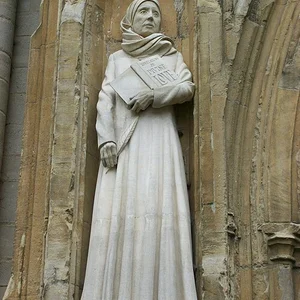
Julian of Norwich
1342 — 1500
A fourteenth-century English mystic, Julian of Norwich is the first known woman to write in the English language. Following a divine vision received in 1373, she composed Revelations of Divine Love, a foundational work of medieval Christian spirituality. Living as an anchoress in Norwich, she developed a theology centered on divine love and mercy.

Jutta of Sponheim
A German Benedictine recluse and mystic of the 12th century, Jutta of Sponheim founded a community of women at the monastery of Disibodenberg. She is best known as the spiritual teacher and educator of Hildegard von Bingen.
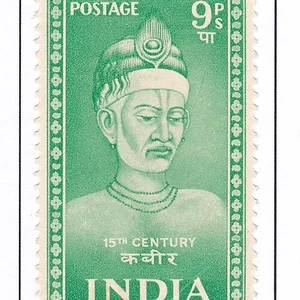
Kabir
1398 — 1518
Kabir was a 15th-century Indian poet and mystic, a leading figure of the Bhakti devotional movement. A weaver by birth, he preached a single God beyond the divisions between Hinduism and Islam, denouncing rituals and caste hierarchies.
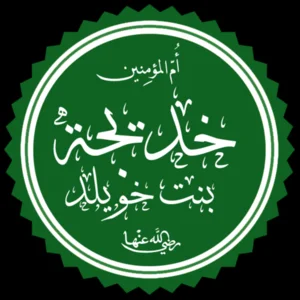
Khadija
557 — 619
A wealthy caravan merchant from Mecca, Khadija bint Khuwaylid was the first wife of the prophet Muhammad and the very first person to embrace Islam. Her fortune and moral support were decisive in the early days of his preaching.
Kitsune
The kitsune is a fox-spirit (yōkai) from Japanese folklore, gifted with supernatural powers and able to shapeshift, notably into a woman. The longer it lives, the more tails it gains, up to nine, a sign of its wisdom and power.
Koken
718 — 770
Empress of Japan who reigned twice (749–758 then 764–770), she is one of the very few women to have occupied the Japanese imperial throne. A devout Buddhist, she actively promoted the spread of Buddhism throughout the country and commissioned the construction of numerous temples.
Kōmyō
1322 — 1380
Kōmyō was emperor of Japan from the Northern Court (1336–1348), enthroned by shogun Ashikaga Takauji during the great imperial split of the Nanboku-chō period. After his abdication, he withdrew from political life and became a Buddhist monk, ending his days in prayer and contemplation.
Lada
Lada is the Slavic goddess of love, beauty, and fertility. Venerated in medieval Slavic folk traditions, she presided over spring celebrations, weddings, and fertility. Her cult is attested in ritual songs and seasonal festivals of Slavic peoples.
Lý Thái Tổ
974 — 1028
Founder of the Lý dynasty in Vietnam (1009–1028), he moved the capital from Hoa Lư to Đại La, renaming it Thăng Long (present-day Hanoi) in 1010, inaugurating over a thousand years of the Vietnamese capital's history.
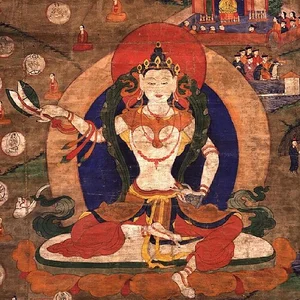
Machig Labdrön
1055 — 1149
Machig Labdrön was a Tibetan Buddhist mystic and master of the 11th–12th centuries. She is the founder of the practice of Chöd, a ritual for cutting through attachment to the ego, and one of the few women to have founded a spiritual lineage in Tibet.
Mama Quilla
Goddess of the Moon in Inca mythology, Mama Quilla is the protector of women, marriage, and the lunar calendar. Wife of Inti, the Sun god, she held a central place in Inca religion and society during the pre-colonial era.
Mami Wata
An aquatic deity venerated in West and Central Africa and throughout the African diaspora in the Americas. A water spirit associated with fertility, healing, and prosperity, Mami Wata is a central figure in vodoun worship and many oral traditions. Her origins are pre-colonial, but her iconography was enriched through contact with Atlantic exchange.
Mansa Musa
1280 — 1337
Mansa Musa (c. 1280–1337) was the tenth mansa (king) of the Mali Empire, one of the largest and wealthiest empires in the medieval world. His pilgrimage to Mecca in 1324–1325 revealed to the world the extraordinary riches of his kingdom.

Margery Kempe
1373 — 1438
English Christian mystic of the late Middle Ages, mother of fourteen children who became a pilgrim and visionary. She dictated the account of her life and mystical experiences, regarded as the first autobiography in the English language.
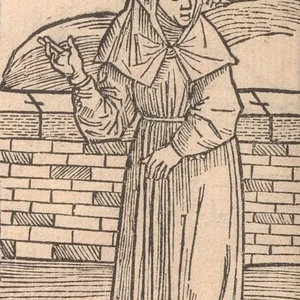
Marguerite Porete
1250 — 1310
A 14th-century Beguine mystic, Marguerite Porete is the author of The Mirror of Simple Souls, a mystical treatise written in the vernacular. Condemned for heresy by the Inquisition, she was burned alive in Paris in 1310, refusing to recant.

Marie of Oignies
1177 — 1213
A Christian mystic and pious laywoman of the diocese of Liège, Marie of Oignies (c. 1177–1213) was a founding figure of the Beguine movement in the Meuse region. Her life, written by Jacques de Vitry, made her a model of feminine holiness grounded in penance, voluntary poverty, and Eucharistic devotion.
Matilda of Tuscany
1040 — 1115
Countess of Tuscany (1046–1115), Matilda was one of the most powerful women of the medieval Western world. An unwavering ally of the papacy, she played a decisive role in the Investiture Controversy, hosting at her Castle of Canossa the famous penance of Henry IV before Gregory VII in 1077.
Mazu
960 — 987
Mazu is the protective goddess of sailors in Chinese tradition. According to legend, she was born around 960 CE in Fujian province under the name Lin Mo, and was deified after her death. Her cult spread across all the coasts of China and into Chinese communities throughout Southeast Asia.
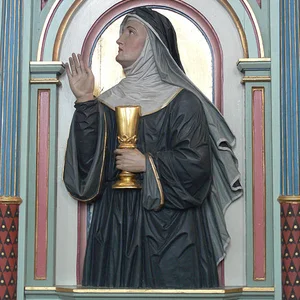
Mechthild of Magdeburg
1207 — 1282
A Rhenish mystic and German beguine, Mechthild of Magdeburg is the author of The Flowing Light of the Godhead, one of the first great mystical texts written in the vernacular. A major spiritual figure of the 13th century, she describes the union of the soul with God in poetic language of rare intensity.
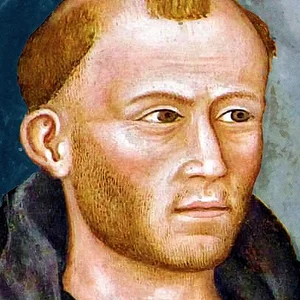
Meister Eckhart
1260 — 1328
German Dominican theologian, philosopher, and mystic of the Middle Ages. A major figure of Rhineland mysticism, he preached the union of the soul with God and the idea of detachment. Some of his theses were condemned by a papal bull in 1329.
Melisende of Jerusalem
1105 — 1161
Queen of Jerusalem from 1131 to 1153, Melisende was one of the most powerful rulers of the Crusader States. She governed with authority, resisting attempts by her son Baldwin III to remove her from power.
Mictlantecuhtli
Mictlantecuhtli is the god of death in Aztec mythology, ruler of Mictlan, the kingdom of the dead located in the deepest reaches of the underworld. Depicted as a skeleton adorned with necklaces of human eyes and cobwebs, he embodied natural death and the cycle of existence.
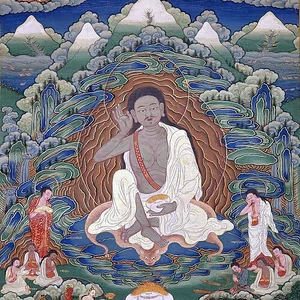
Milarepa
1040 — 1123
Milarepa was a Tibetan yogi, hermit, and poet of the 11th–12th centuries, a major figure of the Kagyu school of Tibetan Buddhism. After a youth marked by black magic and revenge, he became the disciple of the master Marpa and attained enlightenment through asceticism and meditation. His spiritual songs (the “Hundred Thousand Songs”) remain famous.
Mokoch
Mokoch is one of the great goddesses of the pre-Christian Slavic pantheon, associated with moist earth, fertility, and fate. A protective deity of women, she presides over spinning, birth, and harvests. Her cult is attested among Eastern Slavs before the Christianization of Kievan Rus' in 988.
Muhammad
571 — 632
Born around 571 in Mecca, Muhammad is the founder of Islam and the prophet of the Muslim faith. A merchant turned preacher, he received what he believed to be a divine revelation at the age of 40 and united the Arab tribes under a new monotheistic religion.
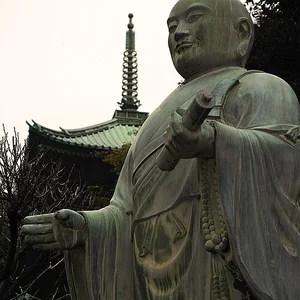
Nichiren
1222 — 1282
Nichiren (1222-1282) was a 13th-century Japanese Buddhist monk, founder of the Nichiren-shū school. He taught that the Lotus Sūtra contained the ultimate essence of the Buddha's teaching and advocated reciting the mantra “Namu Myōhō Renge Kyō.”
Nizam al-Mulk
1018 — 1092
Nizam al-Mulk was the grand vizier of the Seljuk sultans Alp Arslan and Malik-Shah I in the 11th century. A brilliant administrator, he equipped the Seljuk Empire with lasting institutions and founded a network of madrasas, the Nizamiyya, which left a deep mark on the teaching of Sunni Islam.
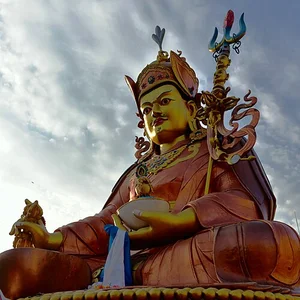
Padmasambhava
717 — 762
Indian tantric Buddhist master of the 8th century, regarded as the founder of Tibetan Buddhism. Nicknamed Guru Rinpoche (“precious master”), he is said to have introduced Vajrayana Buddhism to Tibet and founded the country's first monastery.
Perun
Perun is the supreme god of thunder and lightning in Slavic mythology. Master of the celestial elements, he is eternally opposed to Veles, deity of the underworld and waters. He is the Slavic equivalent of Zeus or Thor in the Indo-European pantheons.
Prince Shōtoku
574 — 622
Regent of Japan under Empress Suiko (593–622), he promoted the spread of Buddhism and Confucianism, promulgated Japan's first constitution, and modernized the state by drawing on the Chinese model.
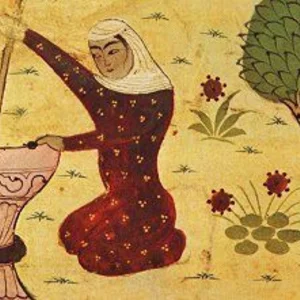
Rābiʿa al-ʿAdawiyya
vers 717 — 801
Rābiʿa al-ʿAdawiyya was a Muslim mystic and poet of the 8th century, born in Basra around 717. A freed slave, she devoted her life to God and became one of the founding figures of Sufism. She introduced the concept of disinterested divine love — loving God not out of fear or hope of reward, but for His own sake.
Rangda
Rangda is the demon queen of Balinese mythology, embodiment of evil and the dark forces. She leads an army of witches called Leyaks and is locked in eternal opposition with Barong, the protective spirit of good. This cosmic battle lies at the heart of Balinese spirituality and ritual theater.
Raziel
Raziel is an archangel from Jewish Kabbalistic tradition, guardian of divine secrets and celestial mysteries. According to legend, he gave Adam the Sefer Raziel HaMalakh, a book containing the secrets of the universe. His name means "secret of God" in Hebrew.
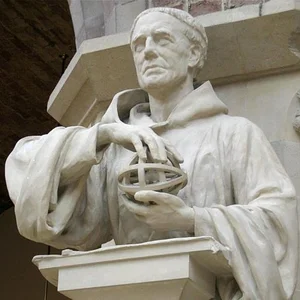
Roger Bacon
1220 — 1292
Roger Bacon, nicknamed Doctor Mirabilis, was a 13th-century English Franciscan friar, philosopher, and scholar. A pioneer of the experimental method, he championed observation and mathematics as the foundations of knowledge, long before modern science.
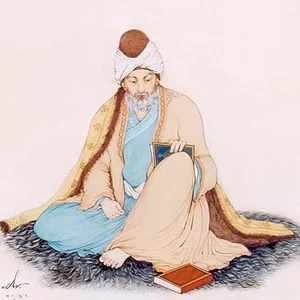
Rûmî
1207 — 1273
Persian Sufi poet, Masnavi, founder of the Whirling Dervishes

Ruqayya
598 — 624
Daughter of the Prophet Muhammad and his first wife Khadija, Ruqayya was one of the very first converts to Islam. Married to Uthman ibn Affan, the future third caliph, she emigrated to Abyssinia and then to Medina, where she died in 624.
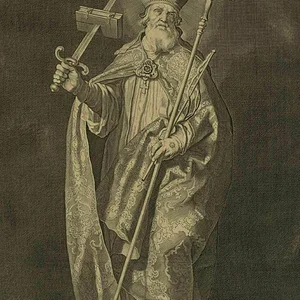
Saint Boniface
675 — 754
An Anglo-Saxon Benedictine monk who became a missionary bishop, he evangelized Germania in the 8th century and reorganized the Frankish Church. Regarded as the “apostle of the Germans,” he was martyred in Frisia.

Saint Brigid of Ireland
Irish saint of the 5th-6th century, founder of the monastery of Kildare. Considered alongside Saint Patrick and Saint Columba as one of the three patron saints of Ireland, she is a major figure of Celtic Christianity.
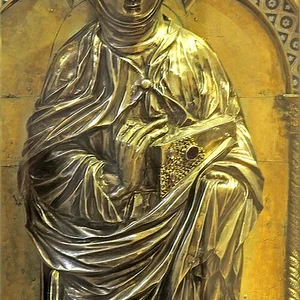
Saint Elizabeth of Hungary
1207 — 1231
A Hungarian princess who became Landgravine of Thuringia, Elizabeth of Hungary (1207-1231) devoted her life to the poor and the sick. Widowed at a very young age, she joined the Franciscan Third Order and founded a hospital, becoming a major figure of medieval Christian charity.
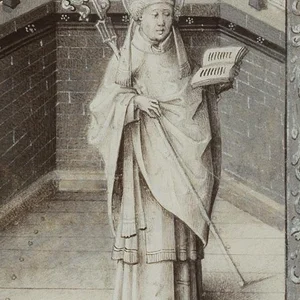
Saint Germain of Paris
496 — 576
Bishop of Paris from 555 to 576, Germain is one of the great figures of the Merovingian Church. Founder of the Abbey of Saint-Germain-des-Prés, he was renowned for his charity toward the poor and his influence over the Frankish kings.

Saint Hilda of Whitby
Hilda of Whitby (614–680) was an Anglo-Saxon abbess, founder and leader of the double monastery of Whitby. A major figure of the Christian Church in Northumbria, she played a leading role at the Synod of Whitby in 664.
Saint Louis
King of France from 1226 to 1270, Louis IX is a major figure of the Middle Ages. Renowned for his piety and his sense of justice, he was canonized in 1297. He led two crusades and died in Tunis in 1270.
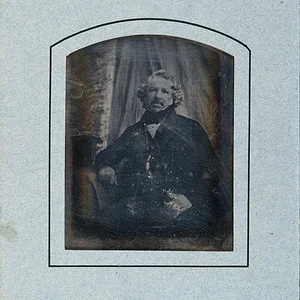
Saint Mandé
Gaulish bishop of the 7th century, venerated as a saint in the Frankish Christian tradition. He gave his name to the commune of Saint-Mandé (Val-de-Marne) and to the Paris Métro station on line 1.
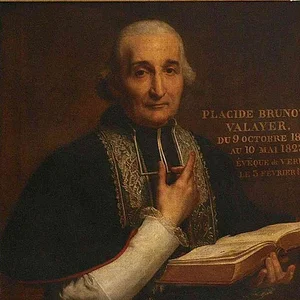
Saint Placid
A disciple of Saint Benedict of Nursia, Placid was a young Roman nobleman who joined the monastery of Subiaco in the sixth century. He is celebrated in Benedictine tradition for having been rescued from drowning by Saint Maurus. Venerated as a martyr, he is one of the earliest disciples of the Benedictine order.
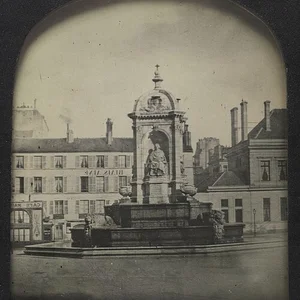
Saint Sulpice
Bishop of Bourges in the 7th century (c. 624–647), Sulpicius the Pious was renowned for his charity toward the poor and his defense of the oppressed. His cult gave its name to the famous Parisian church.
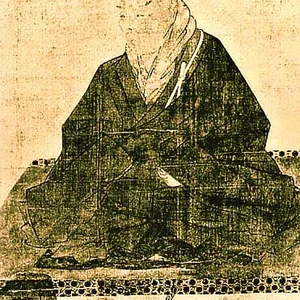
Shinran
1173 — 1263
Shinran was a Japanese Buddhist monk of the Kamakura period and a disciple of Hōnen. He founded Jōdo Shinshū, the "True Pure Land School," which teaches salvation through faith alone in the Buddha Amida.
Sif
Sif is a goddess in Norse mythology, wife of the god Thor. She is famous for her magnificent golden hair, a symbol of the fertility of fields and harvests, which Loki treacherously cut off while she slept and which the dwarves reforged in pure gold.
Succubus
The succubus is a female demon from medieval demonology, believed to visit men in their sleep to unite with them and drain their vital energy. Ubiquitous in the theological and demonological treatises of the Middle Ages, it embodies religious anxieties about sexuality and evil.
Tarasque
The Tarasque is an amphibious dragon from Provençal legend that ravaged the banks of the Rhône near Tarascon. According to Christian tradition, it was tamed by Saint Martha with the sign of the cross and holy water, before being put to death by the townspeople.
Tengu
Tengu are supernatural creatures from Japanese folklore — mountain spirits, fearsome warriors, and tricksters all at once. Depicted with a long nose or a crow's beak, they are renowned masters of martial arts and military strategy.
Trần Nhân Tông
1258 — 1308
Third emperor of the Trần dynasty in Đại Việt (r. 1278–1293), he led the victorious resistance against two Mongol invasions under Kublai Khan (1285, 1287). After abdicating, he became a Buddhist monk and founded the Trúc Lâm Yên Tử sect, the first truly Vietnamese school of Chan meditation.
Tyr
Týr is the Germanic god of war and justice in Norse mythology. He is famous for having sacrificed his right hand during the binding of the wolf Fenrir, a symbol of courage and martial honor. His name gave rise to “Tuesday” in English and “Dienstag” in German.
Veles
Veles is one of the major deities of the Slavic pantheon, ruler of the underworld, protector of cattle, and god of magic. He stands in eternal opposition to Perun, the god of thunder, in a cosmic battle symbolizing the duality between darkness and light. His cult, widespread among Slavic peoples, survived in syncretic form after the Christianization of the 9th–12th centuries.
Vidar
Vidar is a god of Norse mythology, son of Odin and the giantess Grid. Known for his silence and colossal strength, he is destined to avenge his father's death by slaying the wolf Fenrir at Ragnarök.
Wendigo
A malevolent spirit from Algonquian traditions (Ojibwe, Cree), the Wendigo embodies insatiable hunger, winter madness, and cannibalism. A mythic creature said to transform anyone who consumes human flesh into a monster, it symbolizes fundamental taboos and the dangers of winter isolation.
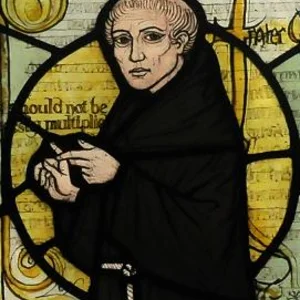
William of Ockham
1287 — 1349
William of Ockham was an English philosopher, logician, and theologian, a major figure of late Scholasticism and of the nominalist movement. A Franciscan friar, he is famous for the principle of parsimony known as “Ockham's razor.”
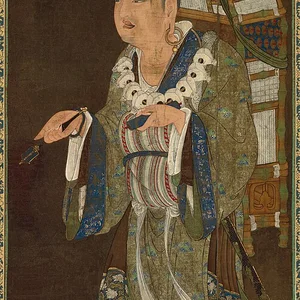
Xuanzang
602 — 664
A 7th-century Chinese Buddhist monk, he undertook a seventeen-year journey to India to collect sacred texts. He translated hundreds of sutras into Chinese and played a major role in the spread of Buddhism in China.
Yahya ibn Muhammad
829 — 864
Idrisid emir of Morocco from 849 to 863, reigning from Fez. His reign was marked by the rise of the city and the founding, in 859, of the al-Qarawiyyin mosque and university.
Yeshe Tsogyal
757 — 817
An 8th-century Tibetan princess, disciple and spiritual companion of Padmasambhava, she is venerated in the Vajrayana Buddhist tradition as one of Tibet's first enlightened female masters. A semi-mythical figure of the Tibetan people, she embodies feminine wisdom in Tantric Buddhism.
Zhong Kui
Zhong Kui is a deity from Chinese mythology, a demon-slayer and protector of households. Depicted as a fierce-looking bearded man, he is invoked to ward off evil spirits. His image is traditionally painted on house doors during festivals.
Literature(84)
Abu Bakr as-Siddiq
573 — 634
A close companion of the Prophet Muhammad, Abu Bakr became the first caliph of Islam following the Prophet's death in 632. His two-year reign consolidated the unity of the Muslim community and laid the foundations of the first Islamic state.
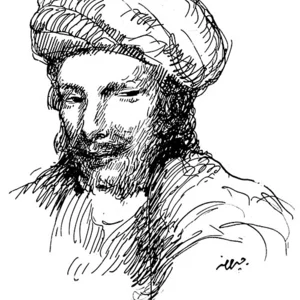
Abu Nuwas
756 — 814
Arab-Persian poet born around 756, considered one of the greatest Arabic-language poets of the Abbasid era. He lived at the Baghdad court under caliphs Harun al-Rashid and Al-Amin, celebrating wine, love, and nature with provocative freedom.
Ahmad Yasawi
1093 — 1166
Ahmad Yasawi was a 12th-century Turkic-speaking Sufi mystic poet, founder of the Yasawiyya order. Born in Sayram, he lived in Yasi (present-day Kazakhstan), where he composed the Divan-i Hikmet, a collection of spiritual poems in popular Turkic language that helped spread Islam across the Central Asian steppes.
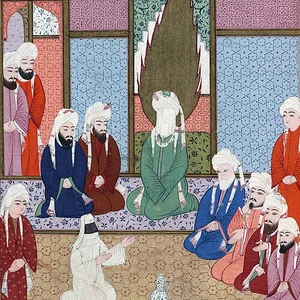
Aisha
614 — 678
Aisha (614–678) was the third wife of the Prophet Muhammad and daughter of Abu Bakr, the first caliph. After Muhammad's death, she played a major political and religious role in the transmission of hadiths.
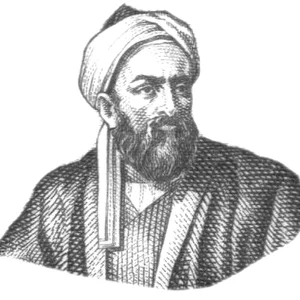
Al-Biruni
973 — 1048
A Persian polymath (973–1048), Al-Biruni was one of the greatest minds of the medieval Islamic world. Astronomer, mathematician, geographer, and historian, he wrote more than 150 works and was one of the first scholars to study India in a systematic, scientific way.
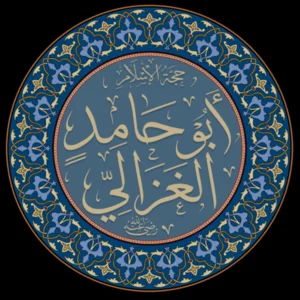
Al-Ghazali
1056 — 1111
A Muslim theologian, philosopher, and mystic of Persian origin, Al-Ghazali is one of the most influential intellectual figures of medieval Islam. He synthesized Sunni theology, philosophy, and Sufism in his masterwork, The Revival of the Religious Sciences.
Al-Tirmidhi
0824 — 0892
Al-Tirmidhi was one of the great hadith compilers of medieval Islam. Born in Tirmidh in Khorasan, he traveled across Iraq, the Hejaz, and Persia to gather the traditions of the Prophet. His collection, the Jami' al-Tirmidhi, is one of the six canonical books (Kutub al-Sitta) of hadith science.
Al-Zamakhshari
1075 — 1144
Al-Zamakhshari was a 12th-century Muslim grammarian, exegete, and theologian, born in Khwarezm. Nicknamed “Jār Allāh” (the neighbor of God) for his long stays in Mecca, he authored the famous Quranic commentary Al-Kashshāf, a monument of Arabic rhetoric. A supporter of the Mu'tazilite movement, he championed a rational reading of the sacred text.
Ali ibn Abi Talib
599 — 661
Cousin and son-in-law of the Prophet Muhammad, Ali ibn Abi Talib was the fourth caliph of Islam (656–661). A central figure of Shia Islam, he is regarded by Shia Muslims as the first rightful imam. His caliphate was marked by the First Fitna, a civil war that gave rise to the foundational Sunni-Shia divide.
Angela of Foligno
1248 — 1309
A 13th-century Italian mystic, Angela of Foligno was a Franciscan tertiary whose visions were recorded in the Book of Visions and Instructions. A major figure in medieval spirituality, she was beatified in 1693 and canonized in 2013.
Anna Komnene
Byzantine princess (1083–c.1153), daughter of Emperor Alexios I Komnenos, Anna Komnene is one of the earliest female historians in recorded history. She is the author of the Alexiad, an epic narrative chronicling her father's reign and an invaluable testimony on Byzantium and the Crusades.
Beatrice of Nazareth
1200 — 1268
Flemish Cistercian nun (c. 1200–1268), abbess of the monastery of Nazareth near Lier. Author of The Seven Manners of Love, one of the earliest mystical works written in the vernacular Dutch language.
Boccaccio
1313 — 1375
A 14th-century Italian writer, Boccaccio is the author of the Decameron, a collection of one hundred tales told by a group of people sheltering from the Black Death in 1348. A diplomat in the service of Florence, he was also a pioneering humanist and close friend of Petrarch.
Bridget of Sweden
1303 — 1373
A mystic and Swedish saint of the 14th century, Bridget of Sweden was a wife, mother of eight children, then a pilgrim and founder of the Order of the Most Holy Savior. Her divine revelations, dictated and spread throughout Europe, gave her exceptional spiritual authority.
Catherine of Siena
1347 — 1380
An Italian mystic and theologian of the 14th century, Catherine of Siena played a major political role by convincing Pope Gregory XI to leave Avignon and return to Rome. A Doctor of the Church, she left behind a remarkable body of spiritual and epistolary work.

Cecilia Chaumpaigne
An English woman of the 14th century known for a legal document of 1380 by which she released the poet Geoffrey Chaucer from all prosecution for “raptus.” This document, rediscovered by scholars, fuels a historical debate on the status of women and the nature of the incident.
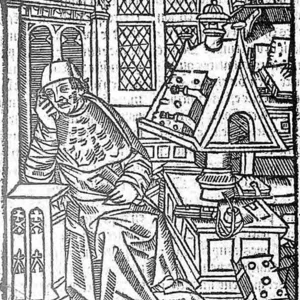
Chrétien de Troyes
1135 — 1181
A French writer and poet of the 12th century, Chrétien de Troyes is the founder of the courtly romance. His major works such as Yvain, the Knight of the Lion and Lancelot, the Knight of the Cart established the conventions of medieval Arthurian literature.
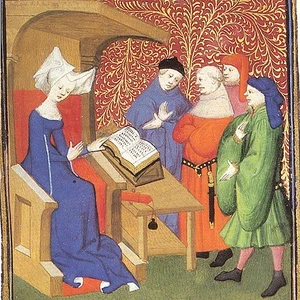
Christine de Pizan
1364 — 1430
French philosopher and poet of Italian origin
Cyril and Methodius
Cyril and Methodius were two Byzantine brothers of the 9th century, Christian missionaries among the Slavic peoples. They created the Glagolitic alphabet to translate liturgical texts into the Slavic language, laying the foundations of Slavic written culture.
Dante Alighieri
1265 — 1321
Florentine poet of the 13th–14th century, author of *The Divine Comedy*, a masterpiece of medieval literature. Exiled from Florence for political reasons, he laid the foundations of the Italian literary language.
Dede Korkut
0900 — 0999
Dede Korkut is the legendary sage and bard of the Oghuz Turks, a tutelary figure of the Turkic-Central Asian epic tradition. Storyteller, shaman, and musician, he embodies the oral memory of a nomadic people. His name is inseparable from the famous collection of epics attributed to him.
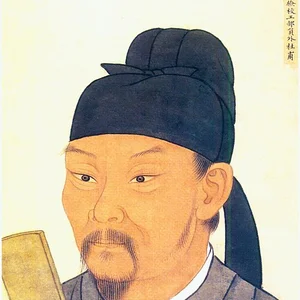
Du Fu
712 — 770
Du Fu (712–770) is considered one of the greatest poets of imperial China, nicknamed the "Sage of Poetry." A contemporary of Li Bai, he lived under the Tang dynasty and witnessed the devastating An Lushan Rebellion. His deeply humanist body of work bears witness to the suffering of ordinary people and the upheavals of his time.
Empress Teishi
Empress consort of Japan (976–1001), wife of Emperor Ichijō and daughter of regent Fujiwara no Michitaka. She was the patron of Sei Shōnagon, whose celebrated *The Pillow Book* bears witness to the brilliant life at her court. Her rivalry with Fujiwara no Shōshi, patroness of Murasaki Shikibu, illustrates the literary ferment of the Heian period.
Fatima al-Fihri
A Muslim scholar and patron from Kairouan (present-day Tunisia), Fatima al-Fihri founded the al-Qarawiyyin mosque-university in Fez in 859, considered the oldest continuously operating university in the world. Born into a Berber-Arab family that emigrated to Morocco, she devoted her entire fortune to this institution of learning.
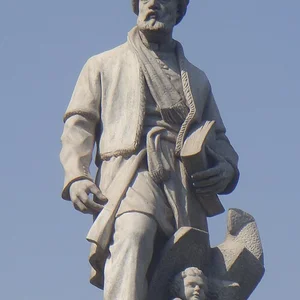
Ferdowsi
940 — 1020
Ferdowsi (c. 940-1020) is the greatest epic poet of Persian literature. He is the author of the *Shâhnâmeh* ("Book of Kings"), an epic of 60,000 couplets recounting the mythical and legendary history of Persia.

Fiammetta
Fiammetta is the muse and idealized literary figure of the Florentine poet Boccaccio. Traditionally identified with Maria d'Aquino, the natural daughter of King Robert of Naples, she first inspires and then narrates the “Elegy of Lady Fiammetta” (c. 1343), a pioneering account of romantic passion expressed in the first person by a woman.
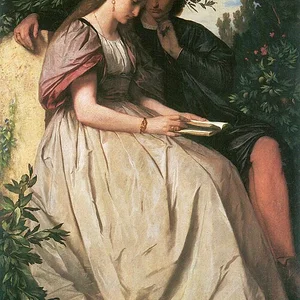
Francesca da Rimini
1259 — 1285
A 13th-century Italian noblewoman, Francesca da Polenta was married to Giovanni Malatesta and then murdered alongside her brother-in-law Paolo, with whom she was in love. Her tragic story was immortalized by Dante in the Divine Comedy.
Francis of Assisi
1182 — 1226
Born in Assisi in 1182, Francis renounced his family's wealth to live in evangelical poverty. He founded the Order of Friars Minor (Franciscans) and championed a form of Christianity rooted in closeness to the poor and to nature. Canonized as early as 1228, he is one of the most influential spiritual figures of the Middle Ages.
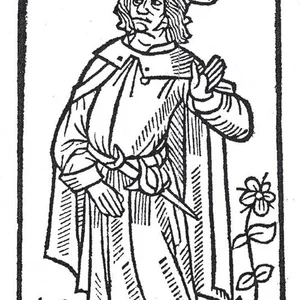
François Villon
1431 — 1463
François Villon was a 15th-century French poet, regarded as the greatest poet of the late Middle Ages. A figure of the “accursed poet” (poète maudit), his life marked by poverty, brawls, and trouble with the law shines through in lyric poetry of rare intensity, dominated by the themes of death and the passing of time.
Geneviève de Paris
423 — 502
Christian saint born around 422, venerated for having protected Paris from Attila in 451 through her religious fervor. An advisor to Clovis I, she embodied the emerging alliance between the Church and Frankish royalty. Patron saint of Paris, her feast day is January 3.
Geoffrey Chaucer
1343 — 1400
Geoffrey Chaucer (c. 1343–1400) is the greatest English poet of the Middle Ages, author of The Canterbury Tales. A diplomat and royal official, he brought the vernacular English language into high literature, leaving a lasting influence on English letters.
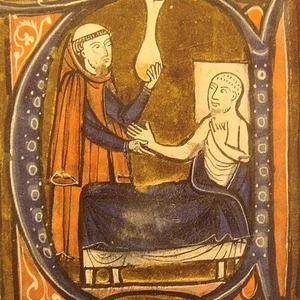
Gerard of Cremona
1114 — 1187
Gerard of Cremona was a 12th-century Italian translator, active in Toledo, who translated many Greek and Arabic scientific works from Arabic into Latin. He played a decisive role in transmitting ancient and Arabic knowledge to medieval Europe.
Gregory I
540 — 604
Pope from 590 to 604, Gregory I is one of the greatest pontiffs of Late Antiquity and the early Middle Ages. A reformer of the Church, he organized the evangelization mission to England and left a remarkable theological and liturgical legacy.
Grendel
Grendel is a monster descended from the cursed lineage of Cain, who terrorizes the mead-hall of Heorot — home of the Danish king Hrothgar — for twelve years. A creature of darkness and marshes, he is ultimately defeated by the Geatish hero Beowulf in the oldest epic poem in English literature (8th century).
Hadewijch of Antwerp
1300 — 1260
Thirteenth-century Brabantine poet and mystic, a towering figure of medieval female spirituality. She was most likely a beguine and left an exceptional literary and mystical body of work written in Middle Dutch.
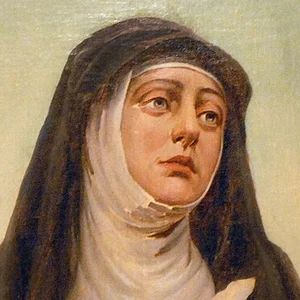
Héloïse d'Argenteuil
1101 — 1164
A French intellectual of the 12th century, Héloïse is celebrated for her passionate correspondence with the philosopher Peter Abelard, whose student and secret wife she became. Later abbess of the Paraclete, she was one of the most learned women of her time.
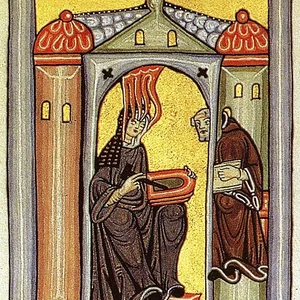
Hildegard of Bingen
1098 — 1179
A twelfth-century German Benedictine nun, Hildegard of Bingen was at once a mystic, composer, naturalist, and theologian. She founded her own monastery and corresponded with the most powerful figures of her time, including popes and emperors.
Hinemoa
Hinemoa is a heroine of Māori oral tradition, from the Arawa tribe, whose legend has been passed down since pre-colonial times in New Zealand. According to tradition, she swam across Lake Rotorua to reach her lover Tūtānekai on Mokoia Island, defying her family's prohibition. Her story symbolizes the power of love and the courage to challenge social conventions.
Ibn Arabi
1165 — 1240
Ibn Arabi was a Muslim mystic, theologian, and philosopher born in Murcia in al-Andalus. Nicknamed al-Shaykh al-Akbar (the Greatest Master), he is one of the major figures of Sufism and profoundly shaped the metaphysical thought of Islam.

Ibn Juzayy
1294 — 1340
Scholar, poet, and Andalusian jurist (c. 1294–1340), Ibn Juzayy is best known for having written the famous travel account of Ibn Battuta, the *Rihla*, which he shaped into literary form at the request of the Marinid sultan. He is also the author of legal treatises and a Quranic commentary.
Ibn Sina
Ibn Sina, known in the West as Avicenna, was a Persian physician, philosopher, and scholar of the Islamic Golden Age. His Canon of Medicine served as a reference work in European and Arab universities for centuries.
Igraine
Igraine is a character from Arthurian legend, wife of Gorlois, Duke of Cornwall, and later of King Uther Pendragon. Seduced by Uther through a spell cast by Merlin that gives him the appearance of Gorlois, she becomes the mother of King Arthur.
Iseult
Iseult the Fair is the heroine of the medieval legend of Tristan and Iseult. An Irish princess who became the wife of King Mark of Cornwall, she lives a fatal, adulterous passion with the knight Tristan after accidentally drinking a love potion. Her story is one of the great love myths of the Matter of Britain.
Iseult of the White Hands
Princess of Brittany, daughter of Duke Hoël, in the medieval legend of Tristan and Iseult. Tristan marries her because her name resembles that of Iseult the Fair, his true love, but he never consummates the marriage.
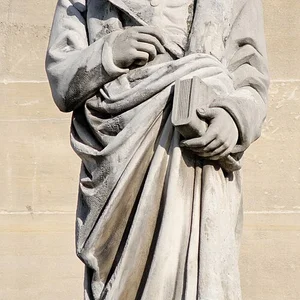
Jean Froissart
1337 — 1410
A fourteenth-century French chronicler and poet, Jean Froissart is the author of the famous Chronicles, a vast narrative tapestry recounting the events of the Hundred Years' War. His work stands as one of the most valuable historical sources on chivalry and the European conflicts of his era.
John Lackland
1166 — 1216
King of England from 1199 to 1216, son of Henry II and Eleanor of Aquitaine. He lost most of the Plantagenet continental possessions to Philip Augustus and was forced to sign Magna Carta in 1215.
Julian of Norwich
1342 — 1500
A fourteenth-century English mystic, Julian of Norwich is the first known woman to write in the English language. Following a divine vision received in 1373, she composed Revelations of Divine Love, a foundational work of medieval Christian spirituality. Living as an anchoress in Norwich, she developed a theology centered on divine love and mercy.
Jutta of Sponheim
A German Benedictine recluse and mystic of the 12th century, Jutta of Sponheim founded a community of women at the monastery of Disibodenberg. She is best known as the spiritual teacher and educator of Hildegard von Bingen.
Kabir
1398 — 1518
Kabir was a 15th-century Indian poet and mystic, a leading figure of the Bhakti devotional movement. A weaver by birth, he preached a single God beyond the divisions between Hinduism and Islam, denouncing rituals and caste hierarchies.
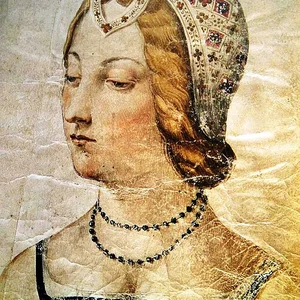
Laure de Noves
1310 — 1348
A fourteenth-century noblewoman of the Comtat Venaissin, traditionally identified as the Laura celebrated by the Italian poet Petrarch in his collection the Canzoniere. A literary muse whose beauty and virtue inspired one of the high points of Western love poetry.
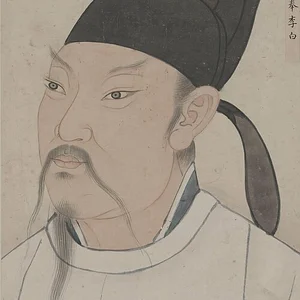
Li Bai
701 — 762
Li Bai (701–762) is considered one of the greatest poets of imperial China, known as the "Drunken Genius" or the "Immortal Poet." He lived during the Tang dynasty, the golden age of Chinese poetry. His work, deeply influenced by Taoism, celebrates nature, friendship, wine, and the moon.
Lý Thường Kiệt
1019 — 1105
General and statesman of Đại Việt (1019–1105), he served under three emperors of the Lý dynasty. Renowned for his preemptive strike against the Song prefectures (1075–1076) and his victory against the Song invasion, he is regarded as one of the greatest military heroes in Vietnamese history.
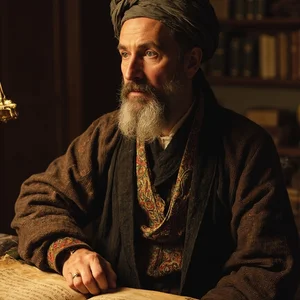
Mahmoud al-Kashgari
1005 — 1102
Mahmoud al-Kashgari was an 11th-century Turkic philologist and encyclopedist, author of the celebrated *Dīwān Lughāt al-Turk* (Compendium of the Turkic Dialects), a monumental work documenting the dialects, poems, and customs of Turkic-speaking peoples. Regarded as the father of Turkic linguistics, he drew up the first known map of the Turkic-speaking world.
Margery Kempe
1373 — 1438
English Christian mystic of the late Middle Ages, mother of fourteen children who became a pilgrim and visionary. She dictated the account of her life and mystical experiences, regarded as the first autobiography in the English language.
Marguerite Porete
1250 — 1310
A 14th-century Beguine mystic, Marguerite Porete is the author of The Mirror of Simple Souls, a mystical treatise written in the vernacular. Condemned for heresy by the Inquisition, she was burned alive in Paris in 1310, refusing to recant.
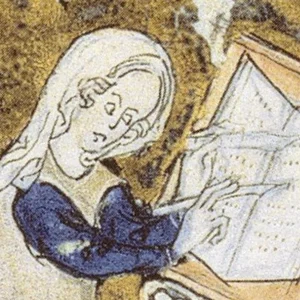
Marie de France
1101 — 1300
An Anglo-Norman poet of the 12th century, Marie de France is the first known woman writer in the French language. She is celebrated for her Lais, her Fables, and her Saint Patrick's Purgatory.
Marie of Champagne
1145 — 1198
Daughter of King Louis VII and Eleanor of Aquitaine, Marie of Champagne was Countess of Champagne and one of the greatest patrons of letters in the 12th century. A patron of Chrétien de Troyes, she made her court at Troyes a radiant center of courtly literature.
Mechthild of Magdeburg
1207 — 1282
A Rhenish mystic and German beguine, Mechthild of Magdeburg is the author of The Flowing Light of the Godhead, one of the first great mystical texts written in the vernacular. A major spiritual figure of the 13th century, she describes the union of the soul with God in poetic language of rare intensity.
Milarepa
1040 — 1123
Milarepa was a Tibetan yogi, hermit, and poet of the 11th–12th centuries, a major figure of the Kagyu school of Tibetan Buddhism. After a youth marked by black magic and revenge, he became the disciple of the master Marpa and attained enlightenment through asceticism and meditation. His spiritual songs (the “Hundred Thousand Songs”) remain famous.
Mordred
Mordred is a character from Arthurian legend, the incestuous son of King Arthur and his half-sister. A traitor to the kingdom of Camelot, he brings about Arthur's downfall at the Battle of Camlann, where the two slay each other.
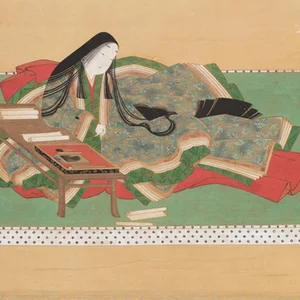
Murasaki Shikibu
970 — 1100
Japanese noblewoman, poet, and lady-in-waiting at the Imperial court during the Heian period
Nasreddin Hodja
1208 — 1284
Nasreddin Hodja is a legendary figure of Seljuk Anatolia, an imam, kadi, and icon of popular wisdom. His colorful anecdotes, blending humor and philosophy, have traveled across centuries and across the borders of the Muslim world to become a universal heritage.
Nguyễn Trãi
Nguyễn Trãi (1380–1442) was a Vietnamese scholar, poet, and statesman, a central figure in the resistance against Ming occupation of Đại Việt. Strategic adviser to Lê Lợi during the Lam Sơn uprising, he is one of the founding fathers of the Hậu Lê dynasty and a cornerstone of classical Vietnamese literature.
Nizam al-Mulk
1018 — 1092
Nizam al-Mulk was the grand vizier of the Seljuk sultans Alp Arslan and Malik-Shah I in the 11th century. A brilliant administrator, he equipped the Seljuk Empire with lasting institutions and founded a network of madrasas, the Nizamiyya, which left a deep mark on the teaching of Sunni Islam.
Nizami Ganjavi
1141 — 1209
Nizami Ganjavi (1141–1209) is the greatest epic poet of classical Persian literature. Born in Ganja, in present-day Azerbaijan, he composed the Khamsa, a collection of five epic poems including *Layla and Majnun* and *Khosrow and Shirin*, which influenced generations of Eastern poets.
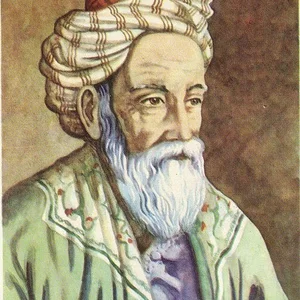
Omar Khayyam
1048 — 1131
An 11th-century Persian poet, mathematician, and astronomer, Omar Khayyam is celebrated for his quatrains (the Rubaiyat) and his work in algebra. He reformed the Persian calendar and solved cubic equations using geometric methods.
Paolo Malatesta
1246 — 1285
A thirteenth-century Italian nobleman and lord of Rimini, Paolo Malatesta is best known for his tragic passion with Francesca da Rimini, his sister-in-law. Immortalized by Dante in the Inferno of the Divine Comedy, he has become one of the great symbols of courtly and fatal love in medieval literature.
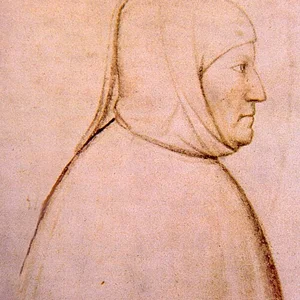
Petrarch
1304 — 1374
An Italian poet and humanist of the 14th century, Petrarch is considered the father of humanism. Deeply passionate about ancient Latin authors, he rediscovered and copied numerous forgotten manuscripts. His poetic work, particularly the Canzoniere dedicated to Laura, profoundly influenced European literature.
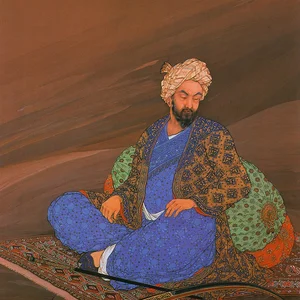
Rudaki
858 — 941
Rudaki, poet and court musician of the Samanid dynasty, is regarded as the father of classical Persian poetry. Blind according to tradition, he is said to have composed more than 100,000 verses, of which only a few hundred have survived. He embodied the renaissance of the Persian language and culture under the Samanid dynasty.
Rûmî
1207 — 1273
Persian Sufi poet, Masnavi, founder of the Whirling Dervishes

Rustichello of Pisa
1300 — 1322
An Italian writer of the 13th century, Rustichello of Pisa is best known for writing down the account of Marco Polo's travels while sharing a cell with him in Genoa. His work, known under the title 'The Book of Marvels', is one of the most important documents on medieval Asia.
Scheherazade
Scheherazade is the legendary narrator of *One Thousand and One Nights*, a collection of Arabic tales compiled between the 9th and 14th centuries. Condemned to death by King Shahryar, she survives by telling him a new story each night, always leaving it unfinished, saving her life through the sheer power of storytelling.
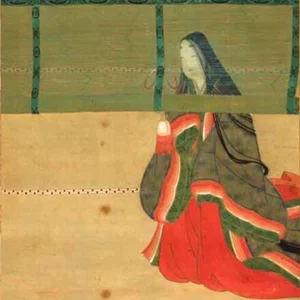
Sei Shōnagon
966 — 1025
Japanese author
Shōshi
988 — 1074
Empress consort of Emperor Ichijō and daughter of regent Fujiwara no Michinaga, Shōshi was one of the most influential women in Heian-period Japan. Her court was a leading intellectual and artistic hub, most notably welcoming the author Murasaki Shikibu.
Tấm
Heroine of the Vietnamese popular tale Tấm Cám, a young woman mistreated by her stepmother and half-sister Cám, who becomes queen through the magical help of Bụt. An emblematic figure of Vietnamese oral literature, her story is compared to the universal Cinderella motif. [1]
Thomas Becket
Archbishop of Canterbury in the 12th century, he clashed fiercely with King Henry II of England over the rights and freedoms of the Church. Murdered in his cathedral in 1170, he was canonized as early as 1173.

Thomas Malory
1405 — 1471
Fifteenth-century English writer, author of *Le Morte d'Arthur*, a vast prose compilation of the Arthurian legends. His work, published by Caxton in 1485, became the definitive source of the King Arthur myth in the English-speaking world.
Urban II
1035 — 1099
Pope from 1088 to 1099, Urban II was the instigator of the First Crusade, proclaimed at the Council of Clermont in 1095. A Cluniac monk of French origin, he strengthened papal authority and continued the Gregorian Reform of the Church.
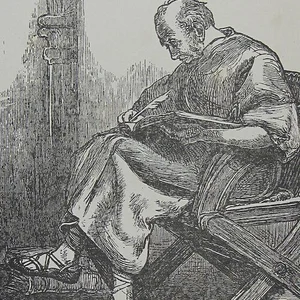
Wace
1100 — 1174
Wace was an Anglo-Norman poet and clerk of the 12th century, born on the island of Jersey. He is the author of the Roman de Brut, which adapts into the Romance vernacular the legendary history of the kings of Britain and introduces Arthurian material into French literature.
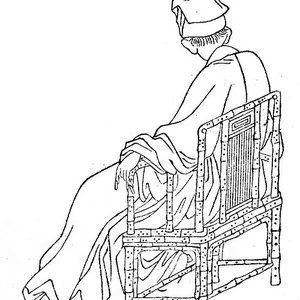
Wang Wei
699 — 759
Wang Wei (701-761) was one of the greatest poets of the Tang dynasty, as well as a painter, musician, and high-ranking official. Deeply influenced by Chan Buddhism, he is celebrated for his landscape poetry in which nature and contemplation merge.
Ximena
Ximena Díaz was the wife of Rodrigo Díaz de Vivar, known as El Cid. A semi-legendary figure of medieval Spanish literature, she was immortalized in the 'Cantar de mio Cid' and later in Corneille's 'Le Cid' (1637), where she embodies the conflict between love and honor.
Xuanzang
602 — 664
A 7th-century Chinese Buddhist monk, he undertook a seventeen-year journey to India to collect sacred texts. He translated hundreds of sutras into Chinese and played a major role in the spread of Buddhism in China.
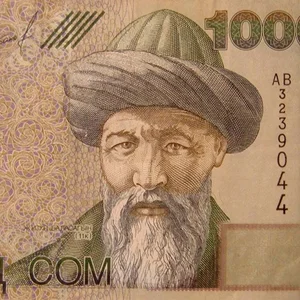
Yusuf Balasaguni
1019 — 1085
Yusuf Balasaguni was an 11th-century Turkic-language poet and philosopher, author of the Kutadgu Bilig (The Wisdom That Brings Happiness), a masterpiece of classical Turkic literature composed in 1069-1070. This foundational work blends ethics, politics, and Islamic philosophy to offer a mirror for princes at the Karakhanid court.
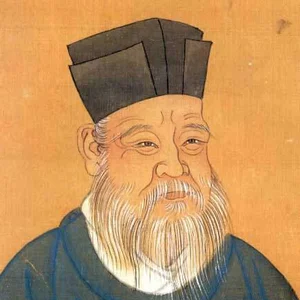
Zhu Xi
1130 — 1200
Zhu Xi (1130–1200) was the greatest Confucian philosopher of medieval China and the founder of Neo-Confucianism. A scholar of the Song dynasty, he synthesized the thought of Confucius and Mencius with metaphysical elements. His work became the official reference for imperial examinations for seven centuries.
Military(58)
Abdallah ibn Saad
Arab general and administrator of the 7th century, foster brother of Caliph Uthman. As governor of Egypt, he led the conquest of Ifriqiya and commanded the first Muslim fleet to defeat the Byzantines.
Abu Lu'lu'a Fīrūz
A slave of Persian origin captured during the Arab conquests, he assassinated the second caliph of Islam, Umar ibn al-Khattab, in the mosque of Medina in 644. His act, driven by personal and fiscal grievances, left a lasting mark on the history of the young caliphate.
Amr ibn al-As
570 — 664
Amr ibn al-As (c. 573-664) was an Arab military commander and administrator, a companion of the Prophet Muhammad. He led the conquest of Byzantine Egypt on behalf of the caliphate and became its first governor, founding the city of Fustat.
An Lushan
703 — 757
A general of Sogdian and Turkic origin in the service of the Tang dynasty, An Lushan rebelled in 755 against Emperor Xuanzong and proclaimed himself emperor of the short-lived Yan dynasty. His rebellion plunged China into a devastating civil war before his assassination in 757.
Andronikos III Palaiologos
1297 — 1341
Andronikos III Palaiologos (1297–1341) was Byzantine emperor from 1328 to 1341. He came to power after a civil war against his grandfather Andronikos II. His reign was marked by military campaigns and the rising power of the Ottoman Empire.
Bertrand du Guesclin
1320 — 1380
Bertrand du Guesclin (c. 1320-1380) was a Breton knight who became Constable of France under Charles V. A skilled strategist of the Hundred Years' War, he reconquered much of French territory from the English through guerrilla warfare and harassment tactics.
Blanche de Castille
1188 — 1252
Queen of France and regent, Blanche de Castille (1188–1252) governed the kingdom during the minority of her son Louis IX (Saint Louis) and again during his crusade. A woman of exceptional power, she successfully asserted royal authority against the great barons.
Börte
1161 — 1230
Börte was the first wife and principal empress of Genghis Khan. Abducted shortly after her marriage and then rescued by her husband, she ruled the imperial court and played a major political role, with her four sons becoming the heirs of the Mongol Empire.
Brynhildr
A Valkyrie from Norse mythology, Brynhildr is a central heroic figure in the Völsunga saga and the Nibelung cycle. An invincible warrior punished by Odin for disobeying his orders, she is imprisoned in a castle surrounded by flames until Sigurd frees her. Her tragic fate — woven from love, betrayal, and revenge — makes her one of the most complex heroines in the Germanic and Scandinavian traditions.
Charles Martel
688 — 741
Charles Martel was mayor of the palace of Austrasia and then de facto ruler of the kingdom of the Franks. Born into the Pippinid family, he imposed Carolingian authority and halted the Arab-Muslim advance at the Battle of Poitiers in 732. The grandfather of Charlemagne, he paved the way for the rise of the Carolingian dynasty.
Charles V the Wise
1338 — 1380
King of France from 1364 to 1380, Charles V restored the kingdom after the defeats of the early Hundred Years' War. Thanks to his constable Du Guesclin, he reconquered nearly all the lost territory and reestablished royal authority.
Dihya
668 — 703
A Berber queen and prophetess of the Djerawa people, Dihya led the resistance against the Arab conquest of North Africa in the late 7th century. Known as the Kahina ("the seeress"), she is a central figure in Amazigh memory, preserved chiefly through oral tradition.
Đinh Bộ Lĩnh
924 — 979
Born in 924 in Đại Hoàng (present-day Ninh Bình), Đinh Bộ Lĩnh ended the War of the Twelve Warlords (loạn 12 sứ quân) and unified the country in 968 [1]. He founded the state of Đại Cồ Việt and became the first emperor of independent Vietnam after the period of Chinese domination (Bắc thuộc) [1].
Frederick Barbarossa
1122 — 1190
Holy Roman Emperor from 1155 to 1190 and a major figure of the Hohenstaufen dynasty. He sought to restore imperial authority in Italy against the Lombard communes and the papacy, and drowned during the Third Crusade.
Gajah Mada
1290 — 1364
Gajah Mada was the Mahapatih (Prime Minister) of the Majapahit Empire in the 14th century. A strategist and conqueror, he pronounced the famous Palapa Oath, pledging to unify the entire Nusantara archipelago under Majapahit’s authority before tasting spices. He led the empire to its zenith and remains an Indonesian national hero.
Geneviève de Paris
423 — 502
Christian saint born around 422, venerated for having protected Paris from Attila in 451 through her religious fervor. An advisor to Clovis I, she embodied the emerging alliance between the Church and Frankish royalty. Patron saint of Paris, her feast day is January 3.
Gengis Khan
1162 — 1227
Founder and first Great Khan of the Mongol Empire, Genghis Khan unified the nomadic tribes of Central Asia in the early 13th century. His conquests created the largest contiguous empire in history.
Gudrun
Tragic heroine of Germanic and Norse mythology, Gudrun/Kriemhild is the wife of the hero Sigurd/Siegfried. A figure of vengeance and grief, she embodies conjugal loyalty taken to the point of total destruction.
Huitzilopochtli
Huitzilopochtli is the god of war and the sun in Aztec mythology. The patron deity of the Mexica people, he guides them from Aztlan to the founding of Tenochtitlan. He lies at the heart of Aztec cosmology and the sacrificial rituals intended to feed the sun.
Husayn ibn Ali
626 — 680
Grandson of the prophet Muhammad and son of Ali, he is the third imam of Shia Islam. His refusal to pledge allegiance to the Umayyad caliph Yazid I led to his death at the Battle of Karbala in 680, a founding event of Shia Islam.
Ismail Samani
849 — 907
Ismail Samani (849-907) is the true founder of the Samanid Empire, the first great Persian dynasty to break free from the Abbasid caliphate. A visionary ruler and brilliant strategist, he made Bukhara a shining center of the Persian cultural and linguistic renaissance.
Jeanne de Clisson
1300 — 1359
A 14th-century Breton noblewoman, Jeanne de Clisson became a privateer after the execution of her husband Olivier IV de Clisson by the King of France in 1343. Nicknamed “the Lioness of Brittany,” she armed a fleet to wage a war of vengeance in the English Channel during the Hundred Years' War.
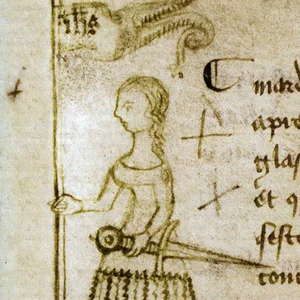
Joan of Arc
1412 — 1431
Joan of Arc (1412–1431) was a French heroine who played a decisive role during the Hundred Years' War. Inspired by religious visions, she led the French armies to several victories against the English. Captured, tried for heresy, and burned at the stake in Rouen, she became an iconic figure of France.
Judith
950 — ?
Legendary ruler of the Kingdom of Semien, Gudit led a revolt around 960 CE that overthrew the Aksumite dynasty of Ethiopia. This warrior queen is said to have reigned for several decades over the Ethiopian highlands, leaving a lasting mark on the collective memory of the region.
Khutulun
1260 — 1306
Mongol princess of the 13th century, great-niece of Kublai Khan and daughter of Khan Kaidu. A legendary warrior and wrestler, she challenged her suitors to wrestling matches and remained undefeated, winning horses with each victory.
Klaus Störtebeker
1360 — 1401
Klaus Störtebeker was a German pirate of the late 14th century, a leading figure of the Vitalienbrüder (Victual Brothers). He raided the North Sea and the Baltic Sea, preying on ships of the Hanseatic League, before being captured and beheaded in Hamburg around 1401.
Kublai Khan
1215 — 1294
Grandson of Genghis Khan, Kublai Khan founded the Yuan dynasty in China and ruled from 1260 to 1294. He expanded the Mongol Empire to its greatest extent and opened China to international trade, most notably welcoming Marco Polo.
Lê Hoàn
941 — 1005
Founder of the Tiền Lê dynasty (980–1005), Lê Hoàn ruled Đại Cồ Việt for 25 years. A general under the Đinh dynasty who became regent and then emperor, he victoriously repelled the Song invasion in 981 and defended the country's independence.
Lê Lợi
1384 — 1433
Vietnamese military and political leader (1385–1433), he led ten years of resistance against Ming occupation (1418–1428) and founded the Later Lê dynasty by restoring the independence of Đại Việt.
Lý Thái Tổ
974 — 1028
Founder of the Lý dynasty in Vietnam (1009–1028), he moved the capital from Hoa Lư to Đại La, renaming it Thăng Long (present-day Hanoi) in 1010, inaugurating over a thousand years of the Vietnamese capital's history.
Lý Thường Kiệt
1019 — 1105
General and statesman of Đại Việt (1019–1105), he served under three emperors of the Lý dynasty. Renowned for his preemptive strike against the Song prefectures (1075–1076) and his victory against the Song invasion, he is regarded as one of the greatest military heroes in Vietnamese history.
Manuel I
1326 — 1380
Manuel Kantakouzenos was Despot of the Morea in the fourteenth century, ruling the Byzantine despotate of the Peloponnese. Son of Emperor John VI Kantakouzenos, he defended Byzantine presence in Greece against the Ottomans and the Latins.
Margaret I of Denmark
Regent and then de facto sovereign of Denmark, Norway, and Sweden, she founded the Kalmar Union in 1397, uniting the three Scandinavian kingdoms under a single crown. Considered the most influential woman of power in the Nordic Middle Ages.
Mas'ud I of Ghazni
Sultan of the Ghaznavid Empire from 1030 to 1040, son of Mahmud of Ghazni. He led numerous military campaigns but was crushed by the Seljuks at the Battle of Dandanaqan (1040), hastening the decline of his empire.
Matilda of Tuscany
1040 — 1115
Countess of Tuscany (1046–1115), Matilda was one of the most powerful women of the medieval Western world. An unwavering ally of the papacy, she played a decisive role in the Investiture Controversy, hosting at her Castle of Canossa the famous penance of Henry IV before Gregory VII in 1077.
Mehmed
Ottoman Sultan (1432–1481), Mehmed II captured Constantinople in 1453, bringing the Byzantine Empire to an end. This event traditionally marks the close of the Middle Ages in Western historiography.
Melisende of Jerusalem
1105 — 1161
Queen of Jerusalem from 1131 to 1153, Melisende was one of the most powerful rulers of the Crusader States. She governed with authority, resisting attempts by her son Baldwin III to remove her from power.
Mohammed ben Toughlouq
Sultan of the Delhi Sultanate from 1324 to 1351, Muhammad ibn Tughluq was one of the most ambitious and controversial rulers of medieval India. A bold reformer, he attempted to relocate the capital from Delhi to Daulatabad and to introduce copper currency — projects that failed and ruined the sultanate.
Muhammad
571 — 632
Born around 571 in Mecca, Muhammad is the founder of Islam and the prophet of the Muslim faith. A merchant turned preacher, he received what he believed to be a divine revelation at the age of 40 and united the Arab tribes under a new monotheistic religion.
Nafanua
A warrior goddess of Samoan mythology, Nafanua is a central figure of feminine power in Polynesia. According to the oral traditions of the Samoan people, she led armies to victory and contributed to the unification of the Samoan islands in the pre-colonial era.
Naré Maghann Konaté
1135 — 1212
King of Manding in the 12th century, Naré Maghann Konaté is best known as the father of Sundiata Keita, founder of the Mali Empire. According to Mande oral tradition, a prophecy foretold that he would father a conqueror who would unite the Mande peoples.
Ngô Quyền
897 — 944
Ngô Quyền (898–944) was the first king of the Ngô dynasty in Vietnam. In 938, he led the Vietnamese resistance and crushed the Southern Han fleet at the Battle of Bạch Đằng, ending nearly a millennium of Chinese domination and ushering in an era of lasting independence [1].
Nguyễn Trãi
Nguyễn Trãi (1380–1442) was a Vietnamese scholar, poet, and statesman, a central figure in the resistance against Ming occupation of Đại Việt. Strategic adviser to Lê Lợi during the Lam Sơn uprising, he is one of the founding fathers of the Hậu Lê dynasty and a cornerstone of classical Vietnamese literature.
Nuh ibn Mansur
Nuh ibn Mansur (961–997) was the Samanid emir who ruled over Khorasan and Transoxiana. His reign witnessed the flourishing of Persian culture, and he welcomed the young Avicenna to his court, where the latter began his medical career.
Razia Sultana
The first woman to reign over the Delhi Sultanate (1236–1240), Razia Sultana was chosen by her father Iltutmish as his successor. She led her armies in person and governed unveiled, defying the conventions of her era, before being overthrown and killed by a coalition of nobles.
Snorri Sturluson
1179 — 1241
Icelandic writer, historian, and politician of the 13th century (1179–1241). He is the author of the Prose Edda, a major source on Norse mythology, and the Heimskringla, a chronicle of the kings of Norway.
Soundiata Keïta
1190 — 1255
Founder of the Mali Empire in the 13th century, Soundiata Keïta united the Mandinka peoples and defeated King Soumaoro Kanté at the Battle of Kirina (c. 1235). His epic, passed down by griots, is one of the great works of African oral literature.
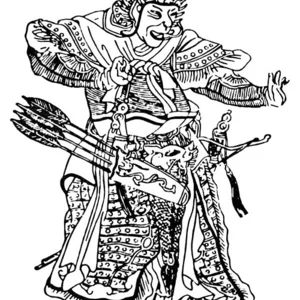
Subutai
1175 — 1248
Subutai was the principal general and strategist of Genghis Khan, and later of his son Ögedei. The architect of the great Mongol campaigns, he is regarded as one of the most brilliant military commanders in history, having led armies from China all the way to the gates of Central Europe.
Sumanguru Kante
King of the Sosso Kingdom in the 13th century, Sumanguru Kante was a formidable ruler who dominated West Africa following the fall of the Ghana Empire. He was defeated by Sundiata Keita at the Battle of Kirina around 1235, an event that marked the birth of the Mali Empire.
Tamar of Georgia
1166 — 1213
Queen of Georgia (1184–1213), the first woman to rule alone over this Caucasian kingdom. Her reign marks the Georgian Golden Age: territorial expansion, cultural and religious flourishing, and decisive military victories against the Seljuks.
Tamerlane
1336 — 1405
Timur, known as Tamerlane (“Timur the Lame”), was a Turco-Mongol conqueror who built one of the vastest empires of the 14th century, stretching from Anatolia to India. Claiming descent from Genghis Khan, he subdued dozens of kingdoms through fearsome violence. His capital, Samarkand, shone as a great center of Islamic culture and architecture.
Tamerlane
1336 — 1405
A Turco-Mongol conqueror of the 14th century, Tamerlane founded an empire stretching from Anatolia to India. His military campaigns, marked by extreme violence, reshaped the map of Central Asia.
Tokhtamysh
1342 — 1406
Tokhtamysh was one of the last great khans of the Golden Horde, managing to reunify this fragmented Mongol empire in the late 14th century. Backed by Tamerlane before becoming his rival, he sacked Moscow in 1382 and clashed with the Timurid army several times, suffering devastating defeats that sealed the decline of the Horde.
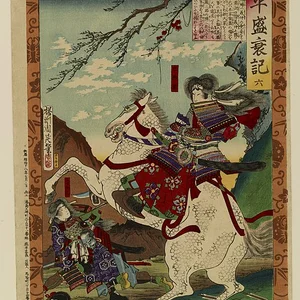
Tomoe Gozen
1157 — 1247
Tomoe Gozen is one of the rare female samurai (onna-musha) in Japanese history. An exceptional warrior in the service of Minamoto no Yoshinaka, she distinguished herself during the Genpei War (1180–1185) through her mastery of the bow, the sword, and horsemanship.
Trần Hưng Đạo
1228 — 1300
Vietnamese prince and great general of the Trần dynasty (c. 1228–1300), he commanded the armies of Đại Việt during the three Mongol-Yuan invasions (1258, 1285, 1288) and repelled each one, most notably through the decisive victory on the Bạch Đằng River.
Trần Nhân Tông
1258 — 1308
Third emperor of the Trần dynasty in Đại Việt (r. 1278–1293), he led the victorious resistance against two Mongol invasions under Kublai Khan (1285, 1287). After abdicating, he became a Buddhist monk and founded the Trúc Lâm Yên Tử sect, the first truly Vietnamese school of Chan meditation.
Tyr
Týr is the Germanic god of war and justice in Norse mythology. He is famous for having sacrificed his right hand during the binding of the wolf Fenrir, a symbol of courage and martial honor. His name gave rise to “Tuesday” in English and “Dienstag” in German.
Yongle
Third emperor of the Ming dynasty (1402–1424), Yongle is known for moving the capital to Beijing, commissioning Zheng He's great maritime expeditions, and consolidating Chinese imperial power.
Culture(39)
Abou Inan
Marinid sultan of Morocco (1348–1358), Abou Inan Faris is known for welcoming Ibn Battuta at his court and commissioning the writing of his famous travel account. A great patron of the arts, he had the Bou Inania madrasa built in Fez.
Agatha Southeil
Agatha Southeil is a legendary character associated with Arthurian folklore and tales of medieval witchcraft. Portrayed as a sorceress or prophetess, she belongs more to legendary tradition than to documented history.
Al-Ma'mun
786 — 833
Seventh Abbasid caliph (reigned 813-833), son of Harun al-Rashid. A patron of scholars, he expanded the House of Wisdom (Bayt al-Hikma) in Baghdad, a center of translation and scientific research.
Anna Komnene
Byzantine princess (1083–c.1153), daughter of Emperor Alexios I Komnenos, Anna Komnene is one of the earliest female historians in recorded history. She is the author of the Alexiad, an epic narrative chronicling her father's reign and an invaluable testimony on Byzantium and the Crusades.
Cardinal Jean Lemoine
French cardinal (c. 1250–1313), renowned canonist and papal legate, he founded the Collège du Cardinal Lemoine in Paris in 1302 to train young clerics from Picardy. Close to Popes Boniface VIII and Clement V, he played a key role at the Roman Curia during the transfer of the papacy to Avignon.
Cyril and Methodius
Cyril and Methodius were two Byzantine brothers of the 9th century, Christian missionaries among the Slavic peoples. They created the Glagolitic alphabet to translate liturgical texts into the Slavic language, laying the foundations of Slavic written culture.
Domovoi
A protective spirit of the home in Slavic mythology, the Domovoi watches over the household and its inhabitants. A tutelary being of the polytheistic Slavic tradition, he embodies the bond between the living and their ancestors. He persists in popular folklore after Christianization.
Empress Teishi
Empress consort of Japan (976–1001), wife of Emperor Ichijō and daughter of regent Fujiwara no Michitaka. She was the patron of Sei Shōnagon, whose celebrated *The Pillow Book* bears witness to the brilliant life at her court. Her rivalry with Fujiwara no Shōshi, patroness of Murasaki Shikibu, illustrates the literary ferment of the Heian period.
Fiammetta
Fiammetta is the muse and idealized literary figure of the Florentine poet Boccaccio. Traditionally identified with Maria d'Aquino, the natural daughter of King Robert of Naples, she first inspires and then narrates the “Elegy of Lady Fiammetta” (c. 1343), a pioneering account of romantic passion expressed in the first person by a woman.
Francesca da Rimini
1259 — 1285
A 13th-century Italian noblewoman, Francesca da Polenta was married to Giovanni Malatesta and then murdered alongside her brother-in-law Paolo, with whom she was in love. Her tragic story was immortalized by Dante in the Divine Comedy.
Genmei
661 — 722
Reigning empress of Japan from 707 to 715, Genmei is one of the few women to have held supreme power in Japan. She is notably responsible for commissioning the Kojiki, Japan's first historical chronicle.
Ibn Juzayy
1294 — 1340
Scholar, poet, and Andalusian jurist (c. 1294–1340), Ibn Juzayy is best known for having written the famous travel account of Ibn Battuta, the *Rihla*, which he shaped into literary form at the request of the Marinid sultan. He is also the author of legal treatises and a Quranic commentary.
Jean Froissart
1337 — 1410
A fourteenth-century French chronicler and poet, Jean Froissart is the author of the famous Chronicles, a vast narrative tapestry recounting the events of the Hundred Years' War. His work stands as one of the most valuable historical sources on chivalry and the European conflicts of his era.
Kelpie
The kelpie is a supernatural creature from Scottish folklore, most often appearing in the form of a horse that haunts lochs and rivers. It lures unwary travellers onto its back before dragging them underwater to drown and devour them.
Kitsune
The kitsune is a fox-spirit (yōkai) from Japanese folklore, gifted with supernatural powers and able to shapeshift, notably into a woman. The longer it lives, the more tails it gains, up to nine, a sign of its wisdom and power.
Klaus Störtebeker
1360 — 1401
Klaus Störtebeker was a German pirate of the late 14th century, a leading figure of the Vitalienbrüder (Victual Brothers). He raided the North Sea and the Baltic Sea, preying on ships of the Hanseatic League, before being captured and beheaded in Hamburg around 1401.
Laure de Noves
1310 — 1348
A fourteenth-century noblewoman of the Comtat Venaissin, traditionally identified as the Laura celebrated by the Italian poet Petrarch in his collection the Canzoniere. A literary muse whose beauty and virtue inspired one of the high points of Western love poetry.
Mansa Souleymane
1400 — 1360
Mansa (emperor) of the Mali Empire from 1341 to 1360, Souleymane was the brother and successor of Mansa Musa. His reign was marked by rigorous administration, economic prosperity, and the Islamic prestige of the empire.
Mazu
960 — 987
Mazu is the protective goddess of sailors in Chinese tradition. According to legend, she was born around 960 CE in Fujian province under the name Lin Mo, and was deified after her death. Her cult spread across all the coasts of China and into Chinese communities throughout Southeast Asia.
Mokoch
Mokoch is one of the great goddesses of the pre-Christian Slavic pantheon, associated with moist earth, fertility, and fate. A protective deity of women, she presides over spinning, birth, and harvests. Her cult is attested among Eastern Slavs before the Christianization of Kievan Rus' in 988.
Naré Maghann Konaté
1135 — 1212
King of Manding in the 12th century, Naré Maghann Konaté is best known as the father of Sundiata Keita, founder of the Mali Empire. According to Mande oral tradition, a prophecy foretold that he would father a conqueror who would unite the Mande peoples.
Paolo Malatesta
1246 — 1285
A thirteenth-century Italian nobleman and lord of Rimini, Paolo Malatesta is best known for his tragic passion with Francesca da Rimini, his sister-in-law. Immortalized by Dante in the Inferno of the Divine Comedy, he has become one of the great symbols of courtly and fatal love in medieval literature.
Prince Shōtoku
574 — 622
Regent of Japan under Empress Suiko (593–622), he promoted the spread of Buddhism and Confucianism, promulgated Japan's first constitution, and modernized the state by drawing on the Chinese model.
Roc
The Roc is a fabulous bird of gigantic size from Persian and Arab folklore, made popular by the tales of the One Thousand and One Nights. Powerful enough to carry off an elephant in its talons, it embodies the boundless excess of Eastern marvels.
Saint Germain of Paris
496 — 576
Bishop of Paris from 555 to 576, Germain is one of the great figures of the Merovingian Church. Founder of the Abbey of Saint-Germain-des-Prés, he was renowned for his charity toward the poor and his influence over the Frankish kings.
Scheherazade
Scheherazade is the legendary narrator of *One Thousand and One Nights*, a collection of Arabic tales compiled between the 9th and 14th centuries. Condemned to death by King Shahryar, she survives by telling him a new story each night, always leaving it unfinished, saving her life through the sheer power of storytelling.
Shōshi
988 — 1074
Empress consort of Emperor Ichijō and daughter of regent Fujiwara no Michinaga, Shōshi was one of the most influential women in Heian-period Japan. Her court was a leading intellectual and artistic hub, most notably welcoming the author Murasaki Shikibu.
Soundiata Keïta
1190 — 1255
Founder of the Mali Empire in the 13th century, Soundiata Keïta united the Mandinka peoples and defeated King Soumaoro Kanté at the Battle of Kirina (c. 1235). His epic, passed down by griots, is one of the great works of African oral literature.
Sumanguru Kante
King of the Sosso Kingdom in the 13th century, Sumanguru Kante was a formidable ruler who dominated West Africa following the fall of the Ghana Empire. He was defeated by Sundiata Keita at the Battle of Kirina around 1235, an event that marked the birth of the Mali Empire.
Tấm
Heroine of the Vietnamese popular tale Tấm Cám, a young woman mistreated by her stepmother and half-sister Cám, who becomes queen through the magical help of Bụt. An emblematic figure of Vietnamese oral literature, her story is compared to the universal Cinderella motif. [1]
Tamar of Georgia
1166 — 1213
Queen of Georgia (1184–1213), the first woman to rule alone over this Caucasian kingdom. Her reign marks the Georgian Golden Age: territorial expansion, cultural and religious flourishing, and decisive military victories against the Seljuks.
Tarasque
The Tarasque is an amphibious dragon from Provençal legend that ravaged the banks of the Rhône near Tarascon. According to Christian tradition, it was tamed by Saint Martha with the sign of the cross and holy water, before being put to death by the townspeople.
Theophanu
Byzantine princess, she married Emperor Otto II in 972, becoming Empress of the Holy Roman Empire. After her husband's death in 983, she served as regent on behalf of their son Otto III until her own death in 991, governing with authority and introducing Byzantine influence to the Ottonian court.
Vampire
A creature of Eastern European folklore, the vampire is an undead being said to rise from its grave to feed on the blood of the living. This mythological figure, rooted in medieval Slavic and Balkan beliefs, has endured through the centuries to become one of the most powerful archetypes in the Western imagination.
Vasilisa the Beautiful
Vasilisa the Beautiful is the heroine of a Russian folktale. An orphan mistreated by her stepmother, she overcomes trials imposed by the witch Baba Yaga with the help of a magical doll bequeathed by her mother, and eventually marries the tsar.
Werewolf
A hybrid creature, half-human and half-wolf, the werewolf is a mythological figure found across many cultures. Lycanthropy — the belief in human transformation into a wolf — is attested as far back as ancient Greece with the myth of Lycaon. During the Middle Ages, this belief intensified and led to actual trials for lycanthropy.
Wyvern
The wyvern is a legendary creature of medieval European heraldry and folklore, depicted as a winged, two-legged dragon with a venomous, barb-tipped tail. Distinct from the classic four-legged dragon, it frequently appears on coats of arms and heraldic emblems.
Ximena
Ximena Díaz was the wife of Rodrigo Díaz de Vivar, known as El Cid. A semi-legendary figure of medieval Spanish literature, she was immortalized in the 'Cantar de mio Cid' and later in Corneille's 'Le Cid' (1637), where she embodies the conflict between love and honor.
Zmey Gorynych
Zmey Gorynych is a multi-headed dragon from East Slavic folklore, an iconic figure of the Russian bylinas. A fire-breather, he embodies evil and abducts princesses, until he is slain by heroes such as Dobrynya Nikitich.
Philosophy(36)
Abu Yaqub Yusuf
The second Almohad caliph (not Almoravid), he reigned from 1163 to 1184 over the Maghreb and al-Andalus. A man of letters and a patron of scholars, he brought the philosophers Ibn Tufayl and Averroes (Ibn Rushd) to his court. He died during the siege of Santarém in Portugal.
Al-Biruni
973 — 1048
A Persian polymath (973–1048), Al-Biruni was one of the greatest minds of the medieval Islamic world. Astronomer, mathematician, geographer, and historian, he wrote more than 150 works and was one of the first scholars to study India in a systematic, scientific way.
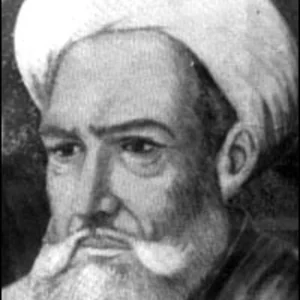
Al-Farabi
870 — 951
Persian philosopher, logician, and music theorist who wrote in Arabic, regarded as the “Second Teacher” after Aristotle. A major figure of medieval Islamic philosophy, he was a transmitter of Greek thought and a leading political thinker.
Al-Ghazali
1056 — 1111
A Muslim theologian, philosopher, and mystic of Persian origin, Al-Ghazali is one of the most influential intellectual figures of medieval Islam. He synthesized Sunni theology, philosophy, and Sufism in his masterwork, The Revival of the Religious Sciences.
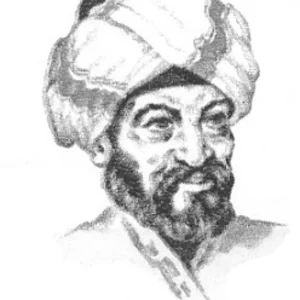
Al-Kindi
801 — 870
Al-Kindi is regarded as the first great philosopher to write in Arabic. A polymath of the 9th century, he worked at the House of Wisdom in Baghdad and played a major role in transmitting Greek thought to the Islamic world.
Albert the Great
1200 — 1280
A German Dominican of the 13th century — philosopher, theologian, and naturalist. Teacher of Thomas Aquinas in Paris and Cologne, he introduced the works of Aristotle into Christian thought and observed nature with an almost experimental spirit.
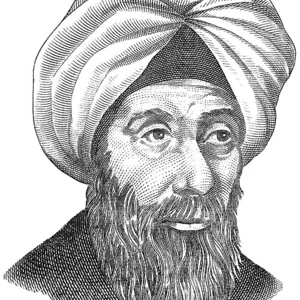
Alhazen
965 — 1039
Arab mathematician, physicist, and astronomer born in Basra around 965 and died in Cairo in 1039. Considered the father of modern optics, he revolutionized the understanding of light and vision. His major work, the Kitāb al-Manāẓir, profoundly influenced European scholars of the Middle Ages.
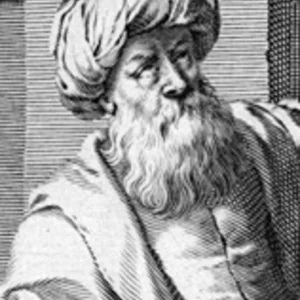
Alhazen (Ibn al-Haytham)
A mathematician, physicist, and Arab philosopher of the 11th century, Ibn al-Haytham is considered the father of modern optics. He was the first to demonstrate that vision results from light reflected by objects toward the eye, overturning the theories of antiquity.
Anselm of Canterbury
1033 — 1109
An Italian-born Benedictine monk who became Archbishop of Canterbury, Anselm is one of the foremost thinkers of early scholasticism. He is famous for his ontological argument, which seeks to demonstrate the existence of God through reason alone.
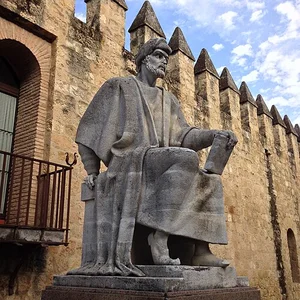
Averroes
1126 — 1198
Andalusian philosopher, theologian, and physician (1126–1198), Averroes was the greatest commentator on Aristotle of the Islamic Middle Ages. His works profoundly influenced medieval European philosophy and Islamic thought by reconciling Aristotelian reason with religious faith.
Avicenna
980 — 1037
A Persian physician and philosopher of the 10th century, Avicenna authored the Canon of Medicine, a reference work used in Europe and the Islamic world for five centuries. He synthesized Aristotle's philosophy with Islamic thought and made decisive contributions to the medical sciences.
Catherine of Siena
1347 — 1380
An Italian mystic and theologian of the 14th century, Catherine of Siena played a major political role by convincing Pope Gregory XI to leave Avignon and return to Rome. A Doctor of the Church, she left behind a remarkable body of spiritual and epistolary work.
Christine de Pizan
1364 — 1430
French philosopher and poet of Italian origin
Clare of Assisi
1194 — 1253
Clare of Assisi (1194–1253) was an Italian Catholic saint and founder of the Order of Poor Ladies, known as the Poor Clares. Inspired by Francis of Assisi, she chose monastic life and absolute poverty. She was the first woman to write a religious rule approved by the papacy.
Dante Alighieri
1265 — 1321
Florentine poet of the 13th–14th century, author of *The Divine Comedy*, a masterpiece of medieval literature. Exiled from Florence for political reasons, he laid the foundations of the Italian literary language.
Dogen
Japanese Buddhist monk of the 13th century, founder of the Sōtō school of Zen in Japan. After a stay in China, he taught the practice of seated meditation (zazen) and wrote the Shōbōgenzō, a major work of Buddhist thought.
Duns Scotus
1266 — 1308
John Duns Scotus was a Scottish Franciscan philosopher and theologian, one of the major figures of late scholasticism. Nicknamed the “Subtle Doctor” for the refinement of his reasoning, he profoundly renewed medieval metaphysics.
Geoffrey Chaucer
1343 — 1400
Geoffrey Chaucer (c. 1343–1400) is the greatest English poet of the Middle Ages, author of The Canterbury Tales. A diplomat and royal official, he brought the vernacular English language into high literature, leaving a lasting influence on English letters.
Hallaj
Persian Sufi mystic of the medieval Muslim world, famous for his ecstatic proclamation “Ana al-Haqq” (“I am the Truth/the Real”). Accused of blasphemy, he was imprisoned and then executed in Baghdad in 922, becoming a major figure of mystical martyrdom in Islam.
Héloïse d'Argenteuil
1101 — 1164
A French intellectual of the 12th century, Héloïse is celebrated for her passionate correspondence with the philosopher Peter Abelard, whose student and secret wife she became. Later abbess of the Paraclete, she was one of the most learned women of her time.
Ibn Arabi
1165 — 1240
Ibn Arabi was a Muslim mystic, theologian, and philosopher born in Murcia in al-Andalus. Nicknamed al-Shaykh al-Akbar (the Greatest Master), he is one of the major figures of Sufism and profoundly shaped the metaphysical thought of Islam.
Ibn Khaldun
1332 — 1406
Muslim philosopher, sociologist, historiographer and historian
Ibn Sina
Ibn Sina, known in the West as Avicenna, was a Persian physician, philosopher, and scholar of the Islamic Golden Age. His Canon of Medicine served as a reference work in European and Arab universities for centuries.
Ibn Taymiyya
1263 — 1328
A Muslim theologian, jurist, and philosopher of the Hanbali school, born in Harran in 1263 and died imprisoned in Damascus in 1328. A rigorist and controversial thinker, he advocated a return to the scriptural sources of Islam and criticized many practices of his time.
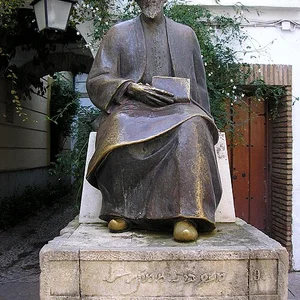
Maimonides
1135 — 1204
A 12th-century Jewish philosopher, theologian, and physician, Maimonides is one of the greatest figures of medieval Jewish thought. Born in Al-Andalus and settled in Egypt, he synthesized Aristotelian philosophy with rabbinical theology in his major work, the Guide for the Perplexed.
Meister Eckhart
1260 — 1328
German Dominican theologian, philosopher, and mystic of the Middle Ages. A major figure of Rhineland mysticism, he preached the union of the soul with God and the idea of detachment. Some of his theses were condemned by a papal bull in 1329.
Nichiren
1222 — 1282
Nichiren (1222-1282) was a 13th-century Japanese Buddhist monk, founder of the Nichiren-shū school. He taught that the Lotus Sūtra contained the ultimate essence of the Buddha's teaching and advocated reciting the mantra “Namu Myōhō Renge Kyō.”
Petrarch
1304 — 1374
An Italian poet and humanist of the 14th century, Petrarch is considered the father of humanism. Deeply passionate about ancient Latin authors, he rediscovered and copied numerous forgotten manuscripts. His poetic work, particularly the Canzoniere dedicated to Laura, profoundly influenced European literature.
Roger Bacon
1220 — 1292
Roger Bacon, nicknamed Doctor Mirabilis, was a 13th-century English Franciscan friar, philosopher, and scholar. A pioneer of the experimental method, he championed observation and mathematics as the foundations of knowledge, long before modern science.
Sei Shōnagon
966 — 1025
Japanese author
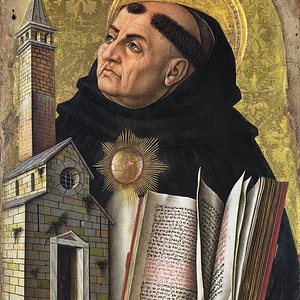
Thomas Aquinas
1225 — 1274
A Dominican theologian and philosopher of the 13th century, Thomas Aquinas is one of the greatest figures of medieval scholasticism. Author of the Summa Theologica, he sought to reconcile Aristotelian reason with Christian faith, and was declared a Doctor of the Church.
Thomas Becket
Archbishop of Canterbury in the 12th century, he clashed fiercely with King Henry II of England over the rights and freedoms of the Church. Murdered in his cathedral in 1170, he was canonized as early as 1173.
Urban II
1035 — 1099
Pope from 1088 to 1099, Urban II was the instigator of the First Crusade, proclaimed at the Council of Clermont in 1095. A Cluniac monk of French origin, he strengthened papal authority and continued the Gregorian Reform of the Church.
William of Ockham
1287 — 1349
William of Ockham was an English philosopher, logician, and theologian, a major figure of late Scholasticism and of the nominalist movement. A Franciscan friar, he is famous for the principle of parsimony known as “Ockham's razor.”
Yusuf Balasaguni
1019 — 1085
Yusuf Balasaguni was an 11th-century Turkic-language poet and philosopher, author of the Kutadgu Bilig (The Wisdom That Brings Happiness), a masterpiece of classical Turkic literature composed in 1069-1070. This foundational work blends ethics, politics, and Islamic philosophy to offer a mirror for princes at the Karakhanid court.
Zhu Xi
1130 — 1200
Zhu Xi (1130–1200) was the greatest Confucian philosopher of medieval China and the founder of Neo-Confucianism. A scholar of the Song dynasty, he synthesized the thought of Confucius and Mencius with metaphysical elements. His work became the official reference for imperial examinations for seven centuries.
Sciences(25)
Al-Biruni
973 — 1048
A Persian polymath (973–1048), Al-Biruni was one of the greatest minds of the medieval Islamic world. Astronomer, mathematician, geographer, and historian, he wrote more than 150 works and was one of the first scholars to study India in a systematic, scientific way.
Al-Farabi
870 — 951
Persian philosopher, logician, and music theorist who wrote in Arabic, regarded as the “Second Teacher” after Aristotle. A major figure of medieval Islamic philosophy, he was a transmitter of Greek thought and a leading political thinker.
Al-Farghani
800 — 870
Al-Farghani was a 9th-century astronomer and mathematician, born in the region of Ferghana (present-day Uzbekistan). Under the patronage of the Abbasid caliphs in Baghdad, he wrote works that summarized and transmitted Ptolemaic astronomy to medieval Europe.
Al-Jazari
1164 — 1206
Engineer and inventor of the 12th–13th century active in Mesopotamia (Jazira), al-Jazari is famous for his treatise on automata and hydraulic machines. His major work describes more than fifty ingenious mechanical devices, making him one of the fathers of medieval mechanics.
Al-Khwârizmî
780 — 850
A Persian mathematician, geographer, and astronomer of the 9th century, Al-Khwârizmî revolutionized mathematics by formalizing algebra and popularizing the Indo-Arabic decimal numeral system. His name gave rise to the word "algorithm", a concept fundamental to modern mathematics.
Al-Kindi
801 — 870
Al-Kindi is regarded as the first great philosopher to write in Arabic. A polymath of the 9th century, he worked at the House of Wisdom in Baghdad and played a major role in transmitting Greek thought to the Islamic world.
Al-Ma'mun
786 — 833
Seventh Abbasid caliph (reigned 813-833), son of Harun al-Rashid. A patron of scholars, he expanded the House of Wisdom (Bayt al-Hikma) in Baghdad, a center of translation and scientific research.
Albert the Great
1200 — 1280
A German Dominican of the 13th century — philosopher, theologian, and naturalist. Teacher of Thomas Aquinas in Paris and Cologne, he introduced the works of Aristotle into Christian thought and observed nature with an almost experimental spirit.
Alhazen
965 — 1039
Arab mathematician, physicist, and astronomer born in Basra around 965 and died in Cairo in 1039. Considered the father of modern optics, he revolutionized the understanding of light and vision. His major work, the Kitāb al-Manāẓir, profoundly influenced European scholars of the Middle Ages.
Alhazen (Ibn al-Haytham)
A mathematician, physicist, and Arab philosopher of the 11th century, Ibn al-Haytham is considered the father of modern optics. He was the first to demonstrate that vision results from light reflected by objects toward the eye, overturning the theories of antiquity.
Avicenna
980 — 1037
A Persian physician and philosopher of the 10th century, Avicenna authored the Canon of Medicine, a reference work used in Europe and the Islamic world for five centuries. He synthesized Aristotle's philosophy with Islamic thought and made decisive contributions to the medical sciences.
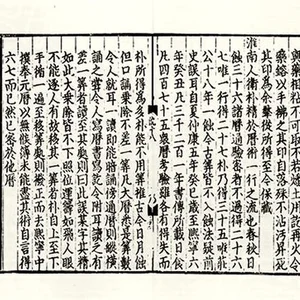
Bi Sheng
990 — 1052
Chinese artisan and inventor of the 11th century, Bi Sheng invented movable type printing using baked clay around 1040, under the Song Dynasty. His invention predates Gutenberg's in Europe by four centuries.

Brahmagupta
598 — 670
A 7th-century Indian mathematician and astronomer, Brahmagupta was the first to formulate arithmetic rules for zero and negative numbers. His major work, the Brahmasphutasiddhanta (628), influenced both Arabic and European mathematics.
Gerard of Cremona
1114 — 1187
Gerard of Cremona was a 12th-century Italian translator, active in Toledo, who translated many Greek and Arabic scientific works from Arabic into Latin. He played a decisive role in transmitting ancient and Arabic knowledge to medieval Europe.
Hildegard of Bingen
1098 — 1179
A twelfth-century German Benedictine nun, Hildegard of Bingen was at once a mystic, composer, naturalist, and theologian. She founded her own monastery and corresponded with the most powerful figures of her time, including popes and emperors.
Ibn Khaldun
1332 — 1406
Muslim philosopher, sociologist, historiographer and historian
Ibn Sina
Ibn Sina, known in the West as Avicenna, was a Persian physician, philosopher, and scholar of the Islamic Golden Age. His Canon of Medicine served as a reference work in European and Arab universities for centuries.
Jutta of Sponheim
A German Benedictine recluse and mystic of the 12th century, Jutta of Sponheim founded a community of women at the monastery of Disibodenberg. She is best known as the spiritual teacher and educator of Hildegard von Bingen.
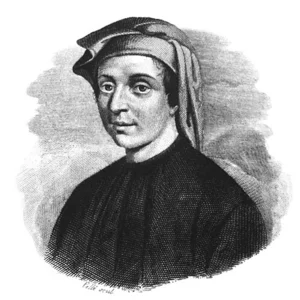
Leonardo Fibonacci
1170 — 1240
Leonardo Fibonacci, an Italian mathematician of the Middle Ages, is famous for introducing Arabic numerals and the decimal system to Europe. His major work, the Liber Abaci (1202), revolutionized Western mathematics. He is also known for the Fibonacci sequence, a numerical sequence with many applications.
Mahmoud al-Kashgari
1005 — 1102
Mahmoud al-Kashgari was an 11th-century Turkic philologist and encyclopedist, author of the celebrated *Dīwān Lughāt al-Turk* (Compendium of the Turkic Dialects), a monumental work documenting the dialects, poems, and customs of Turkic-speaking peoples. Regarded as the father of Turkic linguistics, he drew up the first known map of the Turkic-speaking world.
Omar Khayyam
1048 — 1131
An 11th-century Persian poet, mathematician, and astronomer, Omar Khayyam is celebrated for his quatrains (the Rubaiyat) and his work in algebra. He reformed the Persian calendar and solved cubic equations using geometric methods.
Roger Bacon
1220 — 1292
Roger Bacon, nicknamed Doctor Mirabilis, was a 13th-century English Franciscan friar, philosopher, and scholar. A pioneer of the experimental method, he championed observation and mathematics as the foundations of knowledge, long before modern science.

Theodore Meliteniotes
A 14th-century Byzantine astronomer and mathematician, a scholar and ecclesiastical dignitary in Constantinople. He is the author of a vast treatise on astronomy that synthesizes the Greek, Persian, and Latin traditions.
Trotula of Salerno
1110 — 1197
Female physician of the 11th century associated with the School of Medicine of Salerno, Europe's first organized medical institution. She is linked to foundational treatises on gynecology and obstetrics, though her exact biography remains a matter of debate.
Urban II
1035 — 1099
Pope from 1088 to 1099, Urban II was the instigator of the First Crusade, proclaimed at the Council of Clermont in 1095. A Cluniac monk of French origin, he strengthened papal authority and continued the Gregorian Reform of the Church.
Society(16)
Alice Kyteler
1263 — ?
An Irish noblewoman of the 14th century, Alice Kyteler was the first person officially condemned for witchcraft in Ireland in 1324. Accused of poisoning her husbands and practicing heretical rites, she managed to flee before her execution, leaving her servant Petronilla de Meath to be burned alive in her place.
Arlette
1010 — 1050
Arlette of Falaise, daughter of a tanner or leather-worker from Falaise, in Normandy, was the concubine of Duke Robert the Magnificent. From this union was born William, the future William the Conqueror, King of England. Born among the common people, she became the mother of a royal line.
Berthe de Bourgogne
964 — 1010
Daughter of Duke Conrad of Burgundy, Berthe was first Countess of Blois through her marriage to Odo I. After becoming a widow, she married King Robert II the Pious around 997, but this union, deemed incestuous by the Church due to their close kinship, was condemned by the pope and annulled around 1001.
Blanche de Namur
1320 — 1363
Princess of Namur (c. 1320–1363), she married Magnus IV of Sweden in 1335 and became Queen of Sweden and Norway. Mother of Eric XII of Sweden and Haakon VI of Norway, she played a role of dynastic representation in medieval Northern Europe.
Blanche of Lancaster
1342 — 1368
Blanche of Lancaster (c. 1341–1368) was the daughter of Henry of Grosmont, first Duke of Lancaster, and the wife of John of Gaunt, son of King Edward III of England. Her early death inspired her husband to commission the poem *The Book of the Duchess* from Geoffrey Chaucer.
Cecilia Chaumpaigne
An English woman of the 14th century known for a legal document of 1380 by which she released the poet Geoffrey Chaucer from all prosecution for “raptus.” This document, rediscovered by scholars, fuels a historical debate on the status of women and the nature of the incident.
Francesca da Rimini
1259 — 1285
A 13th-century Italian noblewoman, Francesca da Polenta was married to Giovanni Malatesta and then murdered alongside her brother-in-law Paolo, with whom she was in love. Her tragic story was immortalized by Dante in the Divine Comedy.
Khadija
557 — 619
A wealthy caravan merchant from Mecca, Khadija bint Khuwaylid was the first wife of the prophet Muhammad and the very first person to embrace Islam. Her fortune and moral support were decisive in the early days of his preaching.
Marie of Champagne
1145 — 1198
Daughter of King Louis VII and Eleanor of Aquitaine, Marie of Champagne was Countess of Champagne and one of the greatest patrons of letters in the 12th century. A patron of Chrétien de Troyes, she made her court at Troyes a radiant center of courtly literature.
Marie of Oignies
1177 — 1213
A Christian mystic and pious laywoman of the diocese of Liège, Marie of Oignies (c. 1177–1213) was a founding figure of the Beguine movement in the Meuse region. Her life, written by Jacques de Vitry, made her a model of feminine holiness grounded in penance, voluntary poverty, and Eucharistic devotion.
Petronilla de Meath
1300 — 1324
Petronilla de Meath was a 14th-century Irish servant accused of witchcraft alongside her mistress Alice Kyteler. In 1324, she became the first person burned alive for heresy in Ireland, a victim of one of Europe's earliest major witchcraft trials.
Philippa de Hainaut
1310 — 1369
Queen of England through her marriage to Edward III in 1328, Philippa of Hainaut was a respected sovereign, known for her clemency and benevolent influence. She played an important role in the English court and was a patron of the arts and letters.

Philippa Roet
1346 — 1387
Philippa Roet (or Philippa Pan) was an English lady-in-waiting at the court of the Plantagenet kings in the 14th century. In the service of Queen Philippa of Hainault, she married the poet Geoffrey Chaucer, thus becoming a figure of the medieval English court milieu.
Ruqayya
598 — 624
Daughter of the Prophet Muhammad and his first wife Khadija, Ruqayya was one of the very first converts to Islam. Married to Uthman ibn Affan, the future third caliph, she emigrated to Abyssinia and then to Medina, where she died in 624.
Saint Germain of Paris
496 — 576
Bishop of Paris from 555 to 576, Germain is one of the great figures of the Merovingian Church. Founder of the Abbey of Saint-Germain-des-Prés, he was renowned for his charity toward the poor and his influence over the Frankish kings.
Yahya ibn Muhammad
829 — 864
Idrisid emir of Morocco from 849 to 863, reigning from Fez. His reign was marked by the rise of the city and the founding, in 859, of the al-Qarawiyyin mosque and university.
Exploration(12)
Börte
1161 — 1230
Börte was the first wife and principal empress of Genghis Khan. Abducted shortly after her marriage and then rescued by her husband, she ruled the imperial court and played a major political role, with her four sons becoming the heirs of the Mongol Empire.
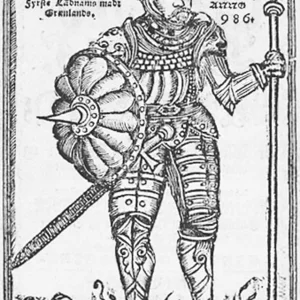
Erik the Red
950 — 1003
A Viking explorer of Norwegian origin, banished from Iceland for manslaughter, around 982 he explored a land he named Greenland (“green land”) to lure settlers there. Around 985 he founded the first lasting Scandinavian colony there.
Gengis Khan
1162 — 1227
Founder and first Great Khan of the Mongol Empire, Genghis Khan unified the nomadic tribes of Central Asia in the early 13th century. His conquests created the largest contiguous empire in history.
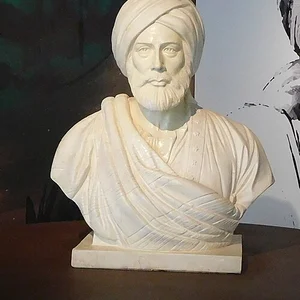
Ibn Battûta
1304 — 1368
Muslim explorer and geographer of the 14th century, born in Tangier (Morocco). Ibn Battûta undertook a journey of over 120,000 km across Africa, Asia, and the Middle East, becoming the greatest medieval traveler. His accounts, recorded in the Rihla (the Journey), bear witness to the richness of the Muslim civilizations of his time.
Ibn Juzayy
1294 — 1340
Scholar, poet, and Andalusian jurist (c. 1294–1340), Ibn Juzayy is best known for having written the famous travel account of Ibn Battuta, the *Rihla*, which he shaped into literary form at the request of the Marinid sultan. He is also the author of legal treatises and a Quranic commentary.
Kupe
1000 — 1099
Kupe is a legendary Polynesian navigator, the founding hero of Maori tradition. According to mythology, he discovered Aotearoa (New Zealand) around the year 1000, guided by a giant octopus. His voyage from Hawaiki symbolizes the mastery of star navigation achieved by the Polynesian peoples.
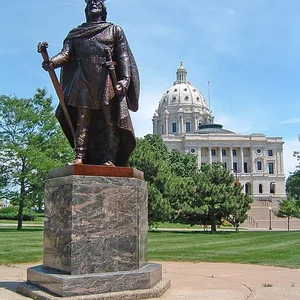
Leif Erikson
972 — 1020
Viking explorer of Icelandic origin, son of Erik the Red. Around the year 1000, he is believed to have reached the coasts of North America (Vinland), becoming one of the first Europeans to set foot in the New World, five centuries before Christopher Columbus.
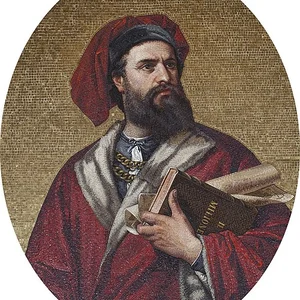
Marco Polo
1254 — 1324
Venetian merchant and explorer (1254–1324), Marco Polo is famous for his long journey to Asia from 1271 to 1295, during which he reached the court of the Great Khan Kublai. His account, The Travels of Marco Polo, profoundly shaped European knowledge of Asia and its trade routes.
Rustichello of Pisa
1300 — 1322
An Italian writer of the 13th century, Rustichello of Pisa is best known for writing down the account of Marco Polo's travels while sharing a cell with him in Genoa. His work, known under the title 'The Book of Marvels', is one of the most important documents on medieval Asia.
Xuanzang
602 — 664
A 7th-century Chinese Buddhist monk, he undertook a seventeen-year journey to India to collect sacred texts. He translated hundreds of sutras into Chinese and played a major role in the spread of Buddhism in China.
Yongle
Third emperor of the Ming dynasty (1402–1424), Yongle is known for moving the capital to Beijing, commissioning Zheng He's great maritime expeditions, and consolidating Chinese imperial power.
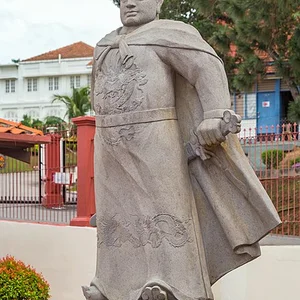
Zheng He
1371 — 1433
Chinese mariner, explorer and diplomat (1371–c. 1434)
Music(10)
Al-Farabi
870 — 951
Persian philosopher, logician, and music theorist who wrote in Arabic, regarded as the “Second Teacher” after Aristotle. A major figure of medieval Islamic philosophy, he was a transmitter of Greek thought and a leading political thinker.
Benzaiten
A Japanese goddess of Buddhist and Shinto tradition, Benzaiten is associated with music, the arts, wisdom, and water. Derived from the Hindu goddess Sarasvati, she was introduced to Japan through Buddhism around the 6th century. She is the only female figure among the Seven Gods of Fortune (Shichifukujin).
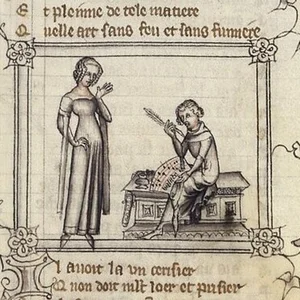
Guillaume de Machaut
1300 — 1377
Guillaume de Machaut was a 14th-century French poet and composer, a leading figure of the Ars nova. Considered one of the greatest musicians of the Middle Ages, he shaped the transition toward complex polyphony.
Hildegard of Bingen
1098 — 1179
A twelfth-century German Benedictine nun, Hildegard of Bingen was at once a mystic, composer, naturalist, and theologian. She founded her own monastery and corresponded with the most powerful figures of her time, including popes and emperors.
Hildegard von Bingen
1098 — 1179
First known composer, visionary, Doctor of the Church
Jutta of Sponheim
A German Benedictine recluse and mystic of the 12th century, Jutta of Sponheim founded a community of women at the monastery of Disibodenberg. She is best known as the spiritual teacher and educator of Hildegard von Bingen.
Omar Khayyam
1048 — 1131
An 11th-century Persian poet, mathematician, and astronomer, Omar Khayyam is celebrated for his quatrains (the Rubaiyat) and his work in algebra. He reformed the Persian calendar and solved cubic equations using geometric methods.
Rudaki
858 — 941
Rudaki, poet and court musician of the Samanid dynasty, is regarded as the father of classical Persian poetry. Blind according to tradition, he is said to have composed more than 100,000 verses, of which only a few hundred have survived. He embodied the renaissance of the Persian language and culture under the Samanid dynasty.
Urban II
1035 — 1099
Pope from 1088 to 1099, Urban II was the instigator of the First Crusade, proclaimed at the Council of Clermont in 1095. A Cluniac monk of French origin, he strengthened papal authority and continued the Gregorian Reform of the Church.
Zhu Xi
1130 — 1200
Zhu Xi (1130–1200) was the greatest Confucian philosopher of medieval China and the founder of Neo-Confucianism. A scholar of the Song dynasty, he synthesized the thought of Confucius and Mencius with metaphysical elements. His work became the official reference for imperial examinations for seven centuries.
Economics(7)
Jacques Cœur
1395 — 1456
A French merchant and financier of the 15th century, Jacques Cœur became the chief treasurer (*grand argentier*) of King Charles VII. The builder of a vast trading empire reaching toward the Levant, he was one of the wealthiest men in the kingdom before falling from grace.
Khadija
557 — 619
A wealthy caravan merchant from Mecca, Khadija bint Khuwaylid was the first wife of the prophet Muhammad and the very first person to embrace Islam. Her fortune and moral support were decisive in the early days of his preaching.
Klaus Störtebeker
1360 — 1401
Klaus Störtebeker was a German pirate of the late 14th century, a leading figure of the Vitalienbrüder (Victual Brothers). He raided the North Sea and the Baltic Sea, preying on ships of the Hanseatic League, before being captured and beheaded in Hamburg around 1401.
Kublai Khan
1215 — 1294
Grandson of Genghis Khan, Kublai Khan founded the Yuan dynasty in China and ruled from 1260 to 1294. He expanded the Mongol Empire to its greatest extent and opened China to international trade, most notably welcoming Marco Polo.
Mansa Musa
1280 — 1337
Mansa Musa (c. 1280–1337) was the tenth mansa (king) of the Mali Empire, one of the largest and wealthiest empires in the medieval world. His pilgrimage to Mecca in 1324–1325 revealed to the world the extraordinary riches of his kingdom.
Mansa Souleymane
1400 — 1360
Mansa (emperor) of the Mali Empire from 1341 to 1360, Souleymane was the brother and successor of Mansa Musa. His reign was marked by rigorous administration, economic prosperity, and the Islamic prestige of the empire.
Mohammed ben Toughlouq
Sultan of the Delhi Sultanate from 1324 to 1351, Muhammad ibn Tughluq was one of the most ambitious and controversial rulers of medieval India. A bold reformer, he attempted to relocate the capital from Delhi to Daulatabad and to introduce copper currency — projects that failed and ruined the sultanate.
Visual Arts(4)
Dante Alighieri
1265 — 1321
Florentine poet of the 13th–14th century, author of *The Divine Comedy*, a masterpiece of medieval literature. Exiled from Florence for political reasons, he laid the foundations of the Italian literary language.
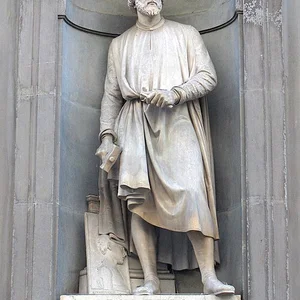
Donatello
1386 — 1466
Donato di Niccolò di Betto Bardi, known as Donatello, was a Florentine sculptor of the 15th century, considered one of the founding fathers of Renaissance sculpture. He revolutionized the art of sculpture by rediscovering ancient naturalism and mastering perspective in low relief.
Jan van Eyck
1390 — 1441
Flemish painter of the early 15th century, a leading figure of the Early Netherlandish painters. A master of portraiture and meticulous realism, he raised oil painting to an unprecedented level of refinement.
Wang Wei
699 — 759
Wang Wei (701-761) was one of the greatest poets of the Tang dynasty, as well as a painter, musician, and high-ranking official. Deeply influenced by Chan Buddhism, he is celebrated for his landscape poetry in which nature and contemplation merge.
Technology(3)
Al-Jazari
1164 — 1206
Engineer and inventor of the 12th–13th century active in Mesopotamia (Jazira), al-Jazari is famous for his treatise on automata and hydraulic machines. His major work describes more than fifty ingenious mechanical devices, making him one of the fathers of medieval mechanics.
Alhazen
965 — 1039
Arab mathematician, physicist, and astronomer born in Basra around 965 and died in Cairo in 1039. Considered the father of modern optics, he revolutionized the understanding of light and vision. His major work, the Kitāb al-Manāẓir, profoundly influenced European scholars of the Middle Ages.
Bi Sheng
990 — 1052
Chinese artisan and inventor of the 11th century, Bi Sheng invented movable type printing using baked clay around 1040, under the Song Dynasty. His invention predates Gutenberg's in Europe by four centuries.