 flip
flipPulmentum of Broad Beans and Barley in the Cloister
Pulmentum of Broad Beans and Barley in the Cloister
Why this dish? Disciple of Saint Bernard, Eugene III remained faithful to Cistercian asceticism even on the throne of Peter: vegetables, legumes, bread, and water. This broad bean and barley pottage is the exact ordinary he ate at the Clairvaux refectory before Rome, and which he kept at the Lateran when other princes of the Church gorged themselves on meats.
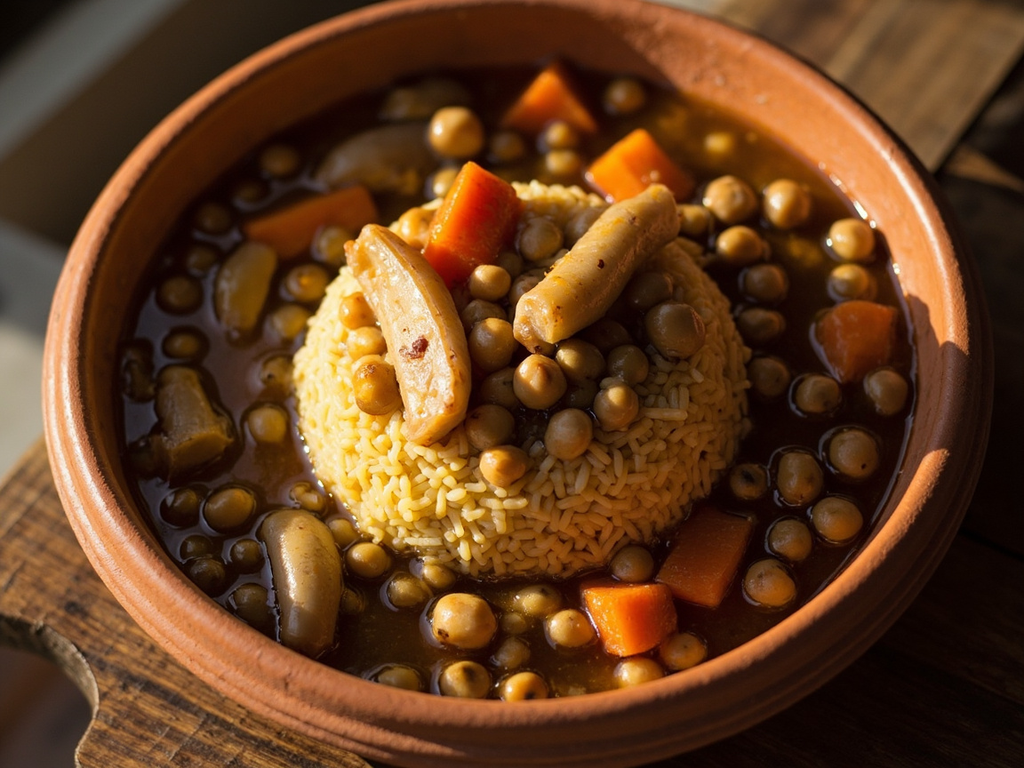
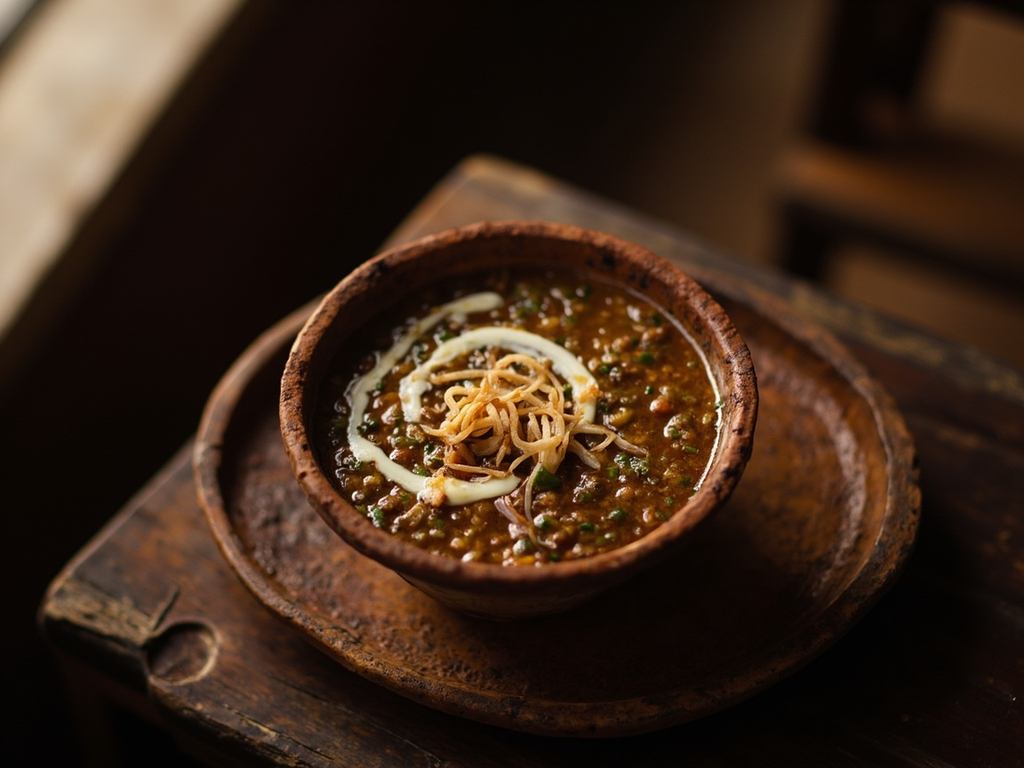
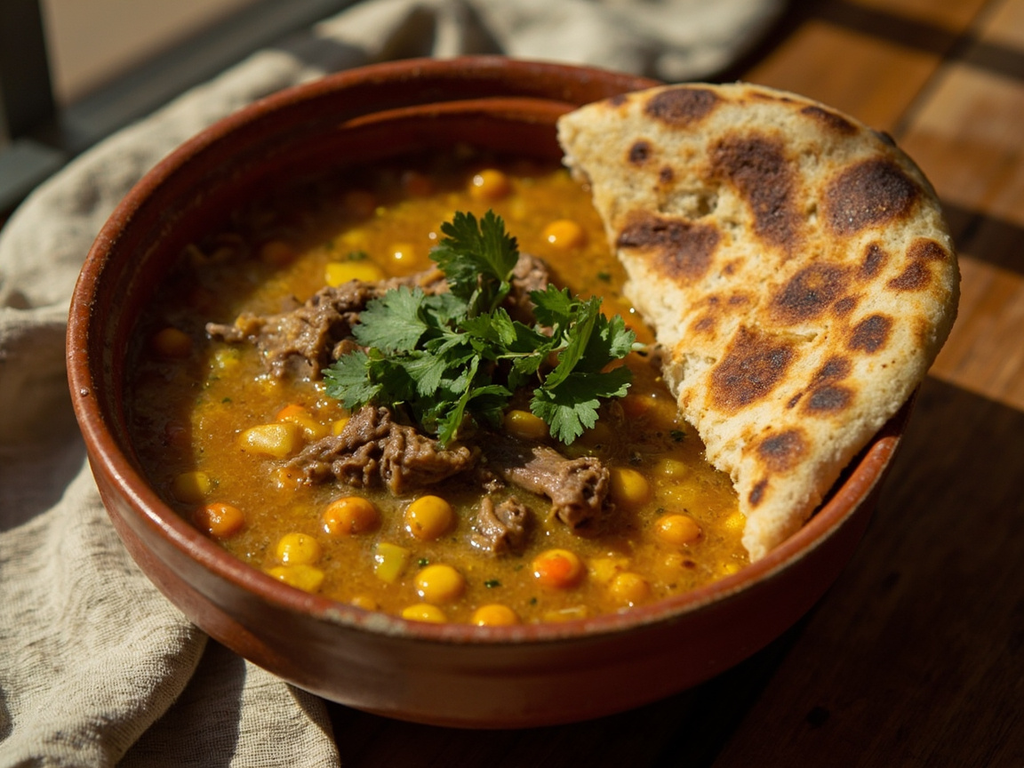
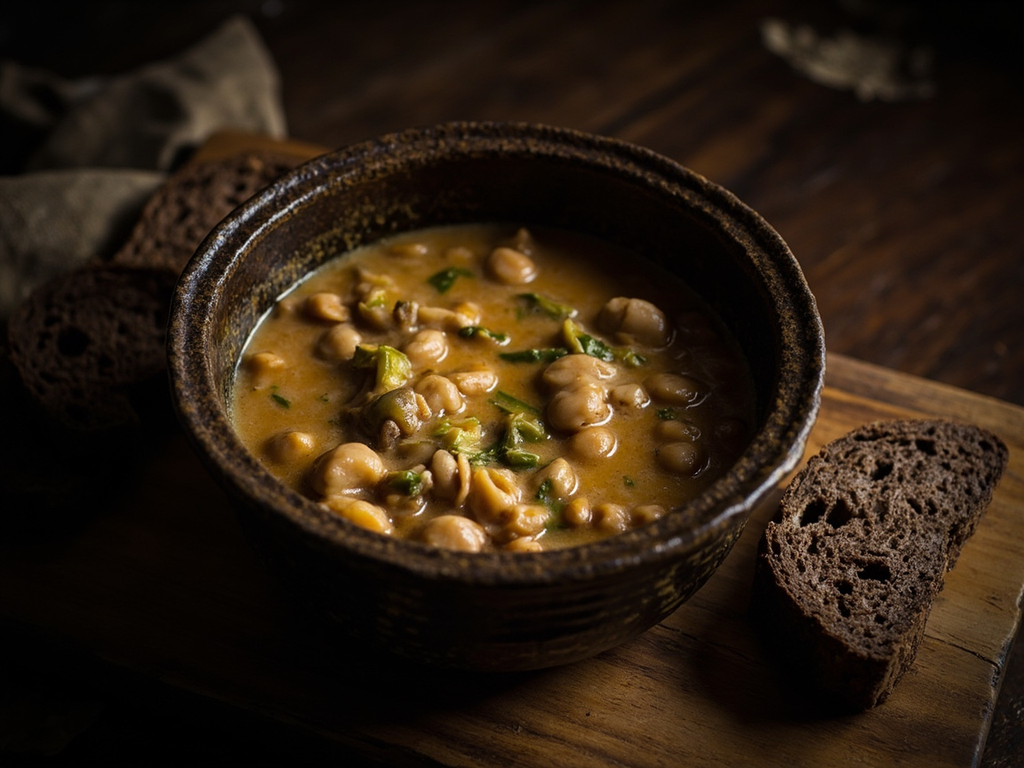
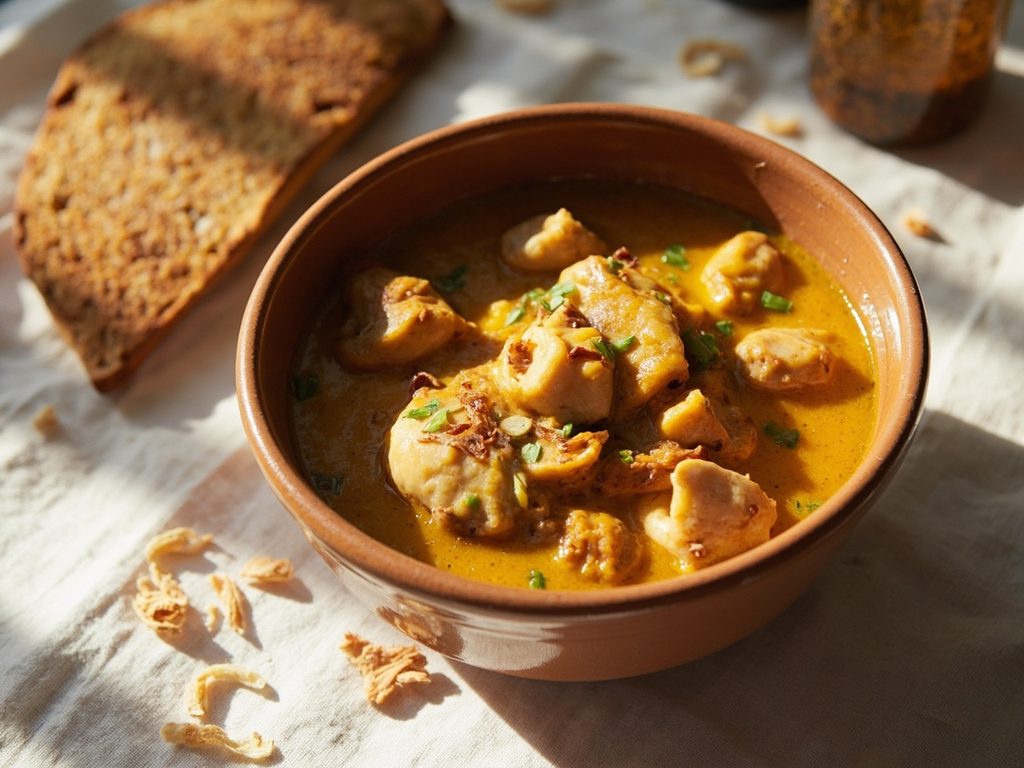
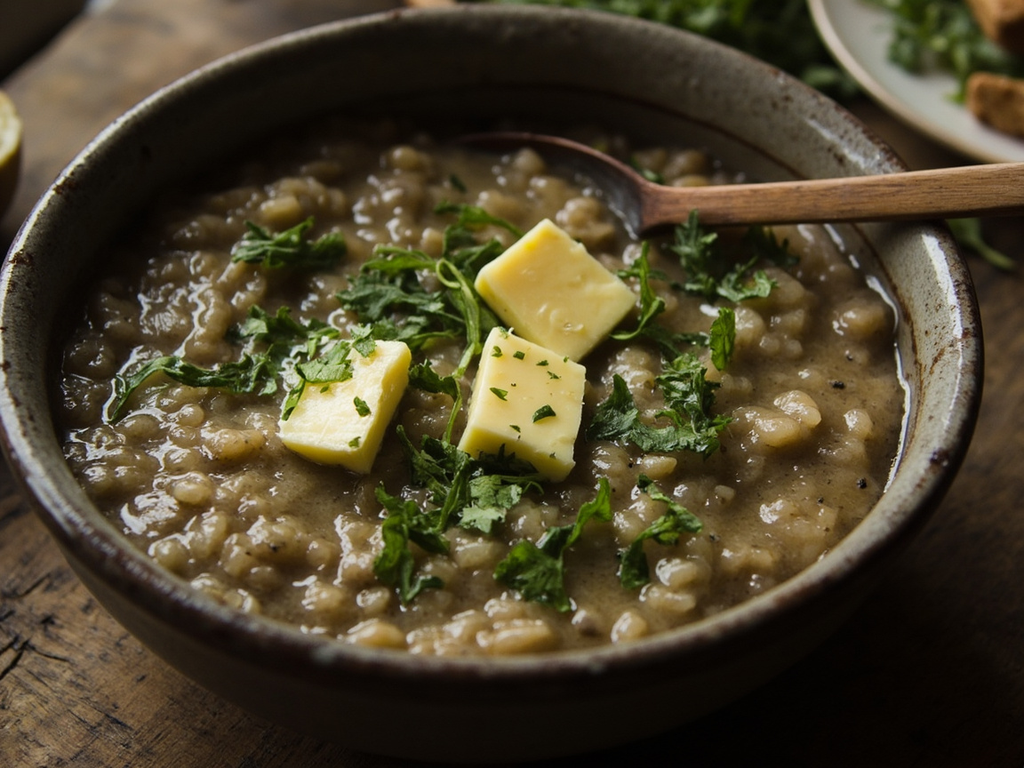
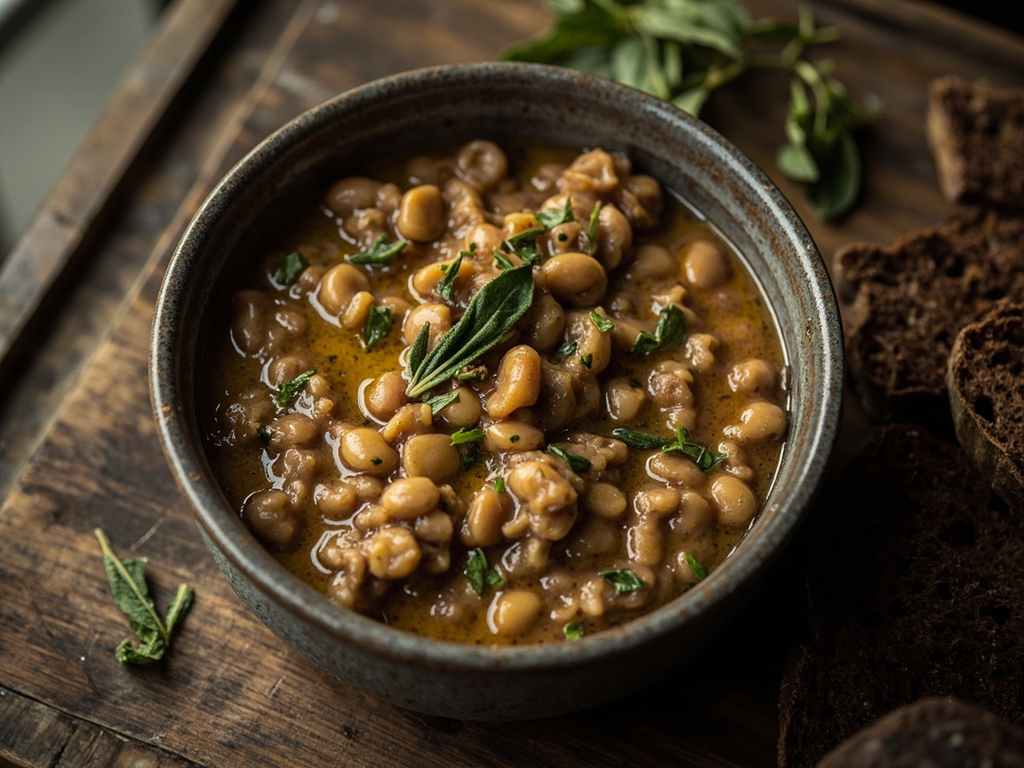
A nourishing porridge of dried broad beans and hulled barley, melted with leek, onion, and garden herbs, bound with a drizzle of oil. The dish of the poor and the monk: filling, mild, without ostentation.
Approach, and seek not here the delights of the great. In the refectory, Bernard my master taught us that a full belly weighs down the soul: so we eat the bean and the barley as the Lord gives them, cooked long in clear water with leek from the garden. I tell you without shame — when I was made Bishop of Rome, I wished to keep this bowl, for better is a pottage of vegetables where charity is than a fatted calf where hatred reigns. Pour the oil in a thin stream, break your rye bread into it, and give thanks.
- •Dried broad beans, skinned — two handfuls (nourishing base)
- •Hulled barley — one handful (binding cereal)
- •Leek — one (aromatic)
- •Onion — one small (aromatic)
- •Sage and parsley from the garden — a few sprigs (herbs)
- •Olive oil — a drizzle (binding and flavor)
- •Salt — to taste (seasoning)
Pulmentum of Broad Beans and Barley in the Cloister
A nourishing porridge of dried broad beans and hulled barley, melted with leek, onion, and garden herbs, bound with a drizzle of oil. The dish of the poor and the monk: filling, mild, without ostentation.
Why this dish? Disciple of Saint Bernard, Eugene III remained faithful to Cistercian asceticism even on the throne of Peter: vegetables, legumes, bread, and water. This broad bean and barley pottage is the exact ordinary he ate at the Clairvaux refectory before Rome, and which he kept at the Lateran when other princes of the Church gorged themselves on meats.
Approach, and seek not here the delights of the great. In the refectory, Bernard my master taught us that a full belly weighs down the soul: so we eat the bean and the barley as the Lord gives them, cooked long in clear water with leek from the garden. I tell you without shame — when I was made Bishop of Rome, I wished to keep this bowl, for better is a pottage of vegetables where charity is than a fatted calf where hatred reigns. Pour the oil in a thin stream, break your rye bread into it, and give thanks.
Ingredients (period version)
- Dried broad beans, skinned — two handfuls (nourishing base)
- Hulled barley — one handful (binding cereal)
- Leek — one (aromatic)
- Onion — one small (aromatic)
- Sage and parsley from the garden — a few sprigs (herbs)
- Olive oil — a drizzle (binding and flavor)
- Salt — to taste (seasoning)
Ingredients
- Dried split broad beans (or frozen broad beans if unavailable) — 200 g (nourishing base)
- Pearl barley — 80 g (binding cereal)
- Leek — 1 (white and light green parts) (aromatic)
- Onion — 1 small (aromatic)
- Fresh sage — 4 leaves (herb)
- Flat-leaf parsley — a few sprigs (herb)
- Olive oil — 2 tbsp (binding and flavor)
- Salt — 1 tsp (seasoning)
- Water — 1.2 L (cooking liquid)
Method
- Soak the dried broad beans overnight in cold water, then drain.
- Finely slice the leek and onion; sweat them gently in olive oil without browning.
- Add the broad beans, pearl barley, and water; bring to a simmer.
- Cook over low heat for 1 hour to 1 hour 15 minutes, until the beans break down and the pottage thickens; stir occasionally.
- Halfway through cooking, add the chopped sage; season with salt at the end.
- Serve thick in a bowl, sprinkle with parsley and drizzle with raw olive oil. Accompany with rye bread.
How it was made : Dried legumes (broad beans, lentils, peas) were the protein base for monks, who abstained from the flesh of four-footed animals according to the Rule of Saint Benedict. They were cooked for hours in a cauldron by the refectory fire, with vegetables and herbs from the cloister garden. Barley, a humble cereal, bound everything into a porridge. Salt was used sparingly, and olive oil, where available, replaced the forbidden lard.
The contemporary twist : A twist of black pepper and a few shards of toasted rye bread rubbed with garlic to serve the pulmentum 'toast-style', faithful to humility but suited to modern palates.
Sources : Rule of Saint Benedict, ch. 39 (on the measure of food) · Ch. de Montalembert, The Monks of the West · M. Montanari, The Famine and Abundance: History of Food in Europe
Eugene III · Charactorium