The ayllu's table — the Andean community meal
In highland villages like Toroca, there is no separation into starter, main course, and dessert: around a nourishing base (a porridge of grains or dried tubers), one arranges what the land and herd have provided. The meal is organized by layers of preservation — fresh from the day, dried from the year, fermented from celebrations — and shared directly on a cloth spread on the ground (the mast'a), each person dipping into the common pot. Everything revolves around the papa and its dried forms, a legacy of high-altitude granaries that the colonial Church found already in place.
Signature : Chuño — the freeze-dried potato of the Andes
Long before parish registers, Andeans froze the papa at night and trampled it by day, for weeks on end, until they obtained a black, light tuber that keeps for years. It is the signature technique of the Toroca table: without it, no reserves to survive the dry season and the frosts of Potosí.
Eulalia Bermúdez at the table
5 period recipes
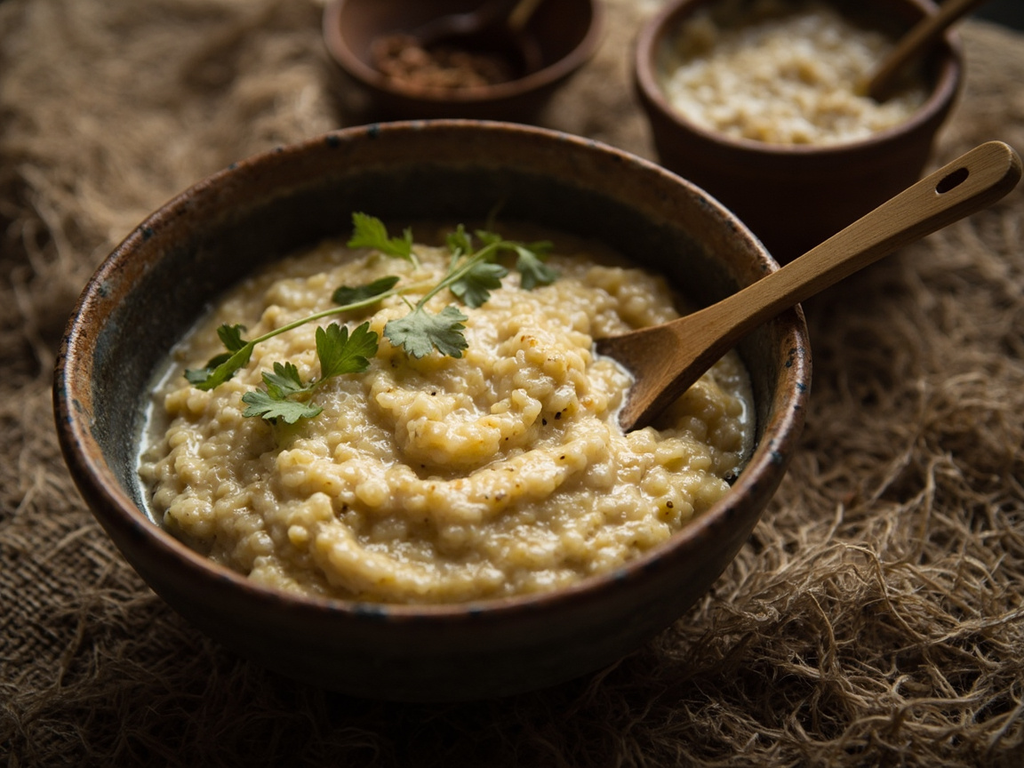 Everyday
Quinoa lawa — thick quinoa porridge
Daily meal base (lawa)
🧂 🍄· 40 min
View the recipe
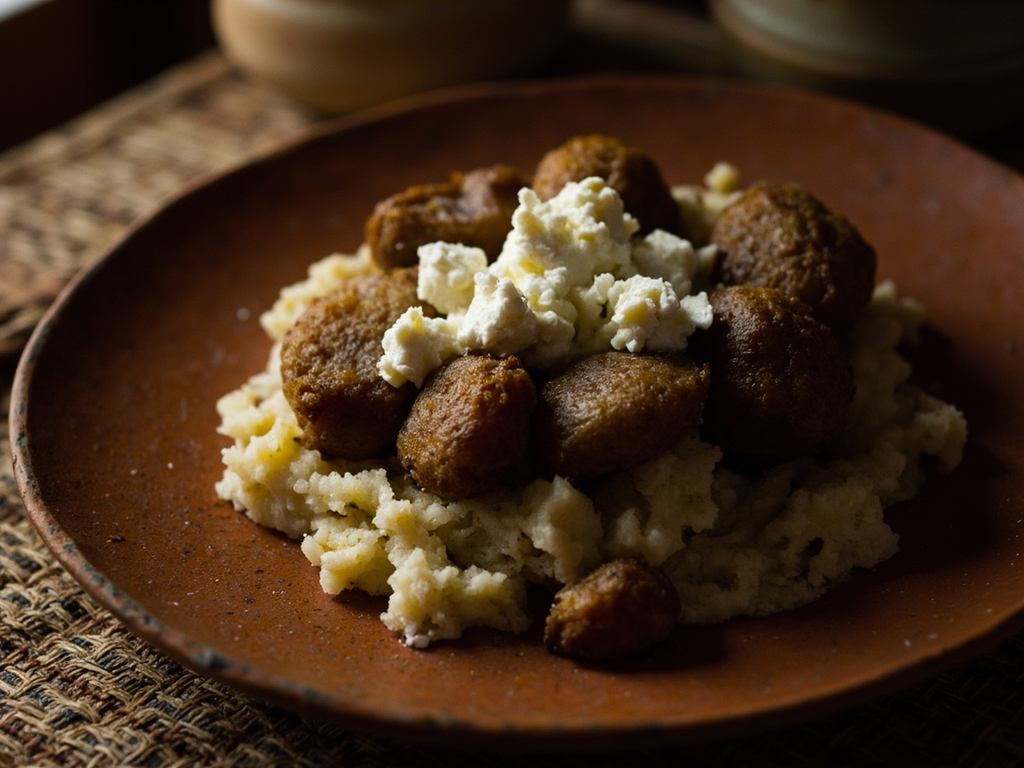 Festive
Chuño phuti — rehydrated chuño with fat and fresh cheese
Sharing dish for feast days (served on the mast'a)
🧂 🍄· 45 min (plus 12 h soaking)
View the recipe
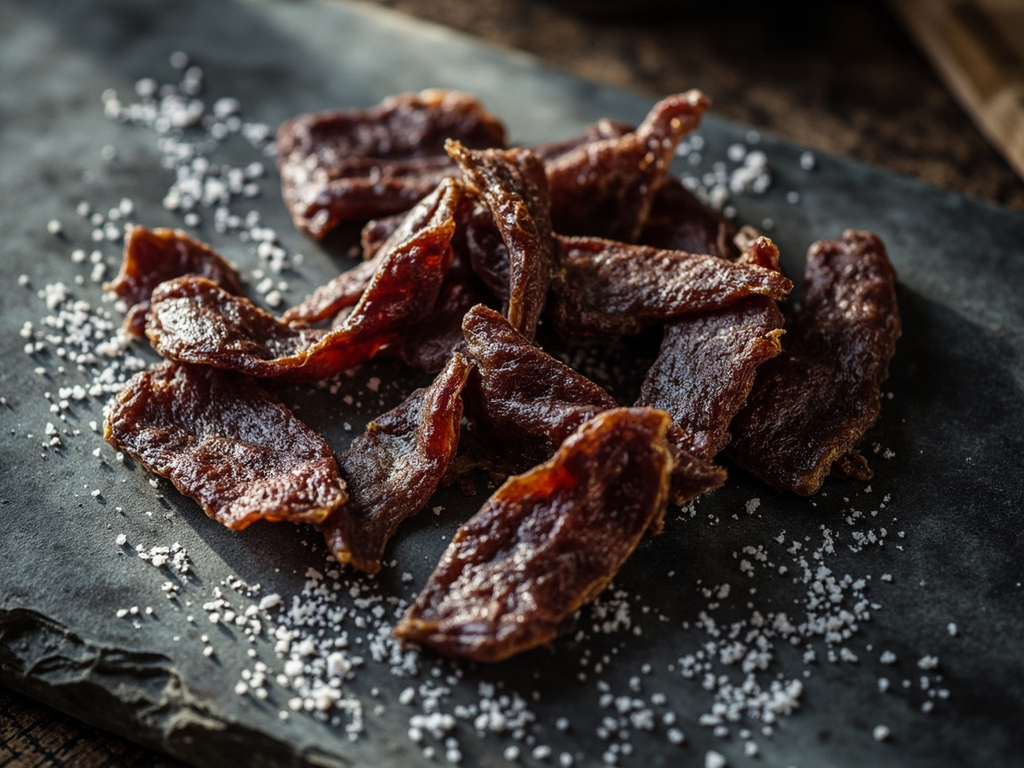 Preserving
Llama charqui — dried salted meat for travelers
Trail provisions (fiambre of the highland paths)
🧂 🍄· 30 min prep + 6–10 h drying
View the recipe
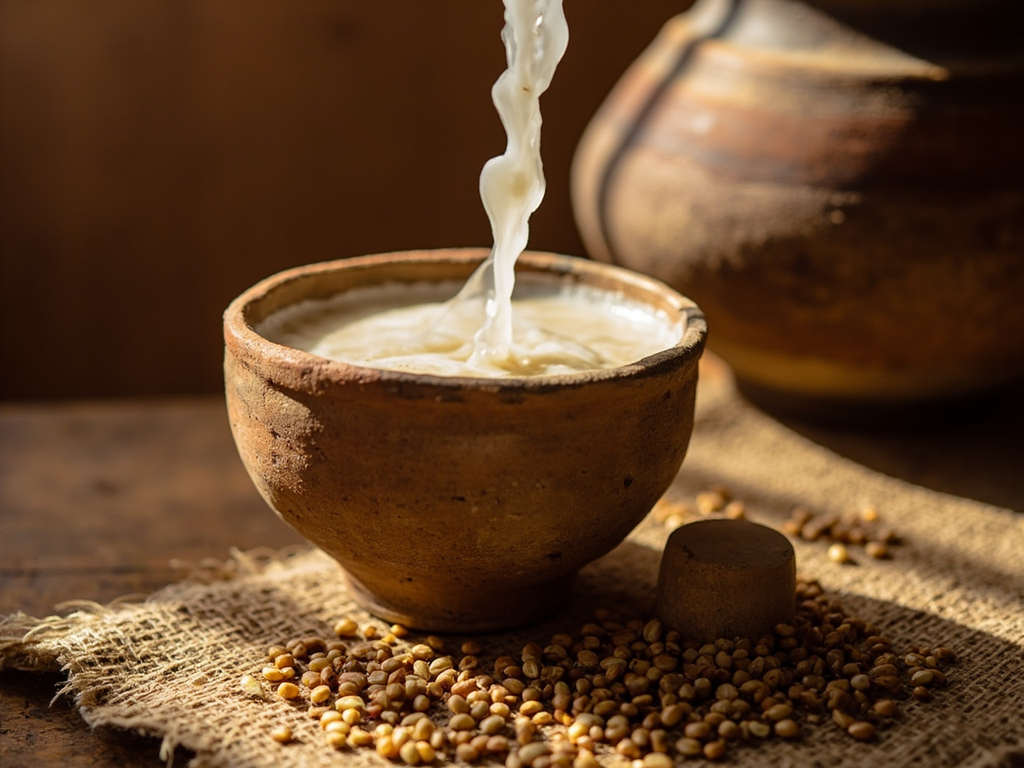 Drink
DrinkQuinoa chicha — fermented grain drink
Common drink for gatherings and celebrations (chicha)
🍋 🫙 🍯· 30 min + 2–4 days fermentation
View the recipe
 Offering
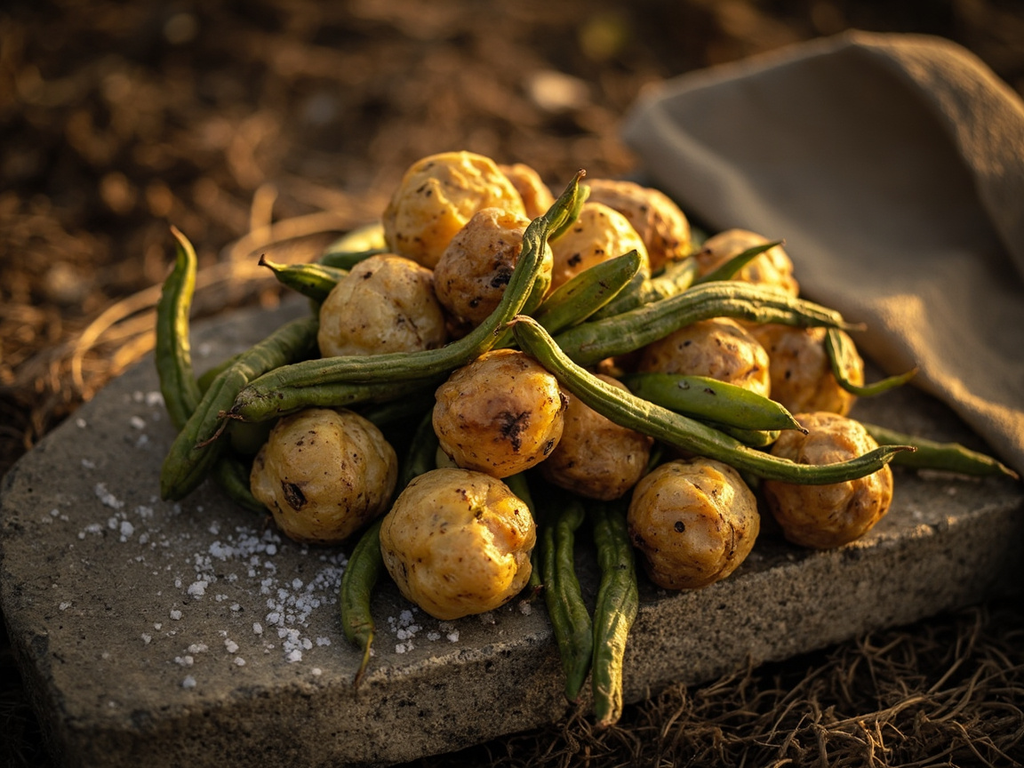
Inspired watia — tubers baked in an earth oven
Shared field cooking (watia / huatia)
🧂 🍄· 50 min
View the recipe