 flip
flipRoasted Barley Flour of the High Passes
Roasted Barley Flour of the High Passes
Why this dish? To cross the Gobi Desert 'where even birds do not fly' and the icy mountain passes, Faxian could not carry a cooking pot. Like the peoples of Central Asia, he lived on roasted cereal flour mixed with a little water or tea: the walker's food par excellence.
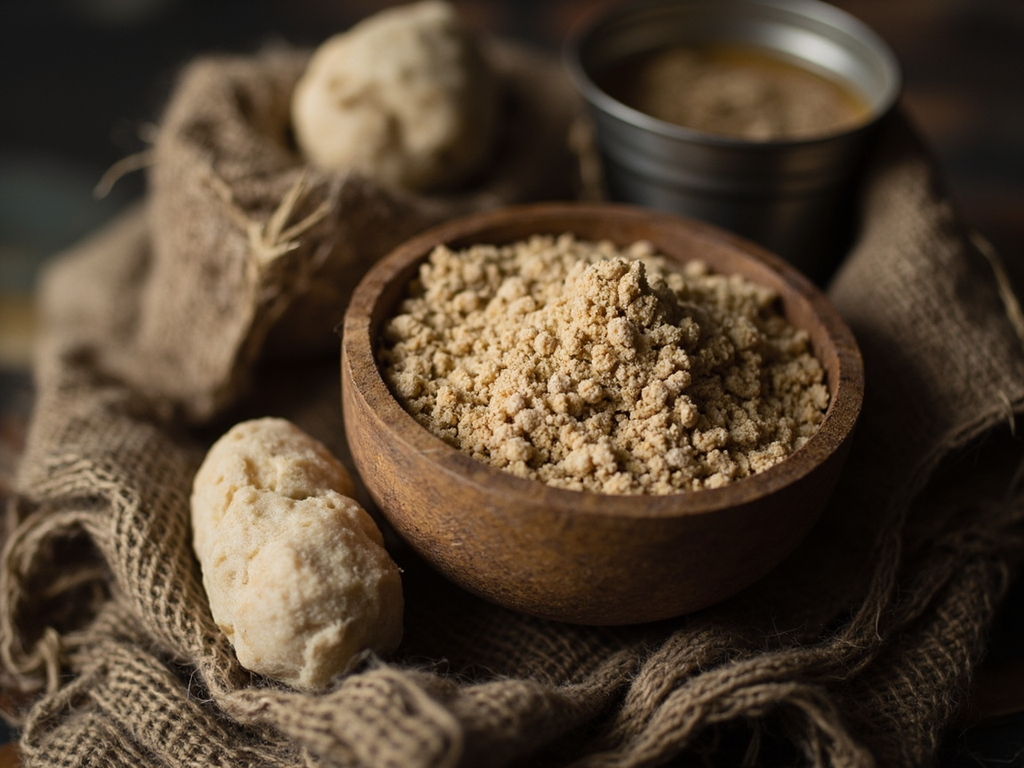
Roasted barley (or millet) ground into fine flour, carried in a bag and mixed on the spot with hot water to form a nourishing paste. Light, durable, requiring no cooking: the fuel of pilgrims crossing deserts and the Himalayas.
Up there, in the Snow Mountains, the wind freezes your breath and no fire lasts long. So I carry my roasted barley flour in a sack against my robe. A handful in the hollow of my bowl, a little warm water melted by the flame, I knead with my finger, and eat while walking. It is nothing—and it is all that kept me alive when my companions fell on the icy trail.
- •Barley (or millet) — as much as one can carry (travel grain)
- •Salt — a pinch (preservation and taste)
- •Water or hot tea — as available (on-site rehydration)
Roasted Barley Flour of the High Passes
Roasted barley (or millet) ground into fine flour, carried in a bag and mixed on the spot with hot water to form a nourishing paste. Light, durable, requiring no cooking: the fuel of pilgrims crossing deserts and the Himalayas.
Why this dish? To cross the Gobi Desert 'where even birds do not fly' and the icy mountain passes, Faxian could not carry a cooking pot. Like the peoples of Central Asia, he lived on roasted cereal flour mixed with a little water or tea: the walker's food par excellence.
Up there, in the Snow Mountains, the wind freezes your breath and no fire lasts long. So I carry my roasted barley flour in a sack against my robe. A handful in the hollow of my bowl, a little warm water melted by the flame, I knead with my finger, and eat while walking. It is nothing—and it is all that kept me alive when my companions fell on the icy trail.
Ingredients (period version)
- Barley (or millet) — as much as one can carry (travel grain)
- Salt — a pinch (preservation and taste)
- Water or hot tea — as available (on-site rehydration)
Ingredients
- Roasted barley (or millet) flour — 200 g (base)
- Pearl barley (if roasting yourself) — 250 g (to toast then grind)
- Fine salt — 1 pinch (seasoning)
- Hot water — about 80 ml per serving (binding)
Method
- If starting from grain: toast the barley dry in a pan over medium heat, stirring, until golden brown and nutty-smelling.
- Let cool, then grind finely (mill, blender, or mortar) to obtain a flour.
- To serve: put 3–4 tablespoons of flour in a bowl, add a pinch of salt.
- Gradually add hot water (or tea) while mixing with a finger or chopstick until a soft dough forms.
- Shape into small balls and eat immediately.
How it was made : Roasted and ground cereal (ancestor of Tibetan tsampa and related to Chinese chǎomiàn) is a nomadic and pilgrim food documented all along the route from China through Central Asia to the Himalayas. Its strength: it keeps for months, weighs almost nothing, and requires no sustained fire—ideal where fuel and time are scarce.
The contemporary twist : Hiker version 2026: the same barley flour whisked with a little butter tea… or, sweeter, with milk and a drizzle of honey for a no-cook instant porridge.
Faxian · Charactorium