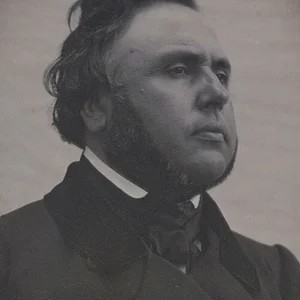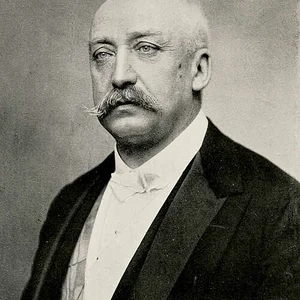

French statesman (1841–1899), President of the Republic from 1895 until his death. Born into the bourgeoisie of Le Havre, his presidency was defined by the Dreyfus Affair, and he died suddenly at the Élysée Palace in circumstances that have since become notorious.
Félix Faure(1841 — 1899)
Félix Faure
France
8 min read
Frequently asked questions
Key Facts
- 1841: born in Paris, from a merchant-class family settled in Le Havre
- 1895: elected President of the Republic following the resignation of Casimir-Périer
- 1897–1898: maintains a cautious stance on the Dreyfus Affair at its height
- 1897: receives Tsar Nicholas II in Paris, strengthening the Franco-Russian alliance
- 16 February 1899: dies at the Élysée Palace of an apoplexy, in intimate circumstances that have remained embedded in collective memory
Works & Achievements
Faure made the Franco-Russian Alliance — a counterweight to the Triple Alliance of Germany, Austria, and Italy — the central axis of his foreign policy. The Tsar's visit to Paris in 1896 and his own visit to Saint Petersburg in 1897 cemented this alliance as a cornerstone of French security for the decades to come.
Faced with a Franco-British confrontation in Sudan, Faure chose the diplomatic route and ordered the withdrawal of Commander Marchand's troops, averting war but accepting a humiliating setback. Paradoxically, this episode accelerated the Franco-British reconciliation that would lead to the Entente Cordiale of 1904.
During his presidency, France consolidated its colonial empire: the annexation of Madagascar (1896), the organization of French West Africa, and advances in Equatorial Africa. Faure supported this expansionist policy inherited from Jules Ferry.
Faure oversaw the initial work and preparatory decisions for the 1900 Paris World's Fair, which was intended to celebrate the dawn of the new century. He died before seeing its triumphant opening, which marked the height of the Belle Époque.
Anecdotes
Félix Faure died on 16 January 1899 at the Élysée in circumstances that became notorious: he collapsed from a cerebral stroke during a meeting with his mistress, Marguerite Steinheil. The incident gave rise to Georges Clemenceau's irreverent quip: “He wanted to be Caesar, he was only Pompey.”
A businessman before he was a statesman, Félix Faure had made his fortune in the hide and fur trade in Le Havre before entering politics. His success illustrates the republican meritocracy of the Third Republic: without noble birth or elite education, he rose to the highest office in the state.
In October 1896, Tsar Nicholas II and Tsarina Alexandra visited Paris with extraordinary pomp. Faure, who relished protocol and ceremony, welcomed the Russian sovereigns with such grandeur that he earned the ironic nickname “Sun President.” This visit symbolically cemented the Franco-Russian Alliance.
When “J’accuse…!” was published by Émile Zola on 13 January 1898 in L’Aurore — an open letter addressed directly to Félix Faure — the president categorically refused to reopen the Dreyfus Affair. His anti-Dreyfusard stubbornness contributed to a lasting polarization of French public opinion.
In September 1898, the Fashoda Crisis nearly triggered a war between France and the United Kingdom, with both powers vying for control of Sudan. Faure had to manage this major incident through diplomacy; it ended with a French withdrawal and left a bitter taste among nationalist opinion.
Primary Sources
Monsieur le Président, will you allow me, in my gratitude for the gracious welcome you once showed me, to express my concern for your rightful glory and to tell you that your star, so fortunate until now, is threatened by the most shameful, the most indelible of stains?
M. Félix Faure was elected President of the French Republic by the National Assembly convened in Congress at Versailles, in the second round of voting, with 430 votes against 361 for M. Henri Brisson.
France and Russia, animated by an equal desire to maintain peace and having no other aim than to provide for the necessities of a defensive war provoked by an attack by the forces of the Triple Alliance against either of them, have agreed upon the following provisions.
The union of our two nations, founded on mutual esteem and shared interests, is a pledge of peace for Europe and for the world. France salutes in Your Majesty the sovereign of a great and friendly people.
Key Places
Félix Faure was born on January 30, 1841, in Paris. His family soon left the capital to settle in Le Havre, where the young Félix built his commercial fortune and launched his political career.
It was in Le Havre that Faure built his career as a merchant in hides and furs, amassed his wealth, and entered politics as a municipal councillor and then as a deputy. The Norman port city is inseparable from his social and political rise.
The official residence of the President of the Republic, the Élysée was the setting for Faure's entire presidency (1895–1899). It was also there that he died suddenly on January 16, 1899, in circumstances that caused a sensation.
It was at Versailles, where the Congress (the Senate and Chamber of Deputies sitting jointly) convened, that Félix Faure was elected President of the Republic on January 17, 1895, in the second round of voting.
In August 1897, Félix Faure made an official visit to Russia and met Tsar Nicholas II. The visit strengthened the Franco-Russian Alliance and stood as one of the diplomatic highlights of his presidency.
Félix Faure was buried at Père Lachaise, where his monumental tomb — adorned with an allegorical bronze figure of the Republic by sculptor René de Saint-Marceaux — has become a point of curiosity for visitors.
Typical Objects

A symbol of republican bourgeois status and presidential dignity, the top hat was the required headwear for all official ceremonies. Faure, ever mindful of his image, left no sartorial detail to chance.

Worn at official ceremonies, the tricolor sash symbolized the authority and republican legitimacy of the head of state. Faure, who had a keen appreciation for protocol, wore it frequently and conspicuously.

The presidential desk — an Empire-era piece refurnished under the Third Republic — was where Faure signed decrees and diplomatic dispatches. It was in his private apartments that his death occurred on January 16, 1899.

Encrypted diplomatic telegrams were the primary means of communication between the president and French embassies abroad. Faure received urgent ones during the Fashoda Crisis of 1898, which threatened to bring France and the United Kingdom to the brink of conflict.

Before entering politics, Faure kept the accounts of his hides and furs trading house in Le Havre. These records bear witness to his origins in the commercial bourgeoisie — a world far removed from aristocratic political dynasties.

Under the Third Republic, the official portrait of the president hung in town halls and public buildings across France. Faure, acutely aware of his image, took great care over his official portraits, helping to popularize the figure of the republican head of state.
School Curriculum
Vocabulary & Tags
Key Vocabulary
Daily Life
Morning
Félix Faure rose early and devoted his mornings to reading the diplomatic dispatches forwarded by the Quai d'Orsay, followed by audiences with his ministers and aides. He carefully read through the political press — Le Figaro, Le Temps, L'Aurore — to gauge public opinion and the mood of the opposition press.
Afternoon
Afternoons were often taken up by official ceremonies, cabinet meetings, or state visits. Faure had a fondness for military parades and lavish receptions, which earned him mockery for his love of protocol in a republic that was otherwise wary of pomp and ceremony.
Evening
Presidential evenings frequently unfolded at state dinners bringing together diplomats, ministers, and prominent figures from the worlds of arts and business. A sociable man with roots in the merchant class, Faure carefully cultivated these networks and relished the art of polished conversation.
Food
Like any prosperous bourgeois of the Belle Époque, Faure appreciated classic French gastronomy: braised meats, Norman seafood (oysters, Channel sole), Bordeaux wines, and champagne. Official banquets at the Élysée were celebrated for their quality and the number of guests they brought together.
Clothing
Faure wore the obligatory formal black — a dark frock coat for working days, a tailcoat and white shirt front for official evenings — always topped with a silk top hat. Mindful of his appearance, he embodied the image of the elegant republican notable, dignified in keeping with his office.
Housing
The Élysée Palace, official residence since 1873, was furnished with great splendor, blending legacies from the Second Empire with republican refurbishments. Faure lived there surrounded by domestic staff, private secretaries, and Republican Guards, while maintaining strong emotional ties to Le Havre, the city he considered his adoptive home.
Historical Timeline
Period Vocabulary
Liens externes & ressources
Références
Œuvres
Consolidation de l'Alliance franco-russe
1895-1897
Gestion de la crise de Fachoda
Septembre-novembre 1898
Expansion coloniale française
1895-1899
Préparation de l'Exposition universelle de 1900
1896-1899