 flip
flipRoast Goose with Honey, Dates, and Figs
Roast Goose with Honey, Dates, and Figs
Why this dish? Fat goose was the prestige meat of Egyptian banquets, raised and force-fed on the estates of great houses like that of Potiphar, captain of the guard. Glazed with honey, it reigned on festive tables where the mistress of the house entertained — the very luxury of her rank.
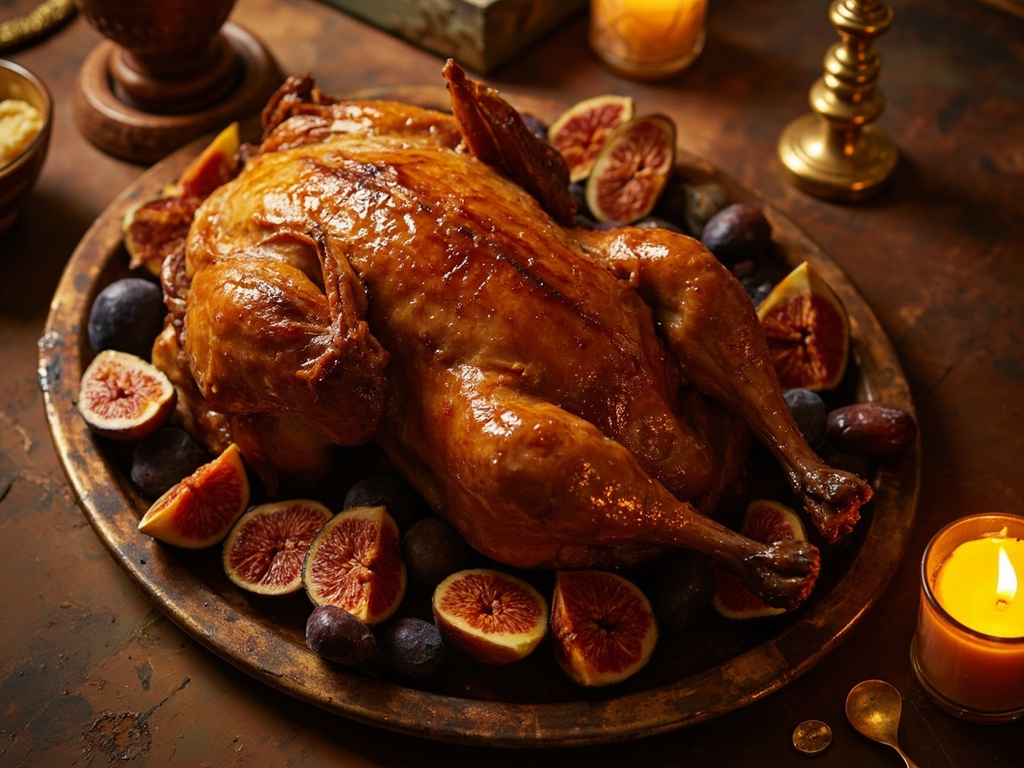
Roast goose lacquered with honey and date must, garnished with figs, perfumed with coriander and cumin. The grand festive dish of noble Egypt, sweet-and-savory and tender.
On the evening of a banquet, I want to hear the goose fat crackling on the embers. It is rubbed with salt and cumin, then coated with honey and crushed date juice until its skin shines like gold from a necklace. The figs melt around it, sweet and heavy. When my guests raise their beer cups to their lips, it is this gleaming flesh that I have served to them — for a woman of my house does not receive with less than what the gods deserve.
- •Plucked and gutted fat goose — one (centerpiece)
- •Wild honey — a bowl (glaze)
- •Ripe dates crushed into must — two handfuls (sweetener/binder)
- •Fresh or dried figs — a cup (garnish)
- •Ground cumin and coriander — to taste (spices)
- •Salt — a good pinch (seasoning)
Roast Goose with Honey, Dates, and Figs
Roast goose lacquered with honey and date must, garnished with figs, perfumed with coriander and cumin. The grand festive dish of noble Egypt, sweet-and-savory and tender.
Why this dish? Fat goose was the prestige meat of Egyptian banquets, raised and force-fed on the estates of great houses like that of Potiphar, captain of the guard. Glazed with honey, it reigned on festive tables where the mistress of the house entertained — the very luxury of her rank.
On the evening of a banquet, I want to hear the goose fat crackling on the embers. It is rubbed with salt and cumin, then coated with honey and crushed date juice until its skin shines like gold from a necklace. The figs melt around it, sweet and heavy. When my guests raise their beer cups to their lips, it is this gleaming flesh that I have served to them — for a woman of my house does not receive with less than what the gods deserve.
Ingredients (period version)
- Plucked and gutted fat goose — one (centerpiece)
- Wild honey — a bowl (glaze)
- Ripe dates crushed into must — two handfuls (sweetener/binder)
- Fresh or dried figs — a cup (garnish)
- Ground cumin and coriander — to taste (spices)
- Salt — a good pinch (seasoning)
Ingredients
- Goose legs and breasts (or a whole duck) — 1.5 kg (centerpiece)
- Honey — 4 tbsp (glaze)
- Date paste or syrup — 3 tbsp (sweetener/binder)
- Figs (fresh or dried) — 8 (garnish)
- Ground cumin — 1 tsp (spices)
- Ground coriander — 1 tsp (spices)
- Salt — 1.5 tsp (seasoning)
Method
- Rub the meat with salt, cumin, and coriander; let rest for 1 hour.
- Mix honey and date syrup to make a glaze.
- Roast the goose (or duck) at 180 °C, brushing with glaze every 20 minutes.
- Add the cut figs around the meat halfway through cooking, so they candy in the juices.
- Cook for 1.5 to 2 hours depending on the piece, until the skin is lacquered and crispy; let rest before serving.
How it was made : Tomb scenes (such as those at Saqqara and Thebes) show force-feeding of geese and roasting on spits. Fatty poultry, beef, and goose were the meats of the rich; honey, a precious commodity harvested in clay hives, marked festive dishes. Sweet-and-savory was at the heart of Egyptian taste.
The contemporary twist : Serve the goose shredded on warm spelt flatbread with roasted figs and a drizzle of date vinegar, as a "Pharaonic taco" for inspiration.
Potiphar's Wife · Charactorium