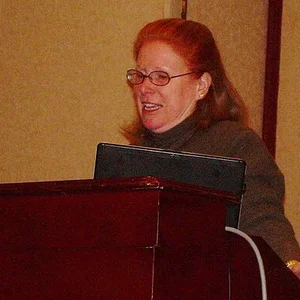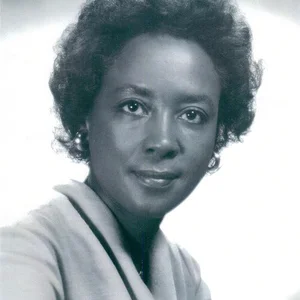

American computer scientist and pioneer in compiler optimization at IBM. The first woman to win the Turing Award in 2006, she laid the theoretical foundations of modern compilation and parallel programming.
Frances Allen(1934 — 2018)
Frances Mary Allen
8 min read
Frequently asked questions
Key Facts
- 1932: Born in Peru, New York (United States)
- 1957: Joined IBM as a programmer tasked with teaching FORTRAN
- 1989: Became the first woman named an IBM Fellow
- 2006: First woman to receive the Turing Award, the highest honor in computer science
- 2020: Died at the age of 88
Works & Achievements
A landmark paper published in the IBM Systems Journal that defines the essential transformations for optimizing compiled programs. This text is considered one of the most influential papers in the history of computer science.
The publication in which Allen formalized the concept of the control flow graph, a mathematical tool that allows compilers to analyze and optimize the sequence of instructions. This theory is still taught in computer science departments worldwide.
A reference catalogue that systematically surveys and classifies all the transformations a compiler can apply to make a program faster and more efficient, which became essential reading for compiler designers.
Optimization work on the FORTRAN H compiler, which produced machine code significantly faster than previous compilers. These concrete improvements demonstrated for the first time the industrial importance of compiler optimization.
A major IBM research project co-directed by Allen, aimed at automating the transformation of sequential programs into parallel programs capable of running on multiple processors simultaneously. This work laid the foundations of modern parallel programming.
The lecture delivered upon receiving the Turing Award, in which Allen traces the evolution of compiler optimization from the 1950s onward and outlines the future challenges of multicore and parallel computing.
Anecdotes
In 1957, Frances Allen joined IBM to teach FORTRAN to scientists working on nuclear defense systems. She had planned to stay for only a year to pay off her student loans, but the complexity of the problems she encountered captivated her so much that she ultimately spent 45 years at the company.
In the 1960s, Frances Allen worked on a top-secret NSA project called 'Alpha', aimed at creating a compiler for a military programming language. This pioneering work on optimization in critical environments led her to develop techniques that would become fundamental to computing worldwide.
In 1989, Frances Allen became the first woman to receive the title of IBM Fellow, IBM's highest internal scientific honor. This recognition rewarded her decades of work on compilers and blazed a trail that other women in technology would follow.
At the 2006 Turing Award ceremony, Frances Allen, then 72 years old, said she hoped the award would encourage more young women to pursue computer science. Her 1960s work on control flow graphs was still being taught at universities around the world.
Primary Sources
This paper presents techniques for the optimization of object programs. The transformations considered are applicable to programs written in any language and compiled by any compiler. They are classified according to the scope of their application.
A general method of control flow analysis for programs is presented. The analysis produces a flow graph representation of the program that can be used as the basis for a variety of program transformations and optimizations.
We present a systematic catalogue of the program transformations that an optimizing compiler may apply, classified by the scope of their application and the information required to apply them safely.
This lecture traces the development of compiler optimization from the early days of FORTRAN compilation through modern parallel computing, and reflects on the challenges ahead for the field.
Key Places
A small rural town in New York State where Frances Allen was born on August 4, 1934. Her modest upbringing in this farming community gave little hint of the revolutionary career in computing that awaited her.
The university where Frances Allen earned her mathematics degree in 1954. She initially set her sights on teaching before computing captivated her when she joined IBM.
The university where Frances Allen earned her master's degree in mathematics in 1957, just before joining IBM. This advanced training gave her the theoretical tools she would need for her future research on compilers.
IBM's main research center, where Frances Allen spent the bulk of her 45-year career. It was here that she developed her foundational theories on compiler optimization and parallel programming.
The city that regularly hosts the ACM annual conference, where Frances Allen received the Turing Award in 2006 before thousands of researchers and engineers from around the world.
Typical Objects

Data input medium on which programmers encoded their code by punching holes in standardized positions. Frances Allen began her career at a time when these cards were the primary means of submitting programs to IBM computers.

A screen and keyboard connected to a central computer that gradually replaced punched cards through the 1970s. Researchers like Frances Allen used these terminals to write, debug, and test their programs interactively.

Technical volume describing the syntax and features of the FORTRAN language, which Frances Allen used daily in her teaching and research work at IBM. It was by mastering this language that she developed her expertise in compilers.

Long accordion-folded sheets of paper produced by mainframe computers, containing compiled code and execution traces. Allen would analyze these listings each morning to understand compiler behavior and identify opportunities for optimization.

Series of mainframe computers introduced in 1964, occupying entire rooms, on which Allen and her colleagues tested their optimization techniques. These machines were the daily working environment of IBM researchers for two decades.

Annual award presented by the Association for Computing Machinery to computer scientists who have made lasting contributions to the field. Frances Allen received it in 2006, becoming the first woman to earn this distinction since it was established in 1966.
School Curriculum
Vocabulary & Tags
Key Vocabulary
Tags
Daily Life
Morning
In the 1960s and 1970s, Frances Allen would arrive early at IBM's Yorktown Heights laboratory, joining an overwhelmingly male team in a functional research building. She often began her day by reviewing paper listings of programs that had run overnight on the mainframes — printer output that could stretch across several meters of accordion-fold paper.
Afternoon
Afternoons were devoted to writing code and designing new optimization transformations, working at terminals or sketching the formal structure of control-flow graphs on graph paper. Allen also attended meetings with fellow researchers to debate theoretical approaches, in an intellectually stimulating but far from diverse environment.
Evening
In the evenings, Frances Allen returned to the residential suburbs of Westchester County, just north of New York City and not far from the IBM campus. She invested her time in mentoring and advocated for the inclusion of women in science and engineering, firmly believing that diversity improved the quality of research.
Food
Like most American researchers of the era, Frances Allen often had lunch in the IBM campus cafeteria, where engineers and scientists exchanged ideas informally over sandwiches and coffee. Coffee was ubiquitous in the labs — an indispensable fuel for long debugging sessions and theoretical thinking.
Clothing
From the 1960s through the 1980s, Frances Allen wore the formal attire typical of IBM's highly regimented corporate culture: a tailored suit or understated dress, in keeping with the strict dress code that applied to all employees. That code would gradually relax toward more casual wear during the 1990s.
Housing
Frances Allen lived in the suburban neighborhoods of Westchester County, close to the IBM campus in Yorktown Heights. These residential suburbs were home to many IBM researchers and engineers, forming an informal intellectual community that gathered as readily at neighborhood dinners as at local conferences.
Historical Timeline
Period Vocabulary
Liens externes & ressources
Références
Œuvres
Program Optimization
1969
Control Flow Analysis
1970
A Catalogue of Optimizing Transformations (avec John Cocke)
1971
Contributions au compilateur FORTRAN H d'IBM
1960-1966
Projet PTRAN (Parallel TRANslation)
1986-1993
Turing Award Lecture : A Perspective on the Field
2006