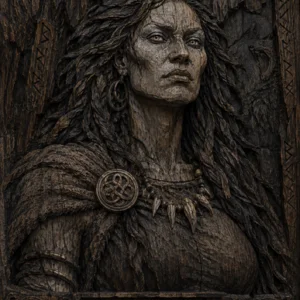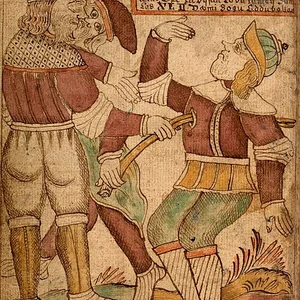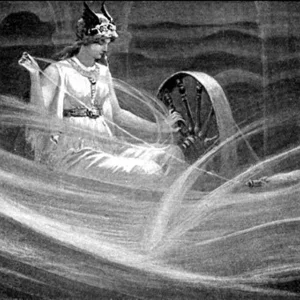

Norse goddess of marriage, motherhood, and wisdom, Frigg is the wife of Odin and queen of the Aesir in Scandinavian mythology. Known among Germanic and Nordic peoples, she is associated with the protection of the home and with foreknowledge. Her figure is conveyed primarily through medieval Icelandic written sources (the Eddas).
Frequently asked questions
Key Facts
- Frigg is mentioned in the Eddas, Icelandic texts written around the 13th century by Snorri Sturluson, who compiled older oral traditions
- She is the wife of Odin, the supreme god of the Norse pantheon, and shares with him knowledge of fate — though she never reveals it
- She is the mother of Baldr, whose death is one of the central myths of Norse tradition connected to Ragnarök
- Her name is the origin of the English word 'Friday' (Frigg's day), reflecting the influence of Germanic culture on Western languages
- She is often confused or associated with Freyja in the sources, which reflects different regional traditions within the Norse world
Works & Achievements
Frigg travels through the nine worlds to obtain from every being a sworn oath never to harm her son Baldr. This act of universal maternal protection is one of the most celebrated episodes in Norse mythology.
According to the tradition recorded by Jordanes, Frea-Frigg uses a clever trick to obtain victory for the Lombards from Odin, demonstrating her ability to influence the fates of peoples.
Frigg weaves and spins the destinies of gods and men, a cosmological function that links her to the Norns. This role symbolizes her authority over the course of future events.
In this Eddic poem, Frigg wagers with Odin over their respective human protégés and uses cunning to bring her favorite to victory, illustrating her intelligence and political influence in the divine world.
After the death of Baldr, Frigg asks who will journey to the realm of the dead to bring him back. Her grief and heroic appeal stand at the heart of the Norse eschatological myth.
Anecdotes
Frigg is the only deity, aside from Odin, permitted to sit upon the throne Hliðskjálf, from which all nine worlds can be observed. This exceptional privilege underscores her rank as queen of the Aesir and her symbolic equality with the supreme god.
According to Snorri Sturluson's Prose Edda, Frigg knows the fate of all beings but never reveals it. This silence is not ignorance but wisdom: she chooses to keep her visions to herself, making her a figure of discretion and prudence.
After the death of her son Baldr, killed by a mistletoe arrow, Frigg had done everything in her power to protect him: she had asked every creature, plant, and mineral to swear never to harm him. Only mistletoe, deemed too young, was overlooked — a lesson on the imperfection of any protection.
Frigg is associated with Friday (from *Frigg's day*), just as Venus gives her name to the Latin word for Friday. This parallel reflects the importance of Frigg's cult among Germanic peoples and the survival of her name in modern languages.
In the *Grímnismál*, one of the Eddic poems, Frigg and Odin clash in a debate over the merits of their respective human favorites. Through cunning and intelligence, Frigg manages to secure victory for her chosen protégé — showing that the goddess is not merely a passive figure but an active player in divine intrigue.
Primary Sources
The völva evokes the death of Baldr and Frigg's grief: "Then Frigg wept in Fensalir's halls for the sorrow of Valhöll."
The poem depicts a wager between Odin and Frigg over their respective mortal protégés, illustrating the benevolent rivalry between the two divine spouses.
"Frigg is the most exalted. She has a dwelling called Fensalir, and her magnificence is great. She is wise, but she never reveals her prophecies."
Loki accuses Frigg of having lain with Odin's brothers, Víli and Vé. The goddess's reply — calm and dignified — reveals her sovereign character in the face of provocation.
Jordanes mentions the goddess Frea (Germanic form of Frigg) intervening to grant victory to the Lombards, at their king's request and against Odin's will.
Key Places
Frigg's personal dwelling in Asgard, described as a magnificent place on the shores of vast stretches of water. According to the Völuspá, this is where she weeps for the death of Baldr.
The principal Norse sanctuary described by Adam of Bremen around 1070, dedicated to the great deities including Odin, Frigg's husband. This site was the center of Viking ritual practices until Christianization.
It is in Iceland that the myths of Frigg were preserved and committed to writing in the 12th–13th centuries, notably by Snorri Sturluson. The island is the primary source for the transmission of Norse mythology.
The site of the Icelandic assembly where the Christianization of Iceland was decided in the year 1000. This event marked the shift of Norse cults, including that of Frigg, into the literary and cultural sphere.
The cradle of many Germanic and Norse traditions associated with Frigg and her equivalent Frea. Rituals in her honor were practiced there before the Christianization of Scandinavia.
Typical Objects
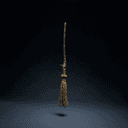
Frigg is often depicted spinning clouds or fate with a distaff. This attribute symbolizes her role as weaver of human destiny and her connection to the domestic hearth.
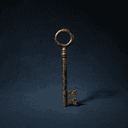
As divine mistress of the household, Frigg carries the keys to Fensalir, her hall of the fens. They symbolize authority over the home and the protection of family — core values of the goddess.
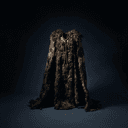
Frigg owns a cloak of falcon feathers that allows whoever wears it to transform into a falcon and fly. She sometimes lends it to other gods, notably Loki, during important missions.
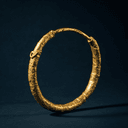
Norse goddesses often wear precious necklaces as a mark of their divinity and status. Frigg is sometimes depicted with a gold ornament, a symbol of her sovereignty among the Aesir.

Mistletoe is directly tied to the myth of Baldr's death: Frigg had forgotten to make the plant swear an oath, which allowed Loki to kill the god with an arrow carved from its wood. The object symbolizes both the fragility of a mother's protection and the cunning of fate.
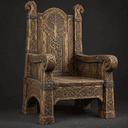
This celestial seat, from which all that happens across the nine worlds can be seen, is shared by Frigg and Odin. It represents the foresight and sovereign power of the divine couple.
School Curriculum
Vocabulary & Tags
Key Vocabulary
Daily Life
Morning
Frigg begins her day at the heights of Asgard, sometimes seated upon the throne Hliðskjálf beside Odin, silently watching over the nine worlds. She receives the day's news and consults the fates that she alone has the power to know.
Afternoon
The afternoon is devoted to spinning in her halls of Fensalir. Surrounded by her handmaidens — including Fulla, her confidante, and Hlin, goddess of protection — she weaves the threads of destiny while overseeing the lives of households and protecting the families who pray to her.
Evening
In the evening, Frigg presides over the feasts in Asgard alongside Odin, watching over the harmony of the Aesir. She may intercede on behalf of mortals who have paid her tribute, and at times she weeps over her darkest visions in the solitude of Fensalir.
Food
As a goddess, Frigg takes part in the feasts of the Aesir, where the flesh of the boar Sæhrímnir is consumed — replenished anew each evening — and mead flows freely in drinking horns. Divine food is a symbol of immortality and abundance.
Clothing
Frigg wears long robes in the hues of mist and the northern sky — midnight blue, snowy white, pearl grey — fastened with finely crafted golden fibulae and brooches. She is adorned with a golden torque and sometimes wears her falcon-feather cloak, a sign of her great power.
Housing
Frigg dwells in Fensalir, her 'Marsh Halls,' a vast palace of wood and stone set within Asgard, surrounded by wetlands and mist. The interior is adorned with tapestries, wood carvings, and precious metals, reflecting the sovereign rank of the goddess.
Historical Timeline
Period Vocabulary
Visual Style
Un style enluminure médiévale nordique, avec une palette froide de bleus, gris et ors, sublimant la majesté sereine et l'autorité douce de la reine des Ases.
Sound Ambience
Une ambiance de grande salle nordique médiévale, mêlant le feu du foyer, le vent des marais et le filage du destin, évoquant la majesté calme et protectrice de Frigg.
Liens externes & ressources
Références
Œuvres
Protection de Baldr (acte mythologique)
Temps mythiques
Intervention pour la victoire des Lombards (tradition orale germanique)
Attestée par Jordanès, VIe siècle
Filage du destin (rôle cosmique)
Tradition mythologique
Dialogue avec Odin dans le Grímnismál
vers Xe siècle
Deuil de Baldr et envoi de Hermóðr
Tradition mythologique, fixée dans l'Edda en prose vers 1220