 flip
flipBuccellatum, the Twice-Baked Siege Bread
Buccellatum, the Twice-Baked Siege Bread
Why this dish? During the Perusine War, Fulvia supported Octavian's besieged legions and knew the harsh logistics of a siege. Buccellatum, bread baked twice so it keeps for months, was the food of soldiers trapped within the walls—a bread of war, mirroring the resistance she led with weapons in hand.
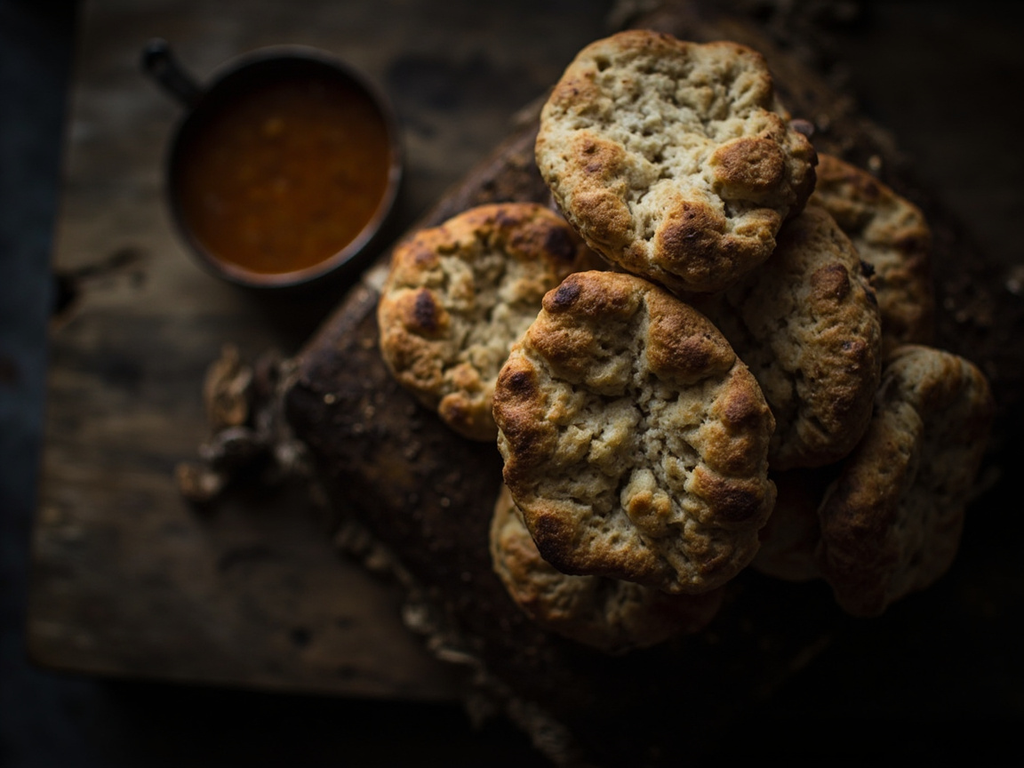
A flatbread baked, sliced, then re-baked until hard and dry: the legion's 'biscuit,' which does not mold and softens in soup or cut wine. Austerity and endurance.
You think war is made of speeches? It is made of bread. Behind the walls of Perusia, we did not eat the soft bread of the Forum, but this flatbread twice passed through the oven, hard as a shield, which keeps for moons without rotting. We dip it in soup or wine so it yields to the bite. This is what I shared with the soldiers while Octavian starved us—and I did not bend.
- •Wheat flour (and a little spelt) — as needed (base)
- •Water — as needed (hydration)
- •Salt — a good pinch (flavor and preservation)
- •Sourdough starter — a little (light fermentation)
Buccellatum, the Twice-Baked Siege Bread
A flatbread baked, sliced, then re-baked until hard and dry: the legion's 'biscuit,' which does not mold and softens in soup or cut wine. Austerity and endurance.
Why this dish? During the Perusine War, Fulvia supported Octavian's besieged legions and knew the harsh logistics of a siege. Buccellatum, bread baked twice so it keeps for months, was the food of soldiers trapped within the walls—a bread of war, mirroring the resistance she led with weapons in hand.
You think war is made of speeches? It is made of bread. Behind the walls of Perusia, we did not eat the soft bread of the Forum, but this flatbread twice passed through the oven, hard as a shield, which keeps for moons without rotting. We dip it in soup or wine so it yields to the bite. This is what I shared with the soldiers while Octavian starved us—and I did not bend.
Ingredients (period version)
- Wheat flour (and a little spelt) — as needed (base)
- Water — as needed (hydration)
- Salt — a good pinch (flavor and preservation)
- Sourdough starter — a little (light fermentation)
Ingredients
- Wheat flour T80 — 400 g (base)
- Spelt flour — 100 g (rusticity)
- Warm water — 300 ml (hydration)
- Salt — 10 g (flavor and preservation)
- Sourdough starter or yeast — 100 g starter (or 5 g yeast) (fermentation)
Method
- Knead flours, water, salt, and starter into a firm dough; let rise for 2 hours.
- Shape into flat, thick discs and bake at 200°C for about 25 minutes.
- Let cool, then slice each disc horizontally through the thickness.
- Return the slices to the oven at 130°C for 40–50 minutes, until dry and hard.
- Store away from moisture; before eating, dip in soup or water-cut wine.
How it was made : Roman armies carried a twice-baked biscuit bread ('panis militaris', later called buccellatum) to make it nearly imperishable. It was rehydrated in broth (puls) or posca. During a siege like that of Perusia (41–40 BC), such reserves decided the outcome.
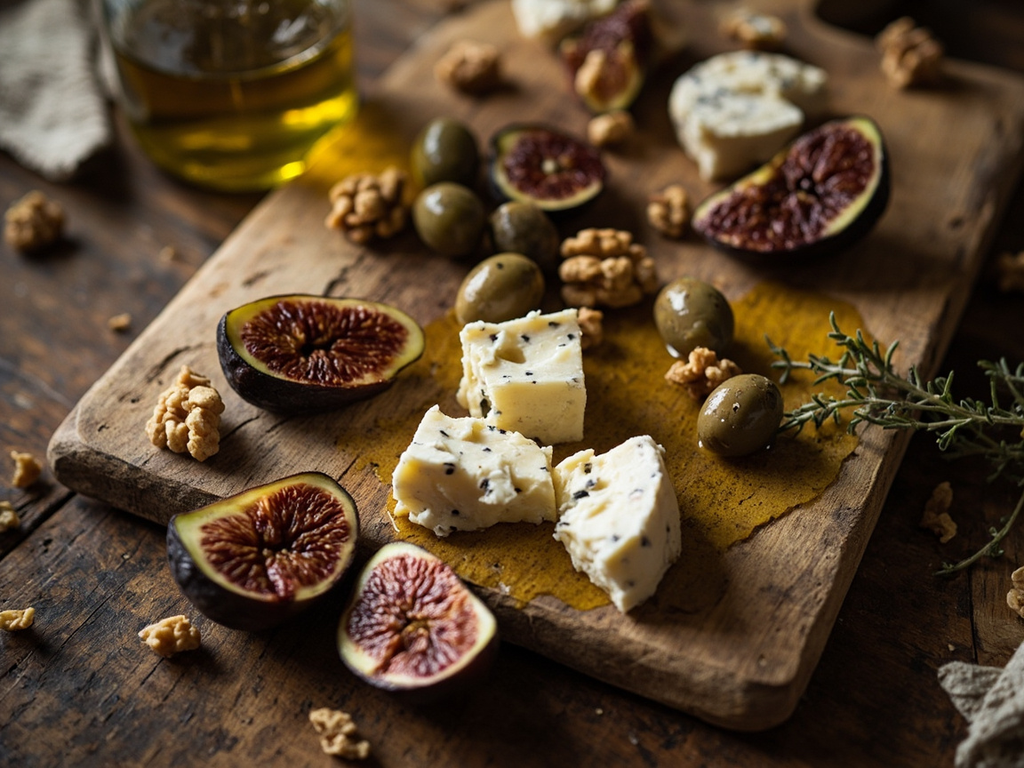
The contemporary twist : Broken into chunks on a board with honey and fresh cheese, this 'legionary biscuit' becomes a stylish hiking snack.
Sources : Pliny the Elder, Natural History (on preserved breads)
Fulvia · Charactorium