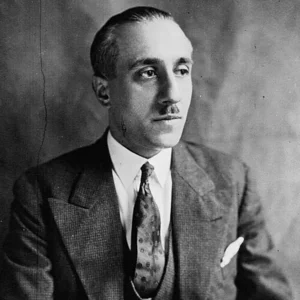

A French Communist journalist and member of parliament, Gabriel Péri vigorously opposed Nazism and fascism throughout the 1930s. Arrested by the Gestapo in May 1941, he was shot at Mont-Valérien on December 15, 1941, becoming one of the most iconic martyrs of the French Resistance.
Gabriel Péri(1902 — 1941)
Gabriel Péri
France
8 min read
Frequently asked questions
Famous Quotes
« My last thoughts will be for France and for you… I believe we are preparing beautiful tomorrows.»
Key Facts
- Born on February 9, 1902, in Toulon, son of a socialist activist
- Editor-in-chief of the foreign affairs section of L'Humanité throughout the 1930s
- Elected Communist member of parliament for Seine-et-Oise in 1932 and re-elected in 1936
- Arrested by the Gestapo on May 18, 1941, after going underground
- Shot at Mont-Valérien on December 15, 1941, he became a symbol of the Communist Resistance
Works & Achievements
Hundreds of articles analyzing the rise of Nazism, the Spanish Civil War, and the expansionist ambitions of the Axis powers. These texts establish Péri as one of the most committed French journalists against fascism before the war.
A reportage work written after a journey to the USSR, in which Péri introduces Soviet society to French readers. It reflects the enthusiasm of Communist intellectuals of the era toward the "land of socialism."
Péri was one of the rare members of parliament to publicly denounce Daladier's capitulation to Hitler. His speeches presciently argued that abandoning Czechoslovakia would only embolden the aggressor.
A historic document in which Péri expresses his convictions, his love of France, and his certainty of a better future. Passed on clandestinely, this letter has become one of the founding texts of Communist resistance memory.
Anecdotes
On the night before his execution, December 14, 1941, Gabriel Péri wrote a final letter to his comrades. In it, he declared that he was giving his life so that France might live, and expressed his certainty that the ideals he had fought for would ultimately triumph. This letter became an iconic text of the Resistance and is still read aloud at commemorative ceremonies today.
During the vote of July 10, 1940, in Vichy, Gabriel Péri was among the 80 parliamentarians who refused to grant full powers to Marshal Pétain. This courageous stand, taken at a moment when the vast majority of deputies were capitulating, reflects his absolute opposition to any form of authoritarian rule — just a few months before his arrest.
As foreign affairs editor at the newspaper *L'Humanité* since the 1930s, Gabriel Péri was one of the first French journalists to alert the general public to the dangers of Nazism. His articles described in precise detail the persecutions taking place in Germany and the rise of fascist regimes across Europe, at a time when many still preferred to believe that peace was possible.
Arrested by the Gestapo on May 18, 1941, in Paris, Gabriel Péri was imprisoned at La Santé prison and then at the Fort de Romainville. Throughout his detention, he refused to give up information on his fellow Resistance members despite relentless pressure — displaying a courage that even his jailers found remarkable. He was shot at Mont-Valérien alongside other Resistance fighters on December 15, 1941.
The son of a modest postal worker from Toulon, Gabriel Péri became politically active as a teenager through the Communist Youth movement. A gifted student, he could have pursued higher education, but chose journalism and political engagement to champion the working class. His journey — from the docks of Toulon to the pages of *L'Humanité* — traces the path of a militant who rose from the people.
Primary Sources
I am going to die for France. My comrades in arms will know that I fell faithful to my communist ideals and to my country. I trust in France for the future, for brighter tomorrows.
Hitler does not hide his intentions: he wants to dominate Europe. The democracies that turn a blind eye to the persecutions in Germany are preparing their own downfall.
The Spanish Republic is under attack by forces openly supported by Fascist Italy and Nazi Germany. Non-intervention is nothing but a lie that paves the way for the capitulation of the democracies.
We are abandoning Czechoslovakia to Hitler. Those who believe they have bought peace by handing a people over to the aggressor are gravely mistaken: they have bought only time, and at the cost of their honor.
Key Places
Gabriel Péri's birthplace, where he was born on February 9, 1902. The son of a modest clerk, he grew up in a working-class environment that shaped his early political convictions.
Gabriel Péri worked here from the 1920s as the foreign affairs editor. It was from this newsroom that he warned the French public about the dangers of European fascism.
Seat of the Chamber of Deputies, where Péri served as the elected representative for Seine-et-Oise from 1932. He delivered numerous speeches against the Fascist Axis there and was among the 80 deputies who voted against Pétain on July 10, 1940.
A military prison converted into a detention center by the Germans during the Occupation. Gabriel Péri was held here before his execution, alongside other resistance members and hostages.
The main execution site for resistance fighters and hostages shot by the Germans in the Paris region. Gabriel Péri was executed here on December 15, 1941; a commemorative clearing today honors the sacrifice of more than 1,000 victims.
Typical Objects

The everyday tool of the militant journalist, on which Péri wrote his engaged articles for *L'Humanité*, denouncing Nazism and fascism throughout the 1930s.

The communist newspaper founded in 1904 by Jean Jaurès, whose foreign affairs section Péri headed; he was one of its most widely read columnists and most feared voices among fascists.

Symbols of his dual commitment — as journalist and parliamentarian — these documents gave him access to political circles and allowed him to carry the workers' voice all the way to the Chamber of Deputies.

After the defeat of 1940 and the dissolution of the PCF, Péri took part in distributing Resistance tracts; these mimeographed sheets, handed out in secret, called on the French to refuse the Nazi occupation.

Handwritten pages prepared for his speeches in the Chamber, notably against the Munich Agreements and in support of the Spanish Republic, bearing witness to meticulous documentary work.

Péri was imprisoned at La Santé following his arrest; the harsh conditions of his detention did nothing to weaken his resolve, and it was in a cell like this that he wrote his final letter to his comrades.
School Curriculum
Vocabulary & Tags
Key Vocabulary
Daily Life
Morning
Gabriel Péri arrives early at the *L'Humanité* newsroom, combing through foreign press — German, Italian, English — to prepare his articles on international affairs. He reads Hitler's and Mussolini's speeches, as published in European newspapers, with close attention, analyzing their implications.
Afternoon
His afternoons are split between the Chamber of Deputies — when Parliament is in session — and writing his columns. An active deputy, he takes part in debates on foreign policy and challenges the government on the dangers of German rearmament and the weakness of the democracies.
Evening
In the evenings, Péri frequently attends Communist Party cell meetings, lectures, or workers' rallies in the Paris suburbs. As much a man of action as of the pen, he maintains regular contact with activists and trade unions.
Food
Like many journalists and activists of modest means, Péri eats simply: meals grabbed on the go between two meetings, coffee downed in haste at a Parisian café counter. Under the Occupation, the food rationing imposed by the Germans further reduced the population's already meager portions.
Clothing
Péri adopts the sober, functional dress of the left-wing politician and journalist of the 1930s: a dark business suit, tie, and overcoat in winter. Nothing ostentatious — an outfit that allows him to move freely in working-class circles as well as in the corridors of Parliament.
Housing
He lives in a modest apartment in the Paris suburbs, far from the splendor of bourgeois neighborhoods. After the defeat of 1940, the apartment becomes a place of danger: Péri goes underground, regularly changing hiding places to evade the Vichy police and the Gestapo.
Historical Timeline
Period Vocabulary
Liens externes & ressources
Références
Œuvres
Chroniques des affaires étrangères dans L'Humanité (1924-1939)
1924-1939
Les Soviets en 1928
1928
Discours parlementaires contre les accords de Munich
octobre 1938
Lettre testamentaire avant l'exécution
14 décembre 1941