 flip
flipBkaila with Confit Spinach and White Beans
Bkaila with Confit Spinach and White Beans
Why this dish? An emblematic dish of Jewish homes in Tunis and La Goulette, bkaila is the cooking of Gisèle Halimi's childhood: a humble, long-confit pot that simmered in the Sephardic family home where meals were both a source of strength and a ground for discussion.
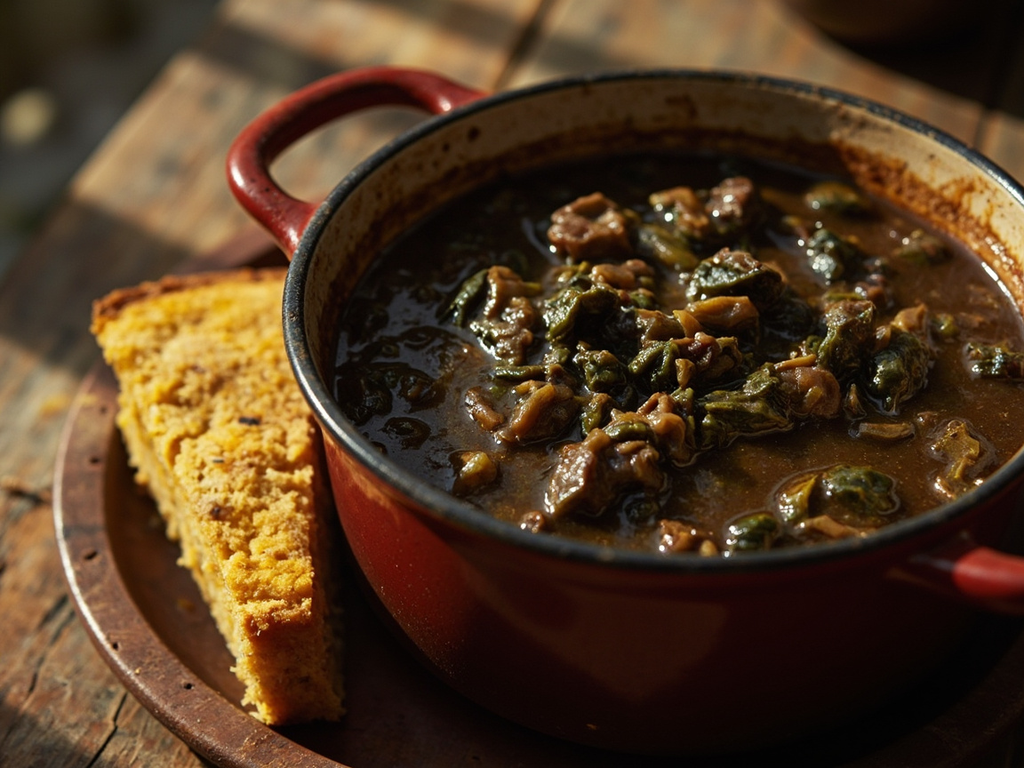
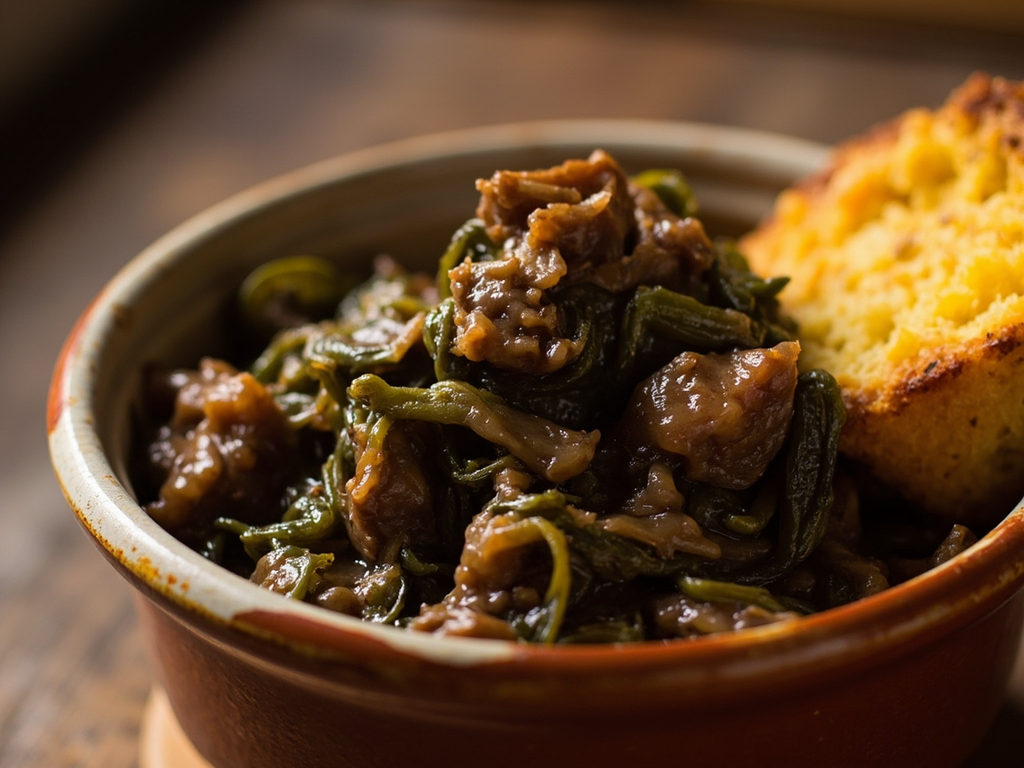
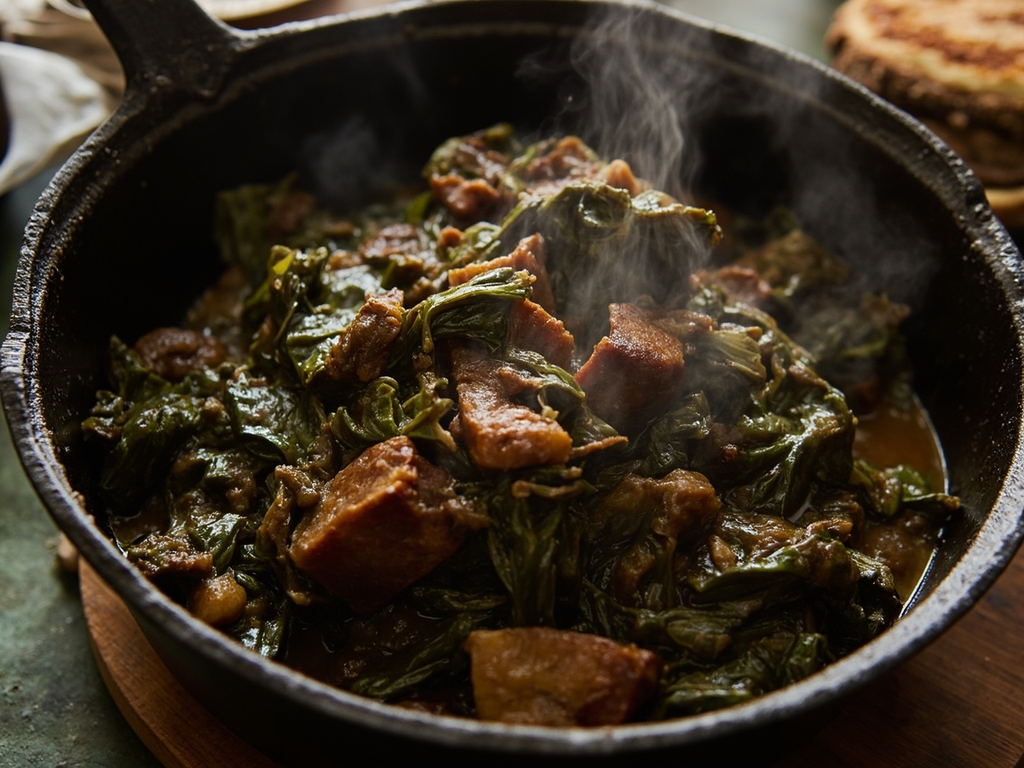
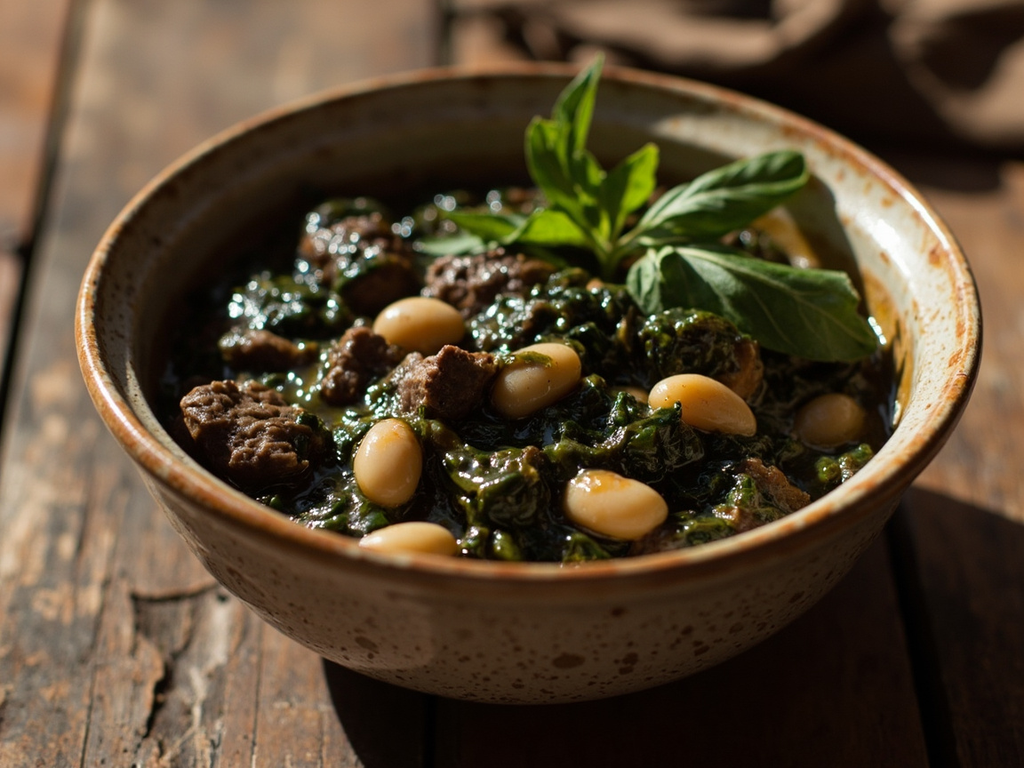
Spinach (or Swiss chard) fried for a very long time until almost black and melting, combined with white beans and a little meat, in a dark, deep sauce. A powerful taste, slightly bitter and earthy, typically Jewish-Tunisian.
At home in La Goulette, that pot would simmer for hours, and often it was me, the girl, who was asked to stir the spinach while my brothers played outside — that injustice, I never swallowed it. But the dish itself, I loved it all my life: you have to let the leaves darken without burning them, gently, until they have no color left but all the flavor. You add the beans soaked the night before, a little meat, and you forget the pot on the fire. It's a cuisine of patience, and patience, you see, I kept for the courts.
- •Spinach or Swiss chard — a large armful (confit base of the dish)
- •Dried white beans — a large bowl, soaked overnight (binding and sustenance)
- •Beef or lamb — a few pieces (flavor and richness)
- •Olive oil — generous (slow frying of the leaves)
- •Garlic — several cloves (aromatic base)
- •Tabil (caraway, coriander, dried garlic) — a pinch (signature spice)
Bkaila with Confit Spinach and White Beans
Spinach (or Swiss chard) fried for a very long time until almost black and melting, combined with white beans and a little meat, in a dark, deep sauce. A powerful taste, slightly bitter and earthy, typically Jewish-Tunisian.
Why this dish? An emblematic dish of Jewish homes in Tunis and La Goulette, bkaila is the cooking of Gisèle Halimi's childhood: a humble, long-confit pot that simmered in the Sephardic family home where meals were both a source of strength and a ground for discussion.
At home in La Goulette, that pot would simmer for hours, and often it was me, the girl, who was asked to stir the spinach while my brothers played outside — that injustice, I never swallowed it. But the dish itself, I loved it all my life: you have to let the leaves darken without burning them, gently, until they have no color left but all the flavor. You add the beans soaked the night before, a little meat, and you forget the pot on the fire. It's a cuisine of patience, and patience, you see, I kept for the courts.
Ingredients (period version)
- Spinach or Swiss chard — a large armful (confit base of the dish)
- Dried white beans — a large bowl, soaked overnight (binding and sustenance)
- Beef or lamb — a few pieces (flavor and richness)
- Olive oil — generous (slow frying of the leaves)
- Garlic — several cloves (aromatic base)
- Tabil (caraway, coriander, dried garlic) — a pinch (signature spice)
Ingredients
- Fresh spinach — 1 kg (or 600 g frozen, squeezed dry) (confit base)
- Dried white beans — 250 g, soaked 12 h (binding)
- Beef for stew (chuck) — 400 g cubed (richness)
- Olive oil — 150 ml (slow frying)
- Garlic — 4 cloves (aromatic)
- Ground caraway and coriander — 1 tsp each (spices)
- Salt, pepper — to taste (seasoning)
Method
- The night before, soak the white beans in plenty of cold water.
- Finely chop the washed spinach. In a large pot, heat the olive oil and add the spinach.
- Fry the spinach over medium heat for 30 to 45 minutes, stirring often: it should reduce, darken, and become very dark, almost black, without burning.
- Add the crushed garlic, caraway and coriander, sauté for one minute.
- Add the meat, brown it, then add the drained beans. Cover with hot water.
- Season with salt and pepper, cover and simmer for 2 to 2½ hours, until the beans are tender and the sauce is thick and dark.
- Serve very hot, with a spoonful of harissa on the side.
How it was made : In Jewish homes in Tunis, spinach was fried very long in olive oil until it turned into a black paste ("bkaila" comes from the idea of confit leaves). The dish was often prepared the day before Shabbat and improved as it simmered. Each family had its own dosage of tabil.
The contemporary twist : Serve the bkaila in small individual bowls topped with a soft-boiled egg and a drizzle of new olive oil, to soften the bitterness of the leaves.
Sources : Gisèle Halimi, Le lait de l'oranger, Gallimard, 1988 (childhood memories in La Goulette) · Jewish culinary traditions of Tunisia (Tunisian Sephardic cuisine)
Gisèle Halimi · Charactorium